Honourable President of Indonesia,
Honourable Vice President,
Honourable Speakers,
Distinguished Members of Parliament,
Excellencies,
My dear brothers and sisters of Indonesia,
Namaskar to all of you.
Selamat Siang!
It is a great joy and privilege to be among my Sahabat Sejati - my true friends.
It is a great honour and privilege for me to be here among you today. I stand before you as the representative of 1.4 billion Indians and as a proud citizen of the Mother of Democracy, conveying the warm greetings and best wishes of all the people of India.
Hon’ble members,
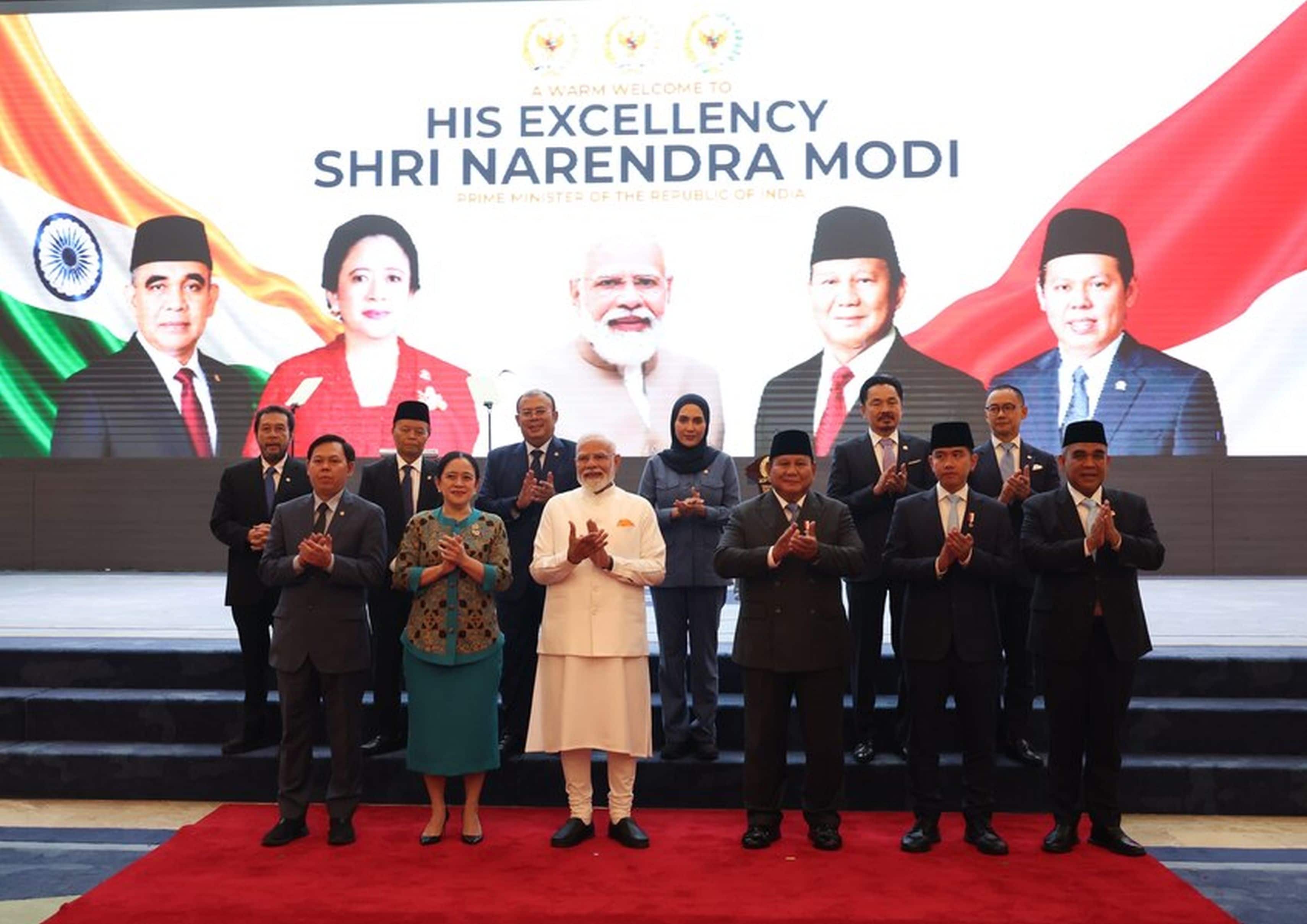
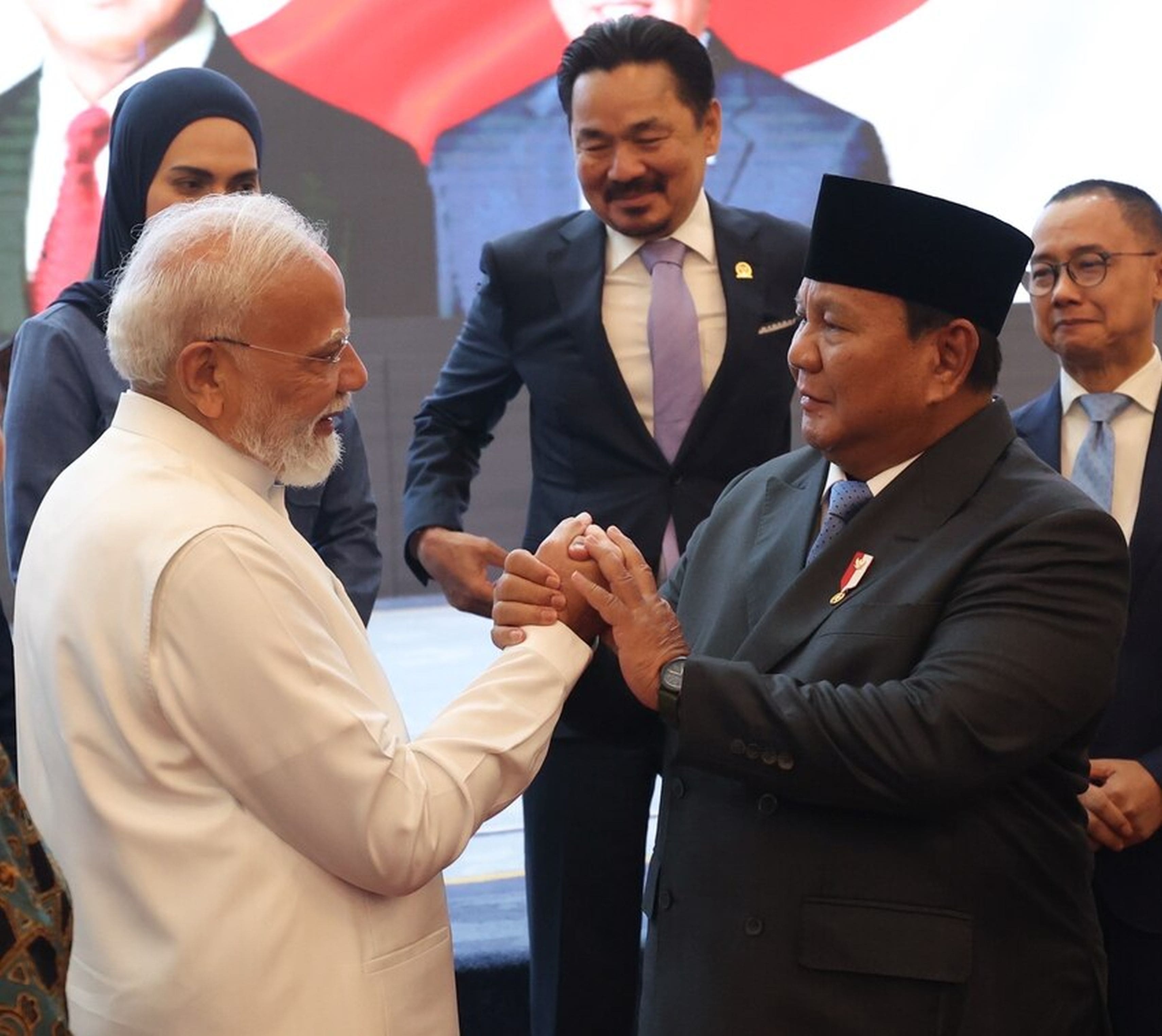
The people of Indonesia - its children, youth, and women - have made today one of the most memorable days of my life. The warmth, affection, and gracious welcome I received from the people of Indonesia this morning is something I will cherish forever. Earlier today, President Prabowo spoke about copyright. I would simply like to tell him that no one can claim copyright over love, affection, friendship, or mutual respect. My friendship with President Prabowo transcends all such boundaries of copyright.
Friends,
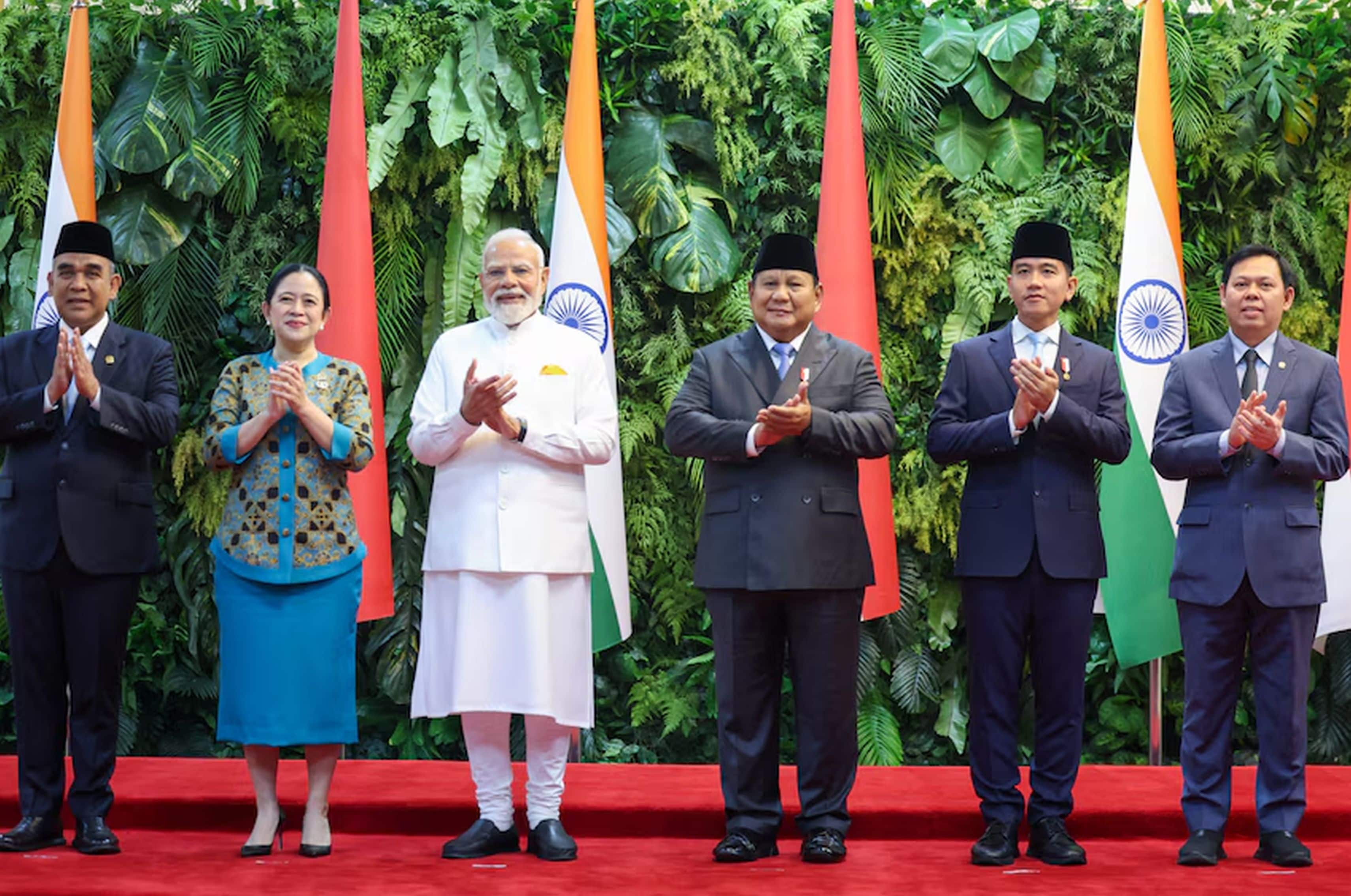
This morning, I also had the privilege of receiving Indonesia’s highest civilian honour. With humility and deep gratitude, I accept this distinction as a reflection of the affection that the people of Indonesia hold for the millions of people of India. This honour celebrates the democratic values we share, our common heritage, and the ever-strengthening bonds between our two countries. I extend my heartfelt gratitude to all of you, to President Prabowo, to the Government of Indonesia, and to the people of Indonesia for this distinguished honour.
Honourable Members,
Today, India and Indonesia stand together at a defining moment in history. The first quarter of this century has now passed, and the next twenty-five years will be of immense significance for both our nations. On this great soil of Indonesia, I come before you with confidence in our shared journey of development. I come with the conviction that, together, India and Indonesia can inspire humanity with renewed hope, purpose, and energy.
When the 1.4 billion people of India and the 290 million people of Indonesia move forward together with shared purpose and collective effort, the world will witness the making of a new chapter in history.
India is a nation that believes not in expansionism, but in development. That is why we are guided by the principle: Sabka Saath, Sabka Vikas—Together with all, development for all.
It is with this very mantra and this spirit that I stand before the distinguished Members of the Parliament of Indonesia today.
Honourable Members,
Although our capitals are separated by thousands of kilometres, the distance between our two countries across the sea is only about 150 kilometres. While seas have often served as boundaries and symbols of distance for many nations, the ocean has never separated India and Indonesia. For us, the sea is not a barrier-it is a bridge. It is the centrepiece of our shared future.
India, Indonesia, and the Indian Ocean - these very names bear witness to the deep and enduring bonds between our two nations. For thousands of years, our ports connected the world, and our ships carried trade, culture, and ideas across distant shores. The seas continue to hold immense opportunities for our shared future. It is with the vastness of this ocean as our inspiration that I invite you today to take India–Indonesia relations to even greater heights.
Honourable Members,
India and Indonesia share far more than the sea—we share a common history. Our relationship is rooted in the timeless legacy of the Ramayana and the Mahabharata. In the wisdom of Nalanda that reached these shores centuries ago. In the traditions of Wayang, dance and music.
We are connected through magnificent monuments such as Borobudur and Prambanan. We are united by Garuda, the national emblem of Indonesia. We are linked through the spirit and celebration of the Bali Jatra festival. And when it comes to flavours, it is difficult to say whether krupuk or papad is crunchier. But one thing is certain-both masala and bumbu add richness and flavour to our lives.
Friends,
Gujarat, located on India’s western coast, is my home state. It is said that centuries ago, traders and Sufi saints from Gujarat travelled to Indonesia by sea, bringing with them the message and values of Islam. Even today, the exquisite Patola textiles of Gujarat are regarded here as symbols of prestige and distinction. Their influence can still be seen in Indonesia’s rich tradition of Batik craftsmanship.
It was for this very reason that President Sukarno once said, “The peoples of Indonesia and India are bound together by ties of blood and culture.”
Friends,
There is so much that our ancestors experienced together. Both our peoples endured long periods of foreign rule. Our two nations also attained independence at nearly the same time-Indonesia in 1945, and India in 1947. And when the question of Indonesia’s sovereignty as an independent nation arose, India stood firmly in support of Indonesia’s freedom struggle and became a strong voice for its cause at the United Nations.
During that defining period, the role played by the respected Biju Patnaik remains a shining chapter in our shared history. The courage and determination with which he safely brought Prime Minister Sutan Sjahrir and Vice President Mohammad Hatta to India forged an even deeper bond between our two nations.
Honourable Members,
Another important bond that brings us closer is our shared commitment to democracy and to unity in diversity. India is the world's largest democracy and the Mother of Democracy. Indonesia, in turn, is the world's third-largest democracy.
India is home to hundreds of languages and a rich tapestry of traditions, and Indonesia too is blessed with hundreds of languages and diverse cultural traditions. India is guided by the timeless principle of Vasudhaiva Kutumbakam—the world is one family—while Indonesia is inspired by the philosophy of Bhinneka Tunggal Ika—Unity in Diversity. Both our nations have made this diversity the very foundation of our democracy and our unity.
Honourable Members,
As the Honourable Speaker just recalled, when India celebrated its first Republic Day in 1950, President Sukarno was the Chief Guest at that historic occasion. And in that same era, at the Bandung Conference, President Sukarno and Prime Minister Nehru sent a clear message to the world-that independent nations have the sovereign right to make their own decisions.
Honourable Members,
Indonesia has demonstrated to the world, through Reformasi, the true strength of democracy. Over the past two decades, its economy has grown rapidly, lifting millions of people out of poverty.
India’s democratic journey tells the same story. Today, India is the world’s fastest-growing major economy, and over the past decade, more than 250 million Indians have risen out of poverty.
And that is why, my friends, when India and Indonesia stand together, they reinforce the world's faith that democracy creates opportunities, and democracy inspires confidence,
Democracy builds the future. And I have unwavering confidence that our shared democratic values and common aspirations will take India–Indonesia relations to new heights.
Honourable Members,
The journey we began together as newly independent nations will soon complete a hundred years of freedom. Here in Indonesia, you are advancing with the ambitious vision of Indonesia Emas 2045. In India, we are moving forward with our resolve to build a Viksit Bharat by 2047. As we pursue these national aspirations, our two countries can complement and strengthen each other in achieving these shared goals.
We are among the world's most youthfull societies. We are among the fastest-growing major economies. We are both major maritime powers. We are strong voices of the Global South. We are ancient civilizations, and at the same time, natural partners in shaping the future.
On this journey, let us be not only partners to one another, but also a source of each other’s strength. It is with this vision that I had detailed discussions with President Prabowo earlier today. Our objectives are very clear. We must transform the goodwill and mutual trust between India and Indonesia into new opportunities for our people.
Last year, bilateral trade between our two countries reached nearly 25 billion US dollars. More than one hundred Indian companies are operating in Indonesia today. There is no doubt that we are moving forward together at a rapid pace. Yet, even greater and limitless opportunities await us in the years ahead.
Honourable Members,
India and Indonesia have the potential to reach limitless heights together in futuristic sectors. One such example is space technology. Today, the entire world recognizes India's capabilities in the space sector. And India regards Indonesia as its natural partner in this journey.
For many years, the satellite tracking facilities at Biak have supported India's space programme. India has also launched several Indonesian satellites and contributed to capacity building in the space sector. The time has now come to take this cooperation to the next level. We can work together on satellite applications, and India stands ready to support the development of satellite launch facilities in Indonesia.
Friends,
To preserve and celebrate our rich maritime heritage, we are developing the National Maritime Heritage Complex at Lothal, the site of a 5,000-year-old port city.
I would like Indonesia to join us in this landmark project.
Honourable Members,
India and Indonesia have always shared a common view on issues such as terrorism. Last year, when the heinous terrorist attack took place in Pahalgam, Indonesia stood firmly with India. I express my gratitude to President Prabowo and all of you for your support.
Both our countries are working together on counter-terrorism through the Joint Working Group. By further enhancing cooperation in areas such as intelligence sharing, cyber threats, terrorist financing, and de-radicalization, we can strengthen the forces of peace across the world.
Honourable Members,
Today, the global order is changing rapidly, and in this context, developing countries like ours are seeking equal participation and a greater role in global affairs. In this evolving global landscape, India firmly believes that reforms in the United Nations Security Council can no longer be delayed.
Indonesia’s G20 Presidency in 2022 and India’s G20 Presidency in 2023 both sought to bring the priorities of developing countries to the centre of global discussions.
Indonesia’s tradition of Bebas-Aktif (independent and active foreign policy) and India’s commitment to strategic autonomy provide a strong foundation for us to stand together on global issues.
India is a strong supporter of a free, open, and inclusive Indo-Pacific. India advocates for freedom of navigation in the Indo-Pacific region. To achieve this, we have placed ASEAN at the centre of our approach. Our Act East Policy is also ASEAN-centric. The Comprehensive Strategic Partnership between India and ASEAN continues to grow stronger. Therefore, it is essential that India and Indonesia continue to work together consistently in this direction.
Honourable Members,
We have another significant opportunity before us. Last year, Indonesia became a full member of BRICS, and this year, India is holding the BRICS Presidency. We can work together to make the BRICS platform more practical, more balanced, and more responsive to the needs of the Global South.
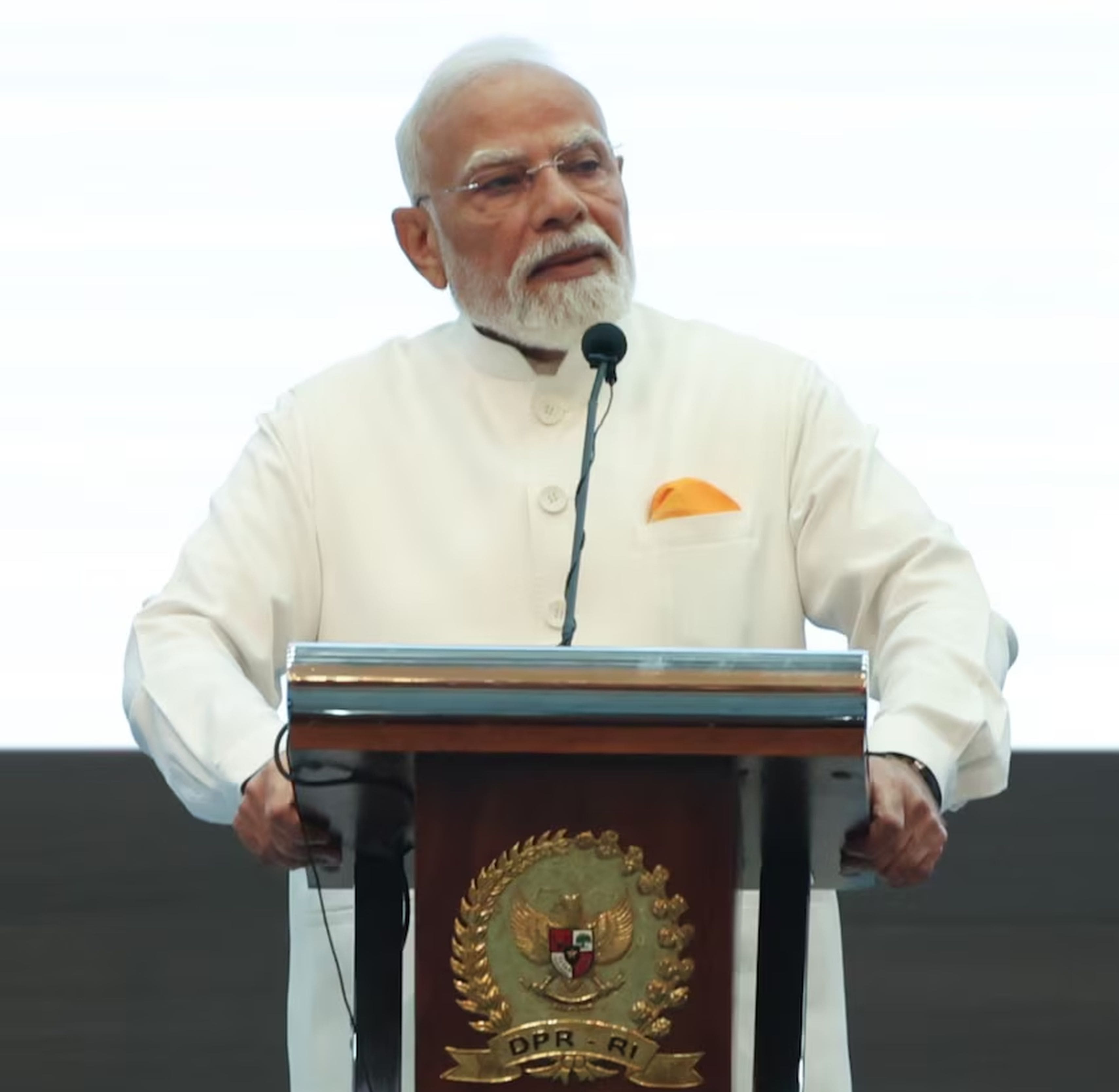
Honourable Members,
Today, before all the members of the Indonesian Parliament, I call for a new era in the India–Indonesia partnership. Like the flowing waters of the Ganga and the Mahakam rivers, our civilizations have connected ideas, faith, trade, and culture for centuries. Today, to infuse this historic bond with new energy for the future, I would like to present the Ganga–Mahakam Vision before all of you.
This vision does not limit our partnership to the needs of the present alone. It paves the way for peace, prosperity, security, and shared progress for future generations.
First… Civilizational Connect
We will connect our civilizational ties with the consciousness of the younger generations. From the Ramayana to Borobudur, and from maritime voyages to cultural exchanges, we will transform our shared history into a source of strength for the future. To achieve this, we should launch an India–Indonesia Civilizational Dialogue.
Second… Shared Development
India and Indonesia will remain steadfast partners in their respective journeys toward becoming developed nations. Indonesia’s “Indonesia Emas Vision” and India’s “Viksit Bharat Vision” will reinforce and accelerate each other’s progress, empowering one another and creating new opportunities for our people.
Third… Security and Strategic Trust
We will take our defence and security cooperation to new heights. Together, we will strengthen our national capabilities and address terrorism, cyber threats, maritime challenges, and emerging security risks. The strategic trust between India and Indonesia will serve as a strong foundation for stability in the Indo-Pacific region.
Fourth…. Maritime Prosperity
As two great maritime nations, we will transform our shared maritime geography into shared prosperity. From Sabang to Great Nicobar, and from the Malacca Gateway to the Indo-Pacific, we will create new opportunities in connectivity, logistics, the blue economy, maritime security, and trade resilience.
Fifth…. Voice of the Global South
We will lend an even stronger voice to the aspirations of the Global South. Together, we will work towards a world order where development is inclusive, technology is accessible, and global governance is more just, equitable, and representative.
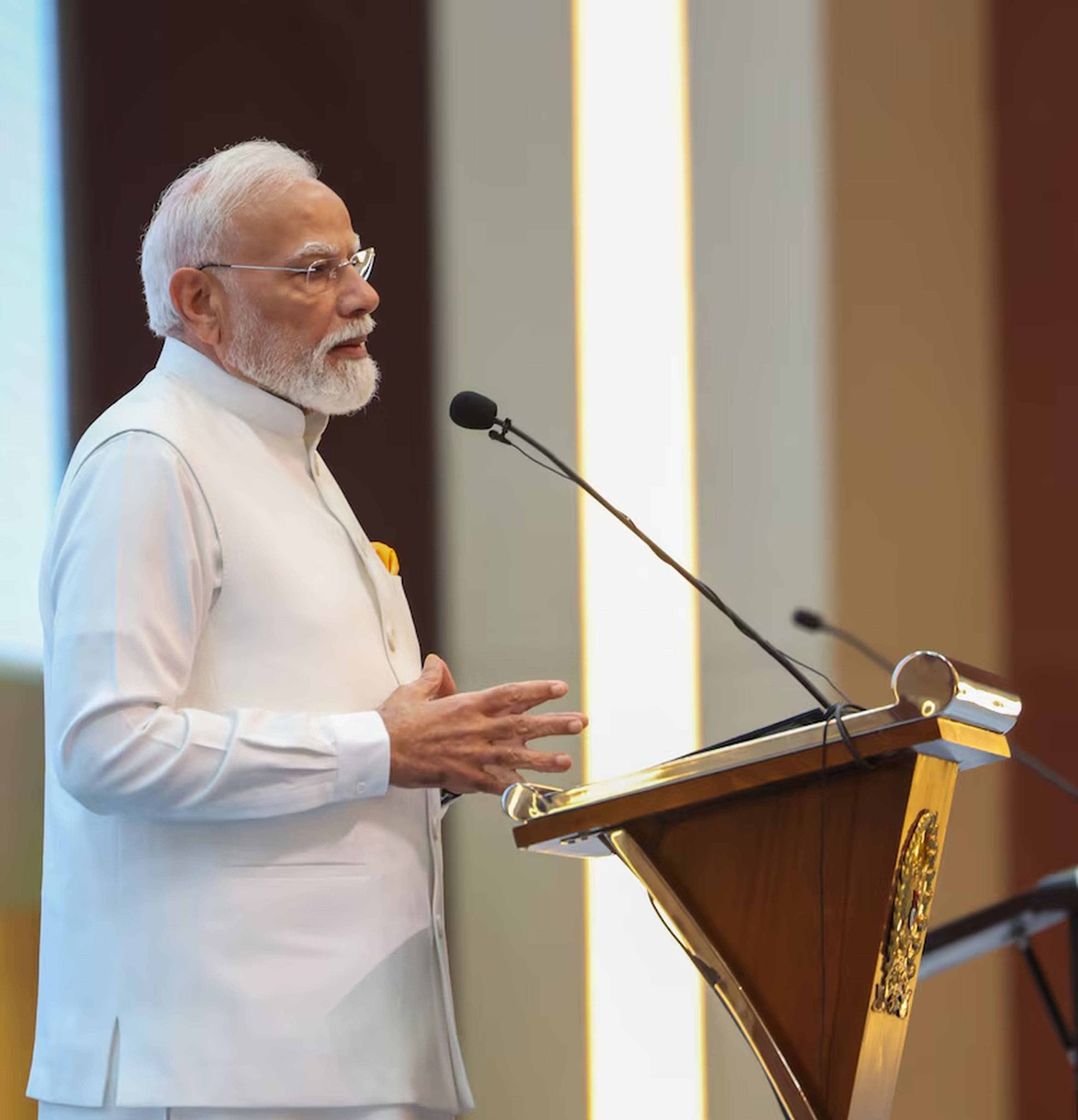
Friends,
Together, India and Indonesia represent one-fifth of humanity. Our partnership is not merely a relationship between two nations-it is a commitment to the stability of the Indo-Pacific, the strength of the Global South, and a shared belief in the future of the world. Let us take our historic friendship into a new era. Let us work together to realize the Ganga-Mahakam Vision.
Honourable Members,
In India, the great poet-saint Tulsidas wrote:
जानें बिनु न होइ परतीती।
जानें बिनु न होइ परतीती।
बिनु परतीति होइ नहिं प्रीती॥
It means that unless people truly know one another, they cannot develop trust; and without trust, there can be no affection.
I am told that Indonesia has a saying that conveys the very same wisdom:
"ताक केनाल माका ताक सायांग"
—One cannot truly care for someone without first getting to know them.
That is why,
We have decided to further intensify our people-to-people engagement. This evening, President Prabowo and I will meet with the Indian community living here in Indonesia. Tomorrow, President Prabowo and I will also visit Prambanan, where we will launch the conservation and restoration project for this UNESCO World Heritage Site. India and Indonesia are fully committed to preserving and protecting the priceless heritage that history has entrusted to us.
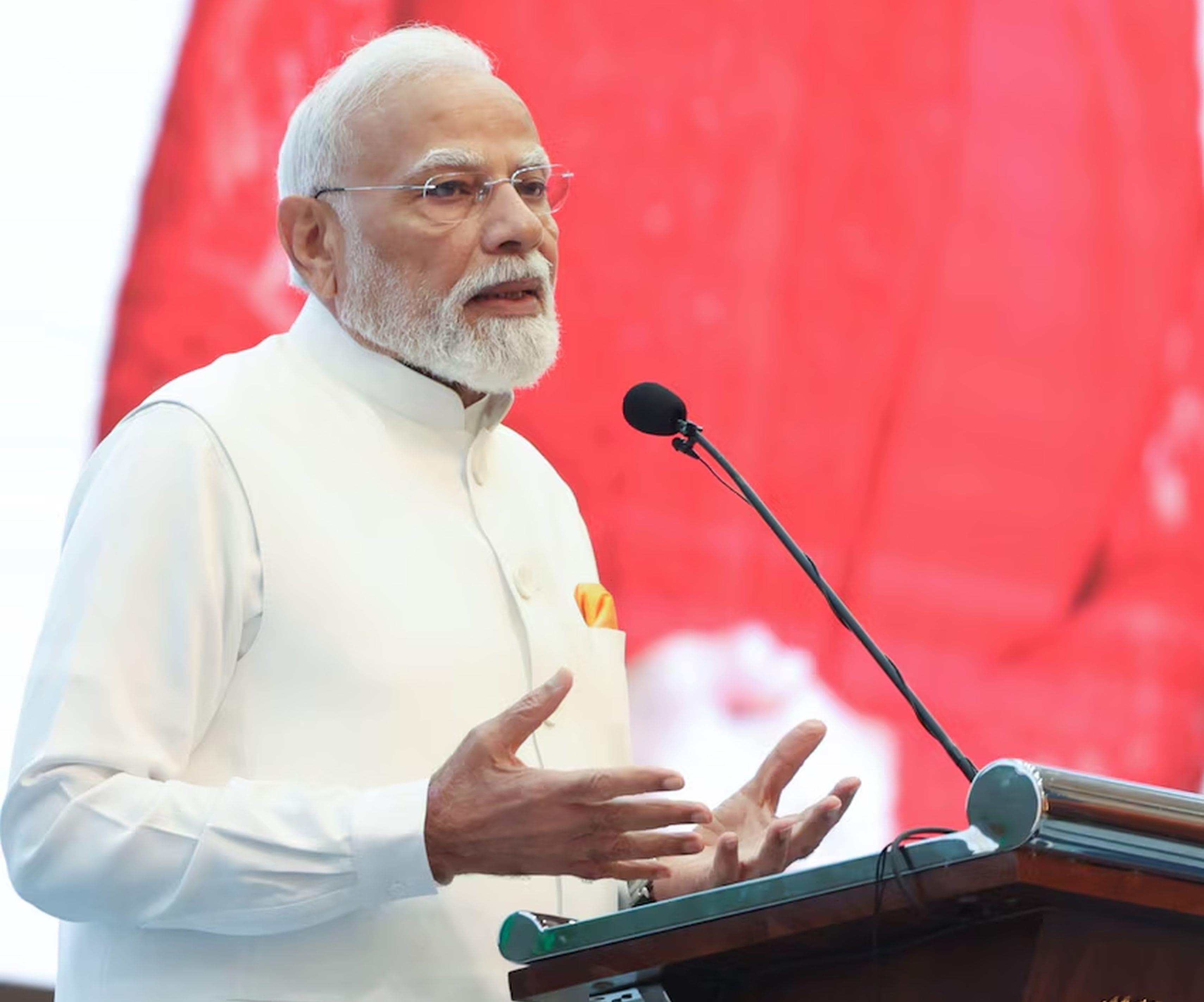
Honourable Members,
Today, I also extend a special invitation to all the Honourable Members of this House to visit India. I warmly invite you to come with your families and friends. The people of India will be delighted to welcome you with open hearts.
I am confident that we will remain Mitra Selamanya - Partners Forever. Together, we will build a future of shared prosperity for the people of India and Indonesia. With these words, I conclude my remarks.
Long Live Indonesia!
Bharat Mata ki Jai!
Thank you.