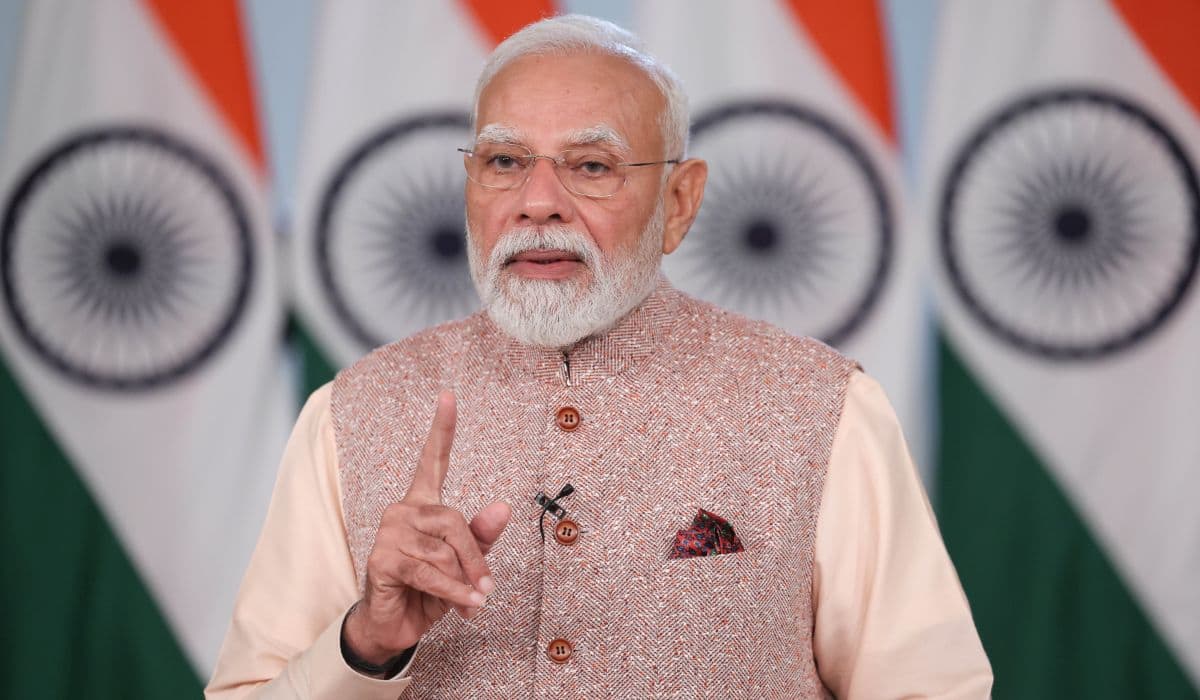
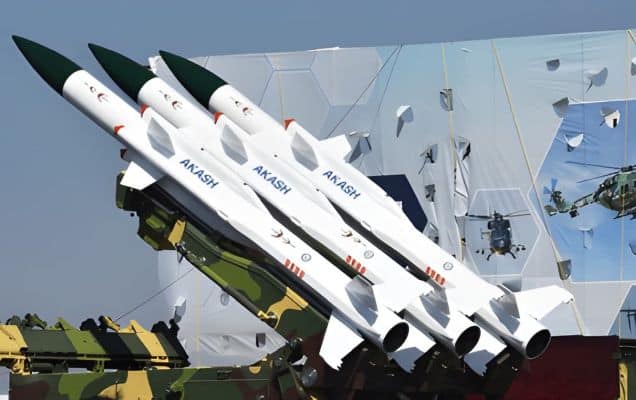
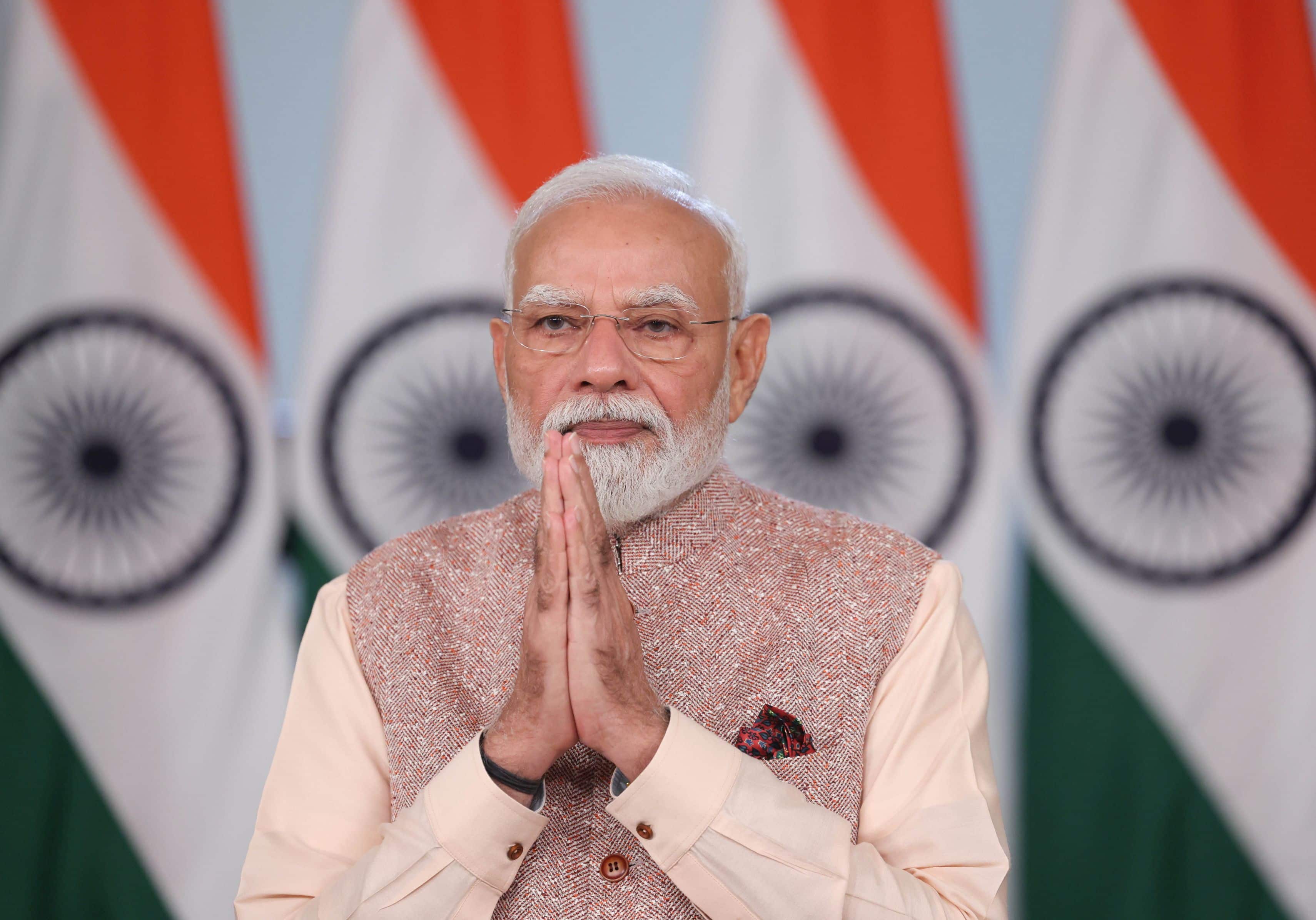
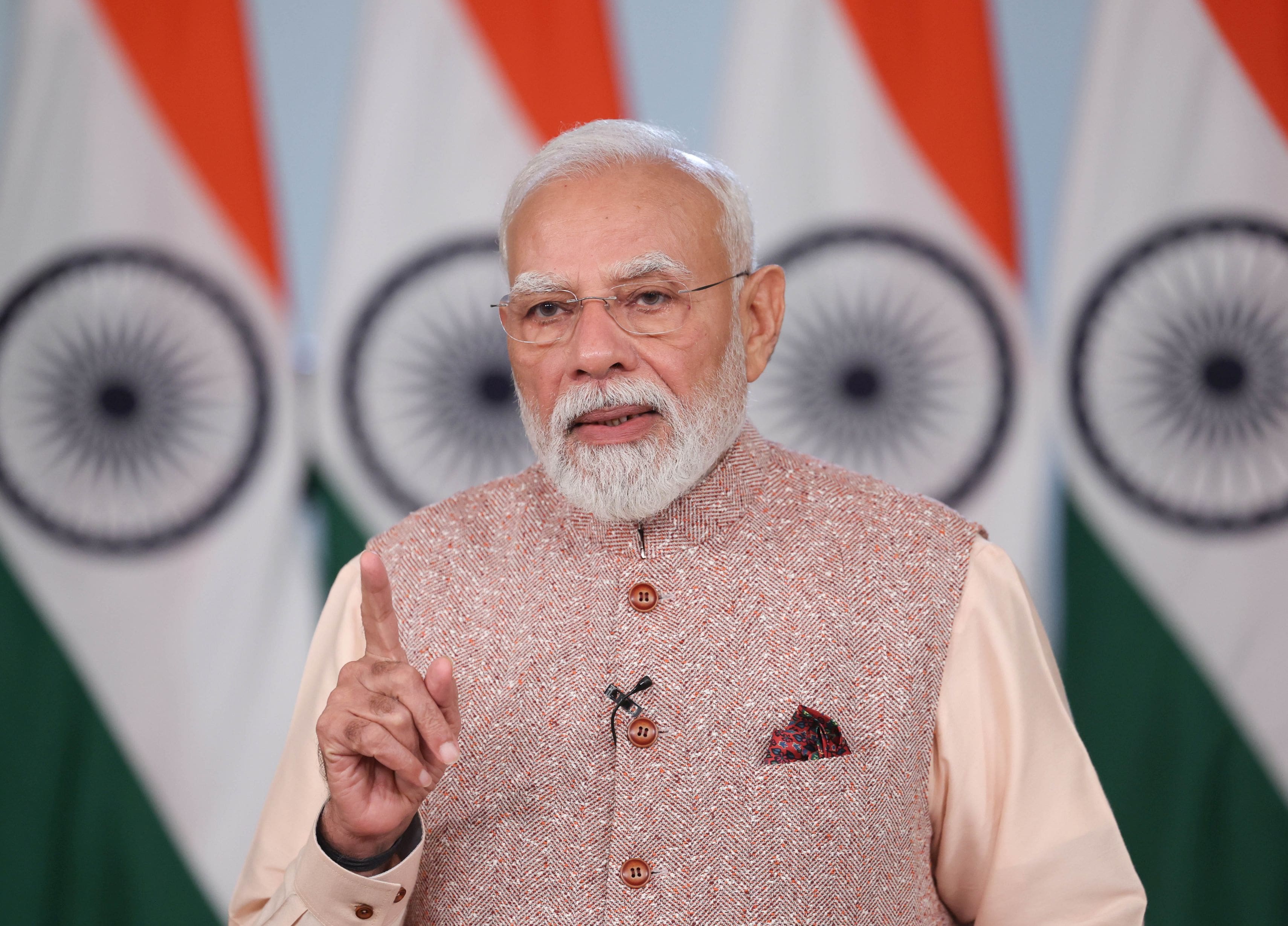
The Prime Minister, Shri Narendra Modi dedicated to the nation three PARAM Rudra Supercomputers worth around Rs 130 crore via video conferencing today. Developed indigenously under the National Supercomputing Mission (NSM), these supercomputers have been deployed in Pune, Delhi and Kolkata to facilitate pioneering scientific research. The Prime Minister also inaugurated a High-Performance Computing (HPC) system tailored for weather and climate research.
Addressing the occasion, the Prime Minister said that today marks a huge achievement in the field of science and technology for India and is a reflection of the nation’s progress by prioritizing research and development. “Today’s India is carving new opportunities in the endless horizon of possibilities”, the Prime Minister remarked. The Prime Minister mentioned the development of three PARAM Rudra Supercomputers by India’s scientists and their installation in Delhi, Pune and Kolkata, and also spoke about the inauguration of ‘Arka’ and ‘Arunika’, a High-Performance Computing (HPC) system tailored for weather and climate research. The Prime Minister conveyed his best wishes to the entire scientific community, engineers and all citizens.
The Prime Minister dedicated the three PARAM Rudra Supercomputers to the youth of the nation as he recalled granting 25 extra days apart from the 100 days towards youth at the onset of the third term. He underlined that these supercomputers will play a crucial role towards making such state-of-the-art technology available to young scientists in the country and highlighted its usage in aiding advanced research in the fields of physics, earth sciences and cosmology. Such sectors, the Prime Minister said, envision the future of science and technology.

“In the era of digital revolution, computing capacity is becoming synonymous with national capability”, the Prime Minister said, noting the direct dependence on science and technology and computing capabilities for opportunities in research, economic growth, the collective capability of the nation, disaster management, ease of living, ease of doing business etc. He said that such industries become the basis of India’s development in Industry 4.0. He stressed that India’s share should not be limited to bits and bytes but expand to terabytes and petabytes. Therefore, the Prime Minister said today’s occasion is proof that India is moving forward in the right direction.
The Prime Minister emphasized that the India of today cannot remain satisfied by merely matching the capabilities of the rest of the world but considers its responsibility to serve humanity through scientific research. “India’s mantra is Atmanirbharta (self-reliance) through research, Science for Self-Reliance”, the Prime Minister remarked as he highlighted historic campaigns like Digital India, Startup India and Make In India. He also mentioned the creation of more than 10,000 Atal Tinkering Labs in schools to strengthen the scientific temper among India's future generations, an increase in scholarships for education in STEM subjects and a research fund of Rs 1 lakh crore in this year's budget. He underscored the aim to make India empower the 21st century world with its innovations.
Emphasizing the strides made by India across various sectors, focusing specifically on the space and semiconductor industries, the Prime Minister said that there is no sector today where India is not making bold decisions or introducing new policies. “India has become a significant power in the space sector”, the Prime Minister said, noting that India’s scientists achieved the same feat with limited resources where other nations spent billions of dollars on their success. Shri Modi proudly highlighted India’s recent achievement of becoming the first country to land near the moon’s South Pole. This achievement, he said, is a testament to the nation’s perseverance and innovation in space exploration. Shri Modi further elaborated on India’s future goals in space, stating, “India’s Gaganyaan Mission is not just about reaching space; it is about reaching the limitless heights of our scientific dreams.” He also mentioned the government's recent approval for the first phase of establishing an Indian space station by 2035, which will elevate India’s presence in space exploration.

The Prime Minister stressed the importance of semiconductors in today’s world and said, “Semiconductors have become an essential element of development.” He mentioned the launch of ‘India Semiconductor Mission’ to strengthen this sector and highlighted the positive results witnessed within the short period. He emphasized that India is building its semiconductor ecosystem, which will play a vital role in the global supply chain. The Prime Minister also mentioned the introduction of three new “Param Rudra” supercomputers, which will further support India’s multidimensional scientific development.
Prime Minister Modi emphasized India's scientific and technological progress, stating that India's journey from supercomputers to quantum computing is a result of the nation’s grand vision. He pointed out that supercomputers were the domain of only a few nations earlier, but India is now matching the capabilities of global supercomputer leaders with the launch of the National Supercomputing Mission in 2015. He said the country is taking the lead in quantum computing where the National Quantum Mission is playing a crucial role in advancing India’s position in this cutting-edge technology. He underlined that this emerging technology is expected to transform the world, bringing unprecedented changes to the IT sector, manufacturing, MSMEs, and startups, creating new opportunities and positioning India to lead globally.

The Prime Minister highlighted that the true purpose of science is not just in innovation and development but in fulfilling the aspirations of the common man. Giving examples of digital economy and UPI, Shri Modi explained that while India is advancing in high-tech areas, it is ensuring that this technology continues to empower the poor. He also spoke about the recently launched ‘Mission Mausam’ aimed at making the country weather-ready and climate-smart. He noted that India’s capacity for weather forecasting will increase allowing for hyper-local and more accurate predictions with the advent of High-Performance Computing (HPC) Systems and supercomputers. The Prime Minister further explained that weather and soil analysis by supercomputers in remote villages is not merely a scientific achievement but a transformative change for thousands of lives. “Supercomputers will ensure that even the smallest farmer has access to the world’s best knowledge, helping them make informed decisions about their crops. Fishermen venturing into the sea will also benefit as these technologies will reduce risks and offer insights into insurance schemes”, he added. PM Modi underlined that India will now be capable of creating models related to AI and machine learning, thereby benefiting all stakeholders.
The Prime Minister emphasized that India’s ability to build supercomputers is a matter of national pride and that the benefits will trickle down to the everyday lives of common citizens, creating significant changes in the future. In this era of AI and machine learning, the Prime Minister said, supercomputers will play a pivotal role. He compared this to India’s success with 5G technology and the manufacturing of mobile phones which has fueled a digital revolution in the country and made technology accessible to every citizen. The Prime Minister emphasized that India’s Make In India initiative will prepare the common citizens for future technological advancements where Supercomputers will drive new research and open up new possibilities to ensure India’s competitiveness on a global level. He assured that these technologies will bring tangible benefits to the lives of ordinary people, allowing them to keep pace with the rest of the world.
Concluding the address, the Prime Minister congratulated the citizens and the nation on these achievements and also encouraged young researchers to make the most out of these advanced facilities opening up new domains in the field of science.
Union Minister for Electronics & Information Technology, Shri Ashwini Vasihnaw was virtually present on the occasion.

Background
In line with his commitment to make India self-reliant in the field of Supercomputing technology, the Prime Minister dedicated to the nation three PARAM Rudra Supercomputers worth around Rs 130 crore, developed indigenously under the National Supercomputing Mission (NSM). These supercomputers have been deployed in Pune, Delhi and Kolkata to facilitate pioneering scientific research. Giant Metre Radio Telescope (GMRT) in Pune will leverage the supercomputer to explore Fast Radio Bursts (FRBs) and other astronomical phenomena. Inter-University Accelerator Centre (IUAC) in Delhi will enhance research in fields like material science and atomic physics. S.N. Bose Centre in Kolkata will drive advanced research in areas such as physics, cosmology, and earth sciences.
The Prime Minister also inaugurated a High-Performance Computing (HPC) system tailored for weather and climate research. This project represents an investment of Rs. 850 crore, marking a significant leap in India's computational capabilities for meteorological applications. Located at two key sites, the Indian Institute of Tropical Meteorology (IITM) in Pune and the National Center for Medium Range Weather Forecast (NCMRWF) in Noida, this HPC system has extraordinary computing power. The new HPC systems are named 'Arka' and 'Arunika,' reflecting their connection to the Sun. These high-resolution models will significantly enhance the accuracy and lead time of predictions related to tropical cyclones, heavy precipitation, thunderstorms, hailstorms, heat waves, droughts, and other critical weather phenomena.
Click here to read full text speech
आज जिन तीन Supercomputers का लोकार्पण हुआ है... Physics से लेकर Earth Science और Cosmology तक ये Advanced Research में मदद करेंगे: PM @narendramodi pic.twitter.com/N7Em7oSRhj
— PMO India (@PMOIndia) September 26, 2024
आज digital revolution के इस दौर में computing capacity, national capability का पर्याय बनती जा रही है: PM @narendramodi pic.twitter.com/mdqpvh6D8f
— PMO India (@PMOIndia) September 26, 2024
अनुसंधान से आत्मनिर्भरता, Science for Self-Reliance... pic.twitter.com/OwWvnxMZYe
— PMO India (@PMOIndia) September 26, 2024
विज्ञान की सार्थकता केवल आविष्कार और विकास में नहीं, बल्कि सबसे अंतिम व्यक्ति की आशा आकांक्षाओं को...उसकी Aspirations को पूरा करने में है: PM @narendramodi pic.twitter.com/y5ZGCi1gSP
— PMO India (@PMOIndia) September 26, 2024