PM chairs fourth National Conference of Chief Secretaries in Delhi

Published By : Admin | December 15, 2024 | 22:15 IST
Pro-people Pro-active Good Governance (P2G2) is at the core of our work, through which we can achieve the vision of Viksit Bharat: PM
PM urges States to simplify the compliances which often lead to harassment of citizens
PM directs States to explore concepts of Viability Gap Funding for recycling of E-waste
PM urges States to identify locations suitable for entrepreneurs in smaller cities and take initiative to facilitate them
PM GatiShakti has been a key enabler for good governance; must be regularly updated and indicators for environmental impacts, disaster prone areas must also be included in it: PM
PM underscore the importance of the old manuscripts and using technology to digitize them
Focus on Reform, Perform, Transform and Inform: PM

Prime Minister Shri Narendra Modi addressed the 4th National Conference of Chief Secretaries in Delhi earlier today. The three day Conference was held in Delhi from 13 to 15 December, 2024.

Prime Minister observed that the greater benefit of this Conference was that Team India had come together for discussion with an open mind and work together for a Viksit Bharat.

Prime Minister observed that Pro-People Pro-active Good Governance (P2G2) is at the core of our work through which we can achieve the vision of Viksit Bharat.

The Conference included discussions around the overarching theme of ‘Promoting Entrepreneurship, Employment and Skilling – Leveraging the Demographic Dividend’.

Prime Minister appreciated the advent of Start-ups especially in Tier 2/3 cities. He asked States to encourage such innovations and work towards providing an environment where start-ups can flourish. He urged States to identify locations suitable for entrepreneurs in smaller cities and take initiative to connect them with the banking system, provide logistics and facilitate them.

Prime Minister also asked the States to simplify the compliances which often lead to harassment of citizens. He urged the participants that States should reform the governance model in such as way as to encourage citizen participation or Jan Bhagidari. The Prime Minister also said that it is important to focus on reform, perform, and transform, and it is also important to inform the people about the various initiatives of the government.

Talking about Circular Economy, PM appreciated that the GOBARdhan programme is now being seen as a big energy resource. He observed that this initiative converts waste into wealth while also making the aged cattle an asset rather than a liability.

PM directed the States to explore concepts of Viability Gap Funding for recycling of E-waste. This is particularly important as with increasing data and technology driven society, digital waste will further increase. Converting this e-waste into a useful resource will lessen our dependence on import of such material.

In the health sector, PM urged that under the Fit India Movement obesity should be taken as a big challenge in Bharat. He said that only a fit and healthy India can be a Viksit Bharat. He also opined that Bharat can be made TB-mukt by end of 2025. He added that the ASHA and Anganwadi workers can play a big role in delivering this goal.

PM observed that the old manuscripts were Bharat’s treasure and technology should be used to digitize it. States should take steps towards it. While appreciating that PM GatiShakti has been a key enabler for good governance, he also said that PM GatiShakti must be regularly updated and indicators for environmental impacts, disaster prone areas must also be included in it.

Talking about Aspirational Districts and Blocks Programme, PM said that competent officers posted in these blocks and districts can bring about massive changes at the ground level. It would also lead to immense socio-economic benefits.

Talking about development of cities, PM strongly encouraged for human resources development in order to develop cities as centres of economic growth. He emphasized on developing institutions for specialization in urban governance, water and environment management. With increasing urban mobility, he also stressed on providing adequate urban accommodation which would in turn lead to better productivity in the manufacturing sector in new industrial hubs.

Prime Minister also paid salutations to Sardar Vallabhbhai Patel describing him as an inspiration for all civil servants. Citing that today is his death anniversary and this year is also his 150th birth anniversary, PM Modi said that next two years should be celebrated and we should work towards achieving his dream of India.

To make every Indian an active participant in achieving the goal of Viksit Bharat, he urged them to follow the example of the freedom movement. As men, women and children from all walks of life participated in the freedom struggle despite their different circumstances, ideological differences and different means, similarly every Indian must work towards making Viksit Bharat by 2047. Citing that India became independent 25 years after Dandi March which was a massive revolution in those times, Prime Minister said that similarly if we decide that we shall become Viksit Bharat by 2047, we too will become Viksit for sure.

The three day Conference emphasised on special themes which included Manufacturing, Services, Rural Non-farm, Urban, Renewable Energy, and Circular Economy.

Discussion during the Conference

The sessions deliberated to work around subjects which would help in collaborative action in promoting entrepreneurship, enhancing skilling initiatives, and creating sustainable employment opportunities for both rural and urban populations thereby helping in the transition of India from middle income to high income country. These initiatives can emerge as the driving wheels for the economy with women-led development as the foundation.

During the conference, it was discussed that a multifaceted approach is required to harness the potential of India's service sector especially in smaller cities. This involves a combination of policy interventions, infrastructure development, skill enhancement, and a focus on creating a business-friendly environment. Emphasis on skilling and formalization of the informal sector was also discussed. Similarly in the rural non-farm sector, it was discussed that rural entrepreneurship should be promoted through specific skilling courses. It was also felt that women and marginalized groups’ participation in non-farm employment should also be encouraged through special incentives.

The Conference also deliberated on PRAGATI platform which has ultimate goal to drive systemic change and to accelerate completion of infrastructure project through rigorous reviews.

The Conference had a Special Session on Frontier Technologies which represents convergence of various fields and can help in providing solutions to global challenges. It also could provide India an opportunity to lead in this arena and have a trajectory of inclusive and sustainable growth. In another special session on Karmayogi, it was observed that it can help States in democratization of learning, citizen-centric programmes thereby strengthening the capacity building ecosystem.

The Conference was attended by Chief Secretaries, senior officials of all States/Union Territories, domain experts and senior officers in the centre.

Explore More
Today, the entire country and entire world is filled with the spirit of Bhagwan Shri Ram: PM Modi at Dhwajarohan Utsav in Ayodhya

Popular Speeches

Today, the entire country and entire world is filled with the spirit of Bhagwan Shri Ram: PM Modi at Dhwajarohan Utsav in Ayodhya
India’s higher education enrolment hits 4.5 crore; women, marginalised groups lead way: AISHE report

Media Coverage

India’s higher education enrolment hits 4.5 crore; women, marginalised groups lead way: AISHE report
NM on the go

Nm on the go

Always be the first to hear from the PM. Get the App Now!
...
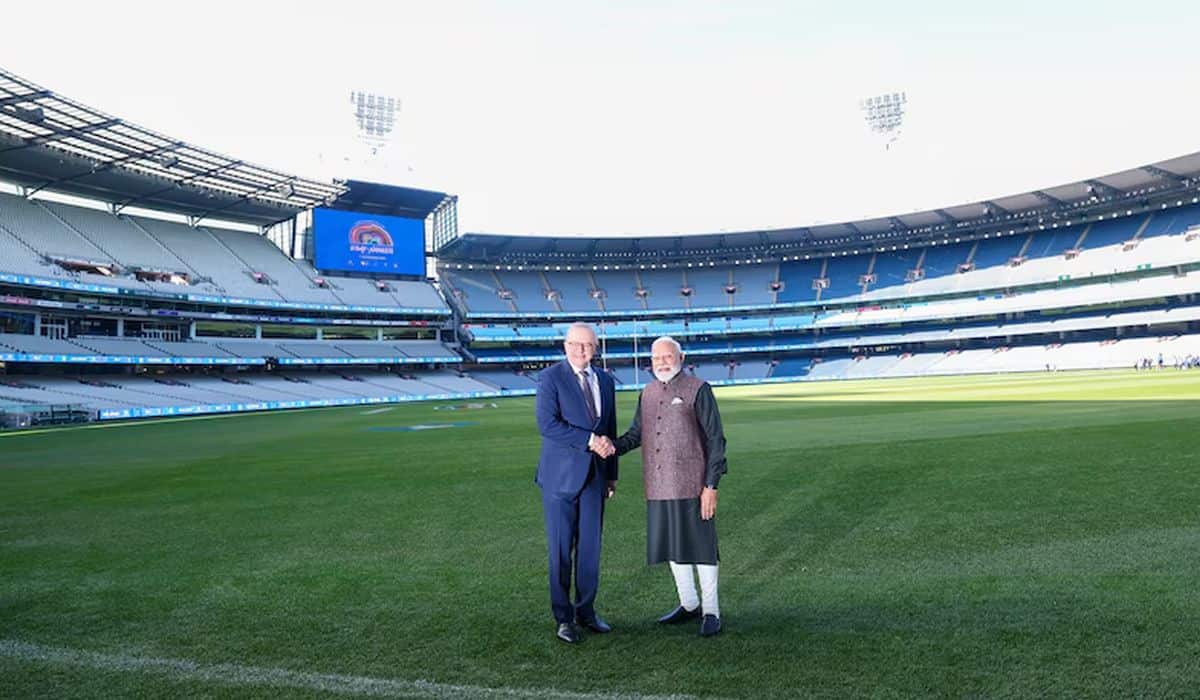
India-Australia Roadmap for Sports Collaboration
July 10, 2026

Sports is a powerful bridge between India and Australia, bringing communities together and opening new pathways for collaboration.

Building on the 2023 MoU on Cooperation in Sports, the India-Australia Roadmap for Sports Collaboration sets out practical, future-focused priorities and opportunities to strengthen this cornerstone of our bilateral relationship.

Recognising the decade of opportunity ahead — including the 2030 Commonwealth Games in Ahmedabad, the Brisbane 2032 Olympic and Paralympic Games, and India’s ambition to host a future Olympic and Paralympic Games — this Roadmap identifies targeted areas of cooperation aligned to shared priorities, capabilities and resources.

Respecting differences in the governance of sport and the development of sport ecosystems in Australia and India, and recognising the leadership role of sporting bodies, businesses, state–level governments, universities and community groups in promoting elite and community sports, we are committed to facilitating engagement and supporting collaborative ways of working between relevant institutions, to encourage stronger sports partnerships at all levels that benefits both countries.

Implementation will be pragmatic and outcomes-focused, with activities prioritised in line with available resources and major event timelines.

Cooperation will be delivered through established partnerships, supported by flexible, demand-led arrangements, whereby responsibility for resourcing activities will be negotiated on a case-by-case basis. This approach ensures practical, sustainable and mutually beneficial outcomes.

In this context, the following have been identified as focus areas for collaboration under this Roadmap:

A. Capacity Building:

o Collaborate for sharing best practice in establishing and operating High-Performance Sports Centres in India in priority sports.

o Identify Para sport as a key priority and opportunity for collaboration, including Australian expertise in Para classification, coaching and performance support, with potential links between Indian and Australian universities where appropriate.

o Drawing on Australia’s coach development models, facilitate two-way exchanges that bring Indian coach and coach educators to Australia and Australian coaches and coach educators to India, using a Train the Trainer approach where appropriate.

o A physical education exchange programme between India and Australia may be introduced to facilitate mutual learning, sharing of best practices, and collaboration in areas such as school sports, sports science, and community participation in physical education.

o Recognising the physical and mental health benefits of yoga and the World Yogasana, the federation for yogasana sports based in India, identify opportunities to share knowledge, foster collaboration and encourage participation in yoga in Australia.

o Work with the Australian Sports Commission to build the capability of select Indian coaches as part of the India Australia High Performance Coach Development program.

o Explore opportunities through relevant non-government stakeholders such as sporting organisations and universities to support talented young Indian sportspersons as part of high-performance programs in Australia through student scholarships funded by Government of India.

B. Collaborative Sports Science and Technology Research:

o Encourage joint research and development projects between universities in India and Australia on athlete performance analytics, injury prevention, sports nutrition, wearable performance technology, recovery techniques and Para sport.

o Encourage partnerships between Indian and Australian universities to co-develop sports curriculums.

o Sport Integrity Australia and National Anti-Doping Agency India contribute to international anti-doping efforts by supporting World Anti-Doping Agency (WADA)-led capacity building programs through engagement with the WADA Asia/Oceania Office, and through representation on the UNESCO International Convention against Doping in Sport (Convention) Groups.

C. Major Sporting Events:

o Collaborate with Australian States and Territories, and National Sporting Organisations to exchange best practices for hosting large events.

o Explore opportunities to host exhibition matches and youth events in both countries to promote sports of mutual interest (such as Kabaddi and Kho Kho in Australia, and Australian Football League and basketball in India).

o Leverage the build-up to major sporting events such as Olympic, Paralympic and Commonwealth Games to establish formal, reciprocal arrangements between Indian and Australian sporting bodies for shared facilities, competitions and support networks during and in the build-up to major sporting events.

o Welcoming the inaugural Big Bash League match to be played in India in Chennai in December 2026, encourage Cricket Australia and the Board of Control for Cricket in India to work towards a commitment to host annual BBL matches in India.

D. Sports Industry and Investment Platform:

o Build on the Australia-funded Sports Industry Summit in Mumbai in December 2026 to promote collaboration between Indian and Australian companies on sports equipment manufacturing, sports media and broadcasting, event management, and sports start-ups.

o Facilitate Australian sports sector businesses in the Indian sports market through information sessions and vice-versa.

o Expand India’s export of high quality, competitively priced sports goods to Australia.

o Expand the export of Australian expertise in high performance sports, including coaching, coach development, strength and conditioning, athlete wellbeing, nutrition and psychology.

E. Women in Sports Partnership:

o Launch joint initiatives promoting women’s leadership, health, high performance and participation in sport, including bilateral tournaments for women athletes, drawing on the Australian Sports Commission’s flagship programs, recognising that sport is a powerful pathway for women’s economic empowerment, leadership, health and social inclusion.