A few days ago, we lost one of our senior-most leaders, Shri Vijay Kumar Malhotra Ji. He lived a long and accomplished life, but more importantly, he led a life of relentless hard work, determination and service. A glimpse of his life will make everyone understand the core ethos of the RSS, the Jana Sangh, and the BJP…courage in the face of adversity, service above self and a deep-rooted commitment to national and cultural values.
The family of VK Malhotra Ji suffered the horrors of partition. The trauma and displacement did not make him bitter or inward-looking. Instead, he immersed himself in serving others. He found his calling in the ideology of the RSS and the Jana Sangh. Those were indeed very challenging times. Malhotra Ji dedicated himself to social work, helping thousands of displaced families, who had lost everything, rebuild their lives. This was also the guiding spirit of the Jana Sangh. His fellow Karyakartas in those days included Madanlal Khurana Ji and Kidar Nath Sahni Ji. People like them and countless others were at the forefront of selfless service, which resonated with the people of Delhi.

It is well known that the Lok Sabha and various state assembly elections of 1967 were a shocker for the all-powerful Congress. A lesser-known election which took place was the first-ever Delhi Metropolitan Council election. In the national capital, the Jana Sangh secured a resounding victory. Shri LK Advani Ji became the Chairman of the Council and Malhotra Ji was given the responsibility of being the Chief Executive Councillor, which is roughly equivalent to being Chief Minister. He was only 36 then. He used his tenure to address the needs of Delhi, especially on infrastructure and civic issues.
This responsibility also deepened Malhotra Ji’s bond with Delhi. Whenever there was an issue of public importance, Malhotra Ji was not a bystander but an active participant speaking the voice of the public. He took part in the cow protection movement in the late 1960s, where he also became a victim of police excesses. He was at the forefront of the anti-Emergency movement. When Sikhs were being brutally butchered on the streets of Delhi, he was a voice of calm and peace and stood strongly with the Sikh community. He believed that politics, in addition to electoral success, was about principles and protecting people as well as values when it mattered most.
From the late 1960s onwards, VK Malhotra Ji remained a permanent figure in public life. Few leaders can claim to have such a long, unbroken span of public engagement. He was a tireless Karyakarta, an excellent organiser and an institution builder. He had the wonderful ability to traverse the worlds of electoral politics and organisational politics with equal ease, providing stable leadership to the Jana Sangh and the BJP’s Delhi unit.

Be it civic administration, state legislature or the Parliament, Malhotra Ji had seen it all. His 1999 Lok Sabha electoral victory against Dr. Manmohan Singh is still remembered by supporters and opponents. It was a high-profile election, where he was pitted against an important Congress leader. The full might of the Congress ecosystem descended upon his South Delhi constituency, but Malhotra Ji never reduced the level of discourse. He ran a positive campaign, ignoring vile attacks and won with over 50% of the vote! This victory was achieved due to Malhotra Ji’s strong connect on the ground. He was skilled at nurturing close relationships with Karyakartas and understanding the aspirations of the voters.
When Malhotra Ji spoke in Parliament, it was always well-researched and well-presented. His tenure as Deputy Leader of the Opposition during UPA-1 offers valuable lessons to students of politics and Parliamentary democracy. He effectively opposed the ineffective UPA Government, especially on its dismal track record of corruption and terrorism. During those days, I was serving as the Chief Minister of Gujarat and would often interact with Malhotra Ji, who was always curious to know about Gujarat’s development strides.
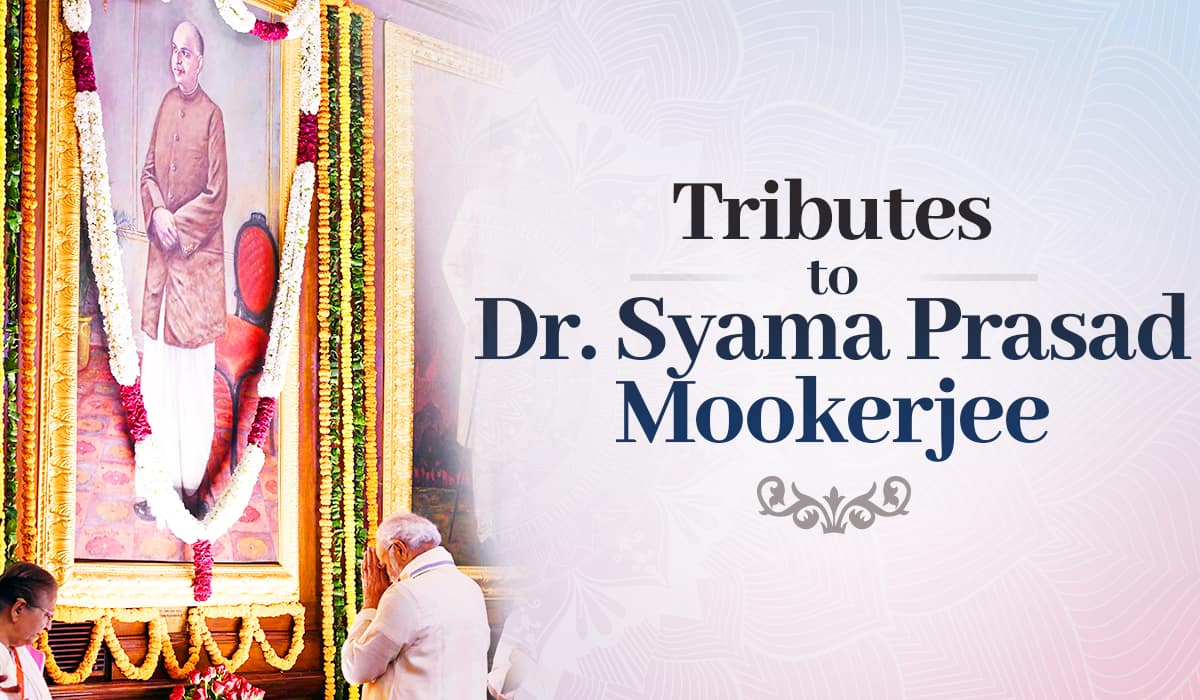
Politics was one facet of VK Malhotra Ji’s persona. He was an excellent academician. I learnt from his family about how he secured double promotions during his school years. He completed matriculation and graduation ahead of schedule. His Hindi proficiency meant that the task of translating Dr. Syama Prasad Mookerjee’s speeches to Hindi often came to him.
One of Malhotra Ji’s greatest traits was his role as an institution builder. He was among the top leaders who founded and nurtured several institutions related to the RSS. Through his efforts, many cultural, educational and social organisations found growth and mentorship. These institutions became nurseries of talent and service, carrying forward the vision of a self-reliant, value-driven society.
Beyond politics and academia, Malhotra Ji made an indelible mark in the world of sports. Archery was his great passion and he served as the President of the Archery Association of India for several decades. Under his leadership, Indian archery gained global recognition and he tirelessly worked to provide athletes with platforms and opportunities. His role in sports administration reflected the same traits he displayed in public life: dedication, organisational ability and the pursuit of excellence.
Shri VK Malhotra Ji’s impact is not just in the positions he held, but in the ethos, he carried forward… of putting service before self, of staying rooted in values and of embracing challenges with courage and perseverance. He was the ideal Party man, never speaking anything that could embarrass our Karyakartas or ideology.
A few days ago, I was at the programme to inaugurate the new Headquarters of the Delhi BJP, where I fondly recalled Shri VK Malhotra Ji. He was thrilled when the BJP formed the Government in Delhi earlier this year after over three decades and had immense expectations, which we are committed to fulfilling for our beloved national capital. May his life and accomplishments continue to remain a role model for generations of public servants in the times to come.