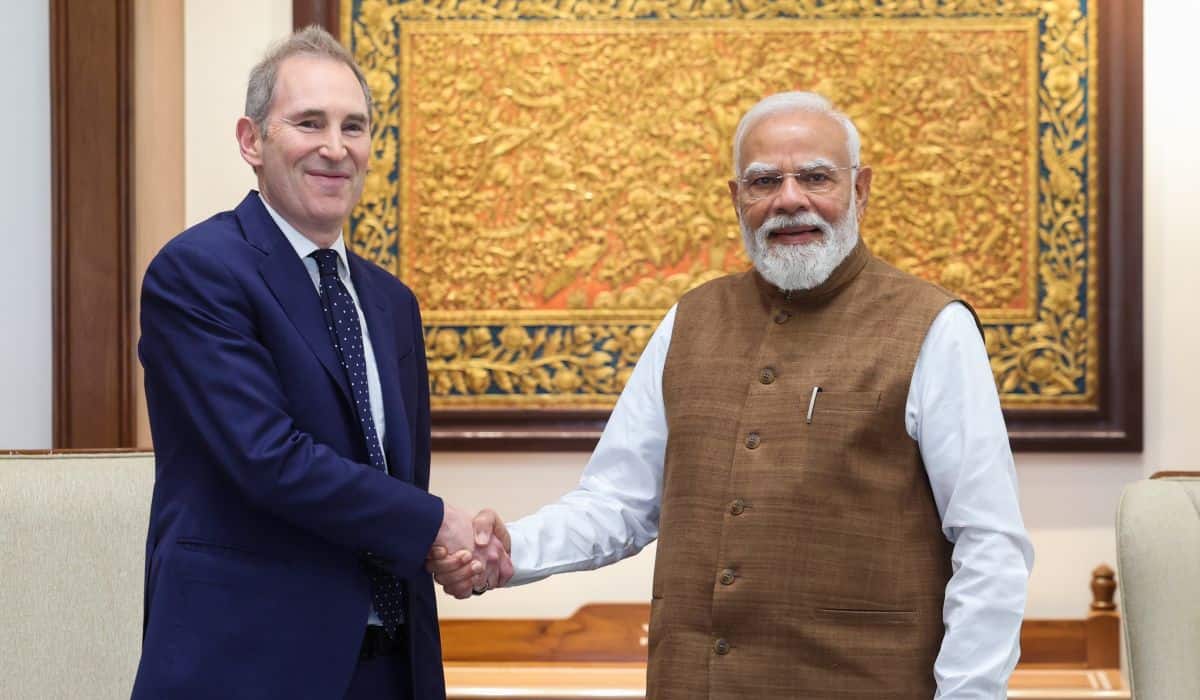
The Prime Minister, Shri Narendra Modi delivered the following inaugural address at PETROTECH 2019 in Noida.
Namaste.
At the outset, I apologise for the delay due to logistical reasons.
I am delighted to welcome you all to PETROTECH-2019, the thirteenth edition of India’s flagship hydrocarbon Conference.
I would also like to congratulate His Excellency Dr. Sultan Al Jaber for his contribution to the energy sector and vision for the future.
Over the last quarter century, PETROTECH has served as a platform to discuss solutions to challenges that we face in the energy sector.
In each of our respective countries, we seek to deliver affordable, efficient, clean and assured energy supplies to our citizens.
The presence of over sixty countries and seven thousand delegates here, is a reflection of that common quest.
Several decades of public life have convinced me that energy is a key driver of socio-economic growth. Suitably priced, stable and sustainable energy supply, is essential for rapid growth of the economy. It also helps the poor and deprived sections of society, to partake of economic benefits.
At the macro level, the energy sector is a pivot and key enabler of growth.

Friends.
As we gather here to discuss the present and future of global energy, winds of change are evident in the global energy arena.
Energy supply, energy sources and energy consumption patterns are changing. Perhaps, this could be a historic transition.
There is a shift in energy consumption from West to East.
The United States has become the world’s largest oil and gas producer after the shale revolution.
Solar energy and other renewable sources of energy have become more competitive. They are emerging as sustainable substitutes for traditional energy forms.
Natural Gas is fast becoming one of the largest fuels in the global energy mix.
There are signs of convergence, between cheaper renewable energy, technologies, and digital applications. This may expedite the achievement of many sustainable development goals.
Nations are coming together to tackle climate change. This is visible in global partnerships, such as the International Solar Alliance, promoted by India and France.
We are entering an era of greater energy availability.
But more than a billion people across the globe still do not have access to electricity. Many more do not have access to clean cooking fuel.
India has taken a lead in addressing these issues of energy access. In our success, I see hope for the world that problems of energy availability can be suitably addressed.
People must have universal access to clean, affordable, sustainable and equitable supply of energy.
India’s contribution in the onset of an era based on energy justice is significant.
Currently, India is the fastest growing large economy in the world. Leading agencies such as IMF and World Bank, project the same trend to continue in the coming years.
In an uncertain global economic environment, India has shown tremendous resilience as an anchor of the world economy.
India recently became the sixth largest economy in the world. According to a recent report, by 2030, India could be the second largest world economy.
We are also the third largest energy consumer in the world, with demand growing at more than five percent annually.
India remains an attractive market for energy companies with energy demand expected to more than double by 2040.
We have adopted an integrated approach towards energy planning. During the last PETROTECH Conference in December 2016, I mentioned four pillars for India’s energy future. These are energy access, energy efficiency, energy sustainability and energy security.

Friends.
Energy justice is also a key objective for me, and a top priority for India. Towards this end, we have developed and implemented many policies. The results of these efforts are now evident.
Electricity has reached all our rural areas.
This year we aim to achieve hundred per cent electrification of households in India, through a targeted programme called SAUBHAGYA.
As we raise production, we also aim to reduce losses in transmission and distribution. Under our UDAY scheme, we are working towards this objective.
India's World Bank Ease of Getting Electricity Ranking, improved from one hundred and eleven in 2014 to twenty-nine in 2018.
LED bulbs distributed across the country under the UJALA scheme, have resulted in an annual saving of seventeen thousand crore rupees, or nearly 2.5 billion dollars.
Access to clean cooking fuel provides major benefits, especially to women and children at risk of exposure to smoke pollution.
LPG connections have been given to over sixty four million or 6.4 crore households in just under three years under the Ujjwala Scheme. A ‘Blue Flame Revolution’ is underway. LPG coverage has reached more than ninety percent, from fifty-five percent five years ago.
Clean Transportation is getting a boost. We are jumping directly from BS four to BS six fuel by April 2020. This is the equivalent of EURO six standards.
Achievements such as hundred percent electrification, and increased LPG coverage, are possible only through people’s involvement. Energy justice can be done only when people believe in their collective power. Government is only an enabler in converting that belief into a reality.
The last five years have seen major reforms in India’s oil and gas sector. We have revamped our upstream policies and regulations. We have launched the Hydrocarbon Exploration and Licensing Policy to bring transparency and competitiveness in the sector.
The bidding criterion has been changed to revenue sharing. This has helped reduce government intervention. An Open Acreage Licensing Policy and a National Data Repository is helping to increase exploration interest in Indian fields.
Gas pricing reforms have also been introduced. The Enhanced Oil Recovery Policy aims to promote the use of latest technology in improving productivity of upstream fields.
Our downstream sector has been completely liberalized. Market driven petrol and diesel prices reflect changes in the international price of crude oil. India has the fourth largest refining capacity in the world. This will further grow by about 200 million metric tons by 2030.
A National Biofuel Policy was enacted last year. Research on second and third generation biofuels is being promoted. Twelve second generation bio-refineries are being set up in eleven states. The ethanol blending and biodiesel programme is reducing carbon emissions, and raising farmers’ incomes. Bio Aviation Turbine Fuel has already been tried out in our civil aviation sector.
Our government has encouraged private participation across the entire oil and gas value chain. India is becoming an attractive FDI destination. Companies like Saudi Aramco, ADNOC, TOTAL, Exxon-Mobil, BP and Shell are looking to increase their investments across the value chain.
India is making rapid strides towards a gas based economy. Over sixteen thousand kilometres of gas pipeline has been constructed and an additional eleven thousand kilometers is under construction.
Execution of three thousand, two hundred kilometers of gas pipeline in Eastern India has begun. This will connect North East India with the National Gas Grid.
The tenth bid round for City Gas Distribution will be complete in a month’s time. This will cover over four hundred districts. It will extend coverage of City Gas Distribution to seventy percent of our population.
We are gearing up for Industry 4.0. This will change the way industry operates, with new technology and processes. Our companies are adopting latest technologies to improve efficiency, increase safety and reduce costs. This is being done in downstream retail, as well as in upstream oil and gas production, asset maintenance and remote monitoring.
In recent years, we have deepened our international engagement with organizations such as the International Energy Agency, and OPEC. We chaired the International Energy Forum from 2016 to 2018. We have been able to convert our traditional buyer-seller engagements into strategic partnerships through bilateral investments. We have also promoted our ‘Neighbourhood First’ policy by strengthening energy engagement with Nepal, Bangladesh, Sri Lanka, Bhutan and Myanmar.
I have regularly engaged with global CEOs from the oil and gas sector. In my interactions with world leaders and CEOs, I have always maintained that Oil and Gas are not only a commodity of trade but also of necessity. Whether it is for the kitchen of a common man or for an aircraft, energy is essential.
For too long, the world has seen crude prices on a roller-coaster. We need to move to responsible pricing, which balances the interests of both the producer and consumer. We also need to move towards transparent and flexible markets for both oil and gas. Only then can we serve the energy needs of humanity in an optimal manner.
Another key issue that needs the world to come together is climate change. Together, we can achieve the targets we set for ourselves at COP-21 in Paris. India has made rapid strides in meeting its commitment. We are on our way to reaching the target.
PETROTECH provides the perfect setting to ponder over the future of the energy sector. It is a good platform to reflect on how global shifts, transitions, policies and new technologies will influence market stability and future investments in the sector.
I wish you all a successful and fruitful Conference.
Thank you.