The vision of “New India” can only be realised through combined effort & cooperation of all States and Chief Ministers, says PM Modi
Government, private sector and civil society, all need to work in sync: PM Modi
PM Modi urges states to speed up capital expenditure and infrastructure creation
Advancement of Budget would enable timely availability of funds at the beginning of the financial year: PM Modi
GST shows the strength and resolve of the federal structure: PM Narendra Modi
Consensus on GST will go down in history as a great illustration of cooperative federalism: PM Modi
GST reflects the spirit of “One nation, One aspiration, One determination”: PM Modi


The Prime Minister, Shri Narendra Modi today said that as a former Chief Minister, he is convinced that the vision of “New India” can only be realised through the combined effort and cooperation of all States and Chief Ministers. Delivering the opening remarks at the third meeting of the Governing Council of NITI Aayog, the Prime Minister said that “Team India” has once again assembled today to discuss and reflect on ways to prepare India for changing global trends. He said the meeting today would be an opportunity to exchange views on policies and implementation.

The Prime Minister said that it is the collective responsibility of this gathering to envision the India of 2022 – the 75th anniversary of independence – and see how we can swiftly move forward to achieve these goals.

Recalling the Father of the Nation, Mahatma Gandhi, on the occasion of the centenary of the Champaran Satyagraha, the Prime Minister said NITI Aayog has been taking steps to transform India, with fresh vigour. He said the Government, private sector and civil society, all need to work in sync. He noted that NITI was a collaborative federal body whose strength was is in its ideas, rather than in administrative or financial control. He pointed out that the Chief Ministers did not have to come to NITI for approval of budgets or plans. He said NITI Aayog had gone beyond relying on government inputs and taken on board a number of outside specialists, subject experts, and Young Professionals; and States can also contribute to policy formulation. He gave the example of e-NAM, where experiences of States played a key role in the final policy.

The Prime Minister noted that sub-groups of State Chief Ministers had given vital inputs on subjects such as Centrally Sponsored Schemes, Swachh Bharat, Skill Development and Digital payments. Stressing the importance given to the views of Chief Ministers, he noted that it was the first time Chief Ministers had been asked to recommend the list of Centrally sponsored schemes and the sharing pattern; despite funding constraints, the recommendations were accepted immediately.

The Prime Minister mentioned that while there has been a 40 percent increase in overall fund allocation to States between 2014-15 and 2016-17, the percentage of funds tied to central schemes has declined from 40 percent of the earlier total, to 25 percent of the enhanced total with a corresponding increase in the untied share.

The Prime Minister urged States to speed up capital expenditure and infrastructure creation.

Speaking of the historic change in budget presentation date, the Prime Minister said this would enable timely availability of funds at the beginning of the financial year. Earlier, budgeted scheme funds were generally not approved by Parliament till May, after which they would be communicated to states and ministries. By that time, the monsoon arrived. Hence the best working season for schemes was typically lost. He also mentioned the ending of the distinction between plan and non-plan expenditure, based on the recommendation of the Rangarajan Committee in 2011, which had found the distinction to be counter-productive. Several important items of expenditure were included as ‘non-plan’ and hence neglected. Hereafter the emphasis would be on distinguishing between development and welfare expenditure on one hand, and administrative overheads on the other.

The Prime Minister said that the Goods and Services Tax shows the strength and resolve of the federal structure. He gave credit to all Chief Ministers for coming on one platform for this cause, keeping aside ideological and political differences. Thanking the Chief Ministers, he said consensus on GST will go down in history as a great illustration of cooperative federalism. He said GST reflects the spirit of “One nation, One aspiration, One determination.”

The Prime Minister called for carrying forward the debate and discussion on simultaneous elections.

He said the NITI Aayog is working on a 15 year long term vision, 7 year medium term strategy, and 3 year action agenda. He said this effort needs support of States, and will eventually reflect in benefits to States.

Click here to read Presentations on NITI Aayog’s work

Click here to read closing remarks at 3rd Meeting of Governing Council of NITI Aayog

Explore More
ਸ੍ਰੀ ਰਾਮ ਜਨਮ-ਭੂਮੀ ਮੰਦਿਰ ਧਵਜਾਰੋਹਣ ਉਤਸਵ ਦੌਰਾਨ ਪ੍ਰਧਾਨ ਮੰਤਰੀ ਦੇ ਭਾਸ਼ਣ ਦਾ ਪੰਜਾਬੀ ਅਨੁਵਾਦ

Popular Speeches

ਸ੍ਰੀ ਰਾਮ ਜਨਮ-ਭੂਮੀ ਮੰਦਿਰ ਧਵਜਾਰੋਹਣ ਉਤਸਵ ਦੌਰਾਨ ਪ੍ਰਧਾਨ ਮੰਤਰੀ ਦੇ ਭਾਸ਼ਣ ਦਾ ਪੰਜਾਬੀ ਅਨੁਵਾਦ
'Best Never The Loudest': Bear Grylls Gives Shoutout To ‘Powerful Leader’ PM Modi

Media Coverage

'Best Never The Loudest': Bear Grylls Gives Shoutout To ‘Powerful Leader’ PM Modi
NM on the go

Nm on the go

Always be the first to hear from the PM. Get the App Now!
...
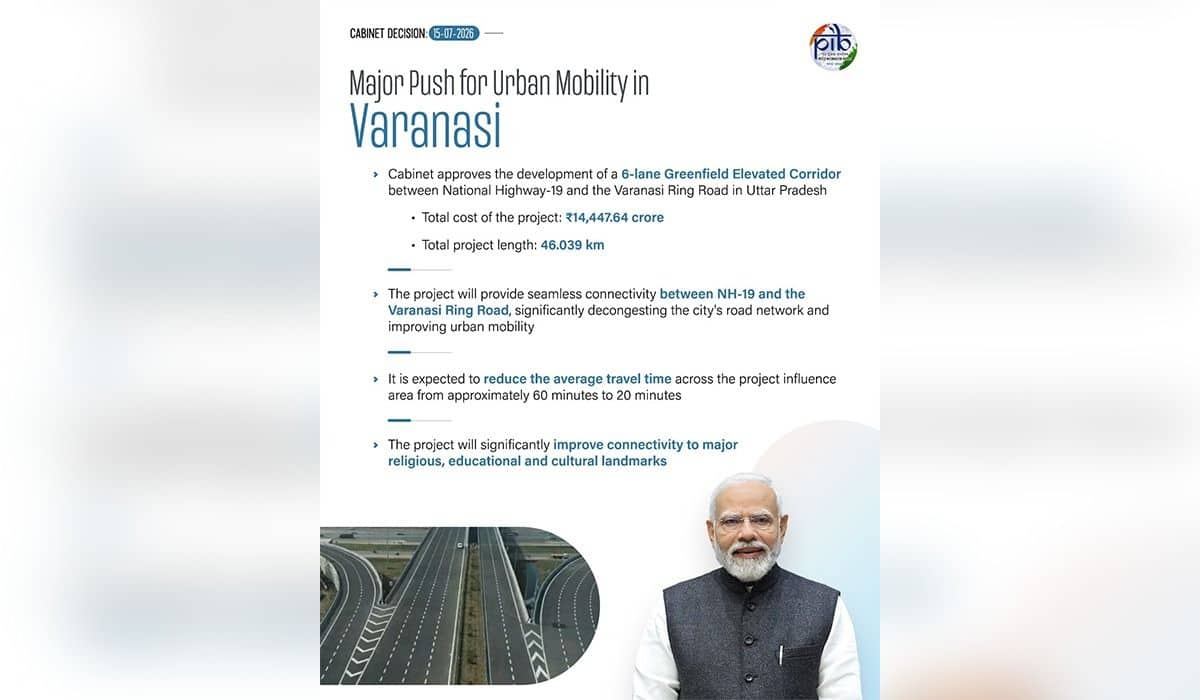
Cabinet approves infrastructure projects between National Highway-19 and Varanasi Ring Road in Uttar Pradesh worth Rs.14447.64 crore
July 15, 2026

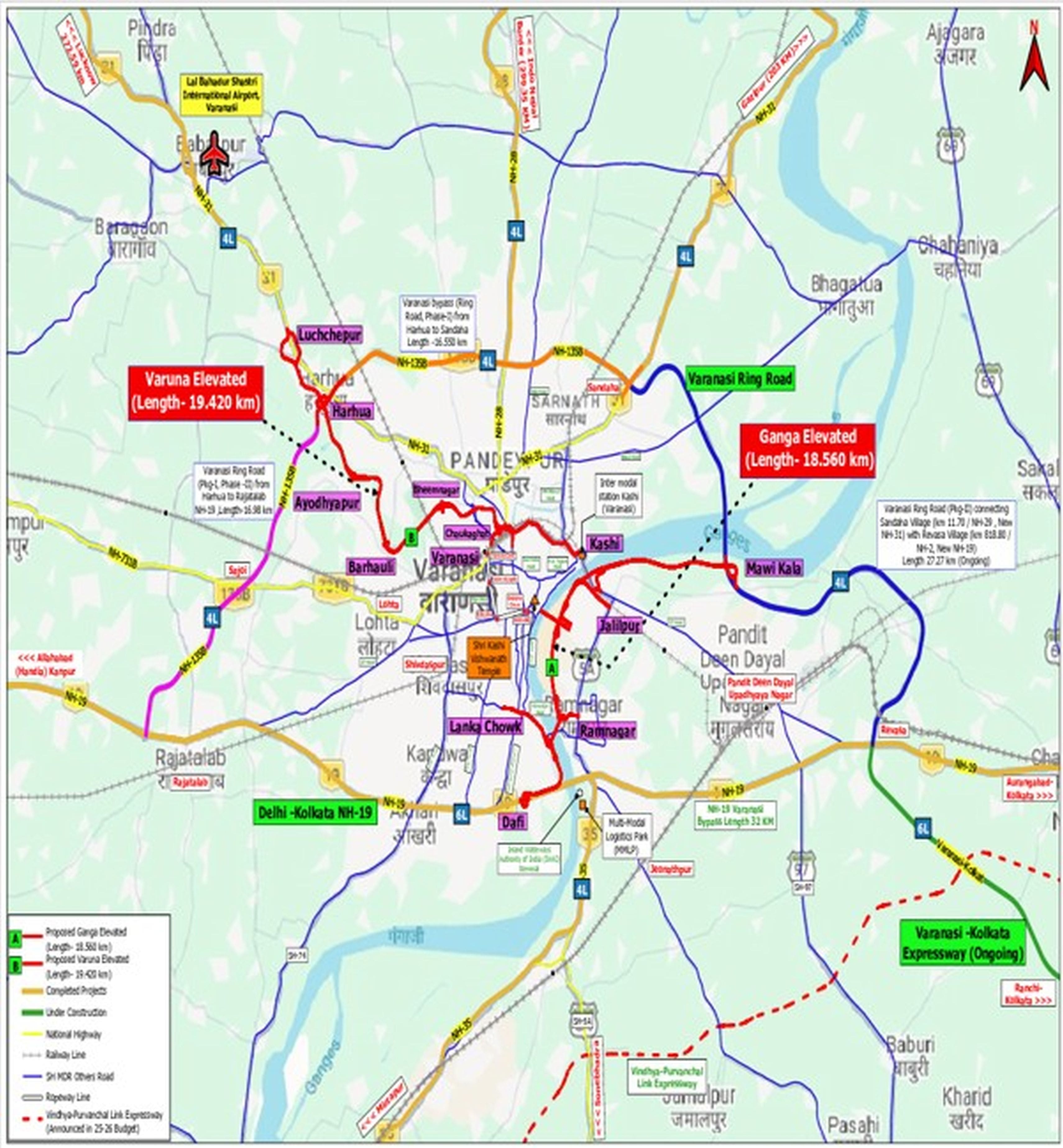
The Cabinet Committee on Economic Affairs, chaired by the Prime Minister Shri Narendra Modi, today has approved the development of a Link/Connector Corridor between National Highway-19 (NH-19) and the Varanasi Ring Road with riverbank connectivity along the River Ganga for the decongestion of Varanasi City in Uttar Pradesh. The 46.039 km project, comprising a six-lane elevated main carriageway, an iconic cable-stayed bridge, an extradosed Foot Over Bridge-cum-Major Bridge, loops, ramps, link roads and service roads, will be implemented under the Hybrid Annuity Model (HAM) at a total capital cost of Rs.14,447.64 crore including a civil construction cost of Rs.6,037.85 crore (including utility shifting, excluding GST) and a land acquisition cost of Rs.541.11 crore under NH(O).

The project will provide seamless connectivity between NH-19 and the Varanasi Ring Road, significantly decongesting the city’s road network and improving urban mobility. Designed for an operating speed of 80–100 km/h, it is expected to reduce the average travel time across the project influence area from approximately 60 minutes to 20 minutes, representing a reduction of nearly 67 per cent. Travel time between NH-19 and Kashi Railway Station will be reduced from approximately 50 minutes to about 25 minutes, resulting in a saving of about 25 minutes (nearly 50 per cent).

Aligned with the PM Gati Shakti National Master Plan, the corridor will strengthen multimodal connectivity by providing seamless access to major highways, railway stations, Lal Bahadur Shastri Airport and Ramnagar IWAI Port, while significantly improving connectivity to key religious, educational and cultural landmarks, including the Kashi Vishwanath Temple, Banaras Hindu University (BHU), Namo Ghat, Ramnagar Fort and the Ghats of Varanasi. By linking important economic, social and logistics nodes, the project will improve logistics efficiency, enhance road safety, facilitate tourism and pilgrimage, and support sustainable regional economic growth across eastern Uttar Pradesh.

The corridor has been conceived as a transformative urban mobility project to decongest the road network of Varanasi & Chandauli by providing a high-speed, access-controlled connection between NH-19, the Varanasi Ring Road (NH-135B), Ramnagar/ BHU and other major urban destinations. With more than 15 crore tourists and pilgrims visiting Varanasi every year, the project will significantly improve connectivity to major religious, educational and cultural landmarks, including the Kashi Vishwanath Temple, Banaras Hindu University (BHU), Namo Ghat, Ramnagar Fort, the Ghats of Varanasi, and Kashi Railway Station, while substantially reducing congestion on the existing city road network. An elevated spur between BHU/Lanka and Samne Ghat will further ease traffic congestion at the heavily trafficked Lanka Junction by separating through traffic from local traffic movements.

The project will improve road safety through controlled-access movement, reduce vehicle operating costs and emissions, enhance travel reliability, and facilitate the efficient movement of passenger and freight traffic. It will also decongest NH-19, the BHU-Ramnagar Corridor and NH-35 by diverting through traffic away from the densely developed urban core.

The project incorporates several landmark engineering features, including an iconic 910 m cable-stayed bridge across the River Ganga, a 1.32 km extradosed Foot Over Bridge-cum-Major Bridge with travelators providing seamless pedestrian connectivity to the Kashi Vishwanath Temple, a Rail Over Bridge over the existing/proposed Malviya Bridge, dedicated emergency parking bays, noise barriers, façade lighting and architectural elements inspired by the cultural heritage of Varanasi. These features will not only improve transportation efficiency but also enhance the city’s urban landscape, create an iconic addition to Varanasi’s skyline, and reinforce its position as one of India’s foremost religious and cultural destinations.

Planned in accordance with the PM Gati Shakti National Master Plan, the corridor will strengthen multimodal connectivity by linking one Economic Node (Chandauli SEZ), one Social Node (Chandauli Aspirational District) and six major Logistics Nodes, namely Lal Bahadur Shastri Airport, Kashi Railway Station, Banaras Railway Station, Varanasi City Railway Station, Pt. Deen Dayal Upadhyay Junction and Ramnagar IWAI Port. By providing seamless connectivity between these transport hubs and key destinations such as the Kashi Vishwanath Temple, Banaras Hindu University (BHU), Namo Ghat, Ramnagar Fort and the Ghats of Varanasi, the project will enhance multimodal integration, improve logistics efficiency, facilitate tourism and pilgrimage, and support sustainable regional economic development across eastern Uttar Pradesh.

Overall, the proposed Ganga Elevated Corridor will create a modern, high-capacity urban transport corridor that transforms mobility in Varanasi by providing faster, safer and more reliable connectivity, significantly reducing congestion, strengthening multimodal integration, enhancing tourism and pilgrimage infrastructure, and supporting sustainable economic growth in line with the vision of PM Gati Shakti and Viksit Bharat.

Map of Corridor: