"When we started Vibrant Gujarat, our intention was that this state should become the growth engine of the country's progress." - PM Narendra Modi, At 20 Years' Celebration of Vibrant Gujarat Global Summit
Under Prime Minister Narendra Modi's direction, Gujarat, a dynamic state known for its rich cultural legacy and rapid economic progress, has seen tremendous development. Prime Minister Narendra Modi has been unwaveringly committed to pushing Gujarat's development trajectory to unprecedented heights throughout his tenure as Gujarat's Chief Minister and now the country's leader. The state has experienced unparalleled growth and prosperity, ranging from social welfare programmes to economic reforms to the preservation of the state's rich cultural legacy.
Prime Minister Modi's government has prioritised infrastructure development in Gujarat to bolster connectivity and stimulate economic growth. Projects such as developing highways, ports, airports, and railway networks have been initiated to improve transportation and trade opportunities. Notable initiatives include the construction of the Statue of Unity, the world's tallest statue, which has become a symbol of Gujarat's pride and a major tourist attraction. Furthermore, significant highway projects, including the Vadodara Mumbai Expressway Section of NE-4 and the construction of the Eight-lane Vadodara Kim Expressway spanning 24.57 km with a total project cost of 2207 crore, demonstrate infrastructure development efforts of the Modi government in the state.
During the fiscal year 2022-23, 21 proposals for National Highway development covering a total length of 409 km and an estimated cost of Rs 1715 Crores have been received and sanctioned. As of February 28, 2023, the Government of India has reimbursed Rs. 146.41 crore for the revival and development of airports and water aerodromes in Gujarat under the "Revival of unserved and underserved airports" scheme, facilitating the operation of UDAN flights.
Gujarat has emerged as a hub for industrial growth and investment under the PM Modi-led government. The government's policies, such as "Make in India" and "Startup India", have incentivised entrepreneurship and facilitated ease of doing business in the state. Gujarat's robust industrial base, encompassing manufacturing, pharmaceuticals, and petrochemicals, has created ample employment opportunities and contributed to the state's economic prosperity. In June 2023, the Union Cabinet, under the leadership of Prime Minister Shri Narendra Modi, sanctioned Micron's proposal to establish a semiconductor unit in India, involving a capital investment of Rs. 22,516 crore (2.75 billion dollars). Companies such as Procter & Gamble India are investing Rs.2,000 crore to establish a new personal healthcare manufacturing facility in Gujarat. Jay Bharat Maruti Ltd (JBML) announced that it would set up manufacturing plants in Gujarat, with an investment of Rs.300-350 crore. Meanwhile, Ocior Energy will invest Rs 40,000 crore in the Kutch district of Gujarat to set up a facility to produce 1 million tonnes of green hydrogen and ammonia annually.
The double-engine government in Gujarat is working towards ensuring welfare for all sections of society. The government has focused on enhancing rural development and agricultural productivity in Gujarat. Schemes like Pradhan Mantri Krishi Sinchai Yojana (PMKSY) and Pradhan Mantri Fasal Bima Yojana (PMFBY) have been implemented to promote sustainable farming practices and financially support farmers. Bhuj, Jamnagar, and Rajkot airports in Gujarat are included under the KRISHI UDAN scheme. A total of 273 applications have been received from individuals/ entities under different sub-schemes of Pradhan Mantri Kisan Sampada Yojana (PMKSY) so far, with proposals to set up food processing facilities in Gujarat, out of which approvals were accorded to 81 eligible projects.
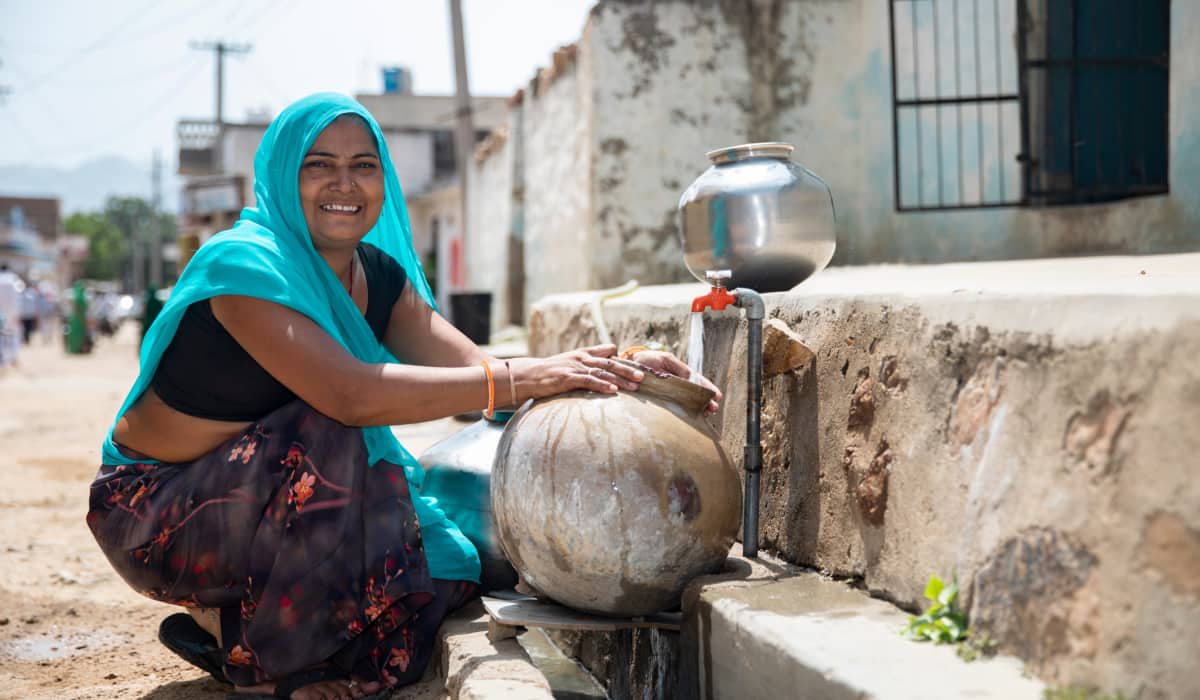
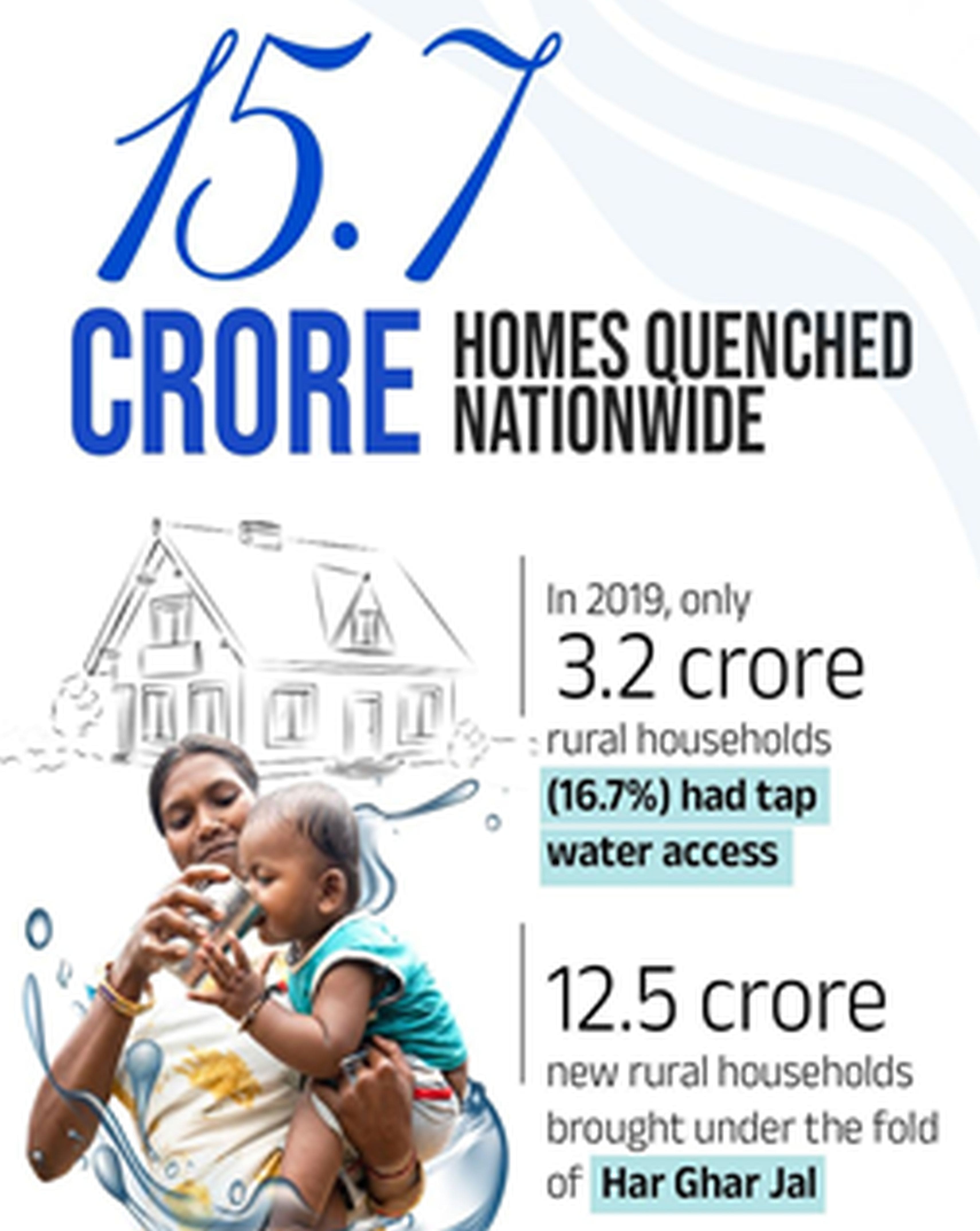
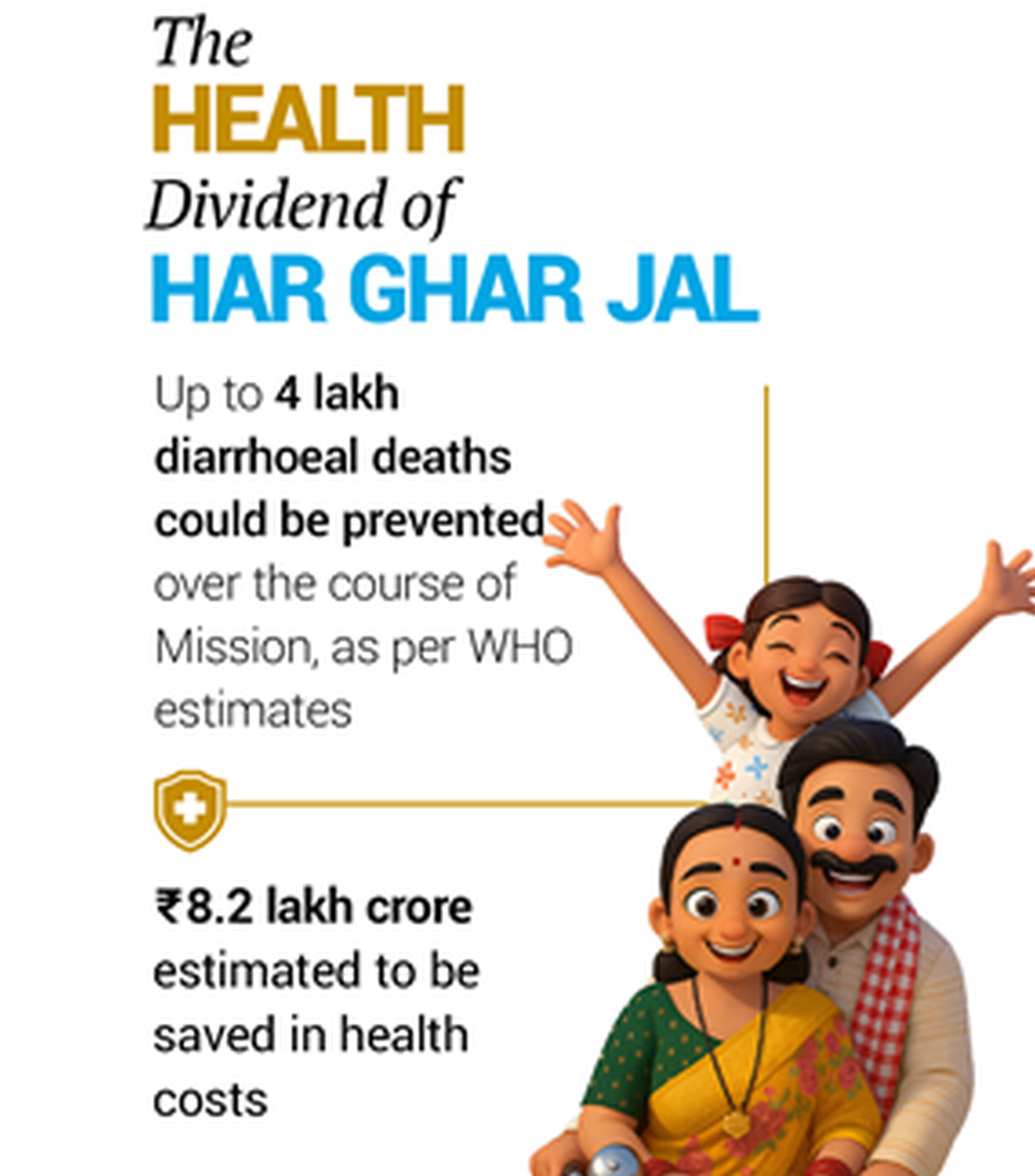
Multiple welfare-centric schemes of the central government are working swiftly to ensure everyone's holistic growth. Since the mission's launch, an additional 33,490 households have been provided tap water connections, making the saturation 100% in the state. Over 17 thousand villages have been made ODF Plus under the initiative of the Swachh Bharat Mission. Under PMAY-G, over 5 lakh houses are constructed in Gujarat. Under Pradhan Mantri Matru Vandana Yojana, the total beneficiaries enrolled are 12.25 lakh, and the total payments are Rs 456.58 crore.
Ensuring access to quality healthcare services has been a priority for the government in Gujarat. Initiatives such as Ayushman Bharat and Janani Suraksha Yojana have expanded healthcare coverage and improved maternal and child health outcomes. A total of 3.21 crore Ayushman Bharat Health Accounts (ABHA) were created, and 1.29 crore health records have been linked.
Gujarat boasts a rich cultural heritage comprising vibrant traditions, festivals, and historical landmarks. In the last decade, Gujarat has witnessed many accolades globally in the cultural domain. UNESCO declared Garba of Gujarat as an Intangible Cultural Heritage in 2023. Meanwhile, UNWTO awarded Gujarat's Dhordo Best Tourism Village.
PM Modi-led government has taken significant steps to preserve and promote Gujarat's cultural identity through various initiatives. Efforts to conserve heritage sites, promote traditional arts and crafts, and organise cultural festivals have been instrumental in showcasing Gujarat's cultural heritage and attracting tourists from across the country and worldwide. Under the PRASAD scheme, Somnath Temple and Ambaji Temple are being developed. The government has also started the 'Saurashtra Tamil Sangamam' initiative to celebrate the vibrant cultural heritage of the Saurashtra community residing in Tamil Nadu. This platform aims to facilitate connections between Saurashtrians in Tamil Nadu and their counterparts in Gujarat, fostering a celebration of their shared traditions and values.
From being the first state to have India's first solar power village, Madhera, to having the world's tallest statue, i.e. Statue of Unity, the success of Gujarat knows no bounds. With the right development push from the double-engine government. Gujarat spearheads the development path, proudly exemplifying Prime Minister Narendra Modi's vision of a Viksit Bharat.