PM chairs high-level meeting to review the progress of the fisheries sector

Published By : Admin | May 15, 2025 | 19:07 IST
Focus of the discussion on Fishing in the EEZ and High Seas
PM Calls for using Satellite Technology to Boost Fisheries and Fishermen Safety
PM Stresses Modernization of Fisheries with Smart Harbours, Drone Transport, and Value-Added Supply Chains
On the lines of agro tech in the agriculture sector, PM suggests enhanced adoption of fish tech in the fisheries sector for improving production, processing and marketing practices
PM discusses Fisheries in Amrit Sarovars and promotion of Ornamental Fisheries for livelihood support
PM suggests exploration of multifarious use of seaweeds for fuel purposes, as nutritional inputs, in pharmaceuticals and other sectors
PM calls for strategy to Boost Fish Supply in Landlocked Areas

Prime Minister Shri Narendra Modi chaired a high-level meeting to review the progress of the fisheries sector, with focus on Fishing in the Exclusive Economic Zone(EEZ) and High Seas, at his residence at Lok Kalyan Marg earlier today.

Prime Minister emphasized the extensive use of satellite technology to harness better use of fish resources and give safety instructions to fishermen.

Prime Minister stressed on modernization of the sector through smart harbours and markets, use of drones in transportation of the catch and its marketing. He said that there is a need to move toward a healthier system of functioning so as to add value in the supply chain.

Further, Prime Minister suggested exploration of the usage of drones, as per technical protocols, for transportation of fresh fish from production centres to big nearby markets in cities / towns in consultation with civil aviation.

Prime Minister underlined the need for improvements in processing and packaging of the produce. Facilitation of investments from the private sector was also discussed.

Regarding the use of technology, Prime Minister said that similar to agro tech in the agriculture sector, adoption of fish tech in the fisheries sector should be enhanced for improving the production, processing and marketing practices.

Prime Minister said that taking up fisheries production in Amrit Sarovars will not only improve the sustenance of these water bodies but also improve the livelihoods of the fishermen. He also highlighted that ornamental fisheries also needs to be promoted as an avenue for income generation.

Prime Minister said that a strategy should be worked out to serve the needs of landlocked areas where there is high demand for fish but not enough supply.

Prime Minister suggested that usage of seaweeds for fuel purposes, as nutritional inputs, in pharmaceuticals and other sectors should be explored. He said that all the departments concerned should work together and use technology to create the required outputs and outcomes in the seaweed sector, ensuring complete ownership.

Prime Minister also suggested undertaking capacity building of fishermen in modern fishing practices. He also suggested maintenance of a negative list of items that hinder the growth of the sector so that action plans can be made to overcome these and further enhance Ease of Doing Business and Ease of Living of the fishermen.

During the meeting, a presentation was also done on the progress made in important initiatives, compliances to the suggestions given during the last review, and the proposed enabling framework for sustainable harnessing of fisheries from the Indian Exclusive Economic Zone(EEZ) and High Seas.

Since 2015, Government of India has stepped-up investment to Rs. 38,572 crore through various GoI schemes and programs namely Blue Revolution Scheme, Fisheries and Aquaculture Infrastructure Development Fund (FIDF), Pradhan Mantri Matsya Sampada Yojana (PMMSY), Pradhan Mantri Matsya Samridhi Sah Yojana (PM-MKSSY) and Kisan Credit Card (KCC). India has registered an annual fish production of 195 lakh tons in 2024-25 with sectoral growth rate of more than 9%.

The meeting was attended by the Union Minister of Fisheries, Animal Husbandry and Dairying Shri Rajiv Ranjan Singh alias Lalan Singh, Principal Secretary to PM Dr. P.K. Mishra, Principal Secretary-2 to PM Shri Shaktikanta Das, Advisor to PM Shri Amit Khare, Secretary of the Department of Fisheries and senior officials.

Explore More
ଶ୍ରୀରାମ ଜନ୍ମଭୂମି ମନ୍ଦିର ଧ୍ଵଜାରୋହଣ ସମାରୋହରେ ପ୍ରଧାନମନ୍ତ୍ରୀଙ୍କ ଅଭିଭାଷଣ

ଲୋକପ୍ରିୟ ଅଭିଭାଷଣ

ଶ୍ରୀରାମ ଜନ୍ମଭୂମି ମନ୍ଦିର ଧ୍ଵଜାରୋହଣ ସମାରୋହରେ ପ୍ରଧାନମନ୍ତ୍ରୀଙ୍କ ଅଭିଭାଷଣ
Regional languages take precedence in Lok Sabha addresses

Media Coverage

Regional languages take precedence in Lok Sabha addresses
NM on the go

Nm on the go

Always be the first to hear from the PM. Get the App Now!
...
Cabinet approves three new corridors as part of Delhi Metro’s Phase V (A) Project
December 24, 2025

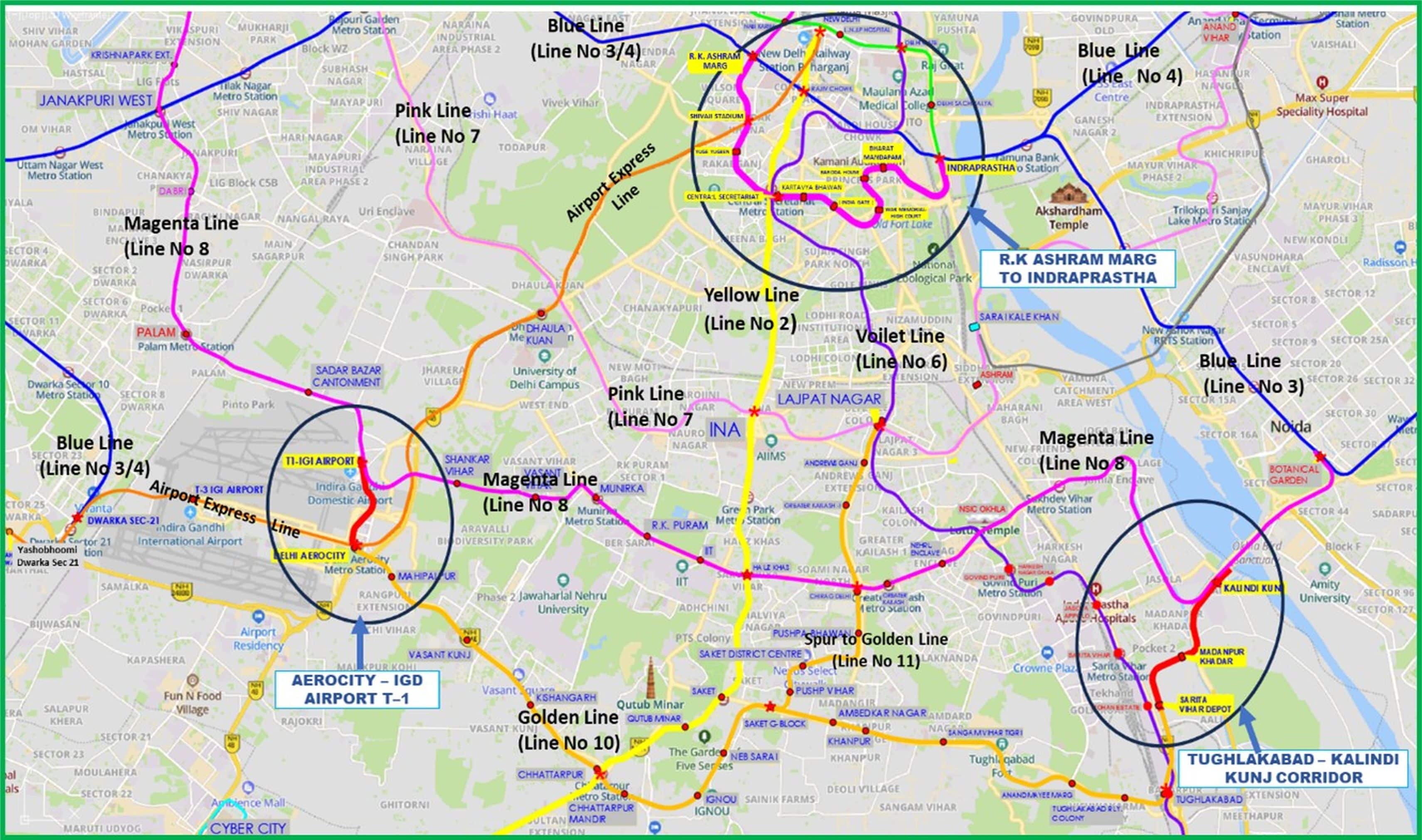
The Union Cabinet chaired by the Prime Minister, Shri Narendra Modi has approved three new corridors - 1. R.K Ashram Marg to Indraprastha (9.913 Kms), 2. Aerocity to IGD Airport T-1 (2.263 kms) 3. Tughlakabad to Kalindi Kunj (3.9 kms) as part of Delhi Metro’s Phase – V(A) project consisting of 16.076 kms which will further enhance connectivity within the national capital. Total project cost of Delhi Metro’s Phase – V(A) project is Rs.12014.91 crore, which will be sourced from Government of India, Government of Delhi, and international funding agencies.

The Central Vista corridor will provide connectivity to all the Kartavya Bhawans thereby providing door step connectivity to the office goers and visitors in this area. With this connectivity around 60,000 office goers and 2 lakh visitors will get benefitted on daily basis. These corridors will further reduce pollution and usage of fossil fuels enhancing ease of living.

Details:

The RK Ashram Marg – Indraprastha section will be an extension of the Botanical Garden-R.K. Ashram Marg corridor. It will provide Metro connectivity to the Central Vista area, which is currently under redevelopment. The Aerocity – IGD Airport Terminal 1 and Tughlakabad – Kalindi Kunj sections will be an extension of the Aerocity-Tughlakabad corridor and will boost connectivity of the airport with the southern parts of the national capital in areas such as Tughlakabad, Saket, Kalindi Kunj etc. These extensions will comprise of 13 stations. Out of these 10 stations will be underground and 03 stations will be elevated.

After completion, the corridor-1 namely R.K Ashram Marg to Indraprastha (9.913 Kms), will improve the connectivity of West, North and old Delhi with Central Delhi and the other two corridors namely Aerocity to IGD Airport T-1 (2.263 kms) and Tughlakabad to Kalindi Kunj (3.9 kms) corridors will connect south Delhi with the domestic Airport Terminal-1 via Saket, Chattarpur etc which will tremendously boost connectivity within National Capital.

These metro extensions of the Phase – V (A) project will expand the reach of Delhi Metro network in Central Delhi and Domestic Airport thereby further boosting the economy. These extensions of the Magenta Line and Golden Line will reduce congestion on the roads; thus, will help in reducing the pollution caused by motor vehicles.

The stations, which shall come up on the RK Ashram Marg - Indraprastha section are: R.K Ashram Marg, Shivaji Stadium, Central Secretariat, Kartavya Bhawan, India Gate, War Memorial - High Court, Baroda House, Bharat Mandapam, and Indraprastha.

The stations on the Tughlakabad – Kalindi Kunj section will be Sarita Vihar Depot, Madanpur Khadar, and Kalindi Kunj, while the Aerocity station will be connected further with the IGD T-1 station.

Construction of Phase-IV consisting of 111 km and 83 stations are underway, and as of today, about 80.43% of civil construction of Phase-IV (3 Priority) corridors has been completed. The Phase-IV (3 Priority) corridors are likely to be completed in stages by December 2026.

Today, the Delhi Metro caters to an average of 65 lakh passenger journeys per day. The maximum passenger journey recorded so far is 81.87 lakh on August 08, 2025. Delhi Metro has become the lifeline of the city by setting the epitome of excellence in the core parameters of MRTS, i.e. punctuality, reliability, and safety.

A total of 12 metro lines of about 395 km with 289 stations are being operated by DMRC in Delhi and NCR at present. Today, Delhi Metro has the largest Metro network in India and is also one of the largest Metros in the world.