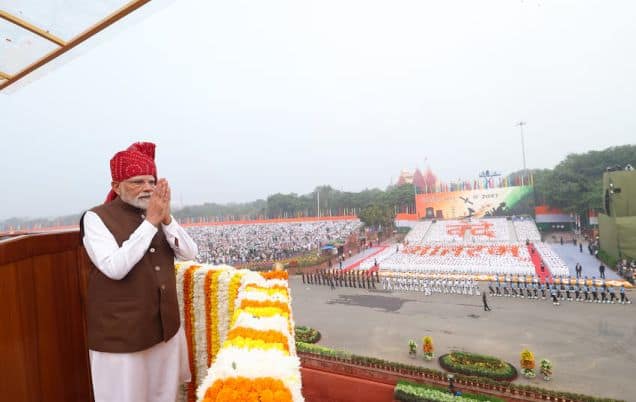
PM Narendra Modi addressed a large crowd of his supporters at a public meeting organized in Jammu today.


Urging his supporters to give an effective response to terrorists and their sympathizers by electing a strong BJP government during the upcoming Lok Sabha elections, PM Modi said,” Sometimes I wonder if the current Congress party is the same that Sardar Vallabhbhai Patel and Netaji Subhas Chandra Bose were once a part of. I say this because the statements given by some Congress, PDP and NC leaders were hailed in Pakistan because of their anti-India content.”

Elaborating on the issues concerning Jammu and Kashmir, Prime Minister Modi asserted, “Congress, NC and PDP are responsible for the troubles of Jammu and Kashmir today. One of the senior-most leaders of the Congress, who manages the party’s overseas affairs recently gave a clean chit to the terrorists and to the state of Pakistan. Should something like this be said by public leaders to de-moralize our people and our forces? This is the true face of parties like the Congress. Their neglect has led to the situation Kashmiri Pandits find themselves in today. Their prime concern was never national security rather they were and will always be concerned about staying in power for as long as possible even if it implies continued troubles for the people of J&K.”


Highlighting the steps and measures taken by the BJP government to improve the security situation in Jammu and Kashmir, PM Modi said, “My stand towards national security remains the same as it was 25 years ago when I hoisted the national flag at Lal Chowk in Srinagar. I want to warn terrorists and their harbingers that any attempt towards harming India’s national security will come at heavy costs. Besides this, our government is also actively banning and restricting the illegal activities of terrorist and anti-national organizations in Kashmir while the investigative agencies of the country are tracking their sources for funding terror. I want to assure each one of you that people indulging in terror and anti-national activities will be brought to justice.”
I urge people to give a befitting reply to terrorists and their patrons by electing a BJP government in the upcoming elections: PM @narendramodi in Jammu
— narendramodi_in (@narendramodi_in) March 28, 2019
What has puzzled me is the Congress' attitude nowadays.
— narendramodi_in (@narendramodi_in) March 28, 2019
Is it the same Congress that Sardar Patel was a part of?
Is it the same Congress that Netaji Subhas Chandra Bose was a part of and fought for India's independence: PM @narendramodi
After the air strikes in Balakot, unfortunately, a few Congress leaders as well as a few leaders from PDP and NC gave statements which were hailed in Pakistan!
— narendramodi_in (@narendramodi_in) March 28, 2019
How can anyone accept such statements: PM @narendramodi in Jammu
Congress, NC & PDP are responsible for the troubles the state of Jammu & Kashmir faces today.
— narendramodi_in (@narendramodi_in) March 28, 2019
It is due to them that Kashmiri Pandits faced so much troubles.
Unfortunately, national security is not a priority for them.
What only matters for them is being in power: PM
मैं जम्मू कश्मीर के एक-एक नागरिक को ये विश्वास दिलाने आया हूं, कि ये कितनी भी ताकत लगा दें, चौकीदार इनके रास्ते पर मजबूती से खड़ा रहेगा।
— narendramodi_in (@narendramodi_in) March 28, 2019
ढाई दशक पहले लाल चौक पर तिरंगा फहराते हुए जो मैंने कहा था, आज भी मेरा रुख और मेरा आचरण वही है: PM @narendramodi
आतंक के साथी चाहे सीमापार हों या फिर देश के भीतर, एक बात कान खोलकर सुन ले।
— narendramodi_in (@narendramodi_in) March 28, 2019
भारत के हितों, भारत की सुरक्षा के विरुद्ध उठाया गया एक भी कदम भारी पड़ेगा: PM @narendramodi
आज सुरक्षा एजेंसियां अपना काम कर रही हैं, आतंकियों की फंडिंग से लेकर उनसे जुड़े लिंक को खंगाल रही हैं।
— narendramodi_in (@narendramodi_in) March 28, 2019
ऐसे संगठन जो आतंकियों को बढ़ावा देते हैं, उन पर प्रतिबंध लगाया जा रहा है: PM @narendramodi https://t.co/BtNvC24lUJ
आज जब पुरानी रीति-नीति को बदल रहा हूं तो कांग्रेस, नेशनल कॉन्फ्रेंस और पीडीपी के नेताओं को तकलीफ हो रही है।
— narendramodi_in (@narendramodi_in) March 28, 2019
ये आए दिन चौकीदार को गाली देने में जुटे हैं: PM @narendramodi https://t.co/BtNvC24lUJ
अगर जम्मू के लोगों को चौकीदार पर विश्वास है तो महामिलावटी लोगों महागिरावट तय है: PM @narendramodi in Jammu https://t.co/BtNvC24lUJ
— narendramodi_in (@narendramodi_in) March 28, 2019
LoC और सीमा से सटे अनेक गांवों को पाकिस्तान की नापाक हरकतों के चलते दिक्कत हो रही है, इसका मुझे पूरा एहसास है।
— narendramodi_in (@narendramodi_in) March 28, 2019
अपनी बौखलाहट में वो हमारे गांवों को, रिहाइशी बस्तियों को, हमारे पशुओं को निशाना बना रहा है।
लेकिन आप आश्वस्त रहिए कि ये लंबे समय तक नहीं चलेगा: PM @narendramodi
हिंसा और साजिश के प्रति अपनी लड़ाई को लेकर मेरी शक्ति और मेरा विश्वास इसलिए भी बढ़ रहा है क्योंकि मुझे जम्मू कश्मीर के युवा चौकीदारों का समर्थन मिल रहा है।
— narendramodi_in (@narendramodi_in) March 28, 2019
यहां के नौजवान, सेना और दूसरे सुरक्षाबलों में भर्ती होने के लिए भारी संख्या में आगे आ रहे हैं: PM @narendramodi
आपका ये चौकीदार राष्ट्र रक्षा के लिए भी पूरी तरह समर्पित है और जम्मू कश्मीर के संतुलित विकास के प्रति भी उतना ही सजग है।
— narendramodi_in (@narendramodi_in) March 28, 2019
फोर लेन की सड़कें हों, AIIMS, मेडिकल कॉलेज, IIM और IIT हों, शिक्षा और स्वास्थ्य से जुड़े ऐसे अनेक प्रोजेक्ट जम्मू को मिले हैं: PM @narendramodi
कांग्रेस, नेशनल कॉन्फ्रेंस और पीडीपी सबने जम्मू के साथ छल किया है, भेदभाव किया है।
— narendramodi_in (@narendramodi_in) March 28, 2019
विकास के तमाम प्रोजेक्ट्स को लटकाने और भटकाने का काम किया है।
जम्मू में विक्रम चौक से गांधी नगर तक के फ्लाईओवर की मांग कितने साल से अटकी थी, हमने उसे पूरा किया है: PM @narendramodi
आपका ये चौकीदार विकास की पंचधारा यानि बच्चों को पढाई, बुजुर्गों को दवाई, युवा को कमाई, किसान को सिंचाई और जन-जन की सुनवाई, ये सुनिश्चित करने के लिए प्रतिबद्ध है: PM @narendramodi
— narendramodi_in (@narendramodi_in) March 28, 2019
गरीब परिवारों के लिए हमने ऐसे अनेक काम तो किए ही हैं, मध्यम वर्ग के लिए भी बहुत बड़ा कदम इस बजट में उठाया है।
— narendramodi_in (@narendramodi_in) March 28, 2019
5 लाख रुपए तक की कर योग्य आय पर टैक्स हमने पूरी तरह से माफ कर दिया है: PM @narendramodi
दो फैसले हैं जो भाजपा की और कांग्रेस की नीति और नीयत को स्पष्ट कर देंगे।
— narendramodi_in (@narendramodi_in) March 28, 2019
अंतर्राष्ट्रीय सीमा पर बसे लोग कबसे आरक्षण की मांग कर रहे थे।
कई सरकारें आई और चली गईं, लेकिन किसी ने ध्यान नहीं दिया: PM @narendramodi
पिछले महीने ही हमारी सरकार ने बड़ा फैसला लिया और राज्य सरकार की सेवाओं में अंतर्राष्ट्रीय सीमा पर बसे लोगों को 3% आरक्षण का प्रावधान कर दिया।
— narendramodi_in (@narendramodi_in) March 28, 2019
इसी तरह पहाड़ी लोगों के लिए भी 3 प्रतिशत का आरक्षण दिया गया है: PM @narendramodi
सामान्य वर्ग के गरीब परिवारों को आरक्षण की मांग देश में दशकों से हो रही थी, लेकिन किसी में संविधान संशोधन की हिम्मत नहीं थी।
— narendramodi_in (@narendramodi_in) March 28, 2019
हमने इच्छाशक्ति दिखाई और गरीबों के लिए 10% आरक्षण आज लागू हो चुका है।
यही सबका साथ, सबका विकास का हमारा मंत्र है और इसी पर हम आगे बढ़ रहे हैं: PM