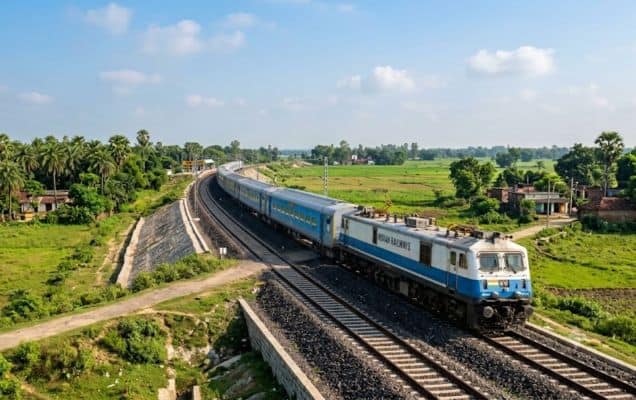
The Union Cabinet chaired by the Prime Minister Shri Narendra Modi has approved the launch and implementation of the Regional Connectivity Scheme – Modified UDAN for a period of ten years from FY 2026-27 to FY 2035-36 with a total outlay of Rs.28,840 crore with the budgetary support of the Government of India.

Impact:

  • Enhanced regional air connectivity to underserved and unserved areas
  • Boost to economic growth, trade and tourism in Tier-2 and Tier-3 cities.
  • Support affordable air travel for common citizens.
  • Improved emergency response and healthcare access in remote and hilly regions.
  • Greater viability and sustainability for regional aerodromes and airline operators.
  • Promotion of the indigenous aerospace sector under Atmanirbhar Bharat.

  • Progress towards Viksit Bharat 2047 goal.

The key components of the scheme are as under:

(a) Development of Aerodromes (CAPEX)

Under the Modified UDAN Scheme, it is proposed to develop 100 airports from existing unserved airstrips to enhance regional connectivity, in line with the Viksit Bharat 2047 vision of infrastructure expansion and transforming India into a globally competitive aviation ecosystem with a total outlay of Rs.12,159 crore over the next eight years.

(b) Operation & Maintenance (O&M) of Aerodromes

Given the high recurring O&M costs and limited revenue streams for Regional Connectivity Scheme (RCS)-only aerodromes, the Scheme proposes to provide O&M support for three years capped at Rs.3.06 crore per annum per airport and Rs.0.90 crore per annum per heliport/water aerodrome, estimated at Rs.2,577 crore for around 441 aerodromes.

(c) Development of Modern Helipads

To address connectivity challenges in hilly, remote, island and aspirational regions, the Scheme proposes developing 200 modern helipads at Rs.15 crore each, amounting to a total requirement of Rs.3,661 crore over the next eight years (inflation-adjusted), focused on priority and aspirational districts to improve last-mile connectivity and emergency response.

(d) Viability Gap Funding (VGF)

Under the Regional Connectivity Scheme, airline operators receive financial support in the form of VGF for operating awarded routes. Recognising the need for longer market development, VGF support to airline operators is proposed amounting to Rs.10,043 crore over 10 years.

(e) Atmanirbhar Bharat Aircraft Acquisition

To address the shortage of small fixed-wing aircraft and helicopters required for operations in remote and difficult terrains and to advance the Atmanirbhar Bharat vision, the scheme also proposes to procure two HAL Dhruv helicopters for Pawan Hans and two HAL Dornier aircraft for Alliance Air.

Background:

The original UDAN Scheme was launched in October 2016 with the objective of making air travel affordable and strengthening connectivity to Tier-2 and Tier-3 cities. Over nine years of implementation:

  • 663 routes have been operationalised across 95 airports, heliports and water aerodromes (as on 28 February 2026).
  • More than 3.41 lakh flights have been operated, carrying 162.47 lakh passengers.
  • Connectivity has been established in remote, hilly and island regions, boosting tourism, healthcare access and emergency services.

  • The scheme has fostered growth in regional airlines and diverse fleet operations, laying a strong foundation for the Modified UDAN Scheme.
Explore More
ଶ୍ରୀରାମ ଜନ୍ମଭୂମି ମନ୍ଦିର ଧ୍ଵଜାରୋହଣ ସମାରୋହରେ ପ୍ରଧାନମନ୍ତ୍ରୀଙ୍କ ଅଭିଭାଷଣ

ଲୋକପ୍ରିୟ ଅଭିଭାଷଣ

ଶ୍ରୀରାମ ଜନ୍ମଭୂମି ମନ୍ଦିର ଧ୍ଵଜାରୋହଣ ସମାରୋହରେ ପ୍ରଧାନମନ୍ତ୍ରୀଙ୍କ ଅଭିଭାଷଣ
PM-KISAN crosses ₹4.27 lakh crore disbursal, over 9.35 crore farmers benefit

Media Coverage

PM-KISAN crosses ₹4.27 lakh crore disbursal, over 9.35 crore farmers benefit
NM on the go

Nm on the go

Always be the first to hear from the PM. Get the App Now!
...
Cabinet approves India’s Nationally Determined Contribution for 2031 to 2035
March 25, 2026
India commits to reduce Emissions Intensity of its GDP by 47 percent by 2035 from 2005 level
India to achieve 60 percent cumulative electric power installed capacity from non-fossil fuel-based energy resources by 2035
India to create Carbon Sink of 3.5 to 4.0 billion tonnes of CO₂ eq. through Forest and Tree Cover by 2035 from 2005 level
India's commitments are aligned with vision of Viksit Bharat @2047 and Net-Zero by 2070

In a significant step towards strengthening India’s action, the Union Cabinet, under the chairmanship of Prime Minister Shri Narendra Modi, has approved India’s Nationally Determined Contribution (NDC) for the period 2031 to 2035, enhancing the country’s ambition under the UNFCCC and its Paris Agreement while reinforcing its commitment to sustainable development and climate justice.

India’s NDC for 2031-35 is guided by the vision of Viksit Bharat, which is not just a goal for 2047, but a commitment to act today to build a prosperous, and climate resilient Bharat for the future generations. India’s successive climate targets build upon India’s earlier commitments, many of which have already been achieved ahead of schedule, reflecting country’s consistent track record of delivering on climate action. The five qualitative targets, are intended to embed sustainability into everyday life and governance systems, promote climate-resilient development pathways, and enable a just and inclusive transition for all sections of the society.

From Early Achievement to Higher Ambition:

Embarking on its commitments towards positive climate actions, India has been periodically raising its ambition towards mitigating greenhouse gas emissions and after the update in 2022, has now announced its targets for 2031-35 marking a significant step towards the goal of achieving net-zero by 2070. India’s original climate commitments i.e NDC submitted in 2015, laid a strong foundation, with targets by 2030 of 33–35% reduction in the emissions intensity of GDP and 40% share of non-fossil resources based electric power installed capacity, both of which were met, 11 years and 9 years ahead of the committed timelines, demonstrating a credible and action-oriented approach to climate governance.

Our emissions intensity has since reduced by 36% during 2005 to 2020, and the target has now been enhanced to 47% to be achieved by 2035. Towards the updated NDC’s goal on enhancing share of non-fossil fuel energy resources in installed electric power capacity, the country has achieved 52.57 % non-fossil capacity (February 2026), successfully meeting the target five years ahead of the timeline and now the ambition has been further raised to 60% share of non-fossil fuel-based energy resources in installed electric power capacity to be achieved by 2035. Further on the NDC goal of creating additional carbon sink through forest and tree cover, India has already created 2.29 billion tonnes of CO2 equivalent by 2021 Afforestation and ecosystem restoration efforts continue to contribute towards India’s carbon sink targets while supporting rural livelihoods. Our afforestation efforts have been duly acknowledged by independent agencies such as Food and Agriculture Organisation (FAO) which has ranked India as third in terms of net gain in forest area and ninth in terms of area under forest. This progress is a testimony to the fact that India has maintained a balance between economy and ecology even as it maintains a high GDP growth rate. Now, we have further enhanced the ambition of creating carbon sink through forest and tree cover to 3.5-4.0 billion tonnes of CO2 equivalent by 2035 from 2005 level.

India’s climate action has been sustained and ambitious, and its track record clearly shows the achievement of our targets ahead of time, which provides strong confidence in our ability to deliver on future commitments and demonstrates India's commitment to ambitious climate action.

Accelerating Clean Energy and Green Growth

India’s climate strategy is implemented through a series of measures including those on large-scale renewable energy expansion, battery storage systems, and green energy corridors, cleaner manufacturing, ensuring reliable and sustainable infrastructure across the country.

It also lays emphasis on strengthening institutional capacity, innovation ecosystems, and local-level adaptation measures, ensuring that climate considerations are integrated across key sectors of the economy through various schemes, including Green Hydrogen Mission, PM Surya Ghar: Muft Bijli Yojana; Production Linked Incentive (PLI) schemes, PM-KUSUM (Pradhan Mantri Kisan Urja Suraksha Evam Utthaan Mahabhiyan); push for Carbon Capture, Utilization and Storage (CCUS); and nuclear energy. Further India is pursuing a positive climate action agenda by forging partnerships at international levels through initiatives such as International Solar Alliance (ISA), Coalition for Disaster Resilient Infrastructure (CDRI), Global Bio-fuel Alliance (GBA) and Leadership Group for Industry Transition (Lead-IT) etc.

Enhancing Climate Adaptation

India’s climate approach extends beyond mitigation actions and focuses on scaling-up adaptation actions. Recognizing that climate change impacts are already being felt, India has placed strong emphasis on adaptation and disaster resilience across the key actors of its economy. Some of the key measures towards the achievement of goals on adaptation are protection of vulnerable coastlines through mangrove restoration, coastal regulation, and climate-resilient infrastructure; early warning systems for cyclones and storm surges; targeted programmes for glacier monitoring, biodiversity conservation, and sustainable livelihoods in Himalayan states; climate-resilient infrastructure to address risks from landslides and glacial lake outburst floods; and implementation of Heat Action Plans across the States; community-based disaster preparedness and resilience programmes, etc.

Under its Climate Action framework, India’s NDC is operationalized through the National Action Plan on Climate Change (NAPCC) and its nine national missions, as well as the State Action Plans on Climate Change (SAPCC). The framework is implemented in convergence with various schemes and programs of the central and State Governments ensuring a coordinated, whole of government approach for climate-resilient and low-carbon development.”

India’s climate action is being implemented at local level through various schemes and programme such as Jal Jeevan Mission, National Mission on Sustainable Agriculture, Sustainable Habitat, MISHTI (Mangrove Initiative for Shoreline Habitats & Tangible Incomes), National Disaster Management Plan, Soil Health Card and Pradhan Mantri Krishi Sinchayee Yojana (PMKSY), etc.

People-Centric Approach

India’s climate efforts are centered around the principle of “Lifestyle for Environment (LiFE),” which is transforming sustainable living into a mass movement and the initiatives like ‘Ek Ped Maa Ke Nam’ to transform tree plantation into a people-driven climate action.

Approach to NDC (2031-35)

In shaping India’s NDC for 2031–2035, the Government has considered the outcomes of the first Global Stocktake (GST), principle of Common but differentiated responsibilities and Respective Capabilities (CBDR-RC), and equity with a view to harmonize national realities, developmental priorities, energy security and the need for greater ambition in climate action, in line with the purpose and long-term goals of the Paris Agreement.

India’s successive climate commitments are the outcome of wide-ranging stakeholder consultations and studies by the ten working groups in NITI Aayog. These ten groups comprised of Central Ministries, domain experts, industry bodies, and civil society organizations, etc. Sector-specific inputs were carefully assessed across energy, industry, transport, agriculture, water, and urban development, ensuring that the revised targets are ambitious, achievable, and grounded in domestic capabilities. The process ensured a whole-of-government and whole-of-society approach, aligning national development priorities with climate objectives. The consultative approach reflects India’s commitment to inclusive and participatory climate policymaking, while safeguarding growth, livelihoods, and energy and food security.

India’s successive climate commitments are likely to generate new opportunities for youth and women, making them key partners in green transition.

With strong policy direction, technological innovation, and people’s participation, India continues to demonstrate that economic growth and environmental responsibility can go hand in hand.

The Cabinet’s approval of India’s Nationally Determined Contribution for the period 2031 to 2035 marks a major milestone in India’s journey towards a low-carbon, climate-resilient future, further strengthening its role as a global leader in climate action.