The spirit of standing with courage and truth is as relevant today as it was in the time of Sri Guru Teg Bahadur Sahib Ji: PM

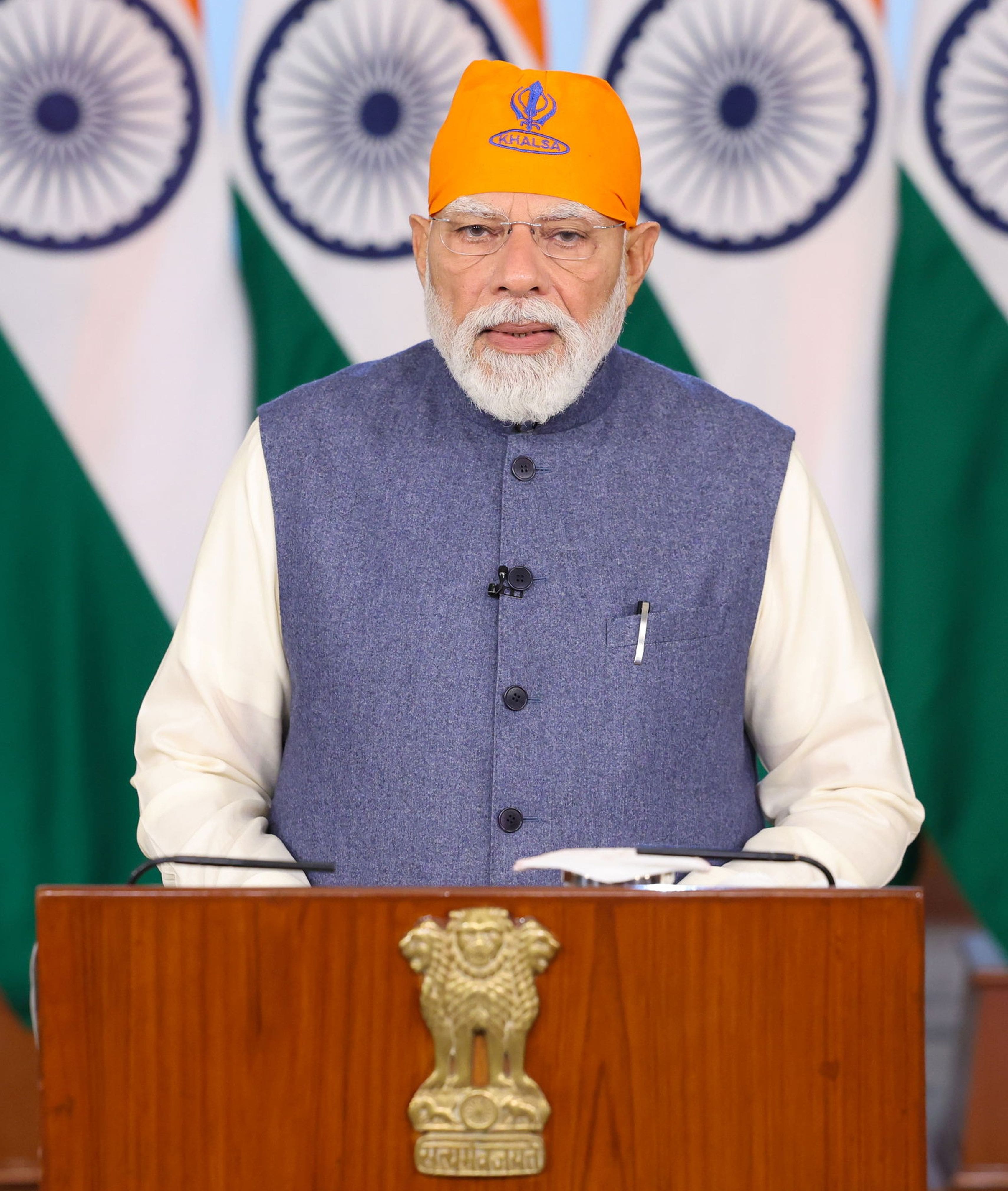
The Prime Minister, Shri Narendra Modi, addressed the 350th Martyrdom Year (Shaheedi Samagam) of ‘Hind di Chadar’ Sri Guru Teg Bahadur Sahib Ji today. Paying his respects, the Prime Minister stated that today we all remember the great Guru on this significant anniversary and expressed that it is a matter of great fortune to be part of such a historic and sacred event.
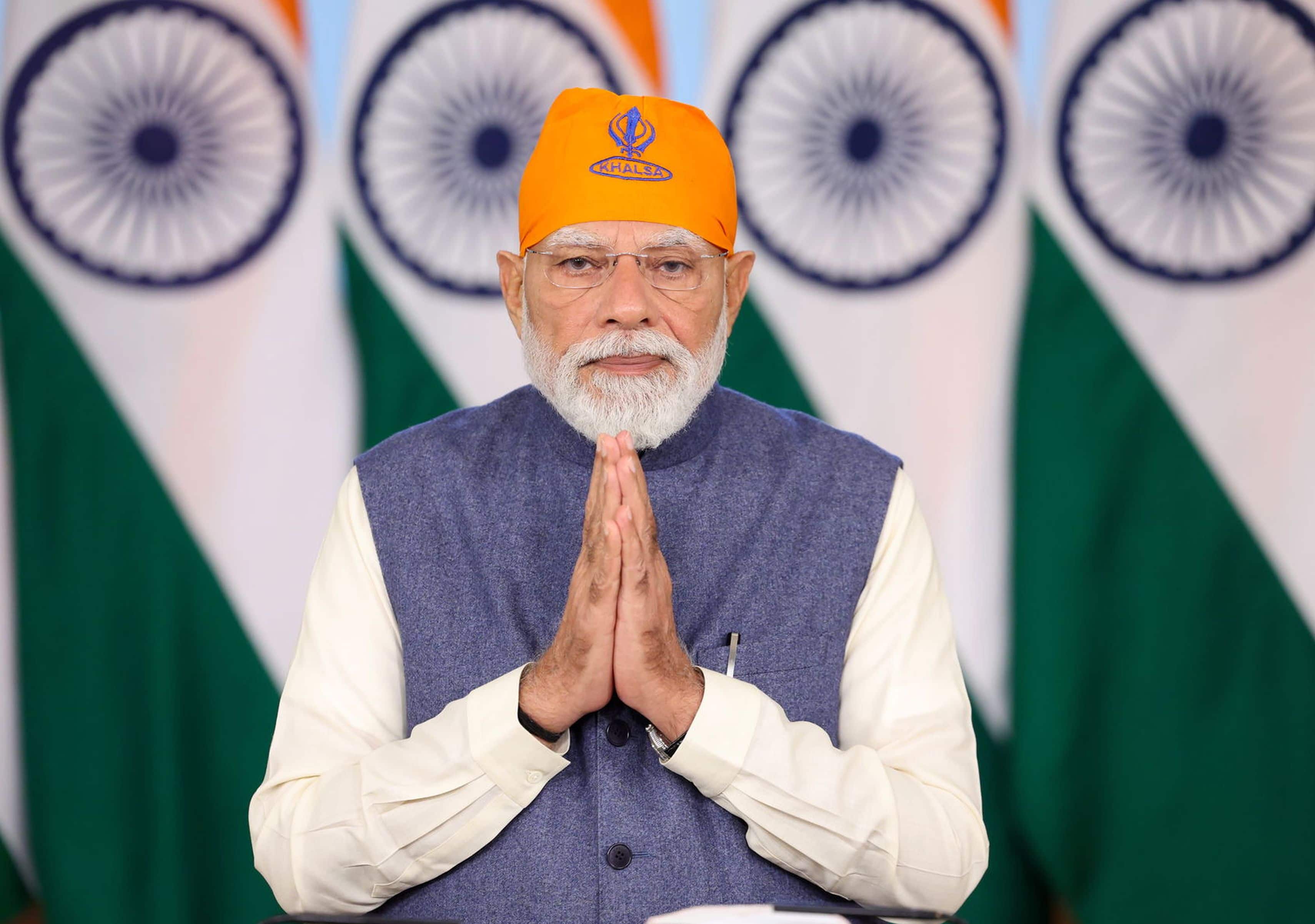
The Prime Minister emphasized that India's history is defined by bravery, harmony, and cooperation. He noted that through this event on the soil of Maharashtra,we are witnessing that very legacy. He remarked that during the era when the Gurus reached the pinnacle of sacrifice, social unity played a significant role, as people from every section drew inspiration from them to remain unwavering for truth and culture. “Traditions like the ‘Guru Nanak Naam-leva Sangat’ of Sri Guru Gobind Singh Ji were instrumental in that great yajna of social unity”, Highlighted Shri Modi.

Highlighting the importance of national cohesion, the Prime Minister noted that today, when the country once again needs social unity the most, this wonderful gathering of the ‘Sangat’ ,reassures the nation that the blessings of the Gurus and Saints are with us.

The Prime Minister described the Samagam as a continuous journey that began last year in Nagpur and deepened on the historic land of ‘Takht Sri Hazur Sahib, Nanded’. “In Navi Mumbai, this journey has reached a significant milestone, taking the history of Sri Guru Teg Bahadur Sahib Ji to every corner of Maharashtra, reaching thousands of villages and settlements”, emphasised Shri Modi. The Prime Minister specially congratulated the Government of Maharashtra for organizing this program.
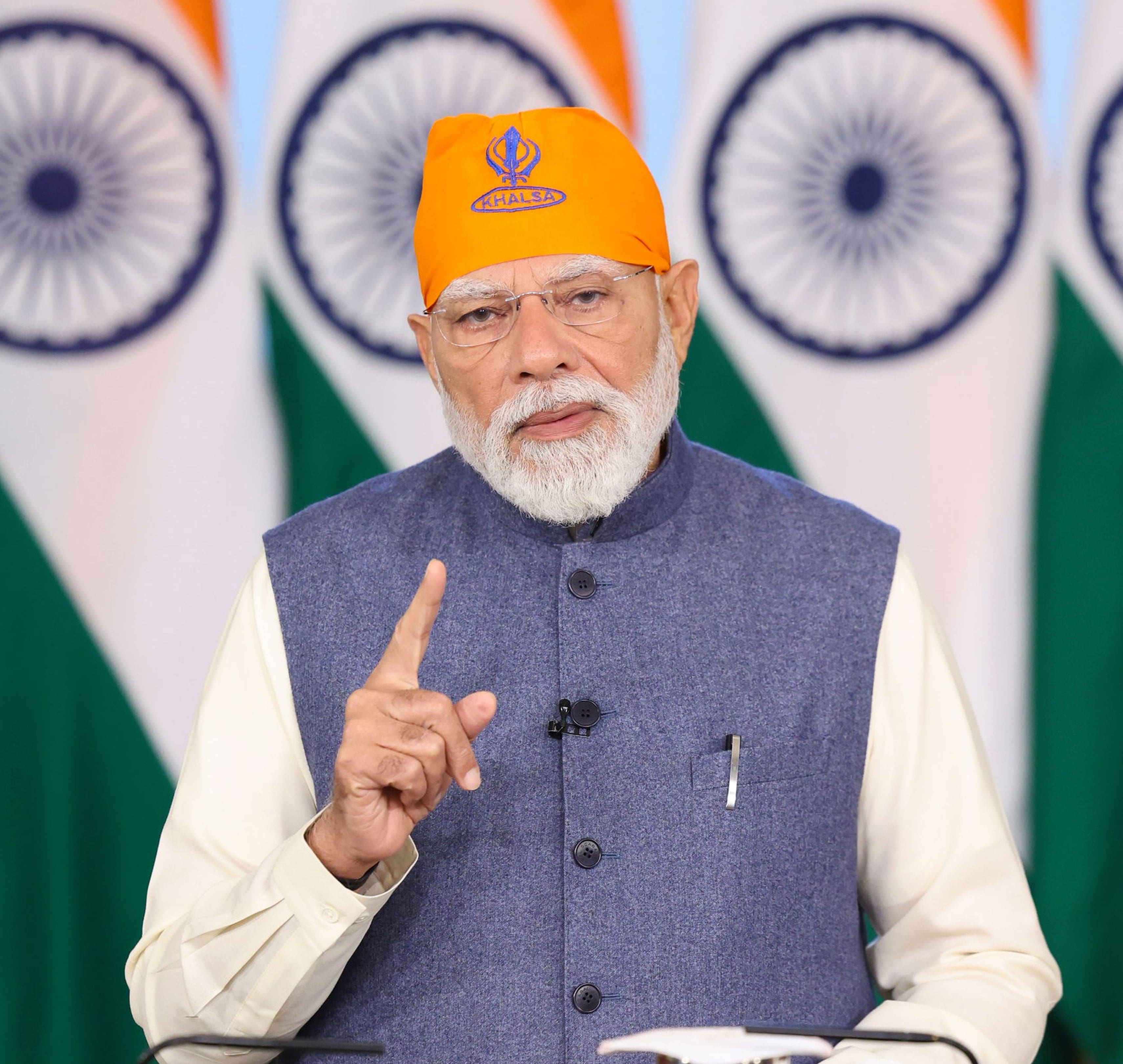
Recalling recent commemorations, the Prime Minister mentioned his privilege in attending an event in Kurukshetra, Haryana, and stated that the Union Government is celebrating every historic occasion related to the Guru Sahibs at the national level. Shri Modi listed milestones such as the 400th Prakash Purab of Sri Guru Teg Bahadur Sahib Ji, marked by a commemorative postage stamp and special coin, and the 550th Prakash Purab of Guru Nanak Dev Ji, noting that every occasion is celebrated with full devotion. He also highlighted the new national tradition of celebrating ‘Veer Bal Diwas’ annually in honor of the ‘Sahibzadas’.

The Prime Minister highlighted major achievements including the completion of the ‘Kartarpur Sahib Corridor’ in record time and the creation of new facilities for the ‘Sri Hemkund Sahib Yatra’. “ The government has provided relief under FCRA to organizations associated with Sikh bodies and Gurdwaras, while also ensuring Sikh history finds its rightful place in school curricula and cultural discourse, fulfilling tasks that the community had awaited for decades”, Shri Modi remarked.

Reiterating the government's commitment to respect and justice, the Prime Minister mentioned the formation of an SIT to investigate the 1984 riots and the reopening of closed cases, which led to punishments for the guilty. He also spoke about the additional compensation announced for the families of the 1984 victims and the more active role given to the National Commission for Minorities.
The Prime Minister spoke about the government's "mission mode" work regarding the safety of Sikh brothers in Afghanistan and the respectful return of the ‘Swaroop’ (forms) of the ‘Guru Granth Sahib’. “ The government cleared the way for citizenship for Afghan Sikhs and Hindus, provided relief through the CAA to persecuted refugees, and implemented rehabilitation packages for Sikh families in Jammu and Kashmir”, Shri Modi highlighted. PM Modi stated that OCI and visa rules were simplified, and thousands of names were removed from the blacklist to ease travel for overseas Sikhs.

The Prime Minister remarked, “respecting the faith of the Sikh community and creating new opportunities for their progress is considered both a responsibility and a privilege of service by the government”.

Concluding his address, the Prime Minister stated that the spirit of standing with courage and truth is as relevant today as it was in the past. “When the new generation connects with these values, tradition becomes a path to the future rather than just a memory”, Shri Modi emphasised. “The purpose of the Samagam is not just to remember history, but to internalize it in one’s conduct”, the Prime Minister concluded.

Click here to read full text speech

Explore More
अयोध्येत श्री राम जन्मभूमी मंदिर ध्वजारोहण उत्सवात पंतप्रधानांनी केलेले भाषण

लोकप्रिय भाषण

अयोध्येत श्री राम जन्मभूमी मंदिर ध्वजारोहण उत्सवात पंतप्रधानांनी केलेले भाषण

Media Coverage

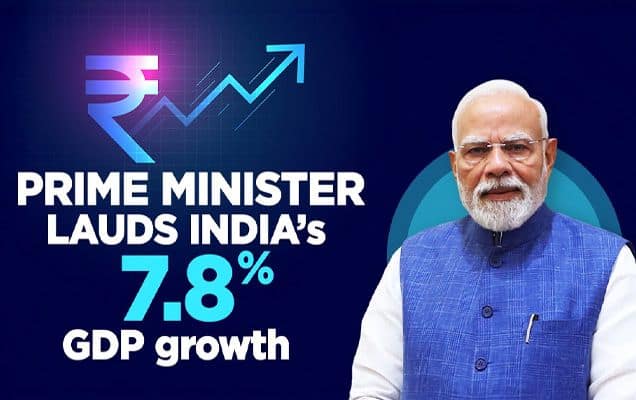
"Doomsayers Doomed, India Bloomed": PM Modi Says GDP Growth "Exemplary"
NM on the go

Nm on the go

Always be the first to hear from the PM. Get the App Now!
...
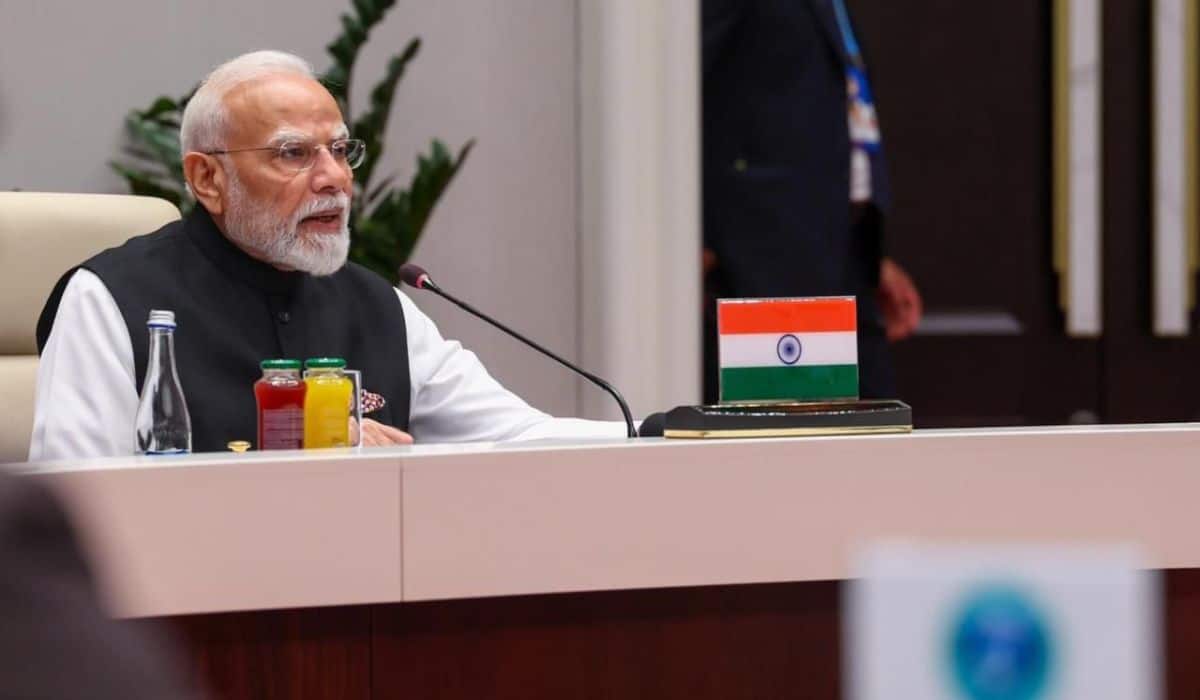
We must transform our shared geography into shared opportunities: PM Modi at SCO Summit
September 01, 2026

President of Kyrgyzstan,

Excellencies,

Namaskar!

It is a matter of great pleasure for me to be here amongst all of you on this special occasion of the 25th anniversary of the SCO.

I sincerely thank President Japarov for the warm welcome and gracious hospitality extended to us in Bishkek.

We had the privilege of being here yesterday, on the occasion of Kyrgyzstan’s Independence Day. I once again extend my warmest congratulations to the President and the people of Kyrgyzstan.

And today, on the occasion of Uzbekistan’s Independence Day, I extend my warmest congratulations to the President and the people of Uzbekistan as well.

During the spectacular Opening Ceremony of the World Nomad Games, we all caught a glimpse of Kyrgyzstan’s rich culture and our shared heritage. This shared heritage and our deep people-to-people connections are among the great strengths of the SCO family.

Friends,

Over the past twenty-five years, the SCO has developed a strong tradition of dialogue and cooperation across the vast expanse of Eurasia. Together, we have made valuable contributions not only to the well-being of our people, but also to the advancement of humanity. Over these twenty-five years, we have laid a strong foundation for cooperation. In the next twenty-five years, our goal should be to translate this cooperation into tangible outcomes.

At a time when the world is passing through uncertainty and instability, we must transform our shared geography into shared opportunities. And through our efforts, we must bring about positive change in the lives of our people.

Friends,

At the previous meeting, I had outlined the three main pillars of India’s vision for the SCO:

S - Security,

C – Connectivity, and

O – Opportunity

The time has come to move these three pillars beyond vision and translate them into concrete outcomes. The first and foremost requirement for this is peace and security. Terrorism continues to pose a serious challenge to humanity as a whole. In the fight against terrorism, we cannot remain confined to an action-reaction approach.

We must dismantle the entire ecosystem of terrorist financing, recruitment, radicalisation, and safe havens. We must speak with one voice and make it clear that there can be no place for double standards on this serious issue.

We must send a strong message to countries that use terrorism as an instrument of policy and provide safe haven and support to terrorists that terrorism can never be a strategic asset for anyone.

Our shared aspiration for a peaceful and secure Eurasia is also closely linked to peace and stability in Afghanistan. India has been contributing to the development and provision of humanitarian assistance to the people of Afghanistan and will continue to do so.

In today’s interconnected world, the scope of security has become even broader. The crisis in West Asia has demonstrated that a conflict in one region does not remain confined to that region. Its impact is felt across the world, affecting energy security, maritime trade, and supply chains. The countries of the Global South bear the greatest brunt of such disruptions. Therefore, India has consistently called for all tensions and conflicts to be resolved not on the battlefield, but through dialogue and diplomacy.

Drug trafficking is not merely a crime; it is a serious threat to our younger generation and regional security. The Centres being established under the SCO to address challenges such as security threats, organised crime, information security, and narcotics are a positive step. We must make these Centres an effective instrument for practical coordination and timely action.

Friends,

The second pillar of our shared development is strong and reliable connectivity. India supports all efforts that connect markets, facilitate trade, and open up new avenues for development. However, it is equally essential that such efforts respect the sovereignty and territorial integrity of all countries. This is also the fundamental spirit of the SCO Charter.

Going forward, the scope of connectivity will become even broader. Along with roads, railways, and air corridors, we must simplify customs processes, promote digital documentation, and make logistics networks more efficient.

Friends,

The third pillar is — Opportunity.

It means that the benefits of SCO cooperation should reach our people directly. Our greatest strength is the connections between our people. For India, the SCO is a confluence of great civilisations, cultures, and ideas. Over the next twenty-five years of the SCO, people-to-people ties should remain at the heart of our cooperation.

The true measure of our success should be how many new opportunities our efforts create for young people, how many new markets open up for our entrepreneurs, how much our farmers benefit from technology, and how much better the lives of our citizens become.

This is the true meaning of “Security, Connectivity, and Opportunity.”

Our cooperation in the SCO should not be merely government-driven; it should also be people-driven. I am pleased that, under Kyrgyzstan’s chairmanship, special emphasis has been placed on youth engagement within the SCO. India has taken initiatives such as the SCO Start-up Forum, Young Authors’ Conclave, and Young Scientists’ Forum.

Last year, India proposed the SCO Civilizational Dialogue Forum. I am pleased that its first session will be held in India this year. I am confident that with the active participation of all of you, this forum will become a strong platform for vibrant dialogue within the SCO.

Friends,

Kyrgyzstan’s great literary figure, Chingiz Aitmatov, gave the world a beautiful and profound thought. He said that we often focus more on the things that divide us, and less on the things that unite us.

This message is equally relevant for the SCO today. Our diversity is our identity, and our shared purpose is our strength. From Bishkek, we should move forward with this resolve:

From shared geography to shared opportunities,

from vision to outcomes,

and from government-driven cooperation to people-driven partnership.

With the same belief and commitment, India is ready to contribute to the SCO family’s shared journey.

Thank you very much.