The spirit of standing with courage and truth is as relevant today as it was in the time of Sri Guru Teg Bahadur Sahib Ji: PM

The Prime Minister, Shri Narendra Modi, addressed the 350th Martyrdom Year (Shaheedi Samagam) of ‘Hind di Chadar’ Sri Guru Teg Bahadur Sahib Ji today. Paying his respects, the Prime Minister stated that today we all remember the great Guru on this significant anniversary and expressed that it is a matter of great fortune to be part of such a historic and sacred event.
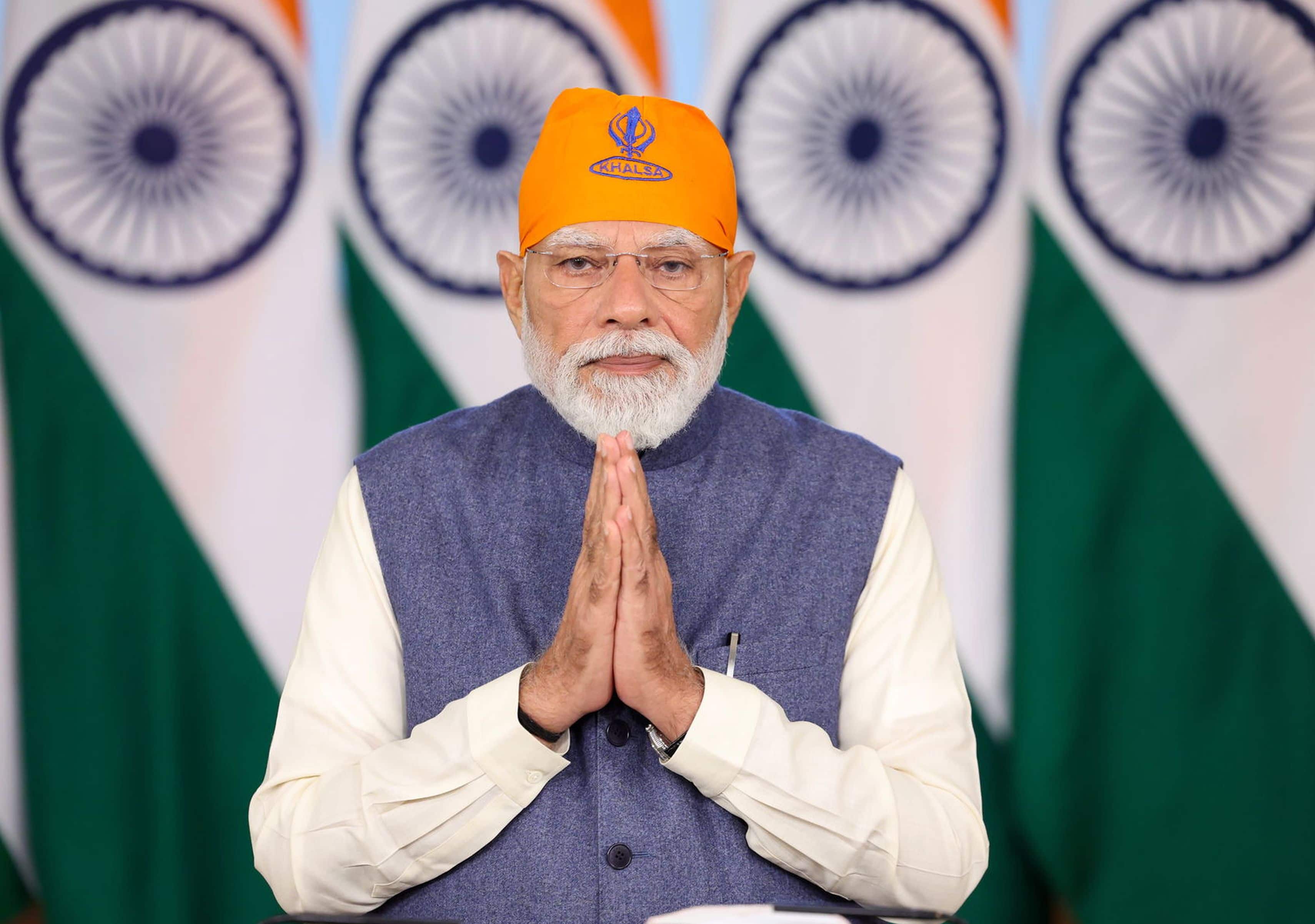
The Prime Minister emphasized that India's history is defined by bravery, harmony, and cooperation. He noted that through this event on the soil of Maharashtra,we are witnessing that very legacy. He remarked that during the era when the Gurus reached the pinnacle of sacrifice, social unity played a significant role, as people from every section drew inspiration from them to remain unwavering for truth and culture. “Traditions like the ‘Guru Nanak Naam-leva Sangat’ of Sri Guru Gobind Singh Ji were instrumental in that great yajna of social unity”, Highlighted Shri Modi.

Highlighting the importance of national cohesion, the Prime Minister noted that today, when the country once again needs social unity the most, this wonderful gathering of the ‘Sangat’ ,reassures the nation that the blessings of the Gurus and Saints are with us.

The Prime Minister described the Samagam as a continuous journey that began last year in Nagpur and deepened on the historic land of ‘Takht Sri Hazur Sahib, Nanded’. “In Navi Mumbai, this journey has reached a significant milestone, taking the history of Sri Guru Teg Bahadur Sahib Ji to every corner of Maharashtra, reaching thousands of villages and settlements”, emphasised Shri Modi. The Prime Minister specially congratulated the Government of Maharashtra for organizing this program.
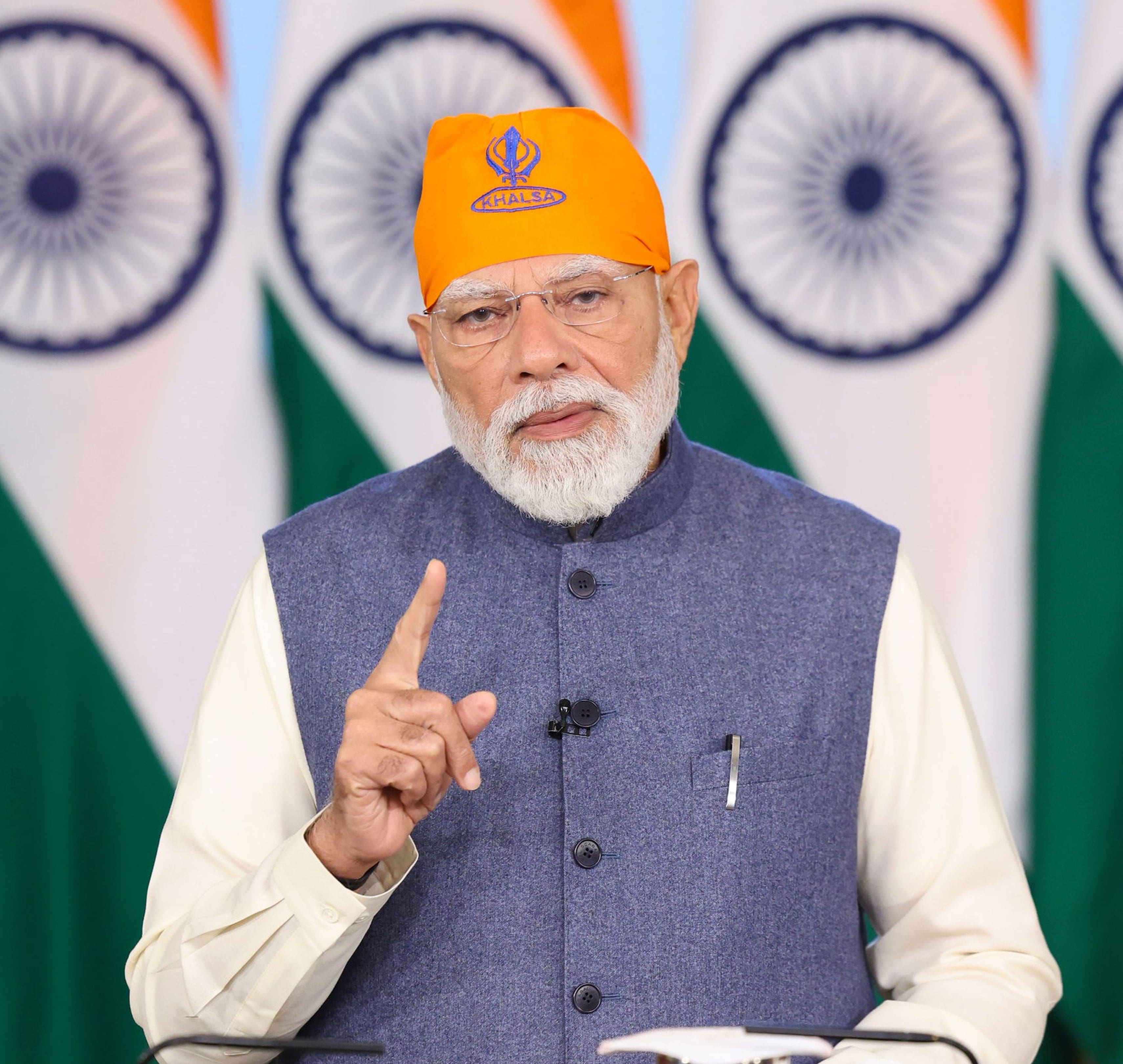
Recalling recent commemorations, the Prime Minister mentioned his privilege in attending an event in Kurukshetra, Haryana, and stated that the Union Government is celebrating every historic occasion related to the Guru Sahibs at the national level. Shri Modi listed milestones such as the 400th Prakash Purab of Sri Guru Teg Bahadur Sahib Ji, marked by a commemorative postage stamp and special coin, and the 550th Prakash Purab of Guru Nanak Dev Ji, noting that every occasion is celebrated with full devotion. He also highlighted the new national tradition of celebrating ‘Veer Bal Diwas’ annually in honor of the ‘Sahibzadas’.

The Prime Minister highlighted major achievements including the completion of the ‘Kartarpur Sahib Corridor’ in record time and the creation of new facilities for the ‘Sri Hemkund Sahib Yatra’. “ The government has provided relief under FCRA to organizations associated with Sikh bodies and Gurdwaras, while also ensuring Sikh history finds its rightful place in school curricula and cultural discourse, fulfilling tasks that the community had awaited for decades”, Shri Modi remarked.

Reiterating the government's commitment to respect and justice, the Prime Minister mentioned the formation of an SIT to investigate the 1984 riots and the reopening of closed cases, which led to punishments for the guilty. He also spoke about the additional compensation announced for the families of the 1984 victims and the more active role given to the National Commission for Minorities.
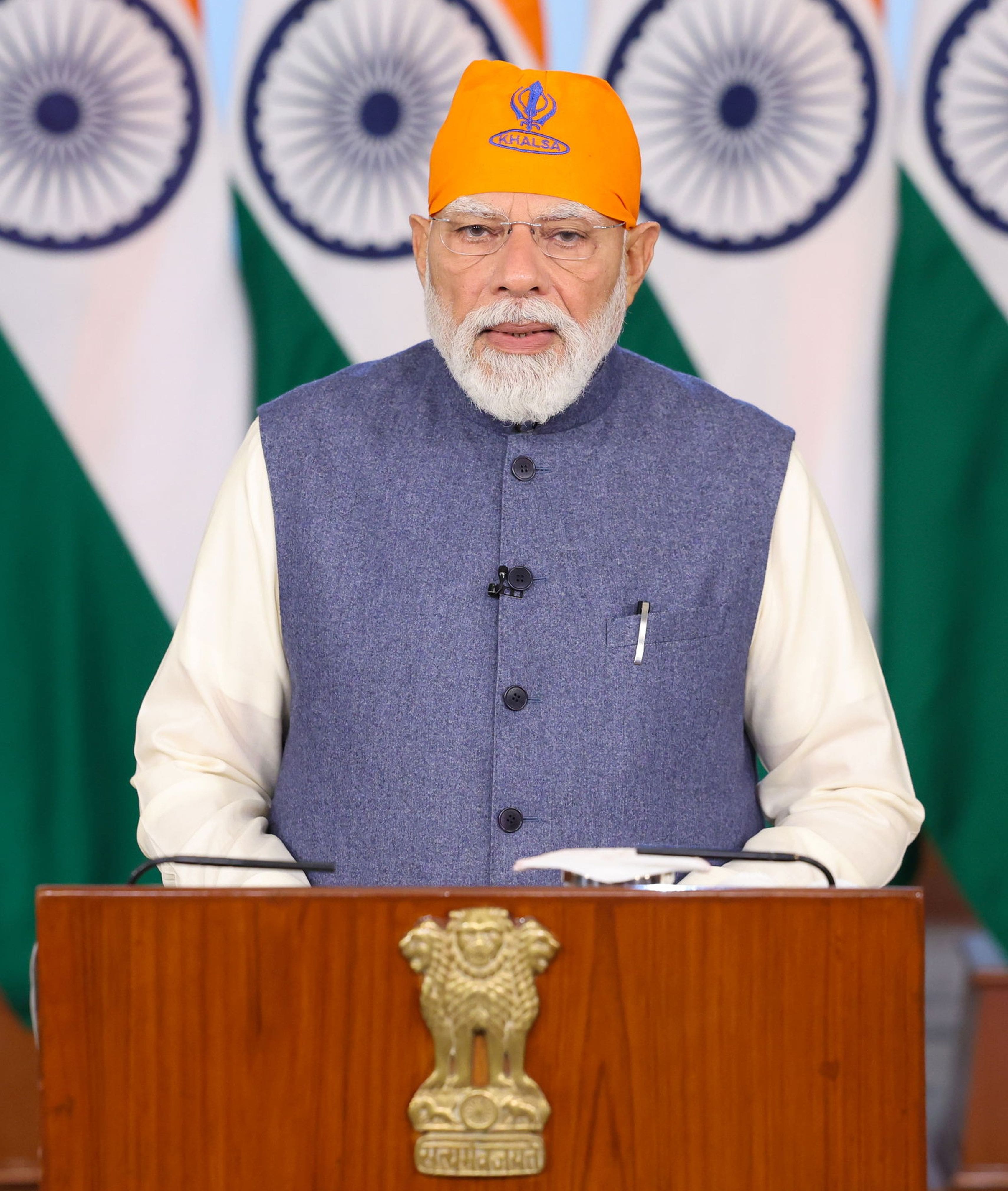
The Prime Minister spoke about the government's "mission mode" work regarding the safety of Sikh brothers in Afghanistan and the respectful return of the ‘Swaroop’ (forms) of the ‘Guru Granth Sahib’. “ The government cleared the way for citizenship for Afghan Sikhs and Hindus, provided relief through the CAA to persecuted refugees, and implemented rehabilitation packages for Sikh families in Jammu and Kashmir”, Shri Modi highlighted. PM Modi stated that OCI and visa rules were simplified, and thousands of names were removed from the blacklist to ease travel for overseas Sikhs.

The Prime Minister remarked, “respecting the faith of the Sikh community and creating new opportunities for their progress is considered both a responsibility and a privilege of service by the government”.

Concluding his address, the Prime Minister stated that the spirit of standing with courage and truth is as relevant today as it was in the past. “When the new generation connects with these values, tradition becomes a path to the future rather than just a memory”, Shri Modi emphasised. “The purpose of the Samagam is not just to remember history, but to internalize it in one’s conduct”, the Prime Minister concluded.

Click here to read full text speech

Explore More
શ્રી રામ જન્મભૂમિ મંદિર ધ્વજારોહણ ઉત્સવ દરમિયાન પ્રધાનમંત્રીના સંબોધનનો મૂળપાઠ

લોકપ્રિય ભાષણો

શ્રી રામ જન્મભૂમિ મંદિર ધ્વજારોહણ ઉત્સવ દરમિયાન પ્રધાનમંત્રીના સંબોધનનો મૂળપાઠ
India records highest-ever startup surge with 55,200 recognised in FY26

Media Coverage

India records highest-ever startup surge with 55,200 recognised in FY26
NM on the go

Nm on the go

Always be the first to hear from the PM. Get the App Now!
...
Cabinet approves two railway projects in Uttar Pradesh and Andhra Pradesh worth Rs 24,815 crore
April 18, 2026

The Cabinet Committee on Economic Affairs, chaired by the Prime Minister Shri Narendra Modi, today has approved 02 (Two) projects of Ministry of Railways with total cost of Rs. 24,815 crore (approx.). These projects include:

Name of Project

Route Length (in km)

Track Length (in km)

Completion Cost (Rs. in Cr.)

Ghaziabad – Sitapur 3rd and 4th Line

403

859

14,926

Rajahmundry (Nidadavolu) – Visakhapatnam (Duvvada) 3rd and 4th Line


198


458


9,889

Total

601

1,317

24,815

The increased line capacity will significantly enhance mobility, resulting in improved operational efficiency and service reliability for Indian Railways. These multi-tracking proposals are poised to streamline operations and alleviate congestion. The projects are in line with the Prime Minister Shri Narendra Modiji’s Vision of a New India which will make people of the region “Atmanirbhar” by way of comprehensive development in the area which will enhance their employment/ self-employment opportunities.

The projects are planned on PM-Gati Shakti National Master Plan with focus on enhancing multi-modal connectivity & logistic efficiency through integrated planning and stakeholder consultations. These projects will provide seamless connectivity for movement of people, goods, and services.

The 02 (Two) projects covering 15 Districts across the states of Uttar Pradesh and Andhra Pradesh will increase the existing network of Indian Railways by about 601 Kms.

The proposed capacity enhancement will improve rail connectivity to several prominent tourist destinations across the country, including Dudheshwarnath Temple, Garhmukteshwar Ganga Ghat, Dargah Shah Wilayat Jama Masjid (Amroha), Naimisharanya (Sitapur), Annavaram, Antarvedi, Draksharamam, etc.

The proposed projects are essential routes for transportation of commodities such as coal, foodgrains, cement, POL, iron and steel, container, fertilizers, sugar, chemical salts, limestone, etc. The Railways being environment friendly and energy efficient mode of transportation, will help both in achieving climate goals and minimizing logistics cost of the country lowering CO2 emissions (180.31Crore Kg) which is equivalent to plantation of 7.33 Crore trees.

Ghaziabad – Sitapur 3rd and 4th Line (403 Km)

  • Ghaziabad – Sitapur is an existing double line section forming a key part of Delhi- Guwahati High Density Network (HDN 4).
  • The project is crucial for improving connectivity between the Northern and Eastern region of the country.
  • The existing line capacity utilization of the section is up to 168% and is projected to be up to 207% in case the project is not taken up.
  • Transverses through Ghaziabad, Hapur, Amroha, Moradabad, Rampur, Bareilly, Sahjahanpur, Lakhimpur Kheri and Sitapur districts of Uttar Pradesh.
  • The project route passes through major industrial centres - Ghaziabad (machinery, electronics, pharmaceuticals), Moradabad (brassware and handicrafts), Bareilly (furniture, textiles, engineering), Shahjahanpur (carpets and cement-related industries), and Roza (thermal power plant).
  • For seamless transportation, the project alignment is planned to bypass congested stations of Hapur, Simbhaoli, Moradabad, Rampur, Bareilly, Shahjahanpur, and Sitapur and accordingly, six new stations are proposed on the bypassing sections.
  • Key tourist/religious places along/near to the project section are Dudheshwarnath Temple, Garhmukteshwar Ganga Ghat, Dargah Shah Wilayat Jama Masjid (Amroha), and Naimisharanya (Sitapur) among others.
  • Anticipated additional freight traffic of 35.72 MTPA consisting of Coal, Foodgrains, Chemical Manures, Finished Steel, etc.
  • Estimated Cost: Rs.14,926 crore (approx.)
  • Employment generation: 274 lakh human-days.
  • CO2 emissions saved: About 128.77 crore Kg CO2 equivalent to 5.15 Cr trees.

  • Logistic cost saving: Rs. 2,877.46 crore every year vis-a vis road transportation.

Ghaziabad – Sitapur 3rd and 4th Line (403 Km)

Rajahmundry (Nidadavolu) – Visakhapatnam (Duvvada) 3rd and 4th Line (198 Km)

  • Rajahmundry (Nidadavolu) – Visakhapatnam (Duvvada) section forms part of the Howrah – Chennai High Density Network (HDN).
  • The proposed project is part of quadrupling initiative of Howrah – Chennai High Density Network (HDN) route.
  • The project traverses through East Godavari, Konaseema, Kakinada, Anakapalle and Vishakapatnam districts of Andhra Pradesh.
  • Visakhapatnam is identified as an Aspirational District in the Aspirational Districts Programme.
  • It provides connectivity to major ports along the East Coast such as Visakhapatnam, Gangavaram, Machilipatnam and Kakinada.
  • The project route runs along the eastern coastline and is among the busiest, predominantly freight-oriented sections of the East Coast Rail Corridor.
  • The line capacity utilization of the section has already reached up to 130%, leading to frequent congestion and operational delays. The line capacity is expected to increase further due to proposed expansion of ports and industries in the region.
  • Project section includes 4.3 km rail bridge over Godavari River, 2.67 km viaduct, 3 bypasses and the new alignment is around 8 km shorter than the existing route, improving connectivity and operational efficiency.
  • The proposed section will also boost tourism by improving access to key destinations such as Annavaram, Antarvedi and Draksharamam etc.
  • Anticipated additional freight traffic of 29.04 MTPA consisting of Coal, Cement, Chemical Manures, Iron and Steel, Foodgrains, Containers, Bauxite, Gypsum, Limestone, etc.
  • Estimated Cost: Rs.9,889 crore (approx.)
  • Employment generation: 135 lakh human-days.
  • CO2 emissions saved: About 51.49 crore Kg CO2 equivalent to 2.06 Cr trees.

  • Logistic cost saving: Rs. 1,150.56 crore every year vis-a vis road transportation.


आर्थिक सशक्तिकरण:

Aspirational districts - Visakhapatnam district will get improved connectivity

Additional economic opportunities in the region through tourism & industries.

Better healthcare and education for the citizens due to enhanced rail connectivity.


Rajahmundry (Nidadavolu) – Visakhapatnam (Duvvada) 3rd and 4th Line (198 Km)

Prime Minister’s focus on railways:

  • Record budget allocation of Rs. 2,65,000 crore for FY 26-27.
  • Manufacturing more than 1600 locomotives- surpassed US and Europe in manufacturing of locomotive production
  • In FY 26, Indian Railways is expected to rank among the top three freight carriers globally, moving 1.6 billion tonnes of cargo.

  • India starts exporting metro coaches to Australia and bogie to United Kingdom, Saudi Arabia, France and Australia.