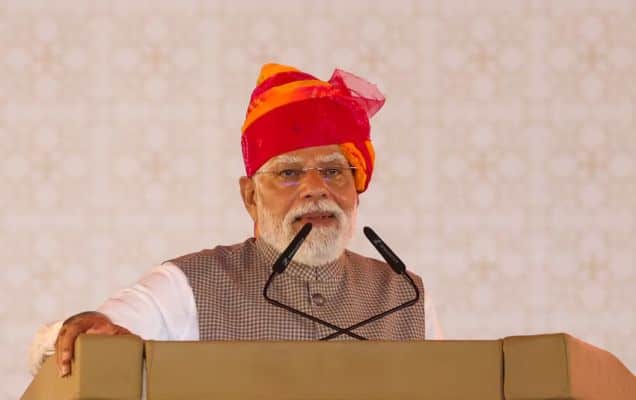
The Prime Minister delivered the inaugural address at the 125th Annual Session of Confederation of Indian Industries (CII) through video conference today. The theme of this years annual conference is “Building India for a New World : Lives, livelihood, growth”

Speaking on the occasion, Prime Minister Shri Narendra Modi said such online events are becoming the new normal due to Corona. This is also the biggest strength of human beings that makes a way out of every difficulty, he added. He said, “On the one hand, we have to take strict steps to fight this Virus and save the lives of the countrymen and on the other hand we have to stabilize the economy and speed it up.”
Referring to the theme of this year's annual session, the Prime Minister praised the indian industry for starting the discussion of "Getting Growth Back". He urged the industry to go beyond it and said “Yes! We will definitely get our growth back.” He said that his trust in India's Capabilities and Crisis Management, in India's Talent and Technology, in its Innovation and Intellect of India, in the Farmers of India, MSME’s, Entrepreneurs makes him confident about getting the growth back.
PM said Corona may have slowed down the speed of the growth, but today the biggest fact is that India has overtaken the lockdown phase and entered in the Un-Lock Phase one. A large part of Economy has opened in Un-Lock Phase one. A lot is going to open after 8th June. Getting Growth Back has started, he added.

The Prime Minister emphasized that when Coronavirus was spreading in the world, India took the right steps at the right time. He said “Today we get to know how widespread the effect of lockdown in India is, by comparing it with other countries.” He said “Re-strengthening Economy against Corona is one of our highest priorities.” For this, the government is taking the decisions that are required immediately and also those that are required in the long run, he added.
The Prime Minister listed the steps taken by the Government in helping people during this crisis situation. Pradhan Mantri Garib Kalyan Yojana has helped a lot in providing immediate benefits to the poor. Ration has been delivered to about 74 crore Beneficiaries under this scheme. Free ration is also being provided to migrant workers. Be it women, disabled persons, elderly, laborers, everyone has benefited from it. During the lockdown, the government has delivered more than 8 crore gas cylinders to the poor - that too free. 50 lakh private employees have got the Government contribution of 24% of EPF amount in their bank accounts, which amounts to Rs.800 Crore.
Prime Minister listed 5 things which are very important to build a Aatmanirbhar Bharat and to bring India back on the path of rapid development, viz. Intent, Inclusion, Investment, Infrastructure and Innovation. These are reflected in the bold decisions taken by the Government recently, he added. He also said that many sectors have been made ready for the future.
The PM said “For us reforms are not any random or scattered decisions. For us reforms are systemic, planned, integrated, inter-connected and futuristic processes. For us, reforms means having the courage to take decisions, and taking them to a logical conclusion.” He listed out the initiatives of the Government to make an encouraging ecosystem for the private enterprises like Insolvency and Bankruptcy Code (IBC), Bank merger, GST and Faceless IT assessment.
The Prime Minister further said that the government is also doing such policy reforms which the country had given up hope. In the agriculture sector, the Prime Minister said the rules and regulations made after independence, left the farmers in the hands of middlemen. After amendment in Agricultural Produce Market Committee (APMC) Act, now farmers have the right to sell to anyone, in any state of the country.
The PM said that labour reforms are being done to increase employment opportunities, keeping the welfare of our workers in mind. Non-strategic sectors in which the private sectors were not allowed, have also been opened. Commercial mining is now allowed in the coal sector, he added. Prime Minister said “In the direction the government is moving, be it our mining sector, energy sector, or research and technology, industry will also get opportunities in every field, and new opportunities will also open for youths. Going beyond all this, now the participation of private players in the strategic sectors of the country is also becoming a reality. Whether you want to invest in the space sector, or want to explore new opportunities in atomic energy, the possibilities are completely open for you.”
The Prime Minister said the Micro, Small and Medium Enterprises (MSME) sector is like an economic engine of our country and contributes around 30% of the GDP. He said that a long time demand of the industry to update the definition of MSMEs has been fulfilled. This will enable MSMEs to grow without any worries and they will not have to follow other paths to maintain the status of MSMEs. Global tenders have been scrapped in government procurement of up to Rs 200 crores to benefit crores of associates working in MSMEs of the country, he added.
PM said that the expectation of India from the world has increased and they trust India more. India helped more than 150 countries with medical supplies, he added. The Prime Minister said that the world is looking for a trusted, reliable partner. In India, there is a potential, strength and ability. He urged the industry to take full advantage of the trust that has developed towards India.
He stressed that Getting Growth Back is not so difficult either. The biggest thing is that now Indian Industries have a clear path that is Aatmanirbhar Bharat. He clarified that Aatmanirbhar Bharat means that we will become stronger and embrace the world. Aatmanirbhar Bharat means to be fully integrated with the world economy and also supportive.
The Prime Minister stressed the need to invest for the creation of a Robust Local Supply Chain that strengthens India's stake in the Global Supply Chain. He gave a call for big institutions like CII to come forward in a new role post-Corona to make India self reliant. He stressed for the need to have products made in the country, made for the world. He urged the industry to set targets to increase productivity in all sectors. He praised the industry for having created Personal Protective Equipments - PPEs industry worth hundreds of crores within 3 months.
The Prime Minister urged the industry to take full advantage of opening up investment and partnership with farmers in the rural economy. Now necessary infrastructure is being prepared for clusters of local agro products near the village. He said that the government considers the private sector as a partner for the country's development journey. He promised that every need of the industry related to the Aatmanirbhar Bharat Abhiyan will be taken care of. He asked the industry to pledge to make the country self-sufficient and put their full strength to fulfill this resolve.
ये भी इंसान की सबसे बड़ी ताकत होती है कि वो हर मुश्किल से बाहर निकलने का रास्ता बना ही लेता है।
— PMO India (@PMOIndia) June 2, 2020
आज भी हमें जहां एक तरफ इस Virus से लड़ने के लिए सख्त कदम उठाने हैं वहीं दूसरी तरफ Economy का भी ध्यान रखना है: PM @narendramodi
हमें एक तरफ देशवासियों का जीवन भी बचाना है तो दूसरी तरफ देश की अर्थव्यवस्था को भी Stabilize करना है, Speed Up करना है।
— PMO India (@PMOIndia) June 2, 2020
इस Situation में आपने “Getting Growth Back” की बात शुरू की है और निश्चित तौर पर इसके लिए आप सभी, भारतीय उद्योग जगत के लोग बधाई के पात्र हैं: PM @narendramodi
बल्कि मैं तो Getting Growth Back से आगे बढ़कर ये भी कहूंगा कि Yes ! We will definitely get our growth back.
— PMO India (@PMOIndia) June 2, 2020
आप लोगों में से कुछ लोग सोच सकते हैं कि संकट की इस घड़ी में, मैं इतने Confidence से ये कैसे बोल सकता हूं?
मेरे इस Confidence के कई कारण है: PM @narendramodi
मुझे भारत की Capabilities और Crisis Management पर भरोसा है।
— PMO India (@PMOIndia) June 2, 2020
मुझे भारत के Talent और Technology पर भरोसा है।
मुझे भारत के Innovation और Intellect पर भरोसा है।
मुझे भारत के Farmers, MSME’s, Entrepreneurs पर भरोसा है: PM @narendramodi
कोरोना ने हमारी Speed जितनी भी धीमी की हो, लेकिन आज देश की सबसे बड़ी सच्चाई यही है कि भारत, लॉकडाउन को पीछे छोड़कर Un-Lock Phase one में Enter कर चुका है।
— PMO India (@PMOIndia) June 2, 2020
Un-Lock Phase one में Economy का बहुत बड़ा हिस्सा खुल चुका है: PM @narendramodi
आज ये सब हम इसलिए कर पा रहे हैं, क्योंकि जब दुनिया में कोरोना वायरस पैर फैला रहा था, तो भारत ने सही समय पर, सही तरीके से सही कदम उठाए।
— PMO India (@PMOIndia) June 2, 2020
दुनिया के तमाम देशों से तुलना करें तो आज हमें पता चलता है कि भारत में lockdown का कितना व्यापक प्रभाव रहा है: PM @narendramodi
कोरोना के खिलाफ Economy को फिर से मजबूत करना, हमारी highest priorities में से एक है।
— PMO India (@PMOIndia) June 2, 2020
इसके लिए सरकार जो Decisions अभी तुरंत लिए जाने जरूरी हैं, वो ले रही है।
और साथ में ऐसे भी फैसले लिए गए हैं जो Long Run में देश की मदद करेंगे: PM @narendramodi
प्रधानमंत्री गरीब कल्याण योजना ने गरीबों को तुरंत लाभ देने में बहुत मदद की है।
— PMO India (@PMOIndia) June 2, 2020
इस योजना के तहत करीब 74 करोड़ Beneficiaries तक राशन पहुंचाया जा चुका है। प्रवासी श्रमिकों के लिए भी फ्री राशन पहुंचाया जा रहा है: PM @narendramodi
महिलाएं हों, दिव्यांग हों, बुजुर्ग हों, श्रमिक हों, हर किसी को इससे लाभ मिला है।
— PMO India (@PMOIndia) June 2, 2020
लॉकडाउन के दौरान सरकार ने गरीबों को 8 करोड़ से ज्यादा गैस सिलेंडर डिलिवर किए हैं- वो भी मुफ्त: PM @narendramodi
भारत को फिर से तेज़ विकास के पथ पर लाने के लिए, आत्मनिर्भर भारत बनाने के लिए 5 चीजें बहुत ज़रूरी हैं।
— PMO India (@PMOIndia) June 2, 2020
Intent, Inclusion, Investment, Infrastructure और Innovation.
हाल में जो Bold फैसले लिए गए हैं, उसमें भी आपको इन सभी की झलक मिल जाएगी: PM @narendramodi
हमारे लिए reforms कोई random या scattered decisions नहीं हैं।
— PMO India (@PMOIndia) June 2, 2020
हमारे लिए reforms systemic, planned, integrated, inter-connected और futuristic process है।
हमारे लिए reforms का मतलब है फैसले लेने का साहस करना, और उन्हें logical conclusion तक ले जाना: PM @narendramodi
सरकार आज ऐसे पॉलिसी reforms भी कर रही है जिनकी देश ने उम्मीद भी छोड़ दी थी।
— PMO India (@PMOIndia) June 2, 2020
अगर मैं Agriculture सेक्टर की बात करूं तो हमारे यहां आजादी के बाद जो नियम-कायदे बने, उसमें किसानों को
बिचौलियों के हाथों में छोड़ दिया गया था: PM @narendramodi
हमारे श्रमिकों के कल्याण को ध्यान में रखते हुए, रोजगार के अवसरों को बढ़ाने के लिए labour reforms भी किए जा रहे हैं।
— PMO India (@PMOIndia) June 2, 2020
जिन non-strategic sectors में प्राइवेट सेक्टर को इजाजत ही नहीं थी, उन्हें भी खोला गया है: PM @narendramodi
सरकार जिस दिशा में बढ़ रही है, उससे हमारा mining sector हो, energy sector हो, या research और technology हो, हर क्षेत्र में इंडस्ट्री को भी अवसर मिलेंगे, और youths के लिए भी नई opportunities खुलेंगी: PM @narendramodi
— PMO India (@PMOIndia) June 2, 2020
इस सबसे भी आगे बढ़कर, अब देश के strategic sectors में भी private players की भागीदारी एक Reality बन रही है।
— PMO India (@PMOIndia) June 2, 2020
आप चाहे space sector में निवेश करना चाहें, atomic energy में नयी opportunities को तलाशना चाहें, possibilities आपके लिए पूरी तरह से खुली हुई है: PM @narendramodi
MSMEs की Definition स्पष्ट करने की मांग लंबे समय से उद्योग जगत कर रहा था, वो पूरी हो चुकी है।
— PMO India (@PMOIndia) June 2, 2020
इससे MSMEs बिना किसी चिंता के Grow कर पाएंगे और उनको MSMEs का स्टेट्स बनाए रखने के लिए दूसरे रास्तों पर चलने की ज़रूरत नहीं रहेगी: PM @narendramodi
स्वभाविक है कि इस समय नए सिरे से मंथन चल रहा है।
— PMO India (@PMOIndia) June 2, 2020
और ऐसे समय में, भारत से दुनिया की अपेक्षा- Expectations और बढ़ीं हैं।
आज दुनिया का भारत पर विश्वास भी बढ़ा है और नई आशा का संचार भी हुआ है: PM @narendramodi
World is looking for a trusted, reliable partner.
— PMO India (@PMOIndia) June 2, 2020
भारत में potential है, strength है, ability है।
आज पूरे विश्व में भारत के प्रति जो Trust Develop हुआ है, उसका आप सभी को, भारत की Industry को पूरा फायदा उठाना चाहिए: PM @narendramodi
“Getting Growth Back” इतना मुश्किल भी नहीं है।
— PMO India (@PMOIndia) June 2, 2020
और सबसे बड़ी बात कि अब आपके पास, Indian Industries के पास, एक Clear Path है।
आत्मनिर्भर भारत का रास्ता: PM @narendramodi
आत्मनिर्भर भारत का मतलब है कि हम और ज्यादा strong होकर दुनिया को embrace करेंगे।
— PMO India (@PMOIndia) June 2, 2020
आत्मनिर्भर भारत world economy के साथ पूरी तरह integrated भी होगा और supportive भी: PM @narendramodi
हमें अब एक ऐसी Robust Local Supply Chain के निर्माण में Invest करना है, जो Global Supply Chain में भारत की हिस्सेदारी को Strengthen करे।
— PMO India (@PMOIndia) June 2, 2020
इस अभियान में, मैं CII जैसी दिग्गज संस्था को भी post-Corona नई भूमिका में आगे आना होगा: PM @narendramodi
अब जरूरत है कि देश में ऐसे Products बनें जो Made in India हों, Made for the World हों।
— PMO India (@PMOIndia) June 2, 2020
कैसे हम देश का आयात कम से कम करें, इसे लेकर क्या नए लक्ष्य तय किए जा सकते हैं?
हमें तमाम सेक्टर्स में productivity बढ़ाने के लिए अपने टार्गेट तय करने ही होंगे: PM @narendramodi
मैं बहुत गर्व से कहूंगा कि सिर्फ 3 महीने के भीतर ही Personal Protective Equipment -PPE की सैकड़ों करोड़ की इंडस्ट्री आपने ही खड़ी की है: PM @narendramodi
— PMO India (@PMOIndia) June 2, 2020
Rural Economy में Investment और किसानों के साथ Partnership का रास्ता खुलने का भी पूरा लाभ उठाएं।
— PMO India (@PMOIndia) June 2, 2020
अब तो गांव के पास ही लोकल एग्रो प्रोडक्ट्स के क्लस्टर्स के लिए ज़रूरी इंफ्रास्ट्रक्चर तैयार किया जा रहा है। इसमें CII के तमाम मेंबर्स के लिए बहुत Opportunities हैं: PM @narendramodi
हमारी सरकार प्राइवेट सेक्टर को देश की विकास यात्रा का Partner मानती है।
— PMO India (@PMOIndia) June 2, 2020
आत्मनिर्भर भारत अभियान से जुड़ी आपकी हर आवश्यकता का ध्यान रखा जाएगा।
आपसे, सभी स्टेकहोल्डर्स से मैं लगातार संवाद करता हूं और ये सिलसिला आगे भी जारी रहेगा: PM @narendramodi
देश को आत्मनिर्भर बनाने का संकल्प लें।
— PMO India (@PMOIndia) June 2, 2020
इस संकल्प को पूरा करने के लिए अपनी पूरी ताकत लगा दें।
सरकार आपके साथ खड़ी है, आप देश के लक्ष्यों के साथ खड़े होइए: PM @narendramodi