Indian Prime Minister Narendra Modi’s first two years in office haven’t included the overhauling of economic policy some had anticipated. Mr. Modi has turned out to be more of an economic policy tinkerer than the radical reformer some optimists had expected
Despite the disappointment of the investors and executives who had hoped Mr. Modi would become New Delhi’s most business-friendly prime minister ever, India’s economy has been doing better: Better relative to other countries and much better compared with the country before Mr. Modi and his party took over in New Delhi.

A look at 12 key indicators shows that Asia’s third-largest economy is now on much better footing than it was under the last government led by the Congress party and headed by Manmohan Singh.
In the fiscal year ended March 31, India’s gross domestic product rose 7.6%, helping it overtake China as the fastest-growing big economy in the world. That’s up from 6.6% in the last full fiscal year Congress was in power.
Inflation is almost half ofwhat it was at a couple of years ago. India’s budget deficit has shrunk to 3.9% of GDP from 4.4%. Foreign-direct investment and foreign exchange reserves have reached new peaks.
“India’s macroeconomic prospects have definitely improved relative to the period just before Prime Minister Narendra Modi took office,” said Chua Han Teng, Asia analyst at BMI Research.
Of the 12 indicators picked by The Wall Street Journal, as many as eight did better during the last fiscal year compared with the year before Mr. Modi came to power.
India’s stock market, exports and the money raised through the sale of stakes in state-controlled companies were all better during Prime Minister Singh’s last year but otherwise India seemed to experience some sort of Modi momentum.
Mr. Modi’s government has relaxed foreign-investment rules in more than a dozen sectors including insurance, pensions and railways, cut red tape and pushed through legislative proposals to simplify bankruptcy procedures and strengthen intellectual property rights. It has also fast-tracked road building, railway and highways expansion.
It has had some big legislative failures including the inability to get lawmakers’ approval for the crucial Goods and Services Tax as well as a new law to streamline the process of acquiring land for important projects.

Meanwhile, the strong economic fundamentals has not been doing much to lift corporate profits or consumer spending and India’s banks have been struggling to control a growing mountain of bad debt. Skeptics also point to the fact that much of India’s world-beating growth is a result of change last year in how GDP is calculated.
The Associated Chambers of Commerce and Industry of India scores the government seven out of 10 for its work in the past two years, describing it as a “work in progress.”
Some economists say the Modi administration needs more time for its policies to bear fruit.
“We think most investors under-appreciate the medium- to long-term positive impact of some of the policies being pursued by the current government,” Standard Chartered Bank said in a research note. “Although policy changes have been gradual and incremental, they are moving in the right direction.”
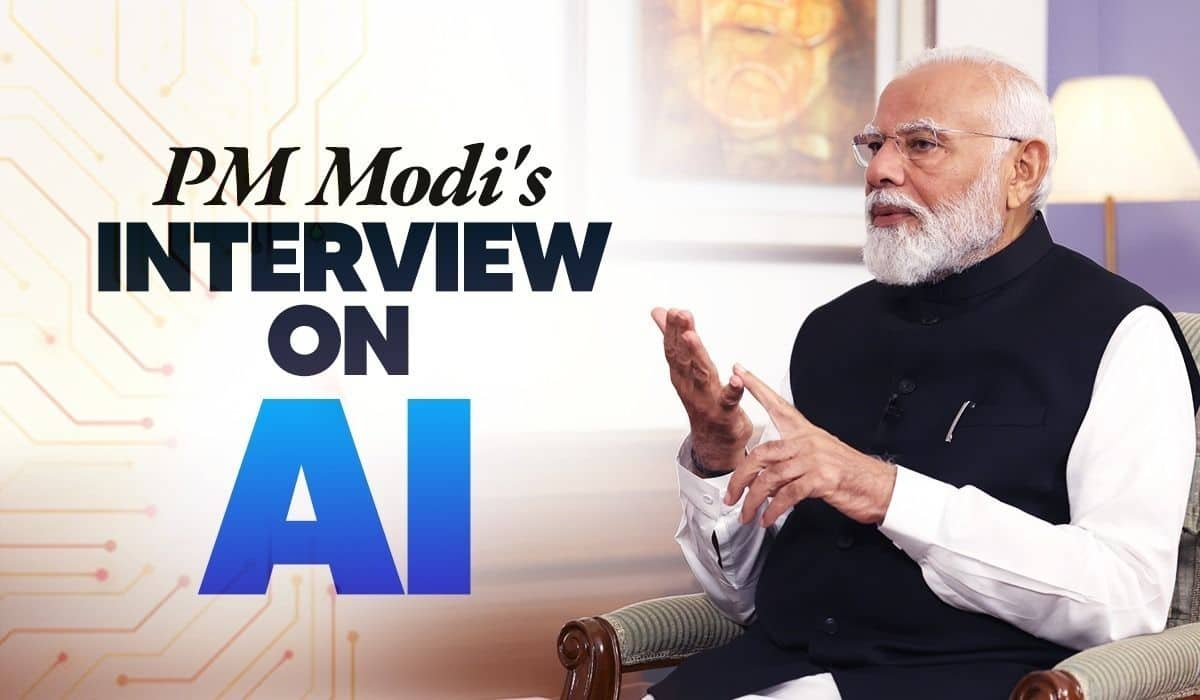
Read an Edited Transcript of The Wall Street Journal’s Interview With Indian Prime Minister Narendra Modi
WSJ: Tim Cook was just in India. He seemed to enjoy his trip. Did that go well?
Mr. Modi: This was Tim Cook’s first visit to India. He was very excited about it. I think he got exposed to the full strength and measure of India’s diversity. I am myself quite techno savvy so I think our wavelengths matched quite quickly.
WSJ: I think it’s fair to say that when you were elected there was a tremendous amount of excitement around the world about your extraordinary victory. We’re two years in now from the initial excitement. How so far is the process of transforming and improving the Indian economy?
Mr. Modi: My election in 2014 had a context. There was a sense of policy paralysis, bad economic conditions and corruption. These issues were widespread and shadowed my country in 2012 and 2013. My biggest challenge was to end this environment of gloom and restore confidence.
Two years down the line, I can say with utmost confidence and a sense of belief that India has regained the trust and the strength that it is supposed to have. If you look at the statements that emanated around the time that the elections took place, what people used to say about BRICS was that the ‘I’ has fallen off. I think I can safely say that I have taken India to a position now where ‘I’ is actually topping the BRICS.
When I referred to a sense of policy paralysis, it was also accompanied by a sense of negativity and a sense of deep inertia in the government machinery.
If you see my Jan Dhan Yojana, you’ll find that I mobilized the whole government machinery so that in a definite period of time, the country’s poorest could be linked to the mainstream of the economy, its banking system. I can actually give scores of other examples like this.
The third issue when my government took over was corruption and the lack of transparency in government decision-making. My country had lost a lot of face on account of corruption relating to the coal scam, the scam involving auctions of the 2G network. But within a short and fixed time period, we have ensured transparency. Auctions are now actually held openly and online in front of media.
WSJ: All of those things have clearly changed in the past two years, but it is also true that people were expecting certain major reforms that your government has proposed, like land acquisition and changes in tax structure. You haven’t yet been able to achieve those. Were we right to expect those changes?
Mr Modi: Do allow me to respond to that in a slightly lighter vein if I may. When I came to the government, I used to sit down with all the experts and ask them to define for me what is the “big bang” for them. What are the reforms that they think would be categorized as “big bang?” I am sorry to say, but nobody could tell me clearly what was the “big bang” that they were looking for.
Secondly, in so far as the Land Acquisition Act is concerned, it was not there either in my party’s manifesto, or on my party’s agenda. But after we came into the government, my minister in charge of rural development chaired a meeting of chief ministers of different states. We found all the chief ministers, irrespective of their party affiliation, stating clearly that they will not really be able to undertake major development initiatives in their states unless this law was changed. So when all the chief ministers of different states of India requested the government, we, naturally, thought of taking it to Parliament. So we took the decision to take the Land Acquisition Act to Parliament. But what happened was that as soon as it was taken to Parliament, parties started taking a political position. When that happened, we called the chief ministers again and asked them how they wanted us to proceed. And their response was that the government should leave it to them to decide because it is a state subject. If we want to move forward, we’ll reform, if we don’t want to move forward, we won’t. They said this is their subject and the federal government shouldn’t get involved.
Some of the state governments have gone ahead and undertaken such reforms and the central government has supported that.
In India, reform in the insurance sector, reform in the defense sector, reform in the Bankruptcy Code had been pending for years. So I have actually undertaken the maximum reforms in the last two years. Now, had all these reforms not taken place, people would have said Modi’s “big bang” is stuck. Now that these have happened, it is no longer considered “big bang.”
In fact, if you were to compare the “big bang” reforms of the last 10 years with what we have done in the last two years, you will find that far more reforms have been undertaken in the last two years.
WSJ: In two years, have you created a more dynamic Indian economy as a result of what you have done? What else do you need to do?
Mr. Modi: See, so far as the Land Acquisition Act is concerned, it is over now. State governments can go ahead and we will give them permission. So what is actually called reform has happened. As far as GST is concerned, we expect to realize it within this year. By and large, all parties except the Congress are on board. We will get by in the numbers game [in Parliament’s upper house] also.
I have an enormous task ahead for myself and a dream for my country. Currently, the relationship between the federal government and the states essentially works as a cooperative federalism. What I am trying to do is to create a concept of competitive cooperative federalism so that there is some competition among the state governments in so far as their economic growth is concerned.
What I also want is to structure the country’s economy around the three pillars: one third each of agriculture, manufacturing and services, which I think is important for balanced and sustainable growth of the country’s economy. A major priority for me is, of course, the youth. The youth, in fact, matters a lot to me because around 800 million of India’s population is below 35 years of age and to create a skill set for that youth population, to create job opportunities for them, is a priority and a focus area for my government. Traditionally, you would hear of private and public sectors, two sectors that provide for the bulk of job opportunities. My focus is to create a third sector, the personal sector. Essentially implying that a person doesn’t merely look for jobs in the market but actually becomes a provider of jobs. He becomes a job creator through entrepreneurship.
WSJ: The last NDA government under Prime Minister Vajpayee was praised and made a big mark with the privatization of public-sector companies. Should we expect that and, if not, what does that tell people about how you view the role of the private sector in helping you achieve your goals?
Mr. Modi: Actually, in any developing country in the world, both the public sector and the private sector have a very important role to play. You can’t suddenly get rid of the public sector, nor should you. But if you look at the last two years of my government, and if you look at the entire post-independence phase of the country, you will find that in terms of money volumes the maximum disinvestment has taken place in the last two years.
WSJ: So no privatization, then?
Mr. Modi: Disinvestment has taken place in that process. I’ll talk about privatization. In defense, in my country, there was no private investment. Today I have allowed it to 100%. In insurance, private investment was not allowed. I have allowed it. In the railways, I have for the first time developed a public-private partnership model for railway stations, which will raise the economic strength and efficiency of railways. I have allowed 100% foreign direct investment in the railways. I’ve taken all these initiatives in two years, and you can see the big results.
WSJ: Do you believe that colonial-era labor laws need to be changed? Is there a reform program for BJP–ruled states that you can prescribe that other states can then emulate? Right now, the process is quite slow.
Mr. Modi: I don’t think the process has been slow. It has actually been fairly rapid. If you take, for example, my government’s target to develop smart cities all around India, we are actually working on something known as “the challenge route,” which has expedited interest among states to develop smart cities within their own jurisdiction. If you look at the ease of doing business, we have partnered with states very intensely and very extensively. As a result of that, in the World Bank’s ratings of countries in terms of ease of doing business, India has jumped about 12 points in a short span of time.
Our focus is to associate as many states as possible irrespective of their political affiliation. Because ultimately every state is a key unit of economic activity within the country and we realize that we can’t really progress without them.
Labor reform should not just mean “in the interest of industry.” Labor reform should also be in the interest of the laborer. I am in favor of different kinds of reforms so that we have a win-win situation for both. We have changed the laws for internships. We had an inspector raj earlier under which inspectors would turn up for inspection anywhere at will. But we said no, there shall be a computer draw and an inspector can visit only that company so that the company is not harassed. There are some states that don’t have industry but are primarily agricultural. They don’t need labor reform. Those states that have a substantial manufacturing sector, they need labor reform. And their state assemblies can adopt them. It is a joint subject of the states and the center, and if they send it to me, I will allow them.
WSJ: Do you need to ease hire and fire rules?
Mr. Modi: This is a western phrase. In India, we have an environment of closeness. In our social milieu, in a family, the grandfather may be a driver and when he gets old, his grandson may be doing the driving. But all three remain employed in the family. That is our environment. You need to understand that environment. Just a play of words won’t work. You have to move beyond that.
WSJ: I travel a lot in Asia and everywhere I speak to governments they express concern about China’s increasing assertiveness. The U.S. is very keen on India, the rising power that India is, to be part of, if not an alliance, then at least a grouping that can stand up to some extent to China. Where do you see India taking a position on the global stage?
Mr. Modi: There is no reason to change India’s non-alignment policy that is a legacy and has been in place. But this is true that today, unlike before, India is not standing in a corner. It is the world’s largest democracy and fastest growing economy. We are acutely conscious of our responsibilities both in the region and internationally.
So far as the relationship with the U.S. is concerned, it’s the world’s oldest democracy and we are the largest. Many of our values match. Our friendship has endured, be it a Republican government or a Democratic. It is true that Obama and I have a special friendship, a special wavelength. Beyond our bilateral relationship, whether it is global warming or terrorism, we have similar thoughts, so we work together. But India doesn’t make its policies in reference to a third country. Nor should it.
We don’t have any fighting with China today. We have a boundary dispute, but there is no tension or clashes. People-to-people contacts have increased. Trade has increased. Chinese investment in India has gone up. India’s investment in China has grown. Despite the border dispute, there haven’t been any clashes. Not one bullet has been fired in 30 years. So the general impression that exists, that’s not the reality.

WSJ: But you have talked recently about countries taking an 18th century expansionist approach to the region, to Asia. I am guessing you were referring to China there. Is that correct? Would you be willing to work more closely militarily with the U.S. and Japan to reassure others in the region that are concerned about China?
Mr. Modi: There are two issues. It is my general principle that 18th century thinking won’t work in the 19th, 19th century thinking won’t work in the 20th, 20thcentury thinking won’t work in the 21st. My philosophy in this broad perceptive is that there was an era of expansionism, but today is the era of development. I have said for many years that our focus should be development.
There was an age when the world was divided into two camps. That is not true anymore. Today, the whole world is interdependent. Even if you look at the relationship between China and the U.S., there are areas where they have substantial differences but there are also areas where they have worked closely. That’s the new way. If we want to ensure the success of this interdependent world, I think countries need to cooperate but at the same time we also need to ensure that there is a respect for international norms and international rules.
WSJ: I want to ask your response to these three words: President Donald Trump
Mr. Modi: If I was a political worker, I could have commented on that. But I am the prime minister of the world’s largest democracy. My views on the internal politics of any country and that too at the peak of their election cycle won’t be in fitness of honoring democratic values. I should maintain my discipline.
As an aside, if elections were ongoing in the U.K., I wouldn’t comment [on Brexit.] But no elections are ongoing and there is a discussion there about whether it should or not stay in Europe. I have said publicly that for us, the U.K. is the gateway to Europe and, in the situation that the world is in, a united Europe would be favorable.
WSJ: You’ve heard what Donald Trump has said about Muslims and about a temporary ban on Muslims entering the U.S. Your country has nearly 200 million Muslims, the second largest Muslim population in the world. That must be of concern to a lot of Indians. Is it of concern to you when you hear something like that from a man who could be the President of the U.S.?
Mr. Modi: I think that an election is taking place there. These are issues of debate in the election. A government shouldn’t respond to that. After a new government is formed, if they bring any new thoughts, whoever wins, we will surely respond as a government. But as a part of the election debate many things will be said there, who ate what, who drank what, how can I respond to everything?
WSJ: Do you support the reappointment of Mr. Rajan, the central bank governor?
Mr. Modi: I don’t think this administrative subject should be an issue of interest to the media. Besides, it will come up only in September.
In supplemental written responses to questions, Mr. Modi said:
WSJ: Your election has sparked enormous optimism about the Indian economy. What are the most important steps India can take to thrive in the changing global economic order?
Mr. Modi: When we took office, the economy was in a nose-dive with policy paralysis, rampant corruption and loss of confidence among both domestic and international investors. Our first task was to end the dive and bring the economy to a level flight path. The second task was to begin to ascend. We have successfully done both. It is a paradox that when global growth was consistently high, India did not take advantage of it, and now when India has taken off, the global economy is doing badly.
In two years, we have done a lot to position India to thrive in the changing world. To set a strong foundation for sustainable growth, we have run the most prudent macro-economic administration in decades, reducing fiscal and current account deficits. We have made India a destination which welcomes capital by liberalizing foreign-direct investment policy, increasing the ease of doing business and bringing predictability in taxation. We will continue our upward trajectory on all of these.
WSJ: When you think about building the Indian economy of the future, which countries do you look to as models? Which countries provide cautionary tales?
Mr. Modi: India is such a large and diverse country that we can learn from different countries in different areas and follow those best practices. We can learn from American regulatory practices, Japanese quality improvement, European social protection etc. But above all our model has to be our own, rooted in our ethos.
As regards cautionary tales, I believe that our growth model has to stay close to Indian ‘sanskriti’ or culture to avoid the environmental problems of the developed world. This teaches us to live life in moderation, care for nature and avoid waste. Our forefathers always consumed less than they could have, and left more for the next generation. This applies to the environment as much as to the economy. I think this ethos will help India not only achieve sustainable growth but also improve the environment at the same time, and show a new path to the world.
WSJ: What is the proper role for the state in the economy?
Mr. Modi: The role of the State in the economy is best described in my maxim “Minimum Government, Maximum Governance.” The state should be an enabler: a fair and transparent enabler creating an environment for sustainable growth and job creation, and giving a sense of belief to the people.
In a developing economy, state enterprises do have a role in some sectors. They have to be managed professionally and efficiently. We have given them operational freedom and brought in talent from the private sector as well to facilitate this. The state need not do business in certain sectors. We have a new policy on strategic disinvestment. We are in the process of identification of entities for strategic sale.
WSJ: Is India ready to scale back this entitlement spending? What would be the political consequences of doing that?
Mr. Modi: Programs to provide a social-security net are found in every country including yours, where you provide unemployment benefits and food stamps. In the case of NREGA, instead of a dole, some form of employment is provided. After coming to power, we have given priority to the dignity of labor, for which economic empowerment is the first step. We are eliminating through technology the leakages which were discrediting such programs. We are re-orienting them towards creating assets like water bodies which protect the environment, and towards creating permanent skills through training.
WSJ: How is being prime minister different from being chief minister in Gujarat?
Mr. Modi: Only a few other prime ministers had worked earlier as chief minister and none of them had spent as much time as I had as chief minister. In our federal structure, most of the programs that touch the common citizen are implemented at the state level. Therefore I have found, as prime minister, that my experience as chief minister is my greatest strength. I believe in cooperative federalism and all the states are equal partners. We make no distinction between states ruled by different parties and actively encourage all states to promote reforms that benefit the country.
WSJ: Do you think India is growing at its full potential?
Mr. Modi: Our current growth has to be viewed in context. We took over at a time of economic crisis. After we took over, we have faced two consecutive years of drought, and global recession. In these adverse circumstances, we have achieved a high rate of growth. The reform measures we have taken are only now beginning to take full effect. We have a strong foundation therefore for further improvement. If global conditions improve, then India’s prospects will be even better. However, for a country like India, high growth for a few years is not what we need. Global experience shows that to transform any country, we need sustainable high growth for 30 years.
WSJ: How does your economic philosophy, approach to governance and views on fighting poverty differ from those of Congress?
Mr. Modi: There are two ways to fight poverty. The government can fight poverty, or the government and the poor can jointly fight poverty. When the government tries to fight poverty, it essentially attempts to “help” the poor. When the government and the poor join to fight poverty, the poor are empowered, made self-reliant and given the tools to transcend their poverty. The government’s role in this joint fight is to provide the poor with resources, opportunity and hand-holding. I believe in the joint fight against poverty. In approach to governance, the key difference is my emphasis on transparency, on speed and on effective implementation.
WSJ: Could you share your thoughts on the idea of “economic reform” in India?
Mr. Modi: For me, reforms are those that transform the lives of ordinary citizens. We have passed legislation covering a new insurance law with enhanced foreign-investment limits; inflation targeting with an independent monetary policy committee for the Reserve Bank; a Bankruptcy Code; and a regulatory framework for real estate. Through executive action, there have been sweeping reforms including opening up nearly all sectors, including defense, to foreign investment; de-controlling fuel prices; permitting listing of stock exchanges; licensing many new banks; and ensuring every family including the poorest, has a bank account. There was a time when these were called “big bang” reforms. The point I have been making is that one should not forget what is done and refer only to what remains as “big bang”.
WSJ: What is driving your decision to deepen bonds between New Delhi and Washington?
Mr. Modi: There was a time when relationships between countries were confined to the capitals: Washington and Delhi or London and Beijing. The U.S. is India’s important strategic partner. We have enjoyed a warm relationship with the United States, regardless of whether the United States has a Republican or Democratic administration. During the last two years, President Obama and I have led the momentum; we are capturing the true strength and scale of our strategic, political and economic opportunities, and people to people ties. Our ties have gone beyond the Beltway and beyond South Block.
Our concerns and threats overlap. We have a growing partnership to address common global challenges viz., terrorism, cyber security and global warming. We also have a robust and growing defense cooperation. Our aim to go beyond a buyer-seller relationship towards a strong investment and manufacturing partnership.
WSJ: What is your view of China’s increasing investments and military presence in the Indian Ocean region? Could India gain from joining China’s efforts to better connect Asia and Europe, such as the new Maritime Silk Road initiative?
Mr. Modi: With a 7,500-kilometer long coast line, India has a natural and immediate interest in the developments in the Indo-Pacific region. We have excellent relationships with the littoral states of the Indian Ocean. India is a net security provider in the Indian Ocean region. We, therefore, watch very carefully any developments that have implications for peace and stability in this region.
Connectivity has been central to human progress over centuries. We are engaged with many countries to develop infrastructure, in our region and beyond, for better connectivity. With regard to the Maritime Silk Road initiative, it is a Chinese initiative. We feel that the world needs to hear more from China on this initiative, especially its intent and objective.
WSJ: What led to the recent breakthrough with Pakistan and drove your decision to personally visit to Prime Minister Sharif in Lahore? Do you think improving ties will help curb terrorism?
Mr. Modi: My government’s proactive agenda for a peaceful and prosperous neighborhood began from the very first day of my government. I have said that the future that I wish for India is the future that I dream for my neighbors. My visit to Lahore was a clear projection of this belief.
I have always maintained that instead of fighting with each other, [India and Pakistan] should together fight against poverty. Naturally we expect Pakistan to play its part.
But, there can be no compromise on terrorism. It can only be stopped if all support to terrorism, whether state or non-state, is completely stopped. Pakistan’s failure to take effective action in punishing the perpetrators of terror attacks limits the forward progress in our ties.
In my view, our ties can truly scale great heights once Pakistan removes the self-imposed obstacle of terrorism in the path of our relationship. We are ready to take the first step, but the path to peace is a two-way street.