



The Union Cabinet, chaired by the Prime Minister Shri Narendra Modi, today approved thesigning of the treaty on transfer of sentenced persons between India and Qatar.
The signing of the Treaty shall facilitate Indian prisoners imprisoned in Qatar or vice-versa to be near their families, for serving the remaining part of their sentence and shall facilitate their social rehabilitation.
Prior to 2004, there was no domestic legislation under which foreign prisoners could be transferred to the country of their origin to serve the remaining part of their sentence, nor was there a provision for the transfer of prisoners of Indian origin convicted by a foreign court to serve their sentence in India.
Hence the Repatriation of Prisoners Act, 2003 was enacted for serving this purpose. For achieving the objectives of the Act, a Treaty/Agreement is required to be signed with countries having mutual interest with India and later to be notified in the Official Gazette.
The Government of India has so far signed Agreements with the Governments of United Kingdom, Mauritius, Bulgaria, Brazil, Cambodia, Egypt, France, Bangladesh, South Korea, Saudi Arabia, Iran., Kuwait, Sri Lanka, UAE, Maldives, Thailand, Turkey, Italy, Bosnia & Herzegovina, Israel, Russia, Vietnam and Australia. Negotiations have also been concluded with the Governments of Canada, Hong Kong, Nigeria and Spain.
Published By : Admin |
December 2, 2014 | 21:08 IST
-
Share
-

-

-


Login or Register to add your comment
Explore More

Popular Speeches
প্রধান মন্ত্রীনা শ্রী রাম জন্মভুমি মন্দির দ্বাজরোহন উৎসবতা পীখিবা ৱারোলগী মৈতৈলোন্দা হন্দোকপা
Media Coverage
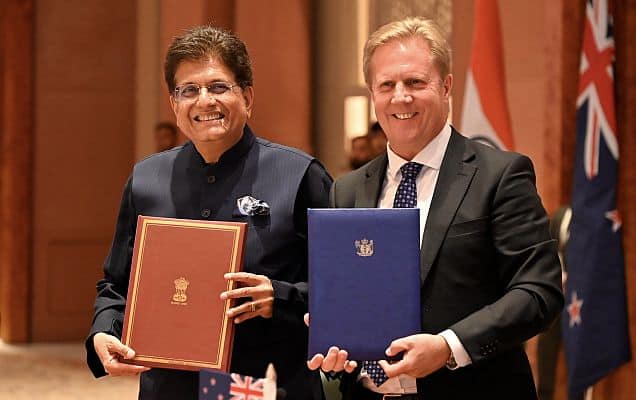
Visa norms to get easier, 100% duty-free exports as India, NZ ink trade pact

Nm on the go
Always be the first to hear from the PM. Get the App Now!

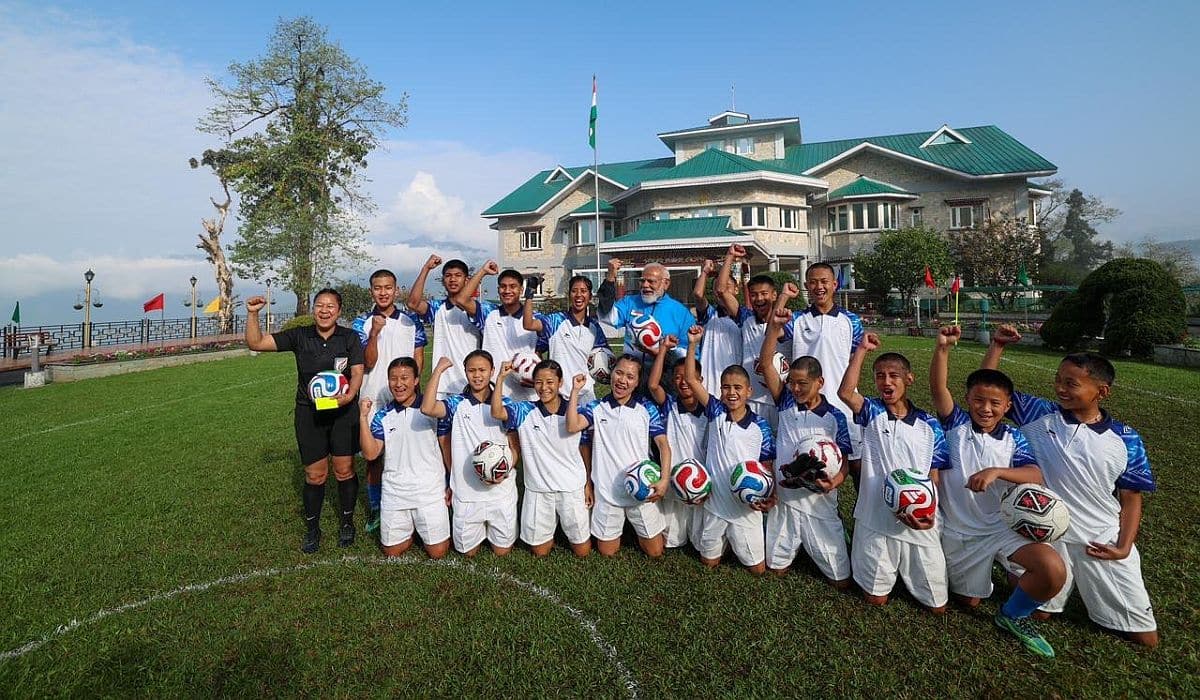
Prime Minister participates in an energetic football session with youngsters in Gangtok, Sikkim
April 28, 2026
-
Share
-
-
-
Prime Minister Shri Narendra Modi today participated in a vibrant football session with youngsters during a pleasant morning in Gangtok, Sikkim.
The Prime Minister wrote on X:
"Nothing like playing some football with my young friends in Sikkim on a lovely Gangtok morning!"
Nothing like playing some football with my young friends in Sikkim on a lovely Gangtok morning! ⚽️ pic.twitter.com/5xEceWBH1f
— Narendra Modi (@narendramodi) April 28, 2026
"Clearly, an energising football session with these youngsters!"
Clearly, an energising football session with these youngsters! pic.twitter.com/Xc99oCylqt
— Narendra Modi (@narendramodi) April 28, 2026
" A football morning in Gangtok! We learnt, we played, we celebrated and above everything else, we enjoyed the game…."
A football morning in Gangtok! We learnt, we played, we celebrated and above everything else, we enjoyed the game…. pic.twitter.com/rZ0jLey5u7
— Narendra Modi (@narendramodi) April 28, 2026


Posted via www.narendramodi.in