Bhavnagar is emerging as a shining example of port-led development: PM Modi

Published By : Admin | September 29, 2022 | 14:32 IST
The Prime Minister lays foundation stone of the World’s First CNG Terminal
PM also inaugurates the Regional Science Centre in Bhavnagar
PM inaugurates various other projects including package 7 of Sauni Yojna link 2, 25 MW Palitana Solar PV Project, APPL Container project
PM lays foundation stone of projects including package 9 of Sauni Yohna link 2, Chorvadla Zone water supply project
“In its journey of 300 years, Bhavnagar has made a steady growth and has made its mark as the cultural capital of Saurashtra”
“In the last two decades, sincere efforts have been made to make Gujarat's coastline the gateway to India's prosperity”
“Bhavnagar is emerging as a shining example of port-led development”
“Lothal is the oldest port in the world and the construction of Lothal Maritime Museum will create a new identity for the place”
“Along the lines of empowerment of farmers, credit cards were issued to fishermen”
“Supporting those who have been left behind is a commitment of the double-engine government”
“Dreams and aspirations of the poor give me the energy to work continuously”

Wishing all the people of Bhavnagar a very Happy Navratri! First of all, I have to apologize to Bhavnagar for coming here after such a long period. This has happened for the first time. I apologize as I could not come before. I would never forget the blessings you showered on me and the love you have given me. I can see such a large number of people far and wide and that too on a scorching day. I bow to all of you.

This meeting in Bhavnagar is special today. On the one hand, the country has completed 75 years of independence while Bhavnagar is going to complete 300 years of its foundation day this year. In this journey of 300 years, Bhavnagar has made a mark for its steady growth as well as being the cultural capital of Saurashtra. Several projects worth crores of rupees have been either inaugurated or foundation stone has been laid here today to give a new dimension to this development journey. These projects will empower the identity of Bhavnagar, will give a new gift of irrigation to the farmers of Saurashtra and will further strengthen the ‘AatmaNirbhar Bharat’ campaign. With the establishment of Regional Science Center, Bhavnagar's identity as a city of education and culture will be further enriched. Many congratulations to all of you for all these projects.

Brothers and sisters,

Whenever I came to Bhavnagar, I emphasized one thing. The echo, which has been there in Surat, Vadodara and Ahmedabad since the last two to three decades, is now going to resonate in Rajkot, Jamnagar and Bhavnagar as well. I have strong faith in Saurashtra's prosperity because it has unprecedented potential for industry, agriculture and tourism. Today's program is a living proof of the efforts of the double engine government moving rapidly in this direction. Bhavnagar district is situated on the sea shore. Gujarat has the longest coastline in the country. But this vast coastline had become a kind of big challenge for the people due to lack of attention to coastal development for several decades after independence. The salt water of the sea was a curse for this place. The villages on the banks of the sea had become deserted. People started migrating to other cities. The youth going to Surat were forced to share one room with 10-15-20 people. It was a very pathetic situation.

Friends,

We have made sincere efforts in the last two decades to make Gujarat's coastline the gateway to India's prosperity. Many new employment opportunities have been created. We developed and modernized many ports in Gujarat. Gujarat today has three major LNG terminals and petrochemical hubs. Gujarat was the first state in the country where the first LNG terminal was built. We developed hundreds of coastal industries and many small and big industries in the coastal areas of the state. We also created a network of coal terminals to meet the energy demand of the industries. Today there are many power plants in the coastal areas of Gujarat which supply power not only to Gujarat, but to several states of the country as well.

We built fishing harbours to help our fishermen, promoted fish lending centers and fish processing. The strong network of fishing harbours that we built is also continuously being expanded and modernized. We have made the coastal ecosystem more secure and strengthened by developing mangrove forests in the coastal region of Gujarat. The then minister in the Government of India had once remarked that the coastal states of India should learn from Gujarat how mangroves can be developed. It is with the cooperation of all of you that this has been made possible in Gujarat.

We also continuously promoted aquaculture. Gujarat is one of the leading states of the country where great efforts have been made for the seaweed cultivation. Today, the coastline of Gujarat has become a medium of employment for lakhs of people, besides playing a big role in the import and export of the country. Today, Gujarat's coastline is emerging as synonymous with renewable energy and the hydrogen ecosystem. We have also tried to make Saurashtra an important center of energy. This region is becoming one of the biggest hubs to meet the energy needs of Gujarat and the country. Now many projects of solar energy are also being set up in this region. The solar power project, which was inaugurated in Palitana today, will provide affordable and adequate electricity to many families in the region. There was a time in Gujarat when people used to rejoice if there was electricity during dinner time. Many of the people who are 20-22 years old today would not be aware of that situation. When I became Chief Minister of Gujarat, I remember people started pleading with me from day one to at least ensure electricity during dinner time. All those miserable days are passé now, friends.

Today, new business opportunities are being created, industries and businesses are flourishing due to sufficient electricity. Bhavnagar is also going to benefit from the investment being made in Dholera for renewable energy, space and semiconductor industries. A neighboring area of ​​Bhavnagar is being developed and the day will not be far away when this entire region of Ahmedabad to Dholera and Bhavnagar will achieve new heights of development.

Brothers and sisters,

Today Bhavnagar is developing as an important center of port-led development. This port will ensure multimodal connectivity with different industrial regions across the country. This port will also be connected to the separate track being laid for goods trains and there will be better connectivity with other highways and railway networks. The PM GatiShakti National Master Plan is going to give a new thrust to these connectivity projects. In a way, this port of Bhavnagar will play an important role in the building of a self-reliant India and hundreds of new employment opportunities will be created here. There is going to be an expansion of business related to warehousing, transportation and logistics. The port will also cater to large projects like vehicle scrapping, container production and Dholera Special Investment Region. As a result, new employment will be created here and self-employment opportunities will be developed.

Friends,

Alang is known to have one of the largest ship breaking yards in the world. There is hardly anyone who is not aware of Alang. When the new vehicle scrapping policy of the Central Government to scrap old vehicles will be implemented, I say with full confidence that you will benefit the most. The reason being Alang has the expertise regarding scrapping as well as the knowledge of scrapping big ships. In such a situation, it can also become a big center of scrapping of other small vehicles along with ships. I do not need to remind my promising entrepreneurs of Bhavnagar that they will bring small vehicles from abroad and start scrapping them here.

Friends,

The iron derived from breaking ships is used extensively in the construction sector. Recently, we have seen how a major crisis can arise from over-dependence on a single country for containers. This is also a new as well as a big opportunity for Bhavnagar. On the one hand, India's share in global trade is increasing and on the other hand, the world is also looking for a reliable supplier of containers. The whole world needs millions of containers. The containers being built in Bhavnagar will also give energy to self-reliant India and will also create many employment opportunities here.

Friends,

When there is a sense of service towards the people in the mind and there is a will to bring change, then it is possible to achieve bigger goals. You are very much aware of the condition of vehicles from Surat to Bhavnagar. Hours of travel, road accidents and above all the cost of petrol and diesel! There were so many difficulties. Now there is less tension and there is saving of both time and money on transport fares. We fulfilled the dream of the Ghogha-Dahej ferry service despite so many hurdles. The distance between Saurashtra and Surat has been reduced from about 400 kms to less than 100 kms due to Ghogha-Hazira Ro-Ro ferry service. About three lakh passengers have used this service in a very short time. More than 80,000 vehicles have been transported and more than 40 lakh liters of petrol and diesel have been saved this year alone. In other words, you saved a lot of money. From today onwards, the way has been cleared for even big ships on this route.

Friends,

You can understand this great service for the common people, farmers and traders of this region. But all these things are happening without any hue and cry and without wasting money on massive advertisements, friends. It is because our motivation and goal has never been the temptation for power. We always consider power as a medium of service. This is our yagna of service. It is because of this spirit of service that we are getting so much love and blessings which keep on increasing continuously.

Friends,

Our efforts have not only facilitated transportation, but tourism has also got a boost. Unprecedented work is being done in the coastal areas of Gujarat to save its maritime heritage and make it a tourism destination. Probably, very few of you would be aware that the Maritime Museum being built in Lothal is going to create a name for itself in the world. Like the Statue of Unity, Lothal's Maritime Museum will also create the same identity. It is a matter of pride for us. The world's oldest port Lothal is on our Gujarat soil, it is on the edge of our Bhavnagar. Lothal has been an important center of our heritage and efforts are being made to bring it on the tourism map of the whole world. Along with Lothal, the eco-tourism circuit in Velavadar National Park is also going to benefit Bhavnagar, especially the small businessmen and traders.

Brothers and sisters,

The lives of both farmers and fishermen in Saurashtra have changed a lot in the last two decades. There was a time when fishermen's lives were often in danger due to lack of information. When I was the Chief Minister here, the fishermen were given a red basket with different buttons on it. In the event of an accident, an alert was sent directly to the Coast Guard's office by pressing the button resulting in immediate help. We have extended this service to the entire country after 2014. We gave subsidies to fishermen to modernize their boats and gave Kisan Credit Cards to fishermen like farmers.

Friends,

Today, I feel very satisfied when I see the change taking place due to Sauni Yojana. I remember launching the project in Rajkot. The media wrote that Modi ji had announced the project in view of the impending elections. Once elections are over, it will be forgotten. But I proved everyone wrong. Today the waters of the Mother Narmada are reaching everywhere we promised due to the Sauni Yojana. We are the people who live up to our words and who live for the society.

Friends,

When one part of the Sauni project is inaugurated, then the work on the other part begins simultaneously. We don't let the work stop. Even today, the part of the project which has been dedicated has led to water reaching many dams of Bhavnagar and Amreli districts. This is going to benefit the farmers of many villages of Gariadhar, Jesar and Mahuva talukas of Bhavnagar and Rajula and Khambha talukas of Amreli district. Another project has been renewed today to supply water to hundreds of villages and dozens of cities in Bhavnagar, Gir Somnath, Amreli, Botad, Junagadh, Rajkot and Porbandar districts.

Brothers and sisters,

It is the commitment of the double engine government to remove poverty and take forward those who have been left behind in development. When the poorest of the poor get resources, they start changing their fortunes. They work hard day and night and defeat poverty. We often used to organize Garib Kalyan Melas in Gujarat. During one such program, I had given a three wheeler cycle to a sister here in Bhavnagar. She was a Divyang and what did she tell me? Look at the spirit of the people of Bhavnagar and Gujaratis. I remember it vividly. That sister said that she did not know how to ride a bicycle and asked for an electric tricycle. This is the mood of my Gujarat and Bhavnagar. The trust that my sister had in her mind is my biggest asset, brothers. These dreams and aspirations of the poor give me the energy to work continuously. May this energy continue with your blessings, and your love continues to grow. And I must say today that it took me a few years to come here, I came late, but I have not come empty handed. I have come with all the outstanding dues of the previous years. And anyway, Bhavnagar has all the rights over me. One is reminded of Narseebaba’s ‘Ganthiya’ and ‘pedas’ of Das. While talking about ‘Ganthiya’, I am reminded of Harisingh Dada. Several years ago, when I was not active in politics and used to be a very small-time activist, it was Harisingh Dada who introduced me to ‘Ganthiya’. Whenever he would come to Ahmedabad, he would bring ‘Ganthiya’ for me. He used to care for me. Now that I am in Bhavnagar today, it is of no use today as the Navratri fasts are underway. But, the ‘Ganthiya’ of Bhavnagar is famous in the country and the world. It is not a small matter, friends. This is the strength of Bhavnagar. Friends, today I have come with many development projects. These projects will decide the future of the younger generation of Bhavnagar. These projects will brighten the future of Bhavnagar. No one will be able to imagine that these projects will usher in rapid development of Bhavnagar. These projects will benefit Saurashtra, Gujarat and the entire country. Brothers and sisters, I am deeply grateful to you for the love and blessings you have showered on me by coming in such huge numbers. Raise your both hands and speak with me with all your might:

Bharat Mata ki – Jai!

Bharat Mata ki – Jai!

Bharat Mata ki – Jai!

Thanks a lot!


Explore More
প্রধান মন্ত্রীনা শ্রী রাম জন্মভুমি মন্দির দ্বাজরোহন উৎসবতা পীখিবা ৱারোলগী মৈতৈলোন্দা হন্দোকপা

Popular Speeches

প্রধান মন্ত্রীনা শ্রী রাম জন্মভুমি মন্দির দ্বাজরোহন উৎসবতা পীখিবা ৱারোলগী মৈতৈলোন্দা হন্দোকপা
UPI goes live at Eiffel Tower and French airports as India-France digital ties strengthen

Media Coverage

UPI goes live at Eiffel Tower and French airports as India-France digital ties strengthen
NM on the go

Nm on the go

Always be the first to hear from the PM. Get the App Now!
...
India-Slovakia Joint Statement
June 15, 2026

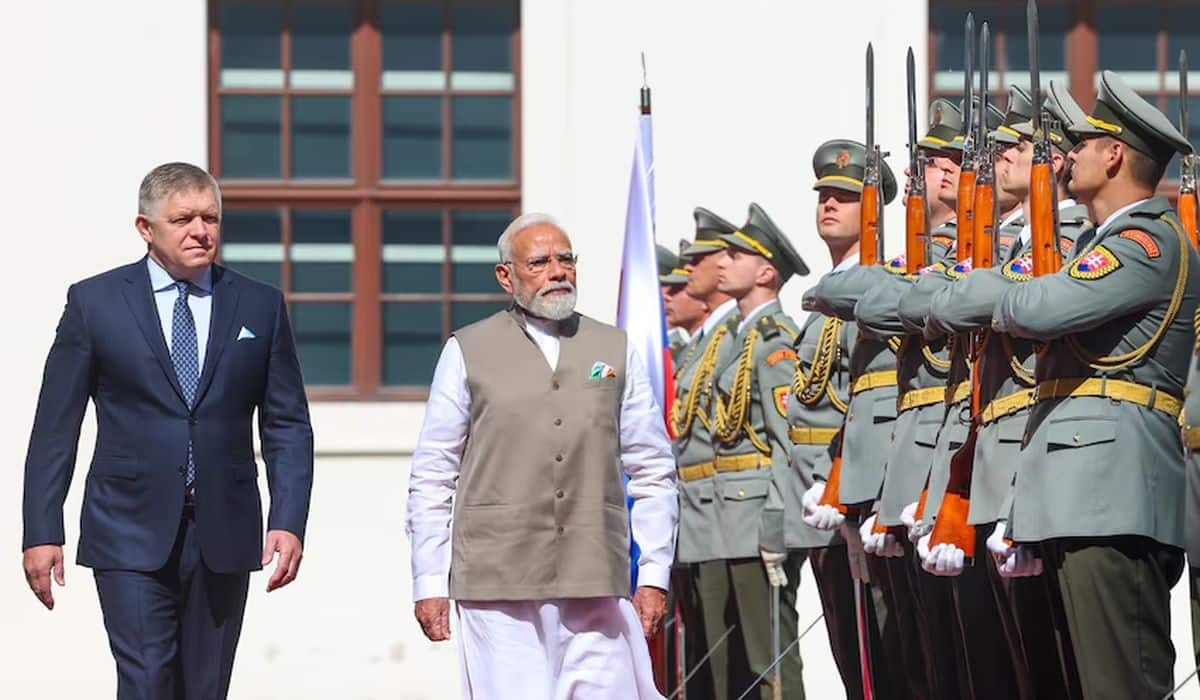
At the invitation of His Excellency Robert Fico, Prime Minister of the Slovak Republic, His Excellency Shri Narendra Modi, Prime Minister of the Republic of India, paid a State Visit to the Slovak Republic on 15 June 2026.

The visit is the first by an Indian Prime Minister to Slovakia since its independence in 1993, marking a historic milestone and charting a new course in the enduring friendship between the two nations. Since the establishment of diplomatic relations in 1993, India and Slovakia have developed a traditional friendship and multifaceted cooperation based on trust, equality and mutual respect.

Building on the historic nature of this visit and their shared commitment to deepen bilateral cooperation, the Prime Minister of the Republic of India and the Prime Minister of the Slovak Republic agreed to elevate the relationship to a Comprehensive Partnership between the Republic of India and the Slovak Republic. The Comprehensive Partnership aims to take bilateral relations to a new level, strengthen existing cooperation mechanisms and explore new avenues for deepening cooperation, both bilaterally and multilaterally.

Recognising the growing geopolitical, economic and technological importance of the Indo-Pacific, the two leaders acknowledged the value of a stronger partnership between India and Slovakia in support of mutually beneficial cooperation, regional connectivity, open international trade, freedom of navigation, peaceful resolution of disputes and a rules-based international order.

Both leaders underscored the importance of regular high-level exchanges and sustained political dialogue, and agreed to enhance exchanges of delegations at all levels. The two sides also agreed to enhance parliamentary exchanges, contacts and cooperation with a view to promoting greater mutual understanding and sharing of legislative experiences and best practices.

The leaders reaffirmed their commitment to multilateralism, with the United Nations at its core, and to a rules-based international order, while supporting comprehensive reforms of multilateral institutions, including the United Nations, particularly the United Nations Security Council, to make them more representative, inclusive, effective and reflective of contemporary geopolitical realities. The leaders stressed on the urgent need to expand the UN Security Council in both permanent and non-permanent categories. In this context, India appreciated Slovakia’s continued support for India’s permanent membership in a reformed and expanded UN Security Council. The two leaders also agreed to continue consultations and coordination on their respective candidacies in international organisations and to exchange views and cooperate closely in global forums, including the United Nations. The two leaders also discussed the importance of upholding the global nonproliferation architecture. Slovakia reaffirmed its constructive approach to India’s membership of the Nuclear Suppliers Group.

The leaders agreed to support the development of cooperation with regional groupings such as the Slavkov 3, Visegrad 4 and 3 Seas Initiative, including interconnected and mutually beneficial infrastructure projects that promote connectivity, sustainable economic growth and regional integration. The two sides further reaffirmed their commitment to a free, open, peaceful and prosperous Indo-Pacific, based on respect for international law, sovereignty and territorial integrity, including the United Nations Convention on the Law of the Sea.

The leaders underscored the importance of strengthening defence and security cooperation as one of the key pillars of the bilateral partnership. They agreed to encourage regular consultations and exchanges between their respective defence authorities to explore opportunities for enhanced collaboration, including in defence technologies, capacity building, research and development, and defence industrial cooperation. In this context, the leaders welcomed the signing of the Letter of Intent on Defence Cooperation between the two sides, which will foster mutually beneficial partnerships in the defence sector.

The leaders recognised the growing importance of strengthening cooperation in disaster risk reduction and resilience-building and agreed to enhance collaboration in the areas of resilient infrastructure, capacity building, knowledge sharing and institutional cooperation.

The leaders agreed to strengthen cooperation in the protection of critical information infrastructure and in preventing and countering cybercrime, while promoting an open, secure, accessible, stable, interoperable, resilient and peaceful digital space. The leaders also expressed their commitment to supporting each other in safeguarding information technology systems against emerging quantum threats to cryptography, including through preparedness for post-quantum security transitions. In this context, they noted that such cooperation would be further facilitated by the Memorandum of Cooperation signed in the field of critical infrastructure protection and postquantum cryptography.

The two leaders unequivocally condemned terrorism in all its forms and manifestations, including cross-border terrorism, and strongly condemned the heinous terrorist attack perpetrated in Pahalgam, Jammu and Kashmir, on 22 April 2025. They agreed to establish a Joint Working Group on Counter- Terrorism. They called for concerted international efforts to combat terrorism in a comprehensive and sustained manner. The leaders reaffirmed their commitment to strengthening bilateral and multilateral cooperation in counterterrorism, including within the framework of the United Nations, and called for strong and decisive action against terrorists and terrorist entities, including those designated by the United Nations Security Council 1267 Sanctions Committee, as well as their affiliates, proxies, sponsors, financiers and supporters. They further underscored the importance of holding perpetrators, organisers and sponsors of terrorist acts accountable and agreed to work closely towards the early finalisation and adoption of the Comprehensive Convention on International Terrorism (CCIT) within the United Nations framework.

Welcoming the conclusion of negotiations on the India–EU Free Trade Agreement in January 2026 and the new Joint India–EU Comprehensive Strategic Agenda, the two leaders noted that the FTA will unlock new opportunities for trade and investment and called for its early signing and timely implementation to realise the full potential of trade and investment cooperation by diversifying critical value chains and opening new markets.

The leaders agreed to further strengthen the role of the India–Slovakia Joint Economic Committee in identifying and promoting high-potential areas of economic cooperation between the two countries. They also committed to exploring avenues to significantly enhance bilateral trade and two-way investment across sectors such as automotive, electronics and other advanced manufacturing industries, leveraging Slovakia’s well-developed industrial ecosystem and India’s scale, innovation ecosystem and technological capabilities, with a particular focus on high value-added collaboration.

The two sides agreed to strengthen bilateral cooperation to achieve netzero emissions, focusing on the exchange of technologies for the green energy transition and promoting clean, reliable and resilient energy systems.

The leaders agreed to enhance cooperation in the energy sector with a view to promoting energy security, sustainability and resilience through diversification of energy sources, including nuclear energy and geothermal power. They expressed their intent to deepen collaboration through joint research, exchange of expertise and capacity-building initiatives in areas of mutual interest.

The leaders agreed to strengthen cooperation in the fields of meteorology and hydrology, including through the sharing of expertise and best practices in the efficient and sustainable management of water resources and dam safety. They further expressed their intent to promote collaboration in areas such as source sustainability, rural drinking water quality monitoring, water treatment technologies, capacity building and community participation, and underscored the importance of developing climate-resilient rural drinking water infrastructure to enhance water security and ensure sustainable access to safe drinking water.

Recognising connectivity as a strategic pillar of the partnership, the two sides underscored the importance of promoting joint ventures, technology transfer, innovation and skills development in the automotive and railway sectors, with a view to enhancing competitiveness and generating new employment opportunities. They further noted the potential of Slovakia’s position as a Central European transport hub and India’s large-scale manufacturing capabilities to boost trade, investment and connectivity. They also encouraged exploring of direct air connectivity between India and Slovakia to facilitate growing economic, business and people-to-people exchanges.

The two leaders appreciated the successful outcomes of the AI Impact Summit 2026 in Delhi, attended by H.E. Mr Peter Pellegrini, President of the Slovak Republic. The two sides welcomed the signing of the Memorandum of Understanding on Digital Technologies, which will provide a structured framework for deepening cooperation in the digital domain. They agreed to further strengthen collaboration in emerging areas such as artificial intelligence, semiconductors, start-ups, innovation ecosystems, research institutions and technology companies, with a view to fostering innovation-led growth and mutually beneficial partnerships. The two sides also agreed to explore cooperation in new and emerging technologies, including 5G use cases, 6G standardisation, Internet of Things (IoT) and machine-to-machine (M2M) applications.

The two leaders agreed to explore opportunities to strengthen cooperation between their respective space ecosystems in the field of satellite technology and its applications. They also underscored the importance of fostering exchanges between scientific and research institutions, as well as industry stakeholders, to encourage innovation and the development of advanced space technologies.

The leaders highlighted the need to maintain regular dialogue and deepen cooperation in the field of healthcare, with particular emphasis on pharmaceutical research and development, digital health solutions and the strengthening of human resources for health. The two sides also underscored the importance of sharing best practices in public health management and leveraging digital technologies to build more resilient, efficient and patientcentric healthcare systems, consistent with their respective national priorities.

The two leaders agreed to encourage enhanced mobility of students, academics and researchers, with particular emphasis on STEM and humanities disciplines, in order to promote deeper educational and scientific exchanges. They took note of the existing arrangements and collaborations between higher education institutions of the two countries and encouraged their further expansion and diversification. The two sides also welcomed the conclusion of a Memorandum of Understanding between the respective Ministries of Education in the field of higher education and research, which would provide a structured framework for strengthening academic linkages and fostering long-term institutional partnerships.

The leaders agreed to further promote cultural exchanges, tourism and people-to-people contacts with a view to deepening mutual understanding and strengthening the bonds of friendship between the peoples of India and Slovakia. They emphasized the importance of expanding cultural cooperation through regular exchanges of artists and cultural troupes, the organisation of exhibitions and participation in festivals, as well as by encouraging greater tourism flows in both directions. The leaders also welcomed the signing of the Memorandum of Understanding on Audio-visual Creation, which will provide a structured framework for collaboration in film and media production and further enhance cultural connectivity between the two countries.

The leaders expressed support for the orderly, safe and legal mobility of skilled professionals. They took note of the Comprehensive Framework of Cooperation on Mobility agreed between India and the European Union in January 2026. They welcomed the signing of the Memorandum of Understanding on Cooperation in the Field of Labour Migration to facilitate mobility and promote the exchange of information between the relevant authorities of India and Slovakia. The two sides also agreed to work towards the early conclusion of a Social Security Agreement, which would contribute to safeguarding the welfare and social protection of working professionals engaged in mobility between India and Slovakia.

The leaders noted that cooperation on consular matters remained an area of continued interest to both countries, given the growing movement of people and expanding people-to-people ties. In this context, they agreed to establish a mechanism for regular consular consultations between their respective consular authorities to facilitate cooperation on consular matters.

The leaders agreed to regularly review the implementation of the Comprehensive Partnership at the appropriate functional level.

Both leaders agreed that the present visit represents a significant step forward in transforming this India-Slovakia relationship and committed to taking bilateral relations forward into a new phase of engagement.

The Prime Ministers welcomed the announcements made and the MoUs signed, which are available on the MEA website.

Prime Minister Modi thanked Prime Minister Fico and the people of Slovakia for the warm hospitality extended to him and his delegation. Both leaders agreed to maintain the momentum of high-level exchanges.