Since 2014, India has undergone a profound technological and digital transformation under the leadership of Prime Minister Narendra Modi. This period has witnessed a remarkable evolution, catapulting India from a developing nation to a global hub of innovation and technology. Prime Minister Modi's visionary approach is at the forefront of this revolution, characterized by an unwavering commitment to harnessing the power of digital solutions to address societal challenges and drive inclusive growth.

From his early days as Chief Minister of Gujarat to his tenure as Prime Minister, Modi has championed technology as a tool for governance and empowerment. His vision of a New, Inclusive India is reflected in initiatives like the National Digital Literacy Mission and Pradhan Mantri Gramin Digital Saksharta Abhiyan, which aim to equip citizens, especially in rural areas, with the skills and knowledge to thrive in the digital age.

Central to India's digital journey is the ambitious Digital India mission, launched with the vision of transforming the nation into a digitally empowered society and knowledge economy. Since its inception, Digital India has emerged as a catalyst for change, reshaping governance, empowering citizens, and fostering innovation across various sectors. Digital India has laid the foundation for a new era of progress and prosperity through a holistic approach encompassing digital infrastructure development, digital literacy, and service delivery.

One of the most significant achievements of the Digital India mission is its success in democratizing access to technology. By leveraging digital platforms and innovative solutions, the Modi government has been able to bridge the digital divide and ensure that the benefits of technology reach every corner of the country. From urban centres to remote rural areas, citizens now access various digital services, spanning banking, education, healthcare, agriculture, and more.

A key pillar of Digital India is the implementation of the JAM trinity – Jan Dhan, Aadhaar, Mobile. This integrated framework has revolutionized financial inclusion, streamlined service delivery, and enhanced transparency in governance. Through initiatives like the Direct Benefit Transfer (DBT) system, the government has eliminated leakages and ensures that welfare benefits reach the intended beneficiaries directly. The success of DBT has not only reduced corruption but has also boosted public confidence in the government's ability to deliver services without leakage.

From a grassroots perspective, the impact of India's digital revolution is palpable. The proliferation of Common Service Centres (CSCs), increased mobile phone penetration, and the deployment of high-speed optical fibre cables in rural areas under the BharatNet project has empowered millions of citizens, enabling them to access essential services and information at their fingertips.

Moreover, India's vibrant tech startup ecosystem and initiatives like the Atal Innovation Mission have unleashed a wave of innovation and entrepreneurship, driving job creation and economic growth. India's strides in fintech have also been significant, with the Unified Payments Interface (UPI) emerging as a game-changer in the digital payments landscape. Designed to facilitate seamless, real-time transactions across multiple banks and platforms, UPI has transformed the way Indians transact, paving the way for a cashless economy. With over 60% of India's digital transactions now being conducted through UPI, India has established itself as a global leader in digital payments, setting a benchmark for other nations to follow.

Beyond domestic achievements, India's digital transformation has positioned the country as a global technology leader, attracting investment and collaboration from around the world. Modi government initiatives like the National Supercomputing Mission and National Quantum Mission have propelled India to the forefront of cutting-edge research and development, while collaborations with global tech giants have led to the export of Indian solutions to international markets.

As India continues its journey towards becoming a digitally empowered society, Prime Minister Modi's leadership remains instrumental in shaping the nation's future. His emphasis on innovation, entrepreneurship, and human capital development has underscored India's commitment to harnessing the full potential of technology for the benefit of its citizens. With each milestone, India has reaffirmed its status as a global powerhouse in the digital landscape, charting a path towards prosperity, inclusivity, and sustainable development for all.

Explore More
ശ്രീരാമജന്മഭൂമി ക്ഷേത്രത്തിലെ പതാക ഉയർത്തൽ ഉത്സവത്തിനിടെ പ്രധാനമന്ത്രി നടത്തിയ പ്രസം​ഗം

ജനപ്രിയ പ്രസംഗങ്ങൾ

ശ്രീരാമജന്മഭൂമി ക്ഷേത്രത്തിലെ പതാക ഉയർത്തൽ ഉത്സവത്തിനിടെ പ്രധാനമന്ത്രി നടത്തിയ പ്രസം​ഗം
India leads globally in renewable energy; records highest-ever 31.25 GW non-fossil addition in FY 25-26: Pralhad Joshi.

Media Coverage

India leads globally in renewable energy; records highest-ever 31.25 GW non-fossil addition in FY 25-26: Pralhad Joshi.
NM on the go

Nm on the go

Always be the first to hear from the PM. Get the App Now!
...
6 Years of Jal Jeevan Mission: Transforming Lives, One Tap at a Time
August 14, 2025
Jal Jeevan Mission has become a major development parameter to provide water to every household.” - PM Narendra Modi

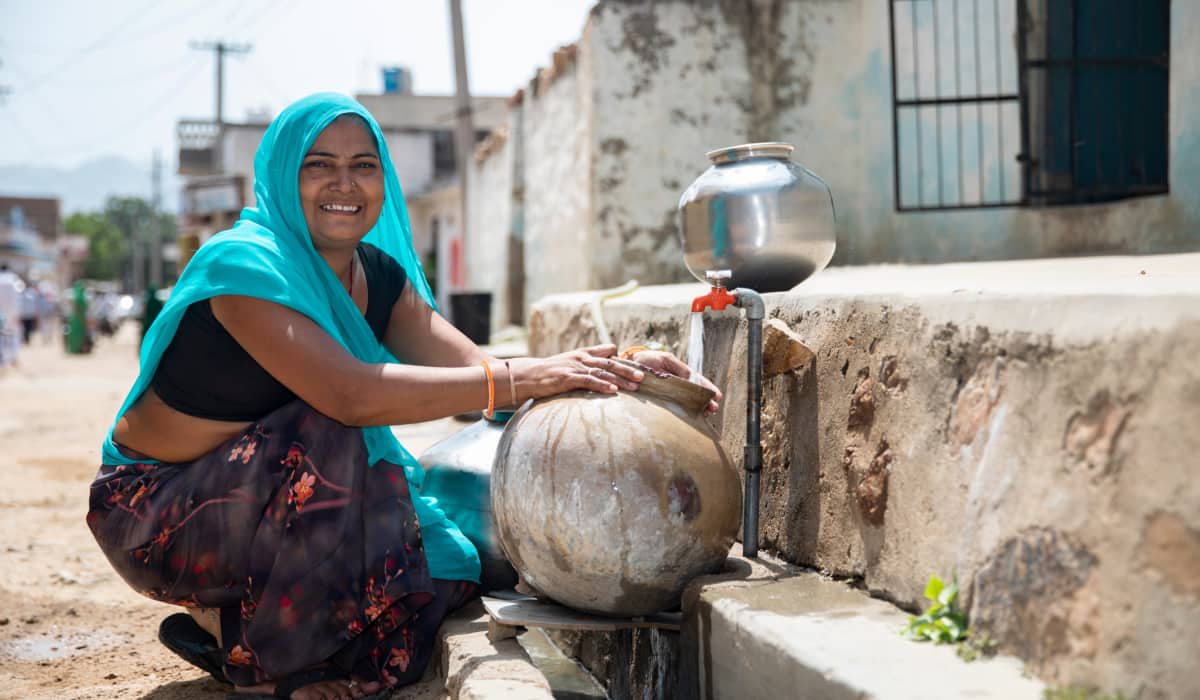
For generations, the sight of women carrying pots of water on their heads was an everyday scene in rural India. It was more than a chore, it was a necessity that was an integral part of their everyday life. The water was brought back, often just one or two pots which had to be stretched for drinking, cooking, cleaning, and washing. It was a routine that left little time for rest, education, or income-generating work, and the burden fell most heavily on women.

Before 2014 water scarcity, one of India’s most pressing problems, was met with little urgency or vision. Access to safe drinking water was fragmented, villages relied on distant sources, and nationwide household tap connections were seen as unrealistic.

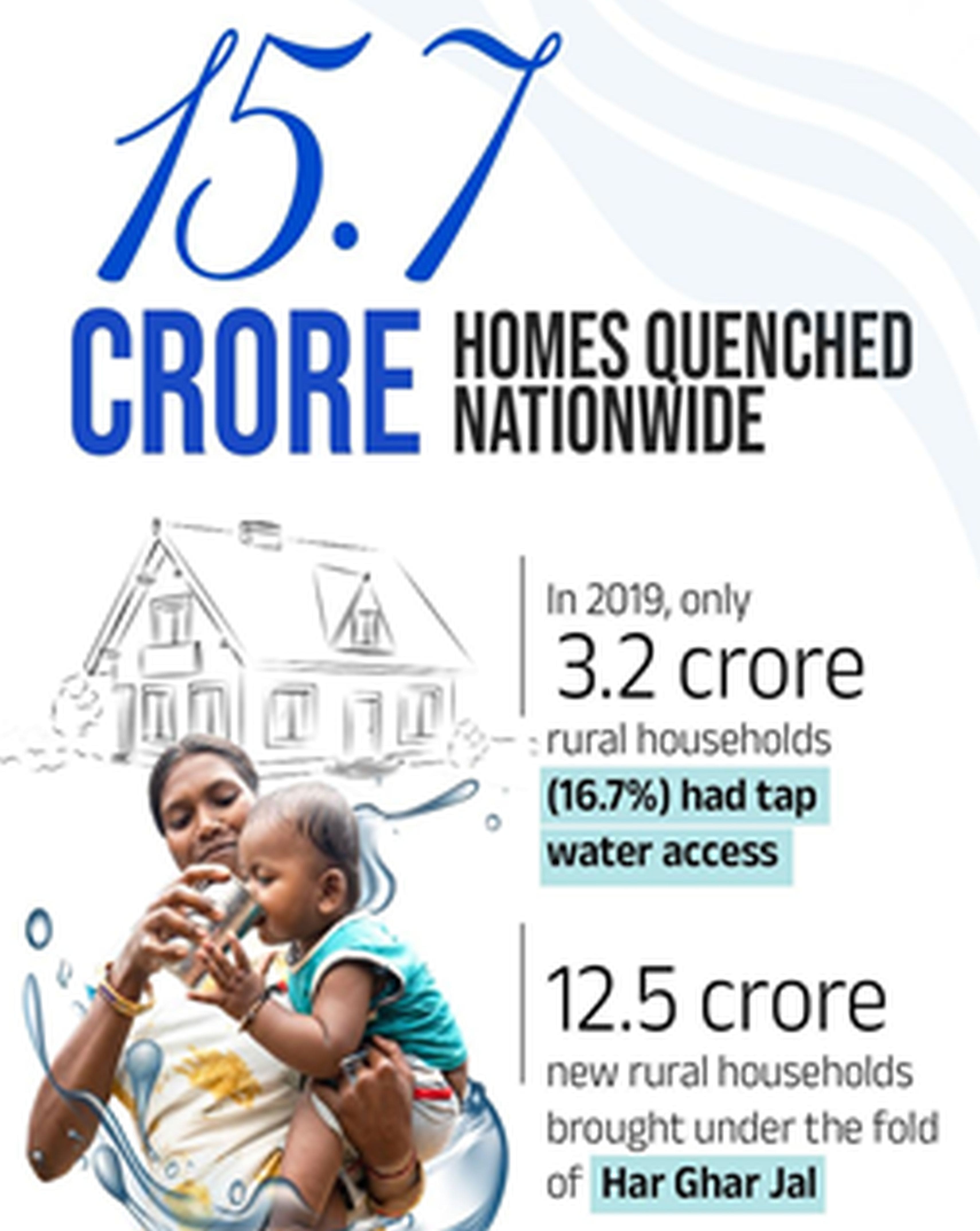
This reality began to shift in 2019, when the Government of India launched the Jal Jeevan Mission (JJM). A centrally sponsored initiative which aims at providing a Functional Household Tap Connection (FHTC) to every rural household. At that time, only 3.2 crore rural households, a modest 16.7% of the total, had tap water. The rest still depended on community sources, often far from home.

As of July 2025, the progress under the Har Ghar Jal program has been exceptional, with 12.5 crore additional rural households connected, bringing the total to over 15.7 crore. The program has achieved 100% tap water coverage in 200 districts and over 2.6 lakh villages, with 8 states and 3 union territories now fully covered. For millions, this means not just access to water at home, but saved time, improved health, and restored dignity. Nearly 80% of tap water coverage has been achieved in 112 aspirational districts, a significant rise from less than 8%. Additionally, 59 lakh households in LWE districts have gained tap water connections, ensuring development reaches every corner. Acknowledging both the significant progress and the road ahead, the Union Budget 2025–26 announced the program’s extension until 2028 with an increased budget.

The Jal Jeevan Mission, launched nationally in 2019, traces its origins to Gujarat, where Narendra Modi, as Chief Minister, tackled water scarcity in the arid state through the Sujalam Sufalam initiative. This effort formed a blueprint for a mission that would one day aim to provide tap water to every rural household in India.

Though drinking water is a State subject, the Government of India has taken on the role of a committed partner, providing technical and financial support while empowering States to plan and implement local solutions. To keep the Mission on track, a strong monitoring system links Aadhaar for targeting, geo-tags assets, conducts third-party inspections, and uses IoT devices to track village water flow.

The Jal Jeevan Mission’s objectives are as much about people as they are about pipes. By prioritizing underserved and water-stressed areas, ensuring that schools, Anganwadi centres, and health facilities have running water, and encouraging local communities to take ownership through contributions or shramdaan, the Mission aims to make safe water everyone’s responsibility..

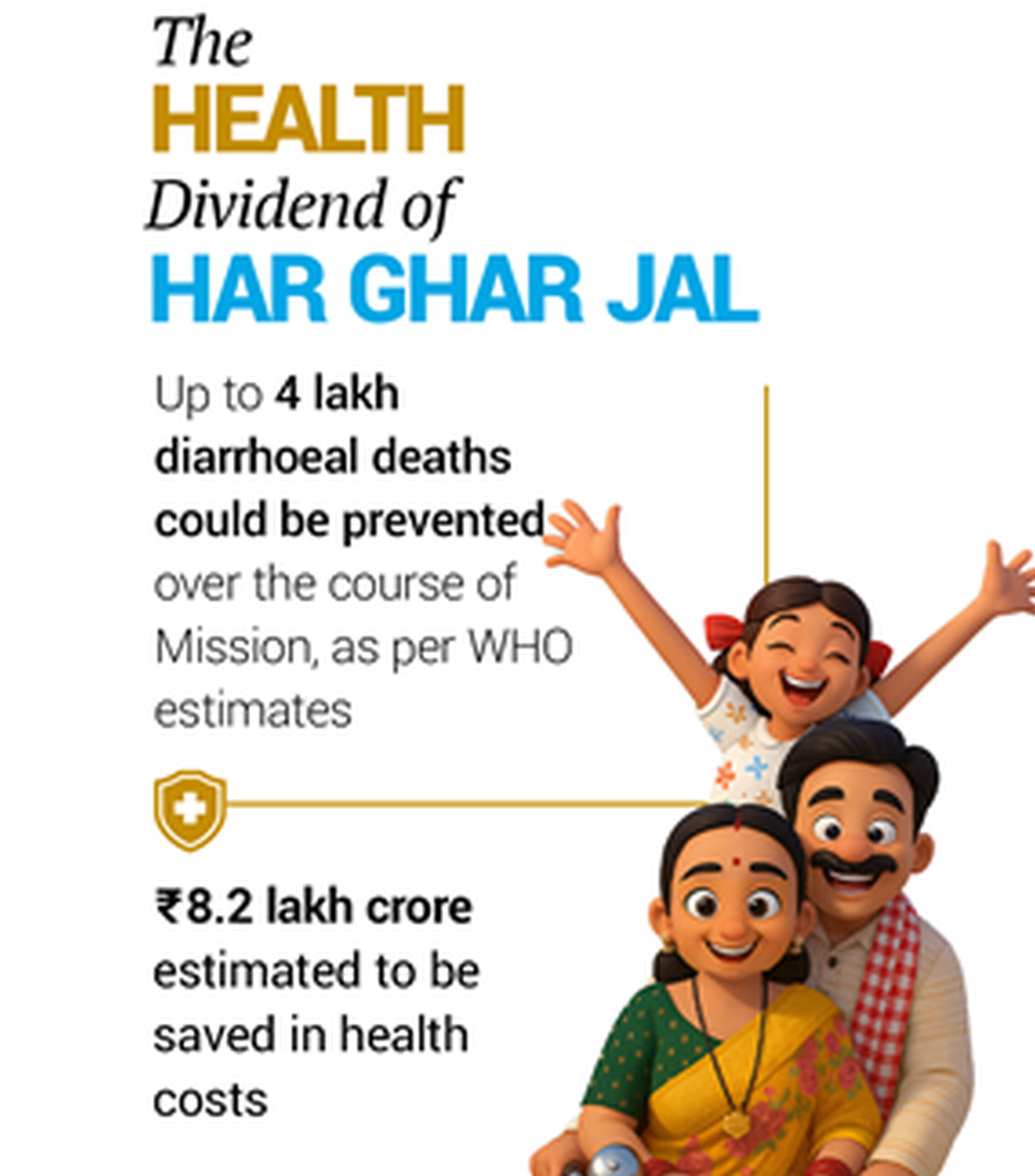
The impact reaches far beyond convenience. The World Health Organization estimates that achieving JJM’s targets could save over 5.5 crore hours each day, time that can now be spent on education, work, or family. 9 crore women no longer need to fetch water from outside. WHO also projects that safe water for all could prevent nearly 4 lakh deaths from diarrhoeal disease and save Rs. 8.2 lakh crores in health costs. Additionally, according to IIM Bangalore and the International Labour Organization, JJM has generated nearly 3 crore person-years of employment during its build-out, with nearly 25 lakh women are trained to use Field testing Kits.

From the quiet relief of a mother filling a glass of clean water in her kitchen, to the confidence of a school where children can drink without worry, the Jal Jeevan Mission is changing what it means to live in rural India.