On the evening of 25th April when I received the news of Sardar Parkash Singh Badal Ji’s demise, I was filled with immense sadness. In his passing away, I have lost a father figure, someone who guided me for decades. In ways more than one, he shaped India’s and Punjab’s politics that can be described as unparalleled.

That Badal Sahab was a big leader is widely accepted. But, more importantly, he was a big-hearted human being. Being a big leader is easier but being a big-hearted person requires a lot more. People across Punjab say - there was something very different about Badal Sahab! (‘Badal Sahab Ki Baat Alag Thi’)

It can be confidently said that Sardar Parkash Singh Badal Sahab ranks among the tallest Kisan Neta of our times. Agriculture was his real passion. Whenever he spoke on any occasion, his speeches were filled with facts, latest information and a lot of personal insight.

I got to closely interact with Badal Sahab in the 1990’s when I was involved in Party work in Northern India. Badal Sahab’s reputation preceded him - he was a political stalwart who had been Punjab’s youngest Chief Minister, a Union Cabinet Minister and someone who held sway over the hearts of crores of Punjabis across the world. I, on the other hand, was an ordinary Karyakarta. Yet, true to his nature, he never let this create a gap between us. He was filled with warmth and kindness. These were traits that remained with him till his last breath. Everyone who interacted closely with Badal Sahab would recall his wit and sense of humour.

In the mid and late 1990’s the political climate in Punjab was very different. The state had seen much turmoil and elections were due in 1997. Our Parties went to the people together and Badal Sahab was our leader. His credibility was a key reason that the people blessed us with a resounding win. Not only that, our alliance successfully won the Municipal Elections in Chandigarh and also the Lok Sabha seat in the city. His persona was such that our alliance went on to serve the state for 15 years between 1997 and 2017!

There is an anecdote I can never forget. After taking oath as CM, Badal Sahab told me that we would go to Amritsar together, where we would halt at night and the next day we would pray and have Langar. I was in my room at a guest house but, when he got to know of this, he came to my room and began to pick up my luggage. I asked him why is he doing this, to which he told me that I would have to come with him to the room meant for the CM and stay there only. I kept telling him that there is no need to do this but he insisted. Eventually, this is exactly what happened and Badal Sahab stayed in another room. I will always cherish this gesture of his towards a very ordinary Karyakarta like me.

Badal Sahab had a very special interest in Gaushalas and kept various cows. During one of our meetings, he told me that he had a desire to breed cows from Gir. I arranged 5 cows for him and after that, when we would meet, he would talk to me about the cows and also joke that those cows are Gujaratis in every way- they never get angry, agitated or attack anyone including when children are playing around. He would also remark that no wonder the Gujaratis are so gentle…after all they drink the milk of the cows of Gir.

After 2001, I got to interact with Badal Sahab in a different capacity - we were now Chief Ministers of our respective states.

I was blessed to receive Badal Sahab’s guidance on numerous issues, especially those related to agriculture including water conservation, animal husbandry and dairy. He was also someone who believed in tapping the potential of the diaspora, considering there are so many hardworking Punjabis settled overseas.

Once he told me that he wants to understand what Alang Shipyard is about. Then he came there and spent the entire day at Alang Shipyard and understood how recycling takes place. Punjab is not a coastal state so in a way, there was no direct relevance of a shipyard for him but such was his desire to learn new things that he spent the day there and understood different aspects of the sector.

I will always cherish his words of appreciation towards the Gujarat Government’s repair and restoration efforts of the holy Lakhpat Gurudwara in Kutch, which was damaged during the 2001 quake.

After the NDA Government came to power at the Centre in 2014, he once again provided valuable insights based on his rich governmental experience. He strongly supported several reforms including the historic GST.

I have highlighted just a few aspects of our interaction. At a larger level, his contribution to our nation is indelible. He was among the bravest soldiers for the restoration of democracy during the dark days of the Emergency. He himself suffered the high-handedness of the imperious Congress culture when his governments were dismissed. And, these experiences only made his belief in democracy stronger.

During the turbulent period of the 1970’s and 1980’s in Punjab Badal Sahab put Punjab First and India First. He steadfastly opposed any plan that would weaken India or compromise the interests of the people of Punjab even if it meant loss of power.

He was a man deeply committed to fulfilling the ideals of the great Guru Sahibs. He also made noteworthy efforts to preserve and celebrate the Sikh heritage. Who can also forget his role in ensuring justice for the riot victims of 1984?

Badal Sahab was a person who brought people together. He could work with leaders of all ideologies. Badal Sahab never associated any relationship with political gains or losses. This was particularly useful in furthering a spirit of national unity.

The void left by Badal Sahab’s demise will be tough to fill. Here was a statesman whose life witnessed many challenges but he overcame them and rose like a phoenix. He will be missed but he will live on in our hearts and he will also live on through the outstanding work he has done over decades.

Explore More
ശ്രീരാമജന്മഭൂമി ക്ഷേത്രത്തിലെ പതാക ഉയർത്തൽ ഉത്സവത്തിനിടെ പ്രധാനമന്ത്രി നടത്തിയ പ്രസം​ഗം

ജനപ്രിയ പ്രസംഗങ്ങൾ

ശ്രീരാമജന്മഭൂമി ക്ഷേത്രത്തിലെ പതാക ഉയർത്തൽ ഉത്സവത്തിനിടെ പ്രധാനമന്ത്രി നടത്തിയ പ്രസം​ഗം
Labour reforms: Govt fully operationalises four new codes by publishing rules

Media Coverage

Labour reforms: Govt fully operationalises four new codes by publishing rules
NM on the go

Nm on the go

Always be the first to hear from the PM. Get the App Now!
...
Somnath and Bharat’s unconquerable spirit!
May 08, 2026

At the start of 2026, I had gone to Somnath for the Somnath Swabhiman Parv, marking a thousand years since the first attack on the Somnath Temple. Now, I will be back in Somnath on 11th May to mark 75 years since the inauguration of the restored Temple by the then President of India, Dr. Rajendra Prasad. In less than half a year, it is a privilege to be attending two important milestones relating to Somnath and its journey from ruin to renewal or what we describe as from Vidhvans to Srijan.

Somnath gives us a civilisational message. The vast sea before it evokes timelessness. The waves tell us…that no matter how fierce the storms are or how turbulent the tides are, one can always rise again with dignity and strength. The waves return to the shore, as though reminding every generation that the spirit of the people can never be subdued for long.

Our ancient scriptures say: प्रभासं च परिक्रम्य पृथिवीक्रमसंभवम्. It means, a Pradakshina of the divine Prabhasa (Somnath) is equal to a Pradakshina of the whole earth itself! While people have come here to pray, they have also experienced the remarkable continuity of a civilisation whose flame could never be extinguished. Empires rose and fell, tides changed, history moved through conquest and upheaval, yet Somnath continued to endure in our consciousness.

It is time to remember the countless greats who stood firm in the face of tyranny. There were Lakulisha and Soma Sarman, who transformed Prabhasa into a great centre of philosophy. Chakravarti Maharaja Dharasena IV of Vallabhi built the Second Temple there centuries ago. Bhima Deva, Jayapala and Anandapala will always be remembered for defending civilisational honour against invasions. It is said that Raja Bhoja too helped with the reconstruction. Karna Deva and Siddharaja Jayasimha played a vital role in restoring Gujarat’s political and cultural strength. Bhava Brihaspati, Kumarapala Solanki and the Pashupata Acharyas rebuilt and sustained the shrine as a great centre of worship and learning. Vishaladeva Vaghela and Tripurantaka protected its intellectual and spiritual traditions. Mahipaladeva and Ra Khangar were instrumental in reviving worship after destruction. Punyashlok Ahilyabai Holkar, whose 300th birth centenary is being marked, ensured the continuity of devotion in the most difficult of times. There were the Gaekwads of Baroda, who safeguarded the rights of pilgrims. And of course, our soil is blessed to have nurtured brave personalities like Veer Hamirji Gohil and Veer Vegdaji Bhil, whose sacrifice and courage have become a part of Somnath’s living memory.

In the 1940s, when the spirit of freedom swept across India and the foundations of a new republic were being laid under the leadership of towering figures like Sardar Patel, one thing continued to trouble him deeply…the condition of Somnath. On 13th November 1947, during Diwali time, he stood next to the dilapidated ruins of the temple with sea-water in his hands and said, “On this auspicious day of the (Gujarati) New Year, we have decided that Somnath should be reconstructed. You, people of Saurashtra, should do your best. This is a holy task in which all should participate.” On one clarion call of Sardar Patel, it was not only the people of Gujarat but also the people of the whole of India that responded enthusiastically.

Unfortunately, fate did not allow Sardar Patel to witness the fulfilment of the dream he had so passionately championed. Before the restored Somnath Temple could open its doors to devotees, he had departed from this world. Yet, his impact continued to be felt over the sacred shores of Prabhas Patan. His vision was championed by Shri KM Munshi, ably supported by the Jamsaheb of Nawanagar. In 1951, when the Temple was complete, it was decided to call the President of India, Dr. Rajendra Prasad, for the ceremony. Overcoming strong objections from the then Prime Minister Pandit Nehru, Dr. Prasad graced the ceremony, thus making it even more special and historic.

My mind also goes back to October 2001, when I had just taken over as Chief Minister. On 31st October 2001, the Jayanti of Sardar Patel, the Gujarat Government had the honour of organising a programme to mark 50 years since the Somnath Temple opened its doors. It also coincided with the 125th birth anniversary celebrations of Sardar Patel. The then Prime Minister Shri Atal Bihari Vajpayee and the then Home Minister Shri LK Advani attended the programme.

During his speech on 11th May 1951, Dr. Rajendra Prasad said that the Somnath Temple proclaims to the world that anything with unparalleled faith and love cannot be destroyed. He expressed hope that this Temple will live in the hearts of people. He also said that the restoration of the Temple was a fulfilment of Sardar Patel’s dream, but taking that spirit forward, it is important that we restore prosperity to the lives of people. These are important and inspiring messages he gave.

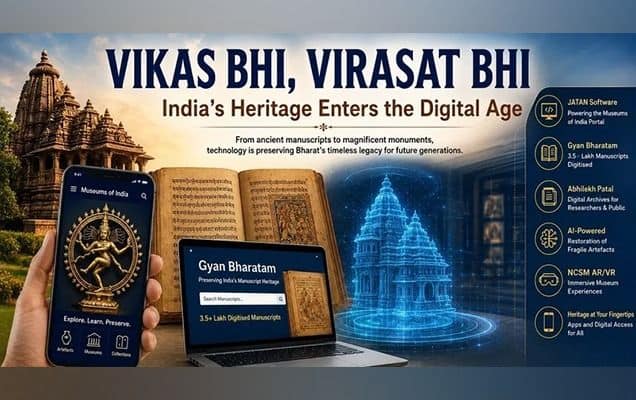
This is the path we have been walking for over a decade. I consider it my good fortune that, inspired by the principle of ‘Vikas Bhi, Virasat Bhi’, from Somnath to Kashi, Kamakhya to Kedarnath, Ayodhya to Ujjain, Trimbakeshwar to Srisailam, our team has had the opportunity to equip our spiritual centres with the latest facilities while at the same time preserving their traditional character. This, along with efforts to improve connectivity, ensures more people can visit them. It boosts the local economy, secures livelihoods and deepens the spirit of ‘Ek Bharat, Shreshtha Bharat.’

The struggles and sacrifices of those who laid down their lives to protect Somnath and those who rebuilt it time and again will never be forgotten. Countless individuals from different corners of India contributed to restoring its glory. They saw every part of Bharat as sacred, bound together by a sense of oneness that transcended geography. In a world often marked by divisions, this spirit of unity is more relevant than ever. Somnath will continue to stand tall in all its glory because the sense of unity and shared civilisational consciousness lives on in the hearts of every Indian. As a tribute to this, remembering the extraordinary courage of a thousand years, there will be special Pujas at Somnath for the next thousand days. It is gladdening to see several people donating for these Pujas as well.

I urge my fellow Indians to travel to Somnath in this special time. When you stand on the shores of Somnath, let its ancient echoes speak to you. You will not only be overwhelmed by devotion but will also feel the strong pulse of a civilisational spirit that refuses to fade, that is unbroken and unyielding. You will experience Bharat’s unconquerable spirit and understand why, despite every effort, our culture remained undefeated and you will have the opportunity to behold the vision of eternal triumph. It will surely be unforgettable.

Jai Somnath.

(Narendra Modi is the Prime Minister of India and is also the Chairman of the Shree Somnath Trust)