At 75, Prime Minister (PM) Narendra Modi represents a rare convergence of personal discipline, political conviction, and national transformation. His life story, which began in the small town of Vadnagar in Gujarat, has become inseparable from India’s own journey of economic growth, social reform, and global reassertion. As he reaches this milestone, Chhattisgarh too completes 25 years of its formation, creating a moment of shared reflection.
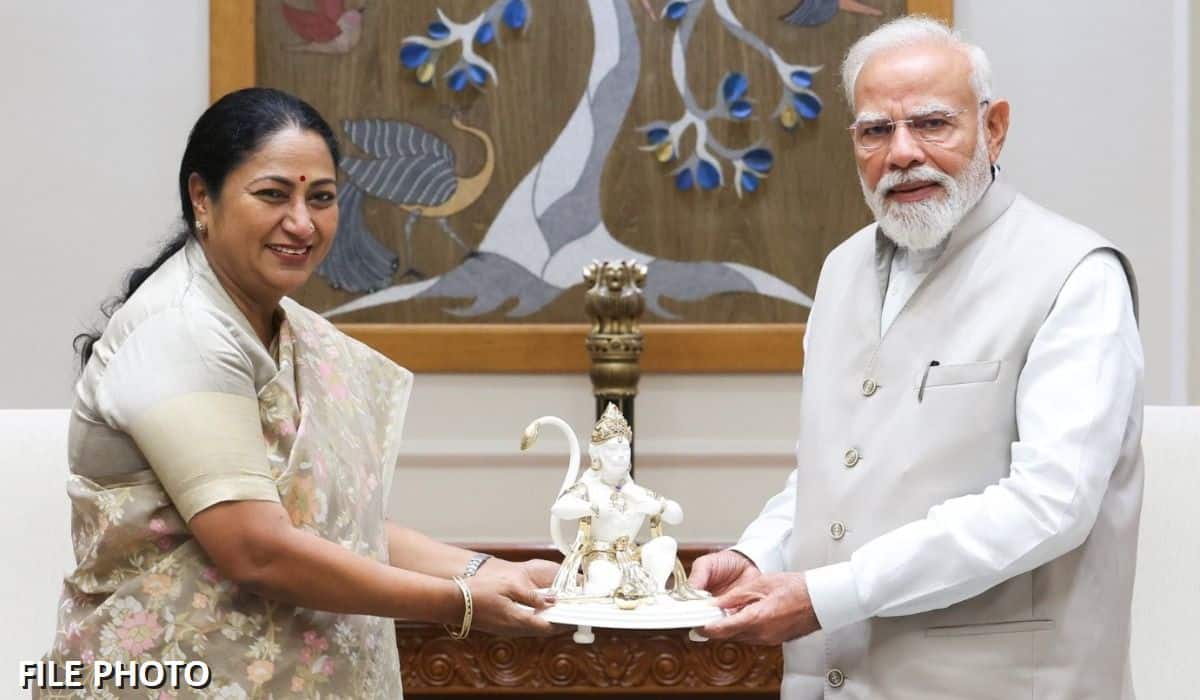
Between 2014 and 2018, I had the privilege of serving in his cabinet. Those years offered an inside view of his leadership — decisive, disciplined, and determined to ensure that resource-rich states like Chhattisgarh gained from national policies. Reforms to the Mines and Minerals (Development and Regulation) Act, for instance, enhanced the share of mineral-bearing states and continue to strengthen our economy.
Between 2014 and 2018, I had the privilege of serving in his cabinet. Those years offered an inside view of his leadership — decisive, disciplined, and determined to ensure that resource-rich states like Chhattisgarh gained from national policies. Reforms to the Mines and Minerals (Development and Regulation) Act, for instance, enhanced the share of mineral-bearing states and continue to strengthen our economy.
Bastar, once synonymous with Maoist violence, is changing. Roads, schools, and markets are replacing fear and isolation. Over 450 Maoists, including senior leaders, have been neutralised, and the target is to make the state Maoist-free by 2026. This transformation reflects the Centre’s dual approach of security and development.
National programmes have directly touched lives in Chhattisgarh. Pradhan Mantri Awas Yojana has provided pucca homes; Ujjwala has freed women from smoke-filled kitchens; Ayushman Bharat has reduced medical distress; Jan Dhan, Aadhaar and mobile have enabled direct transfers; and Mudra loans, Saubhagya, and Jal Jeevan have supported livelihoods and basic amenities.
The PM-KISAN scheme continues to provide ₹6,000 annually to over 90 million farmers. Chhattisgarh farmers now receive the highest minimum support price (MSP) for paddy in the country — ₹3,100 per quintal for 21 quintals per acre. Agreements with the National Dairy Development Board are fuelling a milk revolution, while millets, promoted nationally since 2023, are bringing nutritional and economic benefits. Through Van Dhan Vikas Kendras, tribal gatherers of forest produce are organised into clusters for processing and marketing. The MSP for minor forest produce ensures steady sources of income in places like Sukma and Narayanpur. Nearly 3.1 million households in Chhattisgarh are connected with self-help groups, many achieving financial independence. The Lakhpati Didi initiative is encouraging women to become entrepreneurs.
Operation Sindoor saw the Indian Armed Forces conduct precision missile and air strikes on terrorist infrastructure sites in Pakistan, targeting camps linked to groups like Jaish-e-Mohammed and Lashkar-e-Taiba. This decisive action, in retaliation for the April 22 Pahalgam attack that killed 26 civilians, underscores the government’s commitment to national security and India’s zero-tolerance towards terrorism, aligning with broader efforts to ensure peace and stability.
In higher education, Chhattisgarh has begun implementing the National Education Policy from the 2024–25 session. Universities are introducing flexible degree structures, multiple entry and exit options, and competency-based curricula, aligning state institutions with national reforms.
India today commands a larger role on the global stage. During the G20 presidency in 2023, the theme Vasudhaiva Kutumbakam — One Earth, One Family, One Future — captured the spirit of shared growth. The Delhi Declaration advanced cooperation on digital public infrastructure, climate finance, and inclusive development. Partnerships through the International Solar Alliance, Quad cooperation in the Indo-Pacific, and vaccine supplies to over 100 countries have demonstrated responsible leadership.
Yoga has become one of India’s strongest cultural exports. The International Day of Yoga and the Yoga Connect 2025 summit in New Delhi drew participation from 190 countries. UNESCO has recognised yoga as part of humanity’s shared heritage of well-being.
India’s space programme has also advanced rapidly. In May 2025, Group Captain Shubhanshu Shukla joined the Axiom-4 mission to the International Space Station, building experience for the upcoming Gaganyaan human spaceflight. Advances in earth observation satellites are helping states like Chhattisgarh with agriculture and disaster management. India has combined growth with sustainability. In July 2025, it achieved 50% of installed power capacity from non-fossil sources, five years ahead of schedule. For Chhattisgarh, rich in minerals and forests, this transition supports diversification and environmental protection.
Urban transformation is equally important. Under the Smart City Mission, Raipur and Bilaspur are seeing improvements in water management, digital governance, and public services, complementing the rural transformation underway in Bastar.
In 2025, India repealed several colonial-era laws, including the Indian Penal Code and the Code of Criminal Procedure. Simplified compliance systems, digital governance, and greater transparency are improving both ease of living and ease of doing business.
The Viksit Bharat@2047 vision sets ambitious goals for India’s Independence centenary. Chhattisgarh has prepared the Viksit Chhattisgarh document to expand its economy, strengthen infrastructure, and promote IT, education, and industry.
This moment carries symbolic weight. As PM Modi turns 75, Chhattisgarh celebrates 25 years of statehood. The twin milestones highlight a shared transformation — India moving towards self-reliance and global leadership, and Chhattisgarh towards peace, prosperity, and empowerment.
The Amrit Kaal framework — emphasising semiconductors, green hydrogen, and Artificial Intelligence — offers a roadmap for India to emerge as a leading global economy by 2047. For Chhattisgarh, this provides direction as we diversify into new sectors.
Behind the public life of PM Modi is a personal discipline that inspires. For a leader carrying enormous responsibility, this balance gives both clarity and continuity. At 75, he embodies the connection between personal resolve and national destiny.
(Vishnu Sai Deo is chief minister, Chhattisgarh. The views expressed are personal)