-
At the invitation of H.E. Shri Narendra Modi, Prime Minister of the Republic of India, H.E. Sheikh Hasina, Prime Minister of the People’s Republic of Bangladesh, paid an official visit to India on 05 October 2019. Apart from her official engagements in New Delhi, Prime Minister Sheikh Hasina was also invited as the Chief Guest at the India Economic Summit organized by the World Economic Forum on 03-04 October 2019.
-
The two Prime Ministers held detailed discussions in an atmosphere of great cordiality and warmth. Thereafter, the two Prime Ministers presided over the ceremony to exchange bilateral MoUs/ Agreements signed during the visit and also inaugurated via videolink three bilateral projects. During the meeting, the two leaders expressed satisfaction at the excellent state of bilateral relations, which are based on deep historical and fraternal ties, which reflect an all-encompassing bilateral partnership based on sovereignty, equality, trust and understanding that transcends a strategic partnership. They held productive and comprehensive discussions during which they reviewed all aspects of the bilateral relations, and exchanged views on regional issues. Both Prime Ministers agreed to fully utilize various opportunities for advancing mutually beneficial partnership in both conventional and non-conventional areas, and to ensure that this irreversible partnership enhances the legacy that started with the Great War of Liberation of Bangladesh.
India and Bangladesh – A bond transcending strategic relationship
-
The two Prime Ministers recalled the shared bonds of history, culture, language, secularism and other unique commonalities that characterize the partnership. They paid solemn tribute to the martyrs of the Liberation War, the Muktijoddhas, the Indian soldiers who fought in the War and the citizens of Bangladesh, for their great sacrifices in the Liberation War of 1971, and the commitment of Bangladesh leadership to the cherished values of democracy and equality. Both leaders vowed to uphold these shared values, in line with the dream of the Father of the Nation of Bangladesh, Bangabandhu Sheikh Mujibur Rahman. Prime Minister Modi also reaffirmed India’s full support to the realization of Prime Minister Sheikh Hasina’s vision of ensuring a prosperous, peaceful and developed Bangladesh.
Border Security and Management
-
Prime Minister Narendra Modi appreciated the zero-tolerance policy of the Government of Bangladesh against terrorism and commended Prime Minister Sheikh Hasina for her resolute efforts to ensure peace, security and stability in the region. Recognizing that terrorism remains one of the most significant threats to peace and stability of both countries and the region, the two Prime Ministers reiterated their strong commitment to eliminate terrorism in all its forms and manifestations, and stressed that there can be no justification whatsoever for any act of terror. Both leaders referred to the successful discussions between Home Ministers of both countries during the recent visit of the Home Minister of Bangladesh to India in August 2019, and agreed that closer cooperation against extremist and radical groups, terrorists, smugglers, smuggling of fake currency, and organized crime remain a shared priority.
-
Both sides emphasized simplifying people-people movement between the two countries. Prime Minister Sheikh Hasina thanked Prime Minister Modi for India’s commitment to simplify travel requirements, for Bangladesh nationals traveling by road or rail to India, and asked that in the spirit of reciprocity, all restrictions be lifted for Bangladeshi travelers using existing land ports. The two sides agreed that the remaining restrictions on entry/ exit from land ports in India for citizens of Bangladesh travelling on valid documents would be removed in a phased manner, beginning with checkpoints at Akhaura (Tripura) and Ghojadanga (West Bengal).
-
Both leaders emphasized the importance of effective border management for ensuring a tranquil, stable and crime free border. Towards this goal, the Leaders directed their respective border forces tocomplete border fencing at all pending sectors at the International Border between both the countries at the earliest. Both Leaders also agreed that the loss of civilian lives at the border is a matter of concern and directed the concerned border forces to enhance coordinated measures to work toward bringing such border incidents down to zero.
-
Both Leaders agreed to enhance cooperation in the area of Disaster Management. They welcomed the need for early completion of an MoU in the area of disaster management cooperation in a time-bound manner.
Towards a win-win business partnership
-
Welcoming Bangladesh’s imminent graduation out of LDC status, India extended Bangladesh its warm felicitations. In this context, both sides agreed to expedite commissioning of the Joint Studyon the prospects of entering into a bilateralComprehensive Economic Partnership Agreement (CEPA) between India and Bangladesh.
-
In response to India’s request to withdraw port restrictions on products being traded through Akhaura-Agartala port, the Bangladesh side informed that the restrictions will be removed on most items of regular trade in the near future.
-
Bangladesh side requested Indian authorities to consider addressing the issue of anti-dumping/anti-circumvention duties imposed on multiple products exported from Bangladesh to India, including jute products. The Indian side mentioned that trade remedial investigations are carried out in accordance with the existing laws. Both leaders directed their officials to expedite the establishment of framework of cooperation in the area of Trade Remedial Measures for cooperation and capacity building in this area.
-
Appreciating the positive impact of the border haats on the lives and livelihoods of the people living along the remote border areas, the leaders directed their officials to expedite establishment of twelve Border Haats which have been agreed to by both countries.
-
The leaders also welcomed the renewal of an MoU between Bangladesh Standards and Testing Institution (BSTI) and Bureau of Indian Standards (BIS). They agreed that this MoU will help to facilitate enhanced trade in goods between the two countries in a balanced manner. The two sides agreed to consider mutual recognitionof certifications of BAB and NABL respectively, as both countries are common members of the Asia Pacific Laboratory Accreditation Cooperation, and since BSTI has undertaken to install certain facilities compatible with NABL standards.
-
Prime Minister Sheikh Hasina appreciated India’s readiness to extend duty free and quota free access for Bangladeshi exports to the Indian market. They welcomed that for the first time, exports from Bangladesh to India crossed the one billion dollar mark in 2019 witnessing a year-on-year growth of 52% in the exports.
-
As a step forward to promote collaboration between the textiles and jute sectors of both the countries, the Prime Ministers urged earlyfinalization of the MoU between Ministry of Textiles, Government of India and Ministry of Textiles and Jute, Government of Bangladesh.
Boosting Connectivity – on land, on the waters, in the skies
-
Both sides recognized that increasing connectivity through air, water, rail, road offers mutually beneficial opportunity for enhancing economic cooperation between Bangladesh and the North Eastern States of India and beyond. The Leaders welcomed the conclusion of Standard Operating Procedures for the use of Chattogram and Mongla ports for movement of goods to and from India, particularly to and from the North East of India, which could create a win-win situation for both economies.
-
Both leaders underlined the immense potential of movement of cargo using the inland water and coastal shipping trade. Towards this, they welcomed the decision to operationalize the Dhulian-Gadagari-Rajshahi-Daulatdia-Aricha Route (to and fro) and include Daudkandi-Sonamura Route (to and fro) under Protocol on Inland Water Transit and Trade.
-
Bearing in mind the possible benefits to both economies from greater use of each others’ seaports for trans-shipment of their respective export cargoes, the two sides agreed to expeditediscussions on requisite modalities.
-
To facilitate better connectivity and simplify movement of passengers and goods between both the countries, both Leaders agreed to early operationalization of the BBIN Motor Vehicles Agreement for movement of goods and passengers between the member countries who are willing and ready; or to work towards a bilateral India-Bangladesh Motor Vehicles Agreement, as appropriate.
-
As a further step to enhance road connectivity between both the countries, both Leaders welcomed plans for commencement of Dhaka-Siliguri Bus service.
-
Both Leaders expressed satisfaction at the discussions in August 2019 in Dhaka between the Secretaries of Water Resources of both the countries and the subsequent formation of the Joint Technical Committee as well as formulation of the Terms of Reference to conduct the Feasibility Study of the proposed Ganges-Padma Barrage Project in Bangladesh for optimum utilization of the water received by Bangladesh as per Ganges Water Sharing Treaty 1996.
-
Both Leaders directed the Technical Level Committee of the Joint Rivers Commission to expeditiously exchange updated data and information and prepare the draft framework of Interim Sharing Agreements for the six rivers, namely, Manu, Muhuri, Khowai, Gumti, Dharla and Dudhkumar and to firm up the draft framework of interim sharing agreement of Feni River.
-
Prime Minister Sheikh Hasina highlighted that the people of Bangladesh are awaiting early signing and implementation of the Framework of Interim Agreement for sharing of the Teesta waters, as agreed upon by both governments in 2011. Prime Minister Modi informed that his government is working with all stakeholders in India for conclusion of the Agreement soonest possible.
-
Both Leaders appreciated the decision taken in the Water Resources Secretary level meeting in Dhaka for early start of the work on withdrawal of 1.82 cusec of water from Feni River for drinking purpose of the people of Sabroom town of Tripura.
-
Both Leaders recognized the immense potential of cooperation between the two countries in railways sector. They noted with satisfaction the constructive discussions between the Railways Ministers of the two countries in August 2019.
-
Both Leaders emphasized the need to enhance people-people connectivity. As a step forward, both Prime Ministers welcomed the increase in the frequency of Maitree Express from 4 to 5 times per week and that of Bandhan Express from 1 to 2 per week.
-
Both Leaders directed the concerned officials to expedite the completion of modalities for provision of railway rolling stock supplies by India to Bangladesh, and on modernization of the Saidpur workshop in Bangladesh.
-
Prime Minister Sheikh Hasina thanked Prime Minister Modi for considering the supply of a number of broad-gauge and meter-gauge locomotives to Bangladesh, on a grant basis. This would help in enhancing trade between both the countries.
-
The two Leaders welcomed the decision to enhance the capacity entitlement in air services from existing 61 services per week to 91 services per week with effect from Summer 2019 schedule, and further to 120 services per week with effect from Winter 2020 schedule.
Harnessing Defense Cooperation
-
The two leaders recognized the need for increased cooperation in defence for a more integrated and secure neighborhood, taking into account the illustrious history of their cooperation from the joint operation of both forces during Bangladesh's Great Liberation War in December 1971.
-
Both Prime Ministers welcomed the initiatives for development of closer Maritime Security Partnership, and noted the progress made in finalization of an MoU on Establishment of Coastal Surveillance Radar System in Bangladesh and encouraged both sides for early signing of the MoU.
-
Both leaders also agreed to expedite work towards drawing upon a US$ 500 mn Defence Line of Credit extended by India to Bangladesh, for which implementation arrangements have been finalized in April 2019.
Consolidating Development Cooperation
-
Prime Minister Hasina thanked the Government of India for undertaking various High Impact Community Development Projects (HICDPs) in Bangladesh as grant-in-aid projects, as a contribution to taking socio-economic development to the grassroots of Bangladesh.
-
The two Prime Ministers expressed satisfaction over progress made in the utilization of the three Lines of Credit and directed the officials of both sides to expedite implementation of the projects initiated under these LoCs.
-
The two sides expressed satisfaction over the signing of a Framework Agreement concerning implementation of GoI LoCs extended to Bangladesh, to facilitate the work of the Representative Office of the Exim Bank of India in Dhaka.
-
The Leaders also inaugurated through video-link three bilateral development partnership projects on October 5, namely:
a) Import of Bulk LPG from Bangladesh
b) Inauguration of Vivekananda Bhaban (students hostel) at Ramakrishna Mission, Dhaka
c) Inauguration of Bangladesh-India Professional Skill Development Institute (BIPSDI) at the Institution of Diploma Engineers Bangladesh (IDEB), Khulna
-
Both sides expressed satisfaction over the ongoing bilateral cooperation in capacity building of civil servants of Bangladesh. The Government of India, given the common legacy of jurisprudence, would work toward increasing the number of training programs for Bangladesh judicial officers for the future.
Cross-border Energy Cooperation
-
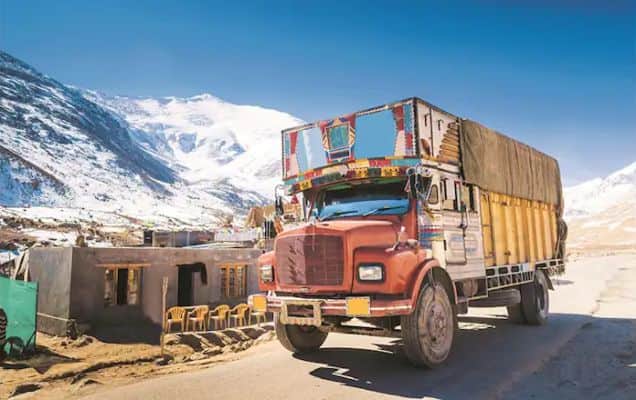
Both the Prime Ministers inaugurated a project on Sourcing of bulk LPG from Bangladesh to Tripura by using Bangladesh Trucks and hoped that such energy links will boost cross border energy trade.
-
Both sides welcomed the agreement reached at the 17th JSC meeting on Indo-Bangladesh cooperation in Power Sector held in Dhaka recently, to develop a 765kV Double Circuit cross-border electricity interconnection between Katihar (India), Parbotipur (Bangladesh) and Bornagar (India). While implementation modalities will be finalized, the Leaders noted that this additional capacity would enable more intra-regional electricity trade, including competitively-priced power generated from Hydro-electric power projects in India, Nepal and Bhutan.
Education and Youth Exchanges
-
Both sides emphasized the importance of enhanced cooperation between the youth of both countries as an investment in the future. They mentioned the signing of an MoU on Co-operation in Youth Affairs as a step in this direction. The two leaders recognized that structured training programs suitable for Bangladesh will be even more productive.
-
Both leaders directed the concerned authorities of both countries for early conclusion of the MoU on Mutual Recognition of Academic Qualifications.
Cultural cooperation- 150 years of Birth Anniversary of Mahatma Gandhi (2019), Bangabandhu’s Birth Centenary (2020) and 50 yrs of Bangladesh War of Liberation (2021)
-
Both Leaders emphasized the need for greater cooperation to commemorate the two important anniversary years: Bangabandhu Sheikh Mujibur Rahman's Birth Centenary in 2020; and 50 years of Bangladesh’s War of Liberation, and the establishment of India-Bangladesh bilateral diplomatic ties in year 2021. To commemorate these two historic years, both Leaders also agreed to enhance cultural interactions between both the countries. The Bangladesh Prime Minister thanked the Indian Prime Minister for a proposal to organize a Festival of India in Bangladesh at a mutually convenient period during 2019-2020.
-
Both Prime Ministers also welcomed the renewal of the MoU on Cultural Exchange Programme during the visit.
-
Both Prime Ministers directed the officials to expedite the work towards agreement between NFDC and BFDC for co-production of feature film on Bangabandhu Sheikh Mujibur Rahman, in time for the celebrations of his birth centenary in 2020.
-
Prime Minister Narendra Modi thanked the Government of Bangladesh for agreeing to release a commemorative postal stamp on the occasion of the 150th birth anniversary of Mahatma Gandhi, who is celebrated across the world for his philosophy of non-violent struggle against colonialism and inequity.
-
Both Leaders agreed to have an MoU on cooperation between the National Museum (India) and Bangabandhu Museum (Bangladesh), and directed the concerned officials to finalize the MoU at the earliest.
Displaced persons from the Rakhine state of Myanmar
-
Prime Minister Modi appreciated Bangladesh’s generosity in sheltering and providing humanitarian assistance to forcibly displaced persons from the Rakhine State of Myanmar. India will supply a fifth tranche of humanitarian assistance to support the Government of Bangladesh’s humanitarian efforts to shelter the Rohingyas in temporary camps in Cox’s Bazar. This tranche of aid will comprise tents, relief and rescue material as well as one thousand sewing machines for skill development of forcibly displaced women from Myanmar. In addition, India has completed a first project to build 250 houses in Rakhine state of Myanmar, and is now preparing to implement another set of socio-economic development projects in the area.
-
Prime Minister Sheikh Hasina conveyed the gratitude of the Government of Bangladesh for the humanitarian assistance provided by India since September 2017 to help meet the needs of the displaced persons from Myanmar. The two Prime Ministers agreed on the need to expedite safe, speedy and sustainable repatriation of the displaced persons to their homes in the Rakhine State of Myanmar. They agreed on the need for greater efforts to be made to facilitate their return, including by improving security situation and socio-economic conditions in the Rakhine State of Myanmar.
Partners in the Region and the World
-
The two Prime Ministers reaffirmed their commitment to work closely in the UN and other multilateral organisations. They also reaffirmed their commitment to work together particularly in the international arena, to call upon developed countries to fulfill their commitments on the means of implementation as enshrined in the Agenda 2030.
-
Both leaders agreed that Regional and sub-regional cooperation is a priority area for the two countries. Towards this goal, they agreed to streamline the activities of BIMSTEC to make it an effective vehicle for sub-regional cooperation to achieve the aim of collective prosperity of all member countries.
-
The following bilateral documents were signed, exchanged, adopted and handed over during the visit:
. MoU for providing a Coastal Surveillance System.
. Standard Operating Procedure (SOP) on the use of Chattogram and Mongla Ports for Movement of goods to and from India.
. MoU on withdrawal of 1.82 cusec of water from Feni River by India for drinking water supply scheme for Sabroom town, Tripura, India
. Agreement concerning Implementation of the Lines of Credit (LoCs) committed by India to Bangladesh.
. MoU between University of Hyderabad and University of Dhaka
. Renewal of Cultural Exchange Programme
. MoU on Co-operation in Youth Affairs
-
Prime Minister Sheikh Hasina thanked Prime Minister Narendra Modi for concurring to Bangladesh’s request for opening a Deputy High Commission of Bangladesh in Chennai.
Sustaining momentum through High-level visits
-
Prime Minister Sheikh Hasina thanked Prime Minister Modi for the warmth and cordiality shown and the gracious hospitality extended to her and members of her delegation during their stay in India.
-
Prime Minister Sheikh Hasina extended an invitation to Prime Minister Narendra Modi to pay a visit to Bangladesh. The invitation was accepted and it was agreed that the dates of the visit would be finalized through diplomatic channel.