Today, India’s former Vice President and respected statesman Shri M. Venkaiah Naidu Garu turns 75. I wish him a long and healthy life and also extend my greetings to all his well-wishers and supporters. This is an occasion to celebrate a leader whose life journey showcases dedication, adaptability and an unwavering commitment to public service. From his early days in the political arena to his tenure as Vice President, Venkaiah Garu’s career exemplifies his unique ability to navigate the complexities of Indian politics with ease and humility. His eloquence, wit and steadfast focus on developmental issues have earned him respect across party lines.

Venkaiah Garu and I have been associated with each other for decades. We have worked together and I have also learnt a lot from him. If there is one thing that has remained common in his life, it is the love for people. His brush with activism and politics began in Andhra Pradesh with student politics as a student leader. Considering his talent, oratory and organisational skills, he would have been welcomed in any political party but he preferred to work with the Sangh Parivar because he was inspired by the vision of Nation First. He was associated with the RSS, ABVP and then strengthened the Jana Sangh and the BJP.

When the Emergency was imposed almost 50 years ago, young Venkaiah Garu immersed himself in the anti-Emergency movement. He was imprisoned and that too for inviting Loknayak JP to Andhra Pradesh. This commitment to democracy would be seen time and again in his political career. In the mid-1980s, when the great NTR’s Government was unceremoniously dismissed by the Congress, he was again at the forefront of the movement to protect democratic principles.

Venkaiah Garu has always been comfortable swimming even against the most formidable tides. In 1978, Andhra Pradesh voted for the Congress but he beat the trend and was elected as a young MLA. Five years later, when the NTR Tsunami swept the state, he got elected as a BJP MLA, thus paving the way for the BJP’s growth across the state.

All those who have heard Venkaiah Garu speak will vouch for his oratory skills. He is certainly a wordsmith but he is as much a worksmith. Since his days as a young MLA, he began to be respected for the rigour he put in to legislative affairs and speaking for people of his constituency. No less than a stalwart like NTR noted his talent and even wanted him to join his Party but Venkaiah Garu refused to deviate from his core ideology. He went on to play a big role in strengthening the BJP in Andhra Pradesh, going across the villages and connecting with people from all walks of life. He led the Party on the floor of the Assembly and even became the AP BJP President.

It was in the 1990s that the BJP central leadership took note of Venkaiah Garu’s efforts and thus in 1993 began his stint in national politics when he was appointed the Party’s All India General Secretary. It was truly a remarkable moment for a man, who as a teenager would go around announcing the visits of Atal Ji and Advani Ji, to be working directly with them. As the General Secretary, he was focused on how to bring our Party to power and ensure that the nation get their first ever BJP Prime Minister. After the move to Delhi, there was no looking back and he rose to become the National President of the Party.

In 2000, when Atal Ji was keen to induct Venkaiah Garu in the government as a Minister, Venkaiah Garu instantly conveyed his preference for the Rural Development Ministry. This left everyone including Atal Ji puzzled. After all, here was a leader who was being asked which portfolio he wants and his first choice was Rural Development. But, Venkaiah Garu was clear- he was a Kisan Putra, he had spent his early days in the villages and thus, if there was one area he wished to work, it was rural development. As Minister, he was closely associated with the conception and rolling out of the ‘Pradhan Mantri Gramin Sadak Yojana.’ Years later, when the NDA Government of 2014 assumed office, he handled the crucial portfolios of Urban Development, Housing and Urban Poverty Alleviation. It was during his tenure that we launched the important Swachh Bharat Mission and important urban development related schemes. Perhaps, he is one of the only leaders to have worked for both rural and urban development for such an extensive period.

When I came to Delhi in 2014, I was an outsider to the national capital, having worked in Gujarat for the previous decade and a half. In such times, Venkaiah Garu’s insights were very handy. He was an effective Parliamentary Affairs Minister - he knew the essence of bipartisanship but at the same time he drew a line when it came to Parliamentary norms and rules.

In 2017, our Alliance nominated him as our Vice-Presidential candidate. We faced a dilemma – we thought about how the big shoes of Venkaiah Garu would be impossible to fill, but at the same time, we also knew there was no better candidate for the Vice Presidency than him. I can never forget one of the speeches he gave when he resigned as Minister and MP. He could not control his tears when he recalled his association with the Party and efforts to build it. It gave a glimpse of his deep-rooted commitment and passion. Upon becoming the Vice President, he undertook various steps that also enhanced the dignity of the office. He was an outstanding Chairperson of the Rajya Sabha, ensuring that young MPs, women MPs and first time MPs get the opportunity to speak. He put great emphasis on attendance, making the Committees more effective and also raising the level of debate in the House.

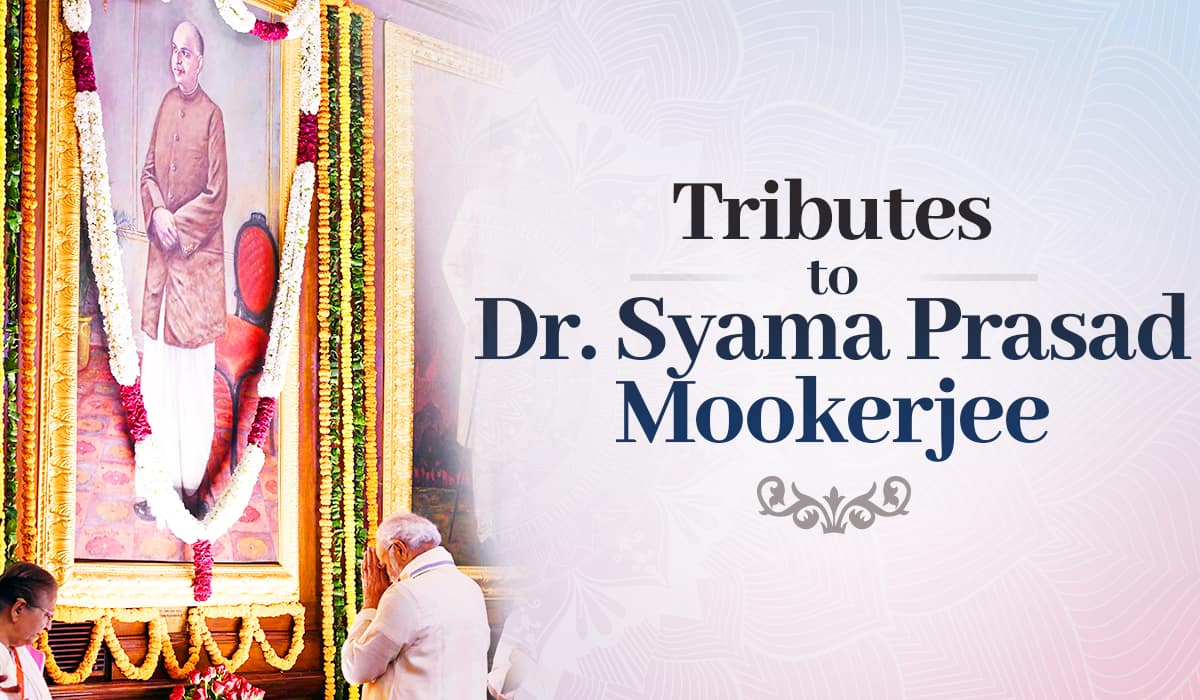
When the decision to remove Articles 370 and 35(A) were placed on the floor of the Rajya Sabha, it was Venkaiah Garu who was on the Chair. I am sure it was such an emotional moment for him- the young boy who was drawn to Dr. Syama Prasad Mookerjee’s dream of a united India was on the Chair when this was finally achieved.

Apart from work and politics, Venkaiah Garu is a voracious reader and writer too. For the people in Delhi, he is known as the person who brought the glorious Telugu culture to the city. His Ugadi and Sankranti programmes are clearly among the most cherished gatherings in town. I have always known Venkaiah Garu as someone who loves food and also hosting people. But, off late, his self-control has also been visible to everyone. His commitment to fitness is seen in how he still plays badminton and enjoys his brisk walk.

Even after the Vice Presidency, Venkaiah Garu has led an active public life. On the issues that he is passionate about or on various developments that take place across the nation, he calls me and asks me about it. I met him most recently when our government returned to office for the third term. He was delighted and conveyed his best wishes to me and our team. I wish him once again on this milestone. I hope young Karyakartas, elected representatives and all those who have a passion to serve learn from his life and imbibe those values. It is people like him who make our nation better and more vibrant.

Explore More
શ્રી રામ જન્મભૂમિ મંદિર ધ્વજારોહણ ઉત્સવ દરમિયાન પ્રધાનમંત્રીના સંબોધનનો મૂળપાઠ

લોકપ્રિય ભાષણો

શ્રી રામ જન્મભૂમિ મંદિર ધ્વજારોહણ ઉત્સવ દરમિયાન પ્રધાનમંત્રીના સંબોધનનો મૂળપાઠ
The quiet foundations for India’s next growth phase

Media Coverage

The quiet foundations for India’s next growth phase
NM on the go

Nm on the go

Always be the first to hear from the PM. Get the App Now!
...
2025 – The year of reforms
December 30, 2025

India has emerged as the centre of global attention. This is due to the innovative zeal of our people. Today, the world sees India with hope and confidence. They appreciate the manner in which the pace of progress has been accelerated with next-generation reforms, which are cross-sectoral and amplify the nation’s growth potential.

I have been telling many people that India has boarded the Reform Express.

The primary engine of this Reform Express is India’s demography, our young generation and the indomitable spirit of our people.

2025 will be remembered as a year for India when it focused on reforms as a continuous national mission, building on the ground covered over the past 11 years. We modernised institutions, simplified governance, and strengthened the foundations for long-term, inclusive growth.

We moved ahead decisively…with higher ambition, faster execution and deeper transformation. The reforms have been about enabling citizens to live with dignity, entrepreneurs to innovate with confidence and institutions to function with clarity and trust.

Let me cite a few examples of the reforms undertaken.

GST reform:

• A clean two-slab structure of 5% and 18% has been implemented.

• The burden has been eased on households, MSMEs, farmers and labour-intensive sectors.

• The purpose is to ensure dispute reduction and better compliance.

• This reform has boosted consumer sentiment and demand. Sales have grown in the festive season.

Unparalleled relief for the middle class:

• In a first, individuals earning up to Rs. 12 lakh a year faced no income tax at all.

• Obsolete Income-tax Act of 1961 has been replaced with the modern and simple Income Tax Act, 2025.

• Together, these reforms mark India’s move towards a transparent, technology-driven tax administration.

Boost to small and medium businesses:

• Definition of “small companies” has been expanded to include firms with turnovers up to Rs. 100 crore.

• Compliance burdens and associated costs for thousands of companies will get reduced.

100% FDI Insurance reform:

• 100% FDI permitted in Indian insurance companies.

• This will give a fillip to insurance penetration and security for the people.

• Apart from enhanced competition, it would offer better insurance choices and improved service delivery for the people.

Securities Market Reform:

• Securities Market Code Bill has been introduced in Parliament. It will enhance governance norms in SEBI, also enhance investor protection, reduce compliance burden and enable a technology-driven securities market for a Viksit Bharat.

• Reforms will ensure savings thanks to reduced compliances and other overheads.

Maritime and Blue Economy Reforms:

• In a single Parliament session, the Monsoon Session, five landmark maritime legislations were passed: the Bills of Lading Act, 2025; the Carriage of Goods by Sea Bill, 2025; the Coastal Shipping Bill, 2025; the Merchant Shipping Bill, 2025; and the Indian Ports Bill, 2025.

• These reforms simplify documentation, make dispute resolution easier and reduce logistics costs.

• Outdated Acts dating back to 1908, 1925 and 1958 have also been replaced.

Jan Vishwas…Ending the Era of Criminalisation:

• Hundreds of outdated laws have been scrapped.

• 71 Acts have been repealed through the Repealing and Amendment Bill, 2025.

Boosting Ease of Doing Business:

• A total of 22 QCOs were revoked across synthetic fibres, yarns, plastics, polymers, and base metals, while 53 QCOs were suspended in various steel, engineered, electrical, alloy, and consumer end product categories, covering a broad spectrum of industrial and consumer materials.

• This will increase India’s share of apparel exports; lower production costs in diverse industries like footwear, automobiles; ensure lower prices for domestic consumers for electronics, bicycles and automotive products.

Historic labour reforms:

• Labour laws have been reshaped, merging 29 fragmented laws into four modern codes.

• India has created a labour framework that secures the interests of workers while boosting the business ecosystem.

• The reforms focus on fair wages, timely payment of wages, smoother industrial relations, social security and safer workplaces.

• They ensure greater female participation in the workforce.

• Unorganised workers including contract workers are brought under the ESIC and EPFO expanding the coverage of formal workforce.

Diversified and expanded markets for Indian products:

Trade deals inked with New Zealand, Oman and Britain. These will add to investments, boost job creation and also encourage local entrepreneurs. They reinforce India’s position as a trusted and competitive partner in the global economy.

The FTA with the European Free Trade Association, comprising Switzerland, Norway, Iceland and Liechtenstein, has been operationalised. This marks India’s first FTA with developed European economies.

Nuclear Energy Reforms:

The SHANTI Act is a transformational step in India’s clean-energy and technology journey.

• Ensures a strong framework for the safe, secure and responsible expansion of nuclear science and technology.

• Enables India to meet the rising energy demands of the AI era, like powering data centres, advanced manufacturing, green hydrogen and high-technology industries.

• Promotes the peaceful application of nuclear technologies in healthcare, agriculture, food security, water management, industry, research and environmental sustainability, supporting inclusive growth and improved quality of life.

• Opens new pathways for private sector participation, innovation and skill development. Creates opportunities for India’s youth to lead in frontier technologies and next-generation energy solutions.

This is an opportune moment for investors, innovators and institutions to partner with India, to invest, innovate and build a clean, resilient and future-ready energy ecosystem.

A Landmark reform in Rural Employment guarantee:

• Viksit Bharat- G RAM G Act, 2025 Rozgar Guarantee framework raises employment guarantee from 100 to 125 days.

• This will result in increased spending towards strengthening village infrastructure and livelihoods.

• The aim is to turn rural work into a means to ensure higher incomes and better assets.

Education Reforms:

Bill has been introduced in Parliament. 

• Single, unified higher education regulator will be established.

• Multiple overlapping bodies like the UGC, AICTE, NCTE will be replaced with the Viksit Bharat Shiksha Adhishthan.

• Institutional autonomy will be strengthened, with innovation and research boosted.

What makes the reforms of 2025 significant is not only their dimension but also their underlying philosophy. Our Government has prioritised collaboration over control and facilitation over regulation in the true spirit of a modern democracy.

These reforms were designed with empathy, recognising the realities of small businesses, young professionals, farmers, workers and the middle class. They were shaped by consultation, guided by data and anchored in India’s constitutional values. They add momentum to our decade-long efforts to move away from a control-based economy to one that operates within a framework of trust, keeping the citizen at its core.

These reforms are aimed towards building a prosperous and self-reliant India. Building a Viksit Bharat is the polestar of our development trajectory. We will continue pursuing the reform agenda in the coming years.

I urge everyone in India and abroad to deepen their bond with the India growth story.

Keep trusting India and investing in our people!