Hon'ble Speaker Manzoor Nadir Ji,
Hon'ble Prime Minister Mark Anthony Phillips Ji,
Hon'ble Vice President Bharat Jagdev Ji,
Hon'ble Leader of the Opposition,
Hon'ble Ministers,
Members of the Parliament,
Hon'ble The Chancellor of the Judiciary,
other dignitaries,
Ladies and gentlemen.
I am deeply thankful to all of you for having graciously invited me to join you in this historic Parliament of Guyana. Guyana bestowed upon me its highest honour yesterday, for which I extend my heartfelt gratitude to all of you and to every citizen of Guyana. For me, every citizen of Guyana is a 'star boy.' Thank you to everyone here! I dedicate this honour to every citizen of Bharat.

Friends,
The bond between India and Guyana runs profoundly deep. It is a connection forged through shared soil, labour and perseverance. Approximately 180 years ago, an Indian set foot on Guyanese soil for the first time. Since then, in good and bad times, this relationship has been marked by closeness and mutual affection. The India Arrival Monument stands as a testament to this shared intimacy. Shortly, I will have the privilege of visiting this important symbol.
Friends,
Today, I am addressing you as the Prime Minister of India, but 24 years ago, I had the opportunity to visit this beautiful nation as a seeker. While many are drawn to destinations known for their extravagance and glamour, I was eager to explore the heritage and history of Guyana. Even now, there are many in Guyana who recall their interactions with me from that visit. I carry vivid memories of my time here, from the deep passion for cricket to the enchanting music and songs. And, of course, I cannot forget the chutney—whether from India or Guyana, it is truly remarkable!
Friends,
It is rare to visit another country and find its history so closely intertwined with one’s own. Over the past two and a half centuries, India and Guyana have shared similar experiences of slavery, struggles, and an enduring quest for freedom. In both nations, countless individuals dedicated their lives to the cause of liberation. Figures like Gandhiji’s close associate C.F. Andrews and Jung Bahadur Singh, the President of the East Indian Association, fought unitedly to free our people from slavery. Together, we achieved independence. Today, both Bharat and Guyana are strengthening democracy on the global stage. Therefore, standing here in the Parliament of Guyana, I extend greetings from 140 crore Indians to all of you. I congratulate every representative in the Parliament of Guyana. Your unwavering commitment to democracy not only strengthens Guyana but also contributes to the progress of the entire world.

Friends,
As we strive to strengthen democracy, we must remain vigilant about the evolving global circumstances. When Bharat and Guyana gained independence, the world grappled with different challenges. Today, in the 21st century, we face an entirely new set of issues. The systems and institutions established after the Second World War are now showing signs of collapse. Following the pandemic, instead of progressing towards a new world order, the world became entangled in other complexities. In these challenging times, the most powerful mantra for moving forward is "Democracy First – Humanity First." The essence of "Democracy First" inspires us to take everyone along, foster inclusivity, and promote collective development. Meanwhile, the principle of "Humanity First" guides the direction of our decisions. When humanity becomes the foundation of our choices, the outcomes naturally serve the best interests of all.
Friends,
Our democratic values are so robust that they support us through every challenge as we progress on the path of development. Democracy remains the most effective means of building an inclusive society. Regardless of a citizen’s religion or background, democracy guarantees the protection of their rights and offers a bright future to all. Our nations have demonstrated that democracy is not merely a legal framework or system; it is embedded in our DNA, vision, and conduct.
Friends,
Our human-centric approach teaches us that every country and its citizens are equally significant. This philosophy has shaped Bharat's global vision. During its G-20 Presidency, India advocated the mantra of One Earth, One Family, One Future. In the face of the pandemic, when humanity faced an unprecedented challenge, Bharat emphasized One Earth, One Health. Addressing climate challenges required collective action, and India championed the vision of One World, One Sun, One Grid. To mitigate natural disasters, Bharat spearheaded the Coalition for Disaster Resilient Infrastructure (CDRI). When the world needed a big network of pro-planet people, Bharat initiated Mission LiFE, akin to a global movement to inspire sustainable living.

Friends,
Upholding the spirit of "Democracy First – Humanity First," India continues to fulfil its role as a Vishwabandhu (a friend to the world). In every global crisis, India strives to be a first responder. During the pandemic, when nations focused on their own defences, India shared medicines and vaccines with over 150 countries. I take satisfaction in knowing that India was able to assist the people of Guyana during that difficult time. Whenever war or disaster struck, India extended help selflessly—whether in Sri Lanka, the Maldives, Nepal, Turkey, or Syria. From earthquakes to humanitarian crises, India was among the first to respond. This ethos is ingrained in our culture. We have never acted out of selfishness or embraced expansionism. We have always respected resources and rejected the idea of occupation or exploitation. I firmly believe that space and the seas should not be arenas for universal conflict but symbols of universal cooperation. This is not an era for conflict but one where we must identify and eliminate the root causes of discord. Challenges such as terrorism, drug trafficking, and cybercrime threaten our shared future, and only by combating these collectively can we secure a better world for future generations. This goal can only be achieved when we place "Democracy First – Humanity First" at the centre of our efforts.
Friends,
Bharat has always spoken with a foundation of principles, trust, and transparency. If even a single country or region is left behind, our global goals will remain unfulfilled. This is why India asserts – Every Nation Matters! It is also why Bharat refers to island nations as Large Ocean Countries, not Small Island Nations. With this perspective, we established the SAGAR platform to connect island nations in the Indian Ocean region. Additionally, we created a special forum to link countries of the Pacific Ocean. Acting on this principle, Bharat fulfilled its responsibility by securing the inclusion of the African Union in the G-20 during its presidency.
Friends,
Today, India stands firmly in support of global development and peace. It is with this spirit that India has become the voice of the Global South. India believes the Global South has endured significant hardships in the past. Historically, we advanced by harmonising with nature, guided by our cultural values. However, many nations developed at the cost of environmental degradation. Today, the countries of the Global South are bearing the greatest burden of climate change, and it is essential to rectify this imbalance.

Friends,
Whether it is Bharat or Guyana, we share aspirations for development and dreams of providing better lives for our people. To achieve this, the united voice of the Global South is crucial. This is a moment of awakening for the Global South, an opportunity for us to come together and shape a new global order. I envision a significant role for all of you, the esteemed public representatives of Guyana, in this endeavour.
Friends,
I see many women members present here. A critical factor in shaping the future of the world and driving global growth is half of its population – women. For centuries, women were not afforded the opportunity to fully contribute to global progress. Numerous factors contributed to this, and this is not just the story of a single nation or the Global South; it is a global phenomenon. However, in the 21st century, women will play a pivotal role in ensuring global prosperity. Recognising this, during its G-20 presidency, India prioritised Women-Led Development as a key agenda.
Friends,
In India, we have initiated a significant campaign to empower women with leadership roles across all sectors and at every level. Today, women in Bharat are excelling in every field. Globally, only 5% of pilots are women, whereas in Bharat, this figure is 15%. A considerable number of India’s fighter pilots are also women. In the world's developed nations, only 30 to 35% of STEM graduates—those in science, technology, engineering, and mathematics—are women. However, in Bharat, this has surpassed 40 percent. Women scientists are now at the helm of India’s major space missions. You will also be pleased to know that Bharat has recently enacted legislation to provide reservation for women in its Parliament. Today, women are represented at all levels of democratic governance in Bharat. At the local level, through our Panchayati Raj system, over 1.4 million or 14 lakh elected representatives are women. To put this into perspective, women in our local governments represent a population almost twice the size of Guyana’s total population.
Friends,
Guyana serves as the gateway to the vast continent of Latin America. You have the potential to become a bridge of opportunities and possibilities between India and this expansive region. Together, we can enhance the partnership between India and CARICOM. Just yesterday, the India-CARICOM Summit was held here in Guyana, where we resolved to further strengthen every dimension of our collaboration.

Friends,
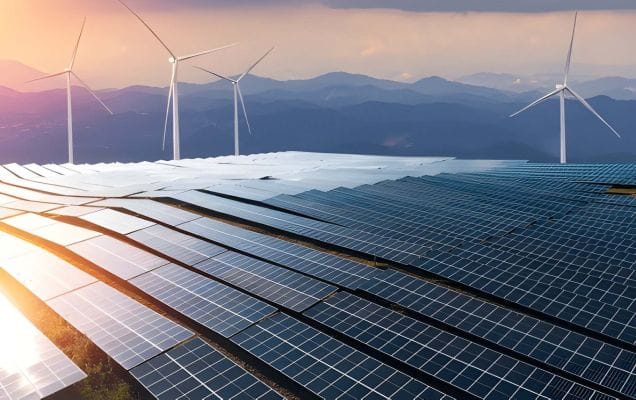
India is committed to supporting Guyana’s development in every possible way. Whether it is investment in infrastructure or capacity building, India and Guyana are working hand in hand. The ferries and aircraft provided by India have proven highly beneficial for Guyana. Bharat is also extending significant support in renewable energy, particularly in the solar power sector. Your successful organisation of the T-20 Cricket World Cup was remarkable, and Bharat is proud to have contributed to the construction of the stadium.
Friends,
Our partnership coupled with development is now entering a new phase. As Bharat's energy demand grows rapidly, we are diversifying our energy sources, and we see Guyana as an important energy source in this endeavour. At the same time, we are making consistent efforts to encourage greater investment by Indian businesses in Guyana.
Friends,
You are aware that Bharat possesses a vast youth population, often referred to as its youth capital. India also boasts a robust quality education and skill development ecosystem. We would be delighted to welcome as many students from Guyana as possible to benefit from this system. Through the Parliament of Guyana, I extend an invitation to the youth of Guyana to collaborate with Indian innovators and scientists. Together, we can inspire our young people to act locally while collaborating globally. Through creative collaboration, we can find innovative solutions to the challenges the world faces today.
Friends,
The great son of Guyana, Shri Cheddi Jagan, once said that we must learn from the past to improve the present and lay a solid foundation for the future. The shared history and lessons of our two countries, combined with our present efforts, will undoubtedly lead us towards a brighter future. With these thoughts, I conclude my speech. I warmly invite all of you to visit Bharat and will be delighted to welcome as many people from Guyana as possible. Once again, I express my heartfelt gratitude to the Parliament of Guyana and to all of you. Thank you.