His Excellency Mr. Peter Hass, the Consul General of USA, Mr. Naoki Sakai from ADB, Mr. Dona Younger from IFC, my colleagues from the State Government, Ladies and Gentlemen!
I am very happy to be part of this important ceremony today. It is indeed a very important moment in the history of renewable energy sector. It is particularly important for solar energy. However, to my mind, it is much more important than just a step forward in energy security.
Friends, our commitment to Renewable Energy is an integral part of our commitment to address the issue of Global warming and Climate change. In fact, I have been saying that it is an issue of ‘Climate Justice’. It is a part of our concern for the future generations.
It is a part of our concern for the poor and the less privileged who are going to be the worst sufferers of climate change. In view of this, we have taken a series of steps to mitigate the impact of Climate Change. Gujarat is one of the four Governments in the world which has a separate department for Climate Change. We have dedicated a huge amount of money for this issue.
We all know that we cannot reverse the clock of human civilization. However, we have demonstrated ways in which it is possible to live a quality life even by consuming less energy. We have demonstrated that it is possible to produce more, both in agriculture and industry, even by consuming lesser energy. More and more consumption of energy will not help us to come out of the vicious cycle of Carbon emission. I have listed some thoughts on this in my book on climate change which is titled as ‘Convenient Action: Gujarat’s response to Challenges of Climate Change’. In this book, I have shown some simple ways in which energy can be saved.
For example, we have brought a paradigm shift from ground water irrigation to surface water irrigation by constructing several Hundred thousand of minor irrigation structures.
You might be aware that Gujarat is a power surplus state. Still the Govt. of Gujarat is spending a huge amount on renewable energy (more than Rs. 2,000 crore per year). We are doing this mainly to contribute in the war against global warming and climate change. Gujarat is a victim of many natural disasters (earthquake, flood, drought, etc.).
We do not want our brothers and sisters living in other parts of the globe to suffer like us. We also feel that we should make sacrifice for the betterment of our next generations. That is why we are spending money and investing our efforts in this direction. We are sacrificing our today for the tomorrow of our next generation. We have a long term vision and want to leave a Green footprint in whatever we do. We want to leave a footprint which the winds of history or minds of historian cannot erase. I request you to join our hands in this historic movement on this historical occasion.
I also feel that by locating us where we are, perhaps the nature has given us the responsibility to lead this movement. We are blessed in the form of strong solar radiation. If only 0.1% of Gujarat’s land is set aside for solar energy, the potential is 10,000 MW of solar power! In wind energy too, we are strategically placed, with a long coast line of 1600 Km. In wind power, with an installed capacity of 2255 MW, we are contributing more than 4500 million units of electricity. Thus, blending the nature’s gift with human endeavour, we are committed to Green and Renewable Energy.
This solar park of 600 MW is again a part of our commitment to find out development processes and technologies which are sustainable. Gujarat is the first State to develop such a Solar Park in the Country. If you see the speed in our solar journey, you will be amazed. Though there was lot of uncertainty, we took a bold initiative and announced the Solar Power Policy in January- 2009. The foundation stone for this Solar Park was laid on 30 December, 2010. Within a short span of one year, this park recorded an installation of 605 MW. Today, it is being dedicated to the nation before you.
The success of this park and the commitment it has received from the investors and generation companies is very motivating. However, my own thinking is to take this movement further. My ultimate end is to produce solar power on roof tops and in farmers’ fields. It is not enough to produce renewable energy. It is also important to produce it in a decentralized way. I need your support. I particularly need your inputs and insight in this journey.
With innovative ideas, energy and purpose, Yuva Shakti is at the forefront of nation-building: PM Modi
January 12, 2026
Share
With innovative ideas, energy and purpose, Yuva Shakti is at the forefront of nation-building: PM
Swami Vivekananda's thoughts continue to inspire the youth: PM
With a clear focus on the youth, we rolled out successive schemes. It was from here that the startup revolution truly gathered momentum in India: PM
India is experiencing remarkable growth in the Orange Economy, rooted in culture, content and creativity: PM
Over the past decade, the series of reforms we began has now turned into a Reform Express. At the heart of these reforms is our Yuva Shakti: PM
India's youth must take a resolve to free the nation from the mindset of slavery: PM
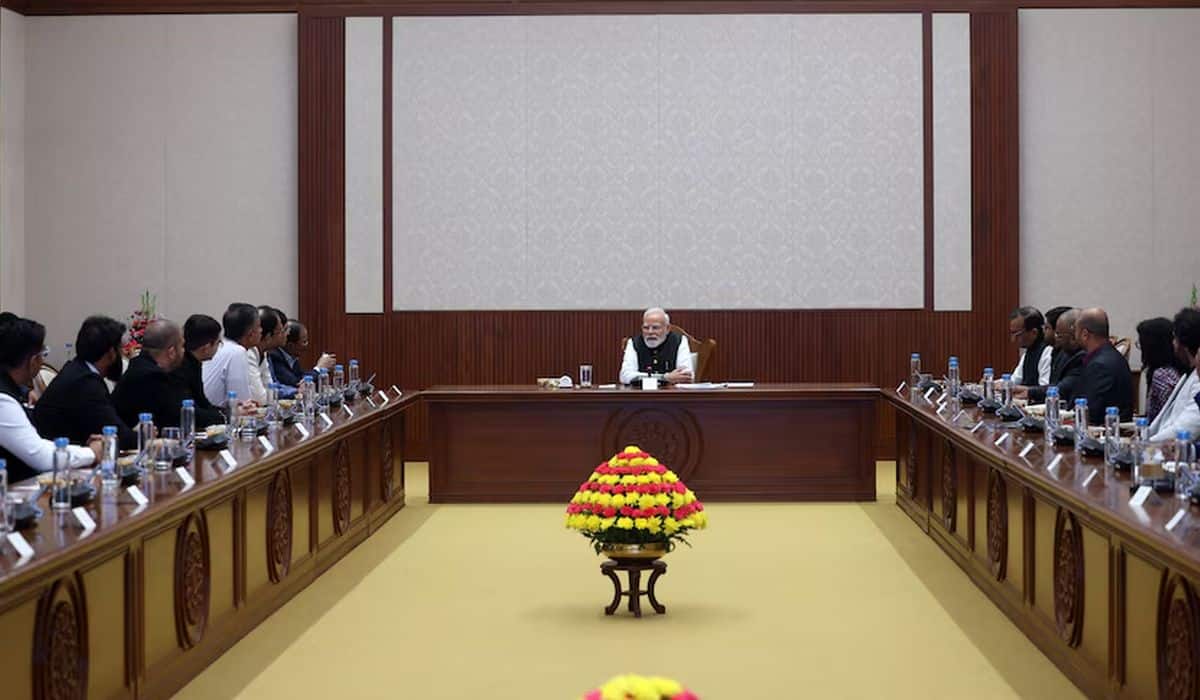
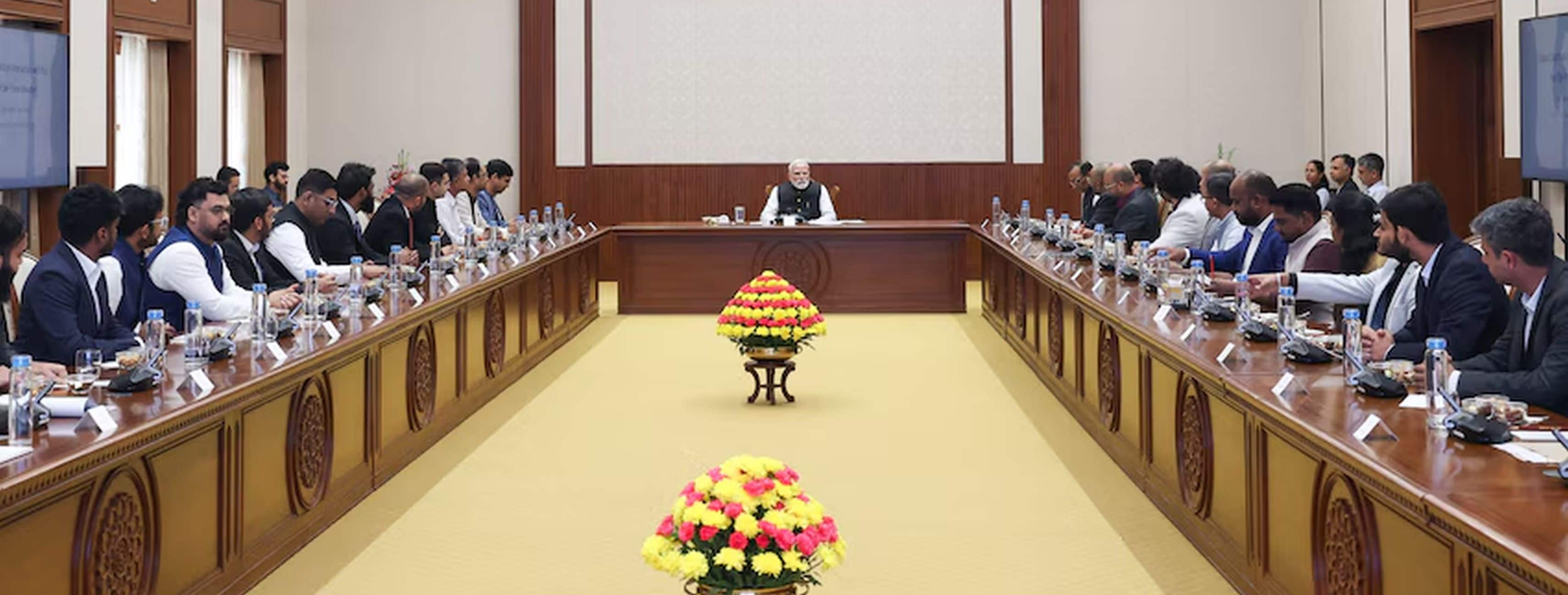
My colleagues in the Union Cabinet, all Members of Parliament, the winners of the Viksit Bharat Young Leaders Challenge, other dignitaries, and my young friends who have come here from across the country including those who have come from abroad must all have had a new experience here. Aren’t you tired? You have been engaged for two days now, so won’t you feel tired listening once again? Anyway, from my seat at the back, I have already said as much as I needed to. When I first took the oath as Chief Minister, I believe that many of you had not even been born. And when I took the oath as Prime Minister in 2014, most of you would still have been children. But whether as Chief Minister or now as Prime Minister, I have always had immense faith in the younger generation. I have always drawn energy from your capability and your talent. And today, I see that you are holding the reins of the mission to build a developed India.
Friends,
In 2047, when India completes 100 years of independence, the journey leading up to that milestone is extremely important for the nation. At the same time, these years are also the most crucial period of your lives. This is a great golden opportunity for you. Your capability will become India’s capability, and your success will take India’s success to new heights. I congratulate all of you for participating in the Viksit Bharat Young Leaders Dialogue. I will speak on this subject in greater detail later, but first let us reflect on the significance of today.
Friends,
Today is the birth anniversary of Swami Vivekananda. Even today, his thoughts continue to inspire every young person. What is the goal of our lives? What is our purpose? How should we live with the spirit of “Nation First”? In every action of ours, the welfare of society and of the nation must be central. In this regard, the life of Swami Vivekananda serves as a great guide and source of inspiration. In his memory, every year 12 January is celebrated as National Youth Day, and inspired by him, this date has been chosen for the Viksit Bharat Young Leaders Dialogue.
Friends,
I am pleased to see that in such a short time, the Viksit Bharat Young Leaders Dialogue has become such a major platform, a platform where youth directly participate in shaping the direction of the nation’s development. More than five million youth registered, over three million actively participated in the Viksit Bharat Challenge, and shared their ideas for India’s future. Youth engagement on such a massive scale is unprecedented. Around the world, the term “think tank” is commonly used. Think tanks hold discussions and influence opinion-making. But after watching the presentations today and the manner in which you raised challenging ideas, I believe that this forum itself has become an institution- a unique global think tank. When millions of minds brainstorm together on defined subjects with a clear goal, what greater exercise of thinking can there be? In fact, the word “think tank” seems inadequate. A “tank” may be small, but this initiative is vast broader than the ocean and deeper than it in ideas. The subjects you discussed today- particularly Women-Led Development and Youth Participation in Democracy- were addressed with remarkable maturity. Your presentations demonstrate how determined our Amrit Generation is to build a developed India. They also reveal the temperament of India’s Gen-Z: creative, confident, and committed. I congratulate all my young friends and everyone associated with the Yuva Bharat organisation for making this event a success.
Friends,
When I mentioned the year 2014 earlier, most of you here would have been only eight or ten years old. You would not have developed the habit of reading newspapers at that time. You did not witness the era of policy paralysis, when governments were criticised for delayed decisions and even when decisions were taken, they were poorly implemented. The rules and regulations were such that youth could not even imagine doing something new. Young people were burdened by restrictions at every step.
Friends,
At that time, something as simple as applying for an examination or a job required running from office to office just to get certificates attested. Paying fees meant visiting banks and post offices to get demand drafts. Starting a business required multiple guarantees even for a small loan. Today, these things seem unbelievable, but this was reality just a decade ago.
Friends,
You spoke here about start-ups, so let me explain the transformation of the start-up ecosystem. While start-up culture began globally decades ago, India saw very little discussion on it until recently. Until 2014, there were fewer than 500 registered start-ups in the country. Excessive government control dominated every sector, leaving young talent with little opportunity to pursue innovation.
Friends,
I have faith in the youth of my country and confidence in your capabilities. That is why we chose a different path. Keeping youth at the centre, we introduced one reform after another, and it was from here that the Startup Revolution truly gained momentum in India. Ease of Doing Business reforms, Startup India, Digital India, the Fund of Funds, and tax and compliance simplification — many such initiatives were undertaken. Sectors that were earlier completely dominated by the government were opened up for youth-led innovation and enterprise. The impact of these efforts has itself become a remarkable success story.
Friends,
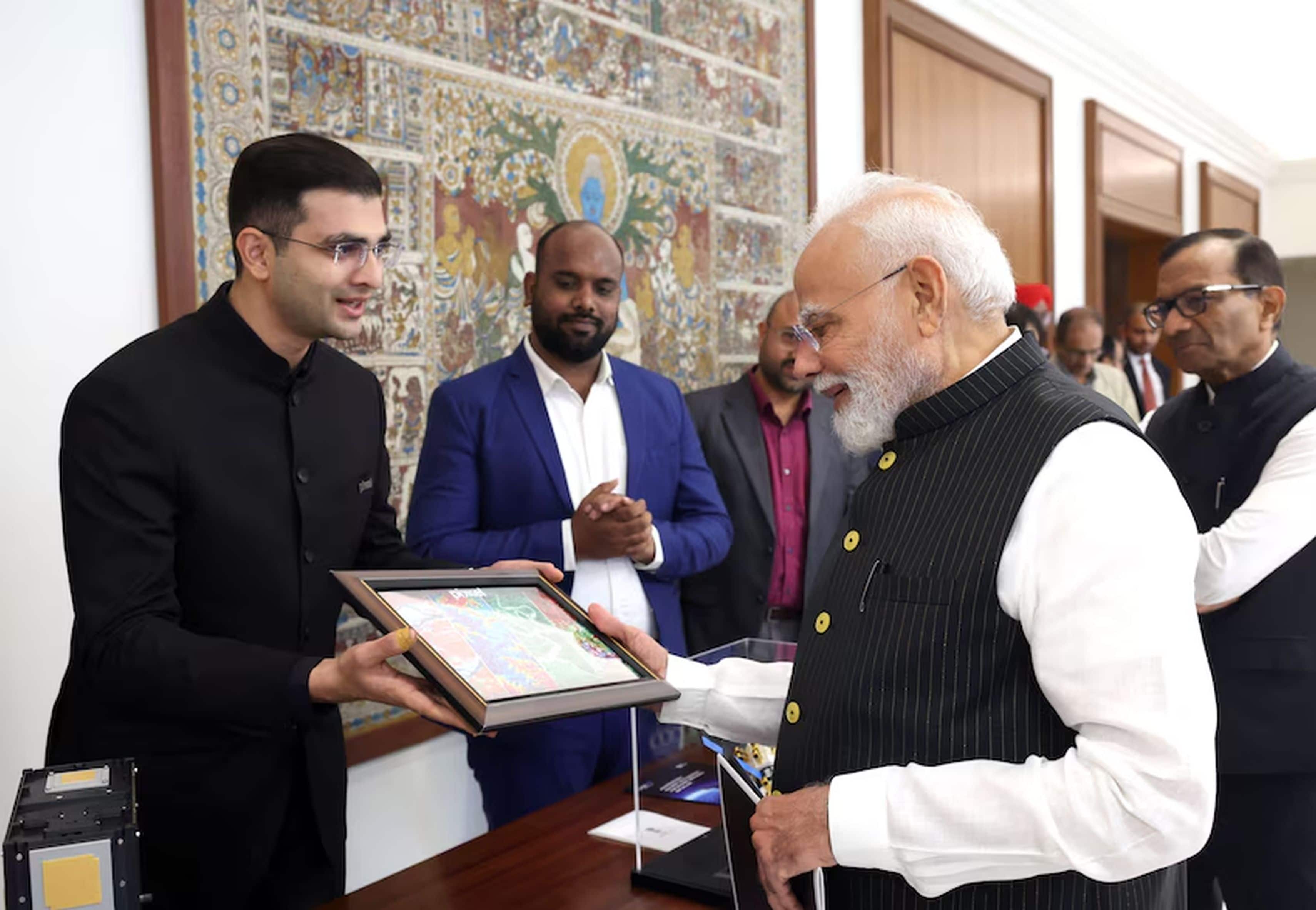
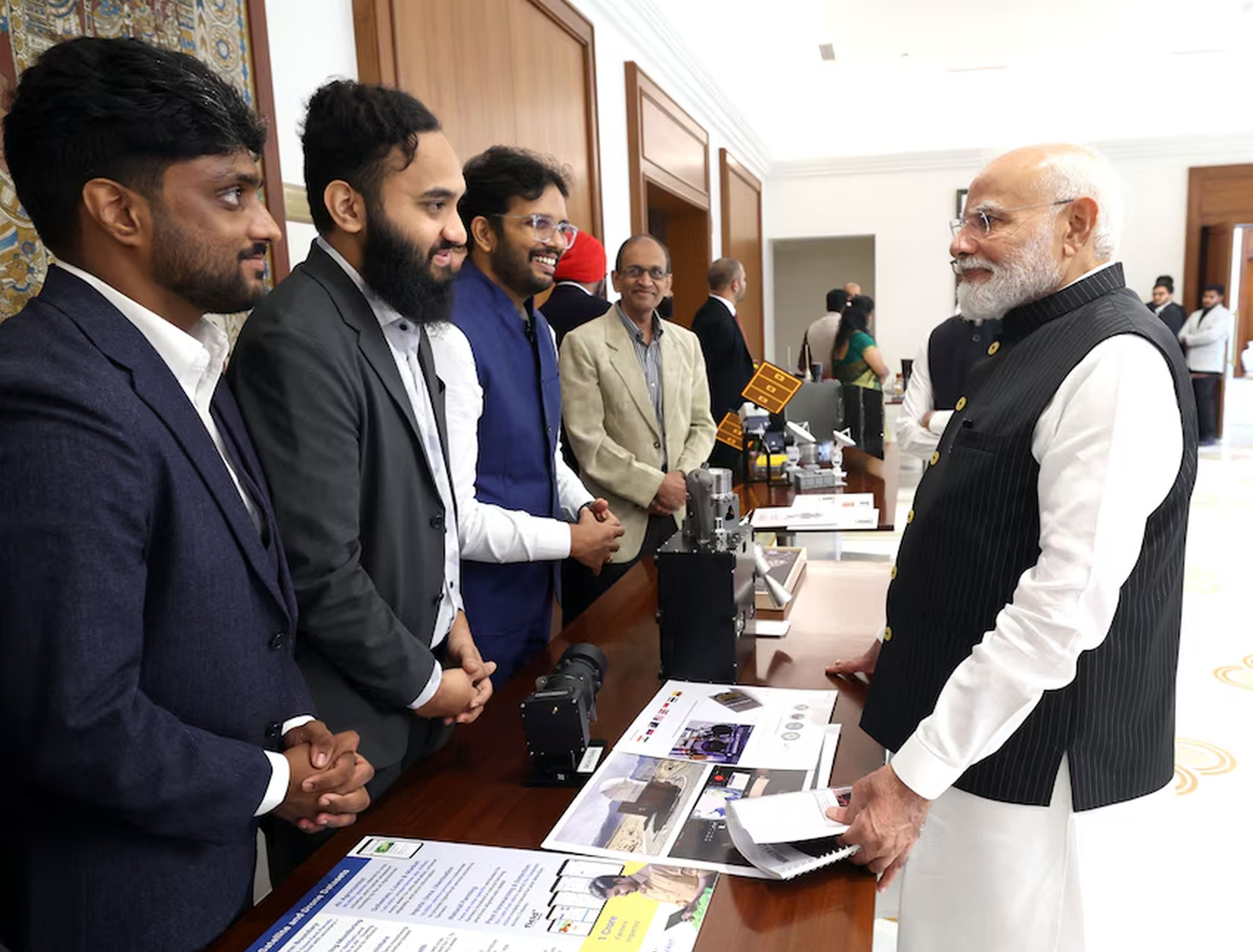
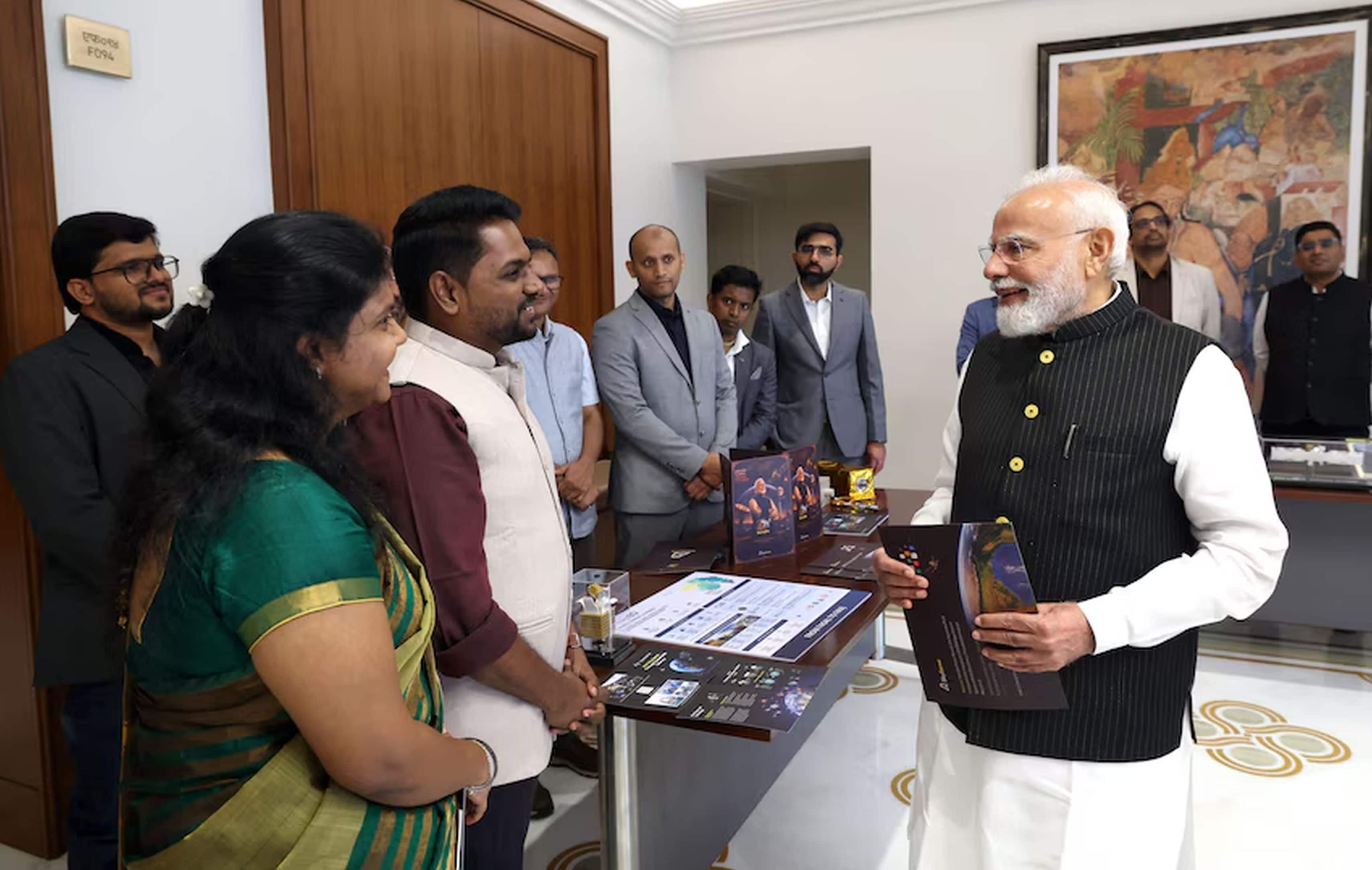
Take the space sector as an example. Until five or six years ago, the responsibility for advancing the space sector rested solely with ISRO. We opened the space sector to private enterprise, created the necessary frameworks, and established supporting institutions. As a result, today more than 300 start-ups are operating in India’s space sector. In a short span of time, our start-up Skyroot Aerospace developed its rocket, Vikram-S. Another start-up, Agnikul Cosmos, astonished the world by creating the world’s first 3D-printed engine. All of this is the result of the power of start-ups. India’s space start-ups are now consistently demonstrating their capabilities.
Friends,
Let me now ask you a question. Imagine if there had been round-the-clock restrictions of every kind on flying drones -what would have happened? That was exactly the situation earlier. In our country, both flying and manufacturing drones were trapped in a web of laws. Obtaining a licence was like climbing a mountain, and the entire issue was viewed only from a security perspective. We introduced new rules and simplified them. As a result, many youth today have received the opportunity to move forward in the drone-related sector. On the battlefield, Made in India drones are defeating the enemies of the nation, and in the agricultural sector, our Namo Drone Didi sisters are using drone technology in farming.
Friends,
The defence sector earlier depended entirely on government companies. Our government changed this as well and opened the doors of India’s defence ecosystem to start-ups. This has brought significant benefits to our youth. Today, more than 1,000 defence start-ups are working in India. One young entrepreneur is building drones, another is developing anti-drone systems, some are creating AI-based cameras, while others are working in the field of robotics.
Friends,
Digital India has also created a new community of creators in India. Today, India is witnessing unprecedented growth in the Orange Economy that is, culture, content, and creativity. India is emerging as a major global hub in fields such as media, film, gaming, music, digital content, and VR–XR technologies. A presentation here just now spoke about exporting our culture. I urge the youth present: we have such a vast treasure of stories and legends the Ramayana, the Mahabharata, and so much more. Can we take these into the world of gaming? Globally, gaming is a massive market and a major economy. We can create innovative games based on our mythological narratives. Our Hanuman ji can capture the imagination of gamers across the world. In this way, our culture will be exported in a modern form, using technology as its medium. Even today, I see several Indian start-ups that are beautifully presenting India’s stories through gaming, making it easier for children to understand India while they play.
Friends,
The World Audio-Visual and Entertainment Summit (WAVES) has become a powerful launchpad for young creators. No matter which sector you belong to, today India is opening doors to infinite possibilities. Therefore, my call to all youth associated with this event, and to the youth of the nation, is this: move forward with your ideas, do not hesitate to take risks. The government is walking with you, shoulder to shoulder.
Friends,
Over the past decade, the series of changes and reforms we began has now turned into a Reform Express. At the heart of these reforms is you- our youth power. Next-generation reforms in GST have made processes even simpler for youth and entrepreneurs. Income up to twelve lakh rupees is now tax-free, which significantly increases the potential for savings for those entering the workforce or starting new businesses.
Friends,
You all know that today, electricity is not merely a source of light. From AI and data centres to semiconductors and manufacturing, every modern ecosystem requires abundant energy. That is why India is ensuring Assured Energy. Reforms related to civil nuclear energy- the Shanti Act have been undertaken with this objective. This will create thousands of new jobs in the nuclear sector and will also generate a strong multiplier effect across other sectors.
Friends,
Different countries across the world have different needs and demands, and their workforces are steadily shrinking. Our effort is to ensure that India’s youth are prepared for the opportunities emerging globally. Therefore, continuous reforms in skill development sectors are essential and we are actively pursuing them. After the introduction of the new National Education Policy, regulations related to higher education are also being reformed. Foreign universities are now opening their campuses in India. Recently, the PM SETU programme was launched with investments worth thousands of crores of rupees. This initiative will upgrade thousands of ITIs so that youth can be trained according to the present and future needs of industry. In recent years, India has also signed trade agreements with several countries, which are bringing new opportunities for Indian youth.
Friends,
No nation can become self-reliant or developed without self-confidence. A lack of pride in our capabilities, our heritage, and our tools weakens us. We need commitment and a sense of pride, and we must move forward with strength and confidence. You must have read about the British politician Macaulay, who, during the colonial period, worked through the education system to create a generation of Indians who were mentally enslaved. This fostered an inferiority complex towards indigenous traditions, products, and capabilities. Being foreign or imported came to be seen as a guarantee of superiority. Is that mindset acceptable today? Together, we must put an end to this mentality of slavery. Ten years from now, two hundred years will have passed since Macaulay’s actions, and it is the responsibility of this generation to wash away the injustice of those two centuries. We still have ten years, and I have complete faith that this young generation will accomplish this task. Every young citizen must resolve to free the country from this mindset.
Friends,
Our scriptures say and this was also mentioned in one of the start-up presentations here- “Aa no bhadraḥ kratavo yantu viśvataḥ”, meaning let noble, auspicious, and beneficial thoughts come to us from all directions. You must learn from the world’s best practices, but never allow the tendency to undervalue your own heritage and ideas to dominate. This is precisely what the life of Swami Vivekananda teaches us. He travelled the world, appreciated its strengths, yet continuously challenged the misconceptions spread about India’s civilisation. He did not accept ideas simply because they were popular; instead, he confronted social evils and sought to build a better India. With the same spirit, our youth power must now move forward. And at the same time, take care of your fitness- play, laugh, and live fully.
I have unshakeable faith in all of you, in your capabilities and in your energy. With these words, I once again extend my heartfelt greetings to all of you on National Youth Day. One final suggestion, I want to give you: this dialogue programme should also be organised at the state level to discuss development within states. After that, we should move towards district-level dialogues. In this way, what we call a think tank can evolve into a think web. My best wishes are always with you.