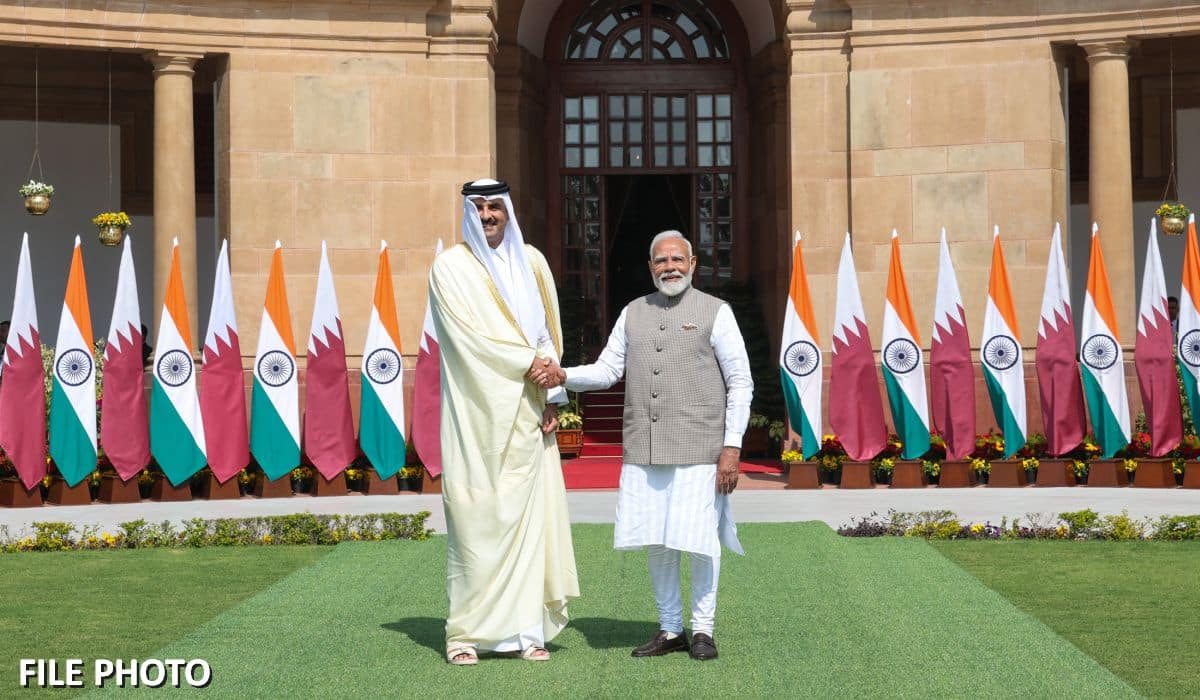
PM Modi, President Rahmon hold wide-ranging talks on bilateral, regional and international issues
India, Tajikistan agree to combat terrorism and extremism collectively
PM Modi reiterates India’s commitment to supporting the development of Tajikistan’s defence capacities to enhance stability and security
PM Modi thanks Tajikistan for its support in declaring June 21 as International Day of Yoga in the United Nations
PM thanks Tajikistan for support to India’s membership to the Shanghai Cooperation Organization (SCO)

The Prime Minister of the Republic of India, His Excellency Mr. Narendra Modi paid a State visit to the Republic of Tajikistan from 12 to 13 July 2015 at the invitation of the President of the Republic of Tajikistan, His Excellency Mr. Emomali Rahmon.

  1. The President and the Prime Minister held wide-ranging talks on bilateral, regional and international issues. The discussions between the Leaders were warm and cordial and the outcomes of the visit reflected the mutual trust that exists between the two countries.
  2. President and Prime Minister expressed satisfaction at the excellent relations between India and Tajikistan. They noted that ties between their countries are based on shared history and cultural affinities between their people. The two leaders reaffirmed their commitment to take all necessary steps to transform bilateral relations into a multi-faceted strategic partnership for the mutual benefit of the people of both their countries.
  3. The two leaders welcomed continuing exchanges at Ministerial and senior official levels, which serve to cement bilateral ties. They noted the existing broad legal framework for development of cooperation between the two countries and called for an enhanced focus on implementation of outcomes envisaged under bilateral agreements/MoUs in various areas.
  4. The two leaders noted the rising trend of extremism and terrorism in many parts of the world and in their immediate neighbourhood, posing a threat to India and Tajikistan as well as the region. Both sides further emphasized the need for adoption of the "Comprehensive Convention on International Terrorism" by the UN General Assembly. 

    The leaders underlined the importance of a stable and secure environment for economic development and prosperity of their countries. They agreed to continue their active engagement and cooperation in the fight against terrorism and extremism, and reaffirmed their determination to act resolutely against organizations and agencies that support terrorism. 

    Prime Minister Modi expressed appreciation at Tajikistan’s efforts at curbing extremism and radicalism and to ensure secular governance, which is a common ideal of both the countries.
  5. The Leaders decided to reinvigorate official-level interactions in the framework of the Joint Working Group (JWG) on Counter Terrorism for strengthening cooperation in the fight against terrorism and instructed that the JWG meet at an early date. They emphasized the need for continued cooperation between their security agencies including information sharing mechanisms to counter the growing menace of extremism and terrorism.
  6. The Leaders expressed satisfaction at ongoing defence cooperation, which remains one of the main pillars of partnership between the two countries. The Prime Minister reiterated India’s commitment to supporting the development of Tajikistan’s defence capacities to enhance stability and security. The President of Tajikistan welcomed India's assistance in capacity building of the Tajik defence forces.
  7. Despite being close neighboring countries, the Leaders noted that that trade and economic linkages between India and Tajikistan are not in keeping with their potential. They highlighted the importance of trade and investments in developing a balanced and sustainable bilateral relationship and committed to work together to overcome structural and functional issues hampering economic relations between the two countries. The Leaders mandated the 8th session of the India-Tajikistan Joint Commission on Trade, Economic, Scientific and Technical Cooperation (JCM), to meet in Dushanbe this year and draw up a concise strategy to deepen trade and investment relations and identify specific steps to facilitate exchanges between the business communities.
  8. The Leaders underscored the importance of improving connectivity in the region to realize the full potential of trade and commerce. The two leaders discussed ways and means to explore possibilities of developing an alternate surface route in cooperation with other countries of the region. Tajikistan reiterated its support to the International North South Transport Corridor (INSTC) which will considerably reduce transit time and cost for transportation of goods between India and Central Asia and beyond and welcomed recent measures to speed up its implementation.
  9. Both Leaders recognized that the proposed Pakistan, Afghanistan and Tajikistan Trilateral Transit Trade Agreement (PATTTTA) would facilitate trade between Tajikistan and the countries of the South Asian region. They decided that further consultations would be held on the inclusion of India to this arrangement.
  10. The Leaders stressed the importance of enhanced air connectivity between the two countries to facilitate trade and economic linkages as well as tourism and greater people-to-people interactions. They called upon relevant authorities in both countries to find constructive ways and means to increase the frequency of flights on the Delhi-Dushanbe sector, including the provision of Fifth Freedom rights for carriers.
  11. Underling the importance of agriculture in the economies of both the countries and given India’s expertise in the agricultural sector, including research, development and processing of agricultural products, the Leaders agreed to deepen cooperation in agriculture. Tajikistan expressed its intention to facilitate agricultural cooperation with India, and in particular welcomed greater involvement of Indian companies in the agricultural sector in Tajikistan. The Leaders noted that a Workshop on Agriculture was being held in connection with the visit involving officials, experts from research institutions and organisations, private enterprises and business leaders of both the countries. They called for early implementation of the outcomes and agreements reached at the Workshop.
  12. The Leaders noted the centrality of energy security for rapid economic development. Tajikistan thanked India for successful up gradation and modernisation of the Varzob-1 Hydro Power Station through the Bharat Heavy Electricals Limited (BHEL) and National Hydroelectric Power Corporation (NHPC) as well as various training programmes organised for experts from Tajikistan in the field of hydropower. Highlighting the vast untapped hydropower potential, the President of Tajikistan sought greater Indian engagement in the field of hydropower generation in Tajikistan.
  13. The Leaders noted that health sector is an important area of bilateral cooperation. Acknowledging the growing number of people from Tajikistan visiting India for medical treatment, they agreed to expand cooperation in the field of health for the benefit of the people of the two countries. Tajikistan welcomed India’s proposal to implement a tele-medicine project in Tajikistan by connecting reputed multi-speciality hospitals in India with hospitals in Dushanbe and other regions of Tajikistan for offering medical consultation and education.
  14. The Leaders stressed the importance of education and human resource development in nation building and agreed to enhance cooperation in the education sector through greater exchanges between educational institutions of the two countries. The Leaders also highlighted the importance of better utilization of scholarships offered under the Indian Technical & Economic Cooperation (ITEC) and by the Indian Council for Cultural Relations (ICCR) for capacity building in Tajikistan.
  15. The Leaders identified cooperation in food processing, mining, pharmaceuticals, textiles, skill development, science & technology, Information Technology, culture and tourism as promising areas for further cooperation. The leaders underlined the importance of closer interactions between the business bodies and investment promotion agencies of the two countries for enhancement of economic engagements.
  16. The Leaders emphasized the centrality of cultural interactions in further deepening the close bonds between the peoples of India and Tajikistan. They called for active implementation of the Programme of Cooperation between India and Tajikistan on Art and Culture for the period 2016-18 and agreed that relevant organisations hold "Days of Culture" in each other's country.
  17. Prime Minister Modi thanked Tajikistan for its support in declaring June 21 as International Day of Yoga in the United Nations and for successful organisation of events to mark the occasion on 21 June, 2015 in Dushanbe and various regions of Tajikistan. The Leaders noted the role of Yoga and its health benefits and agreed to cooperate further in promotion of Yoga in Tajikistan. They welcomed the proposed AYUSH information cell at the Embassy of India, Dushanbe for sharing information about Yoga and other traditional Indian medical practices in Tajikistan.
  18. Prime Minister Modi thanked Tajikistan for installation of a bust of renowned Indian poet Rabindranath Tagore in Dushanbe. The Leaders acknowledged the contemporary relevance of Tagore’s writings and agreed that the symbolic presence of Tagore in Tajikistan will promote harmony between cultures.
  19. Considering the huge popularity of Indian cinema in Tajikistan, the Leaders agreed thatcooperation in the field of television and radio-broadcasting would further enhance people to people contacts and cultural understanding.
  20. Underlining the importance of greater cooperation and more people-to-people interaction, the Leaders instructed their officials to hold Consular Consultations at an early date to discuss liberalization of the existing visa regime.
  21. The Leaders noted that Afghanistan occupies a central position in Asia and reaffirmed their support for peace and security in Afghanistan through an Afghan-led and Afghan-owned process.
  22. The Leaders expressed satisfaction at the excellent cooperation between the two countries on multilateral issues and mutual support for their initiatives in the United Nations and other international forums. The Leaders underscored the need to deepen such interaction on issues of interest to both countries and for developing countries as a whole. Tajikistanreiterated its support for India’s candidature for permanent membership of an expanded UN Security Council.
  23. Prime Minister Modi thanked Tajikistan for support to India’s membership to the Shanghai Cooperation Organization (SCO). The Leaders agreed to work together within the framework of SCO for economic development, security and stability of the region.
  24. The Leaders emphasised that the outcomes and understandings reached during the visit undoubtedly mark a milestone in the development of a long-term strategic partnership between the two countries. The two leaders applauded the deep trust and confidence between the countries and underlined that the strategic partnership between India and Tajikistan is of mutual benefit to their two countries as well as for greater regional stability.
  25. Prime Minister Modi expressed deep gratitude to President Rahmon for the warm welcome and the gracious hospitality extended during his visit to Tajikistan. Prime Minister extended an invitation to the President of the Republic of Tajikistan to visit India at an early date. The invitation was accepted with pleasure.
Explore More
શ્રી રામ જન્મભૂમિ મંદિર ધ્વજારોહણ ઉત્સવ દરમિયાન પ્રધાનમંત્રીના સંબોધનનો મૂળપાઠ

લોકપ્રિય ભાષણો

શ્રી રામ જન્મભૂમિ મંદિર ધ્વજારોહણ ઉત્સવ દરમિયાન પ્રધાનમંત્રીના સંબોધનનો મૂળપાઠ
PM Modi pitches India as stable investment destination amid global turbulence

Media Coverage

PM Modi pitches India as stable investment destination amid global turbulence
NM on the go

Nm on the go

Always be the first to hear from the PM. Get the App Now!
...
India – Germany Joint Statement
January 12, 2026

At the invitation of Hon’ble Prime Minister Shri Narendra Modi, Federal Chancellor of the Federal Republic of Germany, H.E. Mr. Friedrich Merz, paid an official visit to India from 12-13 January 2026. The Chancellor was accompanied by a high-level delegation including 23 leading German CEOs and industry leaders.

This was Chancellor Merz’s first official visit to India and his first visit to Asia as Federal Chancellor, reflecting the high priority Germany attaches to India as a key strategic partner in the Indo-Pacific. The visit followed the successful 7th India–Germany Inter-Governmental Consultations (IGC) held in New Delhi on 25 October 2024, and comes at a high point in the journey of bilateral ties between the two countries, with completion of 25 years of India–Germany Strategic Partnership in 2025, and commemoration of 75 years of diplomatic relations in 2026. Both leaders sincerely appreciated the renewed momentum in bilateral engagement across government, business, civil society and academia that has played an instrumental role in advancing and deepening the Strategic Partnership.

Prime Minister Modi welcomed Chancellor Merz in Ahmedabad. The two Leaders paid floral tribute at the statue of Mahatma Gandhi at Sabarmati Ashram, and participated in the famous Kite Festival. The two Leaders also addressed India-Germany CEOs Forum. Chancellor Merz will also visit Bangalore with engagements focusing on business and technological collaboration between India and Germany.

Prime Minister Modi and Chancellor Merz held restricted and delegation-level talks in Ahmedabad on 12 January 2026. They reaffirmed the shared democratic values, commitment to a rules-based international order, and mutual respect underpinning the Strategic Partnership. Both leaders reviewed bilateral relations and discussed regional and global developments.

Defence and Security

The Leaders reaffirmed their commitment to strengthening defence and security cooperation. They welcomed the outcomes of the High Defence Committee meeting held in New Delhi in November 2025 to further augment bilateral defence cooperation including institutionalised services Staff Talks and visits of Service Chiefs. The leaders endorsed the commitment of both sides to deepen military-to-military cooperation through joint exercises, training and exchanges of senior officials, and noted with satisfaction regular reciprocal port calls by the Naval ships of both countries. The leaders welcomed the establishment of a new Track 1.5 Foreign Policy and Security Dialogue between the two countries.

Prime Minister Modi welcomed Germany’s intent to participate in Naval Exercise MILAN, and 9th Indian Ocean Naval Symposium (IONS) Conclave of Chiefs in February 2026, Air Combat Exercise TARANG SHAKTI in September 2026, as well as Germany’s decision to deploy a Liaison Officer to the Information Fusion Centre–Indian Ocean Region (IFC-IOR). Both sides expressed satisfaction at ongoing cooperation between Defence Research and Development Organisation (DRDO) and Organisation for Joint Armament Cooperation (OCCAR) for the Eurodrone MALE UAV programme, which will enable India to collaborate and harness advanced military technology and strengthen its strategic and defence ties with Europe.

The Leaders welcomed the signing of a Joint Declaration of Intent to develop a Defence Industrial Cooperation Roadmap to promote long-term industry-level collaboration, including technology partnerships, co-development and co-production of defence platforms and equipment. India welcomed Germany’s efforts to facilitate expeditious export clearances of defence equipment. The Leaders appreciated the growing interaction between Indian and German Defence businesses through Defence Roundtables/Seminars held in Berlin and New Delhi and welcomed regular exchanges in this area. Both Leaders lauded the continuing cooperation in submarines, obstacle avoidance system for helicopters and Counter Unmanned Aerial Systems (C-UAS), and looked forward to enhanced defence industrial collaboration by building a deepened relationship based on shared goals and complementarity of strength, namely skilled workforce and competitive costs from India and high technologies and investment from Germany.

In the context of cooperation on training and exchange, the two Leaders welcomed progress towards concluding a Memorandum of Understanding (MoU) on Peacekeeping training between institutions of both countries, Reciprocal Logistics Support Agreement between armed forces, and knowledge exchange in the field of new Defence Technologies between DRDO and Federal Office of Bundeswehr Equipment, Information Technology and In-Service Support (BAAINBw).

The two leaders unequivocally and strongly condemned terrorism and violent extremism in all its forms and manifestations including cross border terrorism. They called for concerted international efforts to combat terrorism in a comprehensive and sustained manner, in accordance with the UN Charter and international law. They condemned in the strongest terms the terrorist attack in Pahalgam, Jammu and Kashmir on 22 April 2025 and the terror incident in Delhi on 10 November 2025. They committed to strengthen co-operation against terrorists and terrorist entities, including those listed in the UN 1267 Sanctions Committee. Both sides also called upon all countries to continue to work towards eliminating terrorist safe havens and infrastructure as well as to disrupt terrorist networks and financing in accordance with international law. The Leaders welcomed the ratification of the Mutual Legal Assistance Treaty and noted the progress under the Joint Working Group on Counter-Terrorism.

Trade and Economy

The Leaders welcomed the sustained growth in bilateral trade and investment and noted that bilateral trade reached a record high in 2024, with the positive trend continuing through 2025. India-Germany bilateral trade in goods and services surpassed USD 50 billion in 2024, amounting to over 25% of India’s trade with EU. The leaders noted the strong two-way investments between India and Germany and the positive impacts of such investments in diversifying global supply chains. They reaffirmed their commitment to fully realising untapped economic potential, including through SMEs, startups, digitalization, AI, and innovation-driven enterprises. Prime Minister Modi invited German companies to invest / expand businesses in India to benefit from its strong economic growth, business-friendly environment, large highly-skilled workforce and immense opportunities to scale up operations. Chancellor Merz recommended Germany as an attractive location for investment by Indian companies.

Prime Minister Modi and Chancellor Merz reiterated their support for the conclusion of the India–EU Free Trade Agreement as a key outcome of the upcoming EU-India Summit, which will facilitate trade flows and inject further momentum into German-Indian economic relations.

The Leaders welcomed the signing of a Joint Declaration of Intent on strengthening the bilateral economic cooperation through the German-Indian CEO Forum, which will further promote business and industry collaboration, supported by the long-standing presence of German businesses in India and Indian businesses in Germany.

PM Modi and Chancellor Merz welcomed holding of the CEO forum, and interacted with leading CEOs and industry leaders of both sides to encourage more business collaboration and investment in areas such as technology, automotives, defence, shipbuilding, smart infrastructure, pharma, chemicals, bio-technology, industrial equipment engineering and energy.

Technology, Innovation, Science and Research

The Leaders welcomed progress in cooperation in critical and emerging technologies, including semiconductors, critical minerals, digitalisation, telecommunications, health and the bioeconomy; which consolidates the Innovation and Technology Partnership Roadmap.

They welcomed the strong willingness on both sides to establish an institutional dialogue across the semiconductor value chain through a new Joint Declaration of Intent on Semiconductor Ecosystem Partnership. They underlined the significance of enhanced institutional research and industrial collaboration between Indian and German semiconductor ecosystems. PM Modi welcomed opening of the Global Capability Centre (GCC) by German technology enterprise Infineon in GIFT city in March last year.

Recognizing the importance of resilient supply chains, the Leaders noted the progress on fostering collaboration in the field of critical minerals through a Joint Declaration of Intent (JDoI) on Critical Minerals cooperation. The two sides aim to explore opportunities in the areas of exploration of critical minerals, R&D, value addition through processing and recycling, as well as acquisition and development of critical mineral assets in both countries and third countries.

Regarding the Indo-German Digital Dialogue, the Leaders noted the finalization of its Work Plan for 2026–27 and emphasised the importance of collaboration on internet & data governance, AI, semiconductors and Industry 4.0, and emerging technologies. The Leaders acknowledged the signing of a JDoI on cooperation in the field of Telecommunications.

The leaders noted the extension of tenure of the Indo-German Science and Technology Centre (IGSTC) and expressed their satisfaction of IGSTC’s flagship role in promoting bilateral industry-academia strategic research in areas of advanced manufacturing, medical technologies, sustainable production, bioeconomy, waste to wealth initiatives, and artificial intelligence for sustainability. The leaders acknowledged the contribution of programmes under the IGSTC such as (2+2) industry-academia projects and Women Involvement in Science and Engineering Research (WISER).

Both Leaders welcomed the progress to establish Indo-German Centres of Excellence on Innovation (IG-CoE) focusing on Digital Convergence, Battery Technology, Green Transportation, and Affordable Healthcare. The Leaders expressed their appreciation on initiation of a bilateral cooperation on Bioeconomy, to deliver transformative outcome in genomics, 3D bioprinting & biomanfacturing. The Leaders also appreciated the high-level of engagement reflected in India’s participation in major science facilities at Facility for Antiproton and Ion Research (FAIR) and Deutsches Elektronen Synchrotron (DESY), and expressed confidence in the continued cooperation at PETRA-III and the free-electron laser facilities at DESY.

The Leaders noted the enhanced dialogue in the area of Space between Indian Space Research Organization (ISRO) and German Space Agency (DLR) and welcomed the possibility to further expand the cooperation between the two agencies. Both sides agreed to enhance space industry level engagements.

The Leaders reaffirmed their commitment to foster evidence-based and people centric traditional medicine practices for affordable healthcare. They welcomed the MoU between the All- India Institute of Ayurveda and Charité University of Germany to promote scientific cooperation in traditional medicine.

Green and Sustainable Development Partnership/Renewable Energy

The leaders noted that 2026 marks half-time of the commitment period of the Green and Sustainable Development Partnership (GSDP), and expressed satisfaction at implementation of this flagship initiative between India and Germany, which has intensified bilateral cooperation on sustainable development and climate action and strengthened the strong commitment to the SDGs and the implementation of the Paris Agreement. Out of German government’s total commitment of 10 billion euros until 2030, mostly as concessional loans, approximately 5 billion euros have already been used or earmarked since 2022 for projects on climate mitigation and adaptation, renewable energy, sustainable urban development, green urban mobility, natural resource management, forestry, biodiversity, agroecology, circular economy and skilling. In that way, Indo-German collaboration under GSDP has contributed to Government of India’s flagship programmes and projects such as PM e-Bus Sewa, the Solar Rooftop Programme, the National Green Hydrogen Mission, Ahmedabad, Surat and Bangalore Metro Rail Projects, the Water Vision 2047 as well as for, climate-resilient urban infrastructure in Tamil Nadu, battery storage project in West Bengal, the new Indo-German collaboration in the area of agro-photovoltaic and financing for public financial institutions to expand renewable energy.

The Leaders reaffirmed the importance of mobilising finance and investment for renewable energy and welcomed the joint efforts under the India-Germany Platform for Investments in Renewable Energy Worldwide, such as the launch of joint working groups on solar energy manufacturing and wind energy in October 2025, as well as the newly established Joint Working Group on Battery Energy Storage Solutions. These joint working groups will deepen bilateral collaboration in technology, standards, regulation and supply chain resilience for renewable energy, and foster exchange and investments of companies from India and Germany.

The Leaders expressed satisfaction at the ongoing cooperation on Green Hydrogen, including work under the joint roadmap within the Indo-German Energy Forum, and underscored the need to align India’s National Green Hydrogen Mission and Germany’s National Hydrogen Strategy through deeper technological, commercial and regulatory collaboration, as well as strengthened business-to-business linkages. To further advance cooperation on developing hydrogen regulations and standards in India, the Leaders welcomed the signing of the MoU between the Petroleum and Natural Gas Regulatory Board (PNGRB) and the German Technical and Scientific Association for Gas and Water Industries (DVGW). They also welcomed the signing of one of the largest Offtake Agreement under India's National Green hydrogen Mission, for supply of Green Ammonia from AM Green to Uniper Global Commodities.The Leaders welcomed the progress which has so far been made by committed stakeholders in the private sector, in particular a recently signed binding large-scale offtake agreement for Indian-produced green ammonia.

The leaders expressed satisfaction at the outcomes of Triangular Development Cooperation (TDC) projects in Africa and Latin America and reaffirmed the commitment of both sides to mobilizing complementary strengths and capabilities for supporting sustainable and inclusive development in third countries. They welcomed the decision to scale up TDC projects in Ghana, Cameroon and Malawi.

Indo-Pacific, Connectivity and Global Issues

The Leaders reaffirmed their commitment to a free and open Indo-Pacific, respect for international law including UNCLOS, and announced a new bilateral Indo-Pacific consultation mechanism. India welcomed Germany’s continued and growing engagement in the region, including activities under the Capacity Building and Resource Sharing pillar of the Indo-Pacific Oceans Initiative (IPOI) co-led by India and Germany.

Reaffirming their strong support to India–Middle East–Europe Economic Corridor (IMEC), the leaders emphasized its transformational potential in reshaping and promoting global commerce, connectivity and prosperity. In this context, they look forward to the first IMEC ministerial meeting to take concrete steps for advancing this initiative.

India and Germany reiterated the urgent need for comprehensive reforms of the UN Security Council, through the expansion of permanent and non-permanent categories of membership to reflect contemporary realities. In this regard, the two countries called for moving forward towards commencing text-based negotiations at the IGN.

The two leaders reiterated their concern over the ongoing war in Ukraine, which continues to cause immense human suffering and negative global consequences. They expressed support for efforts to achieve a comprehensive, just and lasting peace in Ukraine in accordance with international law and the principles of the UN Charter.

The two leaders welcomed the Gaza Peace Plan and noted the adoption of United Nations Security Council Resolution 2803 of 17 November 2025 as a step forward to end the conflict in Gaza. They encouraged all parties to implement this resolution in its entirety. They underlined the need for unhindered and at scale delivery of humanitarian aid to Gaza as well as unimpeded access for humanitarian organizations. They reaffirmed their readiness to support efforts towards just and durable peace and reiterated their call for a just, lasting and comprehensive resolution of the conflict in the Middle East in the form of a negotiated Two State Solution.

The Leaders underscored the urgent need for accelerated global action on climate change and welcomed the UNFCCC process. They highlighted the significance of the Paris Agreement and reaffirmation of COP 30 in Belém and the decisions taken under it in recent years, especially to create a Just Transition Mechanism and Technology Implementation Programme and look forward to the Global Stocktake. They called for significantly enhanced climate action and increasing efforts in the areas of climate finance and technology transfer to support developing countries in a just transition to green and sustainable energy systems and economies and in adapting to the increasing impacts of climate change. They emphasized the potential of well-designed climate action for economic development and poverty reduction and the importance of scaling up climate finance by all actors for shaping and accelerating the transition along national and cross-border value chains. They also recognized the threats by natural disasters and severe weather events as well as the implications arising from climate change, environmental degradation and biodiversity loss for security.

They agreed to strengthen cooperation in addressing global health challenges, including pandemic preparedness and response, combating antimicrobial resistance, and ensuring equitable access to affordable healthcare and medicines.

Education, Skilling, Mobility and Culture

Both leaders reaffirmed that strong people-to-people ties constitute a vital pillar of the Strategic Partnership and welcomed growing exchanges of students, researchers, skilled professionals, artists, and tourists. They recognized the valuable contribution of the Indian community to Germany's economy, innovation and cultural life, while underscoring the importance of expanded cooperation in education, research, vocational training, culture and youth exchanges to foster mutual understanding. PM Modi thanked Chancellor Merz for the announcement of the visa free transit facility for Indian passport holders for transiting through Germany which will not only facilitate and ease travel of Indian nationals, but will further intensify people to people links. Both sides expressed willingness to further strengthen legal mobility and strengthen cooperation on return of persons required to leave the country and in the fight against irregular migration, human trafficking and document and visa fraud[ by fully implementing the provisions of the Migration and Mobility Partnership Agreement (MMPA).

The Leaders noted the growing number of Indian students in Germany, as well as the expanding network of joint and dual degree programmes, collaborative research and institutional partnerships in higher education. The deepening exchanges are also reflected in projects designed to support Indian students’ and graduates’ job market integration in Germany. They welcomed the institutional linkages between Indian Institutes of Technology and Technical Universities in Germany. They welcomed the creation of an Indo-German Comprehensive Roadmap on Higher Education to deepen institutional linkages. PM Modi invited leading German universities to open campuses in India under the New Education Policy.

The Leaders expressed satisfaction at the ongoing cooperation in skilled migration under the Migration and Mobility Partnership Agreement. In line with this commitment and the German skilled labour strategy both countries aim to facilitate the mobility of skilled workers in a manner that benefits all parties while safeguarding against exploitation and ensuring compliance with international labour standards. The Leaders welcomed the signing of the JDI on Global Skills Partnership, which focuses on creating an ethical and sustainable framework for skilled mobility, particularly to address Germany’s growing demand for healthcare professionals, while safeguarding the rights and welfare of workers. The Leaders also welcomed the signing of the JDI to establish an Indo-German Centre of Excellence for Skilling in Renewable Energy, which will strengthen cooperation in curriculum development for the Indian and German job market, cooperation with German and Indian Industry and training of trainers in the renewable energy sector. In this context, both sides remain committed to the goal of expanding the teaching of the German language in India, including in secondary schools, universities and vocational education centers.

India and Germany share strong historical and cultural connections. The leaders welcomed the MoU between the German Maritime Museum - Leibniz Institute for Maritime History (DSM), Bremerhaven, and the National Maritime Heritage Complex at Lothal, which will deepen cooperation on maritime heritage and showcase shared elements of maritime history. In this context, there is renewed interest in museum collaborations. The leaders welcomed the finalization of the JDoI on Cooperation in Sport, which will strengthen collaboration inter alia in athlete training, sports governance, integrity and athletes' rights, as well as research in sport science.

Chancellor Merz thanked Prime Minister Modi for the warm hospitality extended to him and his delegation. Both Leaders agreed that the next India–Germany Inter-Governmental Consultations will be held in Germany later in 2026 and reaffirmed their shared commitment to further deepening the Strategic Partnership.