India’s middle class, long hailed as the backbone of the nation’s economic aspirations, is witnessing a transformative phase. Over the past decade, targeted policy interventions across taxation, healthcare, education, and infrastructure have not only alleviated financial burdens but also unlocked unprecedented opportunities. As the architect of India’s $10 trillion economy vision, this demographic is now poised to drive innovation, consumption, and equitable growth. Let’s explore how systemic reforms are rewriting their future.
A Move From Taxation Survival to Savings
A decade ago, an annual income of ₹12 lakh meant parting with ₹1.95 lakh in taxes. Today, that same income is entirely tax-free under the new regime—a move that has injected ₹80,000–₹2.4 lakh annually back into middle-class households. This fiscal liberation, combined with a simplified tax structure and faceless assessments, has expanded the taxpayer base by 65% since 2014, with 7.28 crore Indians now contributing to the exchequer. Young professionals are leading this shift, as 3.2 crore taxpayers aged 18–35 embrace digital filing tools.
The ripple effects are profound. Freed from excessive tax liabilities, families are redirecting savings toward education, healthcare, and investments. The middle class’s share in India’s population has surged from 14% in 2004–05 to 36% today, cementing their role as catalysts for economic momentum.
PM Ayushman Bharat- Inclusive Healthcare Approach
For generations, out-of-pocket healthcare expenses drained middle-class savings. The tide has turned. Public health spending now surpasses private expenditure, driven by PM Modi’s Ayushman Bharat scheme, which covers 73 crore citizens under free health insurance. Over 2 lakh Ayushman Arogya Mandirs provide affordable diagnostics, while 13,822 Jan Aushadhi Kendras supply medicines at 50–90% discounts, saving households ₹30,000 crore since 2014.
The future looks even brighter. With 4.5 crore families and 6 crore seniors insured under ₹5 lakh coverage plans, and 200 new cancer care centers in the pipeline, the middle class can prioritize preventive care over financial distress. Telemedicine hubs in rural areas further ensure that quality healthcare is no longer a urban privilege.
Education: Crafting a Global Workforce
India’s education landscape has undergone a quiet revolution. Medical colleges have nearly doubled from 387 to 706 since 2014, with 10,000 new seats added in 2025 alone. Premier institutions like AIIMS now dot 23 cities, up from 7 in 2014, while 46 Indian universities feature in global rankings—a fivefold jump from 2014.
The focus on futuristic skills is unmistakable. The PM Research Fellowship supports 10,000 scholars in AI and renewable energy research, while 50,000 Atal Tinkering Labs nurture school-level innovators. These initiatives align with global job markets, ensuring India’s youth are not just employable but leaders in emerging sectors.
Technology: Democratizing Access, Empowering Lives
The cost of 1GB mobile data—once a luxury at ₹260—has plummeted to ₹10.10, bridging the digital divide for 94.9 crore broadband users. Aadhaar’s 1,470 crore e-KYC transactions and DigiLocker’s 776 crore digital documents have streamlined governance, eliminating bureaucratic red tape. UPI’s dominance and FASTag’s 8 crore users exemplify how tech is simplifying daily life, from toll payments to pension access via 11.31 crore digital life certificates.
For the middle class, this digital leap translates into efficiency. Pre-filled tax forms, paperless property registrations under RERA, and AI-driven urban planning under the Smart Cities Mission are reducing hassles and amplifying productivity.
Infrastructure: Building Cities of Tomorrow
Urban India is undergoing a metamorphosis. The ₹1 lakh crore Urban Challenge Fund is revitalizing cities with green spaces, pedestrian pathways, and water-efficient systems. Metro networks, now spanning 1,000 km across 23 cities, offer seamless commutes, while 136 Vande Bharat trains and 4,174 MLD sewage treatment plants underscore the focus on sustainable growth.
Housing, once a distant dream, is now within reach. Over 4.21 crore homes built under PMAY and the ₹15,000 crore SWAMIH Fund are addressing urban shortages, while RERA’s transparency safeguards buyers. Rural India isn’t left behind—79.77% of households now have tap water under Jal Jeevan Mission, up from 17% in 2019.
Financial Security and Green Energy- Pillars of Stability
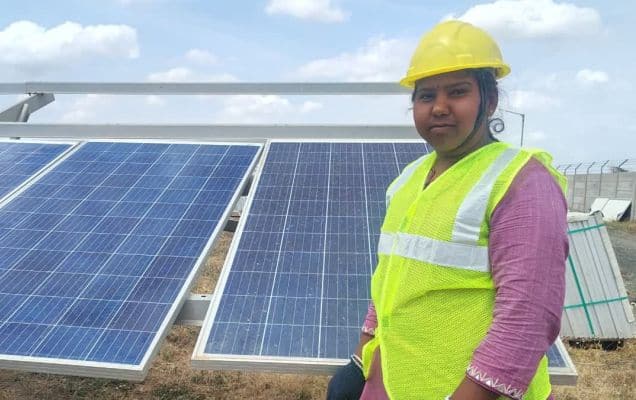
Schemes like the Atal Pension Yojana (7.33 crore enrollees) and MUDRA loans (₹32.36 lakh crore disbursed) are fortifying financial resilience. Simultaneously, rooftop solar installations are slashing electricity bills, with 1 crore homes set to save ₹75,000 crore annually. The middle class is no longer just a consumer but a stakeholder in India’s clean energy transition.
The Road to Viksit Bharat- A Middle-Class Led Revolution
Inflation, once a persistent worry at 8.7%, now hovers at a manageable 5.5%, boosting purchasing power. As India ascends as the world’s fastest-growing major economy, the middle class stands at the heart of this progress. Their rising disposable income, tech adoption, and access to quality education and healthcare are fueling a virtuous cycle of demand and innovation.
By 2030, this demographic will not only shape India’s economic narrative but also redefine global perceptions of inclusive growth. The journey from Saksham Madhyam Varg (Empowered Middle Class) to Viksit Bharat (Developed India) has begun—and it’s irreversible.