Cabinet approves two railway projects with total estimated cost of Rs.6,798 crore

Published By : Admin | October 24, 2024 | 15:12 IST
Projects to provide connectivity, facilitate ease of travelling, minimize logistics cost, reduce oil imports and lower CO2 emissions
Projects will improve logistical efficiency connecting the unconnected areas, increase the existing line capacity and enhancing transportation networks, resulting in streamlined supply chains and accelerated economic growth
The projects will generate direct employment for about 106 lakh human-days

The Cabinet Committee on Economic Affairs (CCEA) chaired by the Prime Minister Shri Narendra Modi, has approved Two Railway projects of Ministry of Railways with total estimated cost of Rs.6,798 crore (approx.).

Two approved projects are – (a) doubling of Narkatiaganj-Raxaul-Sitamarhi-Darbhanga & Sitamarhi-Muzaffarpur Section covering 256 kms and (b) construction of new line between Errupalem and Namburu via Amaravati covering 57 kms.

The doubling of Narkatiaganj-Raxaul-Sitamarhi-Darbhanga & Sitamarhi-Muzaffarpur Section will strengthen the connectivity to Nepal, North-east India and Border areas and facilitating movement of passenger trains along with goods train resulting in the socio-economic growth of the region.

The new rail line project Errupalem-Amaravati-Namburu traverses through NTR Vijayawada and Guntur districts of Andhra Pradesh and Khammam district of Telangana.

The Two projects covering 8 Districts in 3 States i.e., Andhra Pradesh, Telangana and Bihar will increase the existing network of Indian Railways by about 313 Kms.

New Line project will provide connectivity to approx. 168 villages and about 12 Lakh population with 9 new stations. Multi-tracking project will enhance connectivity to Two Aspirational Districts (Sitamarhi and Muzaffarpur) serving approx. 388 villages and about 9 lakh population.

These are essential routes for transportation of commodities such as agriculture products, fertilizer, coal, iron ore, steel, cement, etc. The capacity augmentation works will result in additional freight traffic of magnitude 31 MTPA (Million Tonnes Per Annum). The Railways being environment friendly and energy efficient mode of transportation, will help both in achieving climate goals and minimizing logistics cost of the country, lower CO2 emissions (168 Crore Kg) which is equivalent to plantation of 7 Crore trees.

The new line proposal will provide direct connectivity to “Amaravati” the proposed Capital of Andhra Pradesh and improve mobility for industries and the population, providing enhanced efficiency and service reliability for Indian Railways. The multi-tracking proposal will ease operations and reduce congestion, providing the much-required infrastructural development on the busiest sections across Indian Railways.

The projects are in line with Prime Minister’s Vision of a New India which will make people of the region “Atmanirbhar” by way of comprehensive development in the area which will enhance their employment/ self-employment opportunities.

The projects are result of PM-Gati Shakti National Master Plan for multi-modal connectivity which have been possible through integrated planning and will provide seamless connectivity for movement of people, goods and services.

Explore More
Today, the entire country and entire world is filled with the spirit of Bhagwan Shri Ram: PM Modi at Dhwajarohan Utsav in Ayodhya

Popular Speeches

Today, the entire country and entire world is filled with the spirit of Bhagwan Shri Ram: PM Modi at Dhwajarohan Utsav in Ayodhya
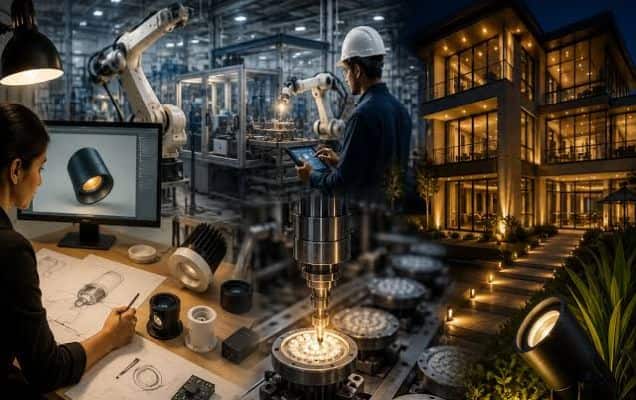
How PLI schemes, design in India and manufacturing excellence are transforming the architectural lighting industry

Media Coverage

How PLI schemes, design in India and manufacturing excellence are transforming the architectural lighting industry
NM on the go

Nm on the go

Always be the first to hear from the PM. Get the App Now!
...
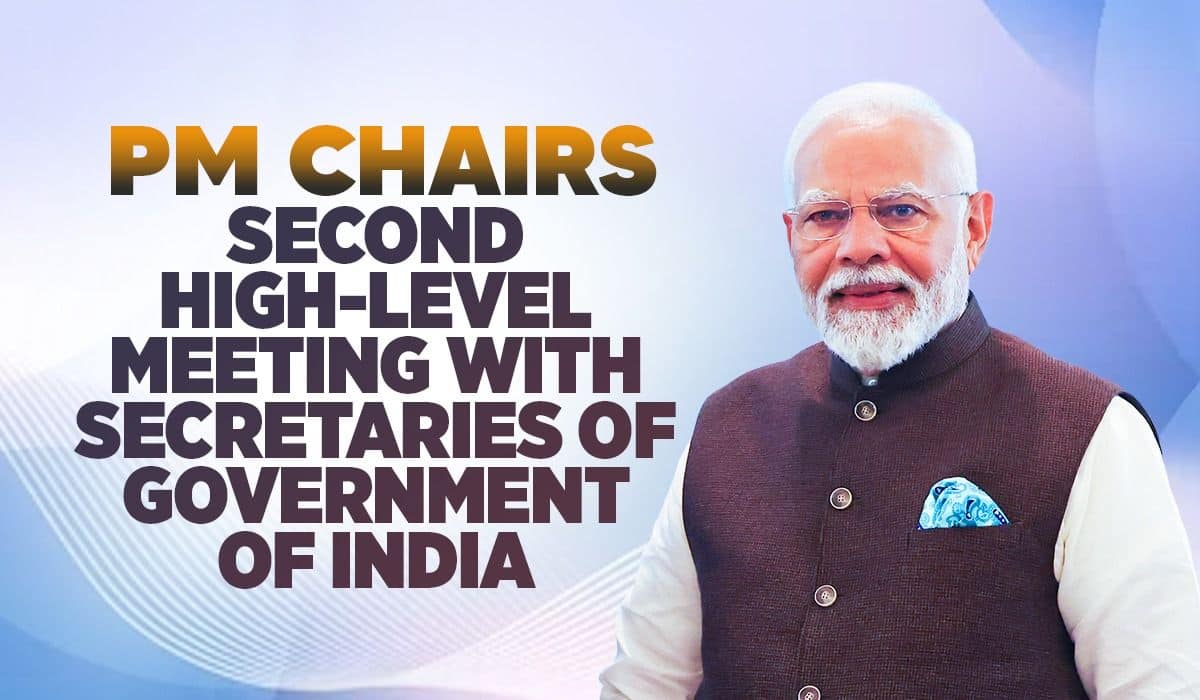
Prime Minister Narendra Modi Chairs Second High-Level Meeting with Secretaries of Government of India
July 28, 2026
Sectors discussed: Finance and Economy, Commerce and Industry, and Technology
PM emphasises the need to break both horizontal and vertical silos within the Government
PM emphasises the importance of technological self-reliance and building domestic capabilities in critical sectors
PM encourages greater participation of young innovators and entrepreneurs in cybersecurity ecosystem
PM Stresses Proactive Outreach on Strategic Sectors to Counter Misinformation
PM says Govt must always remain youthful, dynamic and forward-looking, continuously adapting to new challenges and opportunities with agility and innovation
Secretaries share experiences and perspectives on key initiatives, emerging opportunities and implementation challenges

Prime Minister Shri Narendra Modi chaired the second high-level meeting with Secretaries to the Government of India at his residence at 7, Lok Kalyan Marg earlier today. He reviewed the future action agenda of Ministries and Departments dealing with Finance and Economy, Commerce and Industry, and Technology sectors. The meeting focused on accelerating progress towards the goals of Viksit Bharat.

Prime Minister called for a strong focus on team building across Ministries and Departments, urging officers to work with a shared sense of purpose. He emphasised the need to break both horizontal and vertical silos within the Government so that departments function in close coordination and deliver integrated outcomes.

Highlighting the importance of citizen-centric governance, Prime Minister said that the people of India must remain at the centre of governance. He reminded that every decision and policy should be guided by the interests and aspirations of the common citizen.

Prime Minister stressed that while India is making significant investments in infrastructure, equal priority must be given to developing indigenous technologies. He underscored the importance of technological self-reliance and building domestic capabilities in critical sectors.

Prime Minister underlined that energy security is closely linked with national security, economic stability and citizens’ welfare. Prime Minister said India must achieve self-reliance in the energy sector through innovation, diversification and accelerated capacity creation.

Emphasising that reforms are not merely a fashionable term but a continuous necessity for effective governance, Prime Minister stressed the need to reform processes, improve work culture and strengthen institutional efficiency.

Prime Minister said that growing use of technology must be accompanied by a strong focus on cybersecurity to safeguard digital systems and infrastructure. He stressed the need for constant vigilance against emerging cyber threats. He called for encouraging greater participation of young innovators and entrepreneurs in the cybersecurity ecosystem and emphasised that it should evolve into a nationwide movement.

Prime Minister also emphasised the importance of proactive communication on strategic sectors where the country is undertaking major initiatives, to counter misinformation and unfounded fears surrounding such efforts.

Prime Minister says that new academic courses should be planned in partnership with industry to equip the workforce with skills required by emerging and future industries. He also observed that a government must always remain youthful, dynamic and forward-looking, continuously adapting to new challenges and opportunities with agility and innovation.

The meeting featured detailed discussions by Secretaries on the progress, priorities and implementation issues across their respective domains. The meeting was attended by the Cabinet Secretary, Secretaries of key Ministries and Departments, and senior officials from the Prime Minister’s Office.