The warmth and affection of the Indian diaspora in Kuwait is extraordinary: PM
After 43 years, an Indian Prime Minister is visiting Kuwait: PM
The relationship between India and Kuwait is one of civilizations, seas and commerce: PM
India and Kuwait have consistently stood by each other:PM
India is well-equipped to meet the world's demand for skilled talent: PM
In India, smart digital systems are no longer a luxury, but have become an integral part of the everyday life of the common man: PM
The India of the future will be the hub of global development, the growth engine of the world: PM
India, as a Vishwa Mitra, is moving forward with a vision for the greater good of the world: PM

Bharat Mata ki—Jai!

Bharat Mata ki—Jai!

Bharat Mata ki—Jai!

Namaskar!

I arrived in Kuwait just two or two and a half hours ago. And ever since I set foot here, I have felt a unique sense of belonging and warmth all around. You all have come from different states of Bharat, but looking at all of you, it feels as if a mini Hindustan has come alive before me. Here, I see people from North, South, East, and West, speaking different languages and dialects. Yet, there is one common echo in everyone's hearts, one resounding chant in everyone's hearts – Bharat Mata ki Jai, Bharat Mata ki—Jai.

Here, there is a festive atmosphere of culture. Right now, you are preparing for Christmas and New Year. Soon, Pongal will arrive. Whether it’s Makar Sankranti, Lohri, Bihu, or many such festivals, they are not far away. I extend my heartfelt wishes to all of you for Christmas, New Year, and all the festivals celebrated in every corner of the country.

Friends,

Today, this moment is very special for me personally. After 43 years—more than four decades—a Prime Minister of Bharat has come to Kuwait. It takes just four hours for you to travel from Bharat to Kuwait, but it took a Prime Minister four decades to make this journey. Many of you have been living in Kuwait for generations. Some of you were even born here. And every year, hundreds of Indians join your community. You have added a touch of Indian flavour to Kuwaiti society, painted the canvas of Kuwait with the colours of Indian skills, and blended Bharat’s talent, technology, and tradition into the fabric of Kuwait. That is why I am here today—not just to meet you, but to celebrate your achievements.

Friends,

A little while ago, I met Indian workers and professionals working here. These friends are involved in construction work and are contributing their hard work in many other sectors as well. Members of the Indian community, as doctors, nurses, and paramedics, are a significant strength of Kuwait’s medical infrastructure. Those among you who are teachers are contributing to strengthening Kuwait’s next generation. Those of you who are engineers and architects are building the next generation of infrastructure in Kuwait.

And friends,

Whenever I speak with the leadership of Kuwait, they always praise you all immensely. The citizens of Kuwait also hold great respect for you because of your hard work, honesty, and skills. Today, Bharat is the world leader in remittances, and a significant share of the credit for this achievement goes to all of you hardworking friends. Your contribution is deeply respected by your fellow countrymen back home.

Friends,

The relationship between Bharat and Kuwait is one of civilizations, of the sea, of affection, and of trade. Bharat and Kuwait are situated on opposite shores of the Arabian Sea. It is not just diplomacy that binds us, but also the connection of hearts. Our present ties are as strong as our shared history. There was a time when pearls, dates, and magnificent breeds of horses from Kuwait were sent to Bharat, while many goods from Bharat made their way here. Indian rice, tea, spices, fabrics, and wood were regularly brought to Kuwait. The teakwood from Bharat was used to build ships on which Kuwaiti sailors undertook long voyages. The pearls of Kuwait have been as precious as diamonds to Bharat. Today, Indian jewellery is renowned worldwide, and Kuwaiti pearls have contributed to that legacy. In Gujarat, we often hear stories from our elders about how, in past centuries, there was constant travel and trade between Kuwait and Bharat. Particularly in the 19th century, Kuwaiti traders started coming to Surat. At that time, Surat was an international market for Kuwaiti pearls. Ports like Surat, Porbandar, and Veraval in Gujarat stand as witnesses to these historic connections.

Kuwaiti traders have even published numerous books in the Gujarati language. After Gujarat, Kuwaiti traders established a distinct presence in Mumbai and other markets as well. One notable example is the renowned Kuwaiti merchant Abdul Latif Al Abdul Razzak, whose book ‘How to Calculate Pearl Weight’ was published in Mumbai. Many Kuwaiti traders opened offices in Mumbai, Kolkata, Porbandar, Veraval, and Goa for their export and import businesses. Even today, many Kuwaiti families reside in Mumbai's Mohammad Ali Street. It might surprise many to learn that 60-65 years ago, the Indian rupee was used in Kuwait just as it was in Bharat. Back then, if someone purchased something from a shop in Kuwait, Indian rupees were accepted as currency. Terms like "Rupiya," "Paisa," and "Aana," which were part of Indian currency vocabulary, were very familiar to the people of Kuwait.

Friends,

Bharat was one of the first countries in the world to recognize Kuwait after its independence. That is why visiting a country and society with which we share so many memories and such deep connections in both our past and present is truly memorable for me. I am deeply grateful to the people of Kuwait and its government. I would like to especially thank His Highness The Amir for his kind invitation.

Friends,

The bond forged through culture and commerce in the past is now reaching new heights in this new century. Today, Kuwait is a very significant energy and trade partner for Bharat, and Bharat is also a major investment destination for Kuwaiti companies. I vividly recall a saying mentioned by His Highness, The Crown Prince of Kuwait, during our meeting in New York. He said, “When you are in need, India is your destination.” The citizens of Bharat and Kuwait have always stood by each other during difficult times and crises. During the Corona pandemic, both countries supported each other at every level. When Bharat needed help the most, Kuwait supplied liquid oxygen to us. His Highness, The Crown Prince, personally stepped forward to inspire everyone to work swiftly. I am satisfied that Bharat, too, extended its support by sending vaccines and medical teams to help Kuwait fight the crisis. Bharat kept its ports open to ensure there were no shortages of essential food supplies for Kuwait and its surrounding regions. In June of this year, a heart-breaking incident occurred here in Kuwait—the fire tragedy in Mangaf—which claimed the lives of many Indians. When I heard this news, I was deeply concerned. However, the way the Kuwaiti government extended its support during that time was like that of a true brother. I salute Kuwait's spirit and compassion.

Friends,

This tradition of standing by each other in both happiness and sorrow forms the foundation of our mutual relationship and trust. In the coming decades, we will become even greater partners in prosperity. Our goals are not very different. The people of Kuwait are working towards building New Kuwait, and the people of Bharat are also dedicated to making the country a developed nation by 2047. Kuwait aims to become a dynamic economy through trade and innovation, and Bharat, too, is focusing on innovation and continuously strengthening its economy. These two goals complement each other. The innovation, skills, technology, and manpower required for the creation of New Kuwait are all available in Bharat. Bharat’s start-ups, ranging from fintech to healthcare, smart cities to green technologies, can provide cutting-edge solutions for every need of Kuwait. Bharat’s skilled youth can also add new strength to Kuwait’s future journey.

Friends,

Bharat has the potential to become the world's skill capital. Bharat will remain the youngest country in the world for many decades to come. In this context, Bharat has the capacity to meet the global demand for skills. To achieve this, Bharat is focusing on skill development and skill upgrading for its youth, in line with global needs. In recent years, Bharat has signed migration and employment agreements with nearly two dozen countries, including Gulf nations, Japan, Australia, France, Germany, Mauritius, the UK, and Italy. Countries around the world are also opening their doors to Bharat’s skilled manpower.

Friends,

Many agreements are being made with different countries to ensure the welfare and facilities of Indians working abroad. You may be familiar with the e-Migrate portal. Foreign companies and registered agents have been brought onto a single platform through this portal. This makes it easy to identify where there is a demand for manpower, what type of manpower is needed, and which company requires it. Thanks to this portal, millions of workers have come to Gulf countries in the past 4-5 years. Every such initiative has a single goal—to ensure that the talent from Bharat contributes to the world’s progress and that those who go abroad for work always have the necessary support. You all in Kuwait will also benefit greatly from Bharat’s efforts in this regard.

Friends,

Wherever we live in the world, we respect the country we are in, and we feel immense joy in seeing Bharat reach new heights. You all came from Bharat, lived here, yet you have preserved your Indian identity in your hearts. Now, tell me, which Indian wouldn’t feel proud of the success of Mangalyaan? Which Indian wouldn’t have been overjoyed by the landing of Chandrayaan on the moon? Am I not right? Today, Bharat is advancing with a new spirit. Bharat is now the world’s fifth-largest economy. It is home to the world’s number one fintech ecosystem. Bharat also boasts the world’s third-largest start-up ecosystem and is the second-largest mobile phone manufacturer in the world.

Let me share a statistic with you, and I’m sure you will be pleased to hear it. In the past 10 years, the length of optical fiber laid across Bharat is eight times greater than the distance between the Earth and the Moon. Today, Bharat is one of the most digitally connected countries in the world. Every Indian is using digital tools from small towns to villages. Smart digital systems in Bharat are no longer a luxury; they are now a part of the everyday life of the common man. Whether it’s enjoying a cup of tea, buying fruits on the street, or making digital payments, Bharat has embraced digital convenience. Ordering groceries, food, fruits, vegetables, or everyday household items is now done in a matter of moments, and payments are made via mobile phones. People have DigiLocker for storing documents, DigiYatra for seamless travel at airports, and FASTag to save time at toll booths. Bharat is becoming increasingly digitally smart, and this is just the beginning. The future of Bharat lies in innovations that will set the direction for the entire world. The future Bharat will be the hub of global development, the growth engine of the world. The time is not far when Bharat will become the hub of Green Energy, Pharma, Electronics, Automobiles, Semiconductors, Legal, Insurance, Contracting, and Commercial sectors. You will see the major economic centres of the world establishing themselves in Bharat. Bharat will emerge as a massive hub for Global Capability Centres, Global Technology Centres and Global Engineering Centres.

Friends,

We consider the entire world to be one family. Bharat is moving forward as a ‘Vishwa Bandhu’ (global friend), thinking of the world’s welfare. The world, too, is acknowledging this spirit of Bharat. Today, on December 21, 2024, the world is celebrating its first World Meditation Day, dedicated to Bharat’s thousands of years of meditation tradition. Since 2015, the world has been celebrating International Yoga Day on June 21, also dedicated to Bharat’s yoga tradition. In 2023, the world celebrated the International Year of Millets, which was made possible through Bharat's efforts and proposal. Today, Bharat's yoga is uniting every region of the world. Bharat’s traditional medicine, our Ayurveda, and our Ayush products are enriching global wellness. Our superfoods, millets, and Shri Anna are becoming a major foundation for nutrition and a healthy lifestyle. From Nalanda to the IITs, Bharat’s knowledge system is strengthening the global knowledge ecosystem. Today, Bharat is also becoming a key link in global connectivity. During the G-20 summit held in Bharat last year, the announcement of the India-Middle East-Europe Corridor was made. This corridor is set to provide a new direction for the future of the world.

Friends,

The journey of a ‘Viksit Bharat’ (Developed India) is incomplete without your support and the participation of the Indian diaspora. I invite you all to join the resolve for a ‘Viksit Bharat’. The first month of the new year, January 2025, will be a month of many national celebrations. From January 8 to 10 this year, the Pravasi Bharatiya Divas will be held in Bhubaneswar, with people from all over the world coming together. I invite you all to be a part of this event. On this journey, you can take blessings from Lord Jagannath in Puri. After that, do visit Prayagraj to take part in the Maha Kumbh Mela, which will be held from January 13 to February 26, lasting for about a month and a half. Make sure to return after watching the Republic Day celebrations on January 26. And yes, bring your Kuwaiti friends to Bharat, show them around, and let them experience Bharat. There was a time when Dilip Kumar Saheb inaugurated the first Indian restaurant here. The real taste of Bharat can only be experienced there. So, make sure to prepare your Kuwaiti friends for this experience.

Friends,

I know that all of you are very excited about the Arabian Gulf Cup that is starting today. You are eager to cheer for the Kuwait team. I am grateful to His Highness, The Amir, for inviting me as the Guest of Honour for the opening ceremony. This reflects the immense respect that the royal family, the government of Kuwait, have for all of you and Bharat. I hope that you continue to strengthen the Bharat-Kuwait relationship in this way. With this wish, once again, a heartfelt thank you to all of you!

Bharat Mata ki—Jai!

Bharat Mata ki—Jai!

Bharat Mata ki—Jai!

Thank you very much.

Explore More
শ্রী রাম জন্মভূমি মন্দিরের ধ্বজারোহণ উৎসবে প্রধানমন্ত্রীর বক্তব্যের বাংলা অনুবাদ

জনপ্রিয় ভাষণ

শ্রী রাম জন্মভূমি মন্দিরের ধ্বজারোহণ উৎসবে প্রধানমন্ত্রীর বক্তব্যের বাংলা অনুবাদ
India's Merchandise Exports Defy Global Headwinds, Rise 15 Per Cent In April–14 June Period

Media Coverage

India's Merchandise Exports Defy Global Headwinds, Rise 15 Per Cent In April–14 June Period
NM on the go

Nm on the go

Always be the first to hear from the PM. Get the App Now!
...
India is not only a fast-growing economy, but also a credible one: PM Modi
June 22, 2026
India is not only a fast-growing economy, but also a credible one: PM
Along with being a rising power, India is also a reliable power: PM
For India, Nation First is the highest guiding principle: PM
Maoist terror is breathing its last in India: PM
The shift in mindset from "this can never be done" to "this will be done" is India's greatest achievement: PM
The government is empowering the poor and middle-class: PM
The collective efforts of 140 crore Indians will realise the dream of a Viksit Bharat: PM

Swar Sadhana, Manokamana, Aradhana - after such an auspicious beginning, it would have been wonderful if your program had continued. Greetings to all of you.

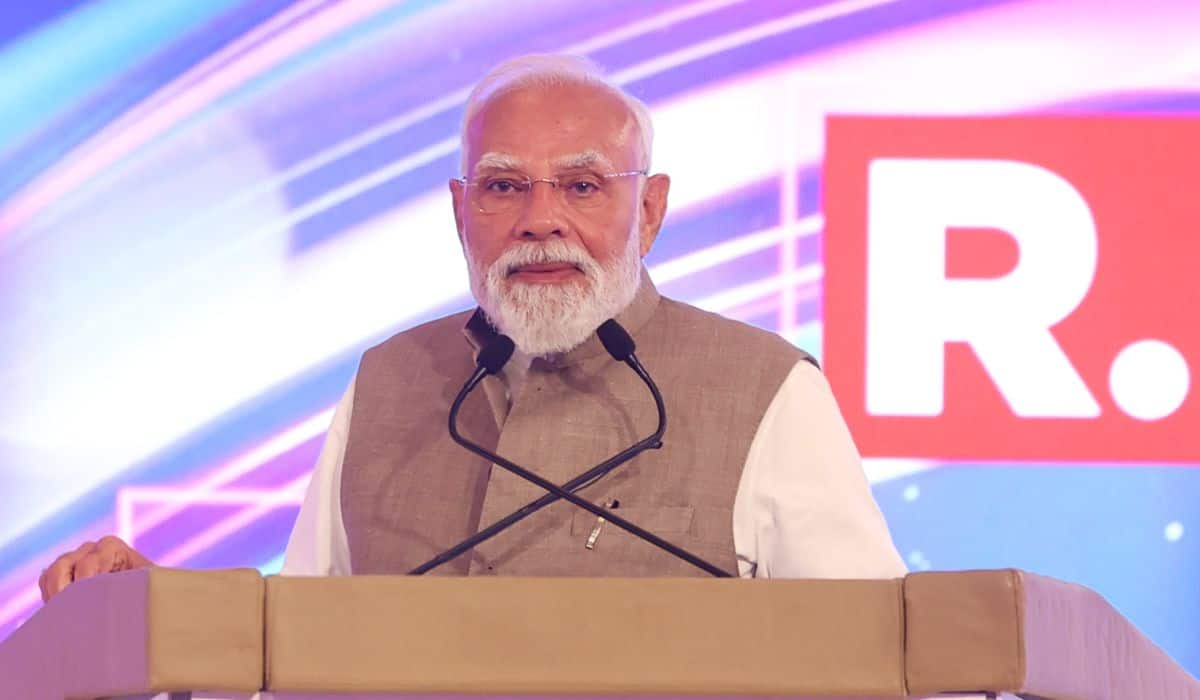
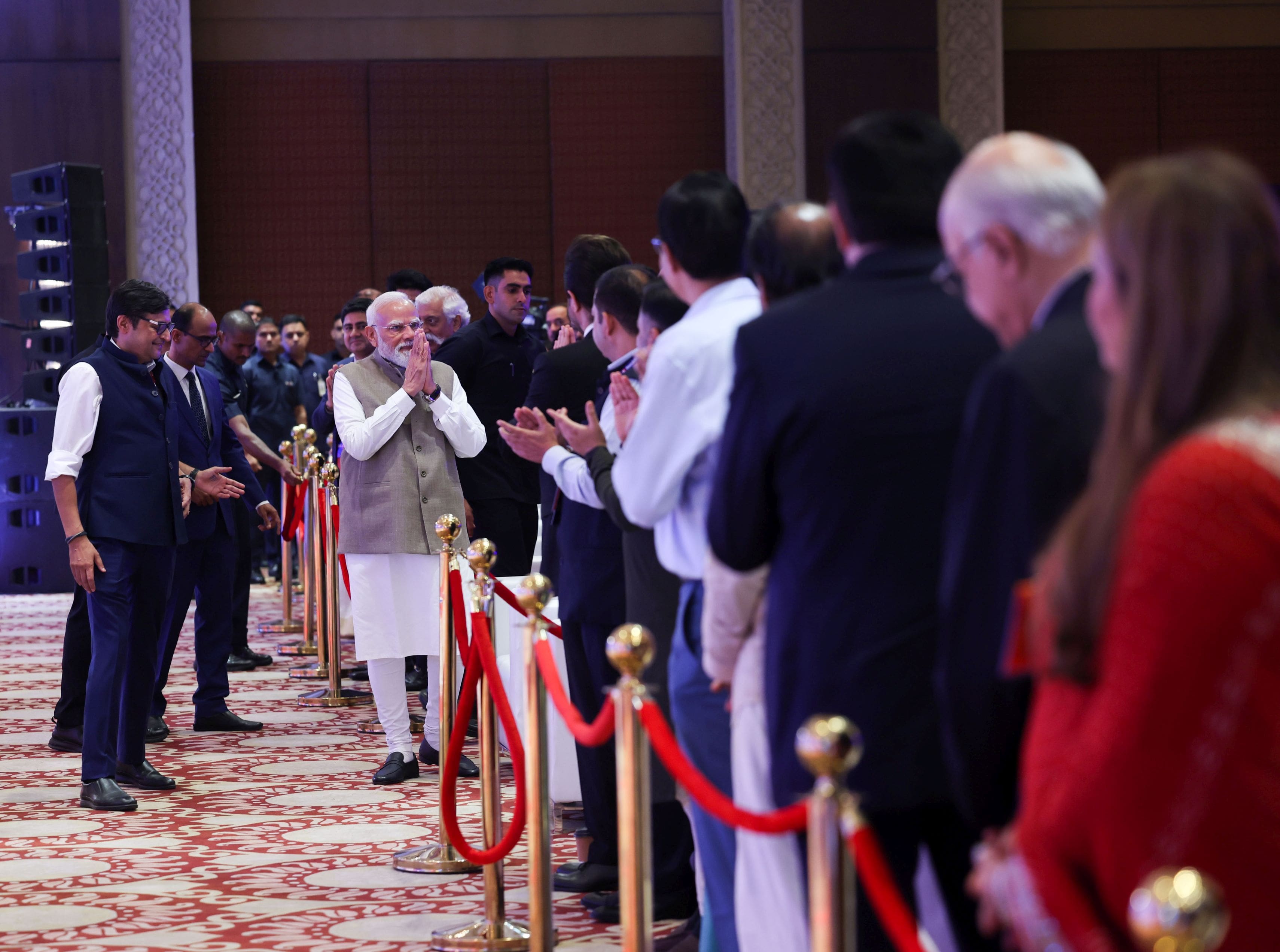
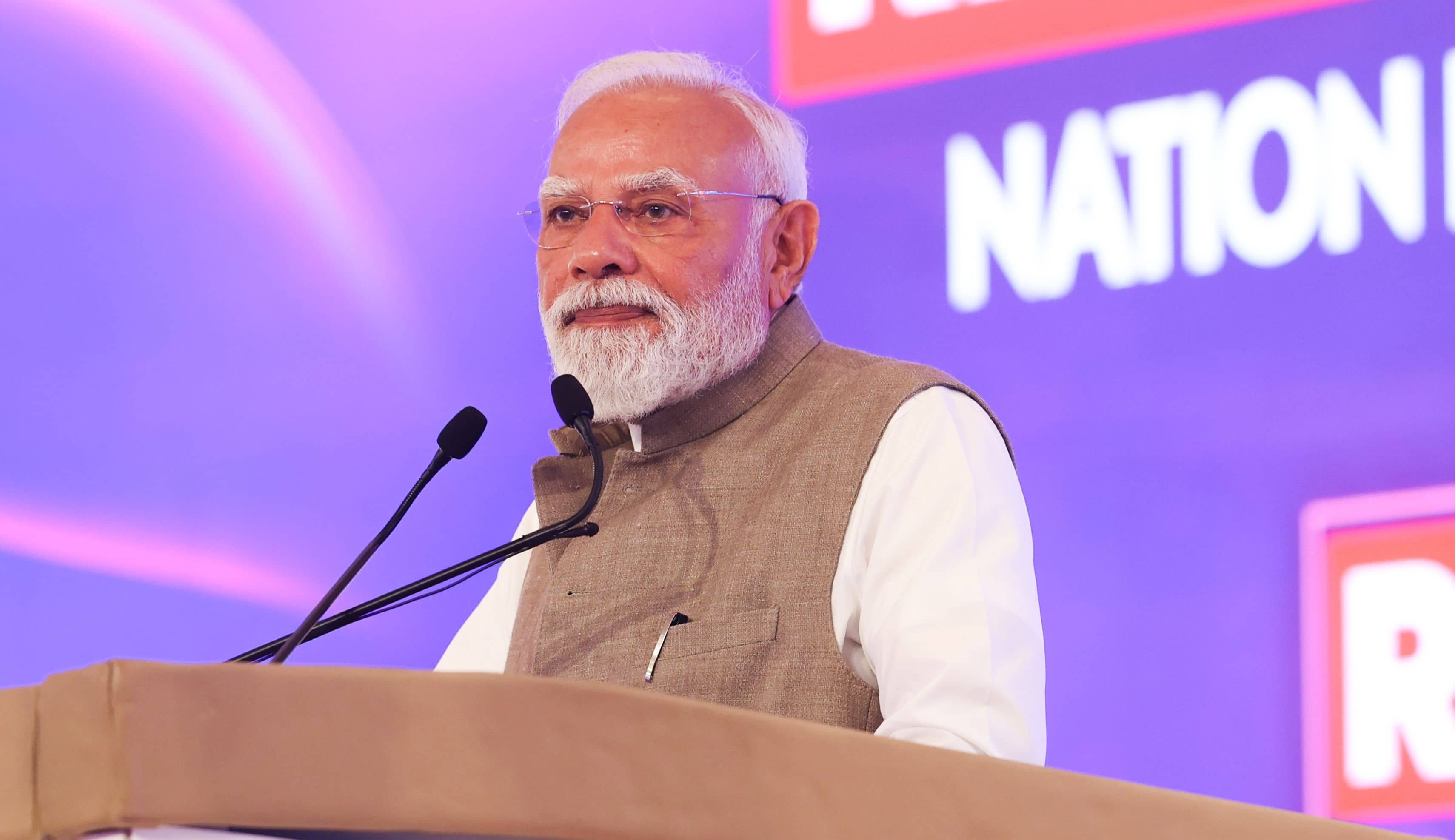
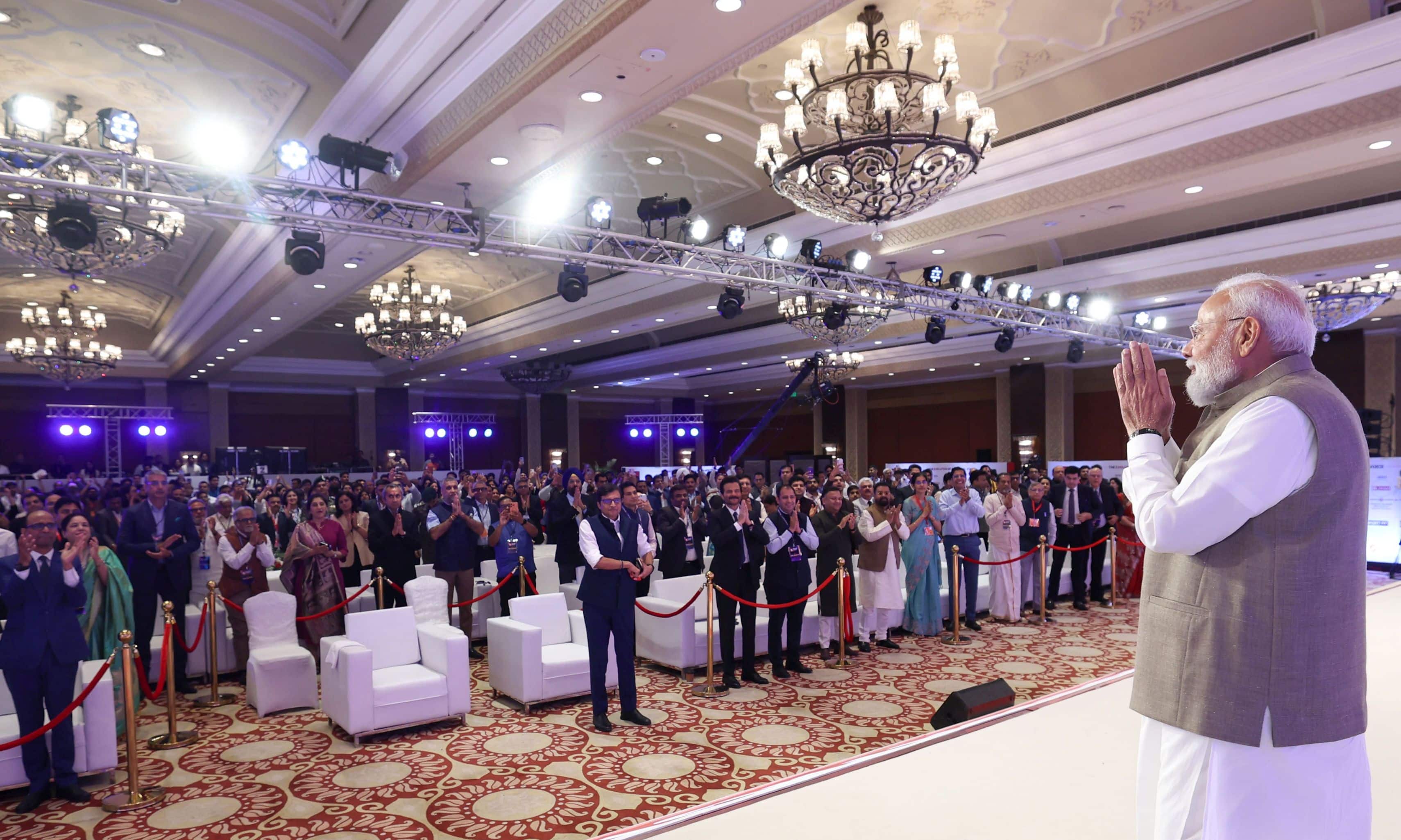
I extend my regards to all viewers of Republic TV Network, which now broadcasts in many languages. I also welcome all companions who have come to participate in this summit. In 24-hour news channels, breaking news holds great importance. And nowadays, if you look anywhere in the world, the entire world seems to be in breaking news mode. Amidst such hustle and bustle, you are hosting and participating in this summit, and therefore you deserve special congratulations. This time, your theme of discussion is equally significant: Great Power India: Nation First.

Friends,

Our scriptures say: Yato Dharmastato Jayah! - meaning, the root of victory and strength is Dharma. And Dharma means duty, Dharma means justice, Dharma means equality, Dharma means dialogue, Dharma means compassion. This very essence is embedded in the spirit of Nation First. India views its power through this lens, weighing it on this scale.

Friends,

India has another unique quality, which the world has now acknowledged. We are not a nation that reacts hastily to momentary events. We are a nation that has witnessed both development and destruction, endured them as well. We are a nation with the memory chip of ages embedded in our consciousness - a nation with the memory chip of millennia. That is why what India is doing today - and I say this with full responsibility - what India is doing today will write the future of the next thousand years. This is India’s greatest guarantee to the world. India is not only a fast-growing economy, it is also a credible economy. Alongside being a rising power - and you even stretched the dictionary to call it a superpower - I would certainly say that India is a reliable power. Just a few days ago, I returned from the G7 Summit, and every leader, every country understands very well that for today’s India, Nation First is the greatest mantra, the highest principle.

Friends,

Just a few days ago, our government completed 12 years. Arnab even compelled you to clap for that. If you weigh the achievements of the past twelve years, you will find that at the core of every decision, every step, every effort lies the spirit of Nation First. From the Swachh Bharat Abhiyan to Make in India, from emphasizing khadi to encouraging local products - all these initiatives succeeded because the people of the country placed the nation above all and fulfilled their duty. I salute the citizens of this country.

Friends,

Here with us is our companion, Shri Sridhar Vembu ji. When our entrepreneurs walk with the spirit of Nation First, when they set their goals by understanding the needs of the nation, institutions are built and the country prospers. I don’t know how much has been discussed here about Shri Vembu ji’s work, but recently I went to VivaTech in France. There were nearly 1.5 to 2 lakh young people there. As I and the President of France walked through different stalls to see the innovations of the youth, we came to the Zoho stall. I was astonished and filled with pride to see the crowd of European youth gathered there, eager to understand what this new creation was. Perhaps in India it is not discussed as much, but what I saw in France was remarkable. Congratulations to you.

Friends,

The impact of Nation First in government policy and decisions can be seen in our tribal regions. I am not here to deliver philosophy, but let me share a few light examples so you can understand how work happens. I speak of tribal areas - a population of more than 100 million, the tribal society. We all know that for decades, Maoist terror had entrenched itself there. Even in the 21st century, these terrorists did not allow a single facility to reach those areas. No government vehicle could pass through; they would be riddled with bullets. Many governments came and went, generations passed, and it seemed this misfortune of violence would remain forever. You can imagine - between 2004 and 2014, in those ten years, due to Maoist terror, more than 17,000 violent incidents occurred, and nearly 7,000 lives were lost.

Friends,

For you, today’s headline or half-hour TV debate might be that Maoist terrorism has ended. But things don’t happen like that. It requires immense effort, and that is why I want to explain. Nowadays, some people keep waving the Constitution, but when they were in government, in Naxal-affected areas, even uttering the word “Constitution” could get you shot. At that time, they sat silently, their hands trembling, unable to hold up the Constitution. The Congress was hardly affected by that painful situation.

Friends,

After 2014, we moved forward with the spirit of Nation First to change the situation. We did not just talk, we did not just announce, we acted. We resolved to uproot Naxalism-Maoism completely, and today the whole country can see the result. Maoist terrorism in India is now counting its final breaths.

And friends,

Often the final outcome is so vast and significant that the hard work behind it goes unnoticed. I want to especially tell Republic TV viewers about this.

Friends,

In those Naxal-affected areas where even going out in daylight would terrify ordinary people - fearing abduction, extortion, or looting - where even speaking of development was impossible, we advanced with a pledge of progress. In the past 12 years, our government has built more than 12,000 kilometers of roads in such regions. Many times, our construction equipment was burned, contractors were chased away. If 25 people worked on a road, 200 police personnel had to guard them so the work could continue. We did all this because we had resolved to do it.

Friends,

We built more than 9,500 mobile towers. Earlier, even one tower could not be installed, and if installed, it would be destroyed. Because they always wanted to fuel anger. We brought mobile connectivity to nearly 45,000 villages. In Naxal-affected districts, more than 1,800 bank branches were opened. Around 75,000 banking correspondents and more than 6,000 new post offices were established. We did not rely only on bombs, guns, and bullets, friends - we invested every ounce of strength given by God to win hearts.

Friends,

With firm resolve, we went into Naxal-affected areas to fulfill the hopes and aspirations of ordinary people. You will be astonished - a notorious Naxalite, with a bounty of crores on his head, his mother received a ration card from us for the first time. Her son never allowed her to get one, because he wanted to run his terror regime. There are countless such incidents. I was shocked. And the government of that time sat silently, blind to the Constitution. But the result of all these efforts was a new wave of trust among the people. Today, look at Bastar - instead of bombs and guns, Bastar Olympics are celebrated with great enthusiasm. Two editions have already been held. In the first, more than 1.5 lakh youth participated, and in the second, nearly 4 lakh youth joined. Where once there was terror, now talent is finding opportunity, and sports are flourishing.

Friends,

One of the greatest achievements of these 12 years of service has been building an India filled with hope and aspiration, rising out of despair.

Friends,

Naxalism may have been concentrated in certain areas, but its pain was felt across every corner of India. And when news began to spread that Naxalism was ending, the sense of trust was not limited to those affected regions - it spread across the entire nation. In the ten years before 2014, under the Congress government, the discontent was not only about governance. The despair was far deeper. The nation had lost hope. People felt nothing could change, nothing could improve.

Friends,

In the past 12 years, India has transformed despair into hope, and this gives me the greatest satisfaction. Today, everyone feels that with a little more effort, things can be achieved. Gone are the days when the only refrain was “It cannot happen, it cannot happen.” That era has passed. Today, the spirit is “It will happen.” This new confidence is India’s true achievement, and this is real power. Challenges remain, and they always will. Challenges are shape-shifters, appearing in new forms. But whatever form they take, we will fight and we will win. When the nation moves forward with the belief that “it can be done and we will do it,” dreams are fulfilled.

Friends,

I want to speak here about more than 100 districts and over 500 blocks in India. These were left behind on every parameter of development, and earlier governments had stamped them as “backward districts” and “backward areas.” We lifted these vast regions out of the despair of backwardness and ignited aspirations for development. First, we changed their identity. We said these are “aspirational districts,” these are “aspirational blocks.” We created programs for aspirational districts and aspirational blocks, and the government began working meticulously on every parameter of development. In each district, we identified three aspects to overcome, in others six aspects, and focused efforts began. Today, these aspirational districts and blocks are driving the overall growth of states. Earlier, they dragged growth backward. These districts had large populations living in poverty and deprivation. In recent years, 250 million poor people have defeated poverty, and aspirational districts have played a major role in this.

Friends,

We see that when one person is cured of illness, it is not just that individual who recovers - the whole family feels relief. Similarly, when a son or daughter achieves something, it is not just their achievement, but the entire family is filled with pride and confidence. In the same way, when someone rises out of poverty, the entire society benefits, the nation benefits. When 250 million people have come out of poverty and entered the neo-middle class, the benefit is not limited to those families. The middle class also gains, because these are new consumers who drive the economy, ultimately creating opportunities for the middle class. Thus, poverty reduction is not merely a matter of welfare - it is a story of expanding opportunities, a source of new aspirations.

Friends,

The vast middle class that has emerged in the country over the past 12 years has been a major priority for the government. For the ease of living of the middle class, the government has worked at every level. Take the dream of owning a home. Every middle-class family desires to have their own house. In 2014, if a family wanted to buy a home, home loans came with double-digit interest rates. Today, loans are available from banks at 7–8 percent interest. Earlier, getting a loan was like winning a war, requiring immense effort. Today, it is possible from the comfort of one’s home. Here in Delhi-NCR, people know how thousands of urban middle-class homes were stuck incomplete. Families had paid their life savings to builders, who showed glossy pamphlets and dreams, but the houses were never delivered. Families had to pay rent while waiting endlessly for their homes. It was a terrible situation. To complete these stalled projects, we created a special fund of ₹25,000 crore. You will be glad to know that nearly 60,000 long-delayed homes have now been delivered across the country.

Friends,

Another aspect that affects daily life is connectivity and transport. Today, if you look at social media, tourists from around the world are amazed by our metro system.

Friends,

In 2014, about 2.8 million people traveled daily by metro. Today, nearly 12.8 million people travel by metro every day. Now, high-speed trains like Vande Bharat, Namo Bharat, and Amrit Bharat are connecting the nation. With better roads and highways, not only is time saved, but vehicle maintenance costs have also reduced. In recent years, the number of airports has doubled. This has given the middle class in many smaller cities the opportunity to fly for the first time.

Friends,

In the past 12 years, India has not only increased the earnings of the middle class but also their savings. In 2013–14, income up to about ₹2 lakh was taxable, and the middle class bore that burden. Today, income up to ₹12 lakh is tax-free. In other words, tax-free income has multiplied several times.

Friends,

GST reforms have also brought great convenience to the middle class. Filing taxes has become easier, saving both time and money. Income tax returns can now be filed from home, and even settlement issues are handled in a faceless manner.

Friends,

A major expense for middle-class families is treatment for diabetes and other lifestyle-related conditions. At Jan Aushadhi Kendras, such medicines are available at an 80 percent discount. If earlier you spent ₹1,000, today you spend only ₹200, saving ₹800. Over the years, this has resulted in savings of nearly ₹40,000 crore for countless families. Another significant portion of the middle-class budget goes toward healthcare for the elderly. Today, every citizen above 70 years of age is entitled to free treatment up to ₹5 lakh.

Friends,

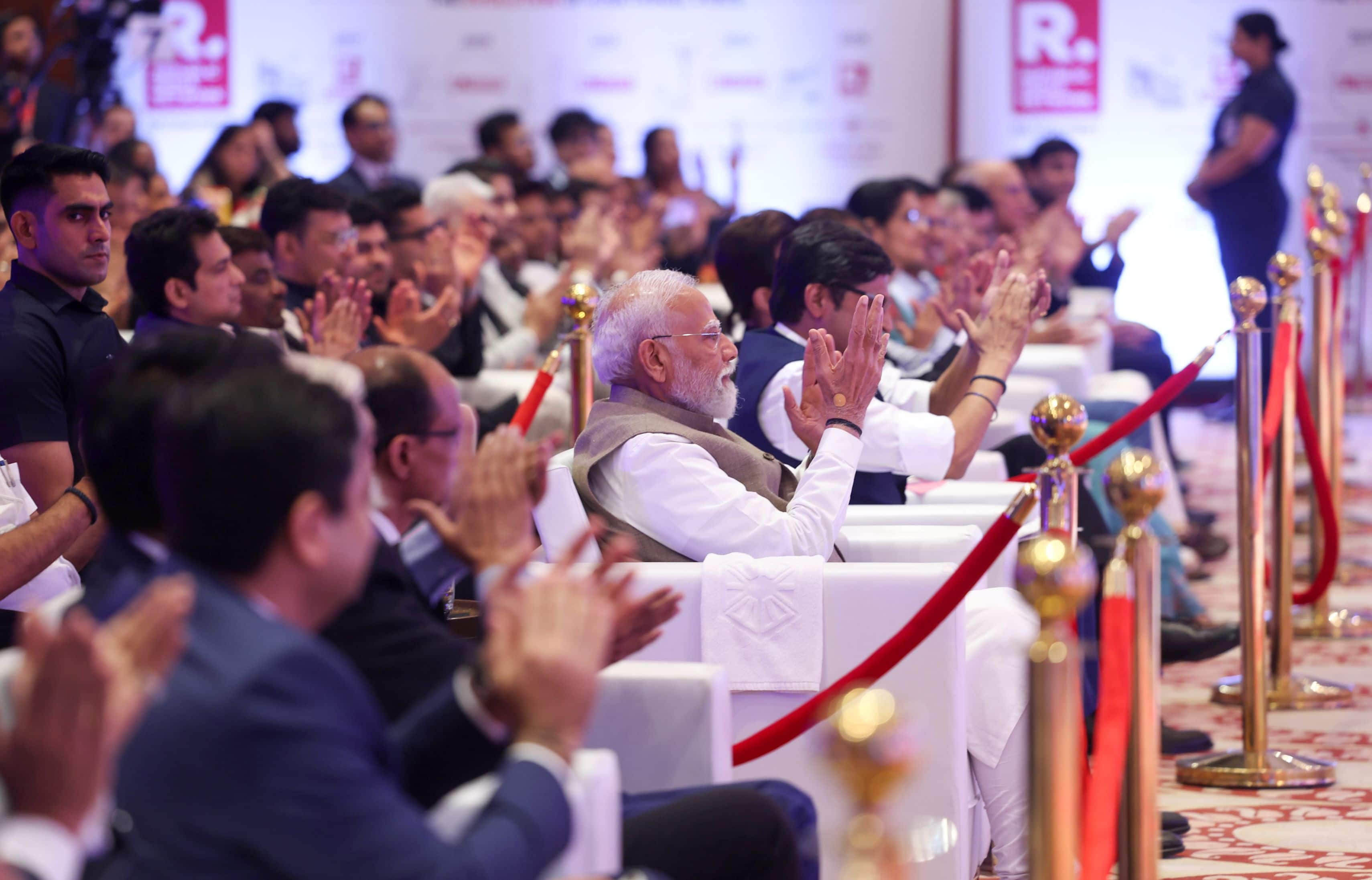
It is human nature to forget past difficulties when conveniences become routine. Earlier, you paid tax on ₹2 lakh income; now, up to ₹12 lakh is tax-free. Yet applause comes only when reminded. On the other hand, if a bus or train is delayed, complaints pour in. This is the most vocal class.

Friends,

As I said, people forget old troubles. You may not even remember the difficulties once faced in getting a driving license or passport. Earlier, it was a struggle. Today, obtaining a driving license is easier, and passports are usually issued within three days.

Friends,

I know the way our government works has raised people’s aspirations. Once a demand is met, people immediately seek something better, something upgraded. If earlier the demand was for a new road, once built, the next question is: when will the metro arrive? Earlier, expectations were that trains should arrive on time and provide clean seating. Today, the demand is: why isn’t Vande Bharat running on our route?

Friends,

Some see this as dissatisfaction, but it is aspiration. In fact, even the Congress party constantly says, “Modi ji, this should happen, that should happen.” They trust that if anyone can deliver, it is this government.

Friends,

Aspirations arise only where people believe dreams can be fulfilled. This is the aspiration of India’s youth, poor, and middle class. Today, it is the driving energy of BJP-NDA governments.

Friends,

On one side, a large section of the nation is aspirational. On the other side, there is a political group whose life mantra has become “Always Against.” This group is filled with chronic dissatisfaction. Let me share some symptoms so Republic TV viewers can recognize them. They will say, “Why doesn’t this place have 24-hour electricity?” But the next day, they protest against dams, solar parks, thermal plants, or nuclear projects. One day they ask why there is no electricity, the next day they oppose power generation. These are the same people who once opposed mineral mining, but today ask where India’s rare earth mineral reserves and supply chains are, and why India doesn’t have an EV ecosystem like other countries. They once debated “data versus flour,” but now demand to know what India has done in AI. In one breath, they say AI should have advanced further, and in the next, they oppose data centers and semiconductor plants, listing endless drawbacks on social media, TV debates, and newspapers.

Friends,

These people bring up corruption indices from around the world to put India in the dock. Their ecosystem’s media amplifies it 24/7. But when action is taken against corruption, they are the first to cry foul, claiming raids and investigations are harassment. They question why action is taken now, why not then, why against A and not B. This is their game.

Friends,

It is vital for the nation to understand their character. Especially our youth, and Gen Z in particular, must recognize them quickly. Otherwise, as I say, “Suryavanshi has arrived,” and he explains swiftly.

Friends,

These people claim the armed forces lack freedom and weapons. But when the government makes a defense deal or buys modern arms, they are the first to question why. They challenge India’s diplomacy worldwide, but when India builds infrastructure projects for diplomacy and security, they protest loudly.

Friends,

At this crucial juncture, India must identify such people, understand their flawed arguments, and remain alert. Unfortunately, today the main opposition party, Congress, has been taken over by such elements. To imagine Congress speaking of Nation First, as it did in Gandhi ji’s time, is now a false dream.

Friends,

The world today is challenging old paradigms, and the scale of disruption is immense. But these challenges also bring new opportunities. Every youth, entrepreneur, innovator, and startup in India must focus on these opportunities. The government, with the spirit of Nation First, stands fully with the people. India is now riding the Reform Express. This momentum will only accelerate. From this Republic TV platform, I say again: our dreams are vast, and our efforts will be equally immense. The collective endeavor of 1.4 billion Indians will build a developed India. And I assure you, you will see this developed India with your own eyes. It will not be left for future generations to wait. With this confidence, I once again extend my best wishes to Republic TV, its viewers, and all of you. Thank you very much!