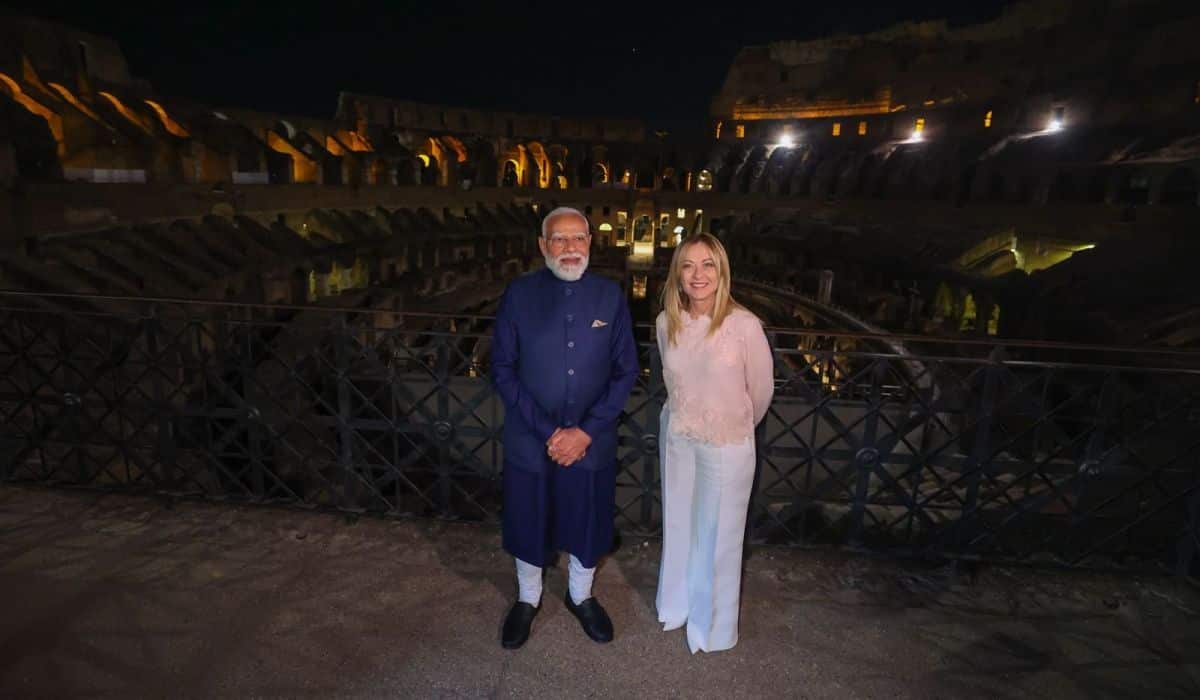
The relationship between India and Italy has now reached a decisive stage. In recent years, our ties have expanded with unprecedented momentum, evolving from a cordial friendship into a special strategic partnership grounded in the values of freedom and democracy, and a common vision for the future.
At a time when the international system is undergoing a profound change, the partnership between Italy and India is guided by regular exchanges at higher political and institutional levels, and is gaining a new and higher dimension that combines our economic dynamism, societal creativity, and millennia-old civilisational wisdom. Our cooperation mirrors our shared awareness that prosperity and security in the 21st century will be shaped by the ability of nations to innovate, manage energy transitions, and strengthen strategic sovereignty. To this end, we have committed to deepen and diversify our bilateral relationship with a view to pursuing new objectives and pooling our complementary strengths. We aim to forge a powerful synergy between Italian design, manufacturing excellence, and world-class supercomputers - reflecting Italy's position as an industrial powerhouse - and India's rapid economic growth, engineering talent, scale, and innovation and entrepreneurial ecosystem with over 100 unicorns and 200,000 start-ups. This is not a simple integration, but a co-creation of value where our respective industrial strengths amplify one another.
The Free Trade Agreement between the European Union and India paves the way for increased trade and investment in both directions. We want to reach and exceed the Euro 20 billion target for trade between Italy and India by 2029, with a focus on defence and aerospace, clean technologies, machinery, automotive components, chemicals, pharmaceuticals, textiles, agri-food, tourism and more.
"Made in Italy" has always been synonymous with excellence worldwide, and today it finds a natural synergy with the high-quality goals of the "Make in India" initiative. In this context, the growing interest of Italian businesses in the production for India and the increasing presence of Indian industries in Italy, numbering over 1,000 from both sides now, is a positive sign that will strengthen the integration of our supply chains.
Technological innovation lies at the very heart of our partnership. The coming decades will be shaped by a technological revolution of unmeasurable scope, marked by advances in sectors such as Artificial Intelligence, quantum computing, advanced manufacturing, critical minerals, and digital infrastructure. India's dynamic innovation ecosystem, coupled with highly skilled professional talent pool, and Italy's advanced industrial capabilities make our cooperation in the above sectors both natural and strategic. The growing partnership between our universities and research centres will support this.
India's Digital Public Infrastructure is already finding resonance with a large number of countries particularly in the Global South. Artificial Intelligence, in particular, is already impacting our societies and the global economy. Italy and India have long been collaborating to ensure that Al development is responsible and human-centred. From this perspective, India and Italy also see Al as a powerful instrument for inclusive development, especially for the Global South, where digital public infrastructure and accessible, multilingual technologies can bridge divides rather than deepen them. Building on India's vision of MANAV-putting human at the centre of technology and Italy's leadership in promoting a human-centric 'algor-ethics' rooted in its humanist tradition, our partnership seeks to ensure that Al acts as a catalyst for social empowerment. Our approach combines India's digital scale with Italy's ethical and industrial expertise, ensuring technology serves human dignity. By sharing best practices in secure digital cooperation, capacity-building and resilient cyber infrastructure, we aim to create an open, trustworthy and equitable digital space in which every nation can shape and benefit from Al. This perspective forms the core of Italy's G7 Presidency and outcomes of the Al Impact Summit 2026, held in New Delhi. Conceiving Al as a tool created by humans for humans means firmly asserting that technology cannot replace individuals or undermine their fundamental rights, nor be used to manipulate public debate or alter democratic processes. Our approach to defending freedom and human dignity in an increasingly interconnected world hinges on this very challenge.
Our cooperation also covers the space sector. India's impressive advancements in space exploration and satellite technology, together with Italy's aerospace engineering excellence, offer significant opportunities for joint initiatives and next-generation technology development.
Security and stability remain essential to ensuring nations' prosperity. Italy and India intend to further strengthen their cooperation in sectors such as defence, security and strategic technologies. Our collaboration will help ensure the security of critical maritime routes, strengthen resilience in the face of threats, such as terrorism, international criminal networks, drug trafficking, cyber-crimes and human trafficking.
Energy is another key pillar of our partnership. The global transition towards diversified energy sources requires innovation, investment, and cooperation. India and Italy are collaborating from renewable energy to hydrogen technologies, and from smart grids to resilient infrastructure. While India's push for becoming a hub for green hydrogen exports offers immense potential, it perfectly complements Italy's advanced technology in renewable infrastructure and its strategic role as an energy gateway for Europe. Our collaboration along with other countries in key India-led initiatives - International Solar Alliance (ISA), Coalition for Disaster Resilient Infrastructure (CDRI) and Global Biofuels Alliance (GBA) - is also important in this context.
Physical, digital and human connectivity is the thread that weaves us together. Both India and Italy are located at the very heart of two crucial hubs of the global economy, the Indo-Pacific and the Mediterranean-regions that cannot be viewed as separate spheres, but instead as increasingly interconnected spaces.
As a matter of fact, we are witnessing the emergence of what might be termed the Indo-Mediterranean, an important corridor for trade, technology, energy, data and ideas tying the Indian Ocean to Europe. It is precisely within this interconnected space that our bond naturally evolves into a special strategic partnership-one that bridges two continents and shapes new global dynamics.
In this context, the India-Middle East-Europe Economic Corridor represents a vision aimed at connecting our regions through modern transport and infrastructure, digital networks, energy systems, and resilient supply chains. India and Italy are also committed to working together with other partners to make this vision a reality.
We can address our shared challenges by drawing upon the profound partnership and the enduring cultural ties between our nations. Within Indian culture, the concept of "Dharma" evokes the sense of responsibility that must guide our actions, whilst the principle of "Vasudhaiva Kutumbakam" - the world is one family-resonates powerfully in this interconnected digital age. Such values find a natural echo in Italy's humanist tradition, rooted in the Renaissance, which highlights the dignity of each individual and the power of culture to unite peoples and societies.
Our shared vision, therefore, aims to lay the foundation for a strong and forward-looking India-Italy partnership with our people at the centre.
(By Narendra Modi, Prime Minister of India and Giorgia Meloni, Prime Minister of Italy)