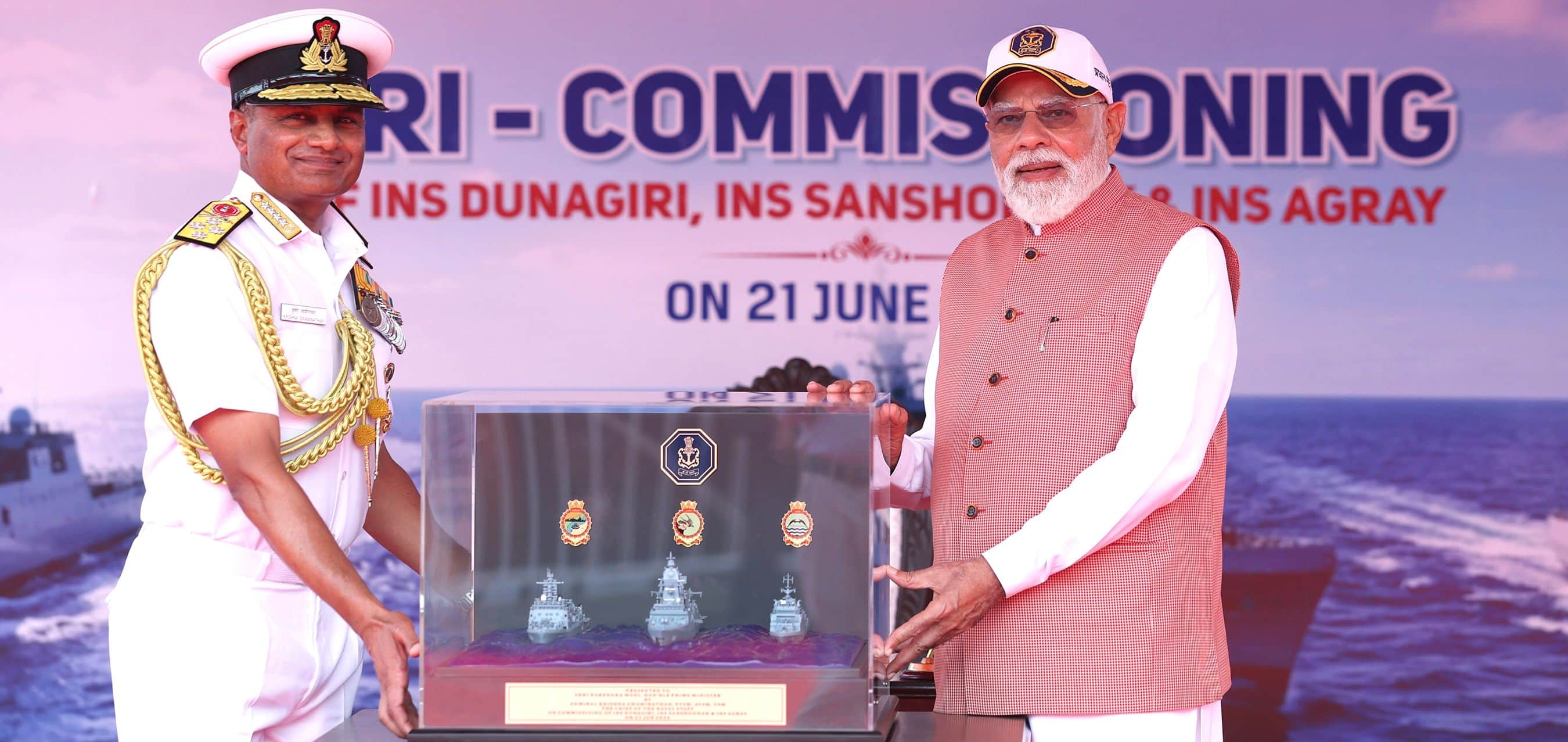
INS Agray, INS Dunagiri, and INS Sanshodhakhave been inducted into the Indian Navy: PM
It is a truly remarkable coincidence that we have commissioned India's most advanced hydrographic ship, INS Sanshodhak, on June 21, celebrated as World Hydrography Day: PM
The stronger a nation's maritime strength, the stronger its economic and strategic influence; India understands this reality and is preparing itself accordingly: PM
The journey from INS Vikrant to the commissioning of INS Agray, INS Dunagiri and INS Sanshodhak is a reflection of India's increasing self-reliance: PM
India has begun to move forward with a new vision for the shipbuilding sector; Special steps have been taken to enhance domestic construction capacity: PM
Shipbuilding, ship repair, and MRO are being viewed as part of a major national mission: PM
India views the ocean as a medium of cooperation, but also knows that strength safeguards peace, security protects prosperity and self-reliance builds the future: PM
Today, INS Agray, INS Dunagiri, and INS Sanshodhak have joined the Indian Navy as symbols of this very spirit: PM

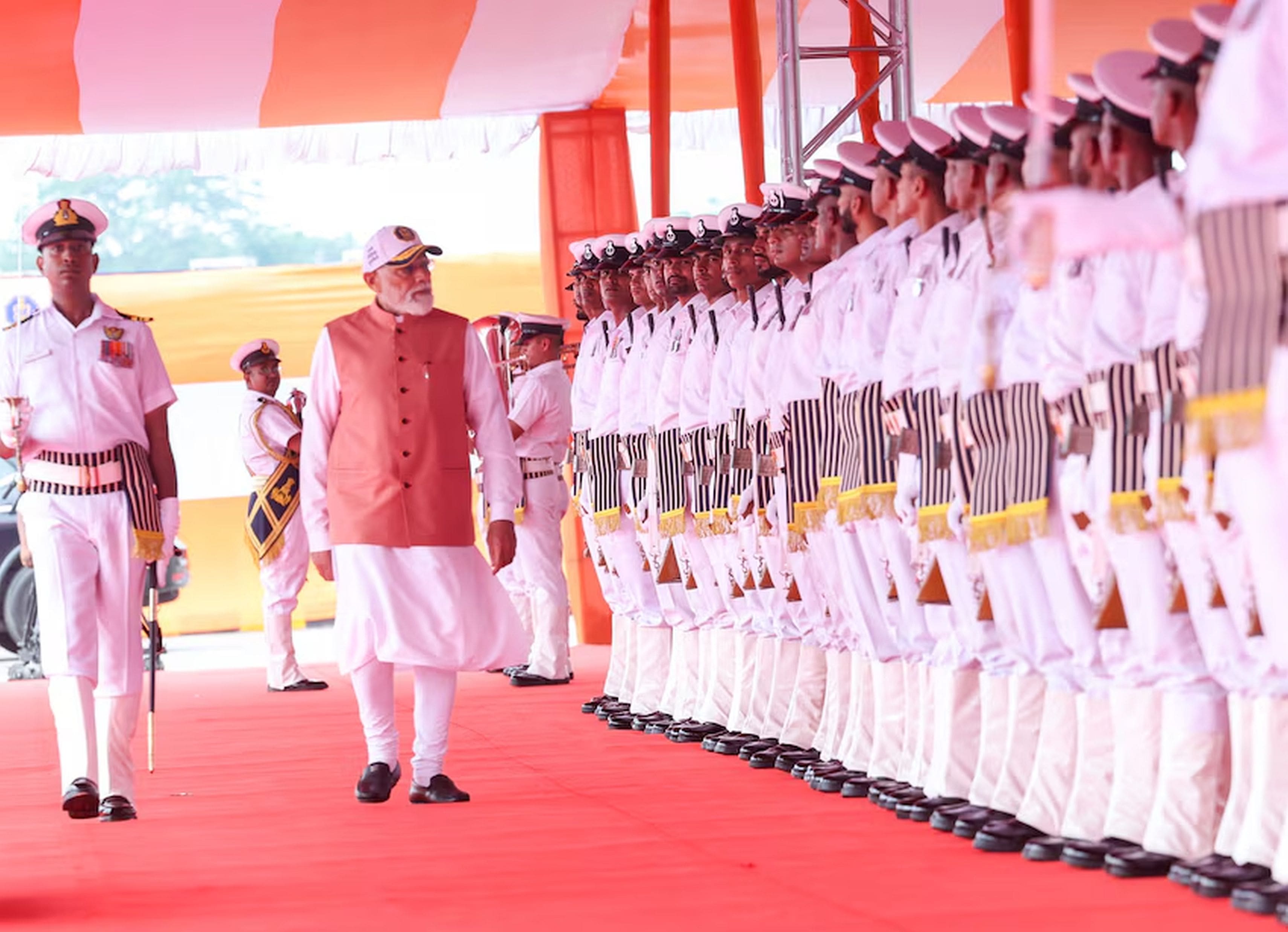
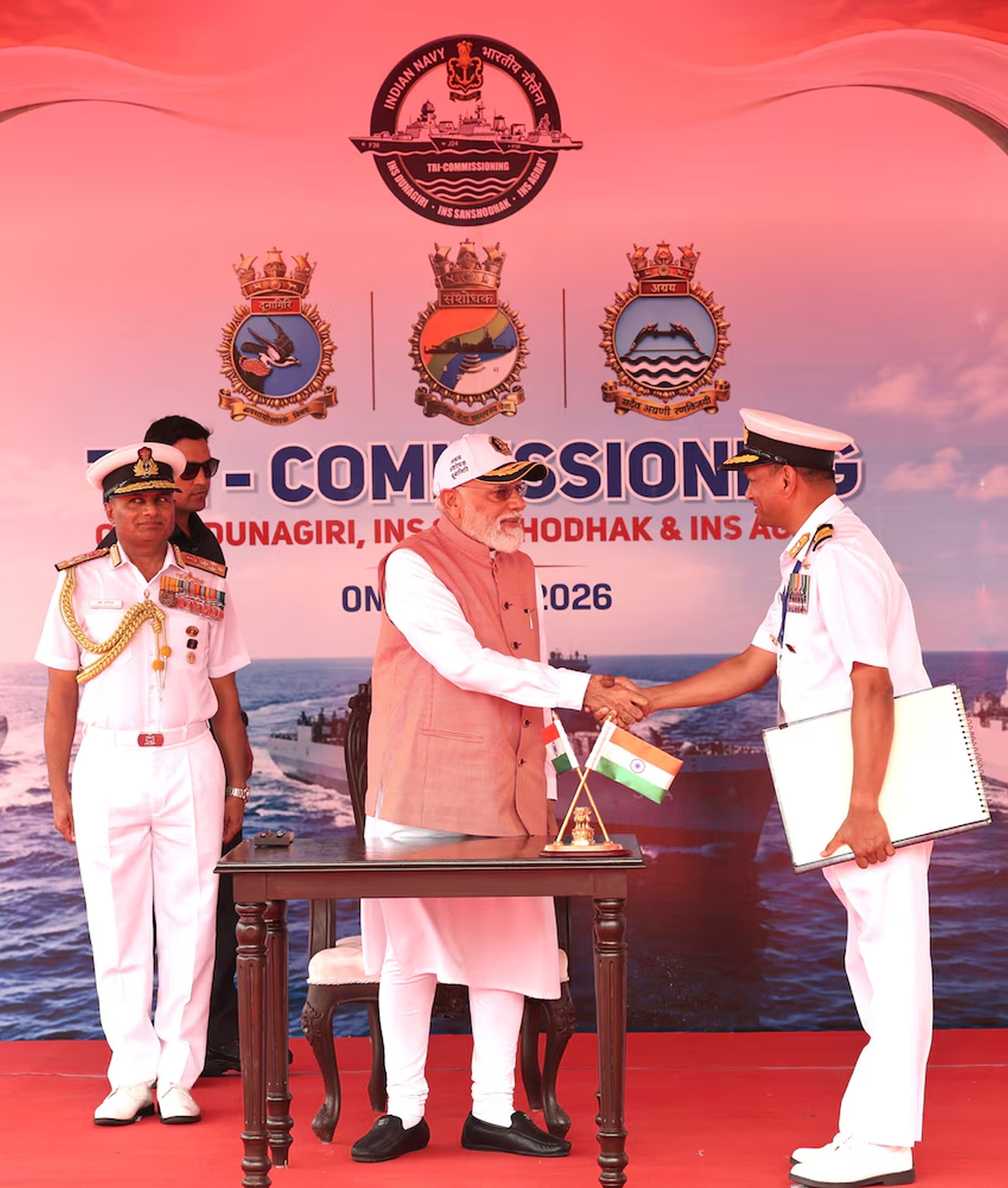
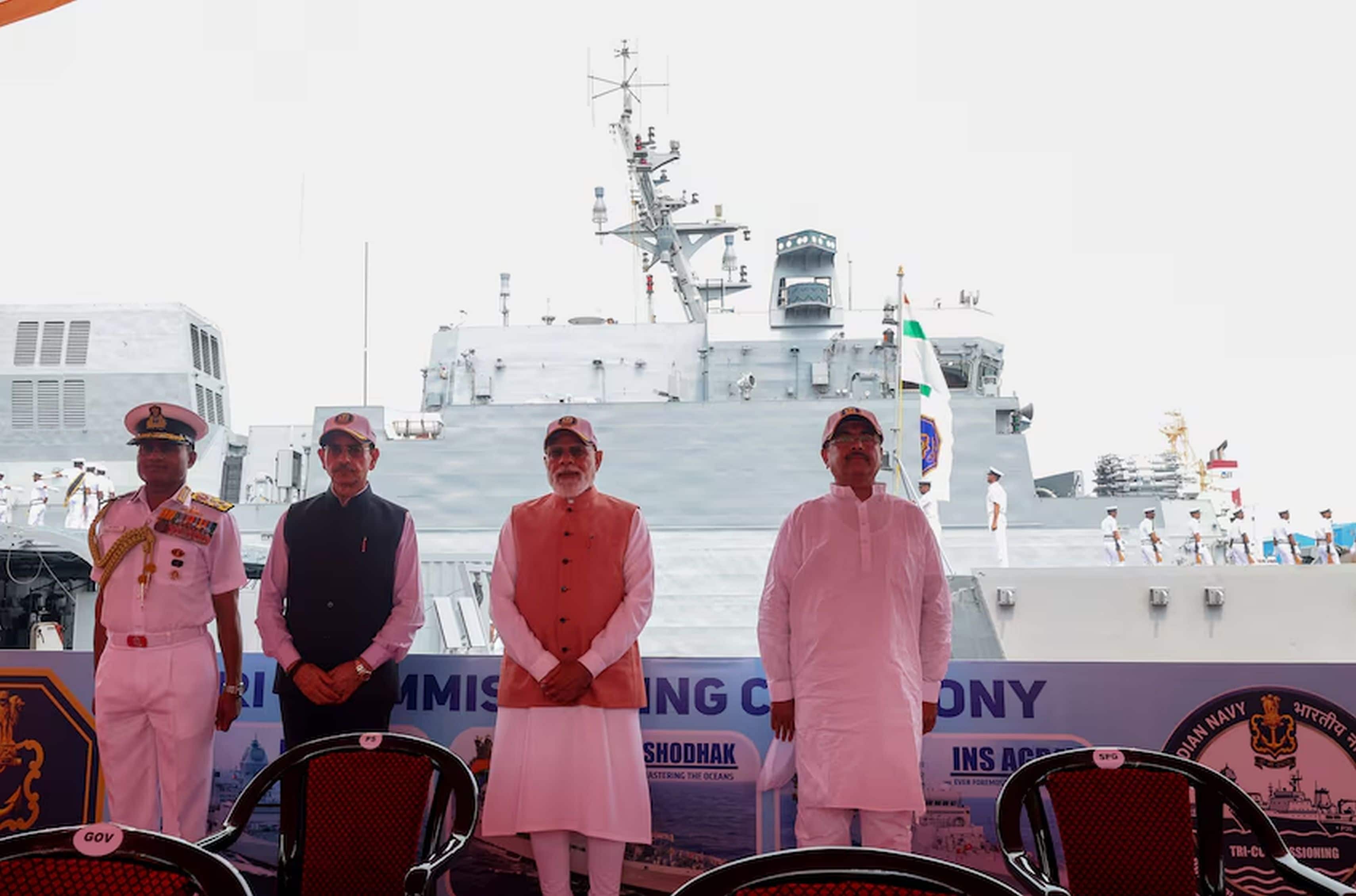
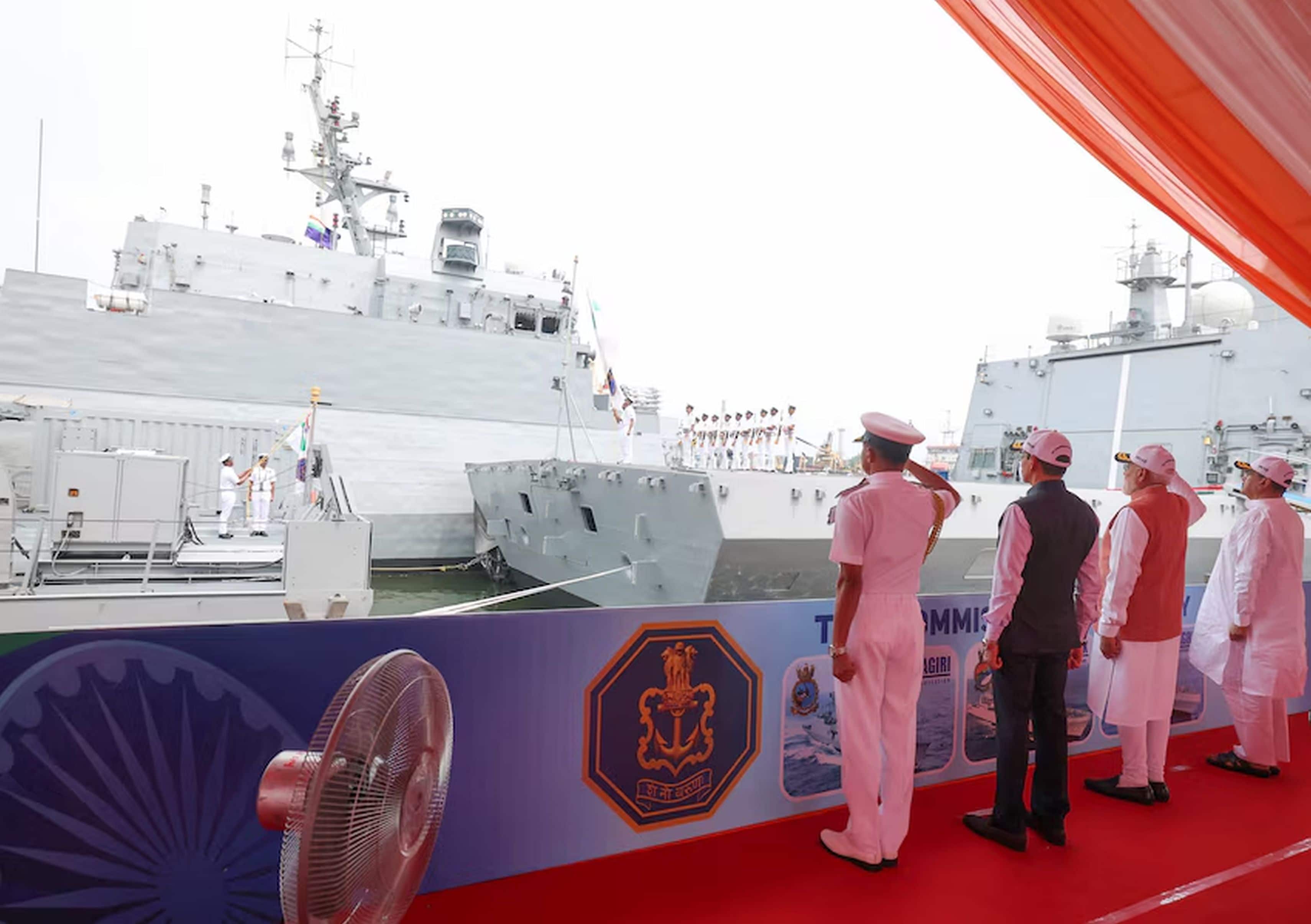
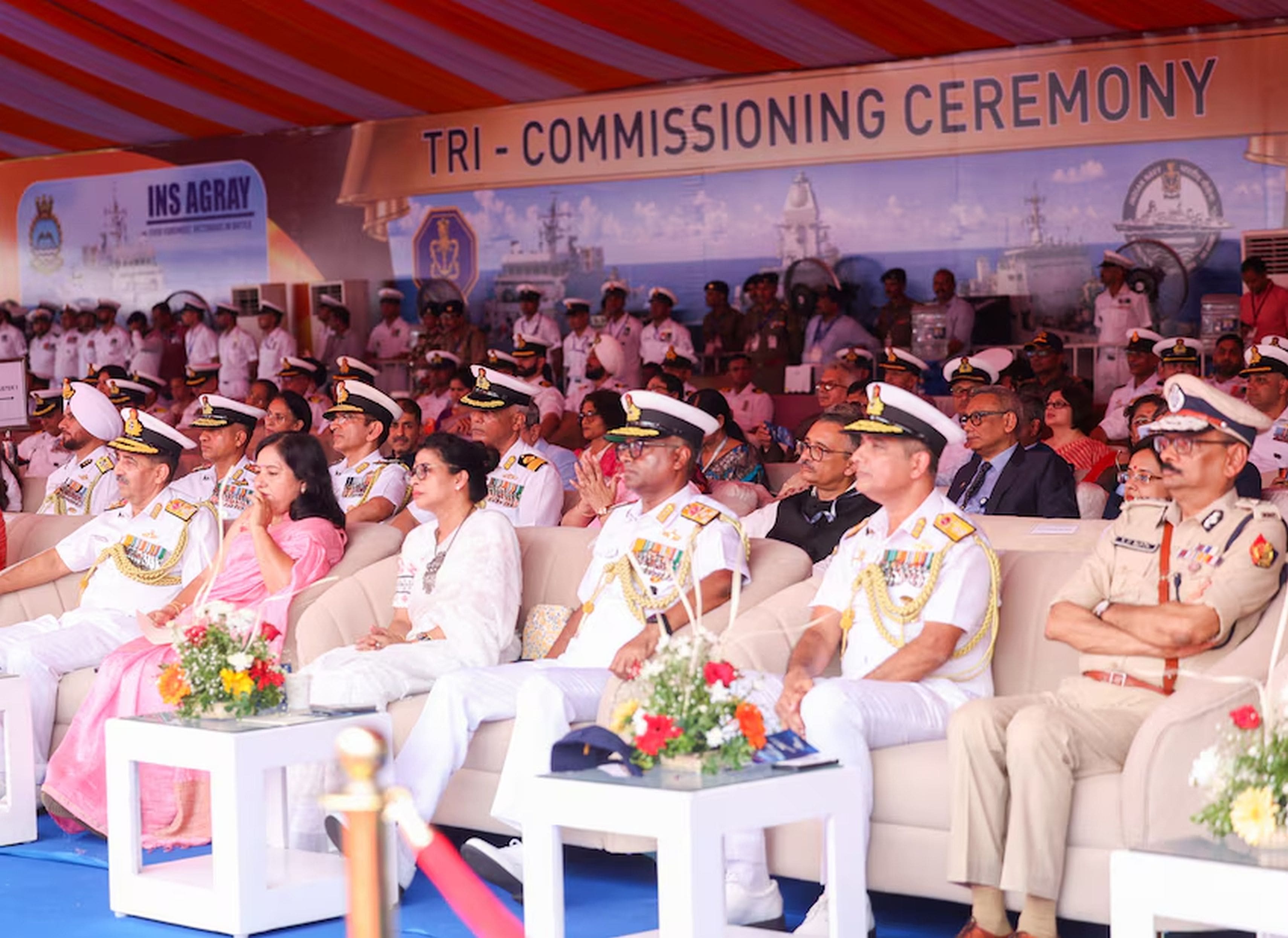
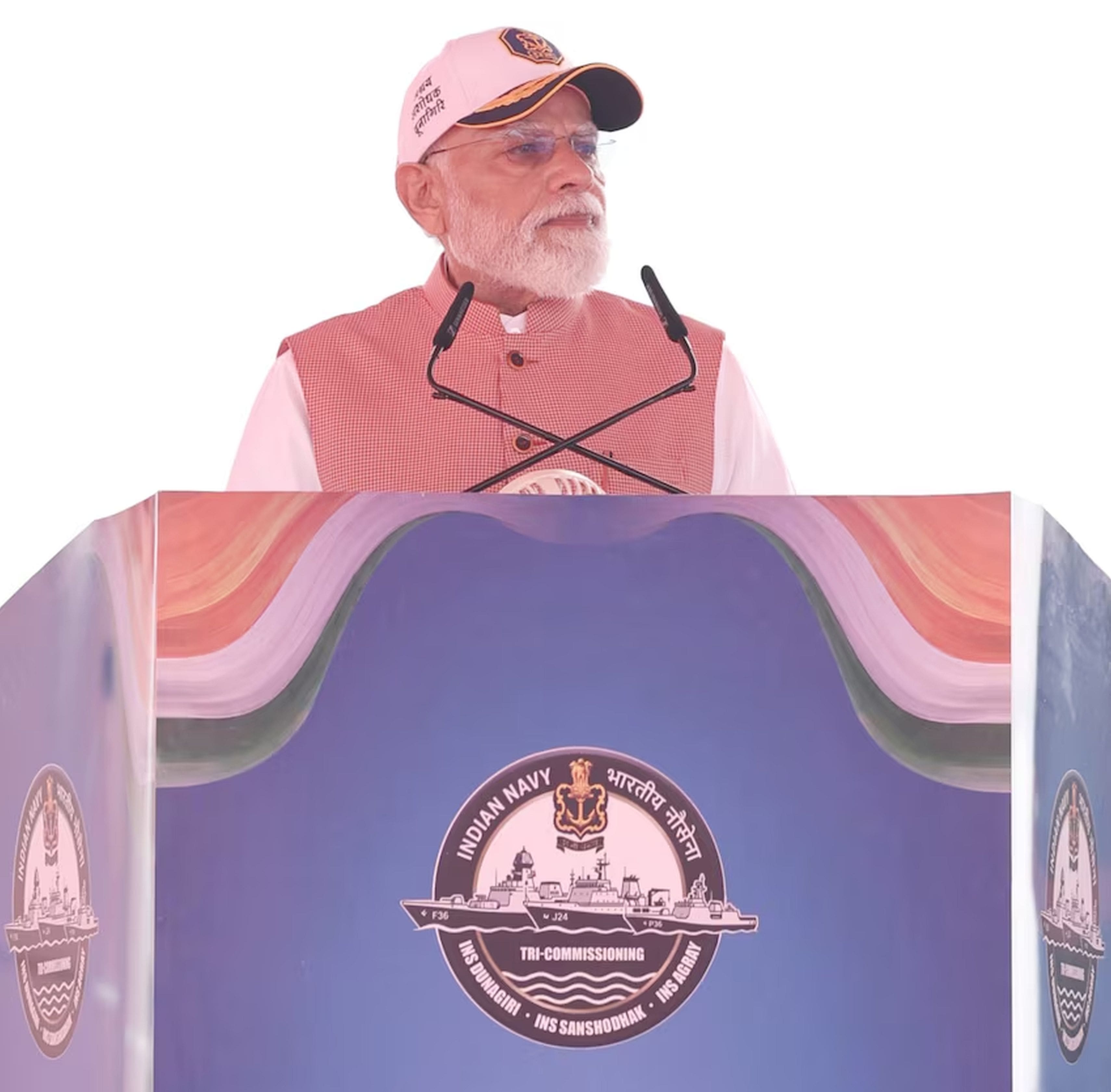
Prime Minister, Shri Narendra Modi, today commissioned three indigenously designed and built naval ships - INS Dunagiri, an advanced stealth frigate, INS Sanshodhak, a survey vessel (large) and INS Agray, an anti-submarine warfare shallow water craft, at Syama Prasad Mookerjee Port, Kolkata, West Bengal. These inductions will significantly bolster the nation’s operational capabilities, enhance maritime domain awareness, and strengthen the security of our coastal waters against geopolitical threats. All three ships were designed by the Indian Navy’s Warship Design Bureau and constructed in Kolkata by Garden Reach Shipbuilders & Engineers (GRSE), with extensive participation by Indian industry, including more than 200 MSMEs. With an indigenous content of over 75 percent, these ships are also a testament to India’s commitment to Aatmanirbharta.

Addressing the gathering, the Prime Minister noted that the occasion coincides with the International Day of Yoga being celebrated across the world and expressed happiness at having the opportunity to visit the historic land of Bengal, which has played a pivotal role in shaping India's intellectual, cultural and national renaissance and has connected India with the world through maritime routes for centuries. “The event represented an important milestone in the journey towards an Aatmanirbhar Bharat, a secure India and a developed India”, Shri Modi noted. He pointed out that June 21 is also observed globally as World Hydrography Day and described it as a remarkable coincidence that India's most advanced hydrographic survey vessel, INS Sanshodhak, is commissioned on the same day. Congratulating the Indian Navy, scientists, engineers, workers and all citizens of the country, Shri Modi said the achievement reflected India's growing technological and maritime capabilities. “No nation can emerge as a major power without strong maritime capabilities. Development, security and prosperity are closely linked to the oceans. Most of the world's trade moves through sea routes, while vast global data networks operate beneath the oceans”, Shi Modi stated while emphasizing the importance of maritime strength in the modern world. He further noted that critical minerals, deep-sea resources and future sources of energy will increasingly be connected to the maritime domain. Therefore, he said, a nation's economic and strategic influence is directly linked to the strength of its maritime sector.

Shri Modi stated that India fully understands this reality and is preparing itself accordingly. “The commissioning of the three naval platforms stands as testimony to the country's growing capabilities and skills”, he remarked. Recalling the commissioning of INS Vikrant, he said that it had marked the beginning of a new chapter in India's maritime journey and announced India's growing naval strength to the world. He noted that the journey from INS Vikrant to the commissioning of INS Agray, INS Dunagiri and INS Sanshodhak is not merely a story of new warships but also a reflection of India's increasing self-reliance. “All three vessels symbolize India's commitment to indigenous design, manufacturing and innovation. Designed and built in India, the vessels showcase the talent of Indian industries, the expertise of Indian engineers and the hard work of Indian workers”, Shri Modi underscored.

Shri Modi asserted that India does not wish to remain merely a buyer in the defence sector. “The strength of the nation's military cannot be measured by its dependence on global markets but by its ability to become self-reliant. India seeks to become a producer and a manufacturer, because nations that manufacture become decisive players on the global stage”, he added. Highlighting recent achievements, the Prime Minister noted that more than 40 indigenously built warships and submarines have been inducted into the Indian Navy over the past few years. He remarked that nearly every few weeks the Navy has received a new capability, while 45 major naval platforms are currently under construction. These figures, he said, are not merely statistics but indicators of India's industrial capacity and future potential.

Underlining the immense employment-generating potential of the maritime sector, Shri Modi said, “The Government views the maritime sector not as an isolated industry but as a major engine of employment and economic growth for a developed India. A modern ship requires large quantities of steel, electronics, machinery and thousands of components, creating opportunities across extensive industrial supply chains”. Referring to the three commissioned vessels, he noted that more than 200 MSMEs contributed to their construction, generating substantial employment and economic activity across the country.

Shri Modi stated that the time has come for India to enter the next phase of maritime development, and the Government has adopted a new vision for the shipbuilding sector and has introduced several policy reforms in recent years to enhance domestic manufacturing capabilities. “The ₹70,000 crore incentive package announced for the shipping sector is not merely an economic measure but an investment in India's maritime future and industrial expansion. Initiatives such as Sagarmala reflect this comprehensive vision and are helping reduce logistics costs, accelerate industrial growth and create new opportunities in coastal regions” he stated.

Reflecting on India's transformation in the defence sector, Shri Modi observed that there was a time when India was counted among the world's largest defence importers, creating both strategic and security challenges. Following the formation of the Government in 2014, he said, a determined effort was made to change this situation through major policy reforms and a strong emphasis on self-reliance in defence manufacturing. “These efforts have opened new opportunities in defence design, manufacturing and exports. While India's total defence production stood at around ₹40,000 crore in 2014, it has now risen to nearly ₹1.8 lakh crore, demonstrating the significant progress made towards building a strong, self-reliant and globally competitive defence industry”, he remarked. Shri Modi emphasized that the progress made over the past twelve years demonstrates how transformative change becomes possible when policies are clear, direction is correct, and all stakeholders work together with a shared commitment towards national development.

Referring to India's rich maritime heritage, the Prime Minister said that the name of West Bengal naturally comes to mind whenever the country's maritime legacy is discussed. He observed that Bengal has historically played a crucial role in India's maritime connections with the world. The waters of the Hooghly River, he said, have witnessed changing chapters of history, the growth of trade, and new journeys of development. He also noted that the port bears the name of Dr. Syama Prasad Mookerjee, the son of Bengal and India's first Minister for Industry, making the occasion even more significant. “West Bengal is poised to become a major hub for India's Blue Economy, maritime manufacturing, logistics and coastal development in the years ahead”, Shri Modi stated.

Shri Modi reiterated that India has always viewed the oceans as a medium for cooperation and connectivity. “Security is indispensable for protecting prosperity, while self-reliance is necessary for building the future. INS Agray, INS Dunagiri and INS Sanshodhak embody these very ideals and symbolize a nation that is increasingly aware of its capabilities, confident in its strengths and determined to move forward with renewed energy and purpose in the twenty-first century” he emphasised.

Concluding his address, the Prime Minister extended his best wishes to all personnel of the Indian Navy, scientists, engineers, workers and all citizens for their contribution to these achievements and expressed confidence that India's maritime and defence sectors would continue to strengthen the nation's security, prosperity and global standing.

Click here to read full text speech

Explore More
শ্রী রাম জন্মভূমি মন্দিরের ধ্বজারোহণ উৎসবে প্রধানমন্ত্রীর বক্তব্যের বাংলা অনুবাদ

জনপ্রিয় ভাষণ

শ্রী রাম জন্মভূমি মন্দিরের ধ্বজারোহণ উৎসবে প্রধানমন্ত্রীর বক্তব্যের বাংলা অনুবাদ
PM Modi Leads International Yoga Day Event In Kolkata, Says It Has Become 'World's Biggest Festival'

Media Coverage

PM Modi Leads International Yoga Day Event In Kolkata, Says It Has Become 'World's Biggest Festival'
NM on the go

Nm on the go

Always be the first to hear from the PM. Get the App Now!
...
The commissioning of INS Agray, INS Dunagiri and INS Sanshodhak is a reflection of India's increasing self-reliance: PM Modi in Kolkata
June 21, 2026
INS Agray, INS Dunagiri, and INS Sanshodhakhave been inducted into the Indian Navy: PM
It is a truly remarkable coincidence that we have commissioned India's most advanced hydrographic ship, INS Sanshodhak, on June 21, celebrated as World Hydrography Day: PM
The stronger a nation's maritime strength, the stronger its economic and strategic influence; India understands this reality and is preparing itself accordingly: PM
The journey from INS Vikrant to the commissioning of INS Agray, INS Dunagiri and INS Sanshodhak is a reflection of India's increasing self-reliance: PM
India has begun to move forward with a new vision for the shipbuilding sector; Special steps have been taken to enhance domestic construction capacity: PM
Shipbuilding, ship repair, and MRO are being viewed as part of a major national mission: PM
India views the ocean as a medium of cooperation, but also knows that strength safeguards peace, security protects prosperity and self-reliance builds the future: PM
Today, INS Agray, INS Dunagiri, and INS Sanshodhak have joined the Indian Navy as symbols of this very spirit: PM

Honorable Governor of West Bengal Shri R. N. Ravi ji, energetic Chief Minister Suvendu Adhikari ji, Chief of Naval Staff Krishna Swaminathan ji, distinguished ladies and gentlemen present here!

Today is special in many ways. The whole world is celebrating International Yoga Day. I am pleased that on this occasion I have had the opportunity to come to this great land of Bengal. This is the land that gave new direction to India’s ideas, that accelerated India’s renaissance, and that for centuries connected India to the world through the sea. Today, on this very soil, an important program linked to Atmanirbhar Bharat, Surakshit Bharat, and Viksit Bharat is taking place. Just a short while ago, INS Agray, INS Dunagiri, and INS Sanshodhak have been inducted into the Indian Navy. Incidentally, June 21 is also celebrated as “World Hydrography Day.” And it is a remarkable coincidence that on this very day, India’s most advanced hydrography ship, INS Sanshodhak, has been commissioned. I extend my warm congratulations and best wishes to the Indian Navy, to all the scientists, engineers, workers associated with these projects, and to my beloved countrymen.

Friends,

The world bears witness that no nation can become a great power without maritime capability. Development is linked to the seas, security is linked to the seas, prosperity is linked to the seas. Today, most of the world’s trade flows through maritime routes. The vast networks of data that connect the world pass beneath the oceans. In the coming times, critical minerals, deep-sea resources, and new sources of energy will also be connected to the seas. Therefore, the stronger a nation’s maritime strength, the stronger its economic and strategic influence. India understands this reality well. India is preparing itself for it. And today is proof of what our capability is, what our skill is.

Friends,

A few years ago, when we dedicated INS Vikrant to the nation, India announced a new chapter of its maritime strength. It was a declaration of our capability before the world. The journey from INS Vikrant to today is not just about new warships. It is also the journey of India’s growing self-reliance. Today, INS Agray, INS Dunagiri, and INS Sanshodhak are giving new momentum to that journey. These three ships are symbols of three important resolves of India. They have been built in India. Their designs were prepared in India. Their construction involved the talent of Indian industries, the skill of Indian engineers, and the hard work of Indian workers. And this is the greatest strength of New India.

Friends,

Today, India does not want to remain merely a buyer in the defense sector. Our military strength cannot be reduced to a marketplace for the world. The identity of our strength lies not in being a market, but in our self-reliance. India wants to be a manufacturer. And the day we become manufacturers, we will also become decisive. We are moving rapidly in this direction. In recent years, more than 40 Made in India warships and submarines have been inducted into the Navy. This means that almost every few weeks, the Indian Navy has gained new strength. Even now, 45 major naval platforms are under construction. This is not just a number. It is proof of India’s industrial capability. It is a signal of India’s future.

Friends,

In the coming years, India’s maritime sector has the capacity to generate millions of new jobs. That is why we do not see the maritime sector as an isolated sector. We see it as the employment engine of a developed India. A modern ship requires hundreds of tons of steel, electronics, machinery, and thousands of components. Behind all this, thousands of companies work - which means thousands of youth get employment. In the construction of the three ships commissioned today, more than 200 MSMEs have contributed. We can imagine the vast number of jobs created in these 200 MSMEs, in these small industries.

Friends,

The time has come for India to enter the next phase of maritime power. Therefore, India has begun to move forward with a new vision for the shipbuilding sector. In recent years, numerous policy reforms have been undertaken. Special measures have been taken to enhance domestic manufacturing capacity. Shipbuilding, ship repair, ship recycling, and MRO are now being seen as part of a major national mission.

Friends,

The incentive package of ₹70,000 crore announced for the shipping sector is not merely an economic decision. It is an investment in India’s maritime future. It is an investment in India’s industrial expansion.

Friends,

Today, India is strengthening its entire maritime ecosystem. That is why India is modernizing its ports, creating new capacity, building new connectivity, expanding river waterways, and developing a multi-modal logistics network. Campaigns like Sagarmala are part of this comprehensive vision. This is reducing the cost of trade, giving new momentum to industries, and creating new opportunities in coastal regions.

Friends,

There was a time when India was known as one of the world’s largest defense importers. This dependence posed both strategic and security challenges. After the government was formed in 2014, we resolved to change this situation. Major policy reforms were carried out, and self-reliance in the defense sector was prioritized. As a result, today new possibilities have emerged in defense design, manufacturing, and exports. Until 2014, the country’s total defense production was around ₹40,000 crore. Today, it has increased to nearly ₹1,80,000 crore.

And friends,

On one hand, defense production in the country has grown rapidly, and on the other hand, our defense exports have increased at an unprecedented pace. Until 2014, India exported defense products worth about ₹700 crore. Today, this figure has risen to nearly ₹40,000 crore. Defense equipment made in India is now reaching more than 80 countries around the world.

Friends,

In the journey of self-reliance, much remains to be done. In my view, this is only the beginning. But the progress achieved in 12 years shows that when policies are clear, when direction is right, and when we work together, such a massive transformation can take place in the country.

Friends,

When we talk about maritime heritage, the name of Bengal naturally comes to mind. This land has also been significant in India’s maritime connections. The currents of the Hooghly have witnessed history being reshaped, new chapters of trade being written, and new journeys of development unfolding. And see the coincidence - this port is named after Bengal’s son, the country’s first Industry Minister, Dr. Syama Prasad Mukherjee.

Friends,

In the new maritime era that India is moving towards, the role of West Bengal will be very important. Here, there is port capacity, industrial capacity, talent, skill, and the ability to take the maritime economy to new heights. I am confident that in the coming years, West Bengal will become a vital center for India’s Blue Economy, maritime manufacturing, logistics, and coastal development.

Friends,

India has always regarded the sea as a medium of cooperation. But India also knows that strength is equally necessary to safeguard peace. Security is essential to protect prosperity. And self-reliance is indispensable for building the future. Today, INS Agray, INS Dunagiri, and INS Sanshodhak have joined the Indian Navy as symbols of this very spirit. They represent the India that is recognizing its strength in the 21st century, trusting its own capabilities, and moving forward before the world with new confidence, with speed, energy, and determination.

Friends,

On this auspicious occasion, I extend my best wishes to all my companions in the Navy, to all my fellow citizens. Once again, I heartily congratulate the Indian Navy, all scientists, engineers, workers, and the people of the nation. Thank you.