PM Modi inaugurates the Navkar Mahamantra Divas

Published By : Admin | April 9, 2025 | 07:47 IST
Navkar Mahamantra is not just a mantra, it is the core of our faith: PM
Navkar Mahamantra embodies humility, peace and universal harmony: PM
Navkar Mahamantra along with the worship of Panch Parmeshthi symbolises the right knowledge, perception and conduct, and the path leading to salvation: PM
Jain literature has been the backbone of the intellectual glory of India: PM
Climate change is today's biggest crisis and its solution is a sustainable lifestyle, which the Jain community has practiced for centuries and aligns perfectly with India's Mission LiFE: PM
PM proposes 9 resolutions on Navkar Mahamantra Divas

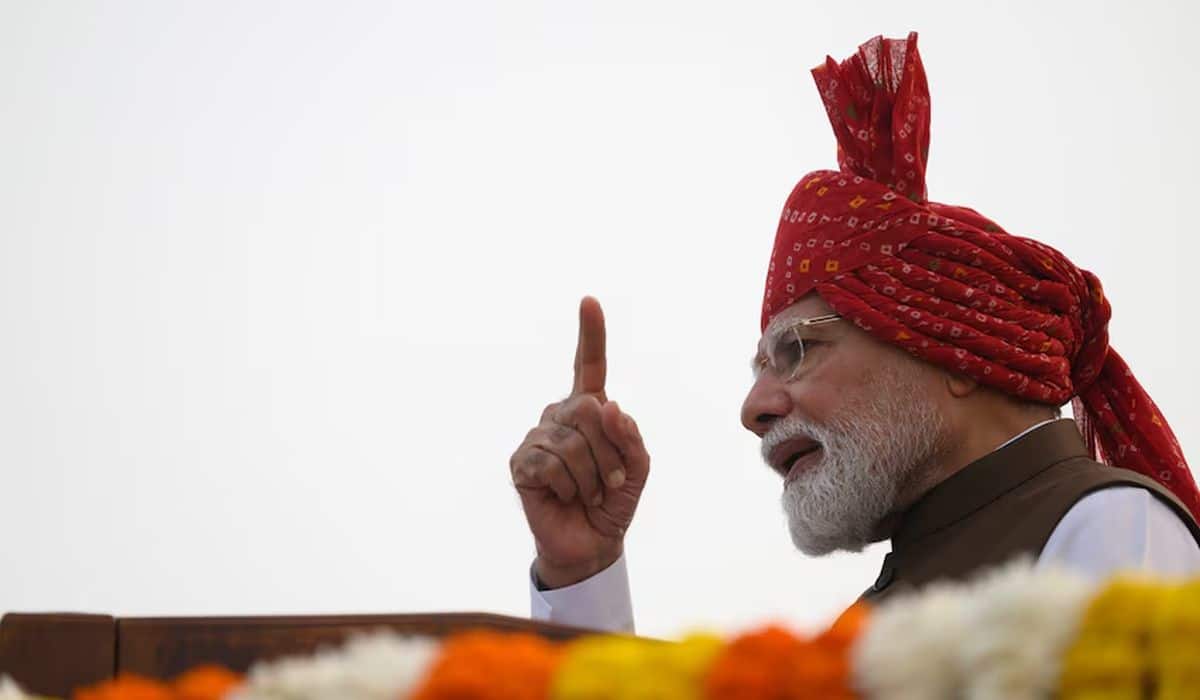
Prime Minister Shri Narendra Modi inaugurated and participated in Navkar Mahamantra Divas at Vigyan Bhawan, New Delhi today. Addressing the gathering, he highlighted the profound spiritual experience of the Navkar Mantra, emphasizing its ability to bring peace and stability to the mind. He remarked on the extraordinary feeling of tranquility, which transcends words and thoughts, resonating deeply within the mind and consciousness. Shri Modi underscored the significance of the Navkar Mantra, reciting its sacred verses and described the mantra as a unified flow of energy, embodying stability, equanimity, and a harmonious rhythm of consciousness and inner light. Reflecting on his personal experience, he shared how he continues to feel the spiritual power of the Navkar Mantra within himself. He recalled witnessing a similar collective chanting event in Bengaluru years ago, which left a lasting impression on him. The Prime Minister highlighted the unparalleled experience of millions of virtuous souls across the nation and abroad coming together in a unified consciousness. He remarked on the collective energy and synchronized words, describing it as truly extraordinary and unprecedented.

Remarking on his roots in Gujarat, where the influence of Jainism is evident in every street, the Prime Minister highlighted how, from a young age, he had the privilege of being in the company of Jain Acharyas. “Navkar Mantra is not just a mantra but the core of faith and the essence of life”, he emphasised. He underlined its significance, which extends beyond spirituality, guiding individuals and society alike. He highlighted that every verse and even every syllable of the Navkar Mantra holds profound meaning. He added that when reciting the mantra, one bows to the Panch Parmeshthi and elaborated on the same. Shri Modi said Arihants, who have attained "Keval Gyan" and guide "Bhavya Jeevas," embody 12 divine qualities while the Siddhas, who have eradicated eight karmas, attained Moksha, and possess eight pure qualities. He added that Acharyas follow Mahavrat and serve as pathfinders, embodying 36 virtues while Upadhyayas impart knowledge of the Moksha path, enriched with 25 qualities. He further added that Sadhus refine themselves through penance and progress toward Moksha, possessing 27 great qualities. He highlighted the spiritual depth and virtues associated with each of these revered beings.

“One bows to the 108 divine qualities and remembers the welfare of humanity when reciting the Navkar Mantra”, said Shri Modi highlighting that the mantra reminds us that knowledge and action are the true directions of life, with the Guru as the guiding light, and the path emerging from within. He emphasized the teachings of the Navkar Mantra, which inspire self-belief and the initiation of one’s own journey. He stated that the true enemy lies within—negative thoughts, distrust, hostility, and selfishness—and conquering these is the real victory. He underlined that Jainism motivates individuals to conquer themselves rather than the external world. “Self-conquest leads one to become an Arihant”, he added, stating that the Navkar Mantra is not a demand but a path—a path that purifies individuals from within and guides them toward harmony and goodwill.

“Navkar Mantra is truly a mantra of human meditation, practice, and self-purification”, exclaimed the Prime Minister highlighting its global perspective and its timeless nature, which, like other Indian oral and scriptural traditions, has been passed down through generations—first orally, then through inscriptions, and finally through Prakrit manuscripts—continuing to guide humanity even today. “The Navkar Mantra, along with venerating the Panch Parmeshthi, embodies right knowledge, right perception, and right conduct, serving as a path to liberation”, he emphasised. Underlining the importance of the nine elements of life, which lead to completeness, Shri Modi noted the special significance of the number nine in Indian culture. He elaborated on the prominence of the number nine in Jainism, mentioning the Navkar Mantra, nine elements, and nine virtues, as well as its presence in other traditions, such as the nine treasures, nine gates, nine planets, nine forms of Durga, and Navadha Bhakti. He highlighted that the repetition of chants—whether nine times or in multiples of nine like 27, 54, or 108—symbolizes the completeness represented by the number nine. The Prime Minister explained that the number nine is not just mathematics but a philosophy, as it represents completeness. He remarked that after achieving completeness, the mind and intellect stabilize and ascend, free from the desire for new things. Even after progress, one remains rooted in their essence and this is the essence of the Navkar Mantra, he stated.

Underlining that the philosophy of the Navkar Mantra aligns with the vision of a developed India, the Prime Minister reiterated his statement from the Red Fort, emphasizing that a developed India signifies both progress and heritage—a nation that will neither stop nor falter, will reach new heights, yet remain rooted in its traditions. He highlighted that a developed India will take pride in its culture. He emphasized the preservation of the teachings of the Tirthankaras. Recalling the nationwide celebration of the 2550th Nirvana Mahotsav of Lord Mahavir, Shri Modi noted the return of ancient idols, including those of the Tirthankaras, from abroad. He proudly shared that over 20 Tirthankara idols have been brought back to India in recent years. He highlighted the unparalleled role of Jainism in shaping India's identity and reaffirmed the government’s commitment to preserving this legacy. Referring to the new Parliament building in New Delhi, describing it as the temple of democracy, he pointed out the visible influence of Jainism. He mentioned the depiction of Sammed Shikhar in the architectural gallery at the Shardul Gate entrance, the Tirthankara idol at the entrance of the Lok Sabha, which was returned from Australia, the magnificent painting of Lord Mahavir on the ceiling of the Constitution Gallery and the depiction of all 24 Tirthankaras together on the wall of the South Building. The Prime Minister remarked that these philosophies guide India’s democracy and provide the right path. He highlighted the profound definitions of Jainism, encapsulated in ancient Agama scriptures, such as "Vatthu Sahavo Dhammo," "Charittam Khalu Dhammo," and "Jivana Rakkhanam Dhammo." He reaffirmed that the government is advancing with the mantra of "Sabka Saath, Sabka Vikas," inspired by these values.

“Jain literature has been the backbone of India's intellectual heritage, and preserving this knowledge is a duty”, said Shri Modi, highlighting the government's decision to grant classical language status to Prakrit and Pali, enabling further research on Jain literature. He emphasized that preserving language ensures the survival of knowledge, and expanding language leads to the growth of wisdom. The Prime Minister noted the existence of centuries-old Jain manuscripts in India, describing each page as a mirror of history and an ocean of knowledge, quoting profound Jain teachings. He expressed concern over the gradual disappearance of many significant texts and mentioned the launch of the "Gyan Bharatam Mission", announced in this year’s Budget. He shared plans to survey millions of manuscripts across the country and digitize ancient heritage, connecting antiquity with modernity. He described this initiative as an ‘Amrit Sankalp’. “New India will explore possibilities through AI while guiding the world with spirituality”, he stressed.

Highlighting that Jainism is both scientific and sensitive, offering solutions to global challenges such as war, terrorism, and environmental issues through its core principles, the Prime Minister said the Jain tradition's emblem, which states "Parasparopagraho Jivanam," emphasises the interdependence of all living beings. He underscored Jainism's commitment to non-violence, even at the most subtle levels, as a profound message of environmental conservation, mutual harmony, and peace. He acknowledged the five major principles of Jainism and emphasized the relevance of the philosophy of Anekantavada in today's era. He stated that belief in Anekantavada prevents situations of war and conflict, fostering understanding of others' emotions and perspectives. He emphasized the need for the world to embrace the philosophy of Anekantavada.

Underscoring that the world’s trust in India is deepening, with India’s efforts and results becoming a source of inspiration, Shri Modi highlighted that global institutions are now looking towards India because of its progress, which opens pathways for others. He connected this to the Jain philosophy of "Parasparopagraho Jivanam," emphasizing that life thrives on mutual cooperation. He noted that this perspective has raised global expectations from India, and the nation has intensified its efforts. Addressing the pressing issue of climate change, he identified sustainable lifestyles as the solution and highlighted India’s launch of Mission LiFE. He remarked that the Jain community has been living the principles of simplicity, restraint, and sustainability for centuries. Referring to the Jain principle of Aparigraha, he emphasized the need to spread these values widely. He urged everyone, regardless of their location, to become flag bearers of Mission LiFE.

Prime Minister remarked that in today’s world of information, knowledge is abundant, but without wisdom, it lacks depth. He emphasized that Jainism teaches the balance of knowledge and wisdom to find the right path. He highlighted the importance of this balance for the youth, where technology must be complemented by human touch, and skills must be accompanied by the soul. He stated that the Navkar Mahamantra can serve as a source of wisdom and direction for the new generation.

Shri Modi urged everyone to take nine resolutions after the collective chanting of the Navkar Mantra. The first resolution being ‘Water Conservation’, he recalled the words of Buddhi Sagar Maharaj Ji, who predicted 100 years ago that water would be sold in shops. He emphasized the need to value and save every drop of water. The second resolution is to ‘plant a tree in Mother’s Name’. He highlighted the planting of over 100 crore trees in recent months and urged everyone to plant a tree in their mother’s name and nurture it like her blessings. He also recollected his efforts in Gujarat in this regard to plant 24 trees related to 24 Tirthankaras which could not be completed due to non-availability of few trees. Stressing the importance of cleanliness in every street, neighborhood, and city, urging everyone to contribute to this mission, Shri Modi mentioned ‘cleanliness mission’ as the third resolution. ‘Vocal for Local’ being the fourth resolution, he encouraged the promotion of locally made products, turning them global, and supporting items that carry the essence of Indian soil and the sweat of Indian workers. The fifth resolution is to ‘explore India’ and he urged people to explore India’s diverse states, cultures, and regions before traveling abroad, emphasizing the uniqueness and value of every corner of the country. ‘Adopting Natural Farming’ being the sixth resolution, the Prime Minister referred to the Jain principle of One living being should not harm another and called for freeing Mother Earth from chemicals, supporting farmers, and promoting natural farming. He proposed ‘Healthy Lifestyle’ as the seventh resolution and advocated for a return to Indian dietary traditions, including millets (Shri Anna), reducing oil consumption by 10%, and maintaining health through moderation and restraint. He proposed ‘Incorporating Yoga and Sports’ as the eighth resolution and emphasized making yoga and sports a part of daily life, whether at home, work, school, or parks, to ensure physical health and mental peace. Highlighting the importance of assisting the underprivileged, whether by holding a hand or filling a plate, as the true essence of service, he proposed ‘Helping the Poor’ as the ninth and final resolution. He emphasised that these resolutions align with the principles of Jainism and the vision of a sustainable and harmonious future. “These nine resolutions will infuse new energy into individuals and provide a fresh direction to the younger generation. Their implementation will foster peace, harmony, and compassion within society”, he added.

Noting that the principles of Jainism, including Ratnatraya, Daslakshan, Solah Karan, and the festivals like Paryushan, pave the way for self-welfare, Shri Modi expressed confidence that the World Navkar Mantra Day will continuously enhance happiness, peace, and prosperity globally. He expressed satisfaction at the unity displayed by all four sects coming together for this event, describing it as a symbol of unity, emphasising the importance of spreading the message of unity across the nation. He stated that anyone who chants "Bharat Mata Ki Jai" should be embraced and connected, as this energy strengthens the foundation of a developed India.

Prime Minister expressed gratitude for the blessings of Guru Bhagwants being received at various locations across the country. He extended his respects to the entire Jain community for organizing this global event. He offered his salutations to Acharya Bhagwants, Muni Maharajs, Shravak-Shravikas, and all those participating in the event from across India and abroad. He congratulated JITO for their efforts in organizing this historic event and acknowledged the presence of Home Minister of Gujarat, Shri Harsh Sanghavi, JITO Apex Chairman Shri Prithviraj Kothari, President Shri Vijay Bhandari, other JITO officials, and dignitaries from around the world, extending his best wishes for the success of this remarkable event.

Background

Navkar Mahamantra Divas is a momentous celebration of spiritual harmony and ethical consciousness that seeks to unite people through the collective chanting of the Navkar Mahamantra—the most revered and universal chant in Jainism. Rooted in the principles of non-violence, humility, and spiritual elevation, the mantra pays homage to the virtues of enlightened beings and inspires inner transformation. The Divas encourages all individuals to reflect on the values of self-purification, tolerance, and collective well-being.

People from more than 108 countries joined the global chant for peace and togetherness. They participated to foster peace, spiritual awakening, and universal harmony through the sacred Jain chant.

Click here to read full text speech

Explore More
শ্ৰী ৰাম জনমভূমি মন্দিৰৰ ধ্বজাৰোহণ উৎসৱত প্ৰধানমন্ত্ৰীৰ সম্বোধনৰ অসমীয়া অনুবাদ

Popular Speeches

শ্ৰী ৰাম জনমভূমি মন্দিৰৰ ধ্বজাৰোহণ উৎসৱত প্ৰধানমন্ত্ৰীৰ সম্বোধনৰ অসমীয়া অনুবাদ
India's high-flying ambitions: How policy overhaul doubled nation's MRO footprint from 96 to 166

Media Coverage

India's high-flying ambitions: How policy overhaul doubled nation's MRO footprint from 96 to 166
NM on the go

Nm on the go

Always be the first to hear from the PM. Get the App Now!
...
India-Netherlands Joint Statement on the visit of Prime Minister of India to Netherlands
May 17, 2026

At the invitation of the Prime Minister of the Netherlands, Mr. Rob Jetten, Prime Minister Shri Narendra Modi paid an official visit to the Netherlands on 16-17 May 2026. This marked Prime Minister Modi’s second visit to Netherlands.

In the morning of May 16, Prime Minister Modi was hosted by Their Majesties King Willem Alexander and Queen Maxima of the Netherlands at the Royal Palace Huis ten Bosch in the Hague for a bilateral meeting. Their Majesties also hosted a luncheon for Prime Minister Modi.

Prime Minister Jetten and Prime Minister Modi met for restricted and delegation level talks, followed by a dinner in the evening of May 16. Both Prime Ministers recalled the longstanding and historical trade linkages, deep rooted people-to-people ties and robust bilateral relations between the two countries and expressed their desire for further expanding and deepening this multifaceted relationship. In this context, the two leaders noted with satisfaction the progress achieved in recent years across various cooperation programmes through regular interactions, including at the highest political level and through the fruitful collaboration during India’s Presidency of the G20 in 2023 and the AI Impact Summit in New Delhi in February 2026.

Acknowledging the strong momentum in the relationship and the growing convergences between the two countries, the two leaders decided to elevate the relations between India and the Netherlands to a 'Strategic Partnership'. In this context, they welcomed the adoption of a Strategic Partnership Roadmap under which both sides agreed to work through regular and structured cooperation in all areas, including political, trade and investment, defence & security cooperation, cyber security, critical & emerging technologies including semiconductors, space, AI & quantum system, science & innovation, sustainability, health, sustainable agriculture and food systems, water management, climate change and energy transition, sustainable transport, maritime development, education, culture and people-to-people ties. The two sides also agreed to explore exchanges in the domain of policy planning.

Both leaders welcomed in this regard the agreements concluded in December 2025 across different priority sectors, such as on defence, semiconductors and related emerging technologies, enhanced cooperation in digital and cyberspace, collaboration in pharmaceuticals and medical devices, the establishment of a Joint Trade and Investment Committee, as well as the cooperation between the maritime museums in Lothal and Amsterdam.

The two leaders noted the Pact for the Future and reaffirmed their commitment to upholding shared values and principles including democracy, human rights, international peace and security, and a rules-based international order in line with the purposes and principles of the UN Charter. Both governments also underscored their commitment to strengthen and reform the multilateral system including expansion of both permanent and non-permanent categories of membership of the UN Security Council to reflect contemporary realities and called for text-based negotiations within a fixed timeframe. Prime Minister Modi thanked Prime Minister Jetten for the continued Dutch support to India’s permanent membership of a reformed and expanded UN Security Council.

Both leaders reaffirmed their commitment to further deepen the India-EU Strategic Partnership and welcomed in this regard the conclusion of negotiations for a mutually beneficial India-EU Free Trade Agreement in January this year. They agreed that the free trade agreement will strengthen political and economic ties between the world's second and fourth largest economies, at a time of rising geopolitical tensions and global economic challenges and highlight the joint commitment to economic openness and rules-based trade. The two leaders further welcomed the simultaneous signing of the Security and Defence partnership that will strengthen EU and India’s dialogue and cooperation on security and defence, and deliver concrete results in areas such as maritime security, cyber, counterterrorism and defence industrial collaboration.

The leaders agreed on the importance of a free, open, secure and peaceful lndo-Pacific, based on respect for international law, sovereignty and territorial integrity, freedom of navigation, and absence of coercion and conflicts. Recalling the EU Strategy on the Indo-Pacific, Prime Minister Jetten announced the decision of the Netherlands to join the Indo-Pacific Oceans Initiative (IPOI) and co-lead the Capacity Building & Resource Sharing pillar along with Germany and the European Union.

On Ukraine, the two sides expressed concern over the ongoing war, which continues to cause immense human suffering and carries global consequences. Both leaders agreed to continue to support efforts towards the achievement of a comprehensive, just, and lasting peace in Ukraine through dialogue and diplomacy, based on the principles of the UN Charter and international law.

Both leaders expressed deep concern over the situation in West Asia / the Middle East, noting its serious implications for the region and the wider world, including immense human suffering and disruptions to global energy supplies and trade networks. The leaders welcomed the ceasefire announced on 08 April 2026. They underscored the importance of de-escalation, dialogue and diplomacy and expressed hope for lasting peace in West Asia / the Middle East. They also called for freedom of navigation and global flow of commerce through the Strait of Hormuz, while opposing any restrictive measures, and reaffirmed their support for ongoing efforts and initiatives in this regard.

Economic Cooperation, Trade & Investment

Both leaders noted that the Netherlands–India economic partnership stands out as a model of cooperation, driven by shared priorities such as sustainability, innovation, and long-term growth, creating mutual prosperity for both nations. They welcomed the growth in bilateral trade between the two countries, supported by efficient supply chains and shared commitment to open markets. The Netherlands, with its world class logistics network also serves as a strategic gateway to Europe for Indian exporters, including via its Port of Rotterdam whilst India offers a vast and dynamic market for Dutch companies who will also benefit significantly from upscaling opportunities, its business friendly environment, and the availability of a vast and skilled talent pool in India. At the same time, Indian businesses can leverage advanced Dutch expertise, particularly in water management, sustainable agriculture, and smart cities.

Expressing satisfaction with the existing economic collaboration between the two countries, the leaders emphasized the immense potential for further growth particularly in light of opportunities arising from the India-EU Free Trade Agreement. The Netherlands continues to remain one of India’s major trade and investment partners, reflecting the depth and resilience of the bilateral economic ties.

In order to further facilitate trade and investment, the Prime Ministers welcomed the signing of the Agreement on Mutual Administrative Assistance in Customs Matters, enabling the exchange of information between the customs authorities of the countries and thus contributing to enhanced customs enforcement and the facilitation of legitimate trade between India and the Netherlands.

The leaders reaffirmed their commitment to further advancing bilateral trade and investment through, amongst others, the India–Netherlands Joint Trade and Investment Committee and the Fast Track Mechanism. They agreed to focus on enhancing investment facilitation and strengthening innovation ecosystems to support sustainable growth, job creation and resilient value chains.

Both Prime Ministers underscored the strong potential for cooperation in startups and innovation, noting that solutions developed in India and the Netherlands can scale globally, including across Indian and EU markets. They agreed to further connect both countries’ startup ecosystems, facilitate exchanges, and explore digital soft-landing programmes, as well as increased participation in trade missions, innovation missions and technology summits.

Defence & Security Cooperation

Both leaders welcomed the signing of the Letter of Intent on Defence Cooperation and emphasized the importance of deepening of the defence cooperation between the two countries including through regular interaction between respective Ministries of Defence and staff level talks, to coordinate exchanges of information, visits, research, innovation and training activities. They also concurred to move towards further expanding the scope of Defence Industrial Cooperation between the two countries.

Both leaders also agreed to enhance cooperation in the defence sector, under EU mechanisms and with other partners, and will explore possibilities of establishing a Defense Industrial Roadmap in which defence industrial collaboration for manufacturing of defence equipment, systems, components and other key capabilities through co-development, transfer of technology and setting up of joint ventures for co-production towards meeting the needs of the Armed Forces of both countries are laid down.

The leaders agreed to further enhance the security co-operation, including through regular exchanges between the National Security Apparatus of both countries on traditional and non-traditional security issues, including defence, maritime security, economic security, critical and emerging technologies, cyber security, counter terrorism and other mutually agreed matters of international security.

Both leaders expressed satisfaction with the annual bilateral cyber consultations as well as noted the holding of 8th session of the online cyber school, as means to further strengthen cooperation between the two countries to ensure an open, free and secure cyberspace. In this context, the leaders welcomed the signing of the Letter of Intent on enhanced collaboration in cyberspace, including closer coordination in multilateral fora and joint efforts on countering cyber threats and cybercrime through capacity building and the exchange of knowledge.

Both leaders underlined the importance of an open, free, secure, stable, accessible and peaceful ICT environment, which is seen as an enabler for innovation and economic growth and innovation. In this regard Prime Minister Modi thanked the Netherlands for its constructive participation in the AI Impact Summit that took place on 19 February 2026 in New Delhi.

Prime Minister Jetten strongly condemned the heinous and abhorrent terrorist attack on civilians in Pahalgam, Jammu & Kashmir, India in April 2025 and expressed Netherlands’ solidarity and unwavering support to India in its fight against terrorism, including cross-border terrorism and the two leaders called for holding the perpetrators accountable. The two Prime Ministers unequivocally condemned terrorism in all its forms and manifestations. They called for zero tolerance approach to terrorism and rejected double standards in countering terrorism.

The two leaders reaffirmed the need to combat terrorism in a comprehensive and sustained manner through both bilateral and multilateral mechanisms, including in the UN and the FATF. They further called for concerted action against all terrorists and terrorist groups, including groups proscribed by the United Nations Security Council (UNSC) 1267 Sanctions Committee and their proxies, affiliates, sponsors, backers and financiers. Both sides also called upon all countries to continue to work towards eliminating terrorist safe havens and infrastructure as well as to disrupt terrorist networks and their financing and bring perpetrators of terrorism to justice swiftly, in accordance with international law. Prime Minister Jetten expressed support for India’s endeavors to establish a UN Comprehensive Convention on International Terrorism (CCIT).

Both leaders noted with concern the growing threats from the use of new and emerging technologies for terrorist purposes such as unmanned aircraft systems, use of virtual assets by terrorists, and terrorist entities and the misuse of information and communication technologies for radicalization.

Recognizing a shared commitment to combat terrorism and strengthen the framework for global cooperation in this regard, both leaders emphasized the importance of upholding international standards on anti-money laundering and combating the financing of terrorism by all countries.

Emerging technologies, Innovation, Science, and Education

Both leaders welcomed the signing of the MoU on a Partnership on Semiconductors and Related Emerging Technology, which provides the framework for intensified cooperation in semiconductors, including in the areas of investment, research and talent exchange.

Both leaders welcomed the ongoing cooperation in the field of science, technology and innovation, focusing on launching public-private partnerships and connecting the expertise of governments, businesses, and knowledge institutions, through the already active Joint Working Group on Science, Technology and Innovation, which facilitates joint R&D projects, talent mobility, and technology transfer, through regular bilateral dialogues. Both leaders reflected on the almost fifty large research and innovation programs which were jointly launched in the past years and underlined the growing importance of continued collaboration in the domain of key enabling technologies, aimed at addressing common societal challenges with shared solutions.

Both leaders also welcomed the initiative to connect the Dutch Semicon Competence Centre to the Indian Semiconductor Mission (ISM), which aims to support and strengthen the semiconductor sector, specifically industries, startups, scale-ups, SMEs, and their suppliers, through collaboration, technology and talent development. Further both Prime Ministers expressed their appreciation for the Indo-Dutch Semicon Online School and its continuation for next phase.

The two leaders welcomed the adoption of a Memorandum of Cooperation between Eindhoven University of Technology and University of Twente and six Indian leading Technical Institutes (IISc Bangalore, IIT Bombay, IIT Delhi, IIT Gandhinagar, IIT Guwahati and IIT Madras) for a brain bridge in semiconductors and related technologies, with industry partnership from NXP, ASML, TATA and CG Semi. This would catalyse the R&D and talent development with academia and industry participation from both sides.

Recognizing the strategic importance of critical minerals for continued innovation, and the need for global cooperation to build resilient and sustainable supply chains, the two leaders expressed their mutual interest in strengthening cooperation across the critical minerals value chain, including exploration, research and innovation, integration of value chains, supply chain resilience, circularity and ESG standards and related assessments. In this context, the leaders welcomed the signing of a Memorandum of Understanding on Critical Minerals.

The two leaders also welcomed the signing of a Memorandum of Understanding on Higher Education between the Ministry of Education of India and the Ministry of Education, Culture and Science of the Netherlands to promote cooperation between the higher education institutions of the two countries, in accordance with their respective academic and educational priorities and needs.

Both leaders also expressed satisfaction at the on-going institutional cooperation between Dutch and Indian universities including recent collaborations for example between: University of Groningen and Nalanda University; Delft University of Technology and Mumbai Metropolitan Regional Development Authority; Survey of India and ITC, University of Twente; Vrije Universiteit Amsterdam and Indian Institute of Technology Roorkee; and many more. Both leaders acknowledged that platforms like Indo-Dutch Education & Academic Network can play a significant part to further strengthen the educational and scientific collaboration.

Both leaders acknowledged the ongoing space partnership between India and the Netherlands and the possibility for intensifying the same, specifically on using space-based applications in addressing societal challenges including climate change, water issues, food security as well as air quality.

Energy Security and Transition / Circular Economy

Noting the active bilateral cooperation in biofuels and bio-chemicals, Prime Minister Modi welcomed the Netherlands joining the Global Biofuel Alliance that was launched during India’s Presidency of the G20. The two Prime Ministers also reaffirmed their commitment to work on bio-economy and reflected on the success of Mission Innovation Program on Biorefineries, co-chaired by India and the Netherlands.

Acknowledging the ongoing cooperation on ‘waste to value’, the leaders noted that the 2025 update of the Dutch National Circular Economy Programme 2023-2030 and the Indian presidency of the World Circular Economy Forum (WCEF) 2026 will provide the opportunity for expansion of the partnership in new areas. This includes industrial circularity, solid and liquid waste management for sustainable and climate resilient urban systems, by technology deployment in pilot and scalable projects, introduction of innovation, and opportunities for trade and investment promotion, such as through B2B partnerships for which Dutch companies were invited to join the Resource Efficiency and Circular Economy Industry Coalition (RECEIC). In the field of sustainable mobility, cooperation may be deepened in areas such as smart and inter operable charging infrastructure, battery technology and system integration, standardization and open protocols, heavy and medium-heavy zero-emission vehicles, smart urban mobility systems and multimodal integration, and, alternative fuels and active mobility.

With a view to further strengthening the partnership between India and the Netherlands in the field of Renewable Energy, the two leaders welcomed the establishment of a Joint Working Group under the Memorandum of Understanding on Renewable Energy which provides ample scope for a diversified agenda for cooperation in renewable energy, including innovative solar energy, green hydrogen, storage and investments in the renewable energy sector to facilitate energy transition.

To further strengthen the cooperation and two-way investments on renewable energy, the leaders launched the ambitious India-Netherlands Roadmap on the Development of Green Hydrogen. The leaders agreed that the roadmap will help support India’s ambition, vast potential and competitive advantages for production, usage and export of Green Hydrogen while also contributing to a swifter adoption of Green Hydrogen as a sustainable source of energy in both countries.

In addition to this, the renewal of the Joint Statement of Intent on Capacity Building for Energy Transition between NITI Aayog and the Netherlands will ensure continued collaboration in Energy Security and Transition areas.

The two leaders furthermore welcomed the signing of a Memorandum of Understanding between the University of Groningen (RUG) and 19 Indian Institutes for Technology (IITs) to strengthen academic cooperation. They also welcomed the establishment of a PhD Fellowship Programme on Hydrogen between the Department of Science and Technology of India and RUG.

Water Management

The two leaders noted the progress made under the Strategic Partnership on Water in building upon the synergies between the water related requirements of India and the expertise and experience of the Netherlands. Both Prime Ministers appreciated the joint efforts being undertaken in the field of water and river management, including partnership in the Namami Gange Mission, urban water management for climate resilience through Urban River Management Plans in combination with ‘Water as Leverage’, delta management, water quality management, waste water re-use and introduction of new water technologies. Both leaders emphasized the importance of safely managed sanitation and inclusive access to clean water and acknowledged the contribution of the Netherlands in sustainable finance for WASH related developmental projects internationally, aligned with India’s Swachh Bharat Mission goals.

Both leaders welcomed the establishment of a Centre of Excellence on Water under the aegis of Ministry of Jal Shakti, Government of India in collaboration with the Ministry of Infrastructure & Water Management, Government of the Netherlands at the Indian Institute for Technology (IIT) Delhi. The leaders also noted the progress under various ongoing joint programs in the states of Uttar Pradesh, Maharashtra, West Bengal, Tamil Nadu and Keralam.

Both leaders agreed to further enhance cooperation on the Kalpasar Project in Gujarat, where Dutch expertise and technical assistance in the Project can lead to the further strengthening of Strategic Partnership on Water.

The leaders noted the progress made so far on the Urban Water Infrastructure Resilience program of the India-led global Coalition for Disaster Resilient Infrastructure (CDRI), through which the Netherlands shares its expertise as part of its membership. Both leaders look forward to the roll-out of the developed training program both in Indian cities with the National Disaster Management Authority (NDMA) and globally in others of the 50+ CDRI member countries.

Maritime development

The two Prime Ministers noted the recently renewed Memorandum of Understanding on Maritime Cooperation and underscored the importance of continued collaboration towards a safe, secure and sustainable maritime sector, supporting the development of a strategic ‘Green and Digital Sea Corridor’ between India and the Netherlands, as outlined in the Letter of Intent signed in October 2025. In this context, they agreed to further deepen and broaden their partnership in the areas of smart and sustainable development of ports and inland waterways, supply chain optimization and green ports and shipping. As a next step, both Prime Ministers agreed to explore developing a comprehensive 'Strategic Roadmap on a Green and Digital Sea Corridor' which aims at working towards an environmentally sustainable, digitally integrated and economically efficient future-ready maritime corridor between India and the Netherlands.

Given the shared interest in global and regional maritime security, particularly in the Indo-Pacific region, both Prime Ministers agreed to exchange best practices – between relevant government entities, businesses and knowledge institutes – in the field of protecting critical infrastructure including cyber resilience in ports and inland waterways and promoting diversified and resilient supply chains (including critical raw materials, medicine and food).

Health Sector

Both leaders emphasized the importance of scaling up bilateral cooperation on health, particularly in addressing global public health risks such as infectious diseases and anti-microbial resistance, as well as the growing impact of non-communicable diseases. Both leaders agreed to encourage further cooperation in digital health (including AI and cybersecurity) and capacity building. They welcomed the renewal of the Memorandum of Understanding on Healthcare and Public Health and consideration of new co-operation initiatives in areas such as women’s health, capacity development for climate and health preparedness, and knowledge exchange on sustainable healthcare systems in both countries. In the light of this renewed Memorandum of Understanding. The two leaders also welcomed the recently signed Letter of Intent between the Dutch National Institute for Public Health and the Environment (RIVM) and the Indian Council of Medical Research (ICMR), focusing on areas such as infectious diseases, vector-borne diseases, One Health and disease surveillance.

Both leaders further underscored that, within the framework of the India-Netherlands strategic partnership, enhanced focus will be given to collaboration in pharmaceuticals and medical devices, to ensure high-quality, accessible, safe, and sustainable healthcare. In 2026, the first Joint Working Group meeting will be convened under the newly signed Memorandum of Understanding to discuss the implementation and further development of the Memorandum of Understanding and its WorkPlan, and to identify key opportunities for collaboration, including through academic cooperation, regulatory cooperation, business engagement, and knowledge exchange on market access.

Agriculture & food systems

Both leaders noted with satisfaction the on-going India-Netherlands collaboration in the field of agriculture, food systems and responsible value chains, including the exchange of knowledge and experience sharing through the Joint Working Group on Agriculture. The leaders welcomed the growing presence of Dutch companies in India in the field of protected cultivation, food processing, dairy and poultry. The leaders underscored the importance of leveraging the opportunities for co-operation between Indian and Dutch companies related to the agricultural sector including agri-tech.

The leaders reviewed the progress in setting up of Centers of Excellence in agri-related sectors in India, with Dutch expertise. These Centres are promoting technology in high-tech greenhouse agricultural productions as well as improved agricultural inputs and capacity building for smallholder farmers, leading to more sustainable and higher quality/productivity and reduced water and agro-chemical use.

The leaders underscored their commitment to further enhancing the impact and effectiveness of the Centers through continued collaboration and knowledge exchange. They also agreed to explore expanded collaboration in vocational education across various aspects of the food systems.

The leaders further welcomed the signing of a Joint Declaration between the Ministry of Fisheries, Animal Husbandry and Dairying and the Ministry of Agriculture, Fisheries, Food Security and Nature of the Netherlands as well as the establishment of an Indo-Dutch Center of Excellence on Training in Dairy at the Center of Excellence for Animal Husbandry (CEAH), Bengaluru. Both sides agreed to continue to explore cooperation in Dairy and other allied agricultural sectors including food processing.

The leaders noted the work being undertaken, to boost Indian-Dutch cooperation in horticulture for establishment of Clean Plant Centres (CPCs) under India’s ongoing Clean Plant Programme in order to promote the availability of disease free, quality planting material of high value horticultural and fruit crops for global competitiveness of Indian Horticulture Sector. In this regard, the leaders welcomed the conclusion of the Memorandum of Understanding on capacity building and support between Naktuinbouw and National Horticulture Board, Department of Agriculture & Farmers’ Welfare, Government of India

Underscoring the importance of food safety and security, both leaders welcomed the Memorandum of Understanding between Netherlands Food and Consumer Product Safety Authority (NVWA) and Food Safety and Standards Authority of India (FSSAI).

People-to-People Exchanges & Culture

The two Prime Ministers acknowledged the strong people-to-people ties which represent an important pillar of the India-Netherlands relationship. Prime Minister Jetten showed gratitude for the contribution made by the Indian community in the Netherlands to Dutch society. Both leaders reaffirmed their resolve to further facilitate people-to-people contacts between the two countries, particularly through youth, academia, professional workforce, sports, and cultural exchanges.

Noting the importance of facilitating fair migration and mobility between the two countries, both leaders welcomed the signing the Memorandum of Understanding on Migration and Mobility.

The two countries also agreed to further strengthen cooperation with a view to prevent and combat irregular migration and trafficking of human beings, and encourage the fair mobility of highly skilled professionals. This approach is guided by international standards that ensure migrant workers are treated with dignity and respect, including fair mobility, transparent visa processes, and the protection of workers' rights.

The two Prime Ministers agreed to deepen cultural ties between the two countries through enhanced cultural cooperation including by promoting exhibitions and cultural initiatives to deepen mutual knowledge, in fields such as, design, performing arts, visual arts, museum and heritage cooperation and exchanged views on the possible establishment of a Joint Working Group on Cultural Cooperation.

Highlighting the importance of mutual cultural appreciation, the leaders appreciated the efforts to showcase the artworks of Amrita Sher-Gil exhibition at the Drents Museum, as part of the Memorandum of Understanding between the Drents Museum and the National Gallery of Modern Art. They also looked forward to the return exhibition showcasing an artwork by Van Gogh and other Dutch artworks at the National Gallery of Modern Art.

Both Prime Ministers underscored the importance of cooperating in the return and restitution of cultural artifacts and in that regard welcomed the return of the Chola Era Copper Plates from the University of Leiden to the Indian authorities.

Recalling the centuries-old bilateral maritime history between India and the Netherlands, both leaders welcomed the signing of the Memorandum of Understanding for cooperation in development of the National Maritime Heritage Complex (NMHC) in Lothal (Gujarat), between National Maritime Museum of Amsterdam and the Ministry of Ports, Shipping and Waterways of India.

The talks were held in a friendly and cordial atmosphere, and both leaders expressed their confidence in the ample scope for further development of bilateral relations and of the multifaceted cooperation across sectors of India-Netherlands Strategic Partnership Roadmap. Prime Minister Modi thanked Prime Minister Jetten for the warm hospitality and extended an invitation to Prime Minister Jetten to visit India at his earliest convenience.