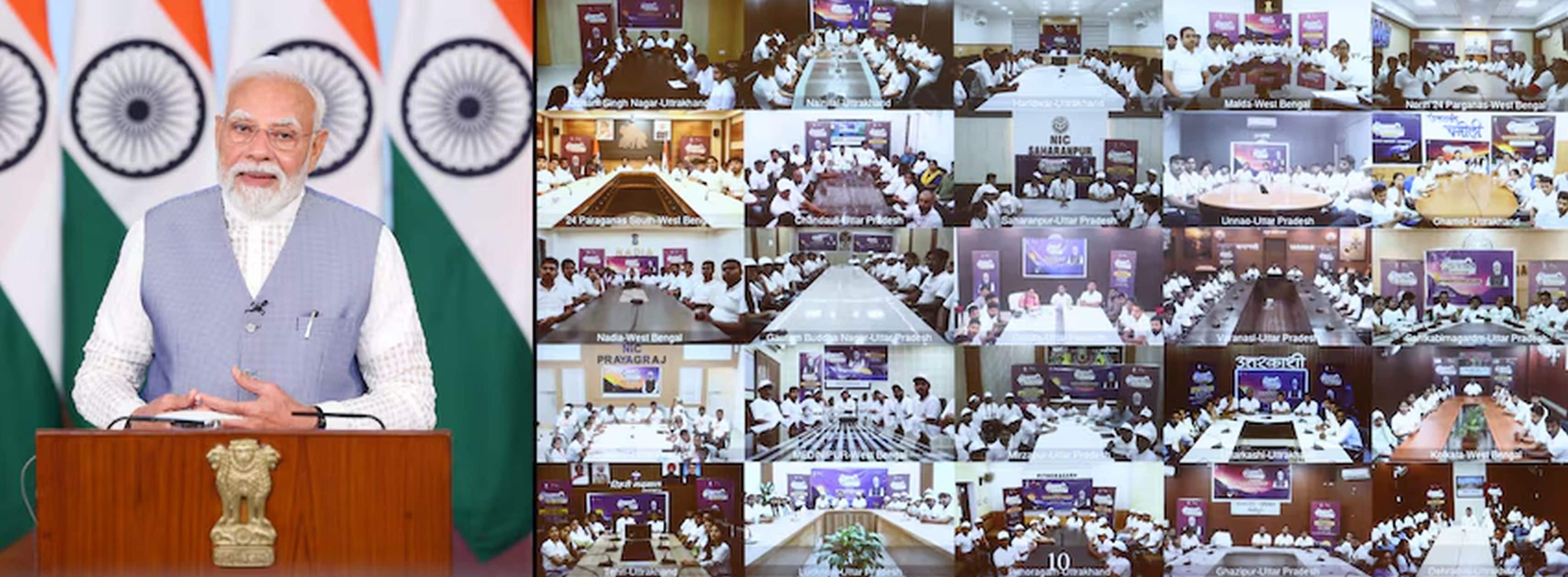
Prime Minister Sushil Koiralaji, my colleagues from South Asia
I am delighted to return to Kathmandu.
Koiralaji, congratulations on organising an excellent Summit
Thank you, Nepal, for your warm hospitality once again.
Greetings to the Observer countries present here.

This is my first SAARC. But, this is the second time I am meeting most of you together. I stepped into the office with the greetings of the entire world.
But, what moved me, dear colleagues, was your personal presence, with the good wishes of one-fourth of humanity.
Because the future I dream for India is the future I wish for our entire region.
The last Summit was three years ago. Only two of us here were present in Addu. Even Prime Minister Sheikh Hasina has come here after her re-election. President Rajapaksa will soon go into one and I wish him good luck. I especially welcome our newest colleague, President Ghani.
Ours is a region of thriving democracy; of rich inheritance; the unmatched strength of youth; and, a strong thirst for change and progress.
In the last few months, I have travelled around the world.
From the middle of the Pacific, to the southern coast of Atlantic Ocean, I see a rising tide of integration.
And, negotiations on major trade agreements such as Regional Comprehensive Economic Partnership, the Trans Pacific Partnership and the Trans Atlantic Trade and Investment Partnership.

Because the barriers of boundaries inhibit progress; international partnerships add speed to it.
Because, in the life of an individual or a nation, a good neighbourhood is a universal aspiration.
Where does South Asia wish to stand in this world?
Nowhere in the world are collective efforts more urgent than in South Asia; and, nowhere else is it so modest.
Big and small, we face the same challenges - a long climb to the summit of development.
But, I have great belief in our boundless potential.
And, confidence - that comes from the many inspiring stories of innovation and initiative in each of our countries.
There is much to learn from each other; even more - to do together.
That was the vision and aspiration that brought us together as SAARC 30 years ago. We have travelled a long distance together since then.
We have an agreement, an institution or a framework of cooperation in every field. We also have many successes.
Yet, when we speak of SAARC, we usually hear two reactions – cynicism and scepticism. This, sadly, is in a region throbbing with the optimism of our youth.
Today, less than 5% of the region's global trade takes place between us. Even at this modest level, less than 10% of the region's internal trade takes place under SAARC Free Trade Area.
Indian companies are investing billions abroad, but less than 1% flow into our region.
It is still harder to travel within our region than to Bangkok or Singapore; and, more expensive to speak to each other.
How much have we done in SAARC to turn our natural wealth into shared prosperity; or, our borders into bridgeheads to a shared future?
Yet, South Asia is slowly coming together.

India and Bangladesh have deepened their links through rail, road, power and transit.
India and Nepal have started a new era of cooperation in energy; and, India and Bhutan are making those ties stronger by the day.
With Sri Lanka, we have transformed trade through a Free Trade Agreement.
We will soon launch a new arrangement to meet Maldives' need for oil.
Distance and difficulties have not held back India and Afghanistan.
And, bus and train sustain contacts between people in India and Pakistan
We have given five South Asian partners duty free access to 99.7% of their goods and are prepared to do more with others.
For India, it has been a privilege to provide assistance of nearly 8 billion U.S. dollars in South Asia over a decade.
It may not seem a great amount in these times, but we are grateful for the opportunity to have made a difference to the lives of a few brothers and sisters in our region.
Each of us has taken our initiatives.
However, as SAARC we have failed to move with the speed that our people expect and want.
Some argue that it is because of the region's development gap. But, that should actually spur us to do more.
Or, is it because we are stuck behind the walls of our differences and hesitant to move out of the shadows of the past?
This won't resolve our differences, but will certainly deprive us of opportunities.
Today, goods travel from one Punjab to the other Punjab through Delhi, Mumbai, Dubai and Karachi – making the journey eleven times longer and the cost four times more.
India, too, has its share of responsibility –because of our size and location. I know that many of your goods, too, have to do a Parikrama of India to reach their destinations.
Just think of what we are doing to our consumers - and to our environment!
We must shrink the distance between our producers and consumers and use the most direct routes of trade. I know India has to lead, and we will do our part hope, each of you will, too.
Infrastructure is our region's greatest weakness and it's most pressing need.
When I thought of coming to Kathmandu by road, it made many officials in India nervous.
Because of the condition of roads at the border!
Infrastructure is my greatest priority in India. And, I also want to set up a Special Purpose Facility in India to finance infrastructure projects in our region that enhances our connectivity and trade.
We speak of ease of doing business in India. Let's extend this to our region. I promise to ensure that our facilities at the border will speed up, not slow down, trade.
Let's all make our procedures simple, our facilities better, our standards common and our paper work less burdensome.
India will now give business visa for 3-5 years for SAARC. Let's make it even easier for our businesses through a SAARC Business Traveller Card.
Excellencies, India has a huge trade surplus with SAARC countries. I believe that this neither right nor sustainable.
We will address your concerns and give you a level playing field in India. But, I encourage you to attract Indian investments to produce for the Indian market and create jobs for your youth.
I also look to a future when your companies can easily raise funds in India for investments at home;
and, when we have cross-border industrial corridors, so that we can take advantage of the natural synergies and connected lives in our Border States.
I also believe that if we can light up each other's towns and villages, we can build a brighter tomorrow for our region.
Or, face a future when someone looks down at us from Space, and says that this is world's darkest corner.
Let us treat electricity as a commodity like any other that we invest and trade in. India will fully support these initiatives in the region.
We should also think with ambition to use solar energy and micro grids to quickly provide clean power to villages across the region.
Our relations become stronger when we connect the lives of the ordinary citizens of our countries. That is why connectivity and services by rail and road are so important. We should also connect ourselves more by air.
We will not only make a difference to the lives of our people but also promote tourism in the region
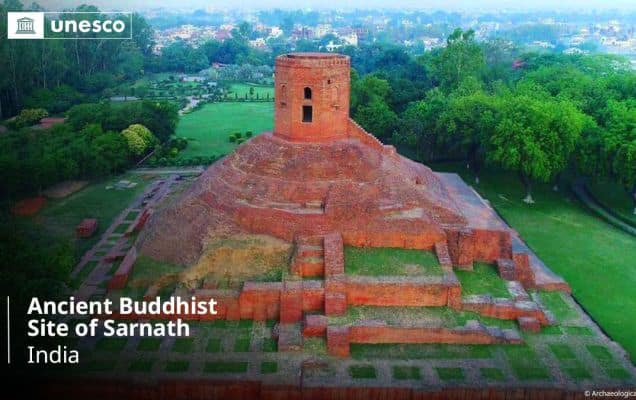
We should use the strength of shared heritage and our diversity - to encourage tourism within our region, and present South Asia to the world. We could begin with the Buddhist circuit, but we don't have to stop there.
As we seek to build bridges to prosperity, we must not lose sight of our responsibility to the millions living without hope.
We must work with our compassion of our hearts, but also with the power of science.
In the area of health, India will meet the shortfall in funds to establish the SAARC Regional Supra Reference Laboratory for TB and HIV.
We offer the five-in-one vaccine for the children of South Asia.
We will support monitoring and surveillance of polio-free countries, and provide vaccines where it might reappear.
And, for those coming to India for medical treatment, India will provide immediate medical visa for the patient and one attendant.
Information technology has removed all barriers to quality education. India is prepared to connect our South Asian students through online course and E-libraries. When we set up India's National Knowledge Network, we will be happy to extend it to the SAARC region.
The dream of a South Asian University has become a reality in New Delhi. But, to be truly South Asian, it must also have partnerships with at least one university in each SAARC country.

Excellencies,
India's gift of a satellite for the SAARC region will benefit us all in areas like education, telemedicine, disaster response, resource management, weather forecasting and communication.
We will also host a conference in India for all South Asian partners next year, to strengthen our collective ability to apply space technology in economic development and governance.
And, we plan to launch our satellite by the SAARC Day in 2016.
As neighbours, we should also be together in good and bad times.
India's capability and expertise in disaster management will always be available to South Asia.
Equally, as we reach out to our Indians caught in conflicts and disasters around the world, we will also be there for all our South Asian citizens.
Excellencies, a prosperous SAARC needs the strong foundation of a secure South Asia.
If we are sensitive to each other's security, and the lives of our people, we will deepen friendships, spur cooperation and advance stability in our region.
Today, as we remember the horror of the terror attack in Mumbai in 2008, we feel the endless pain of lost lives.
Let us work together to fulfil the pledge we have taken to combat terrorism and trans-national crimes.
For India, our vision for the region rests on five pillars – trade, investment, assistance, cooperation in every area, contacts between our people – and, all through seamless connectivity.
This is the call of our times. This is the age of social media, where boundaries matter little.
There is a new awakening in South Asia; a new recognition of inter-linked destinies; and, a new belief in shared opportunities.
The bonds will flow.
Through SAARC or outside it.
Among us all or some of us.
We can all choose our paths to our destinations. But, when we join our hands and walk in step, the path becomes easier, the journey quicker and the destination closer.
I say this as much to my government and people, as I say to you.
We are meeting in the lap of Himalaya, which has nurtured us through the ages. Today, it is calling us to act.
Let us work to change cynicism into optimism.
Let us turn South Asia of flowering hope into a rich field of peace and prosperity.