PM Modi addresses 125th Janma Jayanti of Dr. Syama Prasad Mookerjee

Published By : Admin | July 6, 2026 | 18:17 IST
We pay homage to a great son of India whose unwavering commitment to national unity continues to inspire generations: PM
When there is a government with the resolution of Nation First, then national heroes also get due respect: PM
Dr. Mookerjee fiercely opposed the talk of two constitutions, two prime ministers, and two flags in the country: PM
He understood very well that the essence of nation-building is in the building of institutions : PM
Dr. Mookerjee laid the foundation for such national institutions which became India's economic strength for decades to come: PM

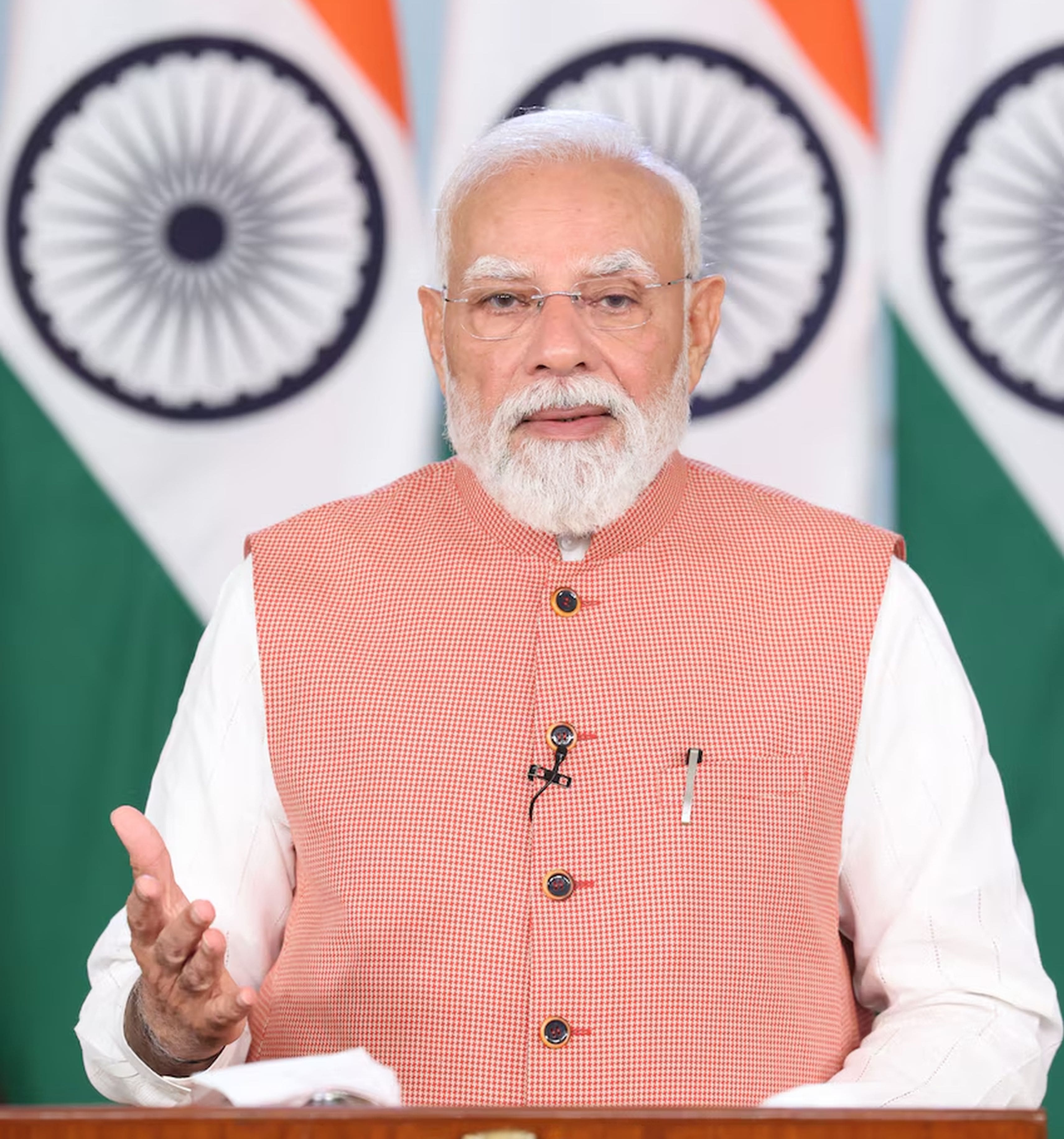
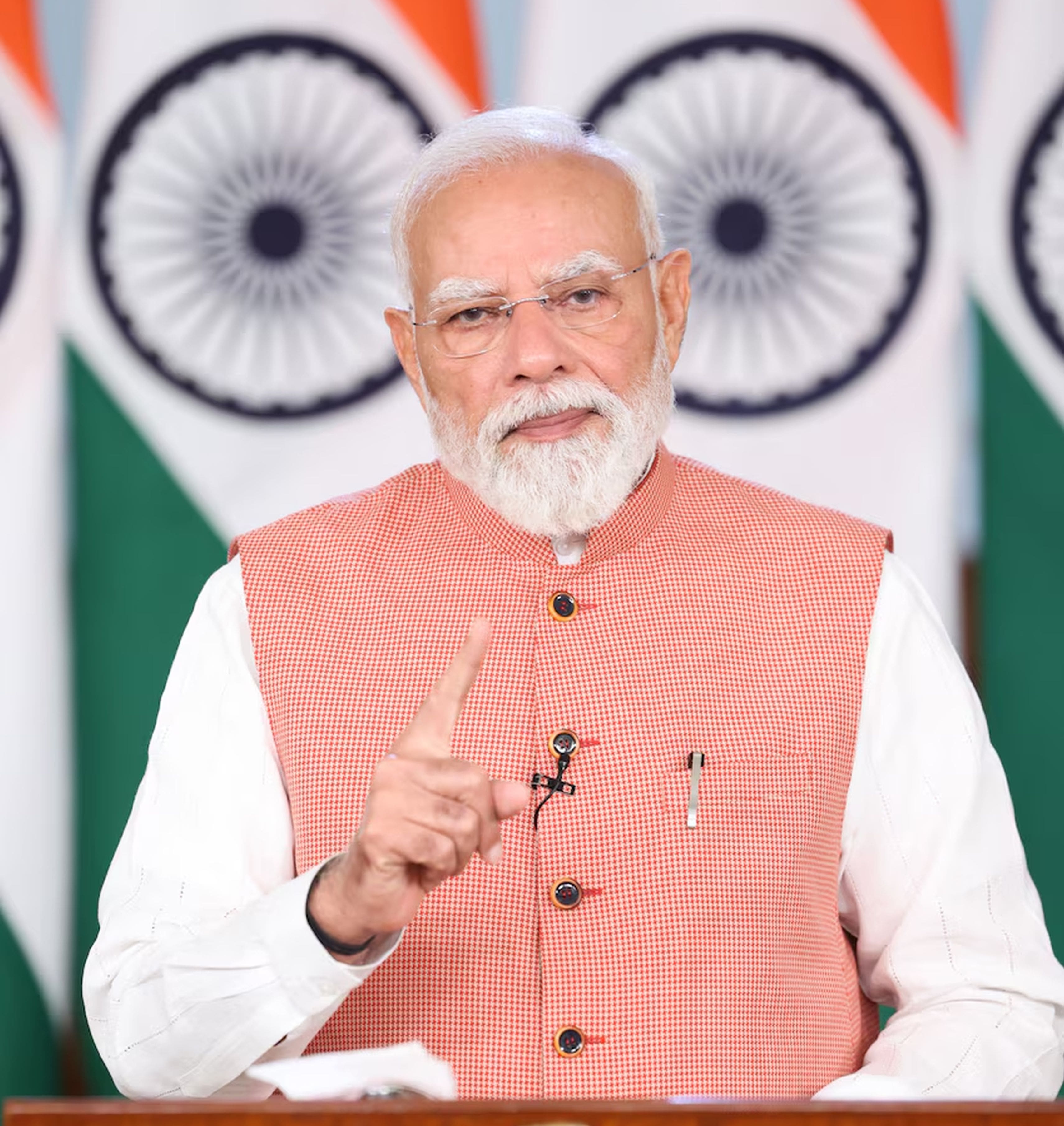
Prime Minister Shri Narendra Modi today addressed a gathering via a video message on the 125th Janma Jayanti of Dr. Syama Prasad Mookerjee. Explaining his physical absence due to a pre-scheduled travel itinerary, he emphasized the remarkable power of digital connectivity in bridging geographical divides for this momentous occasion. "With the help of technology, I am joining you in this historic program," remarked Shri Modi.

Highlighting the profound historical significance of the day for the entire nation and specifically for West Bengal, he led the gathering in paying heartfelt homage to one of its most illustrious sons. He painted a vivid picture of a devoted patriot whose entire existence was dedicated to preserving the nation's core integrity. "Today the land of the country is reverently remembering a visionary dedicated to the integrity of India," observed Shri Modi.

Reflecting on the enduring legacy of the revered leader, the Prime Minister noted how the foundational thoughts planted decades ago are now visibly blossoming across the societal and political landscape. He credited this robust ideological framework with playing an indispensable role in charting the course for the nation's contemporary progress. "Today we are praising the seed of that idea which is playing a major role in giving direction to modern India," affirmed Shri Modi.

Outlining the essential ingredients for achieving monumental national goals, he described a powerful synergy where grounded intellectual strength, pure intentions, and absolute dedication seamlessly converge. He presented the celebrated visionary’s life as the ultimate embodiment and practical demonstration of this successful formula. "When all these links connect with each other, then the fulfillment of the resolution is certain," asserted Shri Modi.

Marking the milestone 125th birth anniversary, he respectfully offered his deep personal veneration to the historic leader. He paused the address to solemnly honor the towering legacy and sacrifices of the great patriot. "I bow down to Dr. Mookerjee on this occasion and offer my tributes," remarked Shri Modi.

Connecting the current administration’s 'Nation First' ethos with the rightful recognition of historical figures, the Prime Minister detailed the ongoing two-year national festival dedicated to this anniversary. He explained that this extended commemoration, which began last July, represents a concerted, long-term effort to follow and honor the visionary's path. "When there is a government with the resolution of Nation First, then national heroes also get due respect," noted Shri Modi.

The Prime Minister observed how the newly formed state government in Bengal has significantly amplified the grandeur of these national celebrations. He specifically praised the recent majestic organization of Paschim Banga Divas as a beautiful, culturally resonant salute to the region's rich heritage. "Today's program is also a part of that same respect for one's heritage," observed Shri Modi.

Delving into crucial historical parliamentary records, the Prime Minister recounted the intense crisis of 1947 when conspiracies threatened to sever the entirety of Bengal from the nation. He praised the leader's rock-solid political resistance and masterclass in shaping public opinion to definitively secure the state's permanent integration with India. “As Dr. Mookerjee famously stated, the foundation of a golden future can be laid only on the ground of national unity,” recalled Shri Modi.

Connecting this historical defiance to contemporary geopolitical challenges, he noted the enduring resonance of such massive political willpower. He emphasized that reflecting on those past circumstances provides vital ideological strength for navigating the modern landscape. "We feel the massive political willpower of that roar even today when we look at today's circumstances," observed Shri Modi.

Transitioning to the fight for absolute national integration, the Prime Minister detailed the fierce historical opposition against maintaining dual administrative and symbolic systems within the country's borders. He recalled the powerful rallying mantra demanding strict uniformity in governance and national identity. "He fiercely opposed the talk of two constitutions, two prime ministers, and two flags in the country," noted Shri Modi.

Portraying this struggle not merely as a political slogan but as a profound call for equal rights, he solemnly acknowledged the ultimate sacrifice made in Kashmir for this unifying cause. He expressed immense pride that the current administration successfully honored this legacy by permanently dismantling the barriers of Article 370. "Today our government is proud that by bringing down that wall, we have fulfilled Dr. Mookerjee's dream," asserted Shri Modi.

Expanding on the vision of a unified nation, the Prime Minister described a seamless society devoid of regional divides, where equal opportunities stretch flawlessly from East to West. He articulated a robust framework where individual state identities collectively fortify the overarching national strength under a single shared destiny. "This is an extension of that same national vision which he defined with his life," affirmed Shri Modi.

Celebrating the realization of this uniform legal landscape, he noted the widespread inspiration derived from an integrated governance model. He highlighted the collective pride in seeing the nation's foundational document applied universally without exception. "Today the Constitution of India is implemented with full pride and glory throughout the country," observed Shri Modi.

Shifting to the critical domain of education, the Prime Minister recounted the visionary's early administrative brilliance as the youngest Vice-Chancellor of Calcutta University. He praised the deliberate effort to transform academic spaces from mere administrative hurdles into active engines of national future-building, completely breaking free from colonial mindsets. "He understood very well that the essence of nation-building is in the building of institutions," noted Shri Modi.

Focusing on linguistic pride, he highlighted the historical push to restore regional self-respect through vernacular instruction. He reiterated the core belief that authentic national confidence must be deeply intertwined with the indigenous soul and its native languages. "His belief was that if India has to become a self-confident nation, its education must be connected to the Indian soul," affirmed Shri Modi.

Bridging historical educational philosophies with modern policy, the Prime Minister proudly pointed to the New Education Policy's strong emphasis on local languages. He presented this current systemic overhaul as the ultimate administrative fulfillment of a long-held national aspiration. "The dream that Dr. Mookerjee saw that regarding local languages, our government has fulfilled it," asserted Shri Modi.

Exploring the economic foresight of independent India's first Industry Minister, he cataloged the establishment of monumental entities like Chittaranjan Locomotive Works, Sindri Fertilizer Plant, Damodar Valley Corporation, and IFCI. He credited these foundational institutions with successfully powering the nation's railway, agricultural, energy, and financial sectors for decades. "He laid the foundation for such national institutions which became India's economic strength for decades to come," observed Shri Modi.

Reframing the purpose of these sprawling infrastructural and academic projects, the Prime Minister explained they were never viewed as mere factories or degree mills. Instead, he described a profound philosophy where research labs and industrial plants function as sacred spaces dedicated to national progress. "For him, all these were the meditative centers of nation-building," remarked Shri Modi.

Detailing this comprehensive developmental ideology, he highlighted the demand for systems that nurture talent, spur innovation, and cement absolute economic self-reliance. He declared that this exact spirit of building an empowered legacy for future generations continues to drive the modern vision of national advancement. "This very spirit is the inspiration for a developed India today," affirmed Shri Modi.

Directing a powerful call to action toward the younger generation, the Prime Minister urged them to elevate the historical fight for a unified nation into a modern crusade for supreme national excellence. He challenged the youth to collectively shoulder the massive responsibility of achieving complete self-reliance. "We have to collectively fulfill the resolution of a Developed India," asserted Shri Modi.

Concluding his address with a profound piece of historical advice, he urged the audience to approach every task with absolute seriousness, dedication, and a commitment to completion. He wrapped up the virtual engagement by extending his warmest wishes to all participants for their future endeavors. "Whatever work you start, do it with full seriousness and do not leave it incomplete," affirmed Shri Modi.

Click here to read full text speech

Explore More
شری رام جنم بھومی مندر دھوجاروہن اتسو کے دوران وزیر اعظم کی تقریر کا متن

Popular Speeches

شری رام جنم بھومی مندر دھوجاروہن اتسو کے دوران وزیر اعظم کی تقریر کا متن
Pvt sector banks log robust growth in deposits and advances in Q1FY27

Media Coverage

Pvt sector banks log robust growth in deposits and advances in Q1FY27
NM on the go

Nm on the go

Always be the first to hear from the PM. Get the App Now!
...
When there is a government with the resolution of Nation First, then national heroes also get due respect: PM Modi
July 06, 2026
We pay homage to a great son of India whose unwavering commitment to national unity continues to inspire generations: PM
When there is a government with the resolution of Nation First, then national heroes also get due respect: PM
Dr. Mookerjee fiercely opposed the talk of two constitutions, two prime ministers, and two flags in the country: PM
He understood very well that the essence of nation-building is in the building of institutions : PM
Dr. Mookerjee laid the foundation for such national institutions which became India's economic strength for decades to come: PM

Union Cabinet colleagues Amit Bhai Shah, Gajendra Singh Shekhawat, West Bengal’s dynamic Chief Minister Shubhendu Adhikari, senior BJP member and inspiration to lakhs of workers like me, Shri Makhanlal ji, BJP state president Shamik Bhattacharya, esteemed public representatives, distinguished guests, ladies and gentlemen!

My greetings to all of you!

Due to my pre-scheduled program, I am currently traveling. But with the help of technology, I am able to join you in this historic event.

Friends,

Today, the soil of our nation, the soil of West Bengal, is reverently remembering one of its great sons - a great patriot, a visionary dedicated to India’s integrity. Today we celebrate the seed of thought he planted, which is flourishing everywhere in the present time, playing a major role in guiding modern India.

Friends,

When ideas are rooted in the ground, when intentions are strong and pure, when new resolutions are pursued with complete dedication, and when all these links come together, success is inevitable. Dr. Syama Prasad Mookerjee lived such a life. On the occasion of his 125th birth anniversary, I bow to him and offer my tribute.

Friends,

This program is also testimony to the fact that when there is a government committed to Nation First, national heroes are honored and efforts are made to walk in their vision. Our government is celebrating Dr. Mookerjee’s 125th birth anniversary as a two-year national festival. It began last year on July 6 and will continue until July 6 next year. And now, with a BJP government in Bengal, this national honor has gained even more grandeur. Just a few days ago, on June 20, West Bengal Day was celebrated in a grand manner. That was a salute to Bengal’s land and heritage. Today’s program is part of that same respect for heritage. I warmly congratulate the West Bengal government for organizing such a magnificent event.

Friends,

Dr. Mookerjee’s life is an inspiration - from an idea to a mass movement. He gave birth to an ideological movement in India. At the time when the Jana Sangh was founded, Congress dominated everywhere. In such an era, when there was no space for alternative thought, when even finding a foothold was difficult, Dr. Mookerjee challenged those circumstances and had the courage to create a new idea. It was not merely the decision to form an organization or a political party. It was the expression of his unwavering faith in ideological diversity, national thought, and public participation in democracy. From this faith, the Bharatiya Jana Sangh was born.

Friends,

No idea becomes immortal merely by its founding. An idea becomes immortal when generations nurture it with their lives. To keep the flame of the Jana Sangh alive, lakhs of workers dedicated their lives, moment by moment, sacrifice by sacrifice. They never let that flame die. Today, even if the Jana Sangh is not visible in its original form, the light of that flame has spread as the trust of crores of Indians. That light today shines across the nation in the form of millions of blooming lotuses. What was once the Jana Sangh is today the Bharatiya Janata Party - the world’s largest democratic force, serving the people.

Friends,

Often we see that with time, some ideas lose their appeal. But think - how powerful was the seed of thought planted by Dr. Mookerjee, that even after so many years, it continues to expand rapidly. I am confident that when future generations write the history of the BJP’s journey, when they study it, they will certainly mention Dr. Syama Prasad Mookerjee’s ideas, his courage, and his foresight. And I will say again - for Bengal, this is a double joy. First, the 125th birth anniversary of Dr. Mookerjee. And second, this grand celebration in Bengal itself, under a BJP government born from his vision. This is a heartfelt tribute from the people of West Bengal to their great son.

Friends,

In one of his speeches in Parliament, Dr. Mookerjee said something that continues to inspire us even today. He said: “On the foundation of national unity alone can the edifice of a golden future be built.” And indeed, India can proudly say that Dr. Mookerjee lived this belief until his last breath. In 1947, when the country was divided and another crisis loomed - conspiracies were being hatched to separate the whole of Bengal from India. At that time, Dr. Mookerjee stood like a rock against these plots. He mobilized public opinion, fought political battles, and ensured that West Bengal remained an integral part of India. It was then that Dr. Syama Prasad Mookerjee thundered: “Congress desh bhag korechhe, ami Pakistan ke bhag korechhi.” Meaning, Congress divided the country, but I divided Pakistan itself.

Friends,

That roar, that strength, the political will it displayed - we can still feel its power when we look at today’s circumstances.

Friends,

Dr. Mookerjee was fully dedicated to the vision of Ek Bharat, Shreshtha Bharat. That is why, when the idea of two constitutions, two prime ministers, and two flags was raised, he strongly opposed it. He gave the nation the mantra: “Ek deshe dui bidhan, dui prodhan ebong dui nishan - amra kokhono mene nebo na.” In other words: “In one country, two constitutions, two prime ministers, and two flags - will not be accepted, will not be accepted.” This was not just a slogan. It was a call for equal rights, one constitution, and a unified national consciousness. He fought for these principles, went to jail, and ultimately gave his supreme sacrifice for Kashmir. Today, our government is proud that by removing Article 370, we fulfilled Dr. Mookerjee’s dream.

Friends,

When we speak of Ek Bharat, Shreshtha Bharat today, it is the expansion of that same national vision defined by Dr. Mookerjee’s life. A vision of an India where there is no distance between North and South, where East and West share equal opportunities, where every state contributes its unique identity to India’s collective strength, and where every citizen is bound by one constitution, one national spirit, and one shared future. I am glad that inspired by Dr. Mookerjee, India’s constitution today applies across the nation with full dignity, inspiring millions of citizens.

Friends,

Dr. Mookerjee understood well that nation-building lies in institution-building. At just 33 years of age, he became the youngest Vice-Chancellor of Calcutta University. But he did not see that position as merely administrative. He saw the university as an institution shaping India’s future. He sought to free education from the mindset of colonial servitude. He said: “Bongo-jatir atto-shomman punor-uddhar ebong matri-bhashar madhyome shikkhar proshar ei amader prodhan lokkho howa uchit.” Meaning, restoring the self-respect of Bengal’s people and spreading education through the mother tongue should be our foremost goal. He believed that if India was to become a confident nation, its education must be rooted in the Indian soul. With this vision, he gave respect to Indian languages. Today, we are proud that under the new National Education Policy, emphasis is being placed on education in local languages - fulfilling the dream Dr. Mookerjee once saw.

Friends,

As independent India’s first Industry Minister, he laid out a broad vision for industrial development. He established national institutions that became the pillars of India’s economic strength for decades. Chittaranjan Locomotive Works gave new momentum to India’s railways. Sindri Fertilizer Plant was a major step toward agricultural self-reliance. Damodar Valley Corporation opened a new chapter in energy and irrigation. The Industrial Finance Corporation of India (IFCI) provided a financial foundation for Indian industries.

Friends,

For him, industries and factories were not just workshops. Universities were not just places to hand out degrees. Research institutions were not just sites for experiments. For him, all these were centers of national devotion. He believed in institutions that gave talent opportunities, education that encouraged innovation, industries that became the basis of self-reliance, and systems that empowered future generations to inherit a stronger India. This spirit is the inspiration behind today’s vision of a developed India.

Friends,

On this occasion, I say to the youth of Bengal and of the entire nation: Dr. Mookerjee dedicated his life for Ek Bharat. We must live for Shreshtha Bharat. Together, we must fulfill the resolve of a developed India. We must make the nation self-reliant. With this call, I once again bow to Dr. Mookerjee. And I will end with his own words, his own spirit: “Je kaj ei hate nao na keno, ta atyononto gurutto shohokare korte hobe.” Meaning: Whatever work you begin, do it with utmost seriousness, with dedication, with complete sincerity. Never leave any work incomplete - always see it through to the end. With this flowing inspiration from Dr. Mookerjee’s words, I extend my heartfelt best wishes to all of you.

Thank you very much!