Paving the Way for Rural Prosperity

Published By : Admin | March 14, 2019 | 14:25 IST

Rural infrastructure is cornerstone of overall development of the nation. Under the Modi government, the sector has received massive impetus so as to bridge the gap between rural and urban life.

Rural Road Construction on Priority

Rural roads are an inextricable part of rural infrastructure, which provide connectivity to the diverse set of markets and services that aid the rural economy to grow.

Speed of rural road construction has doubled from 69 km per day in 2013-14 to 134 km per day in 2017-18. Rural road connectivity is more than 91% as of October 2018, as against 55% in March 2014, ensuring that villages do not fall behind in the development trajectory of a New India.
A massive 1.95 lakh km of road length were completed under Pradhan Mantri Gram Sadak Yojana since 2013-14. A significant number of unconnected habitationshave already been provided connectivity. 100% connectivity is targeted by March 2019. This greatly aids goods and services reach villages, farmers reach markets and youth avail educational and employment opportunities. The targeted construction of thousands of kilometres of roads in areas affected by Left Wing Extremism is also helping development reach those areas.

Setting Records in Rural Electrification

Electricity opens up a whole new world of opportunities from children being able to study at night to farming and allied activities becoming tech-intensive. Prime Minister Narendra Modi had declared in his 2015 Independence Day speech that the government would electrify every single village in 1,000 days. This target was achieved even before the deadline. The Modi government electrified more than 18,000 villages, many of them in extremely remote areas or across hills. When the last un-electrified village in India, Leisang, in Manipur, was electrified, the whole nation applauded in a wave of jubilation. Development truly became a mass movement, as PM Modi often exhorts the nation.

Now, electrification has moved onto powering every home and 2.5 crore households have already been powered through the SAUBHAGYA Yojana, as of February 2019. One must remember that many of these households belong to the poor and underprivileged, often residing in rural or rurban clusters.

Modi government’s initiative to bring light to every village in the country was recognised and praised by (IEA) International Energy Agency as well. The agency called it one of the greatest success stories in the world last year in its World Energy Outlook 2018 report.

Improving connectivity in rural areas

Modi government is committed to equip Indian villages with modern technology. As a result, progress of Bharat Net project has been going on at a rapid speed and scale.

As of May 31, 2014, basic communication infrastructure was abysmal and only 59 Gram Panchayats were made service ready, with only 358 km optical fibre cables laid.

In contrast, as of Feb-2019, 3.13 lakh km of OFC had been laid, covering 1.24 lakh Gram Panchayats out of which 1.17 lakh GPs are connected to high-speed broadband and are service ready.

This apart, when the Modi government came in, there were only 83,000 Common Service Centres across the nation. Now, that number has been taken to around 3 lakh in just 4.5 years of the Modi government. These Common Service Centres are run by village level entrepreneurs and provide many digital and utility services to the people. They also employ more youth from those villages, giving fillip to the economic growth of the villages.

Modi government is developing rural infrastructure in its entirety, with a target leaving no village undeveloped, thus paving the way for a new India which is progressive and equipped with modern infrastructure.

Explore More
شری رام جنم بھومی مندر دھوجاروہن اتسو کے دوران وزیر اعظم کی تقریر کا متن

Popular Speeches

شری رام جنم بھومی مندر دھوجاروہن اتسو کے دوران وزیر اعظم کی تقریر کا متن
How NPS transformed in 2025: 80% withdrawals, 100% equity, and everything else that made it a future ready retirement planning tool

Media Coverage

How NPS transformed in 2025: 80% withdrawals, 100% equity, and everything else that made it a future ready retirement planning tool
NM on the go

Nm on the go

Always be the first to hear from the PM. Get the App Now!
...
6 Years of Jal Jeevan Mission: Transforming Lives, One Tap at a Time
August 14, 2025
Jal Jeevan Mission has become a major development parameter to provide water to every household.” - PM Narendra Modi

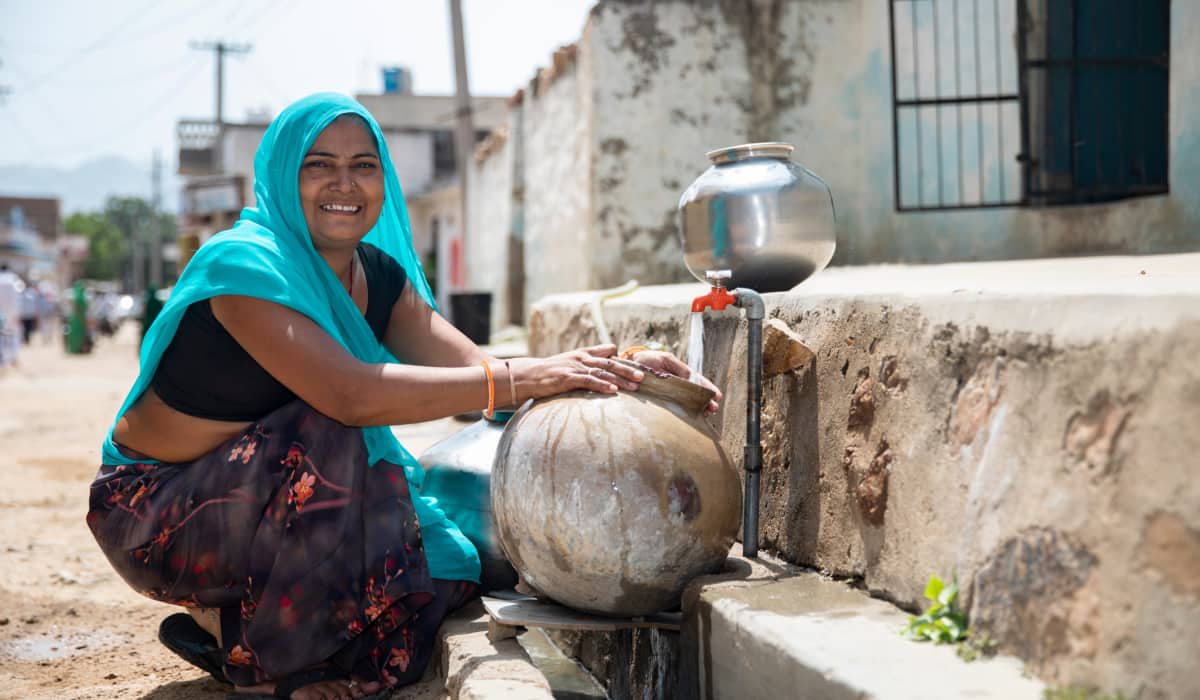
For generations, the sight of women carrying pots of water on their heads was an everyday scene in rural India. It was more than a chore, it was a necessity that was an integral part of their everyday life. The water was brought back, often just one or two pots which had to be stretched for drinking, cooking, cleaning, and washing. It was a routine that left little time for rest, education, or income-generating work, and the burden fell most heavily on women.

Before 2014 water scarcity, one of India’s most pressing problems, was met with little urgency or vision. Access to safe drinking water was fragmented, villages relied on distant sources, and nationwide household tap connections were seen as unrealistic.

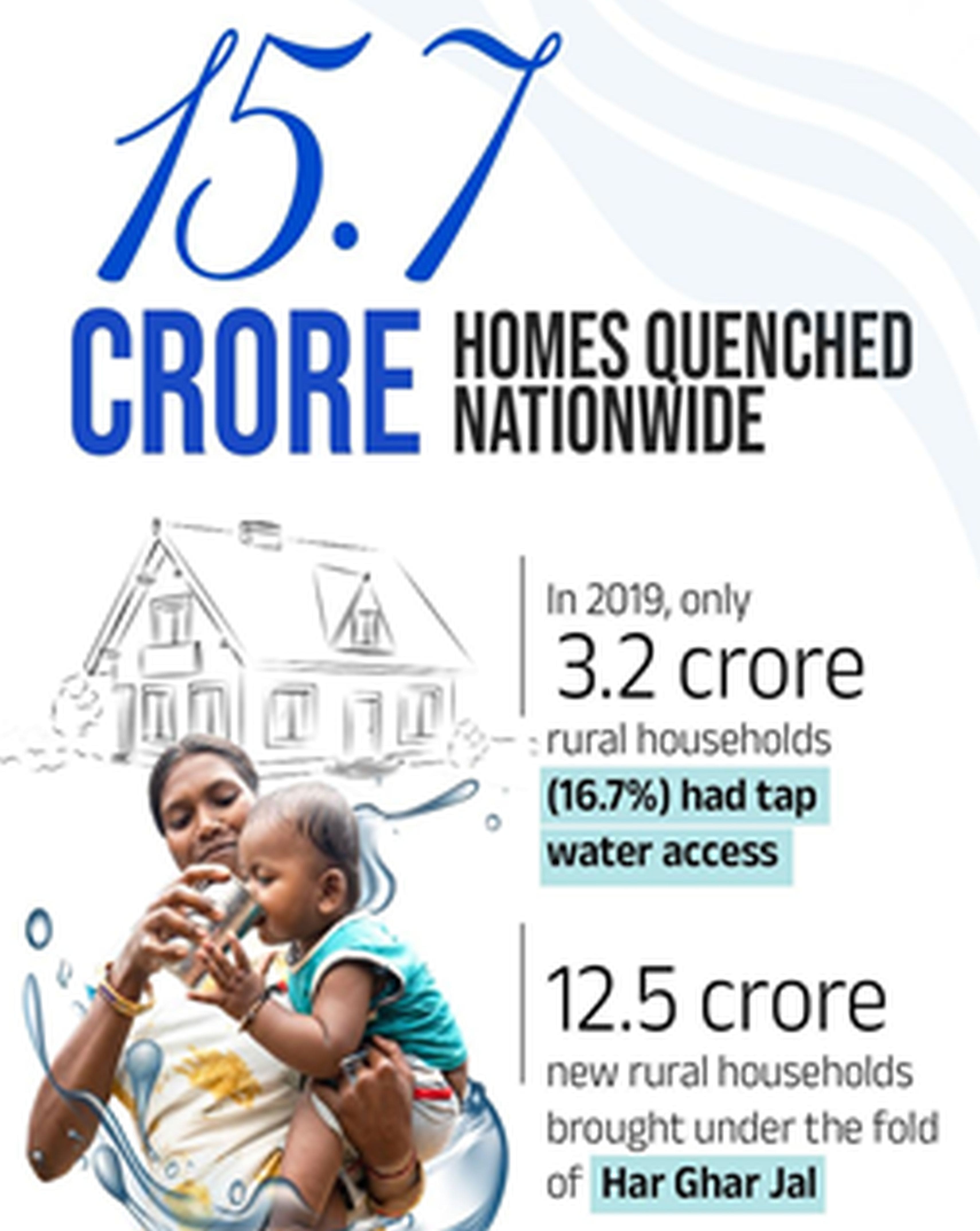
This reality began to shift in 2019, when the Government of India launched the Jal Jeevan Mission (JJM). A centrally sponsored initiative which aims at providing a Functional Household Tap Connection (FHTC) to every rural household. At that time, only 3.2 crore rural households, a modest 16.7% of the total, had tap water. The rest still depended on community sources, often far from home.

As of July 2025, the progress under the Har Ghar Jal program has been exceptional, with 12.5 crore additional rural households connected, bringing the total to over 15.7 crore. The program has achieved 100% tap water coverage in 200 districts and over 2.6 lakh villages, with 8 states and 3 union territories now fully covered. For millions, this means not just access to water at home, but saved time, improved health, and restored dignity. Nearly 80% of tap water coverage has been achieved in 112 aspirational districts, a significant rise from less than 8%. Additionally, 59 lakh households in LWE districts have gained tap water connections, ensuring development reaches every corner. Acknowledging both the significant progress and the road ahead, the Union Budget 2025–26 announced the program’s extension until 2028 with an increased budget.

The Jal Jeevan Mission, launched nationally in 2019, traces its origins to Gujarat, where Narendra Modi, as Chief Minister, tackled water scarcity in the arid state through the Sujalam Sufalam initiative. This effort formed a blueprint for a mission that would one day aim to provide tap water to every rural household in India.

Though drinking water is a State subject, the Government of India has taken on the role of a committed partner, providing technical and financial support while empowering States to plan and implement local solutions. To keep the Mission on track, a strong monitoring system links Aadhaar for targeting, geo-tags assets, conducts third-party inspections, and uses IoT devices to track village water flow.

The Jal Jeevan Mission’s objectives are as much about people as they are about pipes. By prioritizing underserved and water-stressed areas, ensuring that schools, Anganwadi centres, and health facilities have running water, and encouraging local communities to take ownership through contributions or shramdaan, the Mission aims to make safe water everyone’s responsibility..

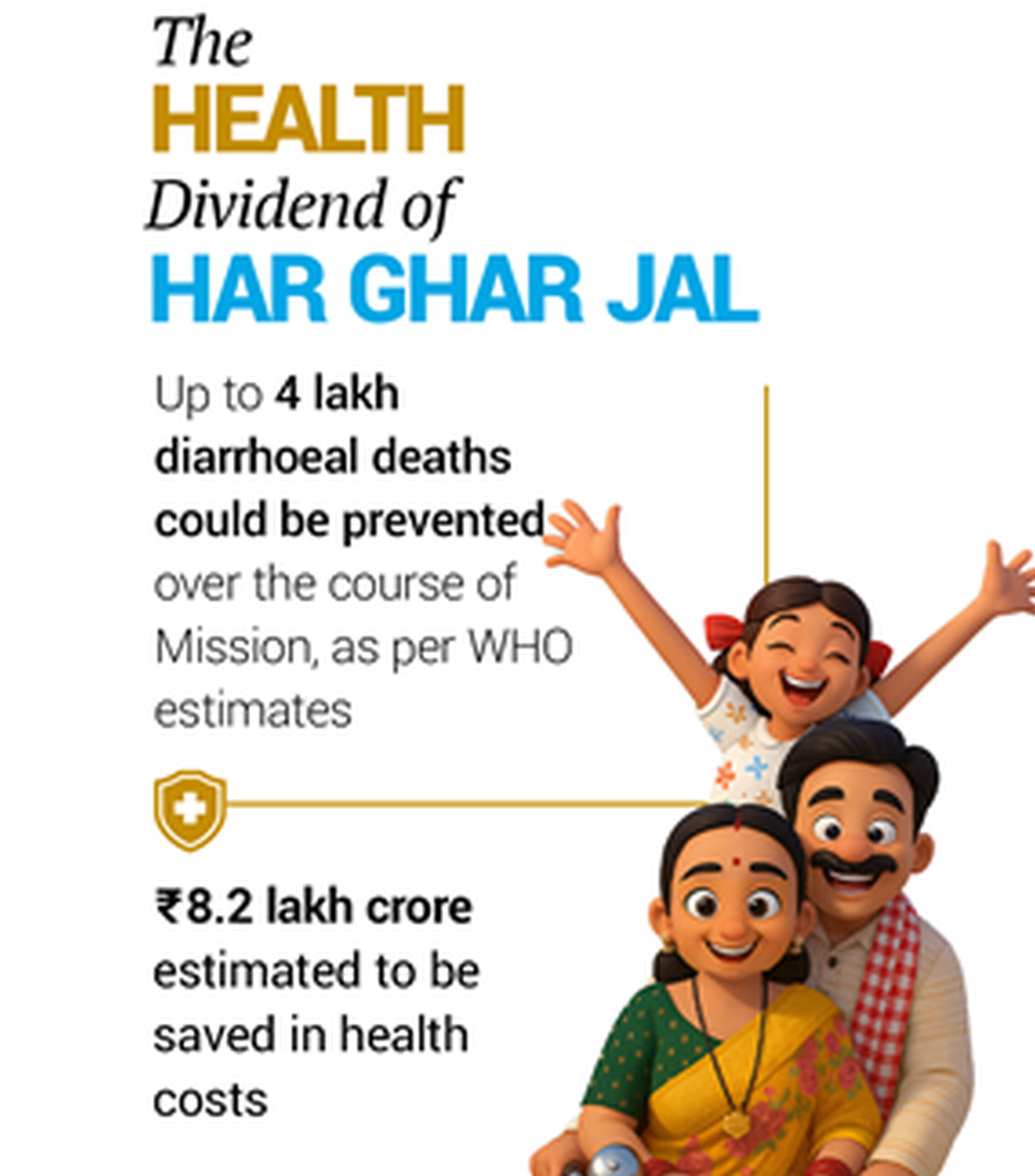
The impact reaches far beyond convenience. The World Health Organization estimates that achieving JJM’s targets could save over 5.5 crore hours each day, time that can now be spent on education, work, or family. 9 crore women no longer need to fetch water from outside. WHO also projects that safe water for all could prevent nearly 4 lakh deaths from diarrhoeal disease and save Rs. 8.2 lakh crores in health costs. Additionally, according to IIM Bangalore and the International Labour Organization, JJM has generated nearly 3 crore person-years of employment during its build-out, with nearly 25 lakh women are trained to use Field testing Kits.

From the quiet relief of a mother filling a glass of clean water in her kitchen, to the confidence of a school where children can drink without worry, the Jal Jeevan Mission is changing what it means to live in rural India.