India is proud of the vibrant culture and heritage of Tamil Nadu: PM Modi

Published By : Admin | January 2, 2024 | 12:30 IST
Inaugurate New Terminal Building at Tiruchirappalli International Airport
Dedicates to nation multiple projects related to rail, road, oil and gas and shipping sectors in Tamil Nadu
Dedicates to nation indigenously developed Demonstration Fast Reactor Fuel Reprocessing Plant (DFRP) at IGCAR, Kalpakkam
Dedicates to nation the General Cargo Berth-II (Automobile Export/Import Terminal-II & Capital Dredging Phase-V) of Kamarajar Port
Pays tributes to Thiru Vijyakanth and Dr M S Swaminathan
Condoles the loss of lives due heavy rain in recent times
“The new airport terminal building and other connectivity projects being launched in Tiruchirappalli will positively impact the economic landscape of the region”
“The next 25 years are about making India a developed nation, that includes both economic and cultural dimensions”
“India is proud of the vibrant culture and heritage of Tamil Nadu”
“Our endeavour is to consistently expand the cultural inspiration derived from Tamil Nadu in the development of the country”
“Tamil Nadu is becoming a prime brand ambassador for Make in India”
“Our government follows the mantra that development of states reflects in the development of the nation”
“40 Union Ministers from the Central Government have toured Tamil Nadu more than 400 times in the past year”
“I can see the rise of a new hope in the youth of Tamil Nadu. This hope will become the energy of Viksit Bharat”

Bharat Mata Ki Jai!

Bharat Mata Ki Jai!

Bharat Mata Ki Jai!

Governor of Tamil Nadu Shri R.N. Ravi ji, Chief Minister M.K. Stalin ji, my cabinet colleagues Jyotiraditya Scindia ji, and son of this soil L. Murugan ji, ministers of Tamil Nadu government, MPs and MLAs and my family members of Tamil Nadu!

Vanakkam (Greetings)!

(Opening remarks in Tamil language)

I wish that the year 2024 is peaceful and prosperous for everyone. It is a privilege that my first public programme in 2024 is happening in Tamil Nadu. Today’s development projects worth nearly Rs 20000 crore will strengthen Tamil Nadu’s progress. I congratulate you for these projects spanning roadways, railways, ports, airports, energy and a petroleum pipeline. Many of these projects will boost ease of travel and also create thousands of employment opportunities.

Friends,

The last few weeks of 2023 were difficult for many people in Tamil Nadu. We lost many of our fellow citizens due to heavy rains. There has also been significant loss of property. I was deeply moved at the condition of the affected families. The central government stands with the people of Tamil Nadu in this time of crisis. We are providing every possible support to the state government. Further, just a few days ago, we lost Thiru Vijayakanth Ji. He was a Captain not only in the world of cinema but also in politics. He won the hearts of the people through his work in films. As a politician, he always put national interest above everything. I pay my tributes to him. I also express my condolences to his family and admirers.

Friends,

Today, when I am here, I also remember another son of Tamil Nadu, Dr M.S. Swaminathan Ji. He played an important role in ensuring food security for our country. We lost him last year as well.

My dear Tamil family members,

The era of 'Azaadi Ka Amritkaal,' spanning the next 25 years, is dedicated to transforming Bharat into a developed nation. When I refer to a developed Bharat, it encompasses both economic and cultural dimensions. In this journey, Tamil Nadu holds a distinct role. Tamil Nadu symbolizes Bharat's cultural richness and heritage. The state possesses an ancient repository of Tamil language and wisdom. From Saint Thiruvalluvar to Subramania Bharati, numerous sages and scholars have composed remarkable literature. Scientific and technological brilliance, from CV Raman to the contemporary personalities, has emanated from this soil. Hence, every visit to Tamil Nadu fills me with renewed vigour.

Dear family members,

The city of Tiruchirappalli vividly displays evidence of its illustrious history at every turn. It reflects the model of good governance adopted by various dynasties such as Pallava, Chola, Pandya, and Nayaka. Because of my personal acquaintance with many Tamil friends, I have gained profound insights into Tamil culture. Regardless of where I travel globally, it is hard for me to resist talking about Tamil Nadu.

Friends,

My aspiration is to continually integrate the cultural inspiration derived from Tamil Nadu into the nation's development and heritage. The installation of the sacred Sengol in the new Parliament building in Delhi symbolizes an attempt to draw inspiration from Tamil Nadu's model of good governance, which has influenced the entire country. Initiatives like Kashi-Tamil Sangamam and Saurashtra-Tamil Sangamam aim for the same. These campaigns have heightened enthusiasm for the Tamil language and culture across the nation.

Dear family members,

Over the last ten years, Bharat has made substantial investments in modern infrastructure. Be it roads, railways, ports, airports, housing for the underprivileged, or healthcare, Bharat is making unprecedented investments in both physical and social infrastructure. Today, Bharat ranks among the top five economies globally, offering a new beacon of hope. Significant investments from major global investors are flowing into Bharat, directly benefitting Tamil Nadu and its people. Tamil Nadu is emerging as a prominent ambassador for the 'Make in India' initiative.

Dear family members,

Our government adheres to the principle of national development through state development. In the past year, over 40 different ministers from the Central Government have collectively visited Tamil Nadu over 400 times. Rapid development in Tamil Nadu will, in turn, propel the overall progress of Bharat. Connectivity plays a crucial role in development, fostering trade, business, and convenience for the public. This spirit of development is evident in Tiruchirappalli today. The new terminal at Trichy International Airport, tripling its capacity, will enhance connectivity with East Asia, the Middle East, and other parts of the country and the world. This will create new investment opportunities and businesses in vast adjacent areas, benefitting sectors like education, health, and tourism. Besides increasing the airport's capacity, the elevated road linking it to the National Highway will also provide significant convenience. I am pleased to note that Trichy Airport will showcase local art, culture, and Tamil traditions to the world.

Dear family members,

Five new projects, aimed at strengthening Tamil Nadu's rail connectivity, are being launched today. These initiatives will not only ease travel and transportation but will also boost industry and electricity production in the region. The road projects that have been inaugurated today connect crucial locations like Srirangam, Chidambaram, Madurai, Rameswaram, and Vellore - significant centres of devotion, spirituality, and tourism. This will greatly benefit both the general public and pilgrims.

Dear family members,

Over the last decade, the Central Government has focused extensively on port development. We have made massive efforts in developing coastal infrastructure and transforming the lives of fishermen. A separate ministry and budget for fisheries have been created for the first time. The Kisan Credit Card facility has been extended to fishermen for the first time. The government has extended its support for the modernization of boats for deep-sea fishing. The PM Matsya Sampada Yojana is providing significant assistance to those in the fishery sector.

Dear family members,

Under the Sagarmala scheme, various ports in the country, including those in Tamil Nadu, are being connected by well-built roads. Due to the Central Government's efforts, Bharat's port capacity and ship turnaround time have notably improved. Kamarajar Port is among the fastest-developing ports in the country today. Our government has nearly doubled its capacity. The inauguration of General Cargo Berth-Two and Capital Dredging Phase-Five will enhance Tamil Nadu's import-export capabilities, particularly benefitting the automobile sector. The nuclear reactor and gas pipelines will further boost industry and employment generation in Tamil Nadu.

Dear family members,

Presently, the Central Government is investing a record amount of funds for Tamil Nadu's development. Our government has allocated Rs 120 lakh crore to the states in the last decade. Our government has provided 2.5 times more funds to Tamil Nadu than it received from the Central Government during the 10 years prior to 2014. In comparison to the past, our government has spent three times more on building National Highways in Tamil Nadu. Likewise, we are investing 2.5 times more in modernizing railways in Tamil Nadu compared to before 2014. Today, lakhs of poor families in Tamil Nadu receive free ration and healthcare from the Central Government. Our government has offered various amenities to the people here, including pucca houses, toilets, tap-water connections, and gas connections.

Dear family members,

The concerted efforts are essential to build a developed Bharat. I have unwavering faith in the potential of the people of Tamil Nadu and its youth. I can see the emergence of new ideas and enthusiasm among the youth of Tamil Nadu. This enthusiasm will be the driving force behind a developed Bharat. Congratulations to all of you once again for these development projects.

Bharat Mata Ki Jai!

Bharat Mata Ki Jai!

Bharat Mata Ki Jai!

Vanakkam!

Explore More
Today, the entire country and entire world is filled with the spirit of Bhagwan Shri Ram: PM Modi at Dhwajarohan Utsav in Ayodhya

Popular Speeches

Today, the entire country and entire world is filled with the spirit of Bhagwan Shri Ram: PM Modi at Dhwajarohan Utsav in Ayodhya
UPI goes live at Eiffel Tower and French airports as India-France digital ties strengthen

Media Coverage

UPI goes live at Eiffel Tower and French airports as India-France digital ties strengthen
NM on the go

Nm on the go

Always be the first to hear from the PM. Get the App Now!
...
India-Slovakia Joint Statement
June 15, 2026

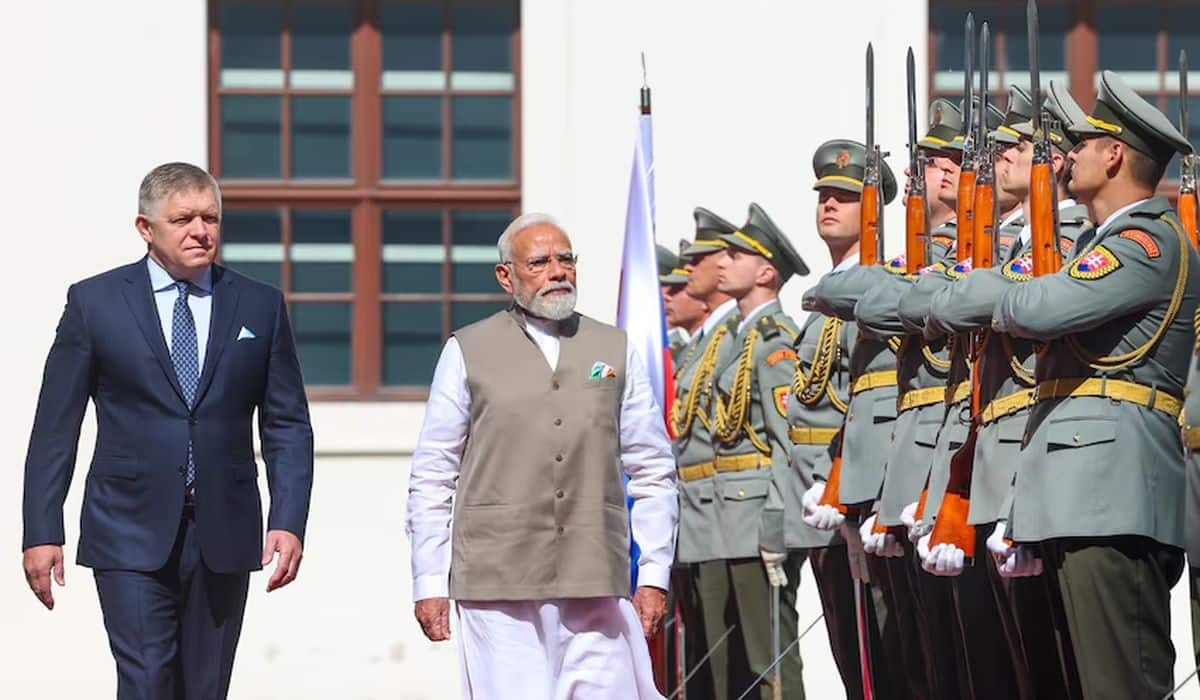
At the invitation of His Excellency Robert Fico, Prime Minister of the Slovak Republic, His Excellency Shri Narendra Modi, Prime Minister of the Republic of India, paid a State Visit to the Slovak Republic on 15 June 2026.

The visit is the first by an Indian Prime Minister to Slovakia since its independence in 1993, marking a historic milestone and charting a new course in the enduring friendship between the two nations. Since the establishment of diplomatic relations in 1993, India and Slovakia have developed a traditional friendship and multifaceted cooperation based on trust, equality and mutual respect.

Building on the historic nature of this visit and their shared commitment to deepen bilateral cooperation, the Prime Minister of the Republic of India and the Prime Minister of the Slovak Republic agreed to elevate the relationship to a Comprehensive Partnership between the Republic of India and the Slovak Republic. The Comprehensive Partnership aims to take bilateral relations to a new level, strengthen existing cooperation mechanisms and explore new avenues for deepening cooperation, both bilaterally and multilaterally.

Recognising the growing geopolitical, economic and technological importance of the Indo-Pacific, the two leaders acknowledged the value of a stronger partnership between India and Slovakia in support of mutually beneficial cooperation, regional connectivity, open international trade, freedom of navigation, peaceful resolution of disputes and a rules-based international order.

Both leaders underscored the importance of regular high-level exchanges and sustained political dialogue, and agreed to enhance exchanges of delegations at all levels. The two sides also agreed to enhance parliamentary exchanges, contacts and cooperation with a view to promoting greater mutual understanding and sharing of legislative experiences and best practices.

The leaders reaffirmed their commitment to multilateralism, with the United Nations at its core, and to a rules-based international order, while supporting comprehensive reforms of multilateral institutions, including the United Nations, particularly the United Nations Security Council, to make them more representative, inclusive, effective and reflective of contemporary geopolitical realities. The leaders stressed on the urgent need to expand the UN Security Council in both permanent and non-permanent categories. In this context, India appreciated Slovakia’s continued support for India’s permanent membership in a reformed and expanded UN Security Council. The two leaders also agreed to continue consultations and coordination on their respective candidacies in international organisations and to exchange views and cooperate closely in global forums, including the United Nations. The two leaders also discussed the importance of upholding the global nonproliferation architecture. Slovakia reaffirmed its constructive approach to India’s membership of the Nuclear Suppliers Group.

The leaders agreed to support the development of cooperation with regional groupings such as the Slavkov 3, Visegrad 4 and 3 Seas Initiative, including interconnected and mutually beneficial infrastructure projects that promote connectivity, sustainable economic growth and regional integration. The two sides further reaffirmed their commitment to a free, open, peaceful and prosperous Indo-Pacific, based on respect for international law, sovereignty and territorial integrity, including the United Nations Convention on the Law of the Sea.

The leaders underscored the importance of strengthening defence and security cooperation as one of the key pillars of the bilateral partnership. They agreed to encourage regular consultations and exchanges between their respective defence authorities to explore opportunities for enhanced collaboration, including in defence technologies, capacity building, research and development, and defence industrial cooperation. In this context, the leaders welcomed the signing of the Letter of Intent on Defence Cooperation between the two sides, which will foster mutually beneficial partnerships in the defence sector.

The leaders recognised the growing importance of strengthening cooperation in disaster risk reduction and resilience-building and agreed to enhance collaboration in the areas of resilient infrastructure, capacity building, knowledge sharing and institutional cooperation.

The leaders agreed to strengthen cooperation in the protection of critical information infrastructure and in preventing and countering cybercrime, while promoting an open, secure, accessible, stable, interoperable, resilient and peaceful digital space. The leaders also expressed their commitment to supporting each other in safeguarding information technology systems against emerging quantum threats to cryptography, including through preparedness for post-quantum security transitions. In this context, they noted that such cooperation would be further facilitated by the Memorandum of Cooperation signed in the field of critical infrastructure protection and postquantum cryptography.

The two leaders unequivocally condemned terrorism in all its forms and manifestations, including cross-border terrorism, and strongly condemned the heinous terrorist attack perpetrated in Pahalgam, Jammu and Kashmir, on 22 April 2025. They agreed to establish a Joint Working Group on Counter- Terrorism. They called for concerted international efforts to combat terrorism in a comprehensive and sustained manner. The leaders reaffirmed their commitment to strengthening bilateral and multilateral cooperation in counterterrorism, including within the framework of the United Nations, and called for strong and decisive action against terrorists and terrorist entities, including those designated by the United Nations Security Council 1267 Sanctions Committee, as well as their affiliates, proxies, sponsors, financiers and supporters. They further underscored the importance of holding perpetrators, organisers and sponsors of terrorist acts accountable and agreed to work closely towards the early finalisation and adoption of the Comprehensive Convention on International Terrorism (CCIT) within the United Nations framework.

Welcoming the conclusion of negotiations on the India–EU Free Trade Agreement in January 2026 and the new Joint India–EU Comprehensive Strategic Agenda, the two leaders noted that the FTA will unlock new opportunities for trade and investment and called for its early signing and timely implementation to realise the full potential of trade and investment cooperation by diversifying critical value chains and opening new markets.

The leaders agreed to further strengthen the role of the India–Slovakia Joint Economic Committee in identifying and promoting high-potential areas of economic cooperation between the two countries. They also committed to exploring avenues to significantly enhance bilateral trade and two-way investment across sectors such as automotive, electronics and other advanced manufacturing industries, leveraging Slovakia’s well-developed industrial ecosystem and India’s scale, innovation ecosystem and technological capabilities, with a particular focus on high value-added collaboration.

The two sides agreed to strengthen bilateral cooperation to achieve netzero emissions, focusing on the exchange of technologies for the green energy transition and promoting clean, reliable and resilient energy systems.

The leaders agreed to enhance cooperation in the energy sector with a view to promoting energy security, sustainability and resilience through diversification of energy sources, including nuclear energy and geothermal power. They expressed their intent to deepen collaboration through joint research, exchange of expertise and capacity-building initiatives in areas of mutual interest.

The leaders agreed to strengthen cooperation in the fields of meteorology and hydrology, including through the sharing of expertise and best practices in the efficient and sustainable management of water resources and dam safety. They further expressed their intent to promote collaboration in areas such as source sustainability, rural drinking water quality monitoring, water treatment technologies, capacity building and community participation, and underscored the importance of developing climate-resilient rural drinking water infrastructure to enhance water security and ensure sustainable access to safe drinking water.

Recognising connectivity as a strategic pillar of the partnership, the two sides underscored the importance of promoting joint ventures, technology transfer, innovation and skills development in the automotive and railway sectors, with a view to enhancing competitiveness and generating new employment opportunities. They further noted the potential of Slovakia’s position as a Central European transport hub and India’s large-scale manufacturing capabilities to boost trade, investment and connectivity. They also encouraged exploring of direct air connectivity between India and Slovakia to facilitate growing economic, business and people-to-people exchanges.

The two leaders appreciated the successful outcomes of the AI Impact Summit 2026 in Delhi, attended by H.E. Mr Peter Pellegrini, President of the Slovak Republic. The two sides welcomed the signing of the Memorandum of Understanding on Digital Technologies, which will provide a structured framework for deepening cooperation in the digital domain. They agreed to further strengthen collaboration in emerging areas such as artificial intelligence, semiconductors, start-ups, innovation ecosystems, research institutions and technology companies, with a view to fostering innovation-led growth and mutually beneficial partnerships. The two sides also agreed to explore cooperation in new and emerging technologies, including 5G use cases, 6G standardisation, Internet of Things (IoT) and machine-to-machine (M2M) applications.

The two leaders agreed to explore opportunities to strengthen cooperation between their respective space ecosystems in the field of satellite technology and its applications. They also underscored the importance of fostering exchanges between scientific and research institutions, as well as industry stakeholders, to encourage innovation and the development of advanced space technologies.

The leaders highlighted the need to maintain regular dialogue and deepen cooperation in the field of healthcare, with particular emphasis on pharmaceutical research and development, digital health solutions and the strengthening of human resources for health. The two sides also underscored the importance of sharing best practices in public health management and leveraging digital technologies to build more resilient, efficient and patientcentric healthcare systems, consistent with their respective national priorities.

The two leaders agreed to encourage enhanced mobility of students, academics and researchers, with particular emphasis on STEM and humanities disciplines, in order to promote deeper educational and scientific exchanges. They took note of the existing arrangements and collaborations between higher education institutions of the two countries and encouraged their further expansion and diversification. The two sides also welcomed the conclusion of a Memorandum of Understanding between the respective Ministries of Education in the field of higher education and research, which would provide a structured framework for strengthening academic linkages and fostering long-term institutional partnerships.

The leaders agreed to further promote cultural exchanges, tourism and people-to-people contacts with a view to deepening mutual understanding and strengthening the bonds of friendship between the peoples of India and Slovakia. They emphasized the importance of expanding cultural cooperation through regular exchanges of artists and cultural troupes, the organisation of exhibitions and participation in festivals, as well as by encouraging greater tourism flows in both directions. The leaders also welcomed the signing of the Memorandum of Understanding on Audio-visual Creation, which will provide a structured framework for collaboration in film and media production and further enhance cultural connectivity between the two countries.

The leaders expressed support for the orderly, safe and legal mobility of skilled professionals. They took note of the Comprehensive Framework of Cooperation on Mobility agreed between India and the European Union in January 2026. They welcomed the signing of the Memorandum of Understanding on Cooperation in the Field of Labour Migration to facilitate mobility and promote the exchange of information between the relevant authorities of India and Slovakia. The two sides also agreed to work towards the early conclusion of a Social Security Agreement, which would contribute to safeguarding the welfare and social protection of working professionals engaged in mobility between India and Slovakia.

The leaders noted that cooperation on consular matters remained an area of continued interest to both countries, given the growing movement of people and expanding people-to-people ties. In this context, they agreed to establish a mechanism for regular consular consultations between their respective consular authorities to facilitate cooperation on consular matters.

The leaders agreed to regularly review the implementation of the Comprehensive Partnership at the appropriate functional level.

Both leaders agreed that the present visit represents a significant step forward in transforming this India-Slovakia relationship and committed to taking bilateral relations forward into a new phase of engagement.

The Prime Ministers welcomed the announcements made and the MoUs signed, which are available on the MEA website.

Prime Minister Modi thanked Prime Minister Fico and the people of Slovakia for the warm hospitality extended to him and his delegation. Both leaders agreed to maintain the momentum of high-level exchanges.