In an interview to News X, Prime Minister Modi addressed the issue of toxic language in elections, explained why the Opposition frequently discussed him, and shared his views on job creation. He criticized the Congress' tax plans and appeasement politics.

Rishabh Gulati: A very warm welcome to the viewers of NewsX and India News. I’m Rishabh Gulati and with me is Aishwarya Sharma of The Sunday Guardian and Rana Yashwant. In today’s special episode, we proudly welcome a renowned ‘rashtra sevak’, and the Prime Minister of India in this Amrit Kaal, Hon’ble Shri Narendra Modi. Mr Prime Minister, you took the time to speak to us, we are very grateful.

Prime Minister: Namaskar, my warm greetings to all your viewers.


Rishabh Gulati: Mr Prime Minister, the first question that comes to mind is about the Opposition, and it seems that the biggest item on their poll agenda is Narendra Modi. Why, in your opinion, do they talk so much about Narendra Modi?

Prime Minister: To understand why they discuss Narendra Modi, we must first understand the Opposition. To understand them, one can examine the administration between 2004 and 2014.

The Opposition has not been able to play a strong role. Even as the Opposition, the way they are falling apart, they did not play a constructive role of any kind. Despite deep discussions, they haven’t been able to bring serious issues to the public attention. They thought that by their antics, taking up space in the media, they would be able to keep their boat afloat. Even in this election, I have seen that they make fresh attempts every day to acquire media space, be it by making videos, nonsensical statements, or behaving in a way that people don’t normally behave. So they do this to acquire space in the media. Now abusing Modi is one such antic, where, if nothing else, they are guaranteed publicity. Even a small-time politician, if he bad-mouths me, will get about an hour of media attention. Perhaps they see Modi as a ladder to climb up in their political career.


Aishwarya Sharma: Mr Prime Minister, the I.N.D.I. alliance is talking about wealth redistribution. Do you think this is possible, and will the voters of the country be influenced by such a scheme?

Prime Minister: You can’t examine this in isolation. You must look at their overall thought process. When their (Congress) manifesto was released, I had said the manifesto had the imprint of the Muslim League. There was a statement made by Dr Manmohan Singh… I had attended the meeting in which he said that ‘Muslims have the first right to India’s resources.’ Now when I raised this in public, their media ecosystem raised a storm saying that ‘Modi is lying,’. So two days later, I brought Manmohan Singh’s press conference forward and put it in front of them. Then they stopped talking. So this was one example. Now in their Manifesto, they have said that they will give reservation (to Muslims) even when allotting government contracts.

So today, when a bridge is to be built somewhere, what is the criteria for awarding the contract? The company bidding is evaluated based on how resourceful they are, their experience, their capability, their ability to deliver on time, all these things. Now they say that they want to give reservations to the minorities, to the Muslims, in this process as well. It all adds up. Now when they say that they will impose inheritance tax, it means that taxes that go to the government, who will stand to benefit from it? It’s the same people that Manmohan Singh ji talked about. If you join the dots, this is the logic that comes from it. How will the country accept this? Secondly, has any developing country in the world indulged in such madness? Today, India needs to work hard to rise above its problems. We have made this attempt and pulled 25 crore people out of poverty. Where there used to be a few hundred start-ups, there are now over 1.25 lakh start-ups, and there are Unicorns. You must go among the people and work with energy, and that will bring the right result.


Rana Yashwant: Mr Prime Minister, the Ram Mandir has been built in Ayodhya, the consecration of Ram Lalla took place and there was joy among the people. In all this, there is Iqbal Ansari, who has fought the legal battle, and is an important person. He comes, holding a placard that says ‘Modi ka Parivaar’. Today, the minority community identifies with your policies and welfare schemes. Your opinion?

Prime Minister: Since you’ve brought up Ram Mandir and Iqbal Ansari, I will narrate an incident. Ram Mandir should have been built right after Independence. In all these years, it wasn’t built because they (Congress) felt it would affect their vote bank. Attempts were made in the Courts till the very end to stop it. It is a fact that Congress hindered the building of the Ram Mandir. Despite this, when the Supreme Court judgment came through, the Court constituted a trust, and the trust members, let go of all past differences and went to invite the Congress Party members to the consecration ceremony. They rejected the invitation. The same people went to invite Iqbal Ansari. The ironic thing is, that Iqbal Ansari, who fought the Babri Masjid case his entire life, respected the Supreme Court’s verdict and attended the ‘Shilanyas’ and the ‘Pran Prathistha’ ceremony as well. This is what I think, as far as Iqbal Ansari is concerned.

Now if you want to talk about secularism, it is my very serious allegation, that for over 75 years, through a very well-crafted conspiracy, a false narrative has been fed to the nation. It has been embedded in the nation from before our birth. Sardar Patel was targeted by this narrative, and maybe, today it may be my turn, tomorrow someone else… Why do they cry out ‘secularism’ over and over again? It’s because they want to divert the world’s attention from their communal activities.

They cry ‘thief’ over and over when they have defrauded the people, and they do this because they think crying ‘thief’ will divert the public’s attention. This is their ploy. I have called them out in front of everyone, that they are the ones who are communal. India’s constitution does not allow you to indulge in such sectarian acts, and I have brought out several such examples, like I mentioned earlier that they called the Muslims the rightful inheritors of India’s wealth. I am exposing them. They (Congress) hide behind their politics of appeasement and instead accuse me of being communal. I am talking about those communal parties that wear the ‘nikab’ of secularism and indulge in hardcore communalism. I find three things common among these people. They are hardcore sectarians, they are extremely casteist, and they are hardcore dynasts. They are so full of these three things that they can’t come out of it.


Rishabh Gulati: Mr Prime Minister, you have spoken about lifting 25 crore people out of poverty. 80 crore poor people are receiving ration – it is necessary now and will be so in the future as well. What do you have to say about how crucial it will be in the future?

Prime Minister: When Manmohan Singh ji was the Prime Minister, news was rife with reports of food grains getting spoilt. So, the Supreme Court asked the government as to why the grains were not being distributed among the poor. Manmohan Singh ji, who was the Prime Minister then, stated on record that they could not distribute the grains and that it was impossible to do it. That is the consequence of his thinking. I faced the same issue, especially during COVID-19. My first goal was to ensure that a stove should be lit in every poor household. So, I started working on it. I have stated this for the next five years as well because in the lives of those who come out of poverty…

For example, one returns home from the hospital. The treatment has been done but precaution is necessary. A doctor advises you to take rest for a particular duration after returning home, tells you what to eat and what to refrain from consuming, and what to take care of. Why? The illness has already been addressed, but if anything is jeopardized then the condition of the person would return to what it was. That is why poor people who escape poverty need handholding. They should not return to that state in any condition. Once they escape poverty, they should be empowered to stand strong. In my understanding, in the next five years, those who have escaped poverty should be able to firmly stand on their feet. Any unfortunate incident in their family, should not push them to poverty again. And only then will the country eradicate poverty.


Aishwarya Sharma: Mr Prime Minister, our country is the youngest country. Under your tenure, 10 lakh government jobs have been filled. Now, the Opposition has vowed to fill 30 lakh government jobs. In your third term, how do you plan to boost employment opportunities for the youth?

Prime Minister: You must have read the SKOCH report that was released. I hope your TV channel studies the SKOCH report in detail and conducts a TV debate on this. They have analysed some 20 to 22 schemes of the government. They have published statistics about how many person-year-hours have been obtained. They have revealed how many hours it takes to build 4 crore houses and how many people it employs. They have published data for about 22 different parameters.

They have stated that 50 crore people have accrued benefits. Secondly, we brought the Mudra Yojana. We give bank loans without any guarantee. We have disbursed loans worth Rs 23 Lakh Crore. 80% of those who have received these loans are first-timers. Some have started their businesses and have employed a few people in this process. Start-ups used to be in the thousands and now they are in lakhs. People have been employed in this process, right? Consider that a 1000-kilometre road is being built and think about how many jobs are created. So, if a 2000-kilometre road is being built more people will be employed, right? Today, road and rail construction has doubled, electrification has doubled, and mobile towers are reaching every corner of India. All this is being created by people who have received jobs. That is why a lie is being peddled.

 What’s important is that we must move towards creating jobs for ourselves. The youth in this country are in the mood to do something and be productive and we must help them. We must encourage them. Our Mudra Yojana does exactly that. We also run the SVANidhi scheme. There are countless street hawkers, who are poor people. But today, they are taking money from the bank to run their businesses. Due to this, they can save money and expand their business. Earlier, a street hawker would sit on the footpath and now his goal is to buy a lorry. One who would owned a lorry earlier now wishes to provide home delivery services. Their aspirations are rising. This is why I believe that while people receive the benefits of government schemes, which will eventually result in development, we must also focus on several other areas.


Rana Yashwant: Prime Minister, your government works on the principle of ‘Sabka Saath, Sabka Vikas’. Beneficiaries avail welfare schemes without any discrimination – caste, religion, or community. Yet, the Opposition maintains that Muslims do not accrue the same benefits from these welfare schemes.

Prime Minister: You are the first person from whom I’ve heard this. The unique aspect of my government, in terms of delivering welfare schemes, has not raised any questions regarding discrimination.


Rana Yashwant: The Opposition has to say this.

Prime Minister: Even the Opposition does not say this. You are the first person from whom I’ve heard this. I have never heard this from anybody because everyone knows… and Muslims themselves say that they receive all benefits.

The primary reason is that I have two principles. First, 100% saturation. For example, if poor people must be given houses, complete delivery must take place. If 100% delivery is the goal, then where does the scope of discrimination even arise? Whether it is providing gas connections, building toilets, ensuring tap water connections, I believe in 100% delivery. Yes, some people will receive the benefits in January, some in April and some in November, but the scheme will apply to all and 100%. I believe that true secularism is when 100% delivery is done. Social justice is when 100% is done. So, if my mission is 100% saturation… and nobody has made this charge yet. They don’t have the courage to say it. I have lived in Gujarat as well, and on this topic, nobody can prop up any charges against me.


Rishabh Gulati: Mr Prime Minister, you have taken out time to sit with us and relay your ‘Mann Ki Baat’. Thank you so much. Best of luck for the polls ahead.

Prime Minister: I thank you all. I have been campaigning day and night…


Rana Yashwant: You are constantly on the move. We see you morning until night on the run…

Rishabh Gulati: Today, you had a big rally at 8 in the morning.

Prime Minister: I started my day at 6 am and went to Jagannath Puri temple to offer my prayers. Since then I have been traveling and have at last got time to meet you.


Rana Yashwant: Where ever you go, Jagannath or Kashi, there is a sea of people that comes to greet you. You have experienced it yourself.

Prime Minister: I realise that my responsibilities are now increasing. I also see that the public has taken ownership of elections. Political parties are not fighting the elections. The public has taken ownership of this election. And the results will be as desired by the public.

Thank you!

Explore More
శ్రీరామ జన్మభూమి ఆలయ ధ్వజారోహణ ఉత్సవం సందర్భంగా ప్రధానమంత్రి ప్రసంగం

ప్రముఖ ప్రసంగాలు

శ్రీరామ జన్మభూమి ఆలయ ధ్వజారోహణ ఉత్సవం సందర్భంగా ప్రధానమంత్రి ప్రసంగం
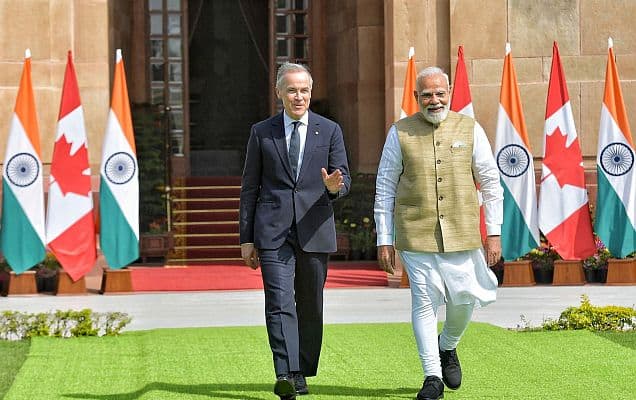
‘Highly Focused’: Canada PM Mark Carney Calls PM Modi A ‘Unique Leader’ After India Visit

Media Coverage

‘Highly Focused’: Canada PM Mark Carney Calls PM Modi A ‘Unique Leader’ After India Visit
NM on the go

Nm on the go

Always be the first to hear from the PM. Get the App Now!
...
India – Finland Joint Statement on the State Visit of President of the Republic of Finland
March 05, 2026

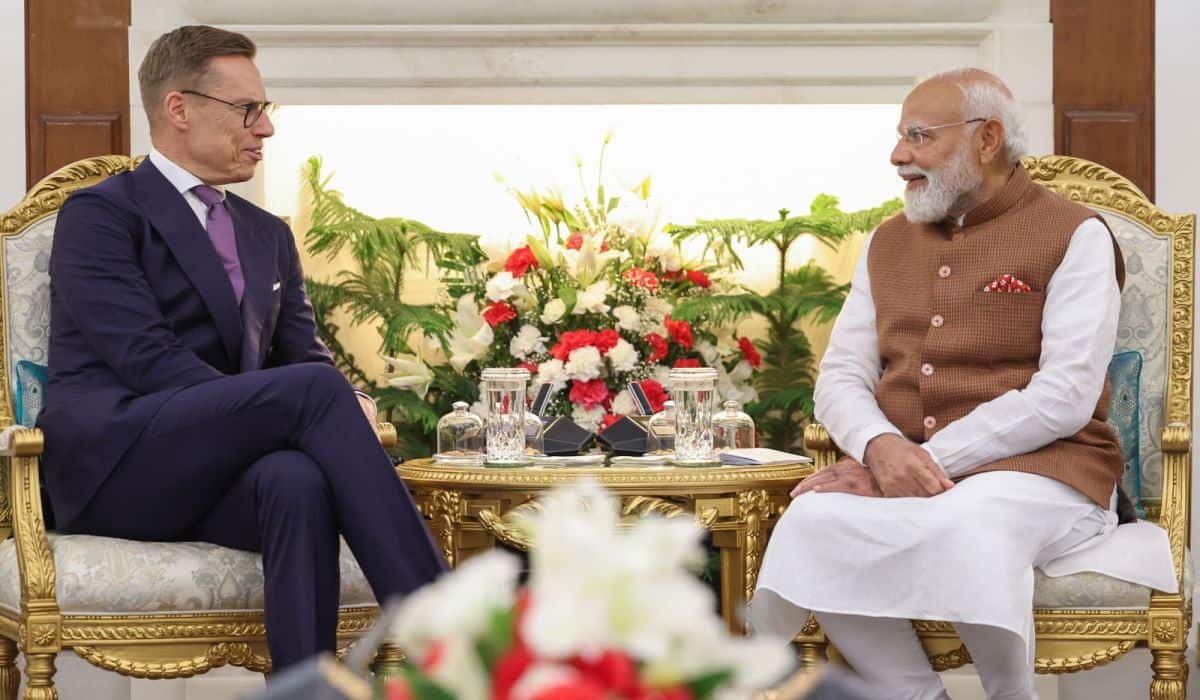
At the invitation of the Hon'ble Prime Minister of India, Shri Narendra Modi, President of the Republic of Finland, H.E. Dr. Alexander Stubb, is on a State Visit to India from 4-7 March 2026. President Stubb, who is on his first visit to India in his present capacity, is visiting New Delhi and Mumbai and is accompanied by Ms. Sari Multala, Minister of Climate and the Environment of Finland, Mr. Matias Marttinen, Minister of Employment of Finland, and a high-level delegation comprising of officials and business leaders. Prime Minister Modi inaugurated the 11th edition of the Raisina Dialogue on 5 March 2026 in New Delhi with President Stubb as the Chief Guest delivering the Inaugural Keynote Address. President Stubb’s visit follows the visit of H.E. Mr. Petteri Orpo, Prime Minister of the Republic of Finland for the AI Impact Summit in February 2026.

On 5 March 2026, President Stubb was warmly welcomed by Hon’ble President of India Smt. Droupadi Murmu at Rashtrapati Bhavan. Prime Minister Modi and President Stubb held wide-ranging discussions during a bilateral meeting, and jointly addressed the media. Prime Minister Modi also hosted a luncheon in honour of the visiting dignitary.

The President of Finland congratulated India for successfully hosting the AI Impact Summit 2026. Both Leaders shared the view that working towards safe, trustworthy, and inclusive development of AI is of paramount importance.

The Leaders affirmed the deep and enduring friendship between India and Finland, built on a foundation of mutual respect and the values of democracy and rule of law, as well as commitment to global peace, security, and international law.

The Prime Minister of India and the President of Finland reiterated their commitment to the rules-based international order and multilateral cooperation, with the UN at its core.

The Leaders underlined the importance of redoubling efforts to reach the Sustainable Development Goals, and the importance of global cooperation against the challenges of climate change and loss of biodiversity.

Welcoming the landmark Free Trade Agreement between India and the European Union concluded in the India-EU Summit on 27 January 2026, the Leaders acknowledged the immense and mutually beneficial opportunities for both parties of increased trade and investments, including for the India-Finland bilateral relationship.

Building on the momentum provided by the India-Finland Virtual Summit on 16 March 2021 and the meetings of the Prime Ministers of both countries in the margins of two editions of India-Nordic Summit in 2018 and 2022 in Stockholm and Copenhagen respectively, as well as during the AI Impact Summit in February 2026, the Leaders emphasized their shared commitment to continue expanding and deepening the cooperation between the two nations. In this spirit, the leaders agreed to elevate the India-Finland relations to a Strategic Partnership in Digitalization and Sustainability, based on converging interests and mutual benefits.

Trade and Investment

The Prime Minister of India and the President of Finland called upon the business community to make use of the vast opportunities unleashed by the landmark India-EU FTA. In this context, The Leaders agreed that the aim should be to double the value of current trade between India and Finland by 2030.

The Leaders took note of the lively interactions between the respective business communities, reflected by the large business delegation visiting India together with the Finnish President, as well as the companies that joined the Finnish Prime Minister in February in connection with the AI Impact Summit in New Delhi. Both leaders expressed confidence that the India-Finland Business Summit and CEOs interaction scheduled to take place in Mumbai on 7 March would help pave the way for enhancing trade, technology collaboration and investments ties.

The Leaders welcomed the growing startup collaboration, manifested by the active participation of innovative Indian startups in Slush in Helsinki and Finnish startups in Startup Mahakumbh in New Delhi, as well as initiatives such as the Indo-Finland Startup Corridor.

Digitalization

Recognizing the transformative power of digitalization as a key driver of inclusive social and economic development, the Leaders identified digital transformation, including new and emerging technologies such as 5G, 6G, high-performance and quantum computing and Artificial Intelligence, as priority areas where collaboration based on mutual trust and benefit can be strengthened. The Leaders noted India’s experience in Digital Public Infrastructure, including digital payments such as the Unified Payments Interface (UPI), and discussed possibilities for cooperation in this area.

Against this backdrop, the Leaders asked the relevant ministries to establish a cross-sectoral Joint Working Group on Digitalization to define priorities and foster work on concrete and substantial actions driving the digital transition.

The Finnish President emphasized the positive impact of the considerable number of Indian professionals in the Finnish R&D and tech innovation ecosystems, contributing to social and economic development by means of digital transition and sustainability for the benefit of all.

The Leaders noted with satisfaction the Joint Calls by the Indian Department of Science and Technology and Business Finland to provide RDI funding for joint initiatives of Indian and Finnish companies and research organizations with focus on semiconductors, 6G, and energy systems. They also took note of the cooperation framework between Bharat 6G Alliance and the University of Oulu, Finland, welcoming all efforts to further strengthen bilateral collaboration on 6G.

Furthermore, the Leaders welcomed the work between the Indian Ministry of Electronics and Information Technology and Business Finland to further explore avenues of RDI collaboration with special focus on AI, noting also the discussions between the Indian Centre for Development of Advanced Computing and the Finnish IT Centre for Science with respect to High-Performance Computing.

In the field of advanced technology, the Leaders also highlighted Space tech as an emerging area of collaboration with considerable future potential and active private sector engagement between Indian and Finnish players.

Sustainability

On sustainability, both Leaders underlined the great potential in advancing clean energy solutions, notably in areas such as low carbon transition, energy efficiency, biofuels, smart grids, and green hydrogen. In addition, they highlighted the importance of cooperation in circular economy, sustainable water management and meteorology.

To this end, the Leaders welcomed the establishment of a Joint Working Group on Sustainability, bringing together relevant actors from both countries to enhance collaboration on sustainability-related issues.

Moreover, the Leaders underscored the importance of implementing the Memorandum of Understanding on Cooperation in the field of Renewable Energy, encompassing many key areas of collaboration that contribute to sustainability, including bioenergy and waste-to-energy solutions, power storage and flexible RE systems, green hydrogen, as well as wind, solar and small hydro power.

They acknowledged the renewal of the Memorandum of Understanding on Environmental Cooperation, and collaboration under the Leadership Group for Industry Transition (LeadIT) and encouraged the parties to advance the deeper collaboration in circular economy, climate action, and sustainability.

Both sides acknowledged that the rapid deployment of Smart Energy solutions, including Advanced Metering Infrastructure (AMI) and other digital grid technologies, has enhanced efficiency while increasing cybersecurity risks to critical power infrastructure. They agreed to explore future areas of cooperation in promoting resilient, reliable and sustainable smart grid systems.

The Finnish President extended his appreciation to India for hosting the next World Circular Economy Forum in the later part of 2026, a Finnish initiative providing a platform to enhance circular economy solutions and bring together leading expertise in the search for new collaborative initiatives.

The Prime Minister of India acknowledged Finland’s active role in bringing together Indian, Finnish and other Nordic stakeholders in the framework of the Indo-Nordic Water Forum, promoting new collaborations and best practices in water resources management and wastewater management for circular economy solutions.

With respect to meteorological collaboration, the Leaders underscored the ongoing cooperation in aerosol monitoring and air quality forecasting between the Finnish Meteorological Institute (FMI) and the Indian Meteorological Department (IMD). They welcomed the work to establish a Virtual Research Center between FMI and the Indian Institute of Technology Madras (IITM), also taking note of the already ongoing FMI-IITM research collaboration with multilateral projects exceeding a total value of Euros 11 million.

The Leaders also took note of the exchange of experiences between the Indian Ministry of Rural Development and the National Land Survey of Finland and the Finnish Environment Institute, cities, and companies about Land Stack, an integrated GIS based digital platform of land and property information.

The Leaders welcomed the signing of Memorandum of Understanding on fostering cooperation in the field of Official Statistics which provides a framework for exchange of best practices, methodologies, and technical expertise in the area of official statistics.

Mobility, education, and people-to-people contacts

The Prime Minister of India and the President of Finland recognized the importance of people-to-people contacts in all fields, including skilled workers, specialists and young professionals, researchers and students, businesspersons, and academics, thereby nurturing economic prosperity, contributing to a rich social fabric, and enhancing mutual understanding.

In this context, the Leaders hailed the signing of a Memorandum of Understanding on Migration and Mobility Partnership, laying the frameworks for smooth, orderly, and mutually beneficial mobility for the years to come. Both sides agreed to take the steps required for the implementation of the MoU in a comprehensive and coordinated manner, that serves both India’s and Finland’s prosperity and economic growth. The Leaders also acknowledged the contacts between the respective Foreign Ministries, looking into possibilities of establishing bilateral dialogue on consular matters.

The Leaders took note of the Joint Statement endorsed by the High-Level Dialogue on Cooperation in Education (31 January 2024) and encouraged the relevant parties to accelerate their joint efforts to advance the common agenda, focusing on the agreed areas of secondary education, higher education, skill development, and student mobility.

In this context, they noted the growing interest in India towards the Finnish education system, the increasing cooperation in teacher training, as well as early childhood education institutions and schools that are being set up according to the Finnish model, as concrete expressions of the stakeholders’ shared will and commitment to continue developing the collaboration on education.

Furthermore, the Leaders highlighted the discussions on a bilateral audiovisual co-production agreement that will provide a solid frame to enhance cooperation in the film and gaming industries.

India-EU-relations

Both Leaders welcomed the new Joint India-EU Comprehensive Strategic Agenda, endorsed in the India-EU Summit on 27 January 2026, based on shared values and principles, mutual trust, converging interests, and shared political will. They agreed that India and the EU can be stable, predictable, and trusted partners, building a multifaceted and deepening long-term relationship with many positive outcomes for both sides.

The Leaders underlined that the conclusion of Free Trade Agreement takes the India-EU relations to a new level. In addition to clear economic benefits by enhancing market access and removing trade barriers, both Leaders noted that the FTA could support economic security and resilience through diversifying critical value chains and opening new markets.

As a platform to address key trade, technology, and economic security issues, the Leaders reaffirmed their support to further enhance the work of the India-EU Trade and Technology Council as the cornerstone of the India-EU technology partnership.

The Prime Minister of India and the President of Finland underscored that the signing of India-EU Security and Defense Partnership added another meaningful dimension to the India-EU Strategic Partnership that will deepen co-operation in areas of shared interests, including maritime security, defense industry, cyber and hybrid threats, space, as well as counter-terrorism.

The leaders lauded the signing of the MoU on Comprehensive Framework of Cooperation on Mobility and the launch of pilot European Union Legal Gateway Office in India.

Multilateral cooperation

The Leaders recognized the need to reform the UN system. In this context, they emphasized the importance of a comprehensive reform of the UN Security Council to make it more efficient, representative, inclusive, and reflective of contemporary geopolitical realities. The President of Finland reiterated Finland’s support for the permanent membership of India in a reformed UNSC.

The leaders underscored the vital role of cooperation within the United Nations and other international bodies to safeguard multilateralism and uphold a rules-based international order, including supporting mutual candidacies and nominations.

Both sides agreed to continue their constructive cooperation in multilateral fora, including on peace and security, human rights, sustainable development as well as climate change and biodiversity.

The Leaders reiterated their shared commitment to promoting a free, open, peaceful and prosperous Indo‑Pacific, in accordance with international law, including the UNCLOS. In this context, India welcomed Finland to join the Indo-Pacific Oceans Initiative.

Both leaders reaffirmed their commitment to further strengthening cooperation and dialogue on Arctic matters, including through joint research initiatives, academic exchanges, and capacity-building programmes. They took note of the first India–Finland Arctic Dialogue titled "The Himalayan and Arctic Ecosystems: India–Finland Partnership for a Sustainable Future” held in January 2026 in Rovaniemi, Finland, which brought together parliamentarians, government officials, academics and experts to deliberate on strategies and pathways for deepening collaboration on Arctic matters. Both leaders also underscored the importance of advancing cooperation in the structures of the Arctic Council, and within the broader framework of the India-Nordic Summit.

Both leaders unequivocally and strongly condemned terrorism and violent extremism in all its forms and manifestations, including cross-border terrorism. They called for decisive and concerted international efforts to combat terrorism in a comprehensive and sustained manner and in accordance with international law. They agreed to enhance cooperation to counter violent radicalization and extremism, combat financing of terrorism, promote internationally agreed anti‑money laundering standards, prevent exploitation of new and emerging technologies for terrorist purposes, and tackle terrorist recruitment. The leaders reaffirmed strong commitment to continue taking active measures to disrupt the terror financing channels including at the UN and FATF. They condemned in the strongest terms the terrorist attack in Pahalgam, Jammu and Kashmir on 22 April 2025 and the terror incident near Red Fort, New Delhi on 10 November 2025.

Both Leaders agreed to continue to support efforts towards the achievement of a comprehensive, just, and lasting peace in Ukraine through dialogue and diplomacy, based on the principles of the UN Charter and international law, including independence, sovereignty, and territorial integrity.

Conclusion

To take forward the cooperation under the India-Finland Strategic Partnership in Digitalization and Sustainability, the Leaders asked the respective Working Groups on Digitalization and Sustainability to develop a future-oriented and concrete Action Plan, including definition of priority areas and related actions, and report back to the Ministry for Foreign Affairs of the Republic of Finland and the Ministry of External Affairs of the Republic of India on the progress achieved.

The President of Finland thanked the Prime Minister of India for the excellent arrangements during his state visit, and both Leaders expressed their appreciation of the open and constructive dialogue, and the forward-reaching and evolving cooperation. They agreed to continue their interaction with a solid foundation in a shared spirit of mutual respect and collaboration. President Stubb invited Prime Minister Modi to pay a visit to Finland, and Prime Minister Modi accepted the invitation.