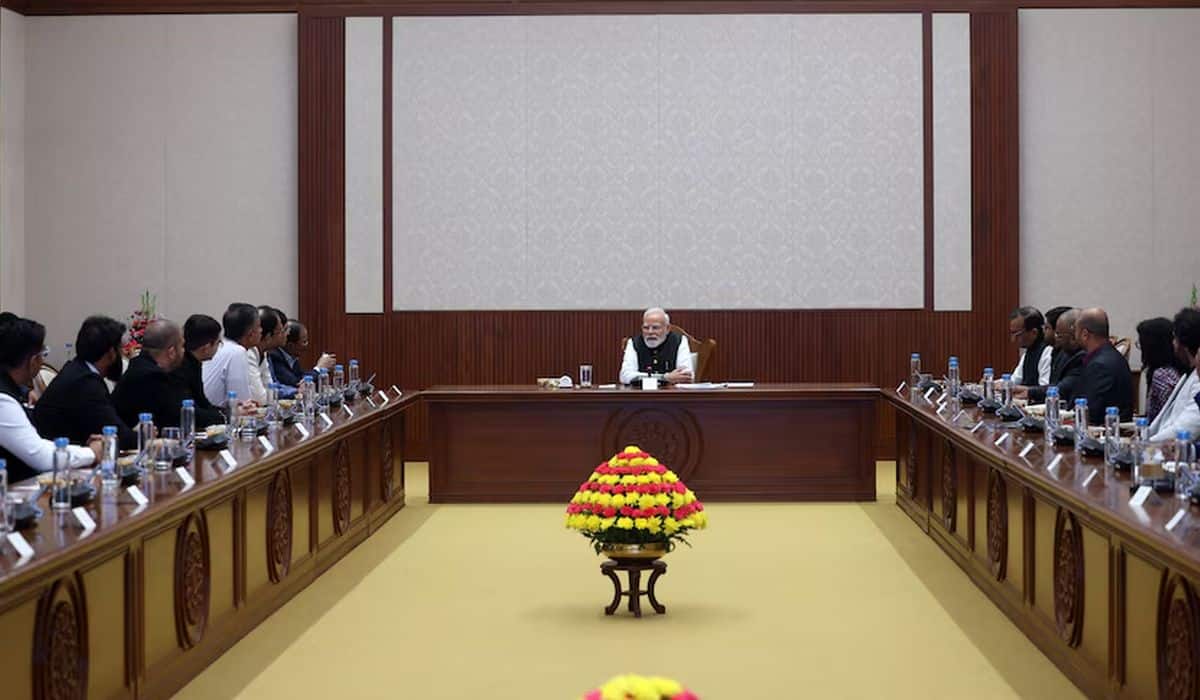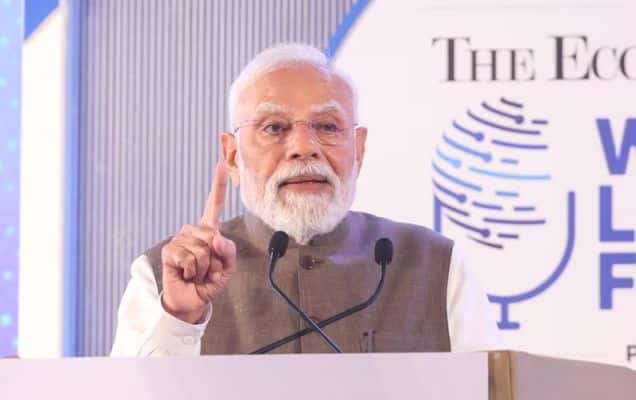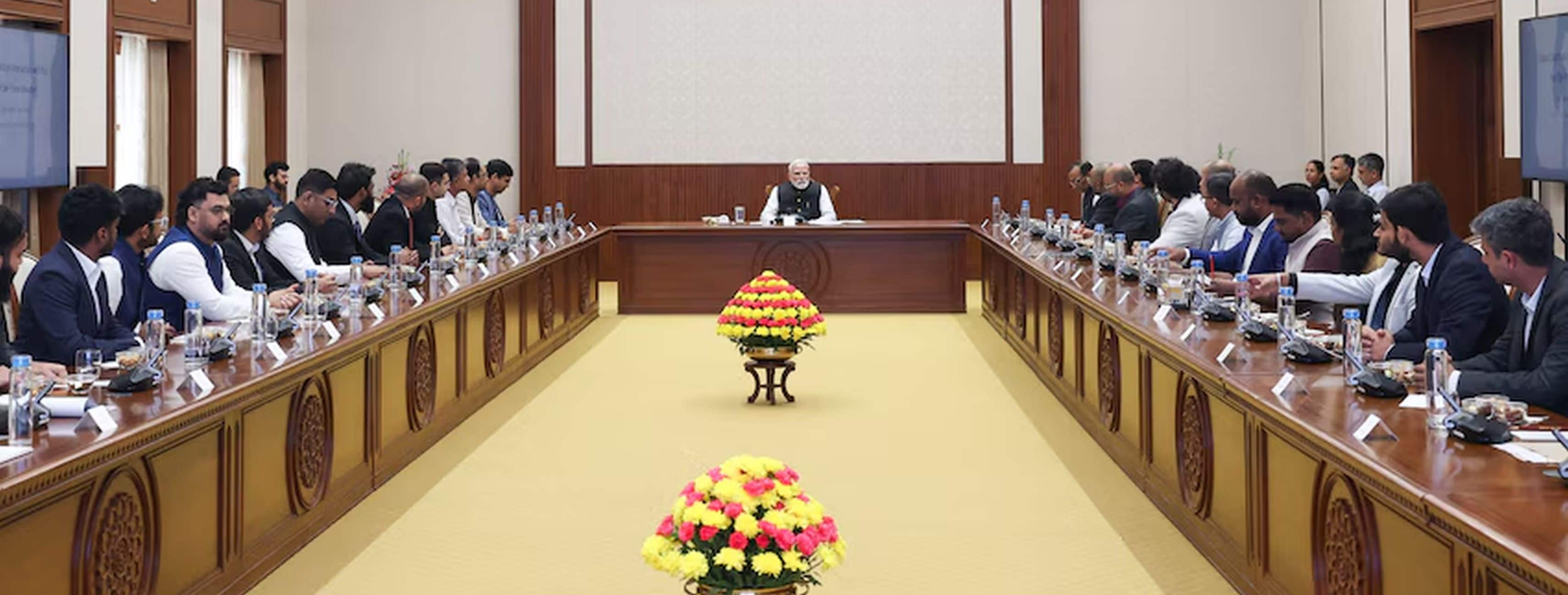
Prime Minister Narendra Modi addresses the G7 Outreach Session

Published By : Admin | June 18, 2025 | 11:13 IST

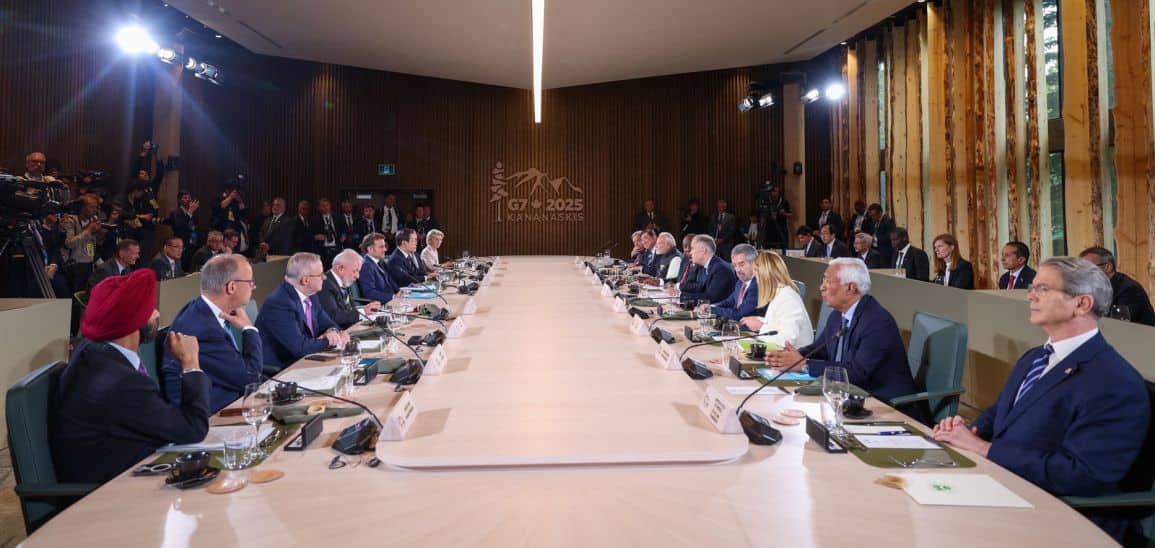
Prime Minister Shri Narendra Modi today participated in the Outreach Session of the G7 Summit in Kananaskis. He addressed a Session on ‘Energy Security: diversification, technology and infrastructure to ensure access and affordability in a changing world'. He thanked the Prime Minister of Canada H.E. Mr. Mark Carney for his invitation and congratulated the G7 on marking 50 years of its journey.

In his address, Prime Minister highlighted that energy security was among the leading challenges facing future generations. While elaborating on India’s commitment to inclusive growth, he noted that availability, accessibility, affordability and acceptability were the principles that underpinned India’s approach to energy security. He further emphasised that even though India is the fastest growing major economy in the world, it has successfully met its Paris commitments ahead of time. Highlighting India’s commitment to a sustainable and green future, he underscored that India has undertaken several global initiatives such as the International Solar Alliance, Coalition for Disaster Resilient Infrastructure, Global Biofuels Alliance, Mission LiFE and One Sun- One World- One Grid, and called upon the international community to further strengthen them.

Prime Minister expressed that uncertainty and conflicts in various parts of the world have had a debilitating impact on the countries of the Global South, and India took it as its responsibility to make the voice of the Global South heard at the world stage. He underlined that it was important for the world to understand the priorities and concerns of the Global South if the international community was serious about a sustainable future. Emphasising on security challenges, he called upon countries to strengthen the global fight against terrorism. Thanking the global community for their strong support to India in its fight against terrorism, he expressed that the Pahalgam terror attack was not just an assault on India but on the entire humanity. He called for strict action against countries who support and promote terrorism. He further noted that there should be no double standards in dealing with terrorism and those who support terrorism should never be rewarded.Calling terrorism a grave threat to humanity, Prime Minister put forth pressing questions for the international community to ponder over :

-will countries understand the grave threat posed by terrorism only when they become a target ?

-how can perpetrators of terror and its victims be equated ?

-will global institutions be mute spectators to terrorism ?

Prime Minister also spoke on the nexus between technology, AI and energy. Noting that while AI has become a critical tool to promote efficiency and innovation, the technology itself was energy intensive, and it was important to strategize how to make it sustainable through clean and green initiatives. Elaborating on India’s human-centric approach to promoting technology, he noted that any technology to be effective must bring value to the lives of common people. He suggested that addressing AI related global governance issues was key to tackling the concerns of AI and to promoting innovation in the field. He underlined that in the age of AI it was important to have secured and resilient supply chains of critical minerals. Prime Minister further stated that quality and diverse data, which abounds in India, is critical for responsible AI.

Prime Minister emphasised that a technology-led world calls for closer cooperation among countries for realising a sustainable future, and to achieve it, people and planet must be kept at the centre of progress.

Click here to read full text speech

Explore More
శ్రీరామ జన్మభూమి ఆలయ ధ్వజారోహణ ఉత్సవం సందర్భంగా ప్రధానమంత్రి ప్రసంగం

ప్రముఖ ప్రసంగాలు

శ్రీరామ జన్మభూమి ఆలయ ధ్వజారోహణ ఉత్సవం సందర్భంగా ప్రధానమంత్రి ప్రసంగం
Australia PM Hails PM Modi's Leadership, Pitches Stronger India-Australia Partnership

Media Coverage

Australia PM Hails PM Modi's Leadership, Pitches Stronger India-Australia Partnership
NM on the go

Nm on the go

Always be the first to hear from the PM. Get the App Now!
...
List of Outcomes: Visit of Prime Minister Shri Narendra Modi to Australia
July 09, 2026
S. No.TitleBrief description


1


Joint Declaration on Defense and Security Cooperation (JDDSC)

Renews the existing Joint Declaration on Security (2009). It identifies interoperability of forces, capacity building, maritime domain, defense industrial collaboration, cyber security and technology, counter terrorism, HADR, and unified approach in UNCLOS, ASEAN, PIF, IORA, as areas of cooperation.

2

Maritime Security Collaboration Roadmap (MSCR)

Enhances maritime security cooperation by promoting information sharing, and capability development, and operational coordination.

3

India-Australia Joint Statement on Energy Security

Reaffirms the commitment of both countries to energy security in the face of geopolitical tensions.

4

Finalisation of Administrative Arrangement of the India-Australia Civil Nuclear Agreement

Operationalises the India-Australia Civil Nuclear Agreement signed in 2014, and enables supply of uranium from Australia to India.

5

Australia-India Partnership for Cyber, Critical Technologies, Supply Chains (PACTS)

Builds on the 2020 Framework Arrangement on Cyber and Cyber Enabled Critical Technology Cooperation. Aims to support national and regional security, promote collaboration to make critical supply chains more resilient, and strengthen collaboration in critical technologies, cyber security, and digital resilience.

6

MoU between Indian Coast Guard (ICG) and Maritime Border Command (MBC) of Australia

Establishes cooperation in the field of Maritime Law Enforcement, domain awareness, and maritime border protection between ICG and MBC

7

Australian invite for an Indian military instructor in Australian Defense College for 2028-29

Announces the deployment of an Indian military instructor in Australian Defense College in 2028-29

8

MoU between Ministry of Skill Development and Entrepreneurship (MSDE),and Technical and Further Education (TAFE), Government of Western Australia to set up a Centre of Excellence in Mining and Mining Equipment, Technology and Services (METS

Sets up a Centre of Excellence in Mining Equipment, Technology and Services at National Skill Training Institute (NSTI), Bhubaneswar to develop a Centre of academic excellence in sub-domains of mining operations, mine safety, mineral processing, mine machinery, etc. It will enable exchange of students/trainees between National Centre for Excellence and TAFE, Western Australia.

9

Handing over Letter of Intent (LoI) to Flinders’ University for setting up its campus in India (Bengaluru)

Enables setting up of the campus of Flinders University in Bengaluru.

10

Signing of Letter of Intent (LoI) between National Council for Vocational Education and Training (NCVET) and Australian Skills Quality Authority (ASQA)

Acknowledges the importance of quality assurance in Technical and Vocational Education and Training (TVET). It will strengthen regulatory frameworks in vocational training systems, co-development and alignment of occupational standards in priority sectors, and enable capacity building of officials, staff exchanges, joint workshops/research activities.

11

Repatriation of Indian artifacts

Brings back 3 Indian antiquities:

a. The sacred bull Nandi, vehicle of Shiva [Description: Tamil Nadu, India, 11th to 12th century Granite]
b. Trident with Auspicious Kali [Bhadrakali][Description: Tamil Nadu, India, 11th century bronze]
c. The six-headed Skanda (Karttikeya) [Description: Tamil Nadu, India, 12th century basalt]

12

Operationalisation the Rooftop Solar Training Academy

Established and operationalised in the Pandit Deendayal Energy University, Gandhinagar in collaboration by Department of Climate Change, Environment and Water (DCEEW), India’s Sector Skills Council for Green Jobs (SSCGJ), ReNEW. Aims to train 2000 women and youth as solar technicians/installers/helpers. Supports the PM Surya Ghar Yojana launched by Hon PM in January 2024, and India’s green energy journey

13

MoU under Australia-Canada-India Technology and Innovation (ACITI) Partnership

Aims to advance trilateral cooperation in emerging technologies and innovation, under the Australia–Canada–India Technology and Innovation (ACITI) Partnership

14

MoU between GeoScience Australia (GA) and Geological Survey of India (GSI)

Builds on the MoU on Scientific and Technical Cooperation signed in 2015. Aimed at adoption of advanced exploration methodologies, capacity building and skill development, and enable technological upgradation and modernization of GSI infrastructure.

15

Traditional Knowledge Digital Library access agreement between Council of Scientific & Industrial Research (CSIR) and IP Australia

Provides access of the Traditional Knowledge Digital Library (TKDL) database to IP Australia.

16

MoU between Council of Scientific and Industrial Research (CSIR) and University of Melbourne

Establishes linkages between both institutions for future collaboration including collaborative research programs towards drug target identification, trainee programs, and faculty exchange Programs

17

MoU between Satyajit Ray Film and Television Institute (SRFTI), Kolkata with Griffith Film School, South Brisbane, Australia.

Establish flexible and open-ended framework for collaboration including joint academic activities and workshops, development of joint projects in cinema and allied fields, and collaboration on short-term workshops, or summer schools.

18

Handing over of Letter of Approval to Victoria University

Permits the Victoria University to set up and operate its campus in Gurugram.