1 crore houses to be constructed for urban poor and middle-class families
Investment of ₹ 10 lakh crore and Government Subsidy of 2.30 lakh crore under PMAY-U 2.0
The Union Cabinet, chaired by Hon’ble Prime Minister Shri Narendra Modi, today approved Pradhan Mantri Awas Yojana-Urban (PMAY-U) 2.0under which financial assistance will be provided to 1 crore urban poor and middle-class families through States/Union Territories (UTs)/PLIs to construct, purchase or rent a house at an affordable cost in urban areas in 5 years. The Government Assistance of ₹ 2.30 lakh crore will be provided under the Scheme.
PMAY-U is one of the major flagship programmes being implemented by Government of India to provide all-weather pucca houses to all eligible beneficiaries in the urban areas. Under PMAY-U, 1.18 crore houses have been sanctioned while more than 85.5 lakh houses have already been constructed and delivered to the beneficiaries.
Hon’ble Prime Minister in his Independence Day speech on 15th August 2023 from the ramparts of Red Fort had announced that Government of India will come up with a new scheme for the coming years to provide benefit to weaker section and middle-class families in owning a house.
The Union Cabinet on 10thJune 2024 resolved to provide assistance to 3 crore additional rural and urban households for the construction of houses, to meet the housing requirements arising out of the increase in the number of eligible families.In pursuance of the Hon’ble Prime Minister’s vision, PMAY-U 2.0, with an investment of ₹ 10 lakh crore, will address the housing needs of one crore families, ensuring that every citizen leads a better quality of life.
In addition, the corpus fund of Credit Risk Guarantee Fund Trust (CRGFT) has been increased from ₹1,000 crore to ₹3,000 crore to provide benefit of credit risk guarantee on affordable housing loans from Banks/Housing Finance Companies (HFCs)/Primary Lending Institutions (PLIs) to Economically Weaker Section (EWS)/Low Income Group(LIG) segments for construction/purchase of their first home. Further Management of Credit Risk Guarantee Fund will be transferred to National Credit Guarantee Company (NCGTC) from National Housing Bank (NHB). Credit Risk Guarantee Fund Scheme is being restructured and modified guidelines will be issued by Ministry of Housing & Urban Affairs (MoHUA).
PMAY-U 2.0 Eligibility Criteria
Families belonging to EWS/LIG/Middle Income Group (MIG) segments having no pucca house anywhere in the country are eligible to purchase or construct a house under PMAY-U 2.0.
EWS households are families with an annual income up to ₹3 lakh.
LIG households are families with an annual income from ₹3 lakh up to ₹6 lakh.
MIG households are families with an annual income from ₹6 lakh up to ₹9 lakh.
Coverage of the Scheme
All statutory towns as per Census 2011 and towns notified subsequently, including Notified Planning Areas, Areas falling within Notified Planning/Development area under the jurisdiction of Industrial Development Authority/Special Area Development Authority/Urban Development Authority or any such Authority under State legislation which is entrusted with the functions of urban planning and regulations shall also be included for the coverage under PMAY-U 2.0.
PMAY-U 2.0 components
The Scheme seeks to address the affordable housing requirement in urban areas through following verticals:
Beneficiary-Led Construction (BLC): Under this vertical, financial assistance will be provided to individual eligible families belonging to EWS categories to construct new houses on their own available vacant land. In case of landless beneficiaries, land rights (pattas)may be provided by States/UTs.
Affordable Housing in Partnership (AHP): Under AHP, financial assistance will be provided to EWS beneficiaries for owning houses being built with different partnerships by States/UTs/ Cities/Public/Private agencies.
Redeemable Housing Vouchers will be given to beneficiaries who purchase house from private projects.States/UTs/ULB shall whitelist the private sector projects complying with all the necessary norms
An additional Grant in the form of Technology Innovation Grant (TIG) @₹1000 per sqm/unit shall be provided to AHP Projects using innovative construction technologies
Affordable Rental Housing (ARH): This vertical will create adequate rental housing for working women/industrial workers/ urban migrants/homeless/destitute /studentsand other eligible beneficiaries. ARH shall ensure affordable and hygienic living spaces for urban dwellers who do not want to own a house but require housing for short term basis or those who do not have the financial capability to construct/buy a house.
This vertical will be implemented through two models as under:
Model-1: Utilizing existing Government funded vacant houses in cities by converting them into ARH under Public Private Partnership mode or by public agencies.
Model-2: Construct, Operate and Maintain rental housing by Private/Public agencies
For projects constructed using innovative technologies, TIG at the rate of ₹3,000 per sqm shall be released by Central Government while State/UT Government shall provide ₹2000/ per sqm as part of State Share.
iv. Interest Subsidy Scheme (ISS): The ISS vertical will provide benefits of subsidy on home loans for EWS/LIG and MIG families. Beneficiaries taking loan up to ₹25 lakh with house value up to 35 lakh will be eligible for 4 percent interest subsidy on first ₹8 lakh loan up to 12 years tenure. A maximum of ₹1.80 lakh subsidy will be given to eligible beneficiaries in 5-yearly instalmentsthrough push button. Beneficiaries can access their accounts through website, OTP or smart cards.
PMAY-U 2.0 will be implemented as Centrally Sponsored Scheme (CSS), except for the Interest Subsidy Scheme (ISS) component, which will be implemented as Central Sector Scheme.
Funding Mechanism
The cost of house construction under different verticals, except for ISS, shall be shared among Ministry, State/UT/ULB and identified eligible beneficiaries.TheGovernment Assistance in AHP/BLC verticals under PMAY-U 2.0 will be ₹2.50 lakh per unit. State/UT share shall be mandatory under the Scheme. For UTs without legislature, Central: State sharing pattern will be 100:0, For UTs with legislature (UT of Delhi, J&K and Puducherry), North-Eastern States and Himalayan States (Himachal Pradesh and Uttarakhand) sharing pattern will be 90:10 and for other states sharing pattern will be 60:40. To improve affordability of houses, States/UTs and ULBs may give additional assistance to beneficiaries.
Under ISS vertical, Central Assistance up to ₹1.80 lakh subsidy will be given to eligible beneficiaries in 5-yearly instalments
Detailed sharing patten is as below.
S. No.
States/UTs
PMAY-U 2.0 Verticals
BLC & AHP
ARH
ISS
North-Eastern Region States, Himachal Pradesh, Uttarakhand and Union Territory (UT) of J&K, Puducherry and Delhi
Central Govt.- ₹2.25 lakh per unit
State Govt.- Min. ₹0.25 lakh per unit
Technology Innovation Grant
GoI: ₹3,000/Sqm per unit
State Share: ₹2,000/Sqm per unit
Home Loan Subsidy – up to ₹1.80 lakh (Actual Release) per unit by Government of India as Central Sector Scheme
All other UTs
Central Govt. - ₹2.50 lakh per unit
Remaining States
Central Govt. - ₹1.50 lakh per unit
State Govt.- Min. ₹1.00 lakh per unit
Notes:
State/UT share shall be mandatory under PMAY-U 2.0. Apart from the minimum State Share, the State Governments may also provide additional top-up share to increase the affordability.
In addition to Central Assistance, MoHUA will provide Technology Innovation Grant (TIG) only to the AHP projects using innovative building materials, technologies & processes @ ₹1,000 per sqm upto 30 sqm per dwelling unit to the implementing agencies to offset the impact of any additional cost implication under AHP projects.
Technology & Innovation Sub-Mission (TISM)
TISM will be set up under PMAY-U 2.0 to guide and facilitate States/UTs and other stakeholdersin adoption of modern, innovative and green technologies and building material for faster and quality construction of houses. Under TISM, States/UTs/Cities will be assisted through innovative practices and projects in challenge mode focused on disaster resistant and environment friendly technologies for climate smart buildings and resilient housing.
Affordable Housing Policy
In order to seek benefit under PMAY-U 2.0, States/UTs will have to formulate “Affordable Housing Policy” containing various reforms and incentives for ensuring active participation of Public/Private entities and promote Affordable Housing Ecosystem. ‘Affordable Housing Policy’ will include such reforms which will improve the affordability of ‘Affordable Housing’.
Impact:
PMAY-U 2.0 will achieve the vision of ‘Housing for All’ by fulfilling the housing dreams of EWS/LIG and MIG segments. The Scheme will also ensure equity across different segments of population by addressing the requirement of slum dwellers, SC/STs, minorities, widows, Persons with Disabilities and other underprivileged sections of the society. Special focus will be given to Safai Karmi, street vendors identified under PMSVANidhi Scheme and different artisans under Pradhan Mantri-Vishwakarma Scheme, anganwadi workers, building and other construction workers, residents of slums/chawls and other groups identified during operation of PMAY-U 2.0.
India is not only a fast-growing economy, but also a credible one: PM Modi
June 22, 2026
Share
India is not only a fast-growing economy, but also a credible one: PM
Along with being a rising power, India is also a reliable power: PM
For India, Nation First is the highest guiding principle: PM
Maoist terror is breathing its last in India: PM
The shift in mindset from "this can never be done" to "this will be done" is India's greatest achievement: PM
The government is empowering the poor and middle-class: PM
The collective efforts of 140 crore Indians will realise the dream of a Viksit Bharat: PM
Swar Sadhana, Manokamana, Aradhana - after such an auspicious beginning, it would have been wonderful if your program had continued. Greetings to all of you.
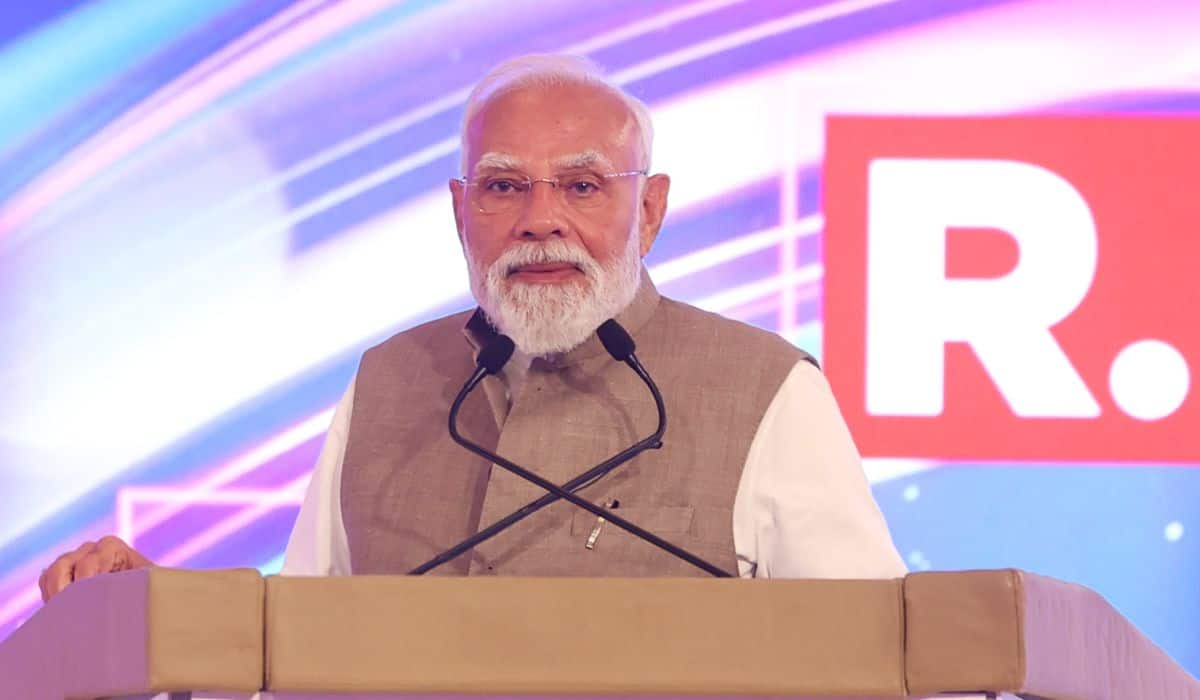
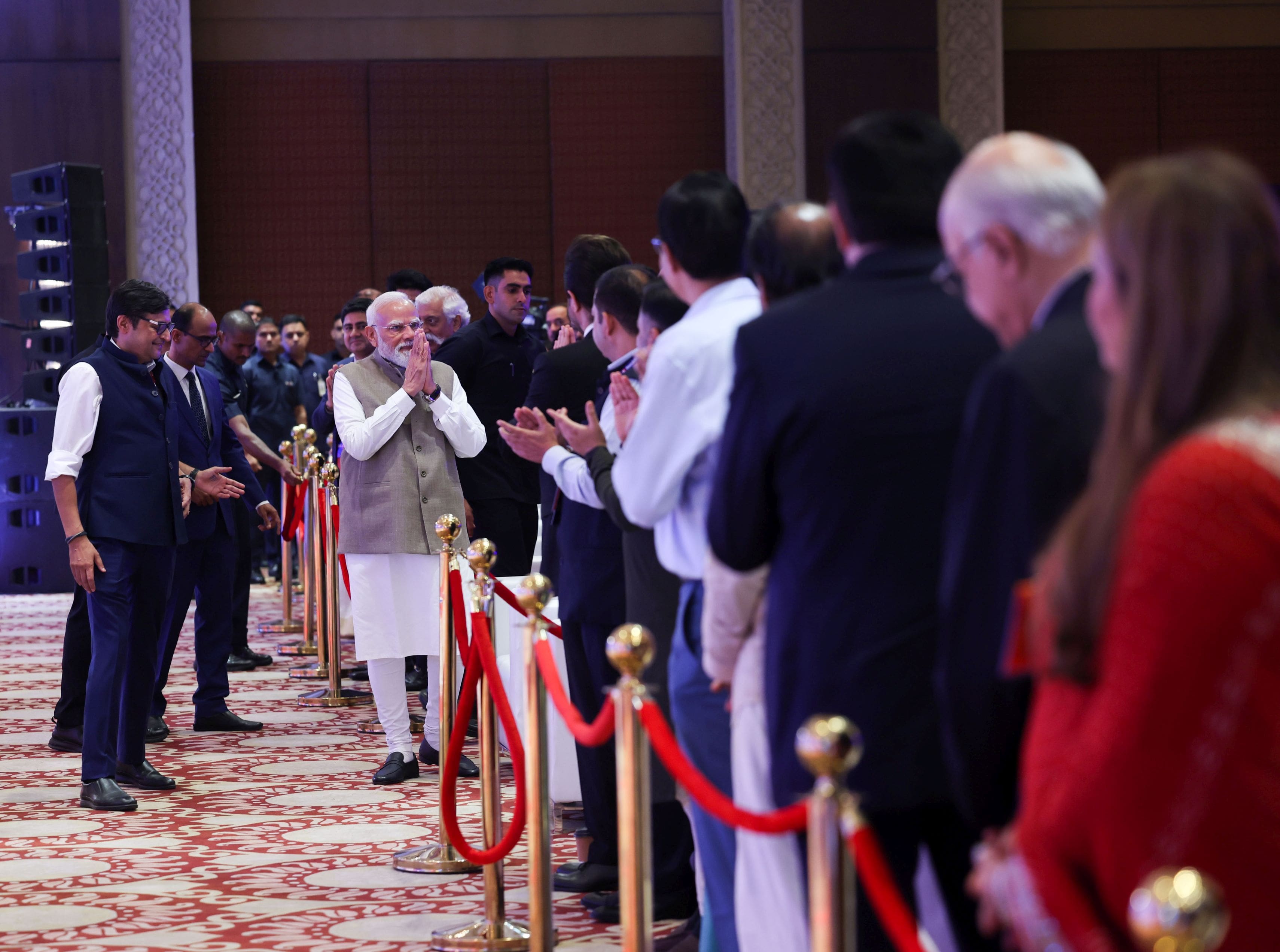
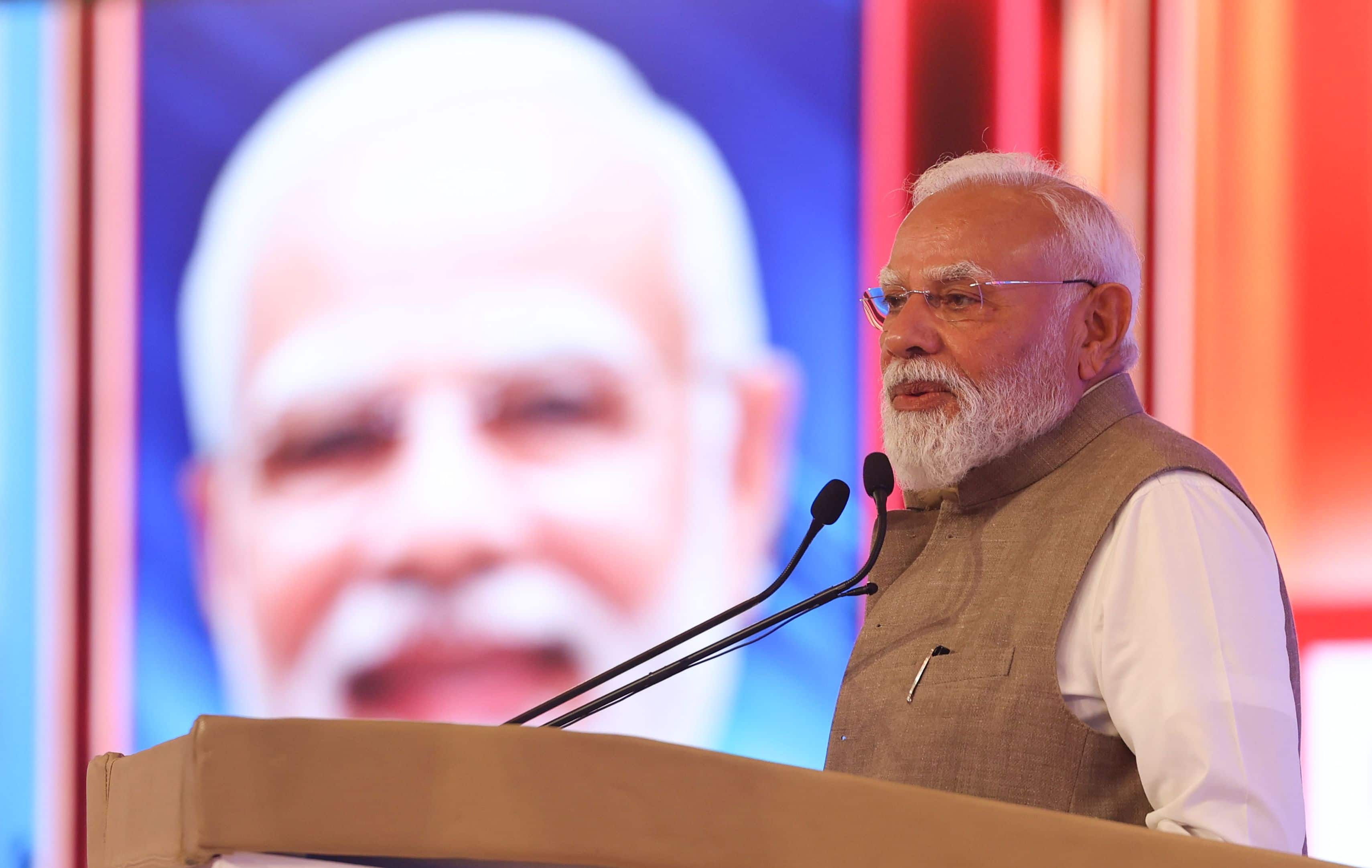
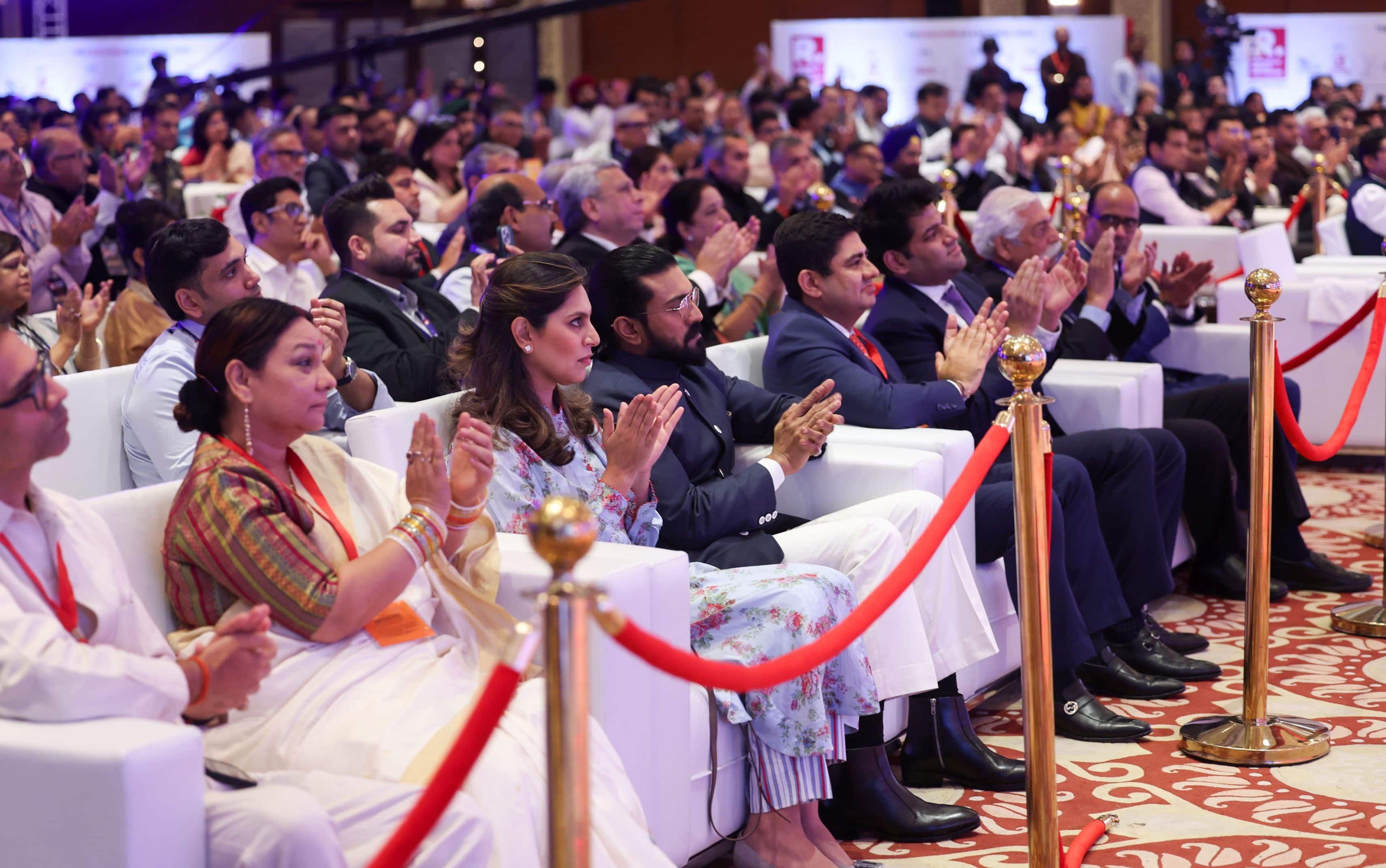
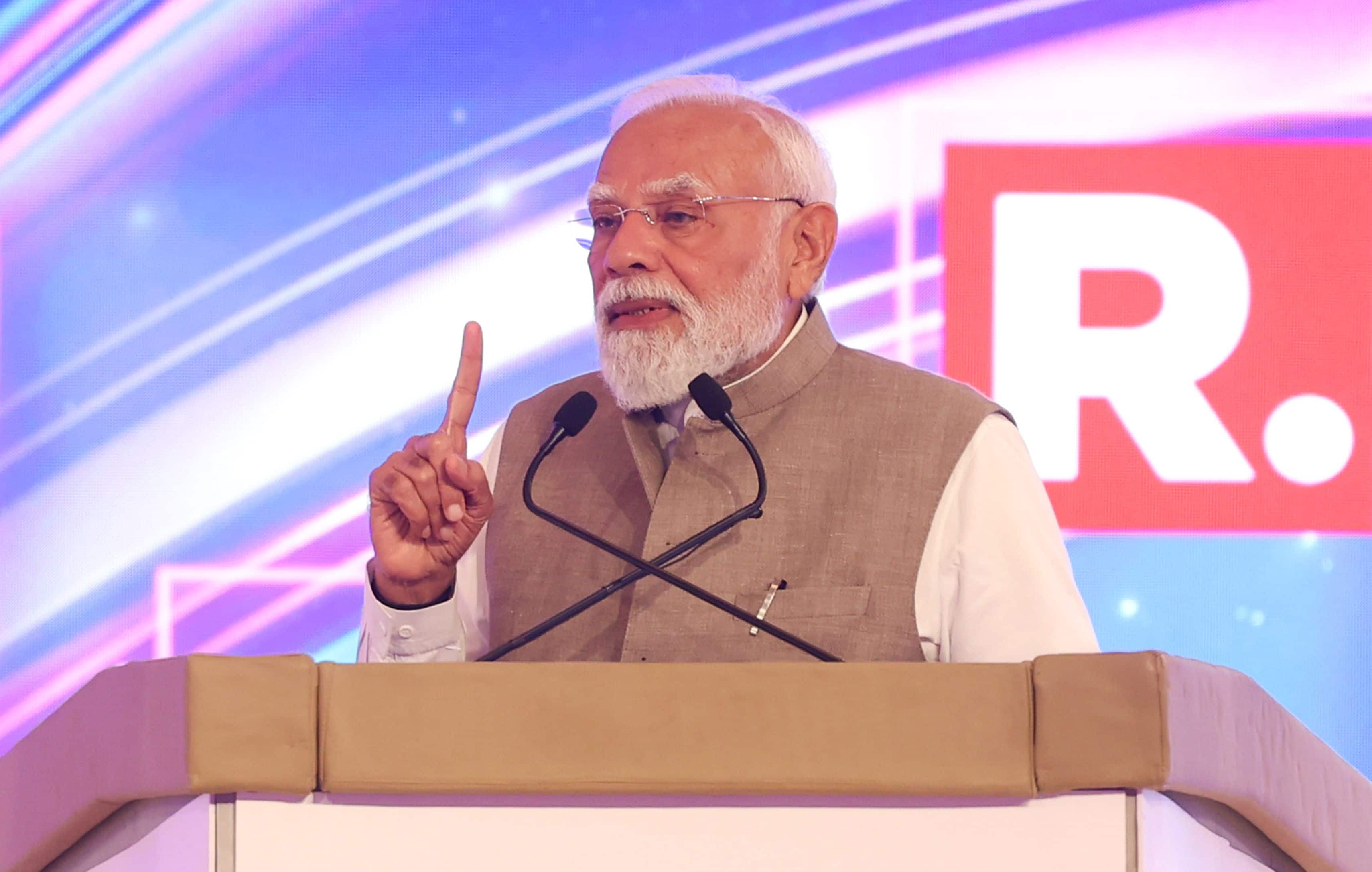
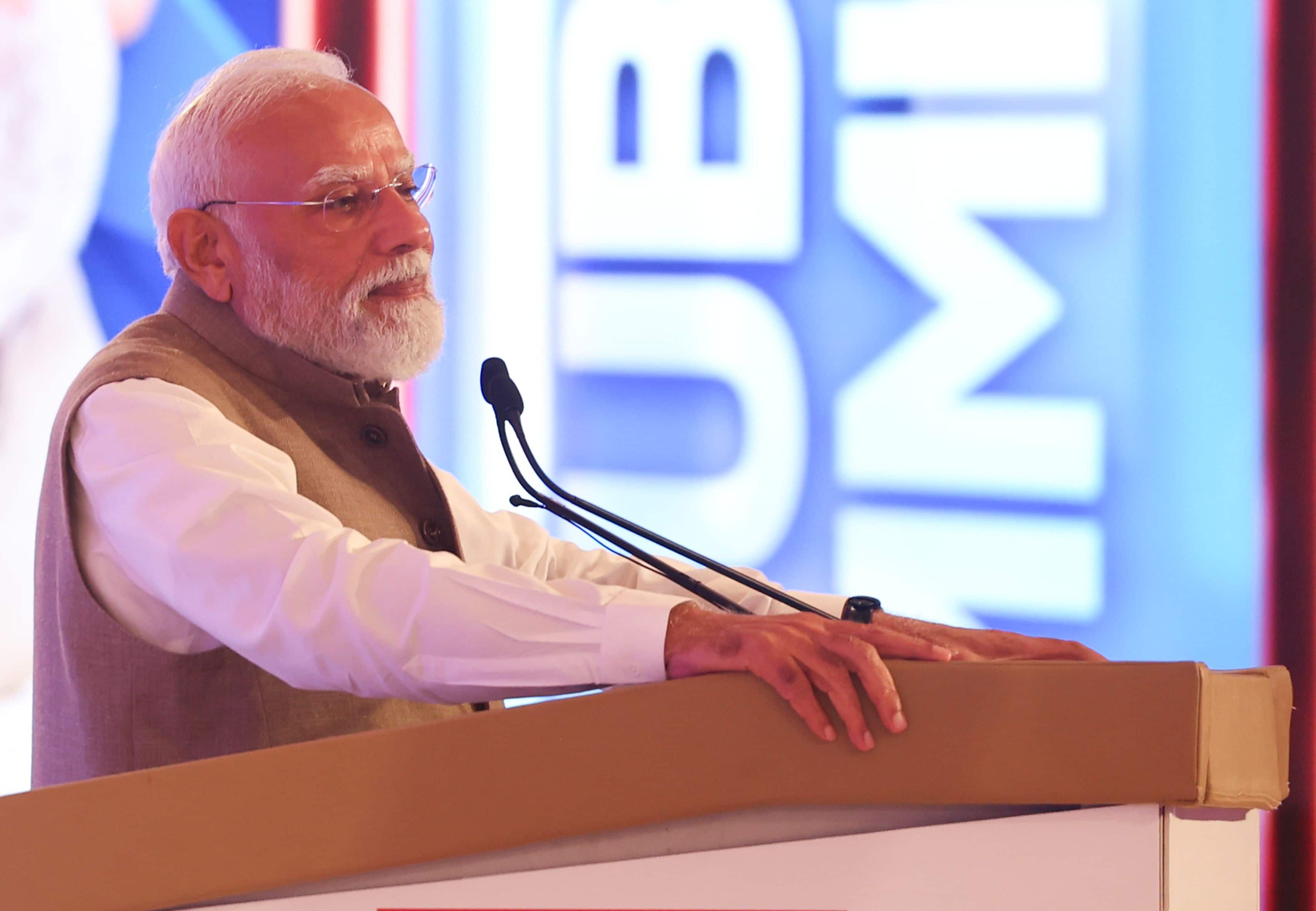
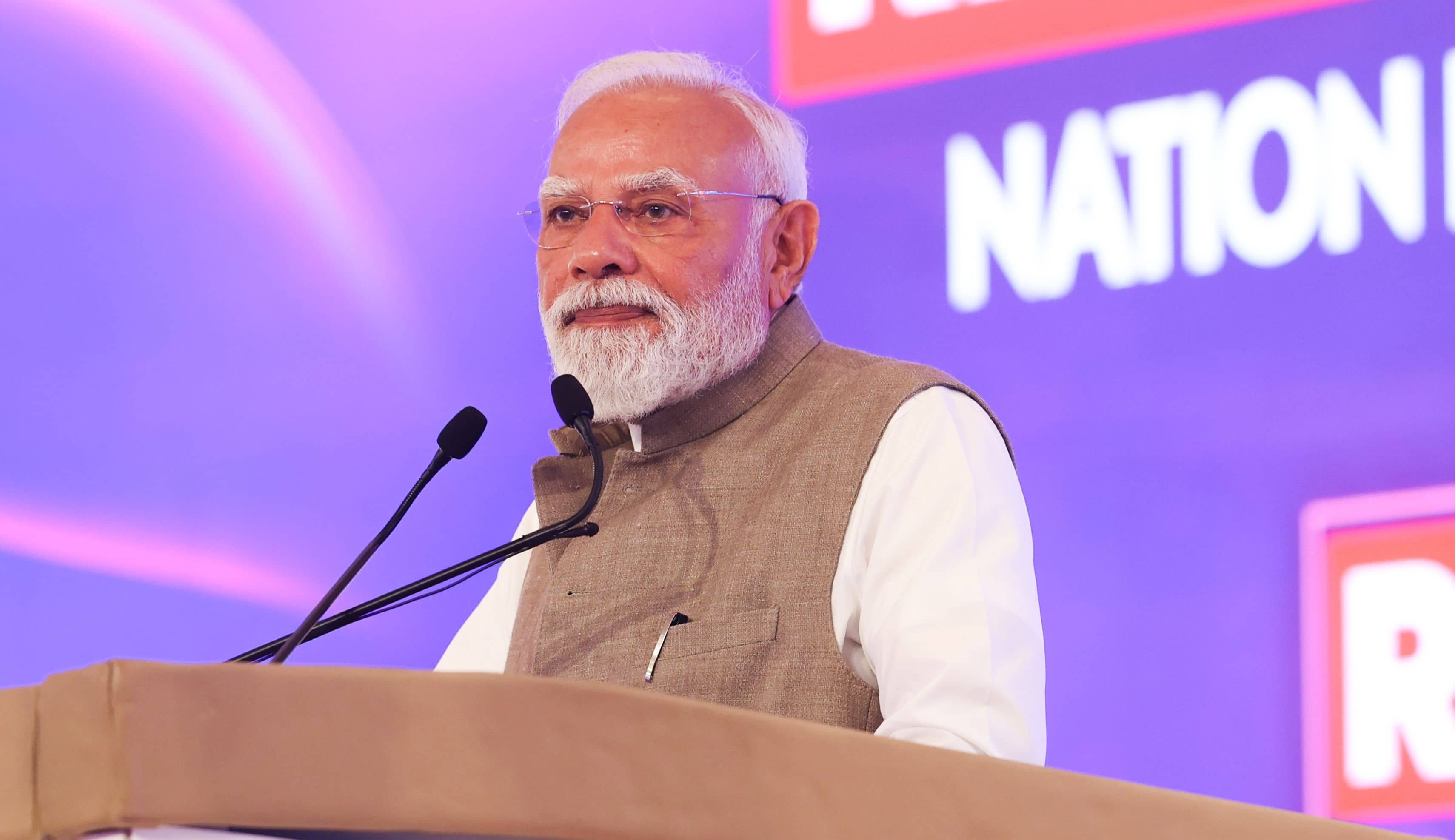
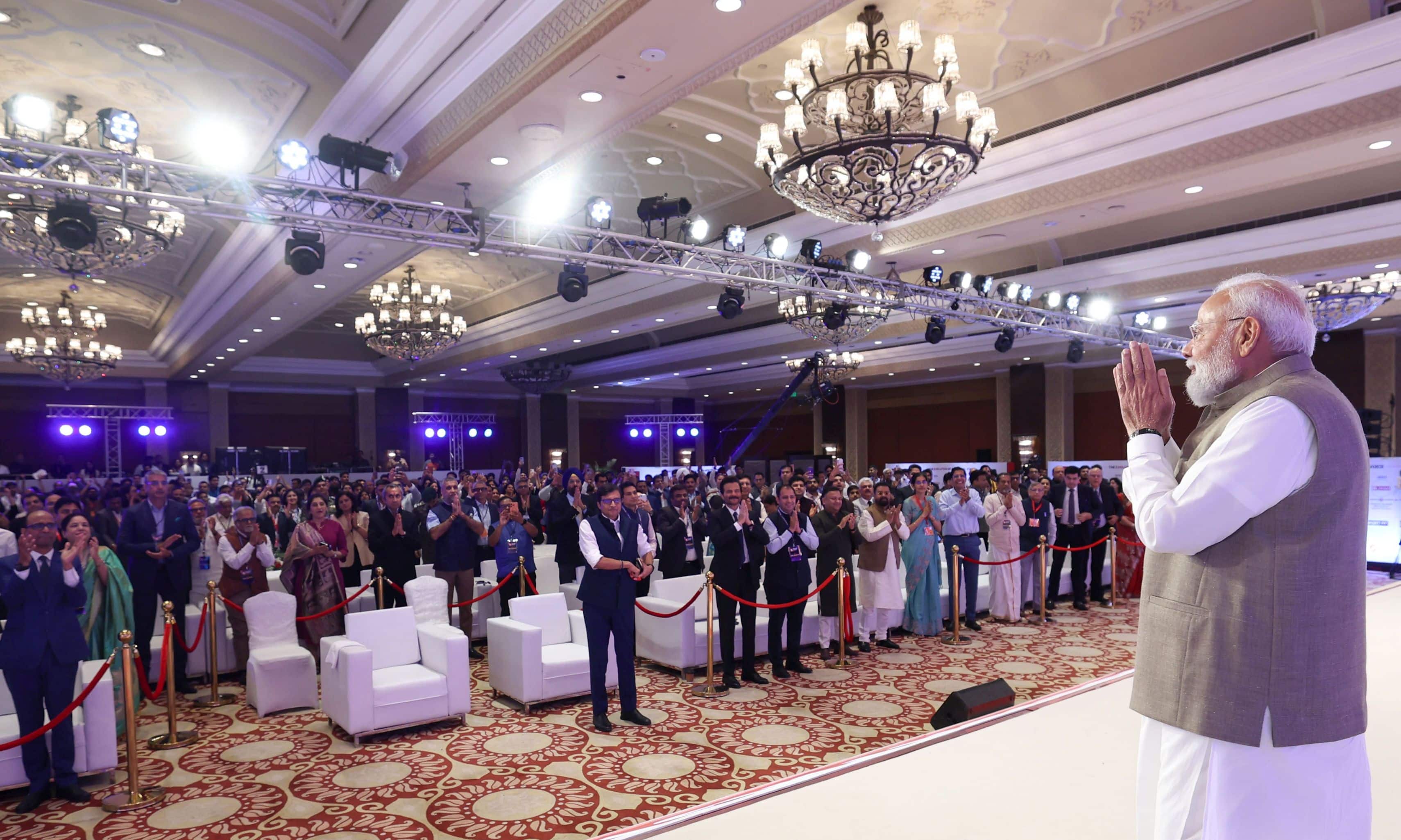
I extend my regards to all viewers of Republic TV Network, which now broadcasts in many languages. I also welcome all companions who have come to participate in this summit. In 24-hour news channels, breaking news holds great importance. And nowadays, if you look anywhere in the world, the entire world seems to be in breaking news mode. Amidst such hustle and bustle, you are hosting and participating in this summit, and therefore you deserve special congratulations. This time, your theme of discussion is equally significant: Great Power India: Nation First.
Friends,
Our scriptures say: Yato Dharmastato Jayah! - meaning, the root of victory and strength is Dharma. And Dharma means duty, Dharma means justice, Dharma means equality, Dharma means dialogue, Dharma means compassion. This very essence is embedded in the spirit of Nation First. India views its power through this lens, weighing it on this scale.
Friends,
India has another unique quality, which the world has now acknowledged. We are not a nation that reacts hastily to momentary events. We are a nation that has witnessed both development and destruction, endured them as well. We are a nation with the memory chip of ages embedded in our consciousness - a nation with the memory chip of millennia. That is why what India is doing today - and I say this with full responsibility - what India is doing today will write the future of the next thousand years. This is India’s greatest guarantee to the world. India is not only a fast-growing economy, it is also a credible economy. Alongside being a rising power - and you even stretched the dictionary to call it a superpower - I would certainly say that India is a reliable power. Just a few days ago, I returned from the G7 Summit, and every leader, every country understands very well that for today’s India, Nation First is the greatest mantra, the highest principle.
Friends,
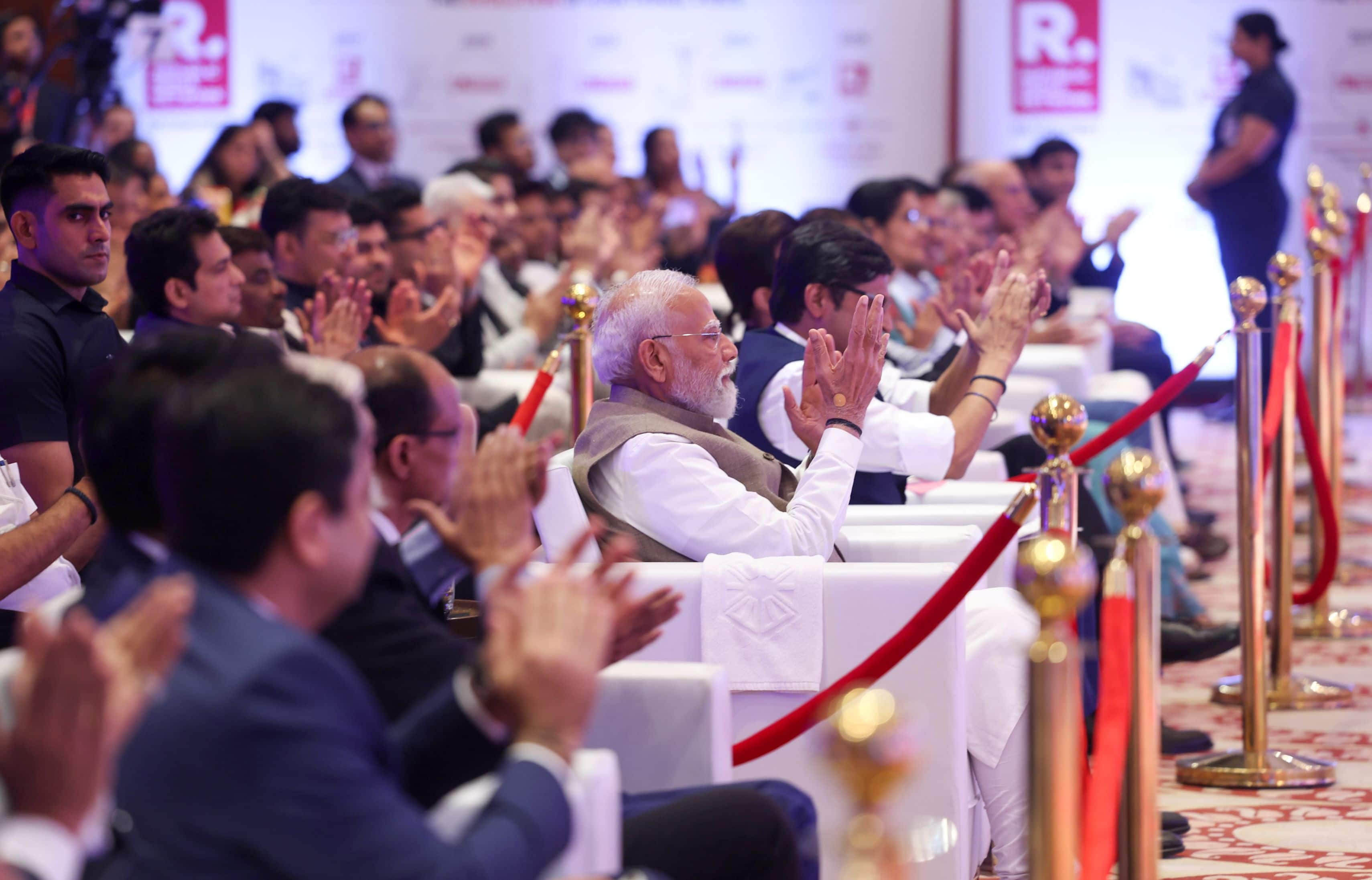
Just a few days ago, our government completed 12 years. Arnab even compelled you to clap for that. If you weigh the achievements of the past twelve years, you will find that at the core of every decision, every step, every effort lies the spirit of Nation First. From the Swachh Bharat Abhiyan to Make in India, from emphasizing khadi to encouraging local products - all these initiatives succeeded because the people of the country placed the nation above all and fulfilled their duty. I salute the citizens of this country.
Friends,
Here with us is our companion, Shri Sridhar Vembu ji. When our entrepreneurs walk with the spirit of Nation First, when they set their goals by understanding the needs of the nation, institutions are built and the country prospers. I don’t know how much has been discussed here about Shri Vembu ji’s work, but recently I went to VivaTech in France. There were nearly 1.5 to 2 lakh young people there. As I and the President of France walked through different stalls to see the innovations of the youth, we came to the Zoho stall. I was astonished and filled with pride to see the crowd of European youth gathered there, eager to understand what this new creation was. Perhaps in India it is not discussed as much, but what I saw in France was remarkable. Congratulations to you.
Friends,
The impact of Nation First in government policy and decisions can be seen in our tribal regions. I am not here to deliver philosophy, but let me share a few light examples so you can understand how work happens. I speak of tribal areas - a population of more than 100 million, the tribal society. We all know that for decades, Maoist terror had entrenched itself there. Even in the 21st century, these terrorists did not allow a single facility to reach those areas. No government vehicle could pass through; they would be riddled with bullets. Many governments came and went, generations passed, and it seemed this misfortune of violence would remain forever. You can imagine - between 2004 and 2014, in those ten years, due to Maoist terror, more than 17,000 violent incidents occurred, and nearly 7,000 lives were lost.
Friends,
For you, today’s headline or half-hour TV debate might be that Maoist terrorism has ended. But things don’t happen like that. It requires immense effort, and that is why I want to explain. Nowadays, some people keep waving the Constitution, but when they were in government, in Naxal-affected areas, even uttering the word “Constitution” could get you shot. At that time, they sat silently, their hands trembling, unable to hold up the Constitution. The Congress was hardly affected by that painful situation.
Friends,
After 2014, we moved forward with the spirit of Nation First to change the situation. We did not just talk, we did not just announce, we acted. We resolved to uproot Naxalism-Maoism completely, and today the whole country can see the result. Maoist terrorism in India is now counting its final breaths.
And friends,
Often the final outcome is so vast and significant that the hard work behind it goes unnoticed. I want to especially tell Republic TV viewers about this.
Friends,
In those Naxal-affected areas where even going out in daylight would terrify ordinary people - fearing abduction, extortion, or looting - where even speaking of development was impossible, we advanced with a pledge of progress. In the past 12 years, our government has built more than 12,000 kilometers of roads in such regions. Many times, our construction equipment was burned, contractors were chased away. If 25 people worked on a road, 200 police personnel had to guard them so the work could continue. We did all this because we had resolved to do it.
Friends,
We built more than 9,500 mobile towers. Earlier, even one tower could not be installed, and if installed, it would be destroyed. Because they always wanted to fuel anger. We brought mobile connectivity to nearly 45,000 villages. In Naxal-affected districts, more than 1,800 bank branches were opened. Around 75,000 banking correspondents and more than 6,000 new post offices were established. We did not rely only on bombs, guns, and bullets, friends - we invested every ounce of strength given by God to win hearts.
Friends,
With firm resolve, we went into Naxal-affected areas to fulfill the hopes and aspirations of ordinary people. You will be astonished - a notorious Naxalite, with a bounty of crores on his head, his mother received a ration card from us for the first time. Her son never allowed her to get one, because he wanted to run his terror regime. There are countless such incidents. I was shocked. And the government of that time sat silently, blind to the Constitution. But the result of all these efforts was a new wave of trust among the people. Today, look at Bastar - instead of bombs and guns, Bastar Olympics are celebrated with great enthusiasm. Two editions have already been held. In the first, more than 1.5 lakh youth participated, and in the second, nearly 4 lakh youth joined. Where once there was terror, now talent is finding opportunity, and sports are flourishing.
Friends,
One of the greatest achievements of these 12 years of service has been building an India filled with hope and aspiration, rising out of despair.
Friends,
Naxalism may have been concentrated in certain areas, but its pain was felt across every corner of India. And when news began to spread that Naxalism was ending, the sense of trust was not limited to those affected regions - it spread across the entire nation. In the ten years before 2014, under the Congress government, the discontent was not only about governance. The despair was far deeper. The nation had lost hope. People felt nothing could change, nothing could improve.
Friends,
In the past 12 years, India has transformed despair into hope, and this gives me the greatest satisfaction. Today, everyone feels that with a little more effort, things can be achieved. Gone are the days when the only refrain was “It cannot happen, it cannot happen.” That era has passed. Today, the spirit is “It will happen.” This new confidence is India’s true achievement, and this is real power. Challenges remain, and they always will. Challenges are shape-shifters, appearing in new forms. But whatever form they take, we will fight and we will win. When the nation moves forward with the belief that “it can be done and we will do it,” dreams are fulfilled.
Friends,
I want to speak here about more than 100 districts and over 500 blocks in India. These were left behind on every parameter of development, and earlier governments had stamped them as “backward districts” and “backward areas.” We lifted these vast regions out of the despair of backwardness and ignited aspirations for development. First, we changed their identity. We said these are “aspirational districts,” these are “aspirational blocks.” We created programs for aspirational districts and aspirational blocks, and the government began working meticulously on every parameter of development. In each district, we identified three aspects to overcome, in others six aspects, and focused efforts began. Today, these aspirational districts and blocks are driving the overall growth of states. Earlier, they dragged growth backward. These districts had large populations living in poverty and deprivation. In recent years, 250 million poor people have defeated poverty, and aspirational districts have played a major role in this.
Friends,
We see that when one person is cured of illness, it is not just that individual who recovers - the whole family feels relief. Similarly, when a son or daughter achieves something, it is not just their achievement, but the entire family is filled with pride and confidence. In the same way, when someone rises out of poverty, the entire society benefits, the nation benefits. When 250 million people have come out of poverty and entered the neo-middle class, the benefit is not limited to those families. The middle class also gains, because these are new consumers who drive the economy, ultimately creating opportunities for the middle class. Thus, poverty reduction is not merely a matter of welfare - it is a story of expanding opportunities, a source of new aspirations.
Friends,
The vast middle class that has emerged in the country over the past 12 years has been a major priority for the government. For the ease of living of the middle class, the government has worked at every level. Take the dream of owning a home. Every middle-class family desires to have their own house. In 2014, if a family wanted to buy a home, home loans came with double-digit interest rates. Today, loans are available from banks at 7–8 percent interest. Earlier, getting a loan was like winning a war, requiring immense effort. Today, it is possible from the comfort of one’s home. Here in Delhi-NCR, people know how thousands of urban middle-class homes were stuck incomplete. Families had paid their life savings to builders, who showed glossy pamphlets and dreams, but the houses were never delivered. Families had to pay rent while waiting endlessly for their homes. It was a terrible situation. To complete these stalled projects, we created a special fund of ₹25,000 crore. You will be glad to know that nearly 60,000 long-delayed homes have now been delivered across the country.
Friends,
Another aspect that affects daily life is connectivity and transport. Today, if you look at social media, tourists from around the world are amazed by our metro system.
Friends,
In 2014, about 2.8 million people traveled daily by metro. Today, nearly 12.8 million people travel by metro every day. Now, high-speed trains like Vande Bharat, Namo Bharat, and Amrit Bharat are connecting the nation. With better roads and highways, not only is time saved, but vehicle maintenance costs have also reduced. In recent years, the number of airports has doubled. This has given the middle class in many smaller cities the opportunity to fly for the first time.
Friends,
In the past 12 years, India has not only increased the earnings of the middle class but also their savings. In 2013–14, income up to about ₹2 lakh was taxable, and the middle class bore that burden. Today, income up to ₹12 lakh is tax-free. In other words, tax-free income has multiplied several times.
Friends,
GST reforms have also brought great convenience to the middle class. Filing taxes has become easier, saving both time and money. Income tax returns can now be filed from home, and even settlement issues are handled in a faceless manner.
Friends,
A major expense for middle-class families is treatment for diabetes and other lifestyle-related conditions. At Jan Aushadhi Kendras, such medicines are available at an 80 percent discount. If earlier you spent ₹1,000, today you spend only ₹200, saving ₹800. Over the years, this has resulted in savings of nearly ₹40,000 crore for countless families. Another significant portion of the middle-class budget goes toward healthcare for the elderly. Today, every citizen above 70 years of age is entitled to free treatment up to ₹5 lakh.
Friends,
It is human nature to forget past difficulties when conveniences become routine. Earlier, you paid tax on ₹2 lakh income; now, up to ₹12 lakh is tax-free. Yet applause comes only when reminded. On the other hand, if a bus or train is delayed, complaints pour in. This is the most vocal class.
Friends,
As I said, people forget old troubles. You may not even remember the difficulties once faced in getting a driving license or passport. Earlier, it was a struggle. Today, obtaining a driving license is easier, and passports are usually issued within three days.
Friends,
I know the way our government works has raised people’s aspirations. Once a demand is met, people immediately seek something better, something upgraded. If earlier the demand was for a new road, once built, the next question is: when will the metro arrive? Earlier, expectations were that trains should arrive on time and provide clean seating. Today, the demand is: why isn’t Vande Bharat running on our route?
Friends,
Some see this as dissatisfaction, but it is aspiration. In fact, even the Congress party constantly says, “Modi ji, this should happen, that should happen.” They trust that if anyone can deliver, it is this government.
Friends,
Aspirations arise only where people believe dreams can be fulfilled. This is the aspiration of India’s youth, poor, and middle class. Today, it is the driving energy of BJP-NDA governments.
Friends,
On one side, a large section of the nation is aspirational. On the other side, there is a political group whose life mantra has become “Always Against.” This group is filled with chronic dissatisfaction. Let me share some symptoms so Republic TV viewers can recognize them. They will say, “Why doesn’t this place have 24-hour electricity?” But the next day, they protest against dams, solar parks, thermal plants, or nuclear projects. One day they ask why there is no electricity, the next day they oppose power generation. These are the same people who once opposed mineral mining, but today ask where India’s rare earth mineral reserves and supply chains are, and why India doesn’t have an EV ecosystem like other countries. They once debated “data versus flour,” but now demand to know what India has done in AI. In one breath, they say AI should have advanced further, and in the next, they oppose data centers and semiconductor plants, listing endless drawbacks on social media, TV debates, and newspapers.
Friends,
These people bring up corruption indices from around the world to put India in the dock. Their ecosystem’s media amplifies it 24/7. But when action is taken against corruption, they are the first to cry foul, claiming raids and investigations are harassment. They question why action is taken now, why not then, why against A and not B. This is their game.
Friends,
It is vital for the nation to understand their character. Especially our youth, and Gen Z in particular, must recognize them quickly. Otherwise, as I say, “Suryavanshi has arrived,” and he explains swiftly.
Friends,
These people claim the armed forces lack freedom and weapons. But when the government makes a defense deal or buys modern arms, they are the first to question why. They challenge India’s diplomacy worldwide, but when India builds infrastructure projects for diplomacy and security, they protest loudly.
Friends,
At this crucial juncture, India must identify such people, understand their flawed arguments, and remain alert. Unfortunately, today the main opposition party, Congress, has been taken over by such elements. To imagine Congress speaking of Nation First, as it did in Gandhi ji’s time, is now a false dream.
Friends,
The world today is challenging old paradigms, and the scale of disruption is immense. But these challenges also bring new opportunities. Every youth, entrepreneur, innovator, and startup in India must focus on these opportunities. The government, with the spirit of Nation First, stands fully with the people. India is now riding the Reform Express. This momentum will only accelerate. From this Republic TV platform, I say again: our dreams are vast, and our efforts will be equally immense. The collective endeavor of 1.4 billion Indians will build a developed India. And I assure you, you will see this developed India with your own eyes. It will not be left for future generations to wait. With this confidence, I once again extend my best wishes to Republic TV, its viewers, and all of you. Thank you very much!