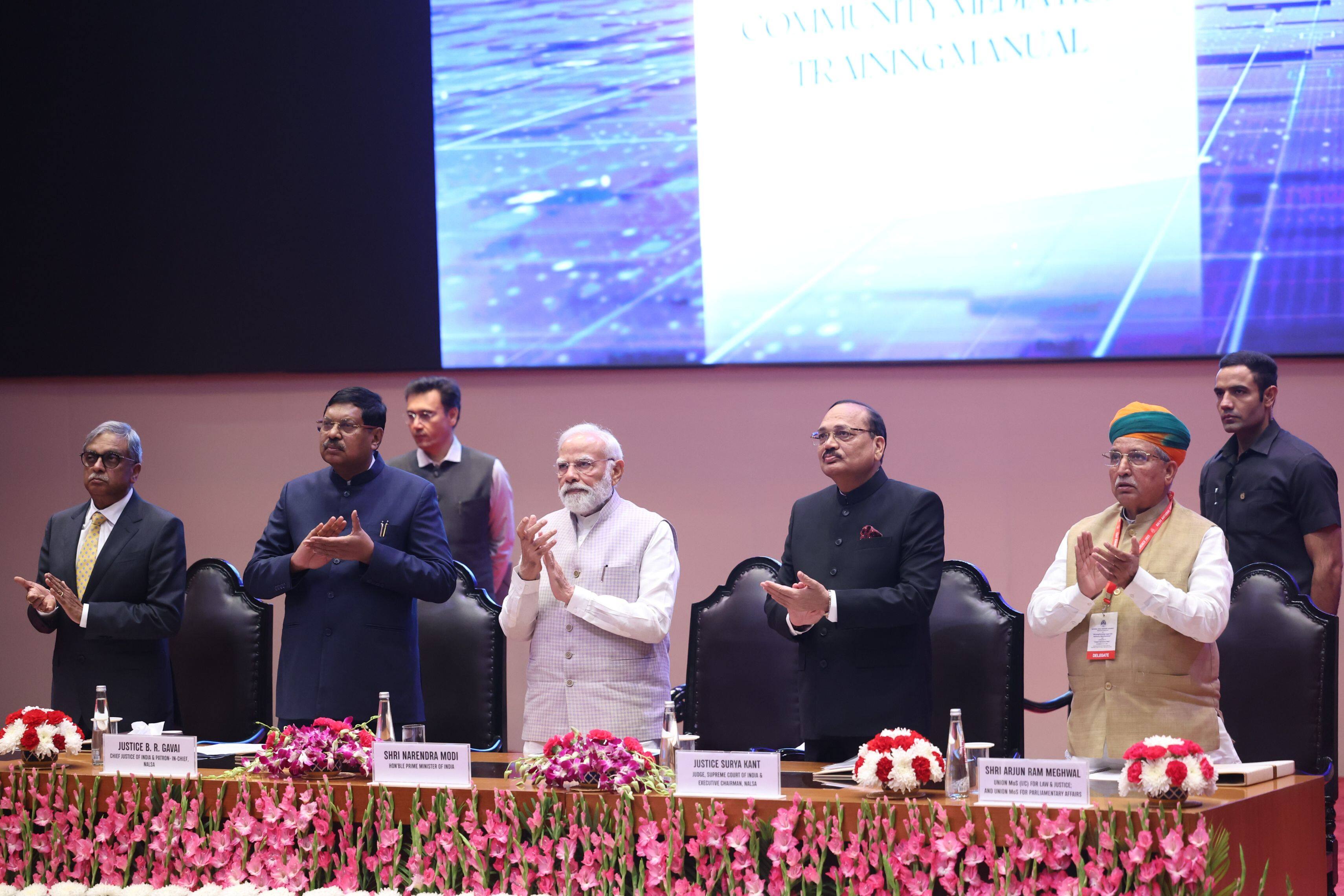
CJI Shri B R Gavai Ji, Justice Surya Kant Ji, Justice Vikram Nath Ji, my colleague at the Centre Arjun Ram Meghwal Ji, other honourable judges of the Supreme Court, Chief Justices of the High Courts, ladies and gentlemen,
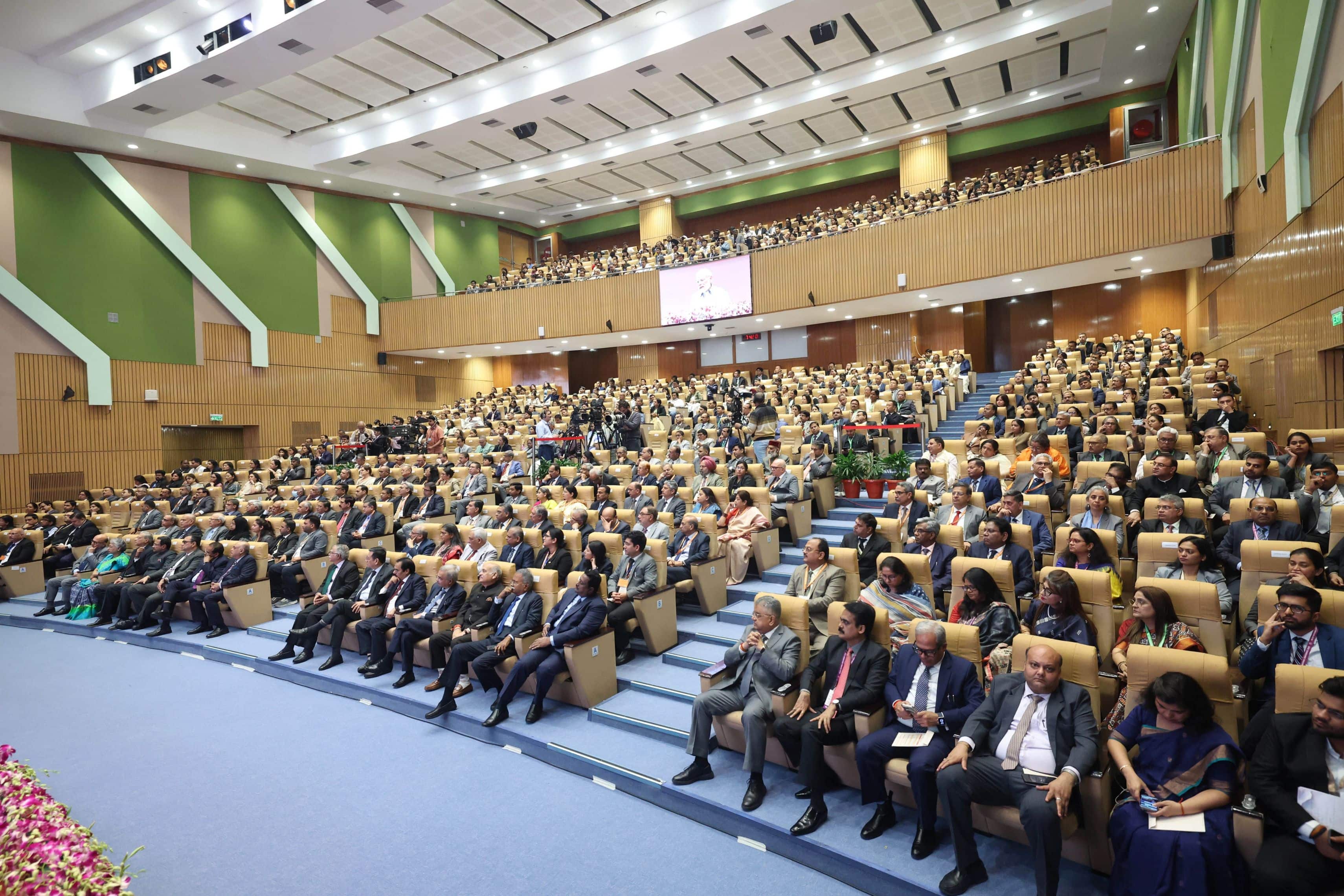
It is a privilege to be present among you all on this important occasion. Strengthening the legal aid delivery mechanism, and this event associated with Legal Services Day, will give new strength to our judicial system. I wish you all the best for the 20th National Conference. I have been told that you people have been engaged in this work since this morning, so I will not take much of your time. I greet the Dignitaries, members of the judiciary, and Legal Services Authorities present here.
Friends,
When justice is accessible to all, is timely, when justice reaches every person regardless of their social or financial background, only then it becomes the foundation of social justice. Legal aid plays a vital role in ensuring that justice is accessible to all. From the national level to the taluka level, legal services authorities act as a bridge between the judiciary and the common man. I am satisfied that today, through Lok Adalats and pre-litigation settlements, millions of disputes are being resolved quickly, amicably, and at low cost. Under the Legal Aid Defence Council System launched by the Government of India, in just three years, around 8 lakh criminal cases have been settled. These efforts of the government have ensured ease of justice to the poor, Dalits, oppressed, exploited and deprived people of the country.
Friends,
Over the last 11 years, our focus has been consistently and firmly on Ease of Doing Business and Ease of Living and we have been taking various steps. More than 40 thousand unnecessary compliances have been removed for businesses. More than 3,400 legal sections have been decriminalized through the Jan Vishwas Act. More than 1,500 irrelevant and outdated laws have been repealed. The old laws that were in existence for decades have now been replaced by the Bhartiya Nyaya Sanhita.
And friends,
As I have said earlier, Ease of Doing Business and Ease of Living are possible only when Ease of Justice is also ensured. In the last few years, many steps have also been taken to enhance the Ease of Justice. And going forward, we will move even faster in this direction.
Friends,
This year marks the 30th anniversary of NALSA, the National Legal Services Authority. In these three decades, NALSA has made a very important effort to connect the judiciary with the poor citizens of the country. People who approach legal services authorities often have no resources, no representation, and sometimes no hope. Giving them hope and support is the true meaning of the word “service”, and this is also present in the name ‘NALSA’. Therefore, I have full confidence that each of its members will continue their work with patience and professionalism.
Friends,
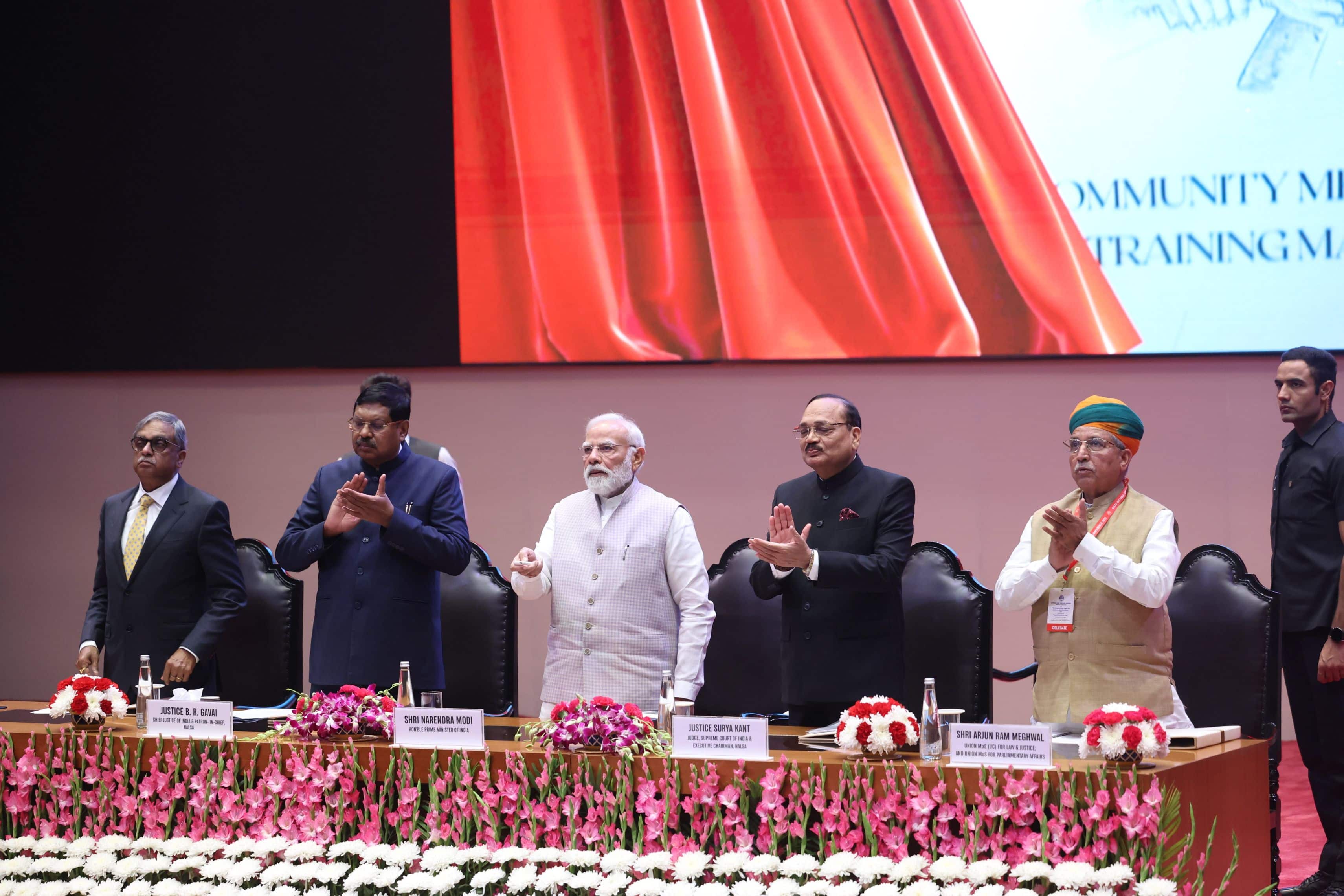
Today we are launching the Community Mediation Training Module of NALSA, through this we are reviving the ancient knowledge of Indian tradition, in which disputes were resolved through dialogue and consensus. From village councils to village elders, mediation has always been a part of our civilization. The new Mediation Act is carrying forward this tradition and giving it a modern form. I am confident that through this training module, resources will be created for Community Mediations, which will help in resolving disputes, maintaining harmony and reducing litigation.
Friends,
Technology is certainly a disruptive force. But if it has a pro-people focus, then the same technology becomes a power of democratization. We've seen how UPI revolutionized digital payments. Today, even the smallest vendors have become part of the digital economy. Villages have been connected with millions of kilometers of optical fiber. Just a few weeks ago, about one lakh mobile towers were launched simultaneously in rural areas. That means technology today is becoming a medium of inclusion and empowerment. The E-Courts project in justice delivery is also a great example of this. This shows how technology can make judicial processes modern and humane. From e-filing to electronic summons service, from virtual hearings to video conferencing, technology has made everything easier. This has made the path to justice easier. As you all know, the budget for the third phase of this project has been increased to more than Rs 7 thousand crore. This demonstrates the government's strong commitment to this project.

Friends,
We all also know the importance of legal awareness. A poor person cannot get justice unless he knows his rights, understands the law, and feels intimidated by the complexity of the system. Therefore, increasing legal awareness among weaker sections, women and the elderly is our priority. All of you and our courts have been continuously making efforts in this direction. I believe that our youth, especially law students, can play a transformative role in this. If young law students are encouraged to connect with the poor and people living in villages, and explain to them their legal rights and legal processes, it will give them an opportunity to feel the pulse of the society directly. By working with self-help groups, cooperatives, Panchayati Raj institutions, and other strong grassroots networks, we can bring legal knowledge to every doorstep.
Friends,
There is another aspect related to legal aid, which I often discuss. The language of justice should be such that it is understood by the person seeking justice. It is very important to keep this in mind when drafting the law. When people understand the law in their own language, it leads to better compliance and reduces litigation. Along with this, it is also necessary that judgments and legal documents should be made available in the local language. It is indeed commendable that the Supreme Court has taken the initiative to translate more than 80 thousand judgments into 18 Indian languages. I am confident that this effort will continue in the High Courts and at the district level as well.
Friends,
As we move towards a developed India, I urge the Legal Profession, Judicial Services and all those associated with it to imagine what our justice delivery system would be like when we call ourselves a developed nation? We have to move forward together in that direction. I extend my heartfelt congratulations to NALSA, the entire legal fraternity, and everyone involved in justice delivery. Once again, I wish you all the best for this event and I am also very grateful to you all for giving me the opportunity to be among you all. Thank you.