Mr. Gulab Chand Kataria ji, my colleague in the Union Cabinet J. P. Nadda ji, Ashwini Vaishnaw ji, my fellow parliamentarian Manish Tiwari ji, and here in the auditorium many legislators, ministers, and MPs are present. I also see many distinguished personalities today, familiar faces from long ago.
Brothers and sisters,
It is a special joy to be among you today.
Friends,
Chandigarh is not just a city - it has been a model of development for India. Chandigarh is known for planned growth, for its identity as a city of better lifestyle and ease of living. It is recognized for advanced medical facilities, and above all, for the blessings of Maa Chandi. That is why the development of Chandigarh has always been a priority for the NDA government. You may recall, about a year and a half ago, the country made a major reform in its justice system. We replaced the Penal Code with the Bharatiya Nyaya Sanhita - a justice-based legal framework instead of punishment-based laws. And the implementation of the Bharatiya Nyaya Sanhita began right here in Chandigarh.
Friends,
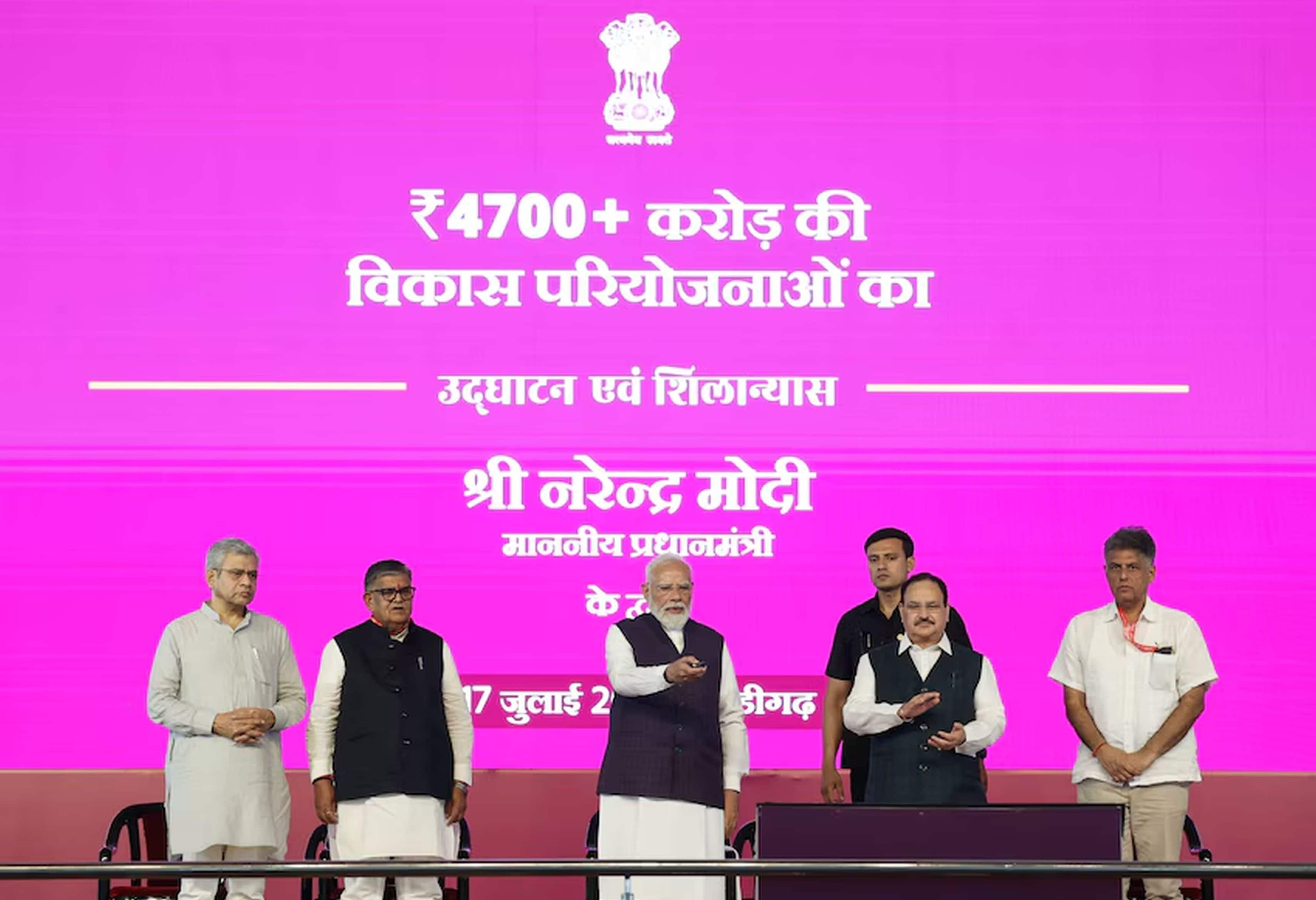
In recent years, projects like the Integrated Command and Control Centre, smart traffic management, smart parking, and digital governance have been undertaken to make Chandigarh hi-tech. More than ₹2,500 crore has been spent on this mission. Even today, several new projects related to health, education, and infrastructure are being launched here. I congratulate all residents of Chandigarh for these initiatives.
Friends,
Before coming here, I was in Jind, Haryana, and after this I will go to Jalandhar for Punjab’s development programs. Between these two, today’s program in Chandigarh is taking place. Because Chandigarh connects Haryana, Punjab, Himachal, and the entire region. The development of Chandigarh not only transforms the lives of its residents but also benefits the people of Haryana, Himachal, Punjab, and Jammu & Kashmir. In terms of medical services, Chandigarh is a major hub for this entire region.
Friends,
When I lived in Chandigarh, I often had to go to PGI. Why? Because someone from our colleagues or their families - whether from Jammu & Kashmir, Punjab, Himachal, or Haryana - would come here for treatment, and it was natural for me to visit them. That is why I know how important PGI has been for the health needs of people across this region.
Friends,
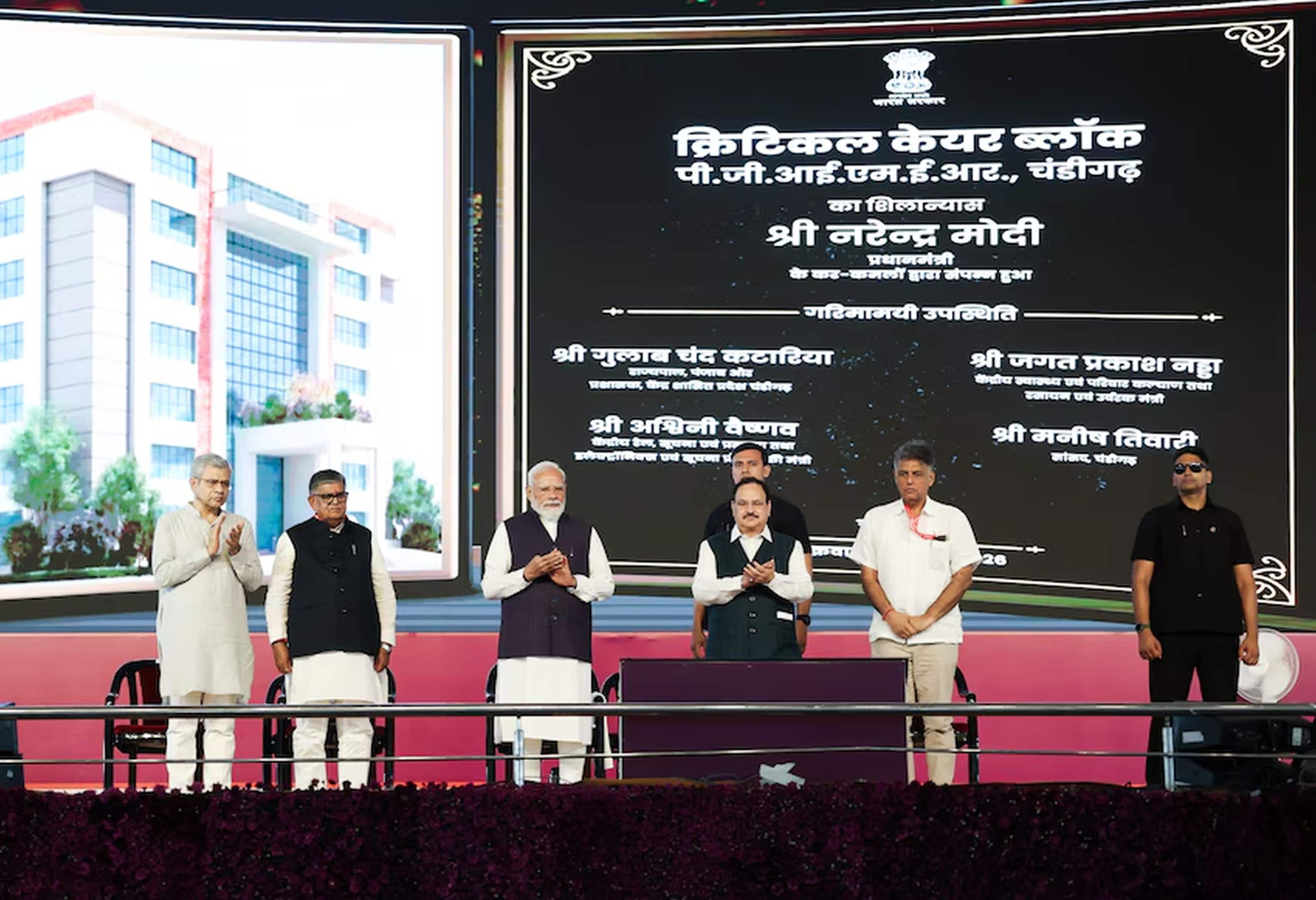
Today, advanced healthcare facilities at Chandigarh PGI are being expanded. The Advanced Neurosciences Centre, Advanced Mother and Child Centre, and Critical Care Hospital Block will provide better treatment to lakhs of people. I remember attending PGI’s convocation in 2015. I am glad that today I am virtually meeting many old colleagues there again. In this decade, PGI’s capacity has expanded greatly. I appreciate the management, professors, and young doctors of PGI Chandigarh and extend my best wishes to them.
Friends,
When we talk about health, we all know how important cleanliness is. That is why when our government was formed, we launched the Swachh Bharat Mission. Millions of toilets were built, India was freed from open defecation, campaigns were run for cleanliness in public places, and initiatives were started to make cleanliness a part of our lifestyle. The Swachh Bharat rankings of our cities are part of this effort, and Chandigarh has consistently worked to perform well in them.
Friends,
I also want to appreciate retired IPS officer Inderjit Singh Sidhu ji of Chandigarh. He is known as the “Broom Warrior.” He awakened a new consciousness about cleanliness in Chandigarh and inspired people. For this, our government honored him with the Padma award this year.
Friends,
Cleanliness is not a one-day task - it is a way of life. I am happy that cleanliness has been linked with today’s program as well. Under the Swachhata Se Swagat initiative, a special cleanliness campaign was carried out. I saw on social media that leaders and citizens alike were engaged in cleaning. It created a joyful atmosphere across the country. I proudly congratulate all residents of Chandigarh for this initiative.
Friends,
Such cleanliness campaigns have proven very helpful in preventing many diseases in the country.
Friends,
There was a time when the world expressed concern about India’s health sector. Whenever a major disaster was anticipated, people questioned what would happen in India. During the coronavirus pandemic, India was at the center of global concern. But our government changed India’s capacity and also changed the world’s perception. When the pandemic came, India was not a country asking for help - India was sending help to the world. Today, people from many countries come to India for treatment of serious illnesses. India is emerging as a major destination for medical tourism.
Friends,
This transformation is the result of 12 years of honest effort and policy. Twelve years ago, we resolved that our people would not live without healthcare services, that they would receive better treatment facilities at affordable prices. The success of the past 12 years is the outcome of that resolve. In recent years, India has rapidly expanded its healthcare infrastructure. Since 2014, approval has been given for 15 new AIIMS. Today, new AIIMS are functioning in different parts of the country. Hundreds of new medical colleges have been established across India. The number of specialty hospitals for treating serious diseases like cancer has also increased. Here in Chandigarh too, the Homi Bhabha Cancer Hospital was built nearby. In 2022, I had the opportunity to inaugurate it. Today, this hospital is serving thousands of patients.
Friends,
Primary healthcare facilities are being strengthened in villages across the country. To ensure that the health system is robust at every level, the Ayushman Bharat Health Infrastructure Mission has been launched. Under this, a network of facilities like critical care blocks, integrated public health labs, and public health units has been created nationwide. Today, nearly 1.75 lakh Ayushman Arogya Mandirs are functioning in urban, rural, and tribal areas. These centers provide primary treatment facilities along with 12 different health package services. Millions of people have undergone screenings for diseases like blood pressure and diabetes here.
Friends,
Our government is also making treatment easier through technology. Through the e-Sanjeevani Mission, telemedicine services have been introduced. Under this, more than 480 million telemedicine consultations have already taken place. Even people from remote areas are able to consult doctors in major hospitals.
Friends,
Because of this expansion of healthcare services, today more than 90 percent of deliveries in India are institutional. Maternal mortality has declined by 86 percent, and infant mortality has also seen a sharp drop.
Friends,
Alongside treatment, equal focus is being given to preventive healthcare. Initiatives like the Poshan Abhiyan, Mission Indradhanush, yoga, HPV vaccination, and the U-WIN platform are securing the lives of millions.
Friends,
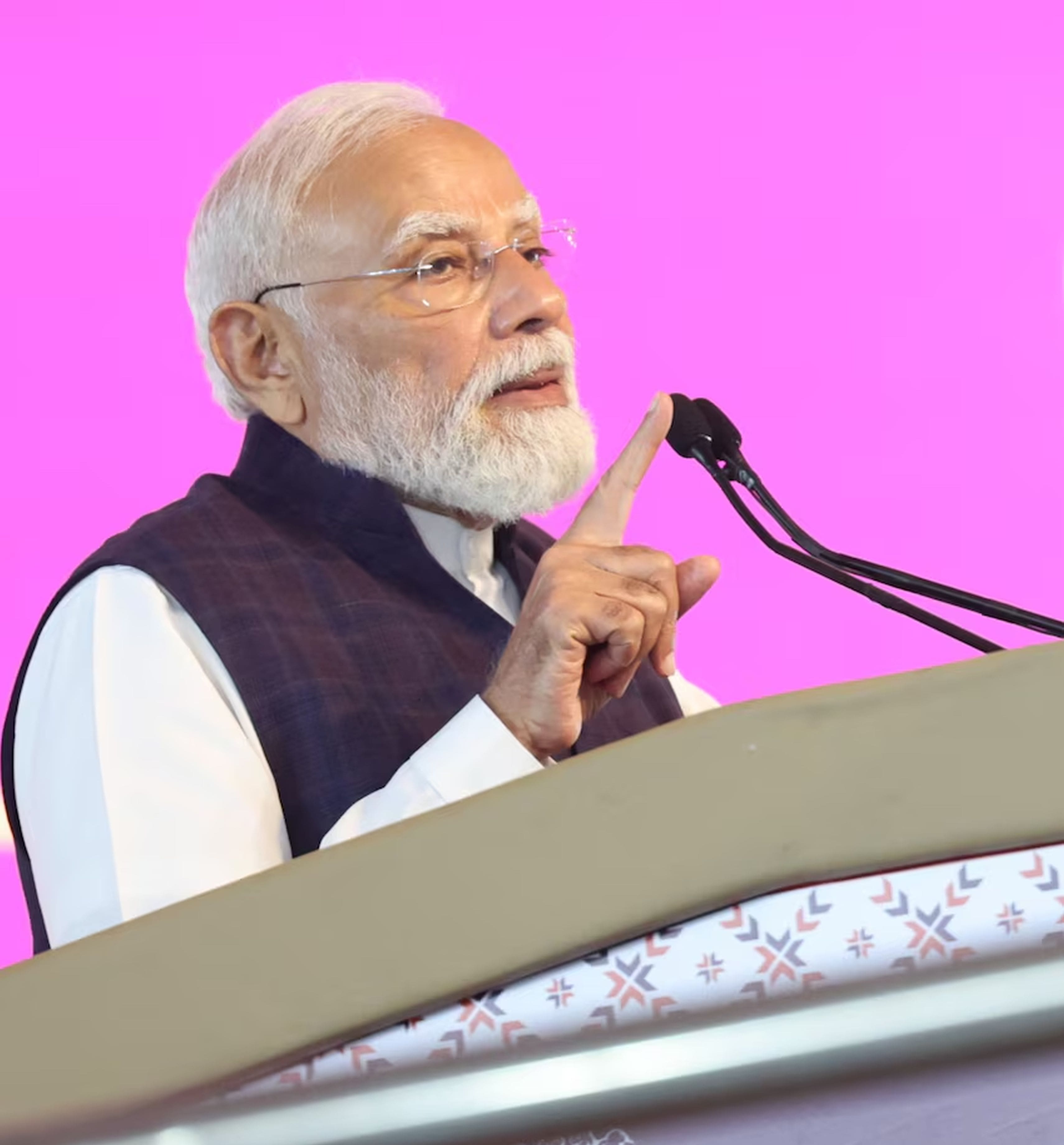
We have also resolved to make India TB-free. For this, the TB Mukt Bharat Abhiyan is being run. Public participation is raising awareness, timely screenings are being conducted, and patients are being provided treatment. As a result, TB treatment coverage has crossed 90 percent. According to last year’s WHO report, TB infection has reduced by 21 percent in just a decade. The greatest benefit of these efforts is reaching the poor, the middle class, and especially our mothers and sisters. Traditionally, women prioritize family work and endure illness silently. But proactive efforts have ensured screenings and care for them, and today, a large number of women are becoming TB-free. In India, healthcare is no longer a privilege - it is becoming the right of every citizen.
Friends,
The government’s focus on the health sector has greatly benefited India’s youth as well. Young doctors know how difficult it once was to pursue this dream. Opportunities were scarce because medical seats and colleges were very limited. We changed this situation. Today, the number of medical colleges has nearly doubled. MBBS and postgraduate seats have increased to record levels. And now, even Chandigarh PGI has received approval for an MBBS college. Soon admissions will begin here too, giving talented youth the chance to study in such a top institution. The nation will gain a large number of excellent doctors.
Friends,
Chandigarh is a city where major institutions of education, engineering, medical science, and research coexist. Very few cities have such strength. In the coming time, these institutions can become major centers for new technology, healthcare, startups, and innovation. Today, several important education-related projects are also giving new momentum to this journey. At Punjab Engineering College, the Kurukshetra Boys’ Hostel and Mess has been inaugurated. A new hostel has been prepared for Government College in Sector-46. The foundation stone of a Research Scholars Hostel has also been laid. Our effort is to provide better labs and faculty for research. When the research environment is strong, innovation will accelerate. In fields like artificial intelligence, semiconductors, advanced manufacturing, and deep-tech, India must move forward. I am confident that Chandigarh’s institutions, teachers, and youth will play a vital role in this direction.
Friends,
Infrastructure development is the roadmap of any nation’s economic progress. For the first time, infrastructure in India is being developed with a holistic approach. Today, several connectivity projects have also been launched in Chandigarh. The six-lane greenfield highway from IT City to Kurali has been inaugurated. This will reduce pressure on the airport road and ease traffic for residents of Mohali and Kharar. The foundation stone of the Ambala–Chandigarh Greenfield Highway’s PR-7 Spur has also been laid. Such projects will boost industry and trade, and improve ease of living in Chandigarh.
Friends,
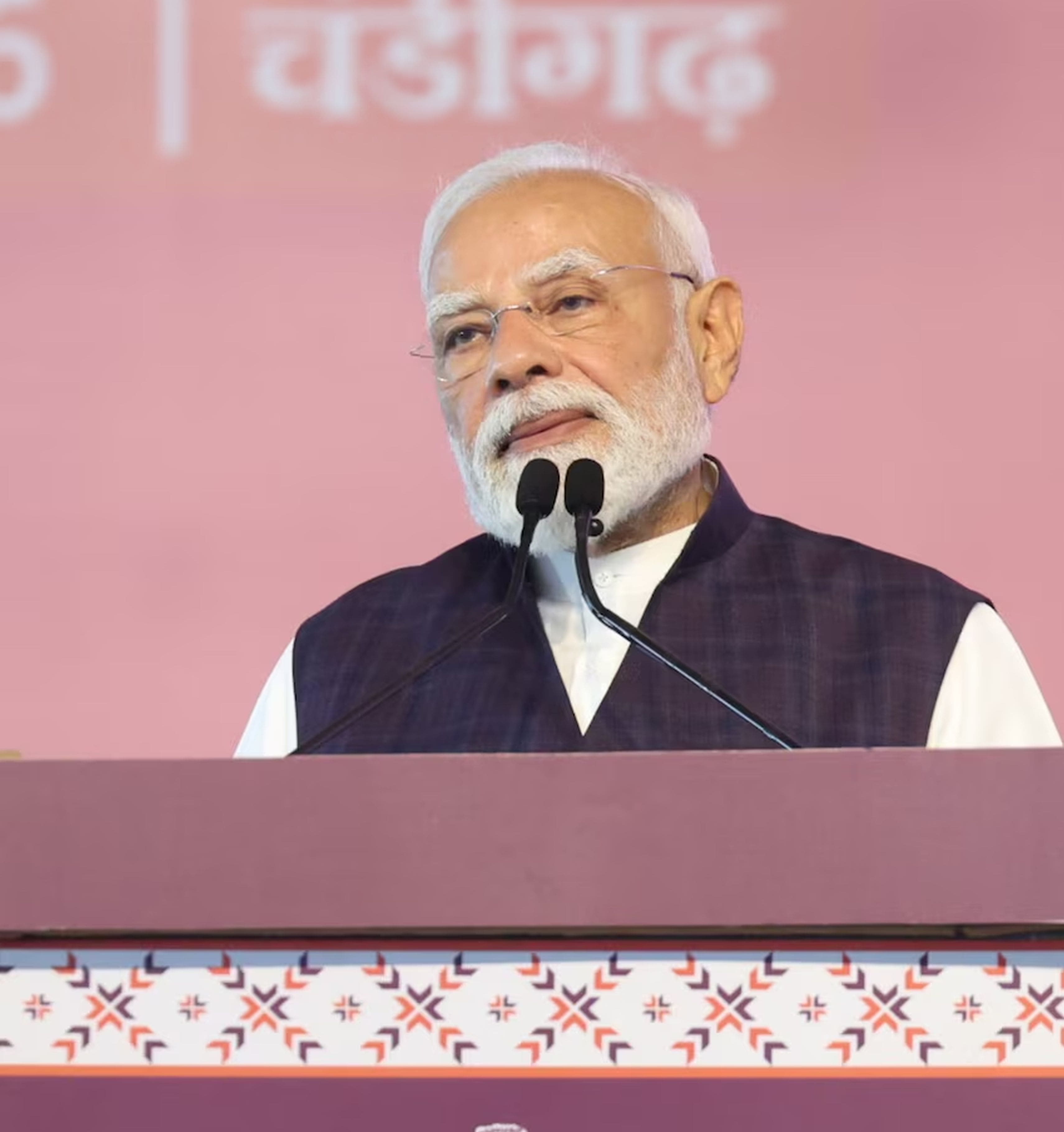
Focusing on regional connectivity, railway projects are also being inaugurated today in Jalandhar. These will benefit Punjab and the entire region. At the same time, from Jind to Sonipat, the country’s first hydrogen train has started running. This clean-fuel train is a major beginning. I congratulate all of you and the people of India for this achievement.
Friends,
On the journey toward a developed India, we must move forward with modern thinking - focusing on future technologies, future transportation, and future healthcare services. We must take decisions that benefit not only the present generation but also future generations. We must build institutions that grow stronger with time. The BJP-NDA government is moving rapidly in this direction. I once again congratulate the people of Chandigarh, Punjab, Haryana, Himachal, and the entire region for these new projects. Thank you all very much. Say with me -
Bharat Mata ki Jai. Bharat Mata ki Jai. Bharat Mata ki Jai.
Thank you very much.