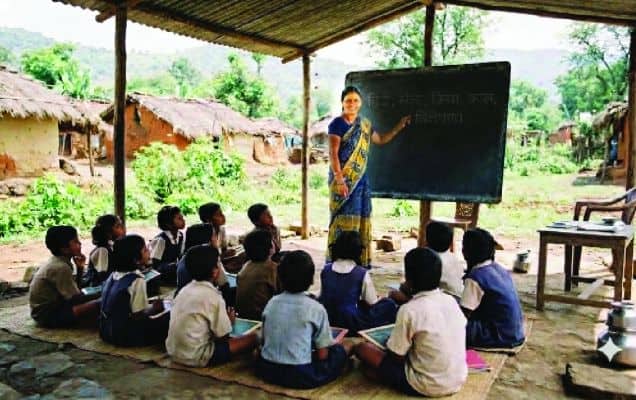
CM launches eMPOWER campaign for providing quality computer education to the state’s youth. 

Over one lakh youths have made online registration so far. 

Youths of the age of above 14 and std-V pass will be able to enroll for the computer course for Rs.50. 

Free-of-charge training for SC/ST, OBC, disabled and backward youth.

 State govt cannot afford to let any youth of the state remain uneducated of computer basics: CM

On Wednesday 4th July 2012, Gujarat Chief Minister Shri Narendra Modi launched the eMPOWER initiative that will provide basic computer training to the youth of the state. eMPOWER has been organized by the State’s Labour and Employment Department. The Chief Minister expressed delight in sharing that 1.04 lakh youngsters have already registered themselves for the programme.

The Chief Minister also expressed joy in sharing that 84% of the candidates who registered are from rural areas and 35,000 women have also enrolled for eMPOWER. Shri Modi said that in ordinary circumstances one would have to pay a lot on money to learn computers but in case of eMPOWER a token free of Rs. 50/- was all that was needed and members of SC/ST, BPL families could avail if the training free of cost. Shri Modi believed this training and the certificate from Microsoft would add tremendous value in the lives of the youngsters. 

He affirmed that in the coming days if one doesn’t know computer and IT he or she will be deemed as illiterate but it was his determination that none of Gujarat’s youngsters should be deemed as illiterate! 

Speaking on the occasion, which also falls on the Nirvan Diwas of Swami Vivekananda, Shri Modi appealed to the youngsters to seize the opportunities the state Government is providing through programmes such as eMPOWER. This is a great way to fulfill the mission of Swami ji, Shri Modi stated, adding that start of eMPOWER is not merely the launch of a new scheme but seeks to strengthen the link between the present and the future.

The Chief Minister affirmed that the world is changing fast and if we are unable to accept the changes in our stride, we would become irrelevant. He called upon youngsters to free India of 1200 years of slavery and play their part in ending any backwardness that prevails. Giving the example of Shri Ishwar Chandra Vidyasagar, Shri Modi shared that when he began to stress on the need of indigenous education, many thought what was the need of this but it was infact due to such stellar efforts that the wheels of change began to roll.

Likewise, Shri Modi believed that technology is one of the changes that are here to stay. He added that it is impossible to imagine life without technology and no section of society especially the youth can remain aloof from technology. He stressed on the need to make it simple and share it with the youth. Shri Modi shared some instances to illustrate the technology penetration across our lives. He remembered how even Adivasi women in a remote taluka of Gujarat were well versed in using mobile phones, indicating how much the influence of technology has been on our lives.

Shri Modi said that while there is unanimity that the 21st century will be Asia’s century, the jury is still out on whether it will be India’s of China’s century. He stated that India is among the world’s youngest nations with 65% of its population under 35 years of age and this can be our greatest strength.. In Shri Modi’s opinion, what was needed was to give the opportunity to the youth.

On the occasion, Shri Modi shared some of Gujarat’s initiatives that are directed towards giving more opportunity to the youth for their future. He cited the example of SCOPE to provide English-speaking skills to the youth. During Gujarat’s Golden Jubilee year, over a lakh youngsters learnt English and soft skills. Similarly, the broadband connectivity across 18,000 villages that was achieved 4 years ago too added tremendous value for the youth, Shri Modi said.

The Chief Minister reminded on the importance ok skill development. He said that Gujarat has 442 institutes for technical education in 2001 but this has gone up to 18,000 today. Similarly, while there were 11 Universities in 2001 there are 42 now. He recounted the state Government’s efforts in giving teeth to ITIs so that there are diverse opportunities for the youngsters of the state.

Concluding his speech, Shri Modi advised the youngsters to dream big and if they work hard, road to success would not be far away. He said that the entire state Government is leaving no stone unturned to providing opportunities to the youth and ensuring their dreams can see the light of day.

Speaking on the occasion Labour Minister Vajubhai Vala said the youths should take Swami Vivekananda’s message as the source of inspiration for getting success. He congratulated the youths for enrolling in the eMPOWER programme.

Minister of State Shri Liladharbhai Vaghela described the programme important for the empowerment of the youths. Even as when the state government is celebrating the current year in the memory of Swami Vivekananda the eMPOWER programme will be important for youths in building career, he said. 

In the beginning, Principal Secretary to Labour P.Paneervel welcomed the dignitaries and gave outline of the programme.

Agriculture Minister Shri Dilip Sanghani, Education Minister Shri Ramanlal Vora, Minister of State for Education Shri Jaysinh Chauhan, Minister of State for Higher Education Mrs. Vasuben Trivedi, MoS Shri Vasanbhai Ahir, Shri Jitendra Sukhadiya, MP Shri Purushottam Rupala, State planning commission Chairman Shri Bhupendrasinh Chudasama, Kaushik Patel, Chief Secretary Shri A K Joti, senior officials, Group Director of Mircrosoft’s Public Sector Ranvirsinh, dignitaries and trainees in large number were present on the occasion.

Explore More
Today, the entire country and entire world is filled with the spirit of Bhagwan Shri Ram: PM Modi at Dhwajarohan Utsav in Ayodhya

பிரபலமான பேச்சுகள்

Today, the entire country and entire world is filled with the spirit of Bhagwan Shri Ram: PM Modi at Dhwajarohan Utsav in Ayodhya
PM-KISAN crosses ₹4.27 lakh crore disbursal, over 9.35 crore farmers benefit

Media Coverage

PM-KISAN crosses ₹4.27 lakh crore disbursal, over 9.35 crore farmers benefit
NM on the go

Nm on the go

Always be the first to hear from the PM. Get the App Now!
...
Cabinet approves India’s Nationally Determined Contribution for 2031 to 2035
March 25, 2026
India commits to reduce Emissions Intensity of its GDP by 47 percent by 2035 from 2005 level
India to achieve 60 percent cumulative electric power installed capacity from non-fossil fuel-based energy resources by 2035
India to create Carbon Sink of 3.5 to 4.0 billion tonnes of CO₂ eq. through Forest and Tree Cover by 2035 from 2005 level
India's commitments are aligned with vision of Viksit Bharat @2047 and Net-Zero by 2070

In a significant step towards strengthening India’s action, the Union Cabinet, under the chairmanship of Prime Minister Shri Narendra Modi, has approved India’s Nationally Determined Contribution (NDC) for the period 2031 to 2035, enhancing the country’s ambition under the UNFCCC and its Paris Agreement while reinforcing its commitment to sustainable development and climate justice.

India’s NDC for 2031-35 is guided by the vision of Viksit Bharat, which is not just a goal for 2047, but a commitment to act today to build a prosperous, and climate resilient Bharat for the future generations. India’s successive climate targets build upon India’s earlier commitments, many of which have already been achieved ahead of schedule, reflecting country’s consistent track record of delivering on climate action. The five qualitative targets, are intended to embed sustainability into everyday life and governance systems, promote climate-resilient development pathways, and enable a just and inclusive transition for all sections of the society.

From Early Achievement to Higher Ambition:

Embarking on its commitments towards positive climate actions, India has been periodically raising its ambition towards mitigating greenhouse gas emissions and after the update in 2022, has now announced its targets for 2031-35 marking a significant step towards the goal of achieving net-zero by 2070. India’s original climate commitments i.e NDC submitted in 2015, laid a strong foundation, with targets by 2030 of 33–35% reduction in the emissions intensity of GDP and 40% share of non-fossil resources based electric power installed capacity, both of which were met, 11 years and 9 years ahead of the committed timelines, demonstrating a credible and action-oriented approach to climate governance.

Our emissions intensity has since reduced by 36% during 2005 to 2020, and the target has now been enhanced to 47% to be achieved by 2035. Towards the updated NDC’s goal on enhancing share of non-fossil fuel energy resources in installed electric power capacity, the country has achieved 52.57 % non-fossil capacity (February 2026), successfully meeting the target five years ahead of the timeline and now the ambition has been further raised to 60% share of non-fossil fuel-based energy resources in installed electric power capacity to be achieved by 2035. Further on the NDC goal of creating additional carbon sink through forest and tree cover, India has already created 2.29 billion tonnes of CO2 equivalent by 2021 Afforestation and ecosystem restoration efforts continue to contribute towards India’s carbon sink targets while supporting rural livelihoods. Our afforestation efforts have been duly acknowledged by independent agencies such as Food and Agriculture Organisation (FAO) which has ranked India as third in terms of net gain in forest area and ninth in terms of area under forest. This progress is a testimony to the fact that India has maintained a balance between economy and ecology even as it maintains a high GDP growth rate. Now, we have further enhanced the ambition of creating carbon sink through forest and tree cover to 3.5-4.0 billion tonnes of CO2 equivalent by 2035 from 2005 level.

India’s climate action has been sustained and ambitious, and its track record clearly shows the achievement of our targets ahead of time, which provides strong confidence in our ability to deliver on future commitments and demonstrates India's commitment to ambitious climate action.

Accelerating Clean Energy and Green Growth

India’s climate strategy is implemented through a series of measures including those on large-scale renewable energy expansion, battery storage systems, and green energy corridors, cleaner manufacturing, ensuring reliable and sustainable infrastructure across the country.

It also lays emphasis on strengthening institutional capacity, innovation ecosystems, and local-level adaptation measures, ensuring that climate considerations are integrated across key sectors of the economy through various schemes, including Green Hydrogen Mission, PM Surya Ghar: Muft Bijli Yojana; Production Linked Incentive (PLI) schemes, PM-KUSUM (Pradhan Mantri Kisan Urja Suraksha Evam Utthaan Mahabhiyan); push for Carbon Capture, Utilization and Storage (CCUS); and nuclear energy. Further India is pursuing a positive climate action agenda by forging partnerships at international levels through initiatives such as International Solar Alliance (ISA), Coalition for Disaster Resilient Infrastructure (CDRI), Global Bio-fuel Alliance (GBA) and Leadership Group for Industry Transition (Lead-IT) etc.

Enhancing Climate Adaptation

India’s climate approach extends beyond mitigation actions and focuses on scaling-up adaptation actions. Recognizing that climate change impacts are already being felt, India has placed strong emphasis on adaptation and disaster resilience across the key actors of its economy. Some of the key measures towards the achievement of goals on adaptation are protection of vulnerable coastlines through mangrove restoration, coastal regulation, and climate-resilient infrastructure; early warning systems for cyclones and storm surges; targeted programmes for glacier monitoring, biodiversity conservation, and sustainable livelihoods in Himalayan states; climate-resilient infrastructure to address risks from landslides and glacial lake outburst floods; and implementation of Heat Action Plans across the States; community-based disaster preparedness and resilience programmes, etc.

Under its Climate Action framework, India’s NDC is operationalized through the National Action Plan on Climate Change (NAPCC) and its nine national missions, as well as the State Action Plans on Climate Change (SAPCC). The framework is implemented in convergence with various schemes and programs of the central and State Governments ensuring a coordinated, whole of government approach for climate-resilient and low-carbon development.”

India’s climate action is being implemented at local level through various schemes and programme such as Jal Jeevan Mission, National Mission on Sustainable Agriculture, Sustainable Habitat, MISHTI (Mangrove Initiative for Shoreline Habitats & Tangible Incomes), National Disaster Management Plan, Soil Health Card and Pradhan Mantri Krishi Sinchayee Yojana (PMKSY), etc.

People-Centric Approach

India’s climate efforts are centered around the principle of “Lifestyle for Environment (LiFE),” which is transforming sustainable living into a mass movement and the initiatives like ‘Ek Ped Maa Ke Nam’ to transform tree plantation into a people-driven climate action.

Approach to NDC (2031-35)

In shaping India’s NDC for 2031–2035, the Government has considered the outcomes of the first Global Stocktake (GST), principle of Common but differentiated responsibilities and Respective Capabilities (CBDR-RC), and equity with a view to harmonize national realities, developmental priorities, energy security and the need for greater ambition in climate action, in line with the purpose and long-term goals of the Paris Agreement.

India’s successive climate commitments are the outcome of wide-ranging stakeholder consultations and studies by the ten working groups in NITI Aayog. These ten groups comprised of Central Ministries, domain experts, industry bodies, and civil society organizations, etc. Sector-specific inputs were carefully assessed across energy, industry, transport, agriculture, water, and urban development, ensuring that the revised targets are ambitious, achievable, and grounded in domestic capabilities. The process ensured a whole-of-government and whole-of-society approach, aligning national development priorities with climate objectives. The consultative approach reflects India’s commitment to inclusive and participatory climate policymaking, while safeguarding growth, livelihoods, and energy and food security.

India’s successive climate commitments are likely to generate new opportunities for youth and women, making them key partners in green transition.

With strong policy direction, technological innovation, and people’s participation, India continues to demonstrate that economic growth and environmental responsibility can go hand in hand.

The Cabinet’s approval of India’s Nationally Determined Contribution for the period 2031 to 2035 marks a major milestone in India’s journey towards a low-carbon, climate-resilient future, further strengthening its role as a global leader in climate action.