Manipur is the crown jewel adorning the crest of Mother India: PM
We must continue to take Manipur forward on the path of sustained peace and development: PM
Netaji Subhas had called Manipur the gateway to India's independence, this soil has given many brave martyrs. Our government, drawing inspiration from every such great personality of Manipur, is moving forward: PM
The government is working to ensure peace and stability in Manipur: PM
I extend my heartfelt congratulations to Smt. Sushila ji on assuming the office of Prime Minister of the interim government in Nepal today, on behalf of 140 crore Indians, I am confident that she will pave the way for peace, stability, and prosperity in Nepal: PM
Manipur has immense potential and we must continuously strengthen dialogue to build a strong bridge of harmony between the hills and the valley: PM

Prime Minister Shri Narendra Modi inaugurated multiple development projects worth over Rs 1,200 crore at Imphal in Manipur today. Addressing the gathering, the Prime Minister stated that projects worth thousands of crores have been inaugurated and launched today for the development of Manipur. He remarked that these projects will enhance the ease of living for the people and strengthen the infrastructure in the region. The Prime Minister said that new employment opportunities will be created for the youth of Manipur and for the sons and daughters of the state.

The Prime Minister stated that among the projects launched today, two are particularly significant, highlighting the ‘Manipur Urban Roads Project,’ with an investment of over ₹3,600 crore and ‘Manipur Infotech Development Project,’ with an investment exceeding ₹500 crore. Shri Modi remarked that these projects will strengthen road infrastructure in Imphal and infuse new energy into Manipur’s bright future. He extended his congratulations and best wishes to the people of Manipur for all the newly launched projects.

Highlighting that after independence, major cities in the western and southern parts of the country witnessed development and became hubs of aspiration, Shri Modi remarked that youth in those regions received new opportunities. “The 21st century belongs to the East and the North East”, he added. The Prime Minister stated that the Government of India has consistently prioritized the development of Manipur, highlighting that as a result, Manipur’s growth rate has been steadily increasing. He noted that before 2014, Manipur’s growth rate was less than one percent. He remarked that today, Manipur is progressing many times faster than before. Shri Modi stated that a new phase of infrastructure development has begun in Manipur. He expressed satisfaction that the pace of road construction and National Highway development in the state has increased manifold. He added that rapid work is underway to extend road connectivity to every village.

Underlining that Imphal is a city of possibilities, Shri Modi remarked that he envisions Imphal as one of the developed cities of India that will fulfill the dreams of the youth and accelerate the nation’s progress. He informed that under this vision, several projects have been completed in Imphal under the Smart City Mission. He added that many other projects worth hundreds of crores are also progressing rapidly.

The Prime Minister remarked that whether it is Imphal or other regions of Manipur, new opportunities are emerging for startups and technology-based industries. He added that the IT Special Economic Zone will further strengthen these possibilities and the first building of this zone has already been completed. Shri Modi noted that the demand for a new Civil Secretariat building in Manipur had been longstanding. He announced that this building is now ready and the new facility will reinforce the spirit of ‘Nagarik Devobhava’ in governance.
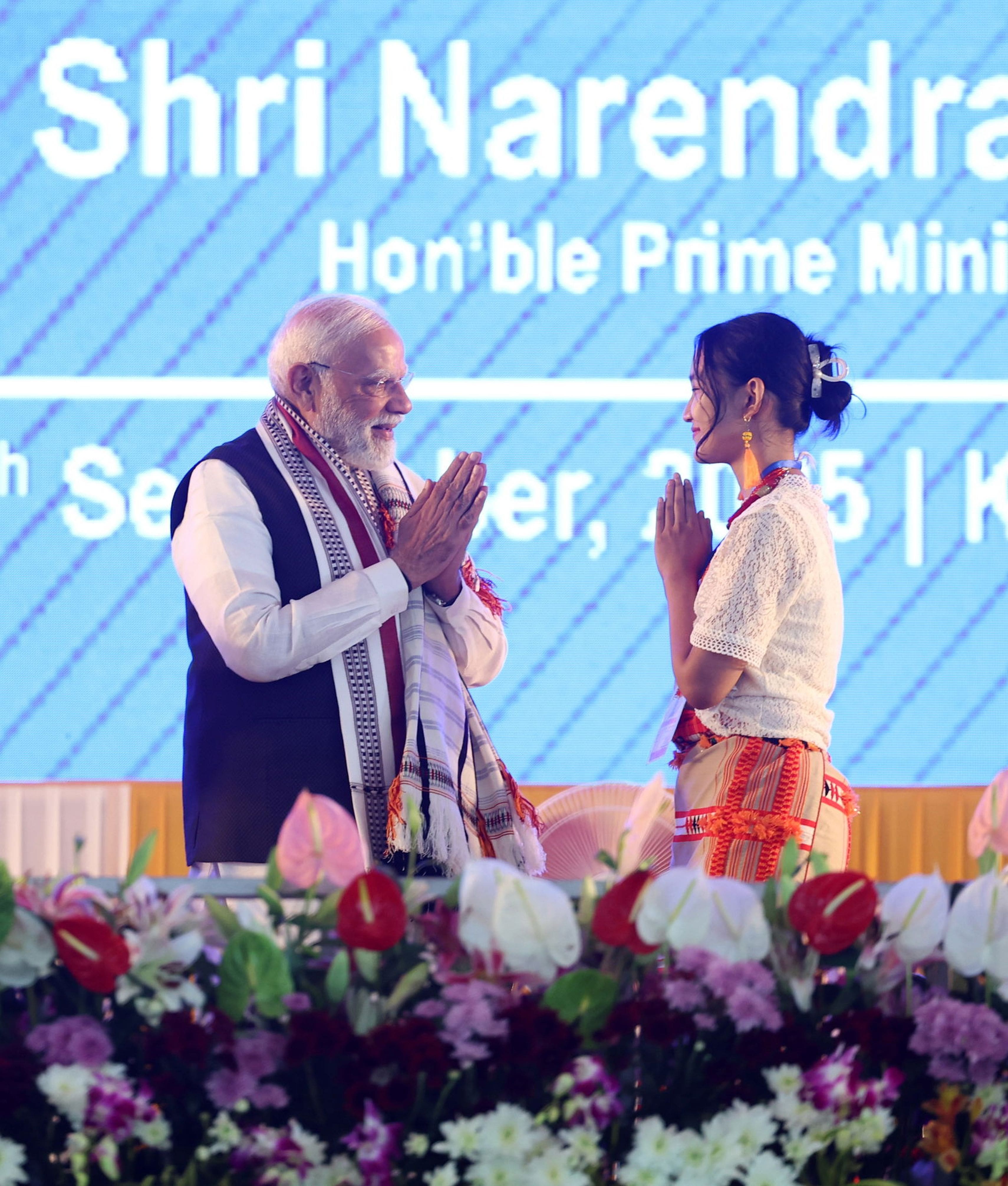
Noting that many people from Manipur frequently travel to Kolkata and Delhi, Shri Modi informed that to ensure affordable accommodation in these cities, Manipur Bhavans have been constructed in both locations. He remarked that these facilities will greatly support the daughters of Manipur. He added that when children are safe and secure there, it will ease the concerns of parents back home.

Emphasising that the government is working with full sensitivity to reduce the hardships faced by the people, Shri Modi acknowledged that many parts of Manipur suffer from severe flood-related challenges. He added that the government is actively working on multiple projects to mitigate this issue.

Underscoring that Manipur is a state where mothers and sisters are at the forefront of the economy, the Prime Minister highlighted the tradition of Ima Keithel as a powerful testament to this fact. He remarked that he considers women empowerment to be a central pillar of India’s development and of the vision for an Atmanirbhar Bharat. He stated that this inspiration is clearly visible in Manipur. Shri Modi said that after the formation of the current government, special haat bazaars—known as Ima Markets—were initiated for women. He expressed happiness that four new Ima Markets have been inaugurated today and these markets will greatly support the women of Manipur.

Emphasising that making life easier for every citizen is the government’s goal, the Prime Minister remarked that Manipur has witnessed the difficult days when transporting goods to the region was a major challenge. He noted that everyday items were once beyond the reach of ordinary families. Shri Modi stressed that in recent years, our government has helped Manipur overcome those old hardships. He announced a new development, stating that our government wants to increase savings and make life more convenient for the people. Highlighting that their government has significantly reduced GST, the Prime Minister stated that this will bring double benefits to the people of Manipur. He explained that many daily-use items—such as soap, shampoo, hair oil, clothes, and footwear—will now become more affordable. He added that prices of cement and other construction materials will also come down. Shri Modi informed that GST has been substantially reduced on hotels and food services as well. He remarked that this will benefit guest house owners, taxi operators, and roadside eateries, adding that this move will also help boost tourism in the region.

“Manipur possesses a rich heritage that spans thousands of years. The cultural roots of the region are deep and strong. Manipur is the crown jewel adorning the crest of Mother India”, exclaimed the Prime Minister. He emphasized the need to continuously strengthen Manipur’s developmental image. Shri Modi stated that any form of violence in Manipur is unfortunate and such violence is a grave injustice to both our ancestors and future generations. He stressed the importance of consistently advancing Manipur on the path of peace and development. The Prime Minister highlighted Manipur’s inspiring contribution to India’s freedom struggle and national defence. He recalled that it was on Manipur’s soil where the Indian National Army first hoisted India’s own flag. He quoted Netaji Subhas Chandra Bose, who referred to Manipur as the gateway to India’s independence and paid tribute to the many brave martyrs from this land. Shri Modi stated that the government draws inspiration from every great personality of Manipur. Mentioning a major step taken by the government—renaming Mount Harriet in the Andaman and Nicobar Islands to Mount Manipur, Shri Modi affirmed that this is a national tribute to the freedom fighters of Manipur.

Acknowledging that even today, many sons and daughters of Manipur are serving across different parts of the country in the defence of Mother India, the Prime Minister remarked that during Operation Sindoor, the world witnessed the strength of the Indian Armed Forces. He stated that the Indian soldiers inflicted such decisive blows that the Pakistani army was left overwhelmed. Shri Modi highlighted that Manipur’s brave sons and daughters played a vital role in India’s success during the operation. He paid tribute to one such valiant soldier, Shaheed Deepak Chingkham, and saluted his courage. He affirmed that Deepak Chingkham’s sacrifice during Operation Sindoor will always be remembered by the nation.
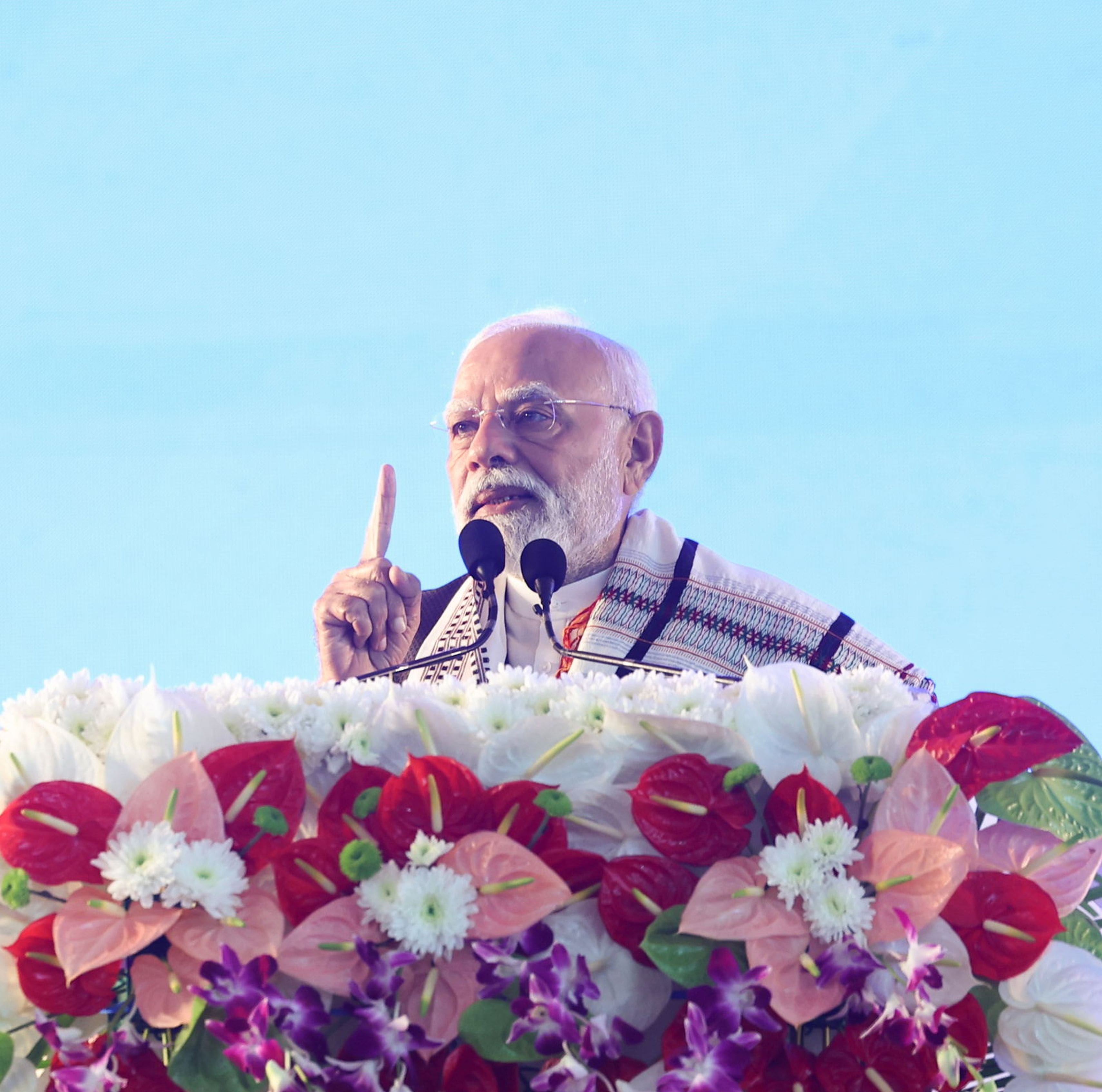
Recalling his visit to Manipur in 2014 and a statement he had made then, Shri Modi mentioned that he had said that without Manipuri culture, Indian culture is incomplete and without the athletes of Manipur, Indian sports remain incomplete. He stated that the youth of Manipur dedicate themselves wholeheartedly to upholding the pride of the national flag. He emphasized that this identity must not be overshadowed by the dark shadow of violence.

“As India emerges as a global sports powerhouse, the responsibility of Manipur’s youth has increased further. This is why the Government of India chose Manipur for the country’s first National Sports University”, said the PM. He added that under the Khelo India Scheme and Olympic Podium Schemes, many athletes from Manipur are being encouraged and supported with modern sports infrastructure being developed in Manipur for the youth. Shri Modi highlighted that to promote polo, the Marjing Polo Complex has been established, featuring the world’s tallest polo statue. He added that an Olympian Park has also been built to honour the Olympians from the region. Pointing out that the government recently announced the National Sports Policy—Khelo India Niti, the Prime Minister emphasized that this will greatly benefit the youth of Manipur in the coming years.

“Our government is continuously working to ensure peace and stability in Manipur”, exclaimed the PM, emphasising that the interests of the people must be safeguarded and that those forced to live in camps should be able to return to normal life. He informed that 7,000 new houses have been approved for displaced families. Shri Modi announced that the Central Government has recently declared a special package of approximately ₹3,000 crore for Manipur. He added that over ₹500 crore has been allocated specifically to assist displaced individuals. The PM further remarked that helping those affected by violence return to a normal life is a top priority for the government. He stated that the newly constructed headquarters for Manipur Police will also play a vital role in supporting this effort.

The Prime Minister stated that from the soil of Manipur, he wishes to address his friends in Nepal. He remarked that Nepal, nestled in the lap of the Himalayas, is a close friend and trusted partner of India. Emphasizing that both nations are bound by shared history, faith, and a collective journey forward, the Prime Minister extended heartfelt congratulations, on behalf of 140 crore Indians, to Smt. Sushila Ji on assuming office as the Prime Minister of Nepal’s interim government. He expressed confidence that she will pave the way for peace, stability, and prosperity in Nepal. Shri Modi highlighted that Smt. Sushila Ji’s appointment as Nepal’s first woman Prime Minister is a remarkable example of women empowerment. He appreciated every individual in Nepal who upheld democratic values even in a climate of instability.

Highlighting a notable aspect of recent developments in Nepal that has not received much attention, Shri Modi stated that over the past two to three days, young men and women in Nepal have been seen diligently cleaning and painting the streets with a spirit of dedication and purity. He remarked that he has also seen their images circulating on social media. The Prime Minister described their positive mindset and constructive actions as not only inspiring but also a clear indication of Nepal’s resurgence. He extended his best wishes to Nepal for a bright and prosperous future.

“In the 21st century, India is moving forward with a singular goal—the goal of a developed India and achieving this goal requires the development of Manipur”, stated the PM underlining that Manipur is full of limitless possibilities. He stated that it is the collective duty of all to remain firmly on the path of development. The Prime Minister affirmed that Manipur lacks no capability, stressing the need to continuously strengthen the path of dialogue and build a strong bridge of harmony between the hills and the valley. The Prime Minister concluded by expressing confidence that Manipur will become a powerful centre of India’s growth. He once again extended his heartfelt congratulations to all for the development projects.

Governor of Manipur, Shri Ajay Kumar Bhalla was present among other dignitaries at the event.

Background

Prime Minister inaugurated multiple development projects worth more than Rs 1,200 crore at Imphal. They include the Civil Secretariat at Mantripukhri; IT SEZ Building and New Police Headquarters at Mantripukhri; Manipur Bhawans at Delhi and Kolkata; and Ima Markets, unique all women's market, in 4 districts.

Click here to read full text speech

Explore More
ஒவ்வொரு இந்தியனின் இரத்தமும் கொதிக்கிறது: ‘மன் கீ பாத்’ (மனதின் குரல்) நிகழ்ச்சியில் பிரதமர் மோடி

பிரபலமான பேச்சுகள்

ஒவ்வொரு இந்தியனின் இரத்தமும் கொதிக்கிறது: ‘மன் கீ பாத்’ (மனதின் குரல்) நிகழ்ச்சியில் பிரதமர் மோடி
India 'restless' for development, growing despite global challenges: PM

Media Coverage

India 'restless' for development, growing despite global challenges: PM
NM on the go

Nm on the go

Always be the first to hear from the PM. Get the App Now!
...
Today, the world sees the Indian Growth Model as a model of hope: PM Modi
November 17, 2025
India is eager to become developed, India is eager to become self-reliant: PM
India is not just an emerging market, India is also an emerging model: PM
Today, the world sees the Indian Growth Model as a model of hope: PM
We are continuously working on the mission of saturation; Not a single beneficiary should be left out from the benefits of any scheme: PM
In our new National Education Policy, we have given special emphasis to education in local languages: PM

Vivek Goenka ji, brother Anant, George Verghese ji, Rajkamal Jha, all other colleagues of the Indian Express Group, Excellencies, other dignitaries present here, ladies and gentlemen!

Today, we have all gathered here to honour a personality who gave a new height to the power of journalism, expression, and public movements in Indian democracy. As a visionary, as an institution builder, as a nationalist, and as a media leader, Ramnath ji established the Indian Express Group not just as a newspaper, but as a mission among the people of Bharat. Under his leadership, this group became the voice of Bharat’s democratic values and national interests. Therefore, when Bharat is moving forward with the resolve of becoming a developed nation in this era of the 21st century, Ramnath ji’s commitment, his efforts, and his vision are a great source of inspiration for us. I express my gratitude to the Indian Express Group for inviting me to this lecture, and I congratulate all of you.

Friends,

Ramnath ji drew great inspiration from a verse of the Gita: सुख दुःखे समे कृत्वा, लाभा-लाभौ जया-जयौ। ततो युद्धाय युज्यस्व, नैवं पापं अवाप्स्यसि।। It means: viewing joy and sorrow, gain and loss, victory and defeat as equal, one should perform duty and fight and by doing so, he will not incur sin. During the freedom movement, Ramnath ji supported the Congress, later supported the Janata Party, and even contested election on a Jana Sangh ticket. Regardless of ideology, he always placed national interest above everything else. Those who worked with Ramnath ji for years narrate many stories that he shared. How Ramnath ji helped Sardar Vallabhbhai Patel when the issue of Hyderabad and the atrocities of the Razakars (private Muslim militia) came up after independence. When the student movement in Bihar needed leadership in the 1970s, Ramnath ji, along with Nanaji Deshmukh, persuaded JP to lead the movement. During the Emergency, when a close minister of Indira Gandhi summoned and threatened Ramnath ji saying he would put him in jail, the reply Ramnath ji gave in return is now a hidden chapter of history. Some things became public, some remained unknown, but these stories tell us that Ramnath ji always stood by the truth, always placed duty above everything else, no matter how powerful the forces standing against him were.

Friends,

It was often said about Ramnath ji that he was very impatient. Impatience not in a negative sense, but in a positive one. A kind of impatience that pushes one to the limits of hard work for the sake of change; impatience that creates ripples even in stagnant waters. In the same way, today’s Bharat too is impatient. Bharat is impatient to become developed. Bharat is impatient to become self-reliant. We all have seen how quickly the first twenty-five years of the twenty-first century have passed. Unprecedented challenges came our way, one after another, yet they could not slow down Bharat’s momentum.

Friends,

You have seen how challenging the last four to five years have been for the entire world. In 2020, the crisis of the coronavirus pandemic struck, and the economies of the whole world were grappling with uncertainties. The global supply chain was severely impacted, and the entire world began moving toward despair. When the situation slowly started stabilizing after some time, upheavals began in our neighbouring countries. Amid all these crises, our economy achieved high growth rates. In 2022, global supply chains and energy markets were affected due to the European crisis. This had an impact on the whole world, yet even in 2022–23, the growth of our economy continued at a fast pace. In 2023, when the situation deteriorated in West Asia, even then our growth rate remained strong. And this year too, when the world is facing instability, our growth rate is still around seven percent.

Friends,

Today, when the world is afraid of disruption, Bharat is moving forward in the direction of a vibrant future. From this platform of the Indian Express, I can say that Bharat is not just an emerging market, Bharat is also an emerging model. Today, the world sees the Indian Growth Model as a Model of Hope.

Friends,

A strong democracy has many criteria, and one of the most important criteria is the participation of people in the democratic process. How confident people are about democracy and how optimistic they are can be seen most vividly during elections. You must remember the results that came on 14 November, and since Ramnath ji also had a connection with Bihar, mentioning it here is quite natural. Along with these historic results, there is another very important aspect. No one can ignore the increasing participation of people in democracy. This time, Bihar recorded the highest voter turnout in its history. Just think, women’s turnout was about 9 percent higher than men’s turnout. This too is a victory of democracy.

Friends,

The results of Bihar have once again shown how strong the aspirations of the people of Bharat are. The people of Bharat trust those political parties that sincerely work to fulfil those aspirations and give priority to development. And today, from the platform of the Indian Express, I would very humbly appeal to every state government in the country, be it left, right, center, and governments of all ideologies that the results of Bihar give us this lesson that the kind of government you run today will determine the future of your political party in the coming years. The people of Bihar gave the RJD government 15 years. Lalu Yadav ji could have done a lot for the development of Bihar if he wanted, but he chose the path of jungle raj. The people of Bihar can never forget this betrayal. Therefore, today, whether it is our government at the Centre or governments of different parties in the states, our highest priority should be just development, development, and only development. And that is why I say to every state government that compete to create a better investment environment in your state, compete to improve ease of doing business, compete to move ahead on development parameters and then see how the people place their trust in you.

Friends,

After winning the Bihar election, some people, including some Modi admirers in the media, have once again started saying that the BJP and Modi always remain in a 24×7 election mode. I believe that to win elections, being in election mode is not necessary; what is necessary is to remain in an emotional mode 24×7. When there is restlessness within the heart then not even a single minute should be wasted and one must keep working to reduce the hardships of the poor, to provide employment to the poor, to give healthcare to the poor, to fulfil the aspirations of the middle class. One should work tirelessly. When this emotion and this feeling drive the government continuously, then the results become visible on the day of the elections. We have just seen this happen in Bihar as well.

Friends,

Someone once mentioned another story connected to Ramnath ji. This was from the time when Ramnath ji got the Jana Sangh ticket from Vidisha. At that time, he and Nanaji Deshmukh were discussing whether the organization is more important or the face of the individual. Nanaji Deshmukh told Ramnath ji that he only needed to come for filing his nomination and then come back again to collect his victory certificate. Nanaji then fought the election on Ramnath ji’s behalf with the strength of party workers and ensured his victory. By mentioning this story, my intention is not to say that candidates should only show up for nomination. My purpose is to draw your attention to the dedication of the countless duty-bound workers of the BJP.

Friends,

Millions of BJP workers have nurtured the roots of the party with their sweat, and they continue to do so even today. And not just that, but hundreds of our workers in states like Kerala, West Bengal, and Jammu & Kashmir have also watered the roots of the BJP with their blood. For a party that has such dedicated workers, winning elections is not the only goal. They work continuously with a spirit of service to win the hearts of the people.

Friends,

For the development of the country, it is very important that the benefits of development reach everyone. When government schemes reach Dalits, the oppressed, the exploited, and the deprived, social justice is ensured. But we have seen how some parties and some families used it only to serve their own interests in past decades and in the name of social justice.

Friends,

I am satisfied that today the country is witnessing social justice turning into reality. I want to tell you what true social justice really is. The campaign to build 12 crore toilets brought dignity into the lives of those poor people who were forced to defecate in the open. The 57 crore Jan Dhan bank accounts ensured financial inclusion for those whom previous governments never considered worthy of even having a bank account. The 4 crore pucca houses given to the poor have given them the courage to dream new dreams and increased their ability to take risks.

Friends,

The work done on social security in the past 11 years has been extraordinary. Today, nearly 94 crore people in Bharat have come under the social security net. And do you know what the situation was 10 years ago? Only 25 crore people were under social security coverage. Today the number is 94 crore people. That means earlier, only 25 crore people were getting the benefits of government social security schemes, and now that number has reached 94 crore people and this is what true social justice is. And we have not just expanded the social security net; we are continuously working on a mission of saturation, meaning, not a single eligible beneficiary should be left out. When a government works with this goal, when it wants to reach every beneficiary, the possibility of any kind of discrimination also ends. Because of these efforts, 25 crore people have overcome poverty in the last 11 years. And that is why the world today agrees that Democracy delivers.

Friends,

I will give you another example. Study our Aspirational Districts Programme. There were more than a hundred districts that previous governments had labelled as backward and then forgotten. It was believed that development in these regions would be very difficult and who would bother working hard in such districts? When an officer needed to be given a punishment posting, they were sent to these backward districts and told to stay there. Do you know how many people lived in these backward districts? More than 25 crore citizens of the country lived in these districts!

Friends,

If these backward districts had remained backward, Bharat would not be able to develop even in the next 100 years. Therefore, our government began working with a new strategy. We brought state governments on board, studied which district lagged behind on which development parameter, and prepared a separate strategy for each district. We deployed the best officers in the country, bright and innovative young minds, appointed them there, and considered these districts not backward, but aspirational. And today, you can see how these Aspirational Districts have started performing much better than other districts in their states on many development parameters. Take Bastar in Chhattisgarh, for example. It used to be a favourite subject for many of you journalists. At one time, when journalists had to visit there, they needed permits not just from the administration but from other organizations as well. But today, that same Bastar is progressing on the path of development. I don’t know how much coverage the Indian Express has given to the Bastar Olympics, but today Ramnath ji would have been very happy to see how the youth of Bastar are organizing events like the Bastar Olympics.

Friends,

Since Bastar has been mentioned, I will also discuss Naxalism, i.e., Maoist terrorism, from this platform. The scope of Naxalism and Maoist violence has been shrinking rapidly across the country, but it has been growing equally active within the Congress. You all know that for the past five decades, almost every major state in the country was affected by Maoist violence. But it was the misfortune of the country that the Congress nurtured and supported Maoist terrorism, which rejects the Indian Constitution. And not just in remote forest areas, the Congress also nourished the roots of Naxalism in the cities. The Congress established urban Naxal sympathizers in many big institutions.

Friends,

The urban Naxals and Maoist forces that infiltrated the Congress 10–15 years ago have now turned the Congress into the Muslim League–Maoist Congress (MMC). And today, I say this with full responsibility that this Muslim League–Maoist Congress has abandoned national interest for its own selfish motives. Today’s Muslim League–Maoist Congress is becoming a major threat to the unity of the country.

Friends,

Today, as Bharat embarks on a new journey to become a developed nation, the legacy of Ramnath Goenka ji becomes even more relevant. Ramnath ji took a firm stand against British tyranny. In one of his editorials, he wrote that he would prefer to shut down his newspaper rather than follow British orders. Similarly, when an attempt was made to enslave the country again in the form of the Emergency, Ramnath ji stood strong. And this year marks 50 years since the Emergency was imposed. Fifty years ago, the Indian Express showed that even blank editorials can challenge the mentality that seeks to enslave the people.

Friends,

Today, I will also speak in detail about the subject of freeing ourselves from the mindset of slavery from this esteemed platform. But for that, we will have to go back 190 years. Even before the First War of Independence of 1857. The year was 1835. In 1835, British parliamentarian Thomas Babington Macaulay launched a massive campaign to uproot Bharat from its own foundation. He declared that he would create such Indians who would be Indian in appearance but English in their minds. And to achieve this, Macaulay did not merely change the Indian education system, he destroyed it from the roots. Mahatma Gandhi himself had said that Bharat’s ancient education system was like a beautiful tree that was uprooted and destroyed.

Friends,

Our education system taught us to take pride in our culture. Bharat’s education system, along with studies, put equal emphasis on skills as well. That is why Macaulay decided to break the backbone of Bharat’s education system and he succeeded in his mission. Macaulay ensured that the British language and British thinking received greater recognition in that era and Bharat paid the price for this for centuries to come.

Friends,

Macaulay shattered our self-confidence. He infused a sense of inferiority within us. With one stroke, Macaulay threw thousands of years of our knowledge and science, our art and culture, and our entire way of life into the dustbin. It was at that moment that the seed was sown that if Indians wanted to progress, if they wanted to achieve something big, they would have to do so through foreign methods. And this feeling only grew stronger even after Independence. Our education, our economy, our social aspirations, everything became tied to foreign systems. The feeling of pride in what was ours gradually diminished. The Swadeshi (self-reliance) that Gandhiji considered the foundation of freedom was no longer valued. We began searching for governance models abroad. We started looking toward foreign countries for innovation. This mentality led to a trend in society where imported ideas, imported goods, and imported services were considered superior.

Friends,

When you do not respect your own country, you reject the indigenous ecosystem. You reject the Made in India manufacturing ecosystem. Let me give you another example of tourism. You will see that in every country where tourism has flourished, the people of that country take pride in their historical heritage. In our case, the opposite happened. After Independence, efforts were made to neglect our heritage. When there is no pride in one’s heritage, there is no effort to preserve it. When there is no preservation, we end up treating it like mere brick-and-stone ruins and that is exactly what happened. Being proud of one’s heritage is a necessary condition for the development of tourism.

Friends,

The same is true for local languages. In which country are local languages looked down upon? Countries like Japan, China, and Korea adopted many Western practices, but they kept their languages intact, they never compromised on their language. That is why, we have placed special emphasis on education in local languages in the new National Education Policy. And let me say this very clearly: we are not against the English language. We are in support of Indian languages.

Friends,

The crime was committed by Macaulay in 1835. And in 2035, after 10 years, it will be 200 years since this crime happened. And that is why, today, I want to make an appeal to the entire nation through you that we must take a pledge that we will free ourselves from Macaulay’s mentality of slavery in the next 10 years. These next 10 years are extremely important for us. I remember a small incident. A hospital for leprosy was being built in Gujarat. The people involved went to meet Mahatma Gandhi to invite him for the inauguration. Gandhi ji said that he was not in favour of inaugurating a hospital for leprosy; he said, “I will not come for the inauguration. But when the hospital has to be locked permanently, then call me, I will come to lock it.” That hospital was not locked during Gandhi ji’s lifetime. But when Gujarat became free from leprosy, I got the opportunity to lock that hospital when I became Chief Minister. Just as the journey that began in 1835 must come to an end by 2035, in the same way that Gandhi ji wished to lock the hospital, it is also my dream that we lock away this mindset forever.

Friends,

We have discussed many topics today. I do not want to take much more of your time now. The Indian Express Group has been a witness to every major transformation and every growth story of our nation. And today, as Bharat moves forward with the goal of becoming a ‘Viksit Bharat’ (Developed India), it is once again a part of this journey. I congratulate you for your sincere efforts to preserve the thoughts and ideals of Ramnath ji with full dedication. Once again, I extend my heartfelt best wishes to all of you for this wonderful event. With respectful regards to Ramnath Goenka ji, I conclude my words.

Thank you very much!