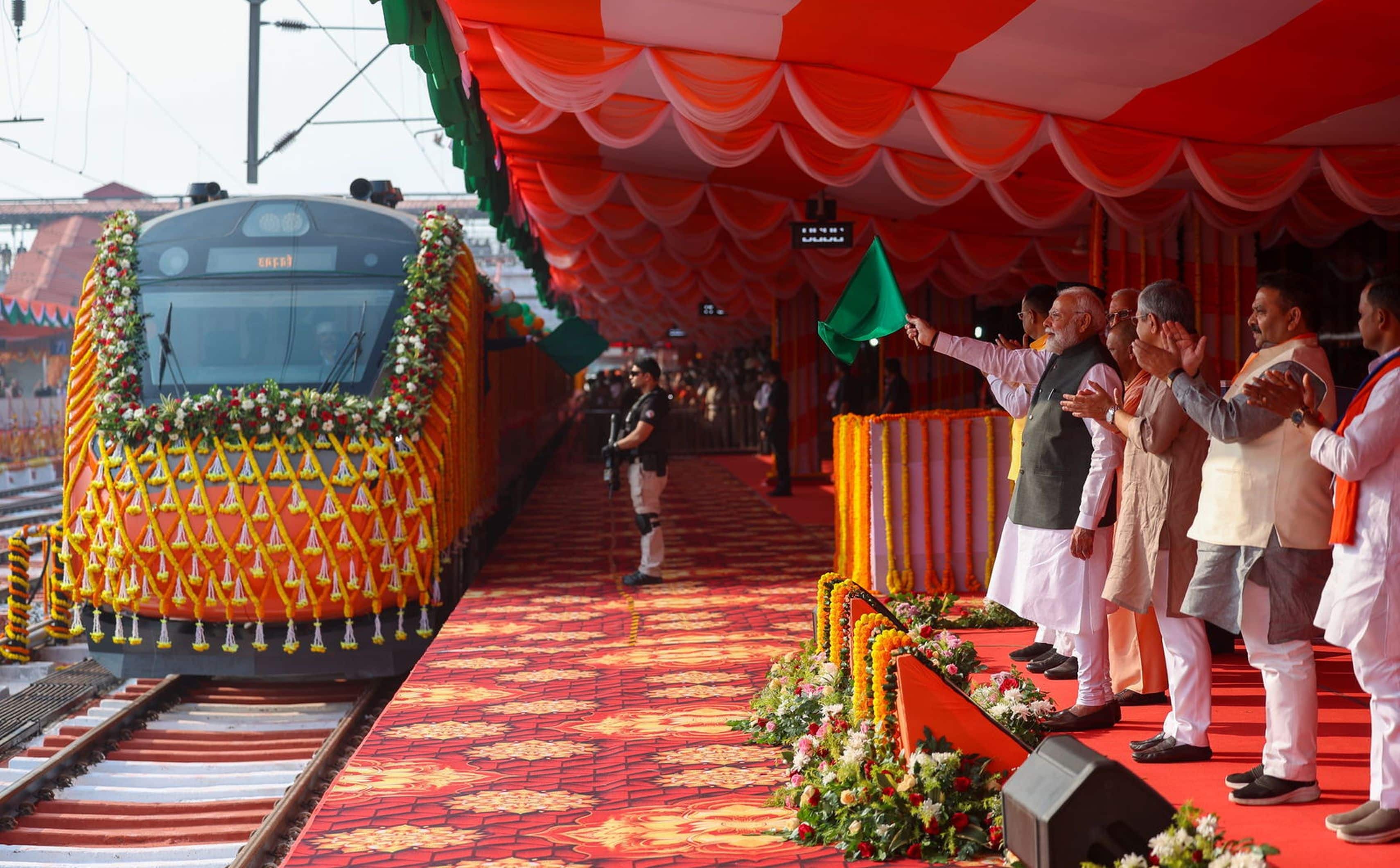
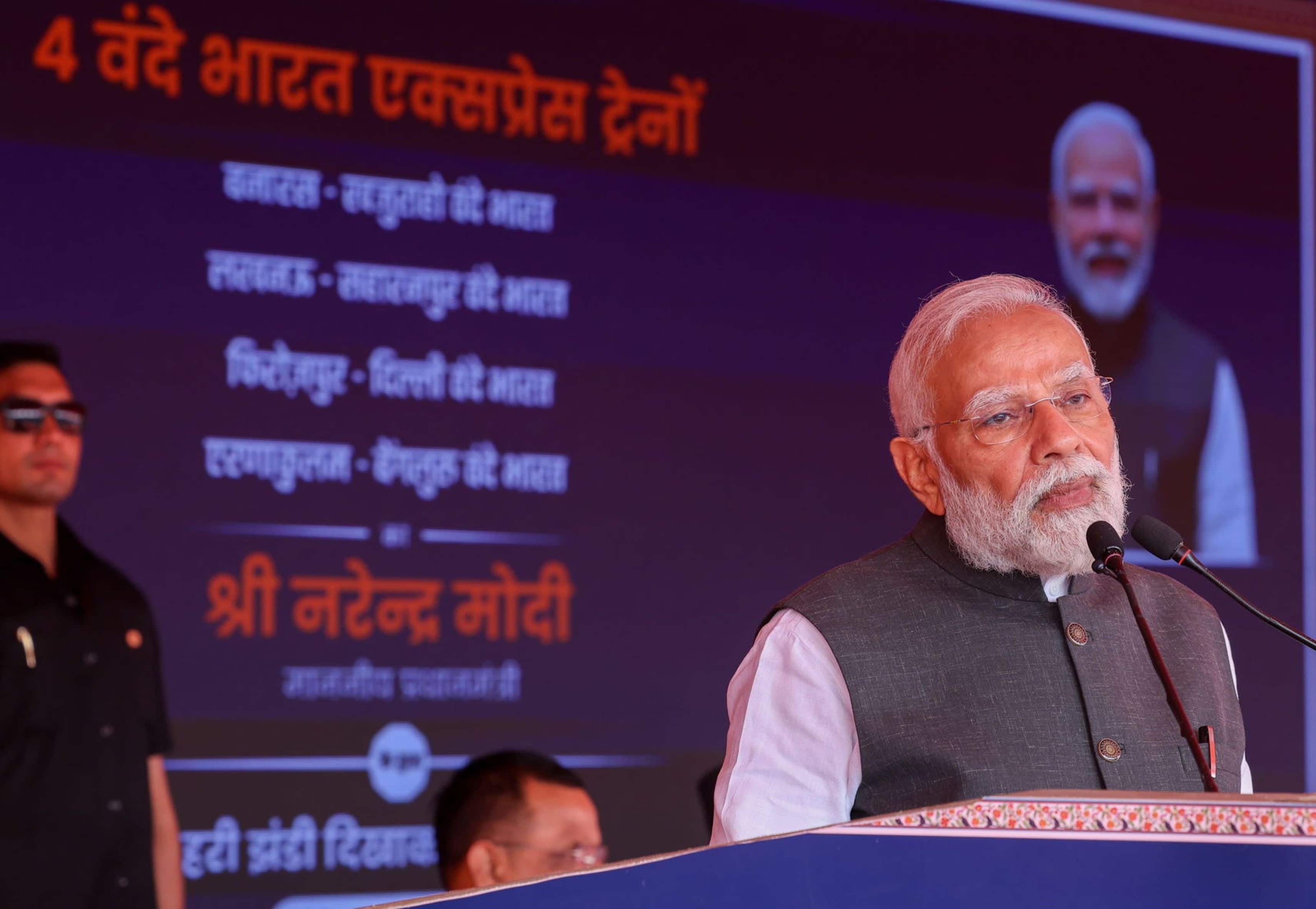
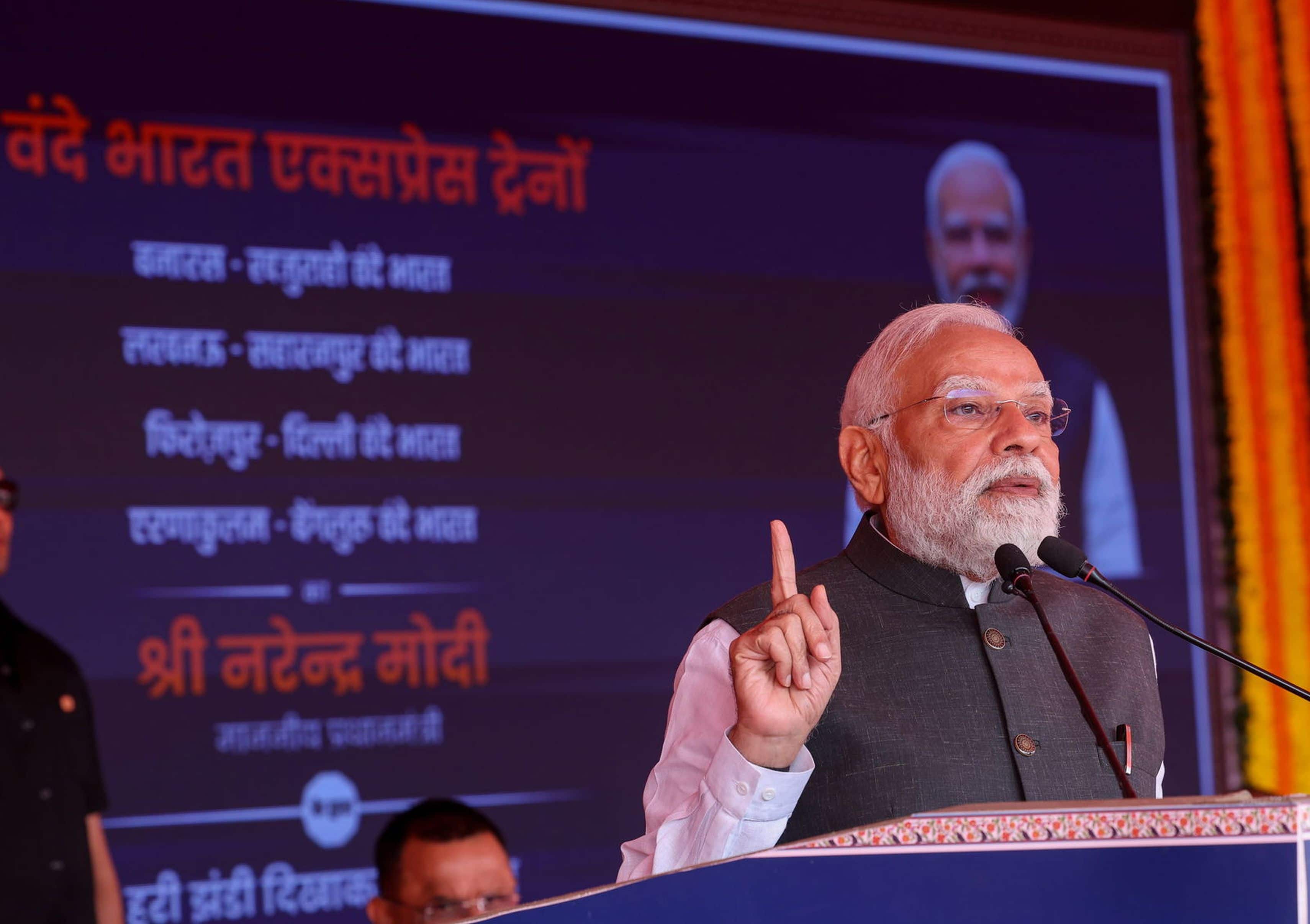
In a significant step towards expanding India’s modern rail infrastructure, Prime Minister Shri Narendra Modi flagged off four new Vande Bharat Express trains from Varanasi, Uttar Pradesh today. Addressing the gathering on the occasion, Shri Modi welcomed all the dignitaries and offered his respectful greetings to all families of Varanasi, the sacred city of Baba Vishwanath. He remarked on the extraordinary celebrations witnessed during Dev Deepawali and noted that today is also an auspicious occasion and extended his best wishes to everyone for this festival of development.
Noting that across the developed nations of the world, a major driver of economic growth has been robust infrastructure, Shri Modi highlighted that in every country that has achieved significant progress and development, infrastructure advancement has played a pivotal role. He stated that India too is rapidly striding on this path. In this context, the Prime Minister announced the launch of new Vande Bharat trains across various regions of the country. In addition to the Banaras–Khajuraho Vande Bharat, he flagged off the Firozpur–Delhi Vande Bharat, the Lucknow–Saharanpur Vande Bharat, and the Ernakulam–Bengaluru Vande Bharat. With these four new trains, the total number of operational Vande Bharat trains in the country has now exceeded 160. The Prime Minister extended his congratulations to the people of Varanasi and all citizens of India on the launch of these trains.
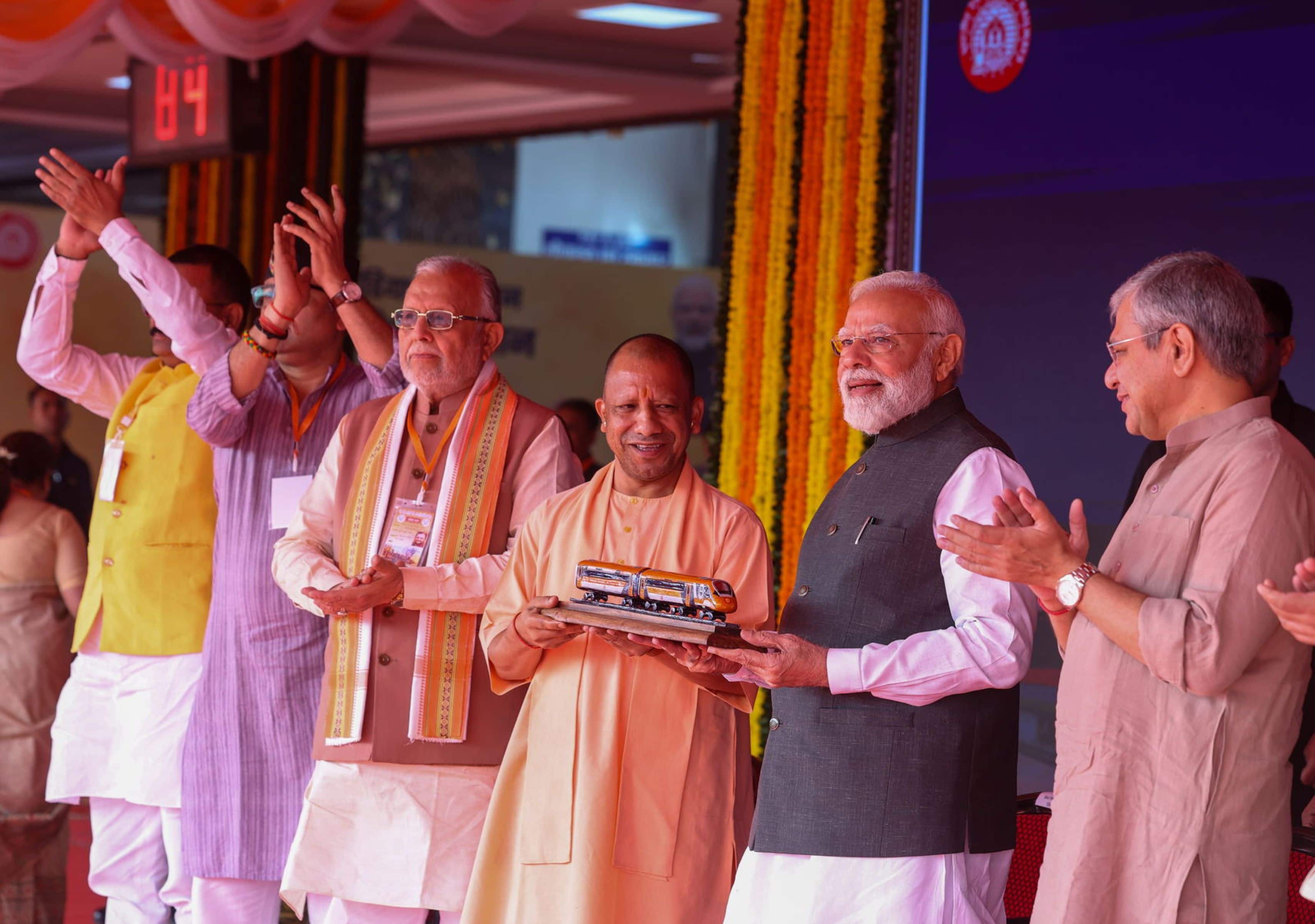
“Trains like Vande Bharat, Namo Bharat, and Amrit Bharat are laying the foundation for the next generation of Indian Railways”, underlined the Prime Minister, emphasising that this is a comprehensive campaign to transform Indian Railways. He described Vande Bharat as a train made by Indians, for Indians, and of Indians—one that fills every Indian with pride. He noted that even foreign passengers are astonished upon seeing Vande Bharat. Shri Modi highlighted that India has embarked on a mission to enhance its resources for a developed India, and these trains are poised to become milestones in that journey.
Highlighting that in India, pilgrimage has for centuries been regarded as a medium of national consciousness, Shri Modi emphasized that these journeys are not merely routes for divine darshan, but sacred traditions that connect with the soul of India. He cited Prayagraj, Ayodhya, Haridwar, Chitrakoot, and Kurukshetra as spiritual centers of the nation’s heritage. “These holy sites are now being connected through the Vande Bharat network; it marks a convergence of India’s culture, faith, and development journey. This is a significant step towards transforming heritage cities into symbols of national progress”, exclaimed the Prime Minister.
Highlighting the often-overlooked economic dimension of pilgrimage in India, the Prime Minister noted that over the past 11 years, developmental initiatives in Uttar Pradesh have elevated pilgrimage to a new level. Last year alone, 11 crore devotees visited Varanasi for darshan of Baba Vishwanath. Since the construction of the Ram Temple in Ayodhya, over 6 crore people have visited the temple of Ram Lalla. Shri Modi stated that these pilgrims have contributed thousands of crores of rupees to Uttar Pradesh’s economy. He remarked that this influx has provided sustained earning opportunities to hotels, traders, transport companies, local artists, and boat operators across the state. As a result, hundreds of youth in Varanasi are now launching new ventures—from transport services to Banarasi saree businesses. He affirmed that these developments have opened the doors of prosperity in Uttar Pradesh and in Varanasi.
Prime Minister stated that to realize the mantra of a developed India through a developed Varanasi, continuous infrastructure development is underway in the city. He highlighted that Varanasi is witnessing the establishment, expansion and qualitative improvement of quality hospitals, improved roads, gas pipeline networks, and internet connectivity. He mentioned that rapid progress is being made on the ropeway project, and sports infrastructure such as the Ganjari and Sigra stadiums is also in place. The Prime Minister emphasized that the goal is to make visiting, living in, and experiencing Banaras a special experience for everyone.
Noting that the government is consistently working to improve healthcare services in Varanasi, Shri Modi recalled the situation 10–11 years ago, he remarked that for serious illnesses, Banaras Hindu University (BHU) was the only option, and due to overwhelming patient numbers, many were unable to receive treatment even after waiting overnight. For diseases like cancer, people had to sell land and farms to seek treatment in Mumbai. The Prime Minister affirmed that his government has worked to reduce these concerns. He listed the Mahamana Cancer Hospital for cancer treatment, Shankar Netralaya for eye care, the advanced trauma center and Centenary Hospital at BHU, and the divisional hospital at Pandeypur as institutions that have become a boon for Varanasi, Purvanchal, and neighboring states. He added that due to Ayushman Bharat and Jan Aushadhi Kendras in these hospitals, lakhs of poor patients are saving crores of rupees. This has not only alleviated public anxiety but has also led to Varanasi being recognized as the health capital of the entire region.
Emphasizing the need to sustain the momentum and energy of Varanasi’s development so that the grandeur of the city continues to grow rapidly in prosperity, Shri Modi concluded by expressed the vision that every visitor from across the world should experience a unique energy, enthusiasm, and joy in the sacred city of Baba Vishwanath.
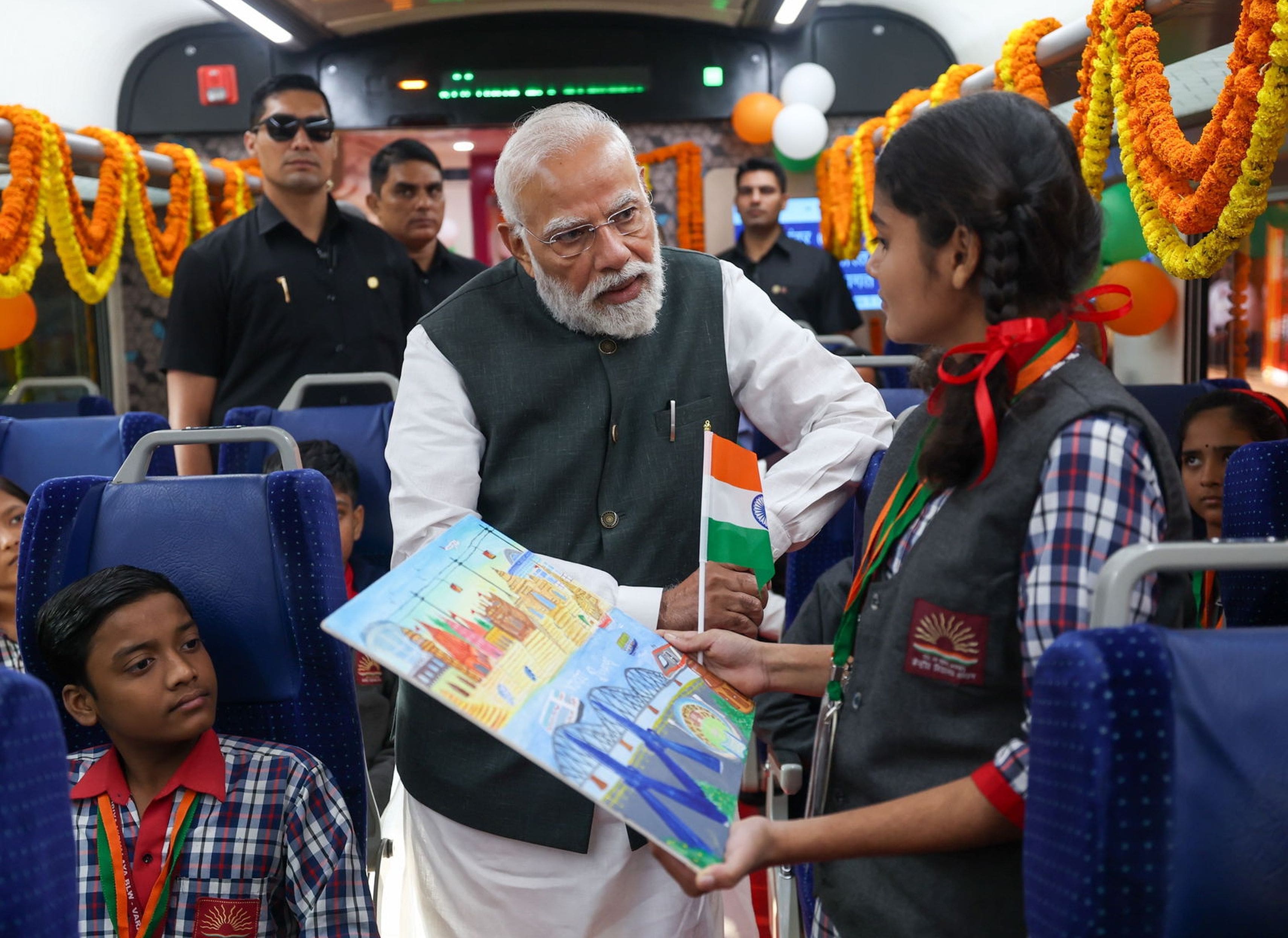
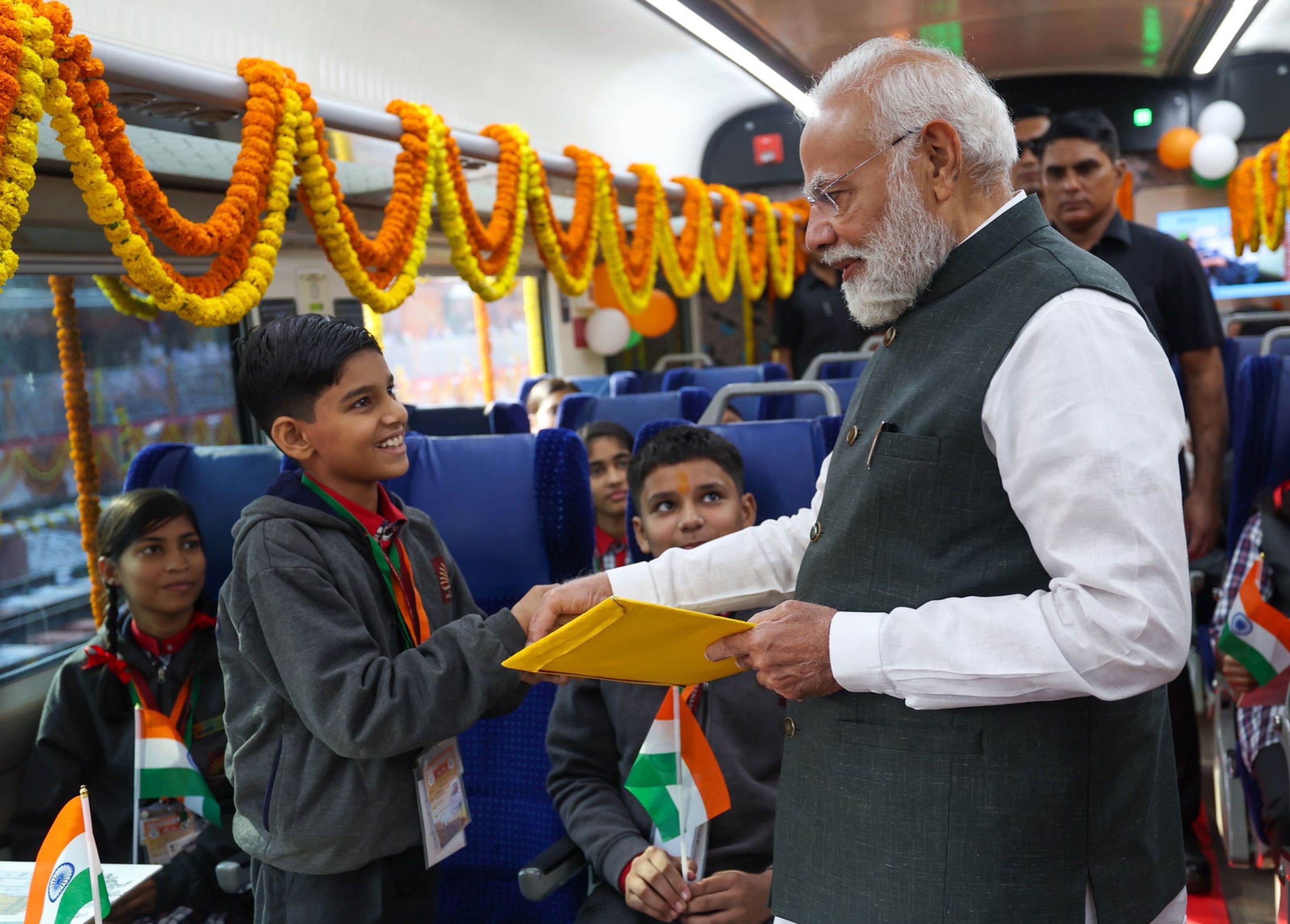
Shri Modi also mentioned about meeting the students who were present at the flag-off event. He praised Shri Ashwini Vaishnaw for making it a practice to arrange competition among students during the launch of Vande Bharat trains. He commended the children for the paintings and poems presented at the competition, based on various themes like Viksit Bharat, Viksit Kashi, Surakshit Bharat. He also lauded their parents and teachers for the support, guidance and encouragement provided. The Prime Minister further proposed the idea of organising a Children’s literary meet and the 8-10 winners can be taken across India for other competitions. He further expressed pride of being a parliamentarian from Varanasi which has such talented children and congratulated them.
Chief Minister of Uttar Pradesh, Shri Yogi Adityanath, Union Minister Shri Ashwini Vaishnaw were present among other dignitaries at the event. Governor of Kerala, Shri Rajendra Arlekar, Union Ministers, Shri Suresh Gopi, Shri George Kurian, Shri Ravneet Singh Bittu and other dignitaries had connected through videoconferencing to the event.
Background
The flagging off of 4 new Vande Bharat trains marks another milestone in realizing the Prime Minister’s vision of providing citizens with easier, faster, and more comfortable travel through world-class railway services. The new Vande Bharat Express trains will operate on the Banaras–Khajuraho, Lucknow–Saharanpur, Firozpur–Delhi, and Ernakulam–Bengaluru routes. By significantly reducing travel time between major destinations, these trains will enhance regional mobility, promote tourism, and support economic activity across the country.
The Banaras–Khajuraho Vande Bharat will establish direct connectivity on this route and save about 2 hours 40 minutes compared to the special trains currently in operation. The Banaras–Khajuraho Vande Bharat Express will connect some of India’s most revered religious and cultural destinations, including Varanasi, Prayagraj, Chitrakoot, and Khajuraho. This link will not only strengthen religious and cultural tourism but also provide pilgrims and travelers with a fast, modern, and comfortable journey to the UNESCO World Heritage Site of Khajuraho.
The Lucknow–Saharanpur Vande Bharat will cover the journey in approximately 7 hours 45 minutes, saving nearly 1 hour of travel time. The Lucknow–Saharanpur Vande Bharat Express will greatly benefit passengers from Lucknow, Sitapur, Shahjahanpur, Bareilly, Moradabad, Bijnor, and Saharanpur, while also improving access to the holy city of Haridwar via Roorkee. By ensuring smoother and faster intercity travel across central and western Uttar Pradesh, this service will play a key role in enhancing connectivity and regional development.
The Firozpur–Delhi Vande Bharat will be the fastest train on this route, completing the journey in just 6 hours 40 minutes. The Firozpur–Delhi Vande Bharat Express will strengthen connectivity between the national capital and key cities in Punjab, including Firozpur, Bathinda, and Patiala. This train is expected to boost trade, tourism, and employment opportunities, contributing to the socio-economic development of border regions and fostering greater integration with national markets.
In Southern India, the Ernakulam–Bengaluru Vande Bharat will reduce travel time by over 2 hours, completing the journey in 8 hours 40 minutes. The Ernakulam–Bengaluru Vande Bharat Express will connect major IT and commercial hubs, providing professionals, students, and tourists with a faster and more comfortable travel option. The route will promote greater economic activity and tourism between Kerala, Tamil Nadu, and Karnataka, supporting regional growth and collaboration.