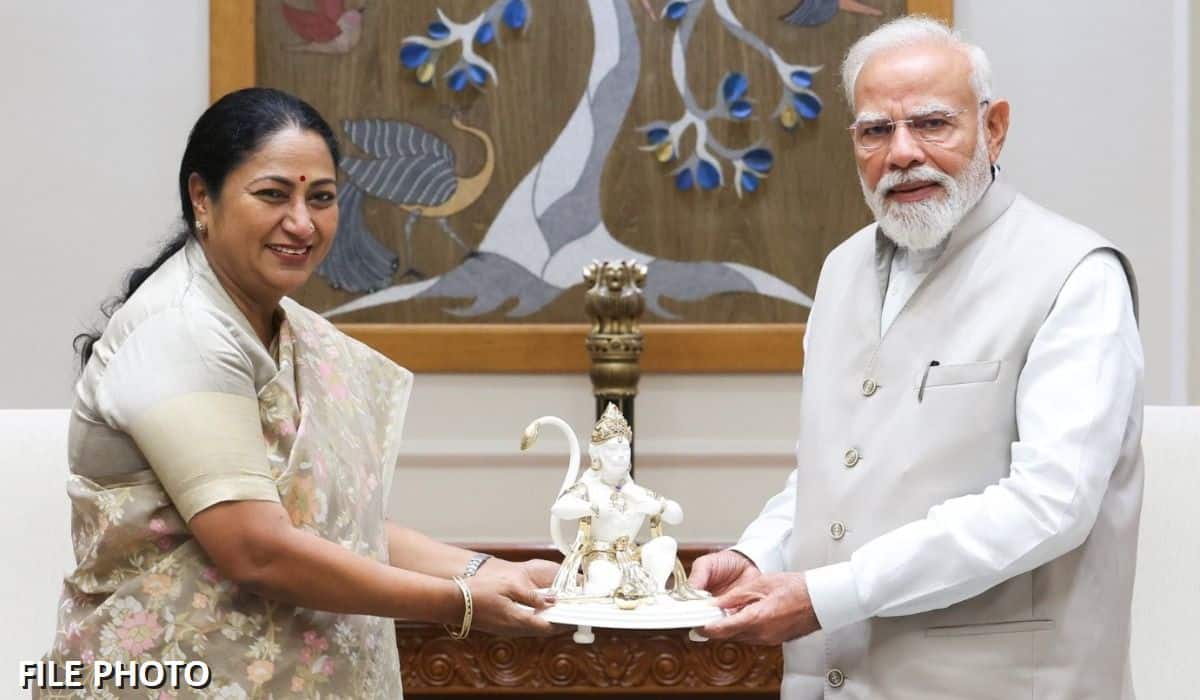
When we think of dynamic leaders, the kind who do not hesitate when decisionshave to be made, the kind who remain connected to the common man, it is impossible not to think of Prime Minister Narendra Modi. Through my life I have observed many leaders, each with their own qualities, but the kind of impact that Modi has had on this generation will always be unmatched. On his birthday, I write not just to extend greetings, but to share why his leadership matters to India
and to Goa.
His life story is familiar to many Indians because it speaks of determination more than background. He began in Gujarat, under ordinary circumstances, and earned his way into public service. The values that shaped Narendra Modi then remain visible even today - discipline, hard work and refusal to accept that India should settle for less than its best.
It is this outlook that guides his every initiative and it is this that makes him stand apart. When he speaks of Aatmanirbhar Bharat, it is not a slogan, it comes from a lived belief that India must rely on its own strength.
From Strength To Strength
The achievements of the past decade have been many, but I will point to those that truly altered the way India functions. Startup India is one such example. Launched in 2016, it has transformed the energy of our youth into enterprises. From just a few hundred then, India now has over 1.8 lakh recognised startups. They have created more than 17 lakh jobs. These are not distant figures, even in Goa I meet young entrepreneurs who say their confidence to begin came from the support system built under this programme.
Digital India is another. Internet penetration, digital payments and access to govt services online are now everyday experiences. I still remember when citizens had to stand in long queues for simple documents, today much of that is handled on a phone. Goa too has benefited. Our services are becoming more efficient, governance is reaching every single household. This is what Prime Minister Modi means when he says last mile delivery of governance.
'Make in India' has revived manufacturing in sectors that was absent for decades. Skill India has opened up training opportunities for youth who earlier lacked the right exposure. Swachh Bharat Abhiyan focused on the criticality of sanitation.
India: A Global Leader
On the global stage, the sea-change is visible. India is being talked about not as a developing country struggling to find its place but as a rising superpower that is setting the terms for the future. Our nation has already become the world's fourth largest economy and projections suggest it will move further up. It is a psychological transformation where every Bharatiya now believes that our country is destined for greatness. It is rare to see a leader turn the tide of belief, but Prime Minister Modi has done that. He has changed the way Indians look at themselves and how the world looks at India.
India's growing respect, admiration and active participation on the global stage under PM Modi's leadership is reflected in over two dozen international honours conferred upon him.
As an Indian, it is a matter of pride, as a Goan, it tells me that our state too is part of a nation that is being respected worldwide.
Man Of The People
Leadership is also tested in crisis. When the Pahalgam attacks shook the nation, people demanded justice. It was under Narendra Modi's leadership that Operation Sindoor was carried out swiftly. Families of victims felt reassured that govt did not rest. More recently, Operation Mahadev again proved that the security of citizens. will never be compromised. These are not easy decisions for any leader, but his firmness gave the country confidence.
Equally significant is his work on climate commitments. His announcement that India will achieve 'net zero by 2070' was bold, but it was followed up with clear steps. Renewable energy, solar power and green hydrogen are expanding rapidly. Goa, with its coastline and sensitivity to climate change, has already started aligning with this vision. The state's own focus on sustainable tourism and renewable energy receives strength from the Centre's direction.
Beyond policy, the Prime Minister has shown that leadership can remain close to the people. Mann ki Baat is perhaps the most visible example. It is a conversation. Farmers, women, students, entrepreneurs, scientists, etc. have all found themselves mentioned in it.
I often tell the youth, especially, to listen carefully, because many times it is in these simple words that you find new perspectives and fresh ideas.
Nation First
Modi often reminds the nation of four pillars - Yuva Shakti, Nari Shakti, Krishi Shakti and Garib Kalyan. Each has been translated into programmes. For women, it has meant larger participation in self-help groups, easier access to finance and opportunities to lead. For farmers, crop insurance and direct income support have been transformative. For the poor, direct benefit transfers have reduced leakages and restored dignity. For youth, skilling and entrepreneurship have opened doors. In Goa, we have seen all four pillars strengthen our own citizens. Women here are leading cooperatives, farmers are benefiting from schemes, and youth are stepping into industries that earlier looked out of reach.
There is also something about his style of governance that has broken away from the past. The dismantling of VVIP culture, for example, might sound symbolic, but it has changed the relationship between leaders and people.
Modi has consistently projected himself as a 'Sevak', always eager to serve. It has influenced the way many of us at state level conduct ourselves too.
Goa has been a beneficiary of central support perpetually. Be it national highways, bridges, improved health infrastructure or funds for tourism, the assistance has been steady. These projects are not ornamental, they matter in daily life. They bring jobs, safety and opportunities. They show how Centre and state can work hand in hand when the vision is aligned..
Helping India Grow
Not long ago, India had the most complex and confusing indirect tax system, with different states following different rules, and businesses often burdened by multiple layers of taxes. It created hurdles for trade and slowed down the economy. The introduction of GST in 2017 was a landmark reform that brought uniformity, removed hidden taxes, and made compliance easier. It turned India into one common market, helping businesses grow, expanding tax base, improving revenue collection and building economic confidence. Now, as we move towards GST 2.0, the focus is on making the system even more citizen-friendly. With improved transparency and massive tax deductions, the next generation of GST will reduce the burden on small businesses and benefit every household. These reforms will stand as testament for Modi Ji's goal of making India a developed nation.
When we speak of Viksit Bharat 2047, we are speaking of a nation that by the 100th year of Independence will stand developed in every sense. It means a country with world class infrastructure, a strong economy, women in leadership, empowered youth, prosperous farmers and a healthy environment. It is a plan being laid brick by brick. And in this Amritkaal, it is our duty to contribute to it.
'Swayampurna Goa' too is linked to this mission. Our own aspirations for a modern yet culturally embedded state, for industries that coexist with our ecology, for youth who are skilled and ready, all flow into the larger vision of Viksit Bharat.
On his birthday today, my thoughts return to the kind of premiership we have been fortunate to witness. What makes Narendra Modi stand apart is his pragmatic approach. He does not remain removed from the people, he listens to them closely.
And so I end with this. There are leaders who are remembered for policies and there are leaders remembered for promises. Rare are those remembered for changing the course of a nation.
On his birthday, I don't just applaud a man, I celebrate a movement. A movement that whispers hope and plants a purpose in every heart. May his dream of a Viksit Bharat 2047 forever guide our sails. And may Goa stand, as always at the forefront of that voyage.
(The writer is the chief minister of Goa)