Congress always treated Dalits as a bank of votes

Published By : Admin | April 28, 2010 | 21:05 IST

State Government Spokes-Person, Health Minister Shri Jaynarayan Vyas and MOS Shri Saurabhbhai Patel have sharply repudiated Congress Leadership for triggering the controversy. The evil -campaign is based on fabricated stories. It is to be noted here that the Book-Release function held at Ahmedabad, and labyrinth controversy is triggered by congress leadership, has no substance at all. State Government has recorded version of CM’s Speech. Chief Minister has not spoken a single word of the sort. Nor, there is anything objectionable is being found in the Book- which was released, the book is based on Social Harmony. Next day, all the major News-Papers, including Gujarat Samachar, had covered the event. In highlighting the Book-Release function, no News-Paper has printed a single word about the alleged controversial remarks. However, with ulterior motives, just to provoke the Dalits, Congress has sponsored the campaign of lies. The episode has damaged the image and esteem of opposition. They must tender their apology to the citizens.

Power hungry Congress is playing with fire. They have been playing dirty, divisive and vote-bank politics for their own benefits. They have always treated Dalits as a bank of votes, never cared about the welfare of Dalits during their regime. The Dalit-Voter was remembered only at the time of election. Congress has treated Hon.Dr.Babasaheb also as an untouchable, during his entire life. Dr. Babasaheb fought for the cause of social harmony. He dedicated his whole life for the cause of social-harmony. He never afraid in highlighting the truth, on the contrary, he remained instrumental in busting the hollowness of Congress. ‘Divide and Rule policy’ is flowing in to the genes of Congress. Since Independence, their unobstructed rule for 40 -50 years are under public scanner, when Shri Narendra Modi was nowhere in picture.

The Dalits, Down-Trodden and Underprivileged Classes remained at the mercy of post- independent regimes, who was responsible for the sorry state? Congress could never treat them as a vibrant force, nor could offer dignified treatment. Congress leadership could not take-up the teachings of Mahatma Gandhi seriously, which implies them to serve Harijan and Daridra Narayan. The down-trodden, underprivileged classes and Dalits trusts Shri Modijee, they see him as an emancipator, who is relentlessly fighting for their rights. Shri Narendra Modi has left a high stamp of credibility among Dalits. Perhaps, Congress is scared of the loss of Dalit Vote-Bank. Dr Ambedkar, who had dedicated his entire life for carrying out the crusade against untouchability, became victim of Congress’s political untouchability. Abandoning cast- creed and religion, he carried out public campaign for the welfare of Dalits. Compared to that, present Congress leadership’s stature is not at all up to the mark. Spokes Person added that people are aware about it.

Spokes Person revealed series of events, under which Congress has employed dirty tactics to remain in power, the power hunger of Congress is known to all. He raised a very crucial point, “During 45 years of Congress Rule, and how many accesses and atrocities the Dalits had to face? Take an account of atrocities, under Congress Regime! Who pitted Minorities against Dalits? Who tried to take disadvantage of the Backwardness and poor state of Dalits? Prod on that. Those, who are shedding crocodile tears, their identity is very clear in the mind-frame of Dalits. They have been victims of number of bitter experiences. And now, they are trying to attack the image of an emancipator, the great leader like Chief Minister Shri Narendra Modi. Mind well, they can never succeed in their evil mission. They can no longer mislead the Dalits.

Shri Narendrabhai Modi has to his credit the longest period of service; he has to his credit a record that he ruled Gujarat for 3000 days. To mark that, he carried out the Abhiyan of Garib Kalyan Mela. As many as 50 Garib Kalyan Mela offered economic assistance to the tune of Rs. 2700 Crores to 21 lac odd beneficiaries. Intended benefits reached up to identified and appropriate beneficiary. It proved disastrous for the mediators, who used to run their shops since Congress Regime. They have become desperate; Congress is also desperate as its vote-bank is no more with it. It left congress in dilemma, a face saving exercise for them. They are not in a position to face Dalits; they even opposed the Maha-Yagna of welfare. In the coming three months, State is scheduled to organise 225 Garib Kalyan Melas, covering all the Talukas. Desperation has come out of the scare. They are trying to vitiate the noble drives, which are aimed to empower the poor. The Dalits would never forgive Congress for their heinous acts, added Spokes Person.

Explore More
Today, the entire country and entire world is filled with the spirit of Bhagwan Shri Ram: PM Modi at Dhwajarohan Utsav in Ayodhya

பிரபலமான பேச்சுகள்

Today, the entire country and entire world is filled with the spirit of Bhagwan Shri Ram: PM Modi at Dhwajarohan Utsav in Ayodhya
Why global AI leaders are flocking to the India AI Impact Summit in New Delhi

Media Coverage

Why global AI leaders are flocking to the India AI Impact Summit in New Delhi
NM on the go

Nm on the go

Always be the first to hear from the PM. Get the App Now!
...
In this decade of the 21st century, India is riding the Reform Express: PM Modi at ET Now Global Business Summit
February 13, 2026
Amid numerous disruptions, this decade has been one of unprecedented development for India, marked by strong delivery and by efforts that have strengthened our democracy: PM
In this decade of the 21st century, India is riding the Reform Express: PM
We have made the Budget not only outlay-focused but also outcome-centric: PM
Over the past decade, we have regarded technology and innovation as the core drivers of growth: PM
Today, we are entering into trade deals with the world because today's India is confident and ready to compete globally: PM

You are all welcome to this Global Business Summit; I extend my greetings to each one of you. We are here to discuss the theme “A Decade of Disruption, A Century of Change.” After listening to Vineet ji’s speech, I feel my task has become much easier. But let me make a small request-since you know so much, it should sometimes also be reflected in ET.

Friends,

The past decade of the 21st century has been one of unprecedented disruption. The world has witnessed a global pandemic, tensions and wars in different regions, and supply chain breakdowns that shook the global balance, all within a single decade. But friends, it is said that the true strength of a nation is revealed in times of crisis, and I take great pride in the fact that amid so many disruptions, this decade has been one of unprecedented development for India, marked by remarkable delivery and the strengthening of democracy. When the previous decade began, India was the eleventh-largest economy. Amid such turbulence, there were strong apprehensions that India might slip further down. But today, India is moving rapidly toward becoming the world’s third-largest economy. And the “Century of Change” that you speak of will, I say with great responsibility, rest significantly on India. Today, India contributes more than 16 percent to global growth, and I am confident that in every coming year of this century, our contribution will keep increasing steadily. I have not come here like an astrologer making predictions. India will drive global growth; it will emerge as the new engine of the world economy.

Friends,

After the Second World War, a new global order took shape. But after seven decades, that system is breaking down. The world is moving toward a new world order. Why is this happening? It happened because the foundation of the earlier system was based on a “One Size Fits All” approach. It was believed that the world economy would be centered in the core and that supply chains would become strong and dependable. Nations were seen merely as contributors within that framework. But today, this model is being challenged and is losing its relevance. Every country now realizes that it must build its own resilience.

Friends,

What the world is discussing today, India made part of its policy as early as 2015, ten years ago. When NITI Aayog was established, its founding document clearly articulated India’s vision: India would not import a single development model from any other country. We would pursue an Indian approach to India’s development. This policy gave India the confidence to make decisions according to its own requirements and in its own national interest. That is a key reason why, even during a decade of disruption, India’s economy did not weaken but continued to grow stronger.

Friends,

In this decade of the 21st century, India is riding on a Reform Express. The greatest feature of this Reform Express is that we are accelerating it not out of compulsion but with conviction, and with a commitment to reform. Many distinguished experts and stalwarts of the economic world are present here. You have seen the period before 2014. Reforms were undertaken only when circumstances forced them, when crises struck, when no other option remained. The reforms of 1991 happened when the country faced the danger of bankruptcy and had to pledge its gold. That was the approach of earlier governments-they undertook reforms only out of compulsion. After the 26/11 terrorist attack, when the Congress government’s weaknesses were exposed, the NIA was formed. When the power sector collapsed and grids began to fail, only then did reforms in the power sector occur out of necessity.

Friends,

There is a long list of examples reminding us that when reforms are made under compulsion, neither the correct results nor the desired national outcomes are achieved.

Friends,

I am proud that in the last eleven years, we have carried out reforms with complete conviction-reforms in policy, in process, in delivery, and even in mindset. Because if policy changes but processes remain the same, if the mindset remains unchanged, and if delivery does not improve, reforms remain merely pieces of paper. Therefore, we have made sincere efforts to transform the entire system.

Friends,

Let me speak about processes. A simple yet crucial process is that of Cabinet notes. Many here would know that earlier, it would take months just to prepare a Cabinet note. How could a nation develop at that speed? So we changed this process. We made decision-making time-bound and technology-driven. We ensured that a Cabinet note would not remain on any officer’s desk beyond a fixed number of hours-either reject it or take a decision. The nation is witnessing the results today.

Friends,

Let me also give the example of approvals for railway overbridges. Earlier, it would take several years to get a single design approved. Multiple clearances were required, and letters had to be written at various levels-and I am speaking not about the private sector, but about the government. We changed this as well. Today, see the pace at which road and railway infrastructure is being built. Vineet ji elaborated on this extensively.

Friends,

Another interesting example is border infrastructure, which is directly linked to national security. There was a time when even constructing a simple road in border areas required permissions from Delhi. At the district level, there was practically no authority empowered to make decisions; there were wall upon walls, and no one could take responsibility. That is why, even decades later, border infrastructure remained in poor condition. After 2014, we reformed this process, empowered local administration, and today we are witnessing rapid development in border infrastructure.

Friends,

One reform in the past decade that has created a stir worldwide is UPI, India’s digital payment system. It is not merely an app; it represents an extraordinary convergence of policy, process, and delivery. Those who could never even imagine accessing banking and financial services are now being served by UPI. Digital India, the digital payment system, the Jan Dhan-Aadhaar-Mobile trinity-these reforms were not born of compulsion but of conviction. Our conviction was to ensure the inclusion of citizens whom previous governments had never reached. Those who were never cared for, Modi honors and empowers. That is why these reforms were undertaken, and our government continues to move forward with this same spirit.

Friends,

This new mindset of India is also reflected in our Budget. Earlier, when the Budget was discussed, the focus was only on outlay-how much money was allocated, what became cheaper or costlier. On television, budget discussions would revolve almost entirely around whether income tax had increased or decreased, as if nothing beyond that existed in the country. The number of new trains announced would dominate headlines, and later no one would ask what happened to those announcements. Therefore, we transformed the Budget from being merely outlay-centric to being outcome-centric.

Friends,

Another significant change in the Budget discourse is this: before 2014, there was extensive discussion about off-budget borrowing. Now, there is the discussion about off-budget reforms. Beyond the Budget framework, we implemented next-generation GST reforms, replaced the Planning Commission with NITI Aayog, removed Article 370, enacted legislation against triple talaq, and passed the Nari Shakti Vandan Act.

Friends,

Whether announced within the Budget or beyond it, the Reform Express continues to gather speed. In just the past year, we have carried out reforms in the ports and maritime sector, taken numerous initiatives for the shipbuilding industry, advanced reforms under the Jan Vishwas Act, enacted the Shanti Act for energy security, implemented labor law reforms, introduced the Bharatiya Nyaya Sanhita, reformed the Waqf law, and introduced a new GRAM G Act to promote rural employment. Numerous such reforms have been undertaken throughout the year.

Friends,

This year’s Budget has propelled the Reform Express even further. While the Budget has many dimensions, I will speak about two important factors-Capex and Technology. As in previous years, infrastructure spending has been increased to nearly ₹17 lakh crore in this Budget as well. You are aware of the significant multiplier effect of capex; it enhances the nation’s capacity and productivity and generates large-scale employment across numerous sectors. The construction of five university townships, the creation of city economic regions in Tier-2 and Tier-3 cities, and seven new high-speed rail corridors, such Budget announcements are, in the truest sense, investments in our youth and in the nation’s future.

Friends,

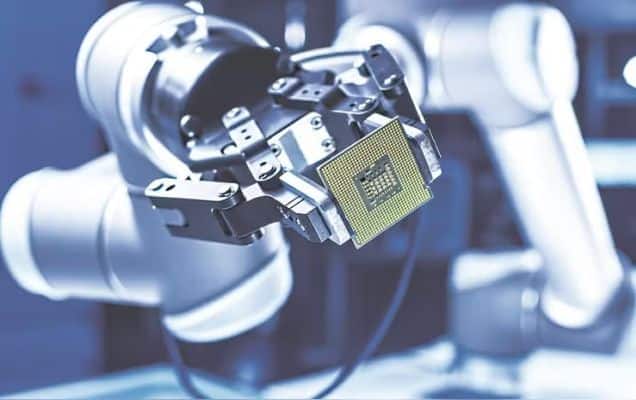
Over the past decade, we have regarded technology and innovation as core drivers of growth. With this vision, we promoted a start-up culture and a hackathon culture across the country. Today, India has more than two lakh registered start-ups operating across diverse sectors. We encouraged our youth and fostered a spirit that rewards risk-taking. The results are evident before us. This year’s Budget further strengthens this priority. Significant announcements have been made, particularly for sectors such as biopharma, semiconductors, and AI.

Friends,

As the country’s economic strength has grown, we have also empowered the States proportionately. Let me share another figure. Between 2004 and 2014, over ten years, the States received around ₹18 lakh crore as tax devolution. In contrast, from 2014 to 2025, States have been given ₹84 lakh crore. If I add the approximately ₹14 lakh crore proposed in this year’s Budget, the total tax devolution to States under our government will reach nearly ₹100 lakh crore. This amount has been transferred by the Union Government to various State governments to advance development initiatives in their respective regions.

Friends,

These days, there is considerable discussion about India’s FTAs-Free Trade Agreements. As I entered here, the conversations had already begun, and analyses are taking place across the world. Today, however, let me present another interesting perspective-perhaps not the angle the media seeks, but one that may be useful. I firmly believe that what I am about to say may not have crossed your minds either. Have you ever wondered why such extensive free trade deals with developed nations did not materialize before 2014? The country was the same, the youthful energy was the same, the government system was the same-so what changed? The change came in the government’s vision, in its policy and intent, and in India’s capabilities.

Friends,

Reflect for a moment-when India was labeled among the “Fragile Five” economies, who would have engaged with us? In a village, would a wealthy family agree to marry their daughter into an impoverished household? They would look down upon it. That was our situation in the world. When the country was gripped by policy paralysis, surrounded by scams and corruption, who could have placed their trust in India? Before 2014, India’s manufacturing base was extremely weak. Earlier governments were hesitant; hardly anyone approached India, and even if efforts were made, they feared that deals with developed nations would result in those countries flooding our markets and capturing them. In that atmosphere of despair, before 2014, the UPA government managed comprehensive trade agreements with only four countries. In contrast, the trade deals concluded by India over the past decade cover 38 countries across different regions of the world. Today, we are entering trade agreements because India is confident. Today’s India is prepared to compete globally. Over the past eleven years, India has built a robust manufacturing ecosystem. Therefore, India today is capable and empowered, and that is why the world trusts us. This transformation forms the foundation of the paradigm shift in our trade policy, and this paradigm shift has become an essential pillar in our journey toward a Developed India.

Friends,

Our government is working with full sensitivity to ensure that every citizen participates in development. Those left behind in the race for progress are being prioritized. Previous governments only made announcements for persons with disabilities; we too could have continued that path. But sensitivity defines governance. The example I am about to give may seem small to some of you. Just as our country has linguistic diversity, sign language too was fragmented-one form in Tamil Nadu, another in Uttar Pradesh, a third in Gujarat, a fourth in Assam. If a differently-abled person from one state travelled to another, communication became difficult. This may not appear to be a major task, but a sensitive government does not consider such matters trivial. For the first time, India has institutionalized and standardized Indian Sign Language. Similarly, the transgender community had long struggled for their rights; we enacted legislation granting them dignity and protection. In the past decade, millions of women were freed from the regressive practice of triple talaq, and reservation for women in the Lok Sabha and State Assemblies was ensured.

Friends,

The mindset within the government machinery has also transformed, becoming more sensitive. This difference in thinking is visible even in schemes like providing free food grains to the needy. Some in the opposition mock us; certain newspapers amplify such mockery. They ask why free rations are given when 250 million people have supposedly risen out of poverty. It is a peculiar question. When a patient is discharged from a hospital, does the doctor not still advise precautions for several days? Yes, the person has come out of poverty, but that does not mean support should immediately cease. Those with narrow thinking fail to understand that lifting someone out of poverty is not sufficient; we must ensure that those who have entered the neo-middle class do not slip back into poverty. That is why continued support in the form of free food grains remains necessary. Over the past years, the Central Government has spent lakhs of crores on this scheme, providing immense support to the poor and the neo-middle class.

Friends,

We also observe a difference in thinking in another context. Some people question why I speak of 2047. They ask whether a Developed India will truly materialize by then, and whether it matters if we ourselves are not present at that time. This, too, is a prevalent mindset.

Friends,

Those who fought for India’s independence endured lathi charges, imprisonment in Cellular Jail, and even mounted the gallows. Had they thought that independence might not come in their lifetime and questioned why they should suffer for it, would India ever have attained freedom? When the nation comes first, when national interest is paramount, every decision and every policy is shaped for the country. Our vision is clear-we must continue working tirelessly to build a Developed India. Whether we are present in 2047 or not, the nation will endure, and future generations will live on. Therefore, we must dedicate our present so that their tomorrow is secure and bright. I sow today so that the generations of tomorrow may reap the harvest.

Friends,

The world must now prepare to live with disruption. Its nature may evolve over time, but rapid change in systems is inevitable. You can already witness the disruption brought by AI. In the coming years, AI will usher in even more revolutionary transformations, and India is prepared. In a few days, India will host the Global AI Impact Summit. Nations and technology leaders from across the world will gather here. Together with all of them, we will continue striving to build a better world. With this confidence, I once again extend my best wishes to all of you for this Summit.

Thank you very much.

Vande Mataram.