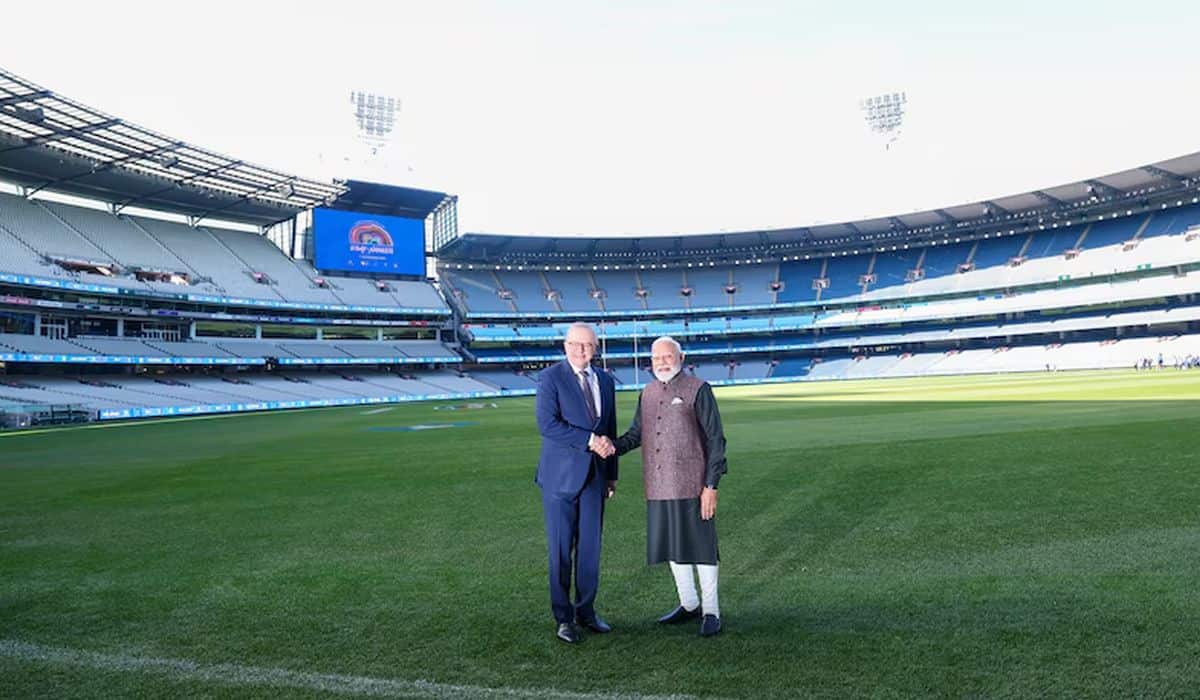
The Prime Minister Shri Narendra Modi delivered his remarks at the India Energy Week 2025 via video message today. Addressing the gathering at Yashobhoomi, he emphasized that the attendees are not just part of the Energy Week, but are also integral to India's energy ambitions. He extended a warm welcome to all participants, including distinguished guests from abroad, highlighting their crucial role in this event.
Highlighting that experts worldwide are asserting that the 21st century belongs to India, Shri Modi remarked, “India is driving not only its growth but also the growth of the world, with the energy sector playing a significant role”. He emphasized that India's energy ambitions are built on five pillars: harnessing resources, encouraging innovation among brilliant minds, economic strength and political stability, strategic geography making energy trade attractive and easier, and commitment to global sustainability. The Prime Minister noted that these factors are creating new opportunities in India's energy sector.
Underlining that the next two decades are crucial for a Viksit Bharat, the Prime Minister highlighted that several significant milestones will be achieved in the next five years. He noted that many of India's energy goals are aligned with the 2030 deadline, including the addition of 500 gigawatts of renewable energy capacity, achieving net zero carbon emissions for Indian Railways, and producing five million metric tons of green hydrogen annually. He acknowledged that these targets may seem ambitious, but the achievements of the past decade have instilled confidence that these goals will be attained.
“India has grown from the tenth largest to the fifth largest economy in the past decade”, remarked Shri Modi. He highlighted that India's solar energy generation capacity has increased thirty-two times in the last ten years, making it the third-largest solar power generating nation in the world. He noted that India's non-fossil fuel energy capacity has tripled and that India is the first G20 country to achieve the goals of the Paris Agreement. The Prime Minister emphasized India's achievements in ethanol blending, with a current rate of nineteen percent, leading to foreign exchange savings, substantial farmer revenue, and significant reductions in CO2 emissions. He highlighted India's goal of achieving a twenty percent ethanol mandate by October 2025. He remarked that India's biofuels industry is ready for rapid growth, with 500 million metric tonnes of sustainable feedstock. He further noted that during India's G20 presidency, the Global Biofuels Alliance was established and is continuously expanding, now involving 28 nations and 12 international organizations. He highlighted that this alliance is transforming waste into wealth and setting up Centers of Excellence.

Highlighting that India is continuously reforming to fully explore the potential of its hydrocarbon resources, Shri Modi highlighted that major discoveries and extensive expansion of gas infrastructure are contributing to the growth of the gas sector, increasing the share of natural gas in India's energy mix. He noted that India is currently the fourth largest refining hub and is working to increase its capacity by 20 percent.
Pointing out that India's sedimentary basins hold numerous hydrocarbon resources, some of which have already been identified, while others await exploration, the Prime Minister highlighted that to make India's upstream sector more attractive, the Government introduced the Open Acreage Licensing Policy (OALP). He emphasized that the Government has provided comprehensive support to the sector, including opening the Exclusive Economic Zone and establishing a single-window clearance system. Shri Modi noted that changes to the Oilfields Regulation & Development Act now offer stakeholders policy stability, extended leases, and improved financial terms. He emphasized that these reforms will facilitate the exploration of oil and gas resources in the maritime sector, increase production, and maintain strategic petroleum reserves.
Prime Minister underlined that due to several discoveries and the expanding pipeline infrastructure in India, the supply of natural gas is increasing. He emphasized that this will lead to a rise in the utilization of natural gas in the near future. He also highlighted that there are numerous investment opportunities in these sectors.
“India's major focus is on Make in India and local supply chains”, exclaimed Shri Modi. He highlighted the significant potential for manufacturing various types of hardware, including PV modules, in India. The Prime Minister noted that India is supporting local manufacturing, with the solar PV module manufacturing capacity expanding from 2 gigawatts to approximately 70 gigawatts in the past ten years. He emphasized that the Production Linked Incentive (PLI) scheme has made the sector more attractive, promoting the manufacturing of high-efficiency solar PV modules.

Highlighting the significant opportunities for innovation and manufacturing in the battery and storage capacity sector, the Prime Minister remarked that India is rapidly advancing towards electric mobility and emphasized the need for swift action to meet the demands of such a large country in this sector. Shri Modi noted that the current year's budget includes numerous announcements supporting green energy. He highlighted that the Government has exempted several items related to the manufacturing of EV and mobile phone batteries from basic customs duty. This includes cobalt powder, lithium-ion battery waste, lead, zinc, and other critical minerals. He remarked that the National Critical Minerals Mission will play a crucial role in building a robust supply chain in India. He also highlighted the promotion of the non-lithium battery ecosystem. The Prime Minister emphasized that the current year's budget has opened the nuclear energy sector, and every investment in energy is creating new jobs for the youth and generating opportunities for green jobs.
“To strengthen India's energy sector, the Government is empowering the public”, emphasised the Prime Minister. He highlighted that ordinary families and farmers have been made energy providers. He remarked that the PM Suryagarh Free Electricity Scheme was launched last year, and its scope is not limited to energy production. He noted that this scheme is creating new skills in the solar sector, developing a new service ecosystem, and increasing investment opportunities.
Concluding his address, the Prime Minister reiterated India's commitment to providing energy solutions that energize growth and enrich nature. He expressed confidence that this Energy Week would yield concrete outcomes in this direction. He encouraged everyone to explore every possibility emerging in India and extended his best wishes to all participants.