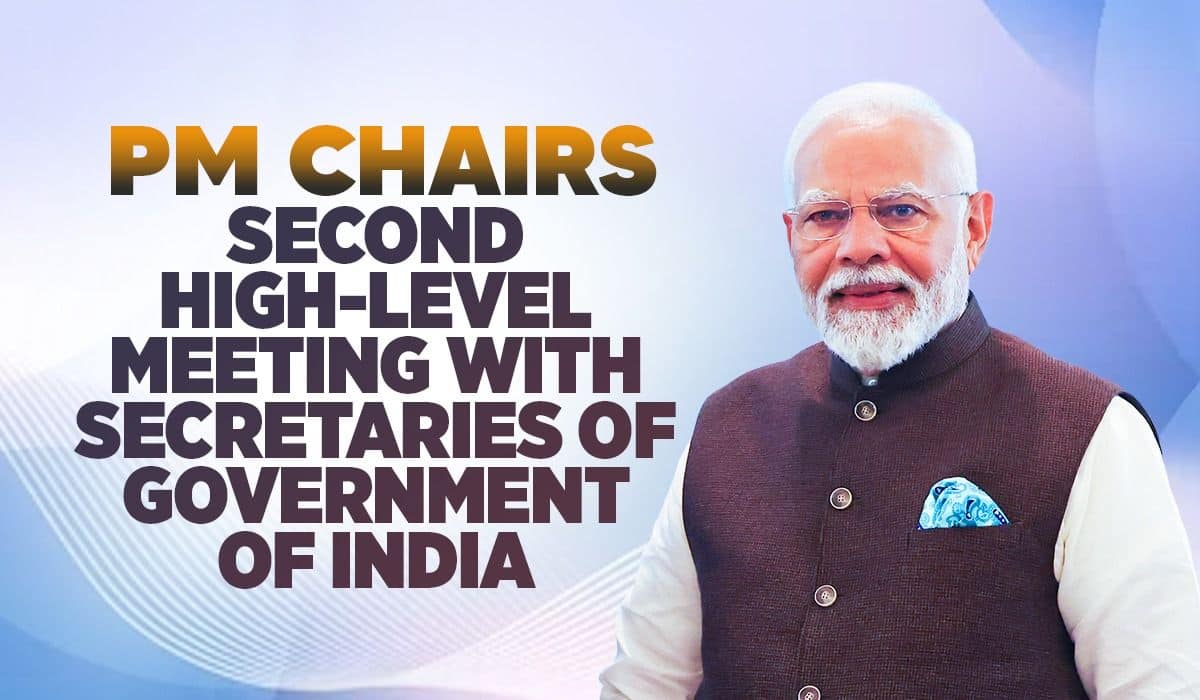
Prime Minister Shri Narendra Modi addressed the centenary celebrations of Arya Vaidya Sala Charitable Hospital in Kerala via video message today. Speaking on the occasion, Prime Minister remarked that on this solemn occasion, it was a matter of joy for him to connect with everyone. He highlighted that Arya Vaidyasala has played a significant role in preserving, protecting, and advancing Ayurveda. Shri Modi noted that in its 125-year journey, the institution has established Ayurveda as a powerful system of treatment. He recalled the contributions of Arya Vaidyasala’s founder, Vaidyaratnam P.S. Varier, emphasizing that his approach towards Ayurveda and his dedication to public welfare continue to inspire.
Underlining that Arya Vaidyasala in Kerala is a living symbol of India’s healing tradition that has served humanity for centuries, Prime Minister Modi stressed that Ayurveda in India has never been confined to one era or one region; in every age, this ancient medical system has shown the way to understand life, create balance, and harmonize with nature. He pointed out that today Arya Vaidyasala manufactures more than 600 Ayurvedic medicines, and its hospitals across different parts of the country treat patients through Ayurvedic methods, including patients from over 60 countries worldwide. Shri Modi stated that Arya Vaidyasala has earned this trust through its work, and when people are in distress, the institution becomes a great source of hope for them.
“For Arya Vaidyasala, service is not merely an idea but a sentiment reflected in its actions, approach, and institutions”, said Shri Modi. He highlighted that the institution’s Charitable Hospital has been continuously serving people for the past 100 years, acknowledging the contributions of all associated with the hospital. He extended his greetings to the vaidyas, doctors, nursing staff, and all others connected with the hospital, and congratulated them for completing 100 years of the Charitable Hospital’s journey. The Prime Minister noted that the people of Kerala have kept the traditions of Ayurveda alive for centuries and are also preserving and promoting them.
The Prime Minister observed that for a long time, ancient medical systems in the country were seen in silos, but in the past 10–11 years, there has been a major change in this approach. He emphasized that now healthcare services are being viewed with a holistic perspective, bringing Ayurveda, Unani, Homeopathy, Siddha, and Yoga under one umbrella, and for this purpose, the Ministry of Ayush was established. Shri Modi underlined that the government has consistently focused on preventive health, launching the National Ayush Mission, opening more than 12,000 Ayush Wellness Centres that provide yoga, preventive care, and community health services. He added that other hospitals across the country have also been connected with Ayush services, with attention given to the regular supply of Ayush medicines. The Prime Minister stated that the clear objective is to ensure that the benefits of India’s traditional medical knowledge reach people in every corner of the country.
Highlighting that the clear impact of government policies is visible in the AYUSH sector, with the AYUSH manufacturing sector growing rapidly and expanding, Shri Modi highlighted that to take Indian traditional wellness to the world, the government has established the Ayush Export Promotion Council, aiming to promote AYUSH products and services in global markets, which is already showing very positive results. The PM noted that in 2014, India exported around ₹3,000 crore worth of AYUSH and herbal products, whereas now exports have risen to ₹6,500 crore, greatly benefiting the country’s farmers.
Underlining that India is also emerging as a trusted destination for AYUSH-based Medical Value Travel, Shri Modi said steps like the introduction of the AYUSH Visa are helping foreign visitors access better facilities in Ayurveda and traditional medicine.
The Prime Minister emphasized that to promote Ayurveda, the government proudly presents it on every major global platform, whether at BRICS summits or G20 meetings, where he has showcased Ayurveda as a medium of holistic health. He pointed out that in Jamnagar, Gujarat, the World Health Organization’s Global Traditional Medicine Centre is being established, and the Institute of Teaching and Research in Ayurveda has already begun its work there. He added that to meet the growing demand for Ayurvedic medicines, medicinal farming is being encouraged along the banks of the Ganga.
Sharing another achievement, Shri Modi stated that the recently announced historic trade agreement with the European Union will give a major boost to Indian traditional medicine services and practitioners. He explained that in EU member states where regulations do not exist, AYUSH practitioners will be able to provide their services based on professional qualifications earned in India, which will greatly benefit the youth associated with Ayurveda and Yoga. He further noted that this agreement will also help establish AYUSH wellness centers in Europe, and extended his congratulations to all dignitaries associated with Ayurveda and AYUSH for this achievement.
Prime Minister remarked that through Ayurveda, India has been treating people for centuries, but it has also been unfortunate that within the country and largely abroad, efforts have been required to explain the importance of Ayurveda. He highlighted that a major reason for this has been the lack of evidence-based research and research papers, noting that when Ayurvedic methods are tested on the principles of science, public trust becomes stronger. Shri Modi expressed happiness that Arya Vaidyasala has consistently tested Ayurveda on the touchstone of science and research, working in collaboration with institutions like CSIR and IIT. He pointed out that the institution has focused on drug research, clinical research, and cancer care, and with the support of the Ministry of Ayush, the establishment of a Centre of Excellence for cancer research marks an important step in this direction.
Emphasising that now, in keeping with changing times, Ayurveda must increasingly adopt modern technology and AI, which can enable innovative approaches to predicting disease possibilities and offering treatment through different methods, the Prime Minister underlined that Arya Vaidyasala has demonstrated that tradition and modernity can move together, and healthcare can become a foundation of trust in people’s lives. Shri Modi noted that the institution has preserved the ancient understanding of Ayurveda while embracing modern needs, systematizing treatment, and delivering services to patients. He congratulated Arya Vaidyasala once again for this inspiring journey and expressed his wish that in the coming years, the institution continues to improve lives with the same dedication and spirit of service.
Governor of Kerala, Shri Rajendra Arlekar was present among other dignitaries at the event.