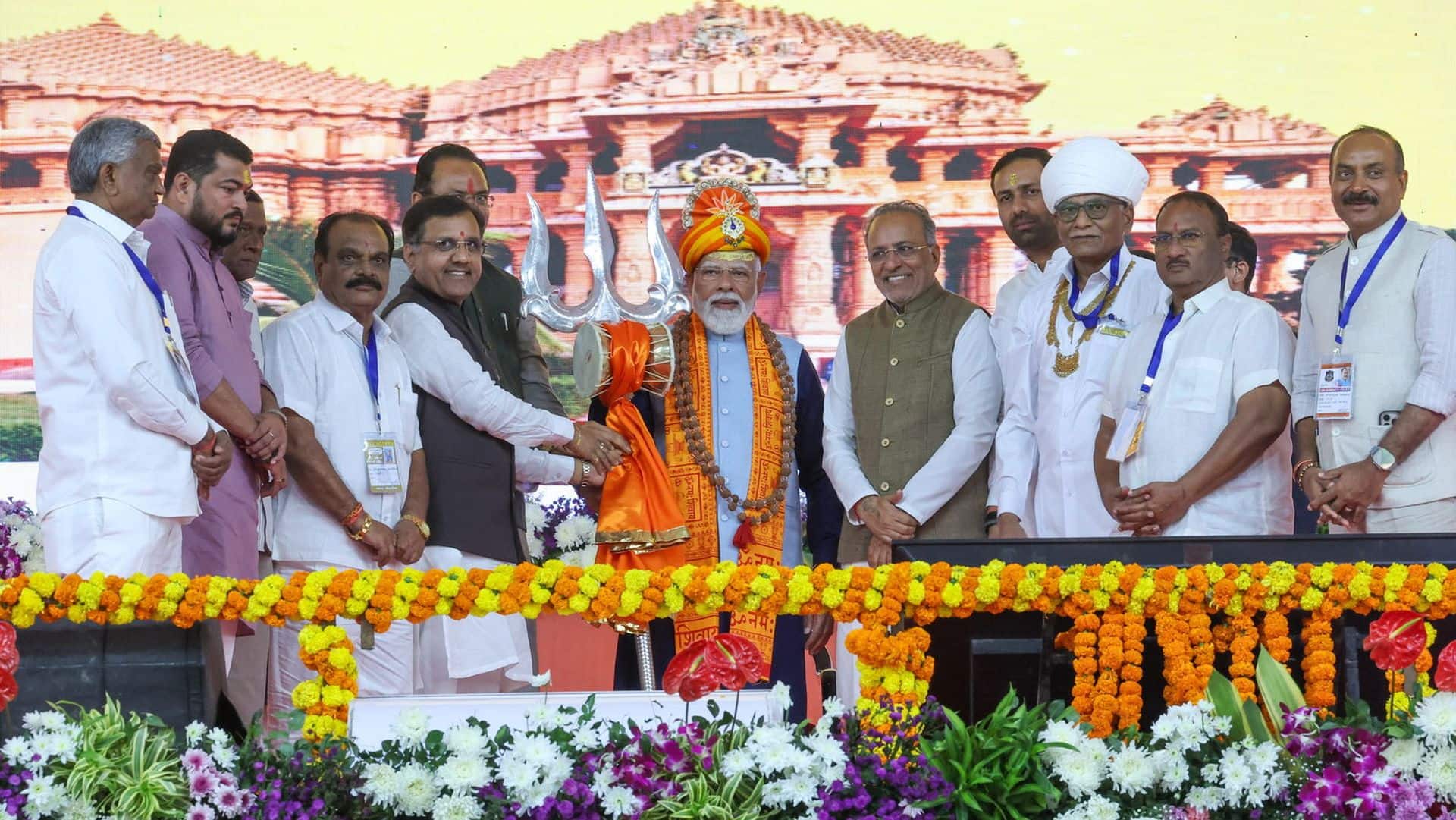


Prime Minister Shri Narendra Modi addressed the Somnath Swabhiman Parv in Somnath, Gujarat today. Speaking on the occasion, the Prime Minister remarked that this time is extraordinary, this atmosphere is extraordinary, and this celebration is extraordinary. He highlighted that on one side stands Lord Mahadev himself, and on the other, the vast waves of the ocean, with the rays of the sun, the resonance of mantras, and the surge of devotion. He stated that in this divine environment, the presence of all devotees of Lord Somnath is making the occasion divine and grand. Shri Modi expressed that he considers it a great fortune that, as Chairman of the Somnath Temple Trust, he has received the opportunity to actively serve in the Somnath Swabhiman Parv. He noted the uninterrupted chanting of Omkar for 72 hours and the continuous recitation of mantras for 72 hours. He highlighted that yesterday evening, a thousand drones, along with the presence of a thousand students from Vedic Gurukuls, presented the saga of Somnath’s thousand years, and today, the ‘Shourya Yatra’ with 108 horses reached the temple. He emphasized that the mesmerizing presentation of mantras and bhajans is beyond words, and only time can capture this experience. The Prime Minister underlined that this celebration embodies pride and honor, dignity and knowledge, grandeur and heritage, spirituality and realization, experience, joy, and intimacy. Above all, he stressed, it carries the blessings of Lord Mahadev.
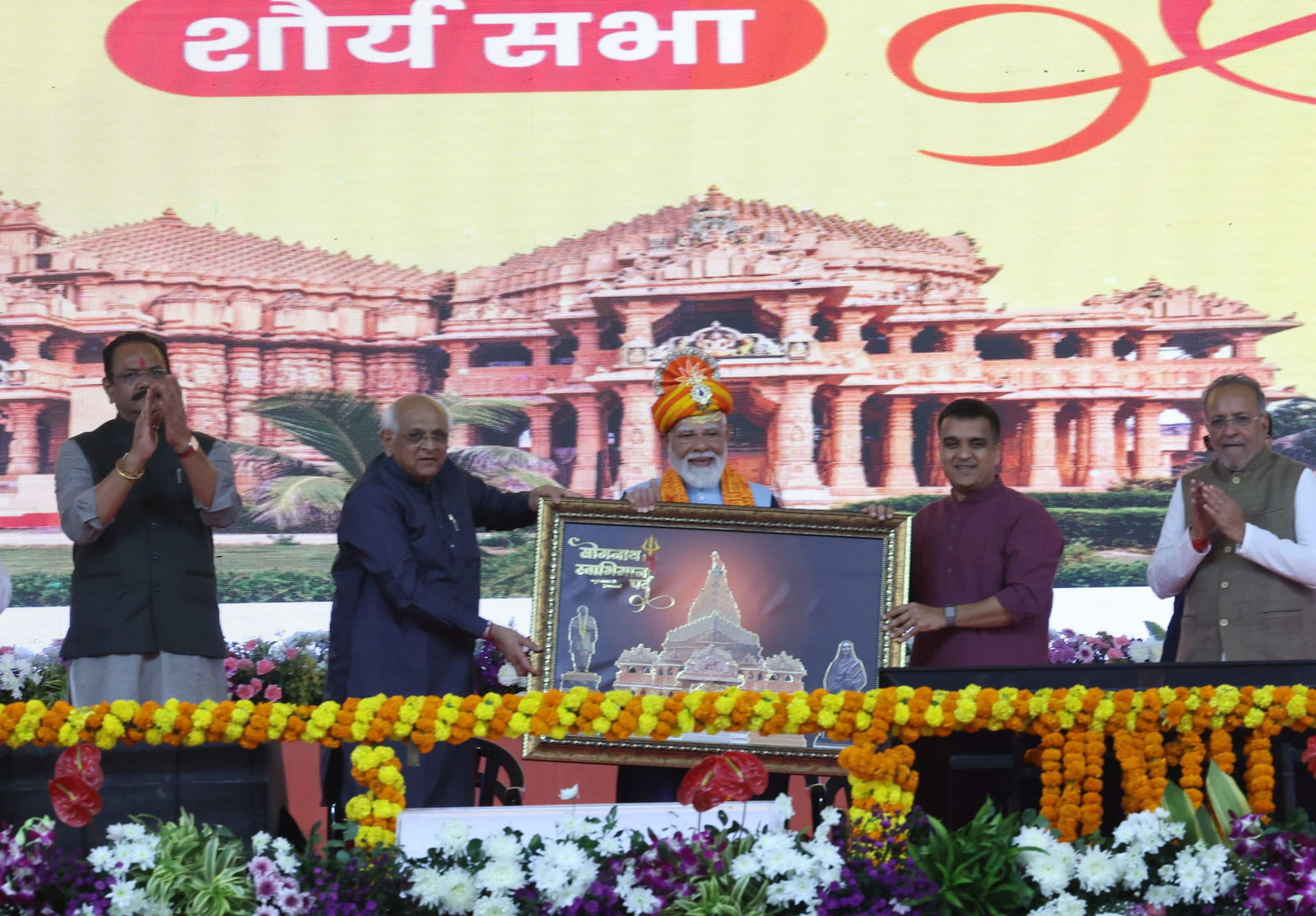
The Prime Minister remarked that as he speaks today, the thought repeatedly arises in his mind of what the atmosphere must have been like exactly a thousand years ago at this very place where people are now seated. He highlighted that the forefathers of those present, our ancestors, risked their lives for their faith, for their belief, and for their Lord Mahadev, offering everything they had. He stated that a thousand years ago, the invaders believed they had won, but today, even after a millennium, the flag atop Somnath Mahadev’s temple proclaims to the entire creation the strength and capability of Hindustan. Shri Modi underlined that every particle of the soil of Prabhas Patan is a witness to valor, courage, and heroism, and that countless devotees of Shiva sacrificed their lives for the preservation of Somnath’s form. He said that on the occasion of Somnath Swabhiman Parv, he bows first to every brave man and woman who dedicated their lives to the protection and reconstruction of Somnath, offering everything to Lord Mahadev.
Emphasising that Prabhas Patan is not only the domain of Lord Shiva but also sanctified by Lord Shri Krishna, Shri Modi said that even the Pandavas performed penance at this sacred site during the Mahabharata era. He remarked that this occasion is therefore an opportunity to pay homage to the countless dimensions of India. He noted the fortunate coincidence that as Somnath’s Swabhiman journey completes a thousand years, it also marks seventy-five years since its reconstruction in 1951. The Prime Minister extended his greetings to millions of devotees across the world on the occasion of Somnath Swabhiman Parv.
Stressing that this festival is not merely a remembrance of the destruction that occurred a thousand years ago, the Prime Minister remarked that it is a celebration of a thousand years of journey, as well as of India’s existence and pride. He highlighted that at every step and milestone, unique similarities can be seen between Somnath and India. Just as there were countless attempts to destroy Somnath, foreign invaders tried for centuries to annihilate India. Yet neither Somnath was destroyed, nor India, because India and its centers of faith are inseparably united.
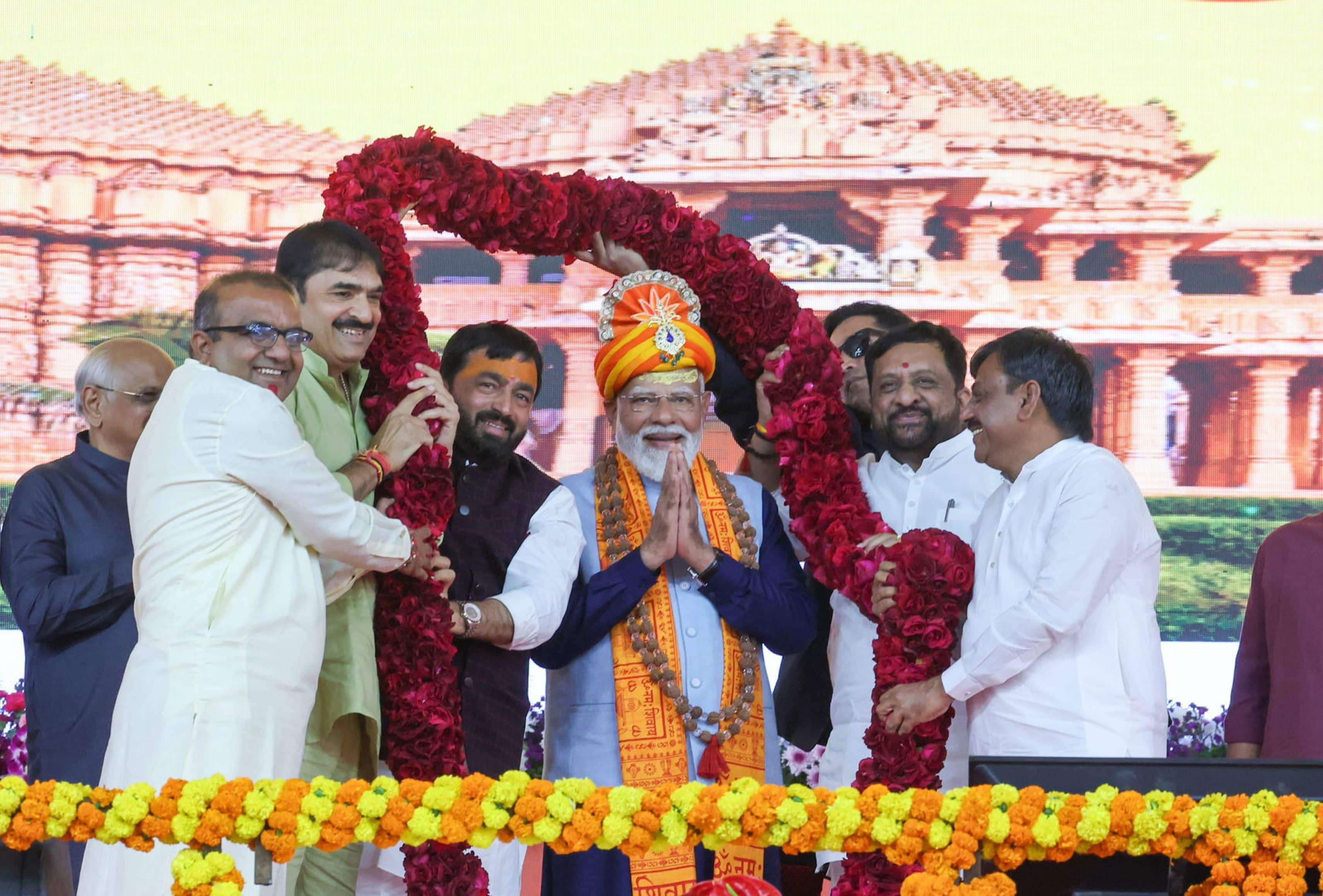
Shri Modi remarked that one must imagine the history of a thousand years ago, when in 1026 AD, Mahmud of Ghazni first attacked and destroyed the Somnath temple, believing he had erased its existence. He highlighted that within a few years, Somnath was rebuilt, and in the twelfth century King Kumarapala carried out a grand restoration of the temple. He noted that at the end of the thirteenth century Alauddin Khilji again dared to attack Somnath, but the ruler of Jalore fought valiantly against Khilji’s armies. The Prime Minister stated that in the early fourteenth century the king of Junagadh once again reinstated the temple’s prestige, and later in the same century Muzaffar Khan attacked Somnath, but his attempt also failed. He recalled that in the fifteenth century Sultan Ahmed Shah tried to desecrate the temple, and his grandson Sultan Mahmud Begada attempted to convert it into a mosque, but through the efforts of Mahadev’s devotees the temple was revived once more. He emphasized that during the seventeenth and eighteenth centuries, Aurangzeb desecrated Somnath and tried again to turn it into a mosque, yet Ahilyabai Holkar later established a new temple, bringing Somnath back to life. “The history of Somnath is not one of destruction and defeat, but of victory and reconstruction”, underlined the Prime Minister. He stressed that invaders kept coming, new assaults of religious terror occurred, but in every era Somnath was re-established again and again. He remarked that such centuries-long struggle, such prolonged resistance, such immense patience, creativity, and resilience in reconstruction, and such unwavering faith in culture and belief is unparalleled in world history.
The Prime Minister remarked that we must ask ourselves whether we should not remember the valor of our ancestors and whether we should not draw inspiration from the courage they displayed. He highlighted that no son, no descendant, should ever pretend to forget the heroic deeds of their forefathers. He emphasized that such remembrance is not only a duty but also a source of strength, and he called upon everyone to ensure that the sacrifices and bravery of our ancestors remain alive in our consciousness.
Shri Modi further said that when invaders from Ghazni to Aurangzeb attacked Somnath, they believed their swords were conquering eternal Somnath, but those fanatics failed to understand that the very name ‘Som’ carries the essence of nectar, the idea of remaining immortal even after consuming poison. He added that within Somnath resides the conscious power of Sadashiva Mahadev, who is both benevolent and the fierce “Prachanda Tandava Shiva.”
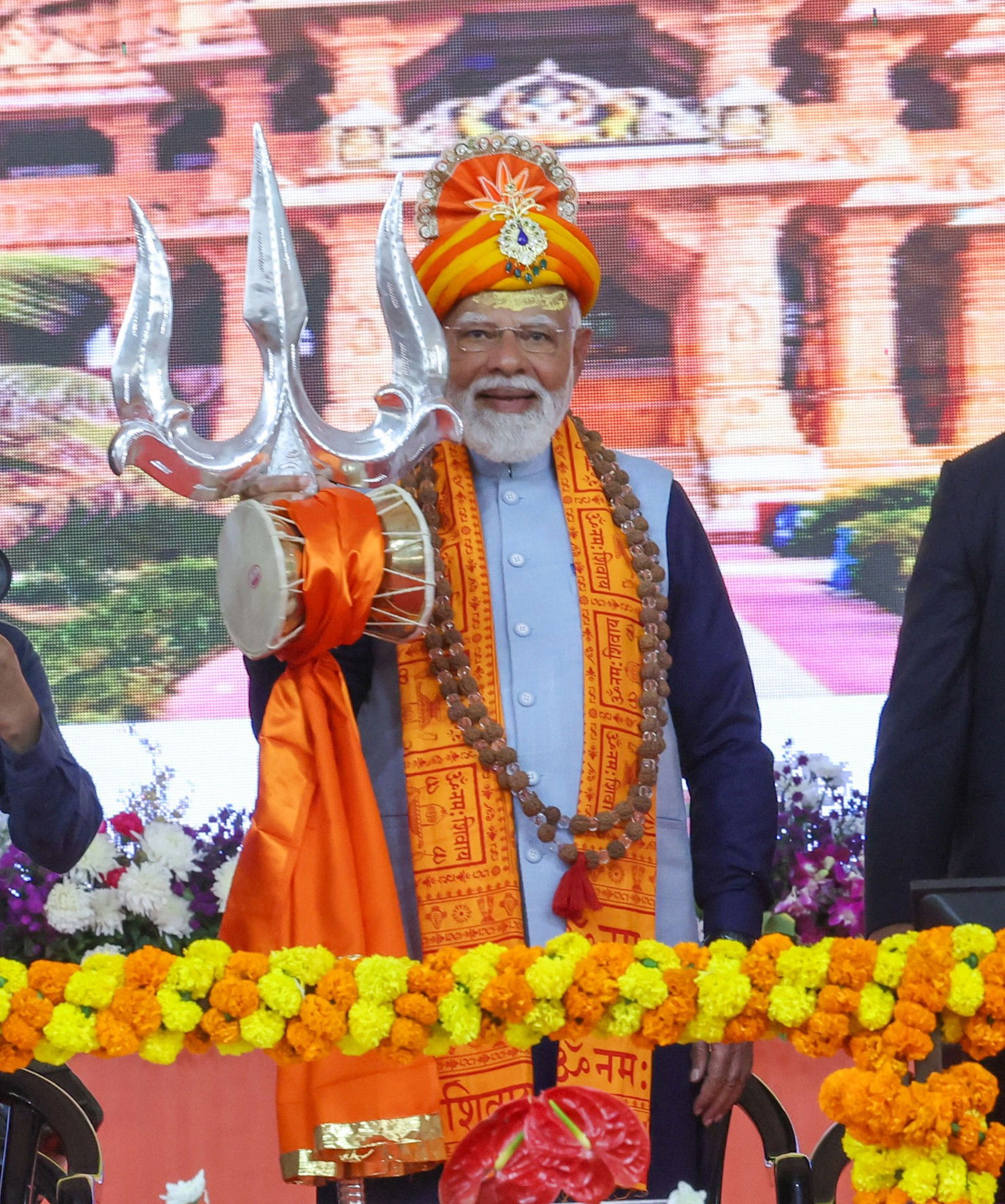
The Prime Minister remarked that one of the names of Lord Mahadev enshrined in Somnath is Mrityunjay, the one who has conquered death, who himself is the embodiment of time. Reciting a Shloka, Shri Modi explained that creation originates from Him and merges back into Him, and affirmed the belief that Shiva pervades the entire universe, that every particle contains Shankar. He emphasized that no one could destroy the countless forms of Shankar, for even in living beings we see Shiva, and thus no force could shake our faith. The Prime Minister highlighted that the cycle of time has reduced those fanatical invaders who sought to destroy Somnath to mere pages of history, while the temple still stands tall on the shores of the vast ocean, holding aloft its towering dharma-dhwaja. He noted that the spire of Somnath proclaims, “I rely on Chandra Shekhar Shiva, what can even time do to me?”
Underlining that Somnath Swabhiman Parv is not only a festival of historical pride but also a medium to make an eternal journey alive for the future, Shri Modi urged that this occasion must be used to strengthen our existence and identity. He observed that while some nations present even a few centuries-old heritage as their identity before the world, India possesses sacred places like Somnath that are thousands of years old, symbols of strength, resistance, and tradition. He lamented that unfortunately, after independence, those with a colonial mindset tried to distance themselves from such heritage, and there were malicious attempts to erase this history. The Prime Minister recalled the sacrifices made for the protection of Somnath, mentioning the efforts of rulers like Raval Kanhardev, the valor of Veer Hamirji Gohil, and the bravery of Vegda Bhil, noting that many such heroes are linked to the temple’s history but were never given due recognition. He criticized that some historians and politicians attempted to whitewash the history of invasions, disguising religious fanaticism as mere plunder, and writing books to conceal the truth. He stressed that Somnath was not attacked just once but repeatedly, and if the assaults had been only for economic loot, they would have stopped after the first major plunder a thousand years ago, but that was not the case. He pointed out that the sacred idols of Somnath were broken, the temple’s form was repeatedly altered, and yet people were taught that Somnath was destroyed merely for loot, while the cruel history of hatred, oppression, and terror was hidden from us.
The Prime Minister remarked that any person honest to their faith would never support such extremist thinking, yet those driven by appeasement have always bowed before it. He highlighted that when India was freed from the chains of slavery and Sardar Patel took the pledge to rebuild Somnath, attempts were made to stop him, and even objections were raised when President Dr. Rajendra Prasad came in 1951. He recalled that at that time, Jam Saheb Maharaja Digvijay Singh Ji, as the ruler of Saurashtra, placed national pride above all, contributing one lakh rupees for Somnath temple and serving as the first chairman of the trust with great responsibility.
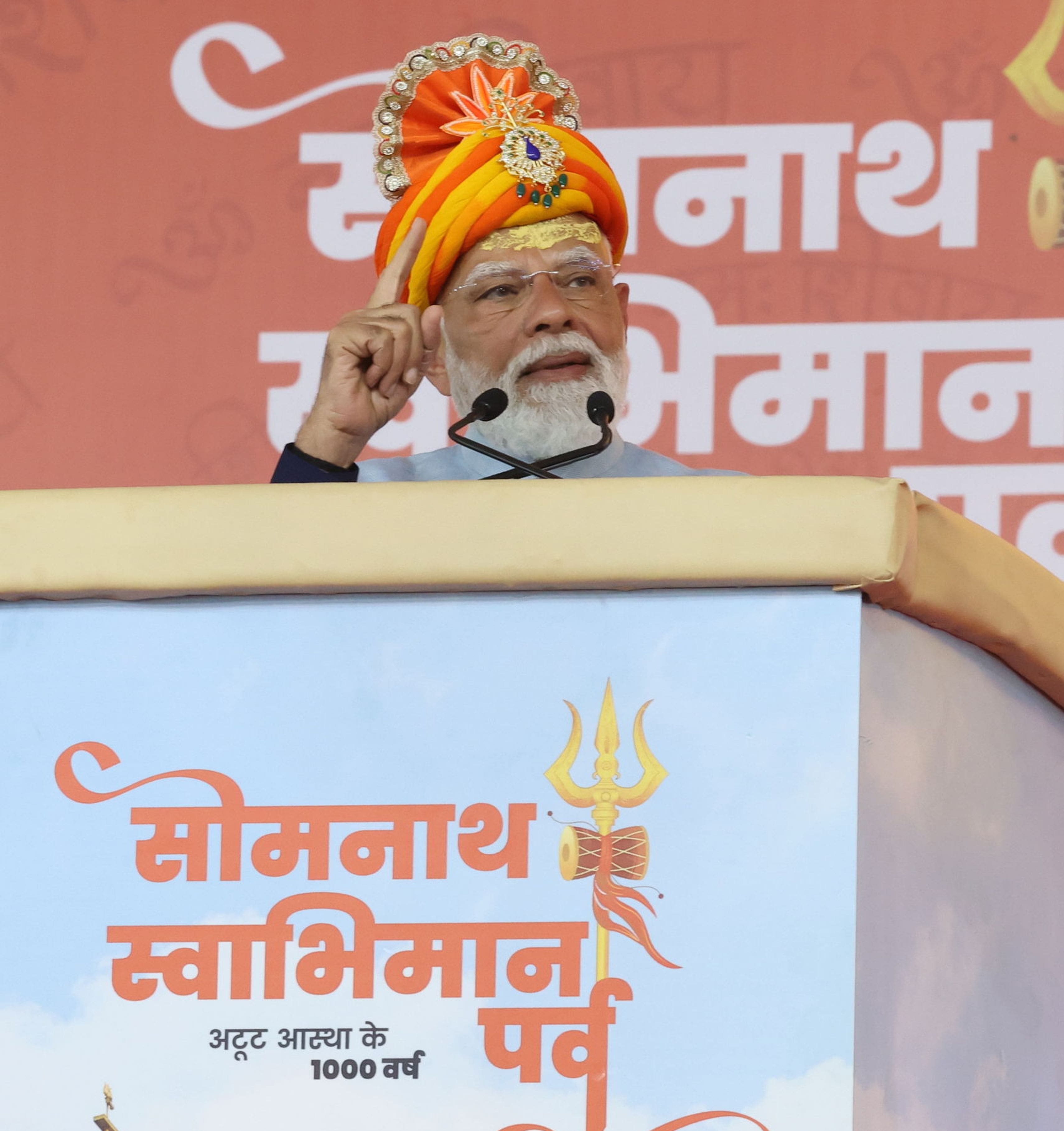
Emphasising that unfortunately, even today forces remain active in the country that opposed Somnath’s reconstruction, Shri Modi said now conspiracies against India are carried out through other malicious means instead of swords. He urged vigilance, strength, unity, and defeating every force that seeks to divide us.
Underlining that when we remain connected to our faith, our roots, and preserve our heritage with full pride, our civilization’s foundations grow stronger, the Prime Minister remarked the thousand-year journey inspires us to prepare for the next thousand years.
Recalling that at the historic occasion of the Ram Mandir Pran Pratishtha, Shri Modi said he had presented a thousand-year grand vision for India, speaking of moving forward with the vision of “Dev se Desh.” He stated that today India’s cultural renaissance is filling crores of citizens with new confidence, every Indian is committed to a developed India, and 140 crore people are determined towards future goals. He affirmed that India will raise its glory to new heights, win the fight against poverty, and achieve new levels of development, with the goal of becoming the world’s third-largest economy and moving beyond, supported by the energy of Somnath temple blessing these resolutions. The Prime Minister highlighted that today’s India is advancing with inspiration from heritage to development, with Somnath embodying both. He noted the temple’s cultural expansion, the establishment of Somnath Sanskrit University, the growing popularity of the Madhavpur fair, and the conservation of Gir lions strengthening heritage, while Prabhas Patan is creating new dimensions of development. He pointed to the expansion of Keshod airport enabling direct access for pilgrims from India and abroad, the launch of the Ahmedabad-Veraval Vande Bharat train reducing travel time, and the development of a pilgrimage circuit in the region. Shri Modi stressed that India today remembers its faith while empowering it for the future through infrastructure, connectivity, and technology.
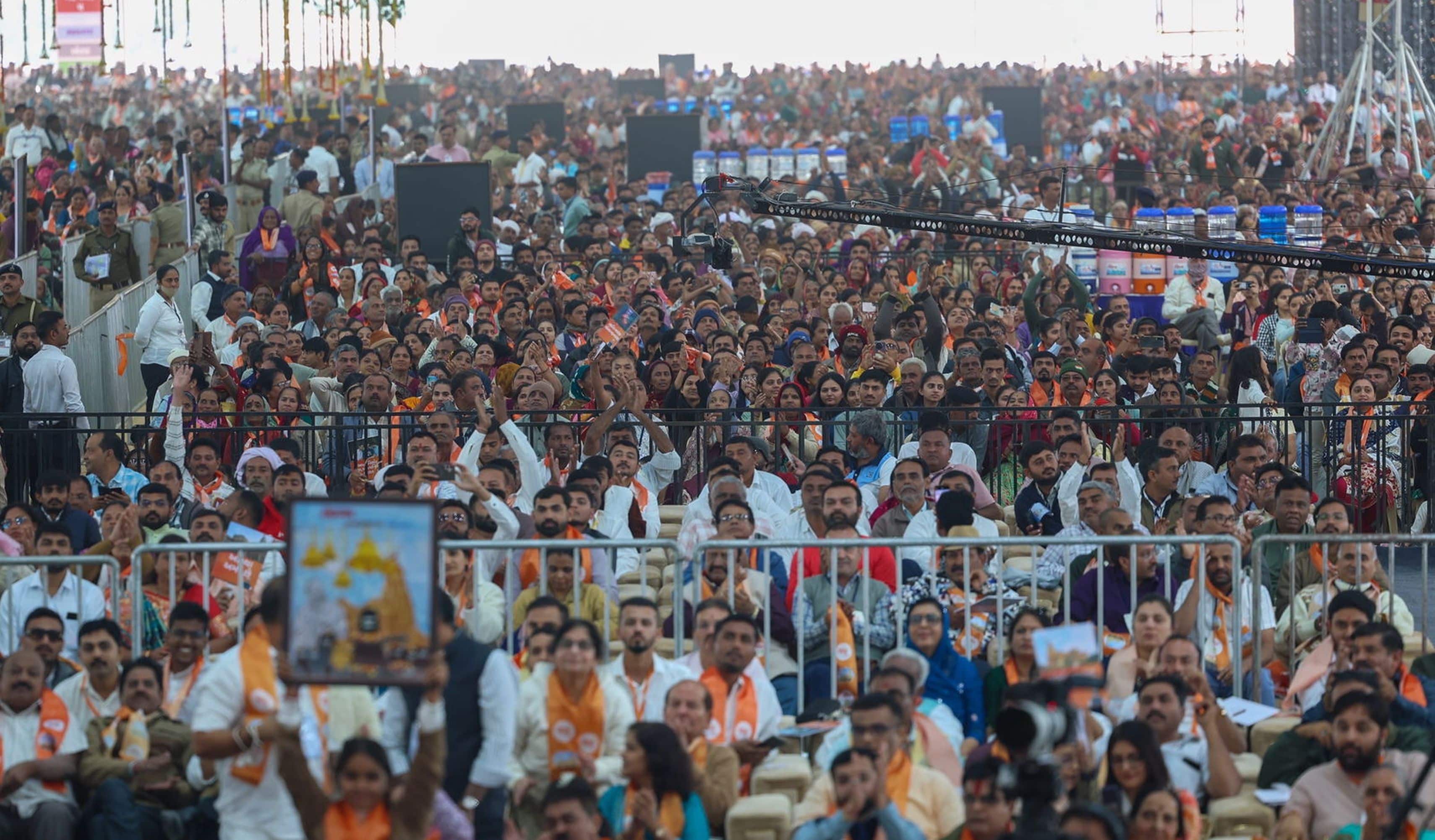
Underlining that India’s civilizational message has never been about defeating others but about maintaining balance in life, Shri Modi said that faith does not lead us to hatred, and strength does not give us arrogance of destruction. He said Somnath teaches that the path of creation is long but lasting, that hearts cannot be won at sword’s edge, and civilizations that seek to erase others are themselves lost in time. He emphasized that India has taught the world not how to win by defeating others, but how to live by winning hearts, a thought needed by the world today.
The Prime Minister concluded by remarking that Somnath’s thousand-year saga gives this lesson to humanity, calling for a pledge to move towards development and the future while staying connected to our past and heritage, embracing modernity while preserving consciousness, and drawing inspiration from Somnath Swabhiman Parv to move swiftly on the path of progress, overcoming every challenge to reach our goals, extending heartfelt greetings once again to all citizens.
Chief Minister of Gujarat, Shri Bhupendrabhai Patel was present among other dignitaries at the event.
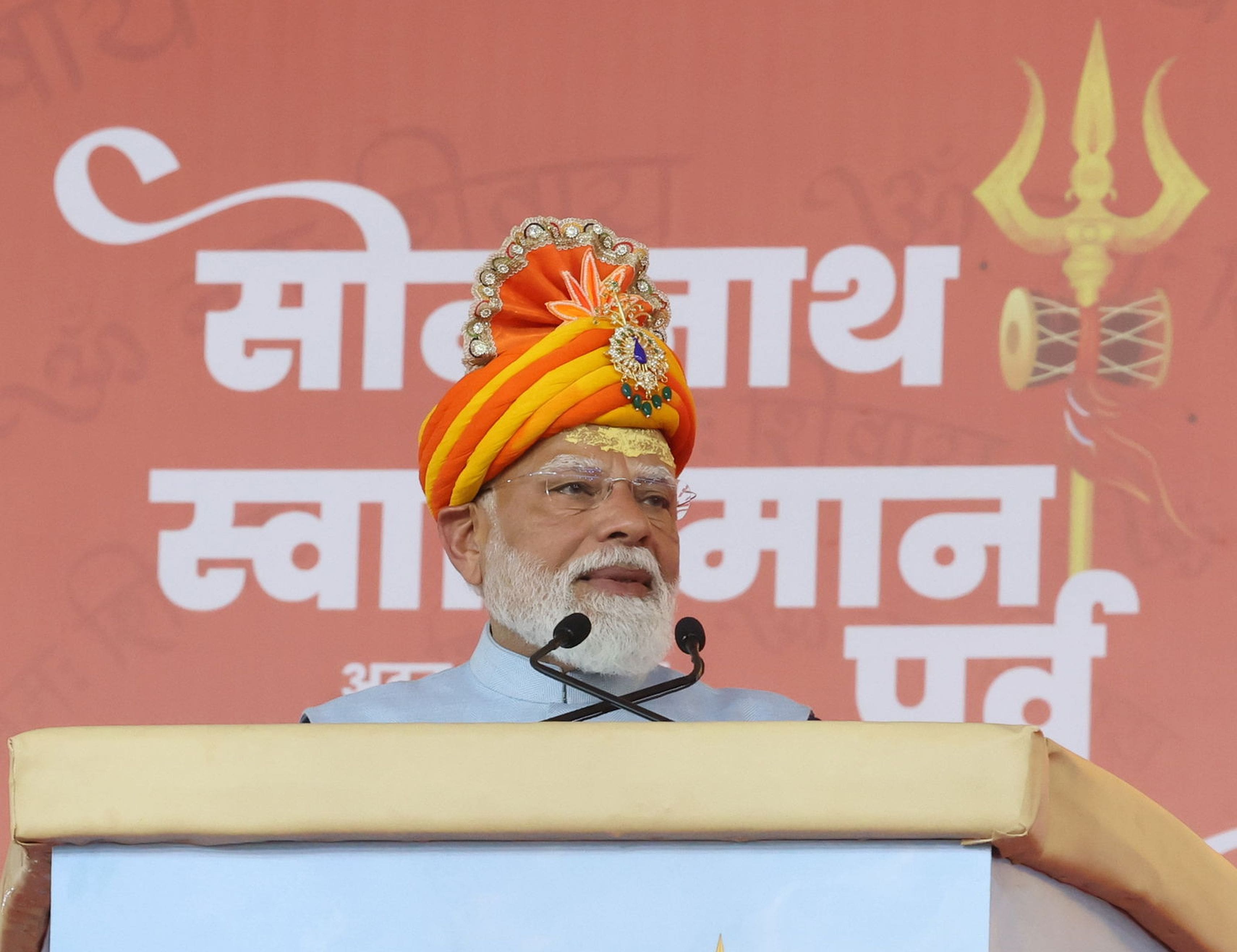
Background
The Somnath Swabhiman Parv, being held from 8 to 11 January 2026, is organised at Somnath. It is being held to remember the countless citizens of India whose sacrifice to defend the Temple continues to inspire the cultural consciousness of future generations.
The programme marks 1,000 years since Mahmud of Ghazni’s invasion of the Somnath Temple in the year 1026. Despite multiple repeated attempts for its destruction over centuries, the Somnath Temple stands today as a powerful symbol of resilience, faith and national pride, owing to the collective resolve and efforts to restore it to its ancient glory.
After independence, the effort for restoration of the Temple was undertaken by Sardar Patel. One of the most important milestones in this journey of revival was achieved in 1951, when the restored Somnath Temple was formally opened to devotees in the presence of the then President of India, Dr. Rajendra Prasad. The completion of 75 years of this historic restoration in 2026 adds special significance to the Somnath Swabhiman Parv.
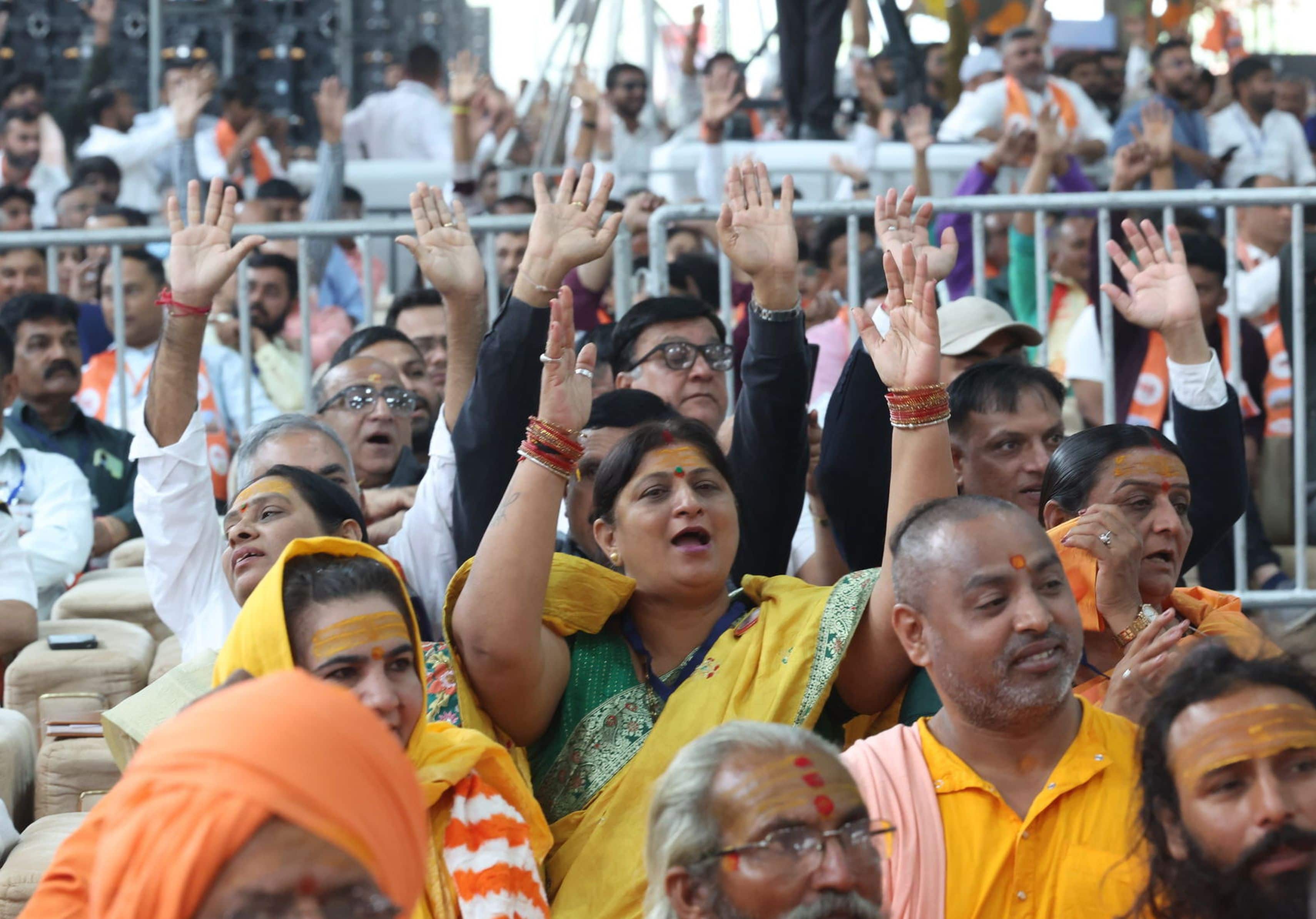
The celebrations will witness the participation of hundreds of saints from across the country, along with 72 hours of continuous chanting of ‘Om’ within the temple premises.
Prime Minister’s participation in the Somnath Swabhiman Parv underscores the enduring spirit of India’s civilisation and reaffirms his commitment to preserve and celebrate India’s rich cultural and spiritual heritage.
Click here to read full text speech
Even after a thousand years, the flag still flies atop the Somnath Temple.
— PMO India (@PMOIndia) January 11, 2026
It reminds the world of India's strength and spirit.#SomnathSwabhimanParv pic.twitter.com/b5sJl1oPoD
#SomnathSwabhimanParv marks a journey of a thousand years. It stands as a celebration of India's existence and self-pride. pic.twitter.com/wYw5V9UyAm
— PMO India (@PMOIndia) January 11, 2026
The history of Somnath is not one of destruction or defeat.
— PMO India (@PMOIndia) January 11, 2026
It is a history of victory and renewal. #SomnathSwabhimanParv pic.twitter.com/kE1JQVPOgM
Those who came with the intent to destroy Somnath have today been reduced to a few pages of history.
— PMO India (@PMOIndia) January 11, 2026
Somnath Temple, meanwhile, still stands tall by the vast sea, its soaring flag of faith flying high. #SomnathSwabhimanParv pic.twitter.com/3Pnd8TezKh
Somnath shows that while creation takes time, it alone endures. #SomnathSwabhimanParv pic.twitter.com/d3q0HZxO4e
— PMO India (@PMOIndia) January 11, 2026