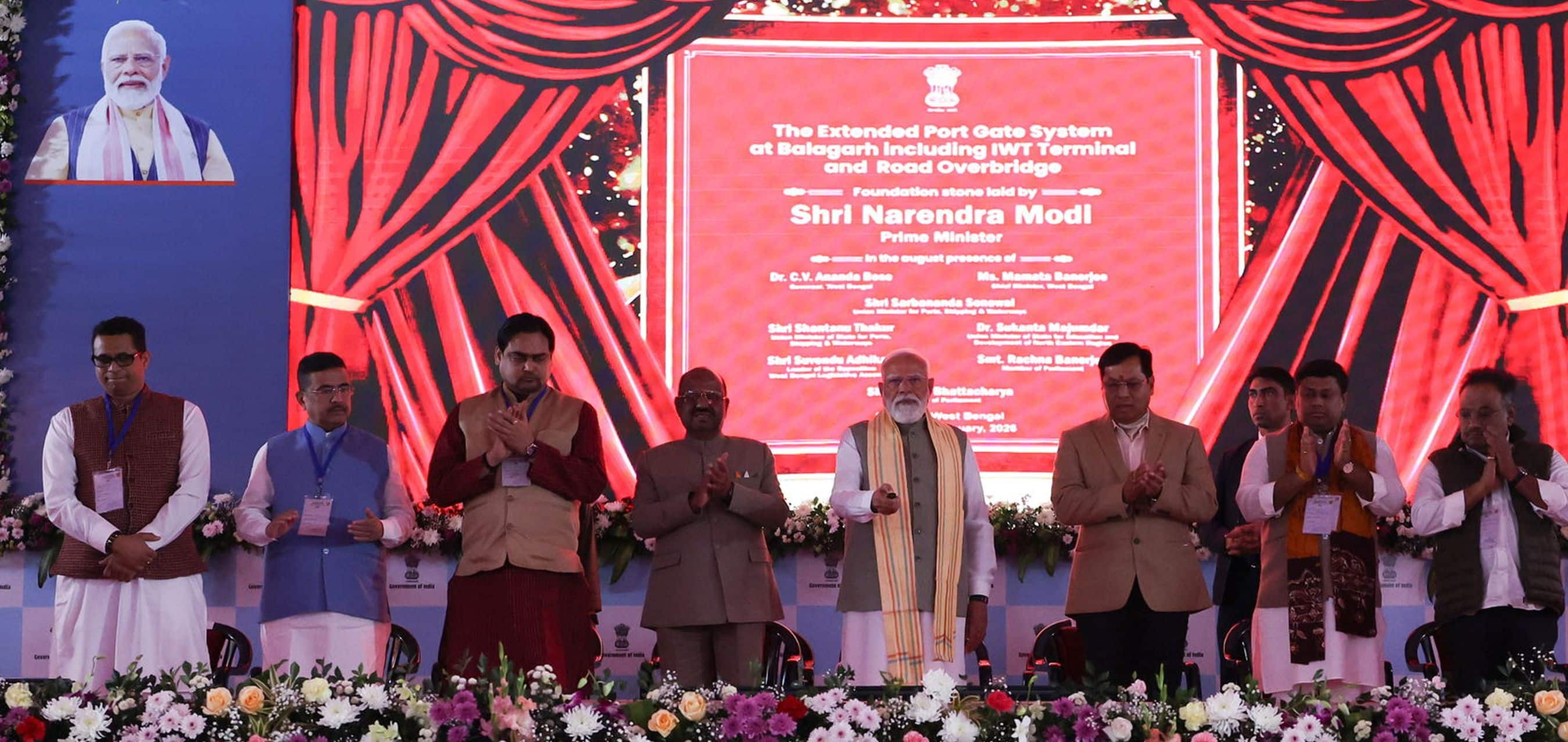


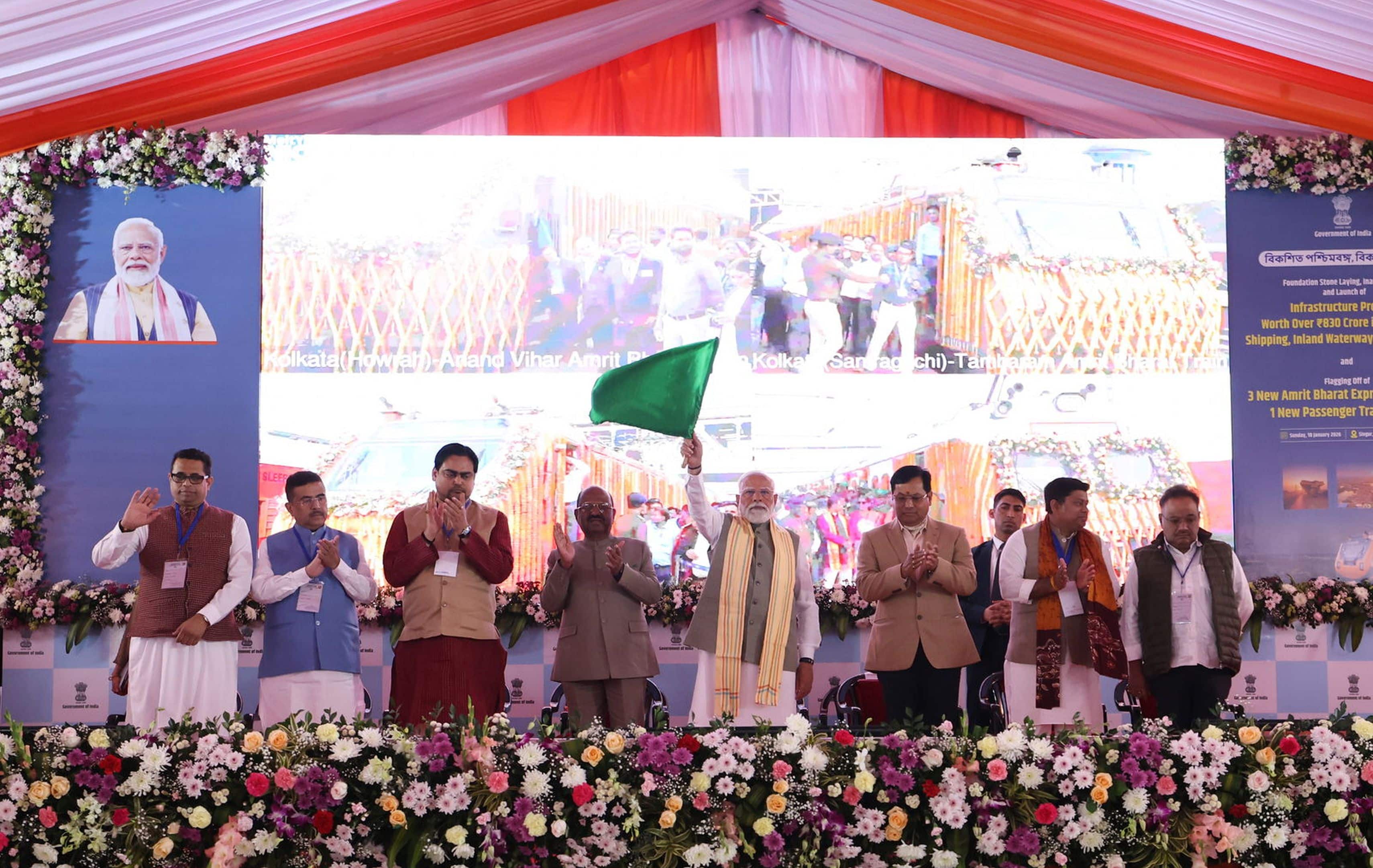
Prime Minister Shri Narendra Modi inaugurated, laid the foundation stone of and flagged off various development projects worth more than ₹830 crore at Singur in Hooghly district, West Bengal today. Addressing the gathering on the occasion, Shri Modi remarked that yesterday he was in Malda and today he had the privilege of being among the people in Hooghly. He highlighted that for a developed India, the development of Eastern India is essential, and with this goal the Union Government is continuously working. He stated that the programmes of yesterday and today strengthen this resolve. The Prime Minister noted that during this period he had the opportunity to lay the foundation stone and inaugurate projects worth hundreds of crores related to the development of West Bengal.
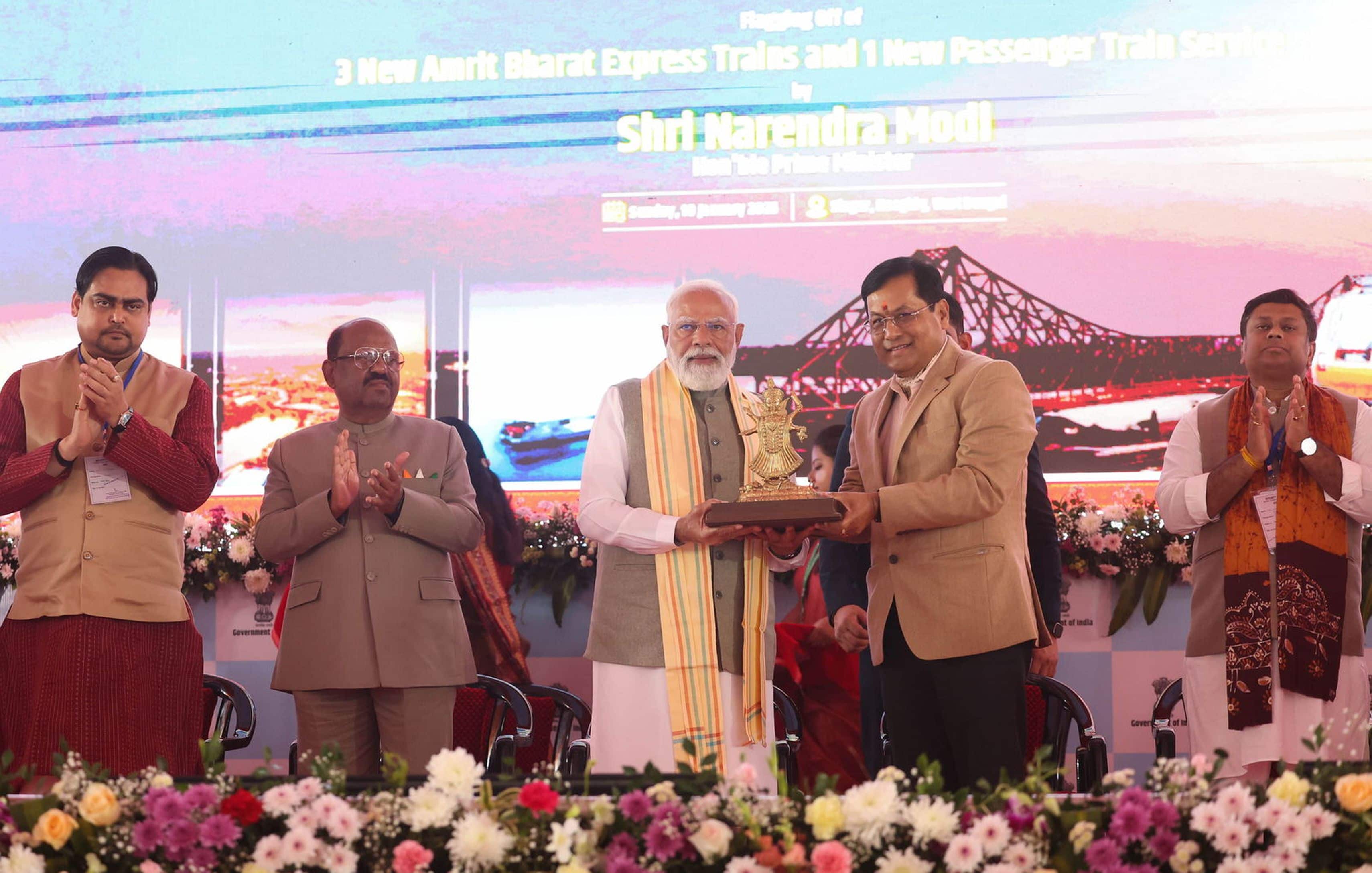
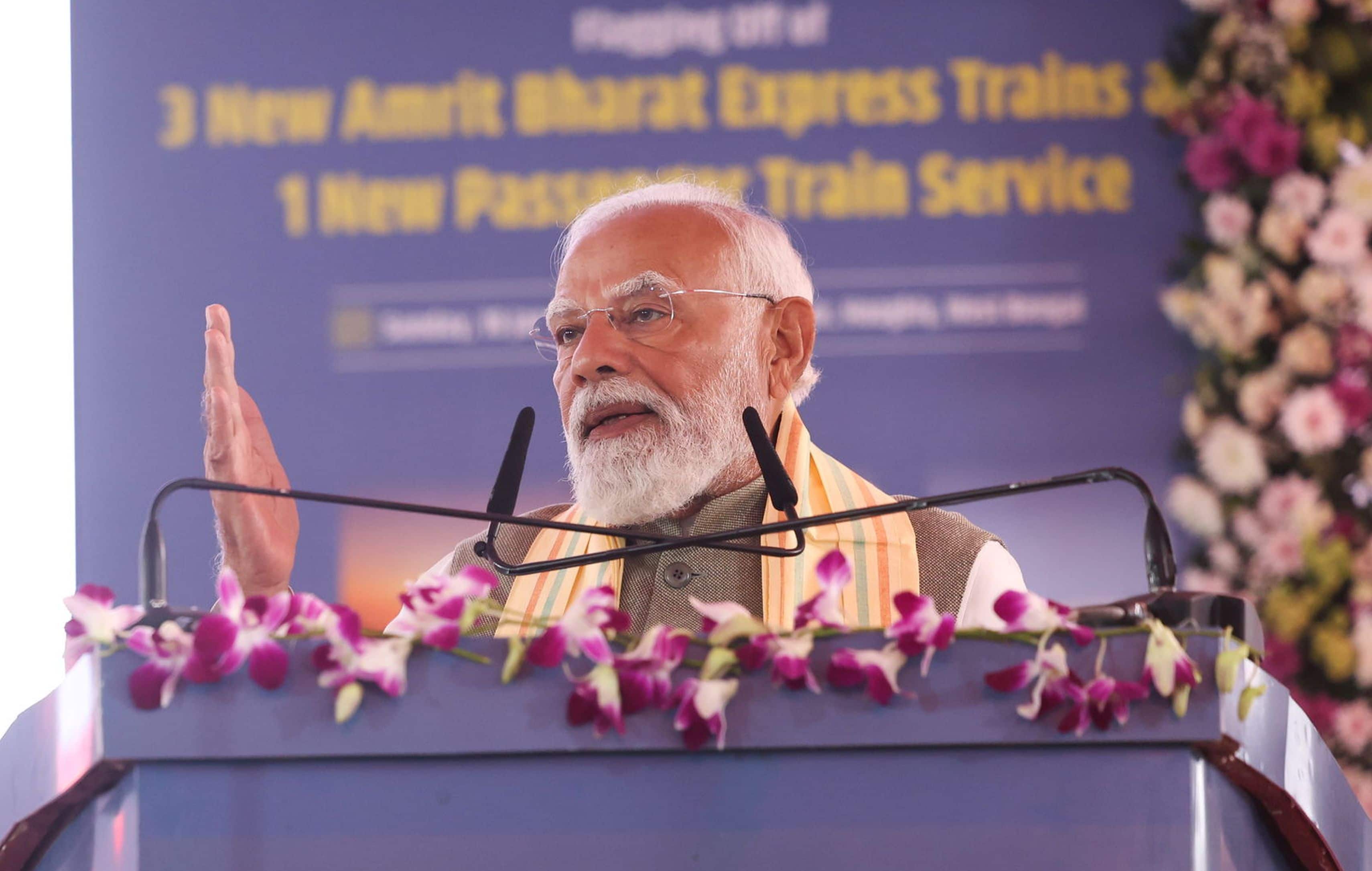
Shri Modi highlighted that yesterday the country’s first Vande Bharat Sleeper Train was launched from West Bengal. He added that Bengal has also received nearly half a dozen new Amrit Bharat Express trains. He remarked that today three more Amrit Bharat Express trains have been launched. He pointed out that one of these trains will further strengthen the connectivity between his parliamentary constituency Varanasi and Bengal. He further stated that Amrit Bharat Express trains have also been launched for Delhi and Tamil Nadu. The Prime Minister underlined that the past 24 hours have been unprecedented for West Bengal’s rail connectivity.
Prime Minister Modi observed that Bengal has immense potential for waterways and the Union Government is working on this as well. He noted that assistance is being provided to build the necessary infrastructure for port-led development. He stated that a short while ago, projects related to ports and river waterways were also inaugurated and foundation stones laid. He emphasized that these are very important for the development of West Bengal and India. He remarked that these are the pillars on which West Bengal can be developed into a major hub of manufacturing, trade, and logistics. The Prime Minister congratulated everyone for these projects.
Shri Modi highlighted that the more emphasis is laid on ports and the associated ecosystem, the more employment will be generated here. He stated that over the past 11 years, the Union Government has made major investments in the capacity expansion of Shyama Prasad Mukherjee Port. He added that under the Sagarmala scheme, roads have also been constructed to improve the connectivity of this port. He remarked that the results of these efforts are now becoming visible. The Prime Minister noted that last year Kolkata Port created new records in cargo handling.
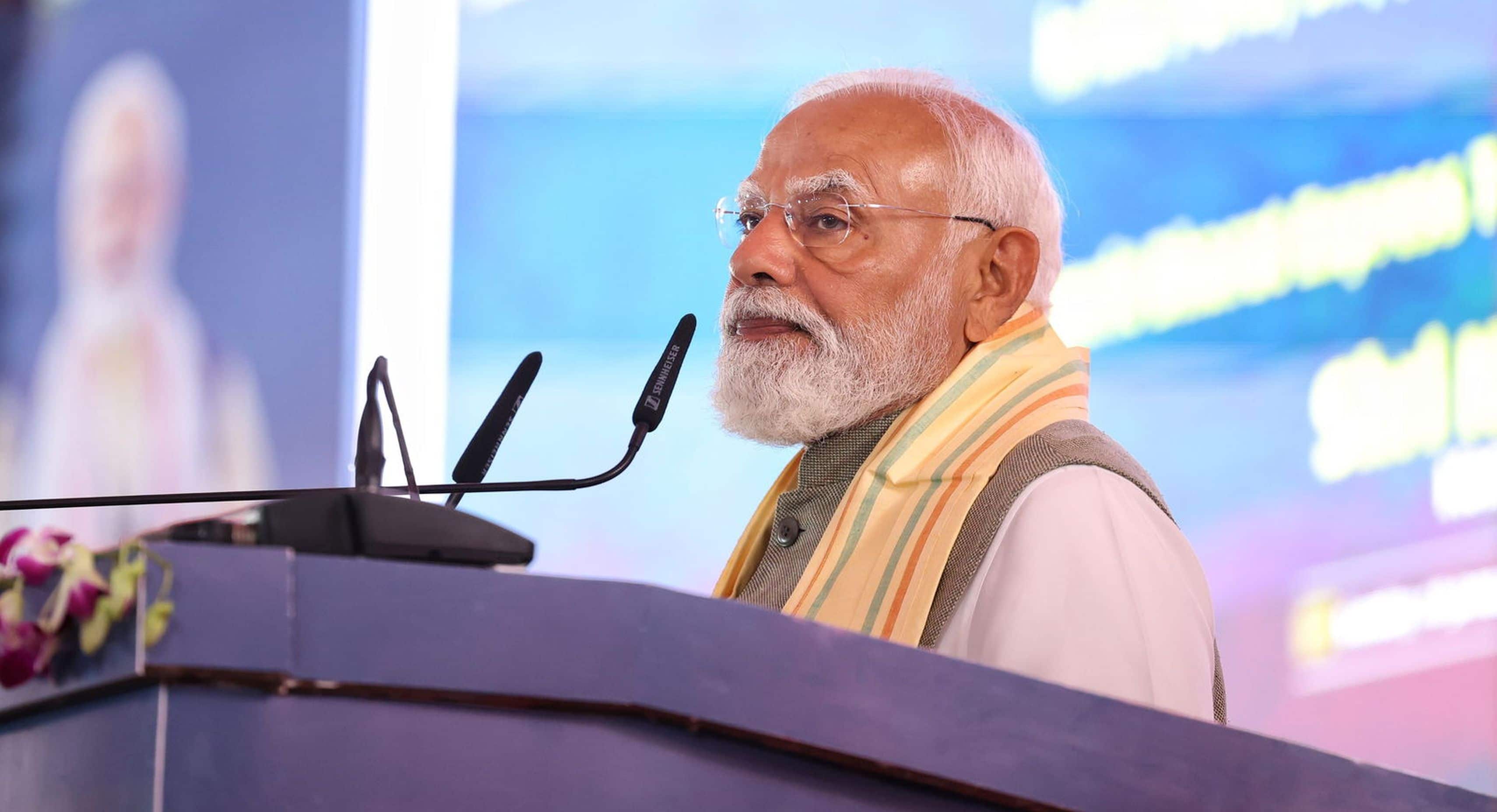
Prime Minister Modi remarked that the extended port gate system being developed in Balagarh will open new opportunities for Hooghly and surrounding areas. He highlighted that this will ease traffic and logistics pressure in Kolkata city. He stated that cargo movement will further increase through the waterway built on the Ganga. The Prime Minister emphasized that this entire infrastructure will help transform Hooghly into a warehousing and trading hub, bringing hundreds of crores of new investment, generating thousands of jobs, benefiting small traders and transporters, and providing new markets for farmers and producers.
Shri Modi underlined that India today is laying strong emphasis on multi‑modal connectivity and green mobility. He noted that to enable seamless transportation, ports, river waterways, highways, and airports are being interconnected. He remarked that this is reducing both logistics costs and transportation time. The Prime Minister added that efforts are also being made to ensure that modes of transport are nature‑friendly. He pointed out that hybrid electric boats will strengthen river transport and green mobility, making travel on the Hooghly easier, reducing pollution, and boosting river‑based tourism.
The Prime Minister observed that India is rapidly advancing in fisheries and seafood production and exports. He expressed his dream that West Bengal should lead the country in this sector. He highlighted that the Union Government is prominently supporting Bengal in its vision for river waterways, and farmers as well as fishermen are already benefiting from this. Shri Modi remarked that all these projects being initiated by the Union Government will accelerate West Bengal’s development journey. He extended his best wishes to everyone for these projects.
Governor of West Bengal, Shri C V Ananda Bose, Union Ministers, Shri Sarbananda Sonowal, Shri Shantanu Thakur, Shri Sukanta Majumdar were present among other dignitaries at the event.
Background
Prime Minister inaugurated, laid the foundation stone of and flagged off various development projects worth more than ₹830 crore at Singur, Hooghly.
Prime Minister laid the foundation stone of the Extended Port Gate System at Balagarh, including an Inland Water Transport (IWT) terminal and a Road Over Bridge
Spanning an area of approximately 900 acres, Balagarh is being developed as a modern cargo handling terminal with an envisaged capacity of about 2.7 million tonnes per annum (MTPA). The project includes the construction of two dedicated cargo handling jetties, one for containerised cargo and one for dry bulk cargo.
The Balagarh project aims to significantly improve cargo evacuation efficiency by diverting heavy cargo movement away from congested urban corridors. This will enhance road safety, reduce vehicular congestion and pollution in Kolkata city, and contribute to an improved quality of life for residents. Improved multimodal connectivity and logistics efficiency will also provide cost-effective market access to regional industries, MSMEs, and agricultural producers. The project is expected to generate substantial direct and indirect employment, benefiting local communities through job creation in logistics, terminal operations, transport services, maintenance, and allied activities.
Prime Minister also launched a state-of-the-art Electric Catamaran in Kolkata. This is one of the 6 Electric Catamarans indigenously built for inland water transport by Cochin Shipyard Ltd. The 50-passenger hybrid electric aluminium catamaran, equipped with advanced electric propulsion systems and lithium-titanate battery technology, is capable of operating in fully electric zero-emission mode as well as in hybrid mode for extended endurance. The vessel will support urban river mobility, eco-tourism and last-mile passenger connectivity along the Hooghly River.
Prime Minister also inaugurated the Jayrambati–Barogopinathpur–Maynapur new rail line. This line is an important part of the Tarkeshwar–Bishnupur new rail line project. Along with the new rail line, a new train service between Maynapur and Jayrambati, with a halt at Barogopinathpur, will also be flagged off. It will provide direct rail connectivity to the residents of Bankura district, making travel more affordable and convenient for daily commuters, students and pilgrims.
Prime Minister flagged off three Amrit Bharat Express trains : Kolkata (Howrah) - Anand Vihar Terminal Amrit Bharat Express; Kolkata (Sealdah) - Banaras Amrit Bharat Express; Kolkata (Santragachi) - Tambaram Amrit Bharat Express.
Click here to read full text speech
विकसित भारत के लिए, पूर्वी भारत का विकास... इस लक्ष्य के साथ केंद्र सरकार निरंतर काम कर रही है: PM @narendramodi
— PMO India (@PMOIndia) January 18, 2026
कल पश्चिम बंगाल से देश की पहली वंदे भारत स्पीलर ट्रेन शुरु हुई है।
— PMO India (@PMOIndia) January 18, 2026
बंगाल को, करीब आधा दर्जन नई अमृत भारत एक्सप्रेस ट्रेनें भी मिली हैं।
आज तीन और अमृत भारत एक्स्प्रेस ट्रेनें शुरु हुई हैं: PM @narendramodi
बालागढ़ में बनने वाला एक्सटेंडेड पोर्ट गेट सिस्टम... हुगली और आसपास के इलाकों के लिए नए अवसरों का द्वार खोलेगा: PM @narendramodi
— PMO India (@PMOIndia) January 18, 2026
आज भारत में हम multi-modal connectivity और green mobility पर बहुत बल दे रहे हैं।
— PMO India (@PMOIndia) January 18, 2026
Seamless transportation संभव हो सके... इसके लिए port, नदी जलमार्ग, highway और airports... इन सभी को आपस में कनेक्ट किया जा रहा है: PM @narendramodi