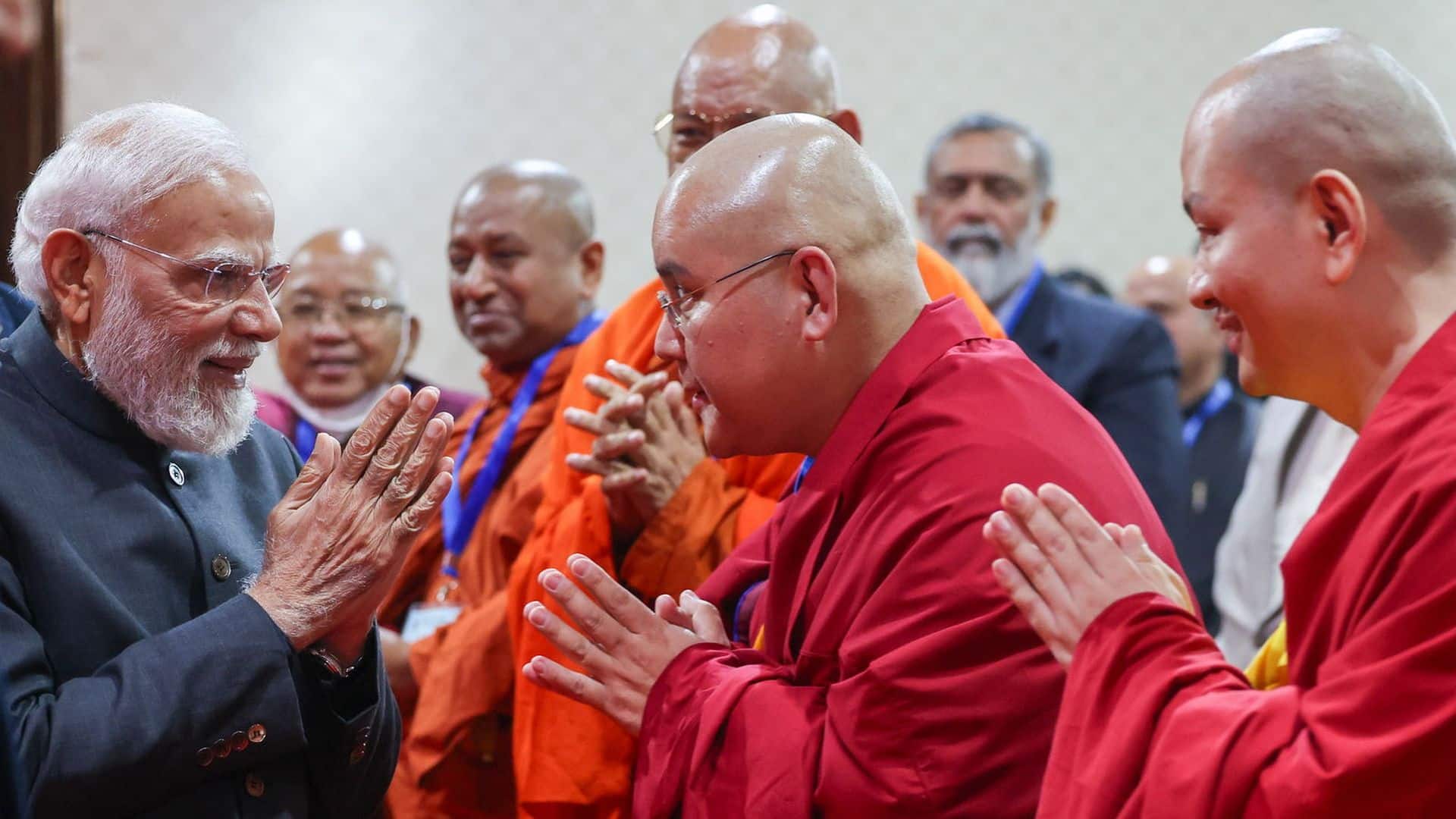


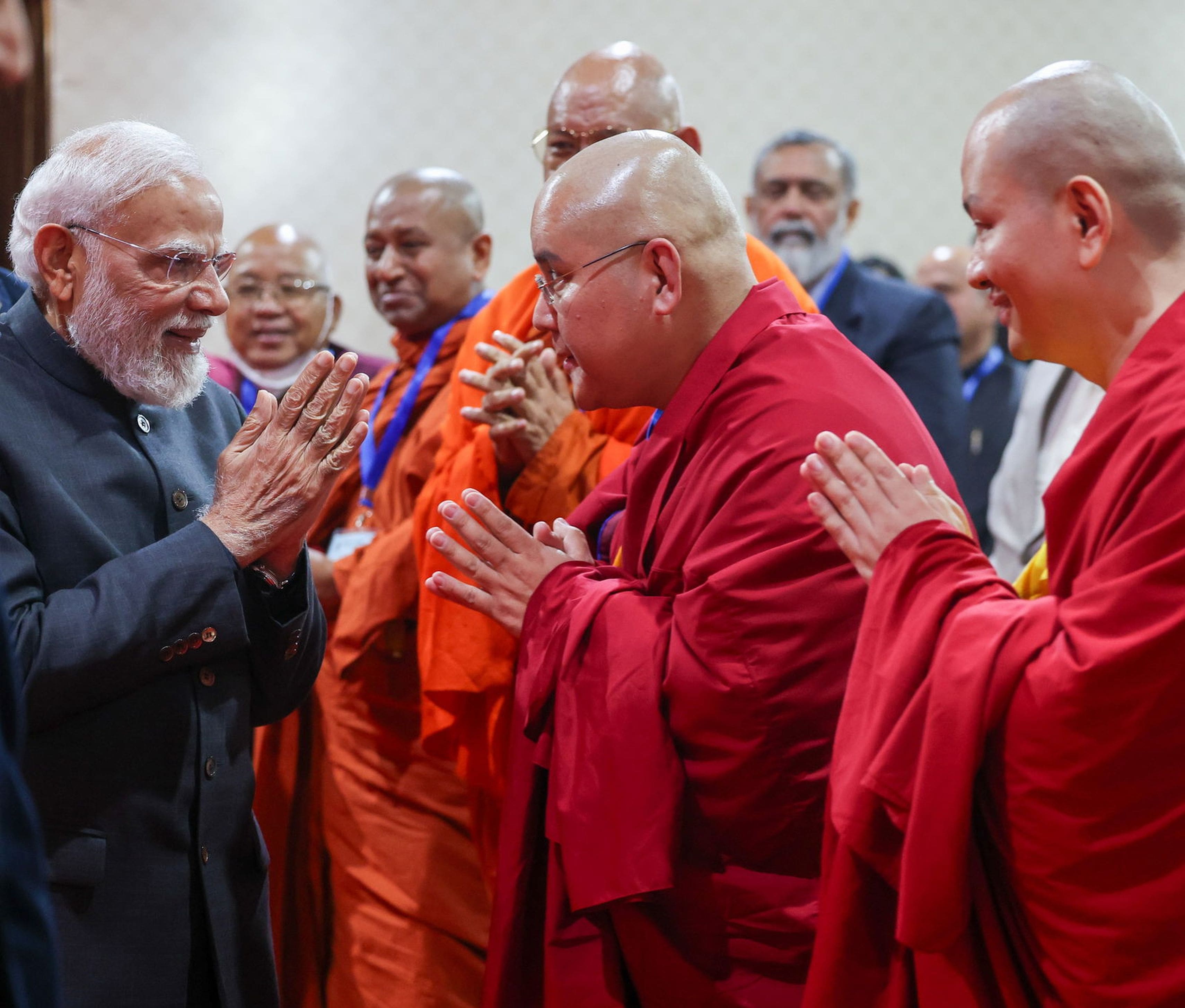
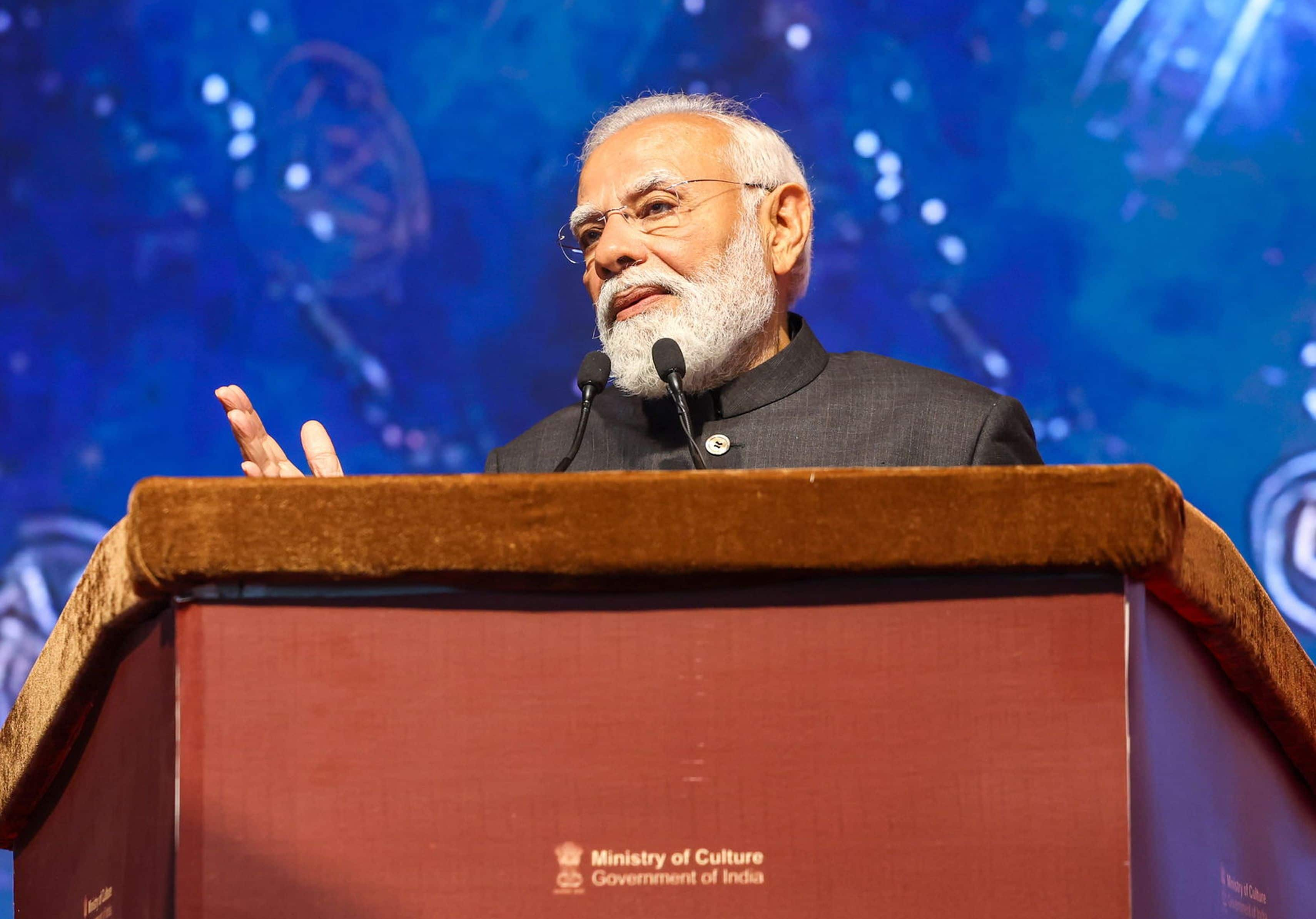
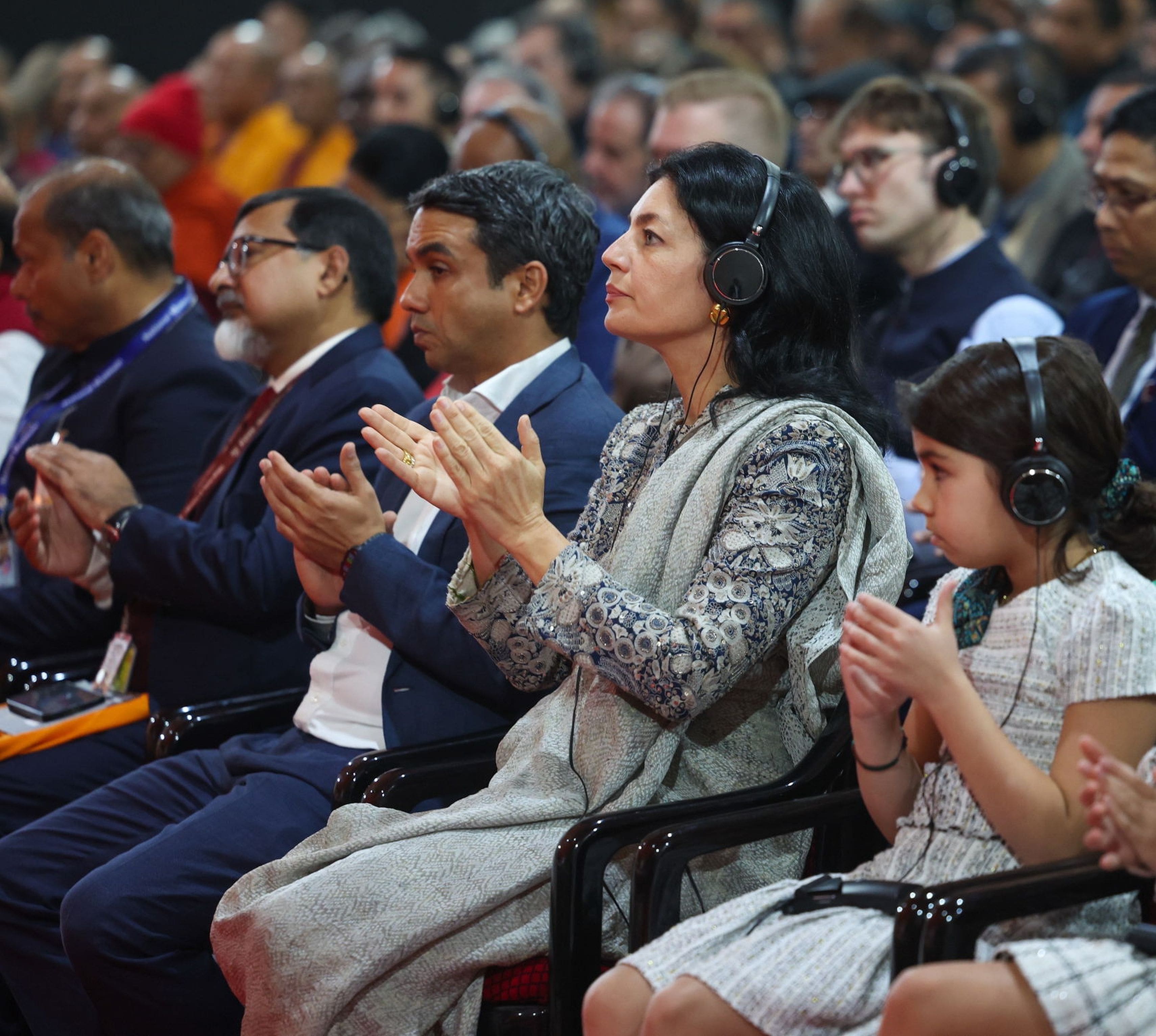
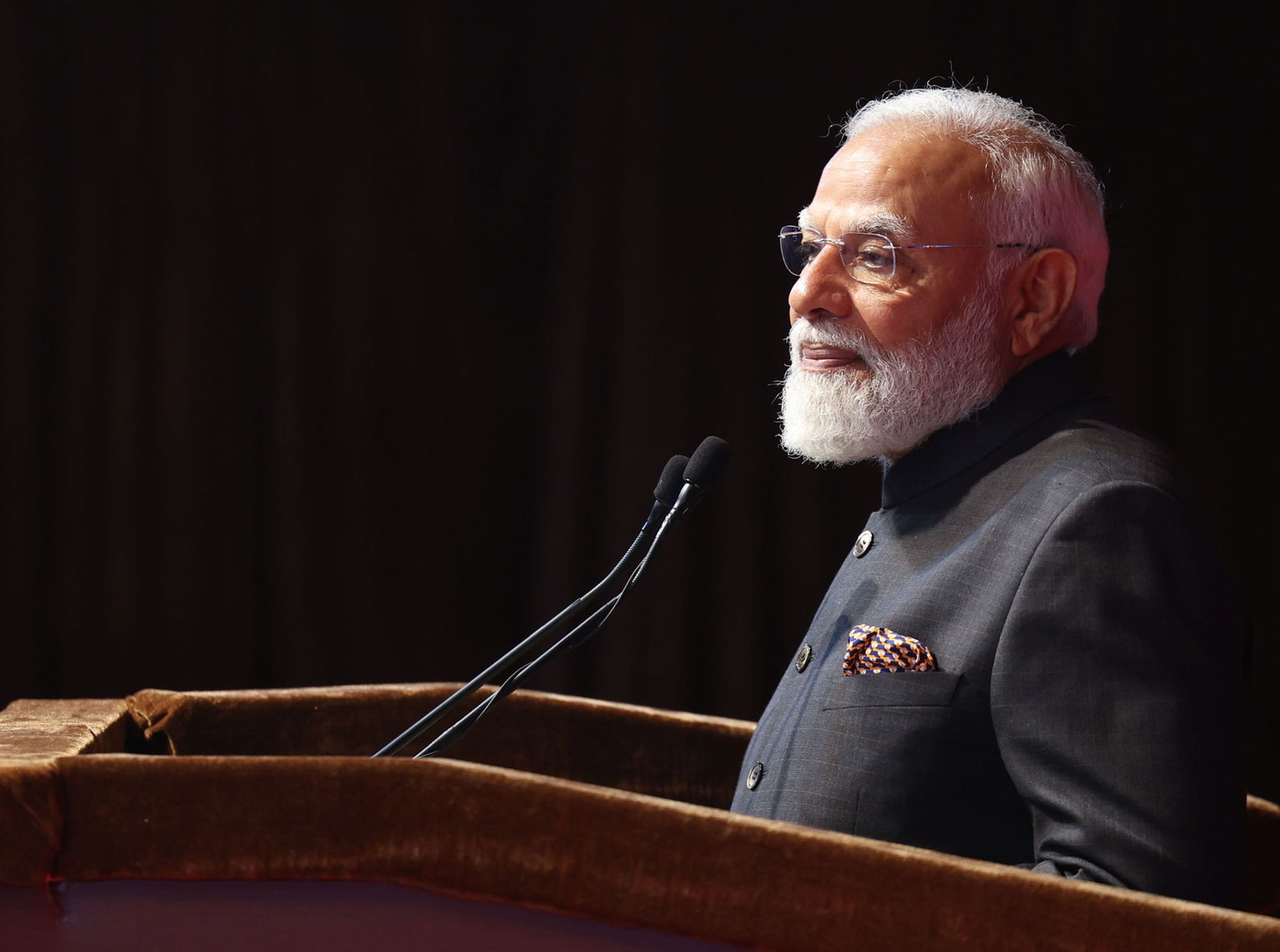
Prime Minister Shri Narendra Modi inaugurated the Grand International Exposition of Sacred Piprahwa Relics related to Bhagwan Buddha, titled “The Light & the Lotus: Relics of the Awakened One”, today at the Rai Pithora Cultural Complex, New Delhi. Addressing the gathering on the occasion, the Prime Minister remarked that after one hundred and twenty-five years of waiting, India’s heritage has returned, India’s legacy has come back. He highlighted that from today the people of India will be able to witness these sacred relics of Lord Buddha and receive his blessings. Shri Modi welcomed and extended greetings to all the guests present on this auspicious occasion. He noted that monks and dharma acharyas associated with the Buddhist tradition are also present and expressed his reverence towards them. He emphasized that their presence is giving new energy to this event. The Prime Minister underlined that at the very beginning of 2026, this auspicious celebration is highly inspiring. He expressed his wish that with the blessings of Lord Buddha, the year 2026 may usher in a new era of peace, prosperity, and harmony for the world.
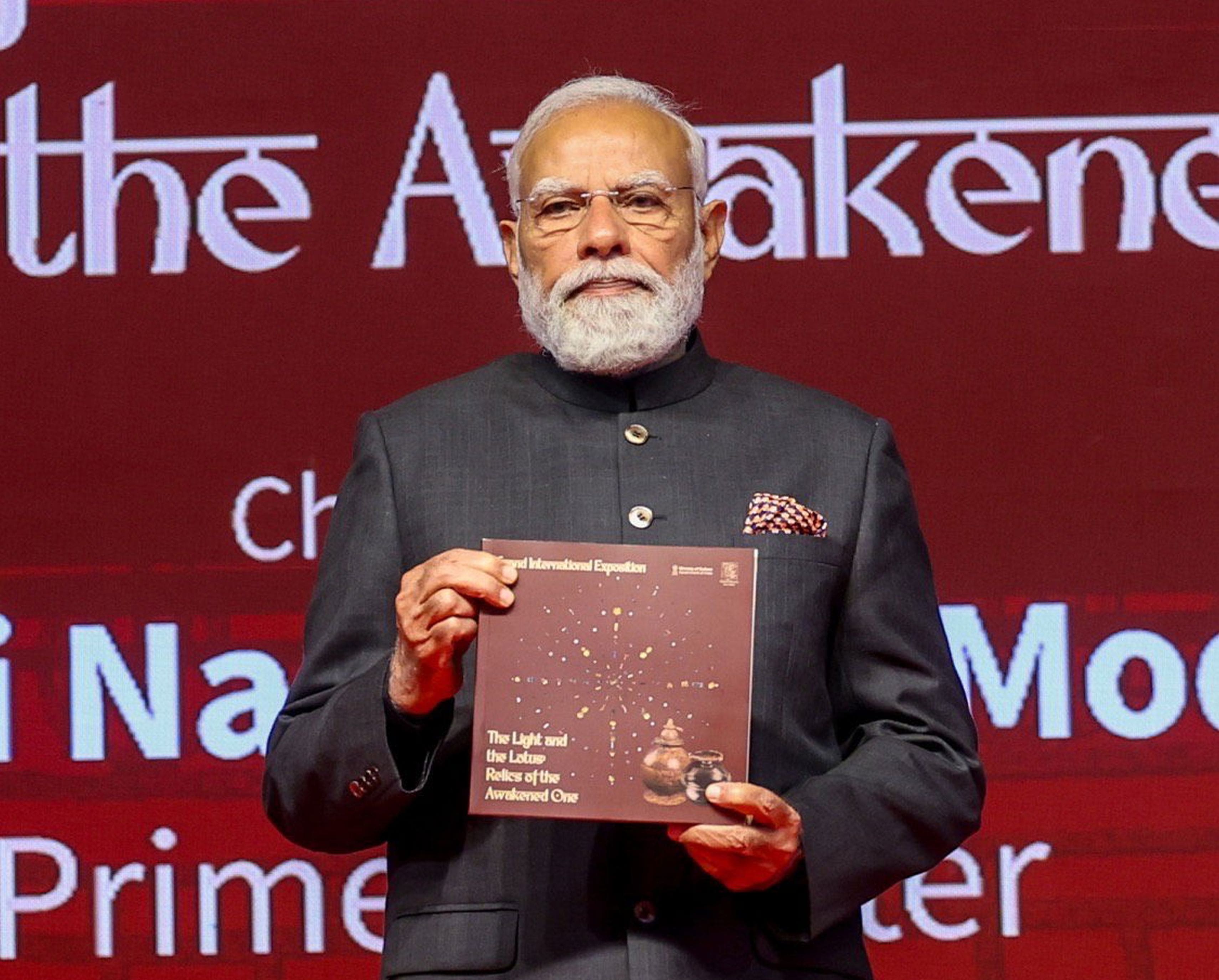
The Prime Minister remarked that the place where this exhibition has been set up is itself special. He highlighted that the site of Qila Rai Pithora is a land of India’s glorious history, where nearly a thousand years ago former rulers established a city surrounded by strong and secure walls. He underlined that today in the same historic city complex, a spiritual and sacred chapter of history is being added. Shri Modi stated that before coming here he had observed this historic exhibition in detail. He emphasized that having the sacred relics of Lord Buddha among us makes everyone blessed. He noted that their departure from India and eventual return are both significant lessons in themselves. Stressing that the lesson is that slavery is not only political and economic, but it also destroys our heritage, Shri Modi remarked that the same happened with the sacred relics of Lord Buddha, which were taken away during the period of slavery and remained outside the country for nearly one hundred and twenty-five years. He pointed out that for those who took them away, and for their descendants, these relics were merely lifeless antique pieces. He added that this is why they attempted to auction these sacred relics in the international market. The Prime Minister asserted that for India, however, these relics are a part of our revered deity, an inseparable part of our civilization. He declared that India decided that their public auction would not be allowed. Shri Modi expressed gratitude to the Godrej Group, noting that with their cooperation these sacred relics connected to Lord Buddha have returned to his land of karma, his land of contemplation, his Mahabodhi land, and his Mahaparinirvana land.
“The knowledge of Lord Buddha and the path shown by him belong to all humanity”, said the Prime Minister, highlighting that this sentiment has been repeatedly experienced in the past few months. He noted that wherever the sacred relics of Lord Buddha travelled in recent months, waves of faith and devotion arose. Shri Modi stated that in Thailand, where such sacred relics were placed at different locations, in less than a month more than forty lakh devotees came for darshan. He emphasized that in Vietnam, public sentiment was so strong that the duration of the exhibition had to be extended, and in nine cities nearly 1.75 crore people paid homage to the relics. He pointed out that in Mongolia, thousands of people waited for hours outside the Gandan Monastery, and many wished to touch the Indian representatives simply because they had come from the land of Buddha. He underlined that in Russia’s Kalmykia region, in just one week more than 1.5 lakh devotees witnessed the sacred relics, which is equal to more than half of the local population. Emphasising that in these events across different countries, whether common citizens or heads of government, all were united in equal reverence, Shri Modi remarked that Lord Buddha belongs to everyone and connects all.

Expressing that he considers himself very fortunate, as Lord Buddha has held a deep place in his life, the Prime Minister recalled that his birthplace Vadnagar was a major centre of Buddhist learning, and that Sarnath, where Lord Buddha gave his first sermon, is his karmabhoomi. He shared that even when away from government responsibilities, he travelled as a pilgrim to Buddhist sites, and as Prime Minister he has had the privilege of visiting Buddhist pilgrimage centres across the world. He recounted bowing at the sacred Maya Devi temple in Lumbini, Nepal, describing it as an extraordinary experience. Shri Modi reflected that at To-ji Temple and Kinkaku-ji in Japan, he felt that Buddha’s message transcends the boundaries of time. He mentioned visiting the Giant Wild Goose Pagoda in Xi’an, China, from where Buddhist scriptures spread across Asia, and where India’s role is still remembered. He recalled his visit to the Gandan Monastery in Mongolia, where he witnessed the deep emotional connection of people with Buddha’s legacy. He stated that seeing the Jaya Sri Mahabodhi in Anuradhapura, Sri Lanka, was an experience of connecting with the tradition sown by Emperor Ashoka, Bhikkhu Mahinda, and Sanghamitra. The Prime Minister added that his visits to Wat Pho in Thailand and the Buddha Tooth Relic Temple in Singapore further deepened his understanding of the impact of Lord Buddha’s teachings.
The Prime Minister remarked that wherever he travelled, he made efforts to bring back a symbol of Lord Buddha’s legacy. He highlighted that in China, Japan, Korea, and Mongolia, he carried saplings of the Bodhi tree. He emphasized that one can imagine the profound message for humanity when a Bodhi tree stands in the botanical garden of Hiroshima, a city devastated by the atomic bomb.
Underlining that this shared heritage of Lord Buddha is proof that India is not connected merely through politics, diplomacy, and economy, but through deeper bonds, Shri Modi stated that India is connected through mind and emotions, through faith and spirituality. “India is not only the custodian of Lord Buddha’s sacred relics but also the living carrier of his tradition”, exclaimed the Prime Minister. He noted that relics of Lord Buddha found in Piprahwa, Vaishali, Devni Mori, and Nagarjunakonda are living presences of Buddha’s message. He affirmed that India has preserved and safeguarded these relics in every form—through science and spirituality alike.
The Prime Minister remarked that India has consistently endeavoured to contribute to the development of Buddhist heritage sites across the world. He highlighted that when the devastating earthquake in Nepal damaged an ancient stupa, India extended support for its reconstruction. He noted that after the earthquake in Bagan, Myanmar, India undertook the preservation of more than eleven pagodas. Shri Modi emphasized that there are many such examples. He stated that within India too, the search and preservation of sites and relics connected to the Buddhist tradition is continuously progressing. He recalled that his birthplace Vadnagar in Gujarat was a major centre of Buddhist tradition, and during his tenure as Chief Minister thousands of relics linked to Buddhism were discovered there. He underlined that today the government is focusing on their preservation and connecting the present generation with them. He mentioned that a magnificent experiential museum has been built there, offering an experience of nearly 2500 years of history. The Prime Minister noted that only a few months ago, a major Buddhist site of the Buddhist era was discovered in Baramulla, Jammu and Kashmir, and its preservation work is now being accelerated.
Stressing that in the past ten to eleven years, India has also sought to link Buddhist sites with modernity, Shri Modi pointed out that in Bodh Gaya, a convention centre and meditation and experience centre have been established. In Sarnath, a light and sound show at the Dhamek Stupa and a Buddha theme park have been created. He remarked that modern facilities have been developed in Shravasti, Kapilvastu, and Kushinagar. He added that in Nalgonda, Telangana, a Digital Experience Centre has been set up. He highlighted that new facilities for pilgrims have been developed in Sanchi, Nagarjun Sagar, and Amaravati. The Prime Minister stated that today a Buddhist Circuit is being created in the country to ensure better connectivity among all Buddhist pilgrimage sites in India, thereby offering devotees and pilgrims from across the world a profound experience of faith and spirituality.
“India’s effort is to ensure that the Buddhist heritage reaches future generations in a natural way”, emphasised Shri Modi. He highlighted that the Global Buddhist Summit and international events like Vaishakh and Ashadha Purnima are driven by this very thought. He noted that Lord Buddha’s Abhidhamma, his words, and his teachings were originally in the Pali language, and emphasized that India is striving to make Pali accessible to the common people. He underlined that for this reason Pali has been accorded the status of a classical language, which will make it easier to understand and explain the Dhamma in its original essence and will also strengthen research connected to the Buddhist tradition.
Shri Modi remarked that these sacred relics of Lord Buddha are India’s heritage, and after a century-long wait, they have returned to the country. He urged people across the nation to come and witness these sacred relics, to connect with the thoughts of Lord Buddha, and to visit at least once. He appealed to school students, college students, young companions, and sons and daughters to definitely see this exhibition. The Prime Minister emphasized that this exhibition is a great medium to connect the glory of our past with the dreams of our future. He concluded by urging people across the country to participate in this exhibition and, with this appeal, he extended his best wishes to all for the success of this event.
Union Ministers, Shri Gajendra Singh Shekawat, Shri Kiren Rijiju, Shri Ramdas Athawale, Shri Rao Inderjit Singh, Lieutenant Governor of Delhi, Shri Vinay Saxena were present among other dignitaries at the event.
Background
The Exposition brings together, for the first time, the Piprahwa relics repatriated after more than a century with authentic relics and archaeological materials from Piprahwa that are preserved in the collections of the National Museum, New Delhi, and the Indian Museum, Kolkata.
Discovered in 1898, the Piprahwa relics hold a central place in the archaeological study of early Buddhism. These are among the earliest and most historically significant relic deposits directly connected to Bhagwan Buddha. Archaeological evidence associates the Piprahwa site with ancient Kapilavastu, widely identified as the place where Bhagwan Buddha spent his early life prior to renunciation.
The exposition highlights India’s deep and continuing civilizational link with the teachings of Bhagwan Buddha and reflects the Prime Minister’s commitment to preserve India’s rich spiritual and cultural heritage. The recent repatriation of these relics has been achieved through sustained government effort, institutional cooperation and innovative public-private partnership.
The exhibition is organised thematically. At its centre is a reconstructed interpretive model inspired by the Sanchi stupa, which brings together authentic relics from national collections and the repatriated gems. Other sections include Piprahwa Revisited, Vignettes of the Life of Buddha, Intangible in the Tangible: The Aesthetic Language of Buddhist Teachings, Expansion of Buddhist Art and Ideals Beyond Borders, and Repatriation of Cultural Artefacts: The Continuing Endeavour.

To enhance public understanding, the exposition is supported by a comprehensive audio-visual component, including immersive films, digital reconstructions, interpretive projections, and multimedia presentations. These elements provide accessible insights into the life of Bhagwan Buddha, the discovery of the Piprahwa relics, their movement across regions, and the artistic traditions associated with them.
Click here to read full text speech
For India, the sacred relics of Bhagwan Buddha are not merely artefacts; they are a part of our revered heritage and an inseparable part of our civilisation. pic.twitter.com/RxtISK4zGX
— PMO India (@PMOIndia) January 3, 2026
The wisdom and path shown by Bhagwan Buddha belong to all of humanity. pic.twitter.com/CkAhd75nVm
— PMO India (@PMOIndia) January 3, 2026
Bhagwan Buddha belongs to everyone and unites us all. pic.twitter.com/brhXvjxuCE
— PMO India (@PMOIndia) January 3, 2026
India is not only the custodian of the sacred relics of Bhagwan Buddha, but also a living carrier of that timeless tradition. pic.twitter.com/84ylJpMluf
— PMO India (@PMOIndia) January 3, 2026
India has made continuous efforts to contribute to the development of Buddhist heritage sites across the world. pic.twitter.com/Om9OwTkxTT
— PMO India (@PMOIndia) January 3, 2026
Bhagwan Buddha's teachings are originally in the Pali language. Our effort is to take Pali to a broader audience. For this, Pali has been accorded the status of a classical language. pic.twitter.com/kCCN6H9EXn
— PMO India (@PMOIndia) January 3, 2026