Prime Minister hold talks with Myanmar President U Min Aung Hlaing

Published By : Admin | June 1, 2026 | 20:09 IST

The Prime Minister, Shri Narendra Modi, today held productive talks with the President of Myanmar, U Min Aung Hlaing.
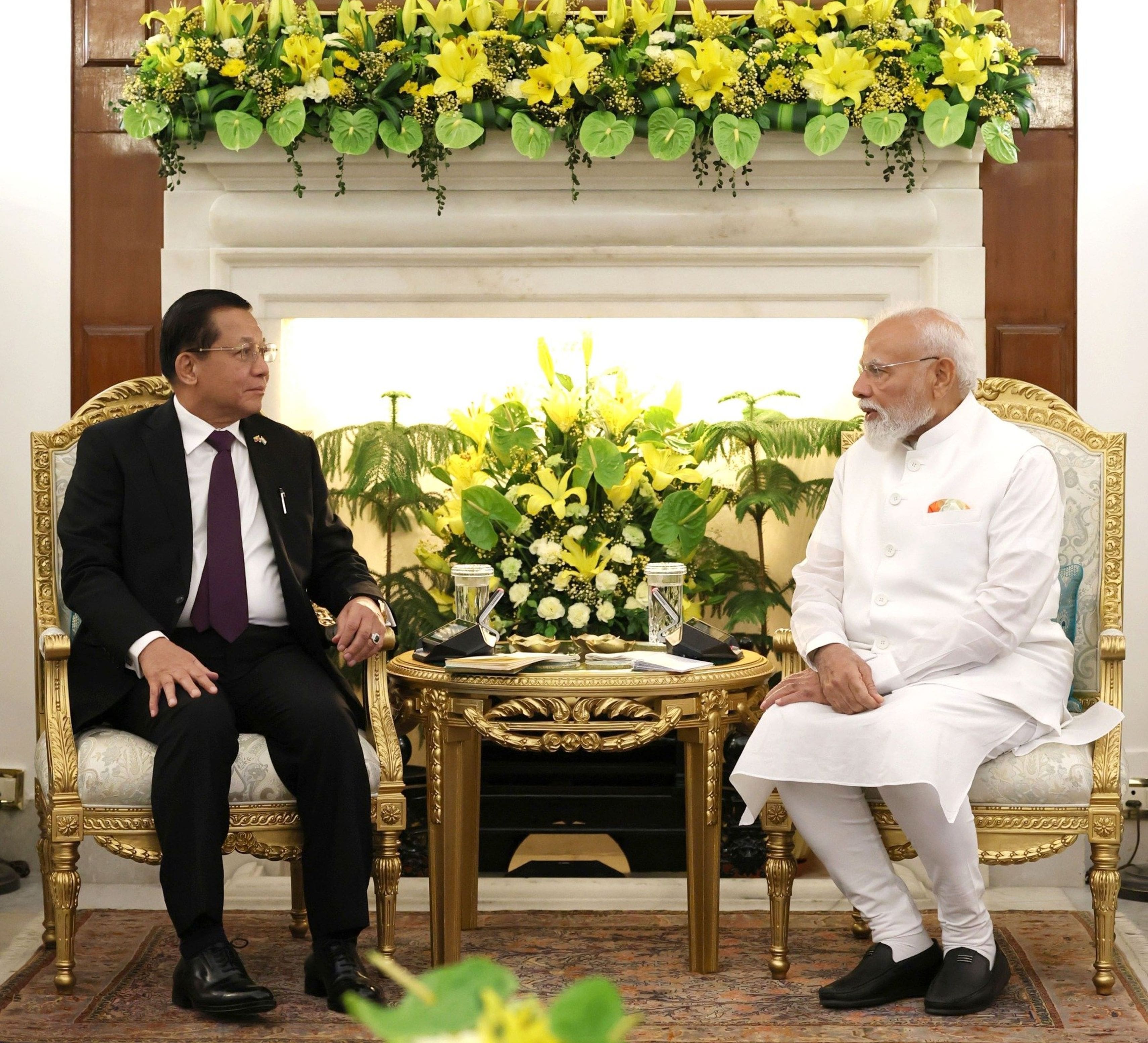
The Prime Minister noted that India is honoured that President U Min Aung Hlaing chose India for his first foreign visit as President. He also expressed happiness that the President began his programme in India from Bodh Gaya with the blessings of Lord Buddha.

During the talks, the two leaders reviewed the full range of India-Myanmar relations and discussed ways to further strengthen bilateral cooperation.
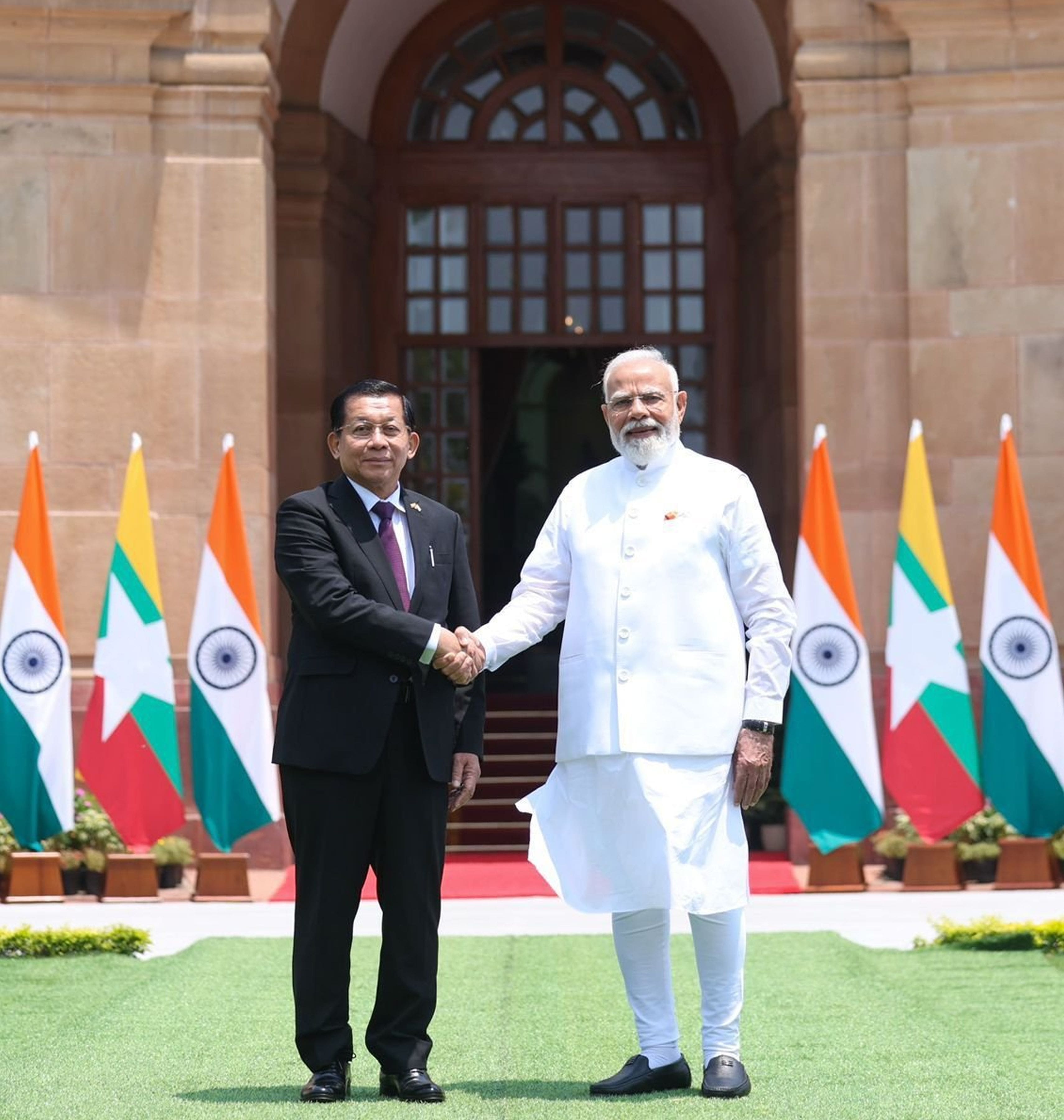
The discussions covered avenues to deepen cooperation in trade, rare earths, healthcare, connectivity, heritage restoration and capacity building. The two sides also agreed to work closely in areas such as maritime security, cyber security and other sectors of mutual interest.

The Prime Minister underlined that Myanmar is vital to India’s ‘Neighbourhood First’, ‘Act East’ and Indo-Pacific policies, reaffirming the importance India attaches to its relations with Myanmar.
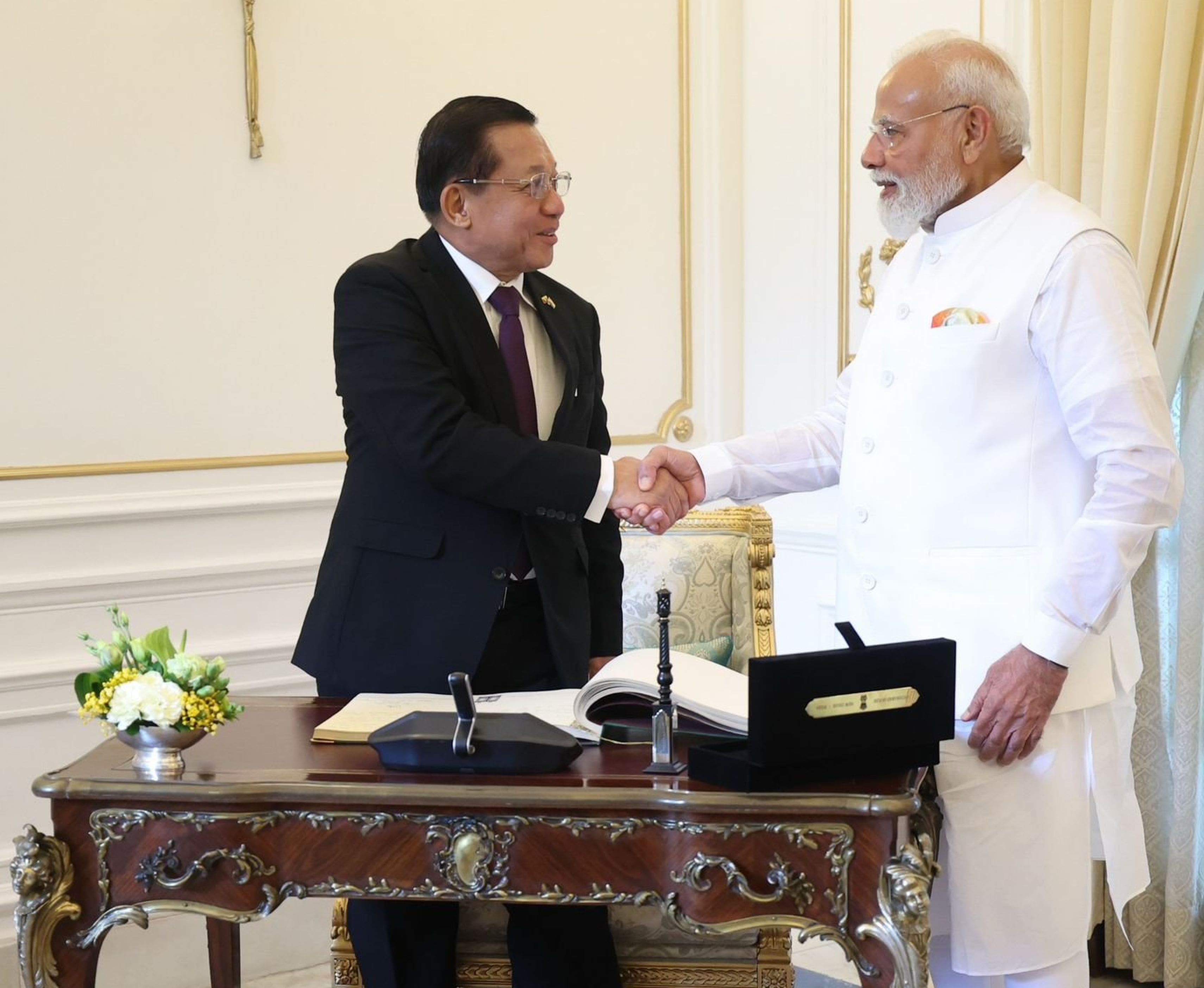
The Prime Minister wrote on X;

“Had a productive meeting with President U Min Aung Hlaing of Myanmar. We in India are honoured that he has chosen India for his first foreign visit as President. Equally gladdening is the fact that he began the visit from Bodh Gaya, with the blessings of Lord Buddha. We reviewed the full range of India-Myanmar relations. Myanmar is vital to India’s policies of ‘Neighbourhood First’, ‘Act East’ and Indo-Pacific.”

“Our talks covered ways to deepen cooperation in trade, rare earths, healthcare, connectivity, heritage restoration and capacity building. We also agreed to work closely in areas such as maritime security, cyber security and more.”

Explore More
Today, the entire country and entire world is filled with the spirit of Bhagwan Shri Ram: PM Modi at Dhwajarohan Utsav in Ayodhya

Popular Speeches

Today, the entire country and entire world is filled with the spirit of Bhagwan Shri Ram: PM Modi at Dhwajarohan Utsav in Ayodhya
India's pace of economic growth shows that its Viksit Bharat dream is not out of reach

Media Coverage

India's pace of economic growth shows that its Viksit Bharat dream is not out of reach
NM on the go

Nm on the go

Always be the first to hear from the PM. Get the App Now!
...
PM chairs valedictory session of National Departmental Summit on Water
September 02, 2026
This marks the first in a series of Summits envisioned by PM to strengthen spirit of Team India and deepen cooperative federalism
PM stresses adoption of a continuous process of review and follow up to act on actionable and time-bound outcomes
Emphasising Jan Bhagidari, PM calls for promoting Jal Utsav to deepen public awareness on water conservation
PM calls for greater adoption of water-saving technologies and learning from global best practices
PM calls for robust water data governance through effective use of AI
PM suggests structured inter-State Study-visits involving public representatives, officials and farmers on water related issues

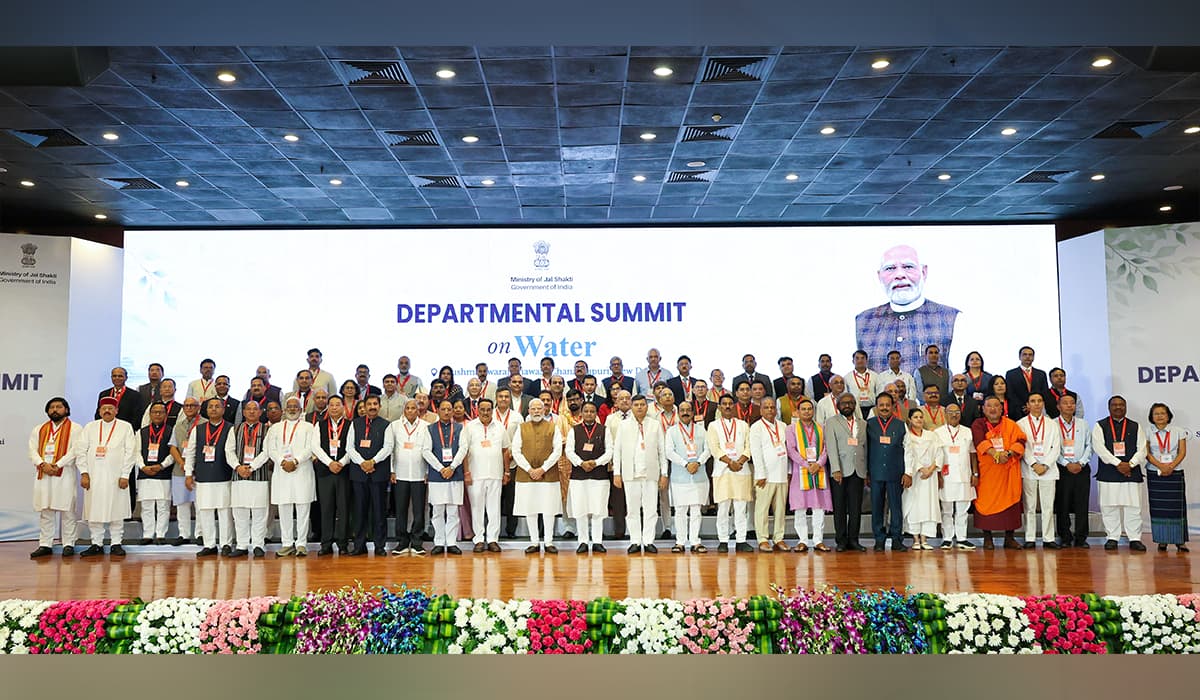
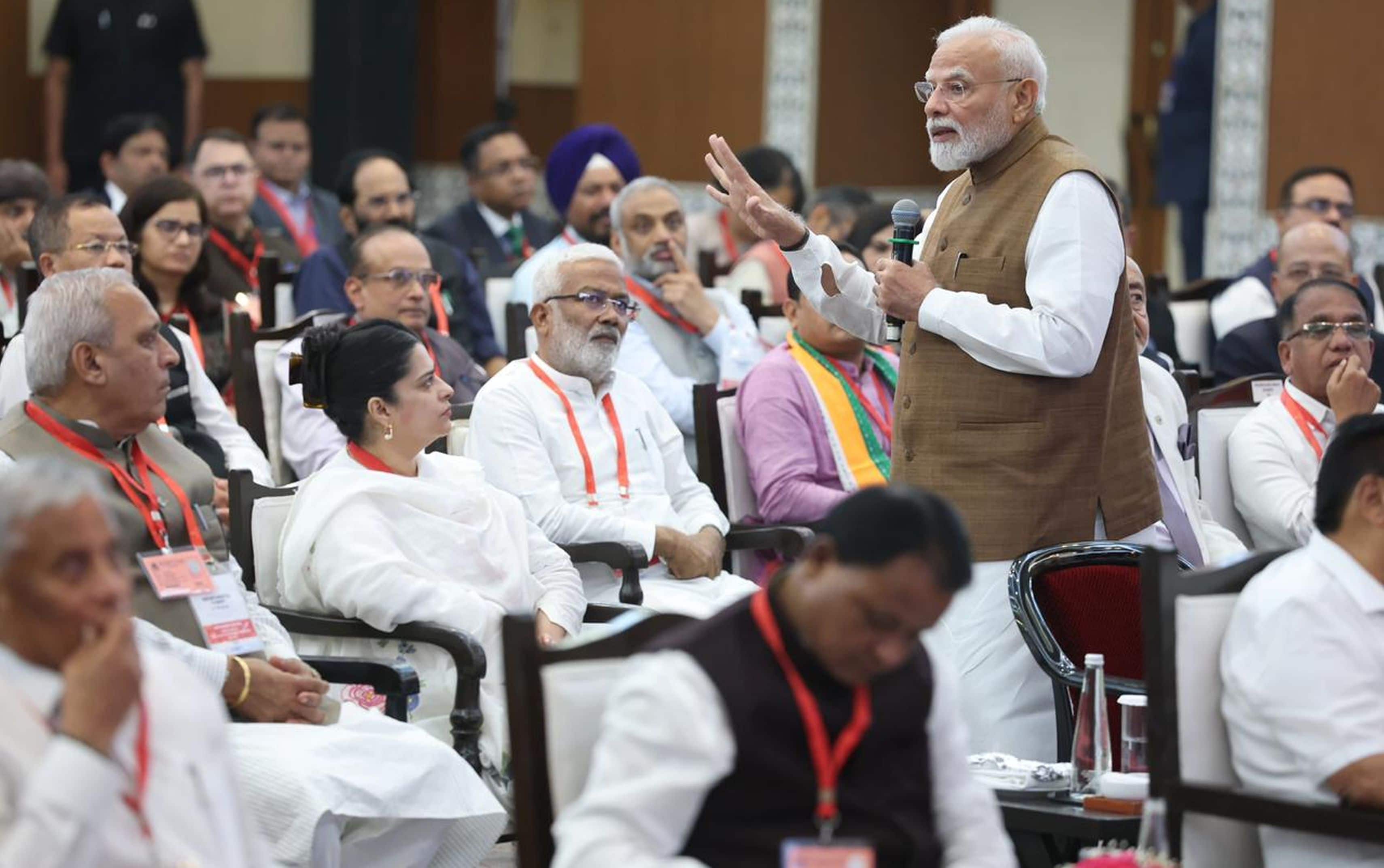
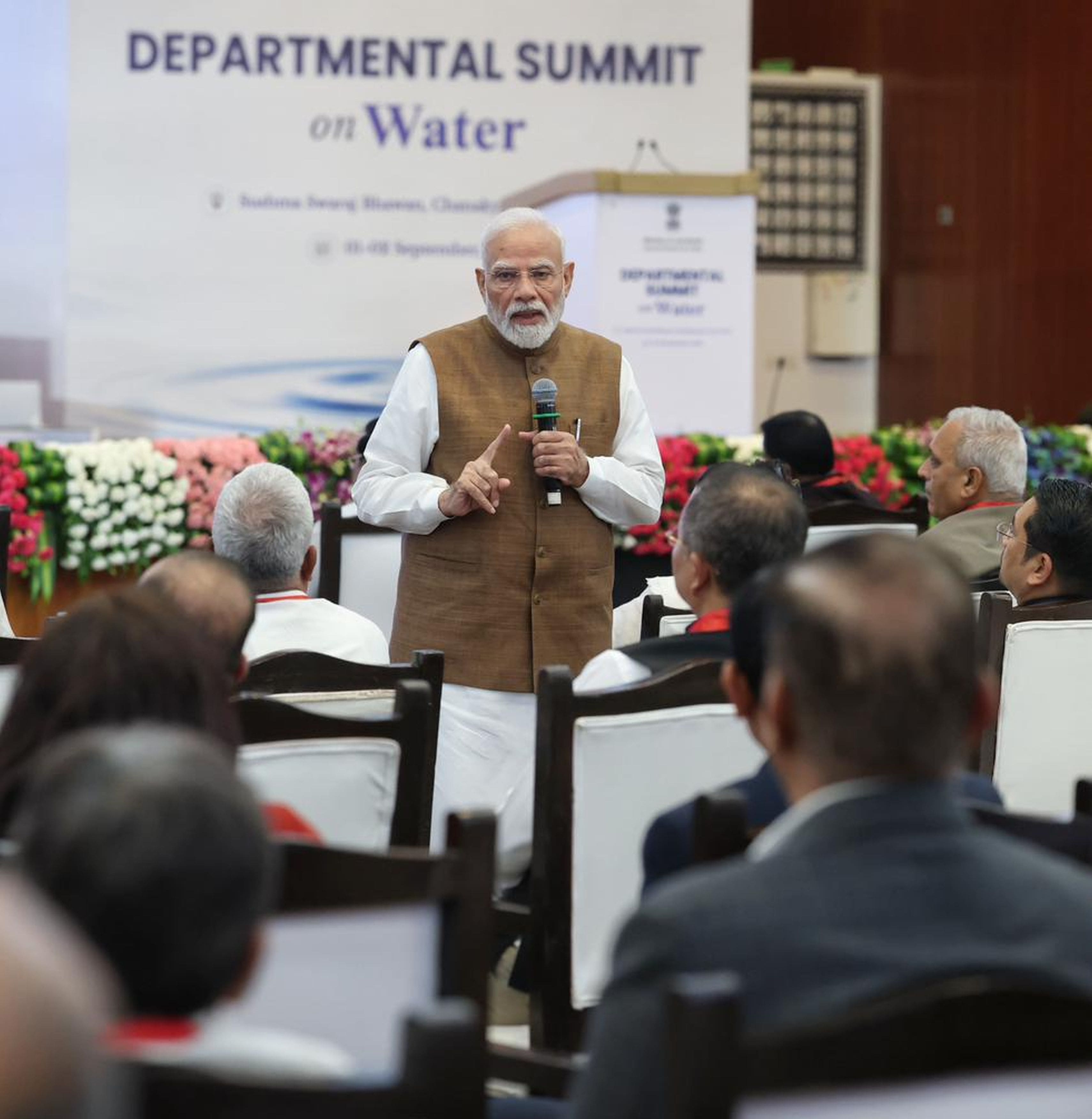
Prime Minister Shri Narendra Modi today chaired the valedictory session of the two-day National Departmental Summit on Water, organised by the Ministry of Jal Shakti. The Summit is the first in a series of Departmental Summits envisioned by Prime Minister to strengthen the spirit of Team India, deepen cooperative federalism and foster collective ownership of national priorities through closer collaboration between the Centre and the States. It brought together Ministers and senior officials from States and Union Territories for focused deliberations on various dimensions of India’s water security.

Prime Minister appreciated the intensive two-day deliberations and emphasised that the actionable and time-bound action points emerging from the Summit should be pursued through a continuous process of review and learning. He suggested that the Summit should not remain a one-time exercise and called for a continuous process of review and follow-up.

Prime Minister called for sensitising Urban Local Bodies to the challenges arising from urbanisation, including population growth and future water requirements, and suggested organising similar Chintan Shivirs for Urban Local Bodies. He called for greater adoption of water-saving technologies. He also suggested dedicated exhibitions and workshops, including exposure to global best practices, to enable Indian manufacturers and stakeholders to develop and scale efficient solutions.

Emphasising Jan Bhagidari, Prime Minister suggested promoting “Jal Utsav” to create greater awareness among people. Prime Minister called for making de-silting a regular programme and developing clear criteria and SOPs for de-silting. On dam safety, he stressed rigorous preparedness before every monsoon, adherence to prescribed precautions and creating awareness among school students, including through suitable incorporation in educational curricula.

Prime Minister further called for strengthening knowledge and capacity on water management and governance in universities and higher educational institutions. He suggested structured inter-State study-visits involving public representatives, officials and farmers to facilitate practical learning and replication of successful interventions.

Prime Minister called for robust water data governance, with water-sector data brought together, systematically managed, analysed and effectively utilised. He recommended the use of AI for data collection and analysis through a uniform format. He also stressed anticipatory and integrated planning to address water scarcity through suitable utilisation of treated water for agriculture and industrial purposes.

Drawing upon his experience as Chief Minister of Gujarat, Prime Minister noted that instances of water scarcity could be transformed into opportunities through systematic planning, commitment and deployment of adequate resources and capable officers.

Union Minister for Jal Shakti Shri C. R. Patil highlighted four key outcomes of the summit: accelerated completion of water infrastructure projects; strengthening water conservation as a sustained people’s movement; ensuring long-term sustainability of drinking-water sources; and institutionalising effective operation and maintenance of rural drinking-water schemes.